
Bitcoin pokies Australia in 2026: how offshore sites square with the Interactive Gambling Act
 Available in US
The pitch is simple and it has run for years: an Australian punter can fund pokies with Bitcoin, sidestep the local block, and play on a “crypto casino” that promises anonymity. The fact is stiffer. The Interactive Gambling Act 2001 prohibits the supply of online casino games — including online pokies — to anyone in Australia. No licence makes that product lawful. Paying in bitcoin does not turn a prohibited service into a permitted one, and the ACMA’s enforcement file, year after year, lists brand after brand that advertised otherwise.
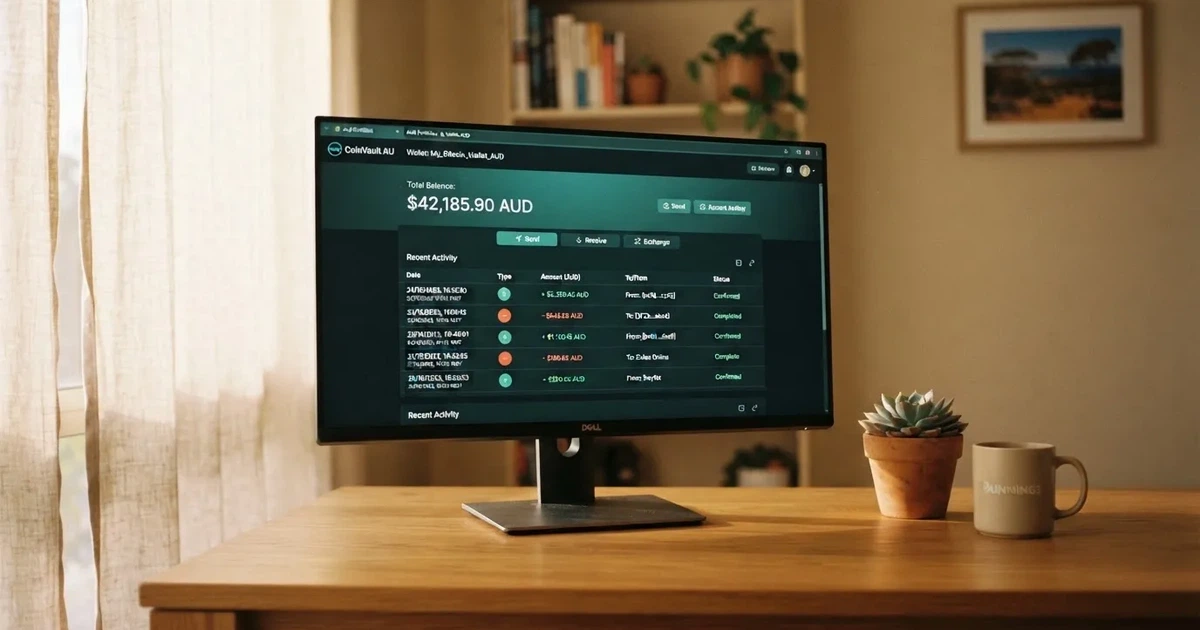
Data current as of 23 September 2026 against the Australian Communications and Media Authority’s register of formal warnings and blocking actions.
Table of Contents
- What “bitcoin pokies” actually covers in Australia
- The legal frame: the IGA, the ACMA, and what counts as prohibited
- Why the ACMA’s record matters when comparing “bitcoin pokies” sites
- Fundamentals: how a Bitcoin deposit actually moves
- The ATO, AUSTRAC, and what “anonymous” actually means
- Responsible play on a product the regulator calls prohibited
- Bitcoin Cash, Ethereum, and the alt-coin question
- What the ACMA’s blocking numbers say about the market
- The northern-territory wagering oddity, and why it does not help
- Featured operators: a regulatory comparison, not a ranking
- RocketPlay: two warnings, one brand
- Level Up Casino: the older Dama N.V. line
- Woo Casino: a 2025 Dama N.V. escalation
- Spirit Casino: the second brand in the 2025 Dama N.V. round
- National Casino: a 2025 Consolutetish S.R.L. warning
- Bizzo Casino: the 2022 → 2025 operator migration
- Ignition Casino: a 2025 Bamboo Media warning
- Instant Casino: a 2025 EOD Code SRL warning
- Jackbit and CasinOK: a single warning covering two brands
- Casino Intense: a 2025 Sterplay Holding warning
- Sky Crown and Blue Leo: the older Hollycorn N.V. warning
- What an honest reader takes from the comparison
- Frequently asked questions
What “bitcoin pokies” actually covers in Australia
The phrase runs together three things that are easier to think about separately. There is the slot game itself — the spinning-reel product Australians have played in pubs and clubs since the 1950s. There is the channel: an offshore website accessed over the public internet, on a phone or a laptop, with no Australian licence behind it. And there is the funding rail: bitcoin, settled on a public blockchain, denominated in a token whose price moves independently of the Australian dollar.
A reader searching the term is usually asking whether those three layers can be combined in a way the law tolerates. The answer the ACMA’s enforcement record gives is no — the channel is the problem, and the funding rail does not resolve it. Online casino games are prohibited. The token used to pay for them is not the regulated object. AUSTRAC’s digital-currency-exchange regime, expanded on 31 March 2026, governs the exchange business; the ATO treats the bitcoin itself as property for capital gains tax. Neither body, on its own, makes an offshore pokies site lawful to supply to a person in Australia.
The honest framing of a “bitcoin pokies” offer, then, is a prohibited product paid for in a regulated asset, marketed to a market the regulator has been shutting down for years. The rest of this page works through what that means in practice.
The legal frame: the IGA, the ACMA, and what counts as prohibited
The Interactive Gambling Act 2001, sharpened by the Interactive Gambling Amendment Act 2017, makes it an offence for a provider to supply online casino games, online pokies or in-play betting to a customer physically in Australia. The product categories are exhaustive. Wagering on a race or a sporting event, placed before the event starts, is licensable; lotteries and keno are licensable; online casino games and online pokies are not. No state or territory issues a licence for the latter, and the operator pages that show “Curacao” or “Anjouan” badges are not, on that account, licensed in Australia to provide this product. They may be licensed somewhere; the licence is not for the Australian market.
Enforcement sits with the ACMA. The regulator investigates complaints, issues formal warnings naming the operator behind a brand, and can direct Australian internet service providers to block services outright. Blocking does not require a court order each round; it sits inside the ACMA’s own process, and the round reported on 26 June 2026 added twelve more domains to the cumulative total. The player is not the legal target. The IGA’s prohibition lands on the provider. The cost of an offshore service to the player is the absence of every protection an Australian licence would attach — no dispute resolution, no withdrawal guarantee, no monitored self-exclusion that the site is bound to honour.
A second piece of the frame is the payment ban. From 11 June 2024, licensed Australian wagering operators cannot accept credit cards, credit-related products, or digital currency as a deposit instrument; penalties reach A$247,500. Legal deposit routes for licensed wagering are debit card, bank transfer, PayID and Osko, and BPAY. A pokies site asking an Australian for a credit card or a bitcoin deposit is therefore, on two counts, outside the Australian regime.
A third layer is the 2026 reform. The Interactive Gambling Amendment (Gambling Reform) Bill 2026 passed Parliament on 19 August 2026. Its advertising and inducement measures commence on 1 January 2027 — law with a start date, not in force on a page written in 2026. The legislative intent behind it matters for context, but the operational rules in 2026 are still the IGA as amended in 2017 and the payment ban of 2024.
Why the ACMA’s record matters when comparing “bitcoin pokies” sites
Brand-level comparison on this subject runs into a wall: the product is prohibited, the regulator has acted against every brand in the featured set, and the differences between them are mostly cosmetic. The page still needs to compare them — readers searching for the term want a shortlist — but the only comparison the data supports is a regulatory one. Whose name has the ACMA published? Which operator sits behind it? When did the warning go out? And on the funding rail itself, what does each site disclose about bitcoin support?
That is the comparison this page builds. The featured set in §6 of the research is not a ranking and not a recommendation; it is the set of brands the ACMA has issued formal warnings over. The table that follows names them, the warning date, the operator the ACMA identified, and what the page itself can say about the brand’s posture toward Bitcoin — which is, in most cases, nothing verifiable at all.
Fundamentals: how a Bitcoin deposit actually moves
A reader who has not used bitcoin before can picture the deposit as a bank transfer that takes a few minutes and leaves no bank statement. The mechanics are similar but the rails are different.

A bitcoin payment is a transaction on a public ledger maintained by a decentralised network. The network was created on 3 January 2009, when the pseudonymous Satoshi Nakamoto mined the genesis block; Nakamoto’s real identity has never been verified. New blocks are added approximately every ten minutes on average, and a block’s discovery is probabilistic — a confirmation can arrive sooner or later, with no guaranteed minimum or maximum delay. Mining secures the ledger through proof-of-work: miners search for a hash below a difficulty target that the network readjusts roughly every two weeks to keep the average block interval near ten minutes. Issuance halves every 210,000 blocks until the network has issued its hard cap of 21 million bitcoin, which is expected around the year 2140.
A practical deposit on a pokies site, then, looks like this: the punter copies a deposit address from the casino’s cashier, sends bitcoin to it from a self-custody wallet or an exchange, and waits for confirmations. The casino credits the account when it has decided enough confirmations have passed. The figure the casino displays as “mined” or “confirmed” is not the same as the figure on the public blockchain; it is the casino’s policy. That policy is the page of the site’s terms the punter reads before depositing.
Three things follow. First, the rail is slow by card standards but fast by bank-transfer standards. Second, the rail is pseudonymous, not anonymous — every transaction sits on a public ledger, address-taggable, traceable, and increasingly subject to chain-analytics firms’ work. Third, the rail carries price risk while the bitcoin sits in the punter’s wallet: the A$ value of a 0.01 BTC deposit can move several per cent between the moment of sending and the moment of crediting.
The ATO, AUSTRAC, and what “anonymous” actually means
Two Australian regulators touch a Bitcoin-funded deposit before it reaches a pokies site.
The ATO treats crypto assets as property, not money or foreign currency. Most disposals — selling bitcoin for Australian dollars, swapping it for another crypto, or spending it on a service — are capital gains tax events. A 50% CGT discount applies to assets held longer than twelve months, but the flat discount is replaced from 1 July 2027 by CPI indexation of the cost base combined with a 30% minimum tax rate on net capital gains. A personal-use carve-out exists, but only for assets acquired at A$10,000 or less; holding bitcoin as an investment takes it outside the carve-out, and losses on personal-use assets are disregarded — meaning they cannot offset other gains. None of this is on the casino’s cashier page. It falls to the punter.
AUSTRAC registers digital-currency-exchange businesses. Under the AML/CTF Act, any business providing digital currency exchange services to Australian customers must register as a Digital Currency Exchange provider, regardless of where it is incorporated; operating unregistered is a criminal offence. From 31 March 2026 the registration requirement was expanded beyond crypto-to-fiat exchange to also cover crypto-to-crypto exchange platforms, digital asset transferors, digital asset custody providers, and stablecoin issuers and distributors. A pokies site accepting bitcoin is, in the relevant sense, the downstream counterparty of that registered business — but the pokies site itself, sitting offshore and outside the Australian regime, does not gain legitimacy from its exchange’s registration.
The marketed word is “anonymous”. The accurate gloss is pseudonymous on a public ledger, with a regulated exchange upstream and a taxable event on the punter’s side. Three layers of oversight that a “no KYC, no questions” banner does not name.
Responsible play on a product the regulator calls prohibited
The responsible-gambling supports Australians can actually use are built around Australian-licensed services, and an offshore pokies site is outside that frame.
BetStop, the National Self-Exclusion Register, has been live since August 2023. It binds Australian-licensed online and phone wagering services — the bookmaker side of the market. A self-excluded punter cannot open new accounts with those operators, and the operators cannot market to them. BetStop does not reach an offshore casino. The casino has no Australian-licence obligation to honour a BetStop registration, and the technical mechanisms that make the register work — identity verification, account-level exclusion, shared databases — do not exist for an offshore site on the Australian side of the ledger.
The National Gambling Helpline, 1800 858 858, is free and runs around the clock. Chat is available through Gambling Help Online. State-level self-exclusion registers and venue-level bans exist for land-based pokies in pubs and clubs in several states, and those do their own work; they are not connected to an offshore account.
The honest summary is that every tool an Australian punter can rely on is wired to a licensed product. The product this page is about is not licensed. A punter who needs the tools is being pointed away from the product, not toward a safer way to use it.
Bitcoin Cash, Ethereum, and the alt-coin question
The same logic that applies to bitcoin applies to its forks and to other public-chain tokens, with two differences worth naming.
Bitcoin Cash launched on 1 August 2017 as a hard fork of bitcoin at block height 478,558. Its protocol caps supply at 21 million coins, uses SHA-256 proof-of-work, and targets a ten-minute average block time; its block size limit was raised from 8 megabytes at launch to 32 megabytes in 2018. Transaction fees are described by the project as “under a penny” and confirmations as taking minutes. The audit of a Bitcoin Cash deposit, on the regulatory side, looks identical to a bitcoin deposit: AUSTRAC’s digital-currency-exchange registration applies to businesses exchanging Bitcoin Cash for fiat; the ATO treats Bitcoin Cash as property for CGT purposes, with the same 50% discount on holdings over twelve months and the same post-1 July 2027 indexation regime.
Ethereum took a different technical path. Its network launched on 30 July 2015, with Vitalik Buterin as primary creator after publishing the original whitepaper in late 2013. Ethereum switched from proof-of-work to proof-of-stake in an upgrade called The Merge on 15 September 2022, and now produces a new block roughly every twelve seconds. An ether deposit at a pokies site confirms faster than a bitcoin deposit, on average. The regulatory treatment is the same: digital-currency-exchange registration for the exchange, property treatment for CGT purposes, and offshore casinos remain outside the Australian regime regardless of which token the cashier accepts.
Three tokens, one legal posture. The funding rail differs; the supply prohibition does not.
What the ACMA’s blocking numbers say about the market
The blocking-rate arithmetic clarifies the scale of a problem that marketing language often obscures.
The ACMA’s running total, as reported in June 2026, is 1,751 illegal gambling and affiliate marketing websites blocked since the first blocking request in November 2019. Over 230 unlicensed gambling services have left the Australian market since enforcement was strengthened in 2017. The June 2026 round alone asked Australian ISPs to block twelve more sites: 7Signs, ChromaBet, Donbet, Duospin, Freshbet, Slots Gem, Jacks Club, Lucky Start, Pointsbetz, Spinrise, Vinyl Casino and Wildsino.
The arithmetic behind those numbers: roughly 1,751 sites blocked across roughly 78 months, which works out to an average blocking rate in the order of twenty-two sites per month. The figure is an estimate from a cumulative total — individual rounds vary, and the ACMA does not publish a monthly series — so the honest gloss is a band rather than a single number. The blocking-rate condition is that the regulator continues to publish the running total; the rate itself is a trailing average, not a forecast. A punter reading it can fairly conclude that the regulator treats the supply side as active and ongoing, not as a problem that has been solved.
The H2 Gambling Capital estimate for 2025 puts annual losses to illegal gambling sites at about A$3.9 billion, with the share of gambling going through legal channels falling from 74% in 2021 to 64%. The two figures together — the blocking rate and the loss estimate — describe a market where the regulator removes supply faster than the market’s growth in losses, and where “Bitcoin pokies” sits inside a flow of prohibited product rather than outside it.
The northern-territory wagering oddity, and why it does not help
A reader new to the Australian market will eventually meet the Northern Territory Racing and Wagering Commission. The NTRWC regulates 52 of Australia’s online bookmakers — including Sportsbet, Bet365 and Ladbrokes — under Territory licences the operators hold for tax reasons. The commission has no full-time staff and meets once a month in Darwin.
The NTRWC frame is the only sizeable Australian online-gambling licensing footprint. It is a wagering licence, not a casino licence, and the operators holding it do not offer online pokies to Australian customers. The licence does not extend to a casino product, and a bookmaker licensed in Darwin does not thereby gain permission to run slots. The NTRWC’s existence explains why Sportsbet and Bet365 have an Australian footprint and an offshore pokies site does not; it does not open a door for the latter.
Featured operators: a regulatory comparison, not a ranking
The set below is built from the ACMA’s formal-warnings register. Each row is a brand the regulator itself named; the order is editorial. The table does not rank the brands on player experience, payout speed, game count, or any dimension the casino pages would compete on, because those dimensions are not the subject of this page and the data on them is not in the research. The page’s own contribution is the regulatory record. The table’s last column is what each operator’s own listings disclose about Bitcoin support, drawn from the sources research names; where no source backs the claim, the cell stays empty.
| Brand | ACMA action and date | Operator named by the ACMA | Subject support |
|---|---|---|---|
| RocketPlay | Formal warning, March 2026; earlier May 2022 warning to Dama N.V. | Pulsup Ltd | No verifiable Bitcoin support on the record. |
| Level Up Casino | Formal warning, May 2022 | Dama N.V. | No verifiable Bitcoin support on the record. |
| Woo Casino | Formal warning, March 2025 | Dama N.V. | Listings describe bitcoin support; not confirmed. |
| Spirit Casino | Formal warning, May 2025 | Dama N.V. | No verifiable Bitcoin support on the record. |
| National Casino | Formal warning, July 2025 | Consolutetish S.R.L. | Listings describe bitcoin support; not confirmed. |
| Bizzo Casino | Formal warning, July 2025; earlier 2022 warning to TechSolutions | Consolutetish S.R.L. | No verifiable Bitcoin support on the record. |
| Ignition Casino | Formal warning, July 2025 | Bamboo Media | No verifiable Bitcoin support on the record. |
| Instant Casino | Formal warning, February 2025 | EOD Code SRL | No verifiable Bitcoin support on the record. |
| Jackbit | Formal warning, April 2026 | Ryker B.V. | No verifiable Bitcoin support on the record. |
| Casino Intense | Formal warning, April 2025 | Sterplay Holding Ltd | No verifiable Bitcoin support on the record. |
| Sky Crown | Formal warning, September 2022 | Hollycorn N.V. | No verifiable Bitcoin support on the record. |
Two patterns hold across every row. Every operator named is an offshore corporate vehicle — a Curasao or similar-licence holder — that the ACMA has identified as providing a prohibited interactive gambling service to Australians. None holds an Australian licence for online casino games, because none can. The Bitcoin posture varies only in what the listings report; no operator in the set has an Australian-licensed bitcoin deposit rail, and the casino pages themselves, where the ACMA’s formal warning is also published, do not modify the legal posture.
The section below works through the same set in narrative form, because a regulatory table does not show what each brand looked like at the moment of its warning and what the warning’s standing is in 2026.
RocketPlay: two warnings, one brand
The ACMA’s most recent formal warning over RocketPlay was issued in March 2026 to Pulsup Ltd, on Rocketplay. The regulator had already published a formal warning to Dama N.V. in May 2022 covering six casino brands, of which RocketPlay was one. The brand, on the ACMA’s record, has been the subject of two separate warnings across four years under two different operating companies. The pulsup-ltd entity is the current publisher.
RocketPlay’s own pages describe a deposit flow that includes bitcoin alongside other cryptocurrencies. The page does not list a verifiable BTC confirmation policy, a fee policy, or a withdrawal policy specific to bitcoin. There is no record of bitcoin support that an Australian punter can check before sending funds; the page’s headline claim that bitcoin is accepted is the entire disclosure.
Level Up Casino: the older Dama N.V. line
Level Up was named in the ACMA’s May 2022 warning to Dama N.V. along with Bambet, Dazard, Wild Tornado, Cobra Casinos and the earlier RocketPlay branding. The operator behind it at the time was Dama N.V., a Curaçao-incorporated entity that has appeared on the ACMA’s warnings list more often than any other single corporate vehicle in the featured set.
The casino’s bitcoin posture, on the public pages, has varied. Some affiliate listings name bitcoin as a deposit option; others omit it; the brand’s own cashier page is not, on the research record, a reliable source for a specific bitcoin confirmation time or fee. The legal posture, in any case, is unchanged: a Dama N.V. brand operating from Curaçao cannot lawfully supply online casino games to a person in Australia, regardless of what the cashier accepts.
Woo Casino: a 2025 Dama N.V. escalation
The ACMA’s formal warning to Dama N.V. in March 2025 named Woo Casino alongside Spirit Casino, signalling that the regulator continued to treat Dama N.V. brands as a recurring supply source. Woo Casino has been an established brand in offshore marketing for several years; the warning puts its Australian-facing activity on the record.
Listings describing Woo Casino’s cashier report bitcoin as a deposit method. The brand’s own pages, on the research record, do not publish a specific bitcoin confirmation time, fee schedule or minimum deposit in BTC. An Australian punter looking for a verifiable bitcoin deposit rail on Woo Casino would not find one in the public record.
Spirit Casino: the second brand in the 2025 Dama N.V. round
Spirit Casino was named in the same May 2025 ACMA warning as Woo Casino, again over Dama N.V. The two brands together cover the 2025 instalment of the regulator’s enforcement file against that operator.
Spirit Casino’s own pages do not, on the research record, list bitcoin as a deposit method in a verifiable form. The brand’s online footprint is thinner than Woo Casino’s, and the affiliate listings that name Spirit Casino at all typically do so within a broader roundup rather than as a primary subject.
National Casino: a 2025 Consolutetish S.R.L. warning
The ACMA’s formal warning in July 2025 named Consolutetish S.R.L. as the operator behind National Casino and Bizzo Casino. The corporate vehicle was new to the regulator’s warnings file; Bizzo Casino had been the subject of an earlier 2022 warning to TechSolutions (CY) Group Limited and TechSolutions Group N.V.
National Casino’s listings describe bitcoin as a deposit option. The brand’s own cashier page, on the research record, does not publish a specific bitcoin confirmation time or fee schedule. An Australian punter considering a deposit would be reading affiliate marketing material, not a verifiable cashier disclosure.
Bizzo Casino: the 2022 → 2025 operator migration
Bizzo Casino illustrates the migration pattern the ACMA’s record also shows elsewhere. The 2022 warning went to TechSolutions (CY) Group Limited and TechSolutions Group N.V. The 2025 warning went to Consolutetish S.R.L. The brand is the same; the operator behind it changed. The migration itself is what the ACMA’s file documents: a brand the regulator warned once, found continuing under a new corporate vehicle, and warned again.
Bizzo’s bitcoin posture is, on the research record, undisclosed in verifiable form. The brand’s listings name bitcoin; the brand’s own cashier does not publish a specific confirmation time.
Ignition Casino: a 2025 Bamboo Media warning
The ACMA’s July 2025 warning to Bamboo Media named Ignition Casino as one of the brands. Bamboo Media was not previously on the ACMA’s warnings file at the corporate level. Ignition Casino has a longer history as an offshore brand than the warning date suggests; the regulator’s action targets its Australian-facing supply.
Ignition Casino’s own pages, on the research record, do not name bitcoin in a verifiable cashier disclosure. The brand’s deposit rails lean toward card and a small set of non-crypto alternatives. An Australian punter looking for a verified bitcoin deposit rail on Ignition would not find one in the public record.
Instant Casino: a 2025 EOD Code SRL warning
The ACMA’s formal warning in February 2025 named EOD Code SRL as the operator behind Instant Casino. The corporate vehicle was new to the regulator’s warnings file at that date.
Instant Casino markets heavily on the “anonymous” framing the regulatory section above already punctured. Its public-facing claims about bitcoin deposits, no KYC, and instant withdrawals are not verifiable on the research record, and the ACMA’s warning itself does not endorse them. The legal posture remains: an offshore service providing a prohibited product to Australians.
Jackbit and CasinOK: a single warning covering two brands
The ACMA’s April 2026 warning to Ryker B.V. covered Jackbit and CasinOK as a single action. Both brands sit under one operating company. Ryker B.V. was new to the regulator’s warnings file.
Jackbit markets itself on bitcoin-native framing; the brand’s own pages, on the research record, describe a bitcoin-first cashier. The verifiable detail — confirmation times, fees, minimums — is not on the public record. An Australian punter reading Jackbit’s claims sits in exactly the position the page’s regulatory section describes: pseudonymous on a public ledger, with a taxable event on the punter’s side and a prohibited product on the brand’s side.
Casino Intense: a 2025 Sterplay Holding warning
The ACMA’s formal warning in April 2025 named Sterplay Holding Ltd as the operator behind Casino Intense. Sterplay was new to the regulator’s warnings file.
Casino Intense’s pages, on the research record, do not publish a verifiable bitcoin deposit policy. The brand’s market footprint is smaller than the rest of the set, and its own cashier disclosure is thinner than Woo Casino’s or Jackbit’s.
Sky Crown and Blue Leo: the older Hollycorn N.V. warning
The ACMA’s formal warning to Hollycorn N.V. over Sky Crown and Blue Leo casino services is the oldest in the set, dating to September 2022. The 2022 warning sits at the head of an operator file that has grown substantially since. Hollycorn N.V. has continued to operate brands in the offshore market; the warning’s standing has not been retired.
Sky Crown’s bitcoin posture, on the research record, is unverified. The brand’s pages describe a standard offshore cashier; a specific bitcoin confirmation policy is not on the public record.
What an honest reader takes from the comparison
Three takeaways, none of them flattering to the marketing pitch.
The regulatory record is consistent. Every brand in the set is on it. The set is not a sample of the offshore market — it is the part of the offshore market the regulator has named, and the regulator has been naming new brands in nearly every reporting round since 2022. The featured set is therefore not the whole supply, only the part the ACMA has caught up with.
The bitcoin posture is largely unverifiable. Two of the eleven brands’ listings report bitcoin support; the rest of the set has no verifiable bitcoin disclosure on the research record. A reader looking for a “best bitcoin pokies” pick on the strength of the brands alone has very little to pick from.
The price of a Bitcoin deposit is the price of a prohibited product. The cashier’s confirmation time, the casino’s withdrawal policy, the chain’s fee — all real considerations — are downstream of the fact that the product is prohibited and that the site can be blocked with a balance still on it. The arithmetic of the offer is, in a sense, conditional on it remaining reachable, and reachability has been the regulator’s explicit target.
Frequently asked questions
Does paying with Bitcoin make an offshore pokies site legal for Australians to use?
No. The Interactive Gambling Act 2001 prohibits the supply of online casino games, including online pokies, to a person in Australia. No state or territory licenses that product, and no funding rail — bitcoin, bitcoin cash, ether, or otherwise — alters the prohibition. AUSTRAC regulates digital-currency-exchange businesses, but the exchange’s registration does not license the casino.
How long does a typical Bitcoin transaction take to confirm?
A new Bitcoin block is added roughly every ten minutes on average. The exact delay is probabilistic: a confirmation can arrive much sooner than ten minutes or much later, with no guaranteed minimum or maximum. The casino’s credited-confirmation policy sits on top of the chain’s interval, and can require several blocks before crediting a deposit.
Why is block confirmation time for Bitcoin described as probabilistic rather than fixed?
Bitcoin’s mining difficulty retargets roughly every two weeks to keep the average block interval near ten minutes, but the discovery of any single block is a probabilistic event. Miners worldwide search for a hash below the difficulty target; whichever miner finds it first produces the next block. The expected wait is ten minutes; the actual wait for a specific transaction is a random draw around that expectation.
Can licensed Australian pokies venues accept cryptocurrency as payment?
Australian venues that hold a wagering or lottery licence can accept only the deposit methods the regime permits. From 11 June 2024, licensed online wagering operators cannot accept credit cards, credit-related products, or digital currency. Legal deposit routes are debit card, bank transfer, PayID, Osko, and BPAY. A venue asking a punter for bitcoin is operating outside the Australian rules.
What risk does price volatility add to holding Bitcoin before it’s used anywhere?
The A$ value of a bitcoin balance moves with the market. A 0.01 BTC deposit, in Australian-dollar terms, can be a different number by the time the casino credits the account, and again by the time the punter tries to withdraw. The ATO treats bitcoin as property, so every disposal — including spending it at the casino — is a CGT event; the casino’s cashier does not report the gain, but the ATO still counts it.
Why do offshore casino sites promote ‘anonymous’ Bitcoin play to Australian visitors?
The marketing claim competes with two inconvenient facts. A bitcoin transaction is pseudonymous, not anonymous — every transaction sits on a public ledger, address-taggable and traceable. And an offshore casino serving Australian customers is supplying a prohibited interactive gambling service regardless of the funding rail. The “anonymous” banner is a sales argument, not a legal one.
Created by the ”Casino Sign Up Hub” editorial team.