The Three-Reel Slot in Australia: A Format That Lives in Clubs, Not in Licensed Online Casinos
 Available in US
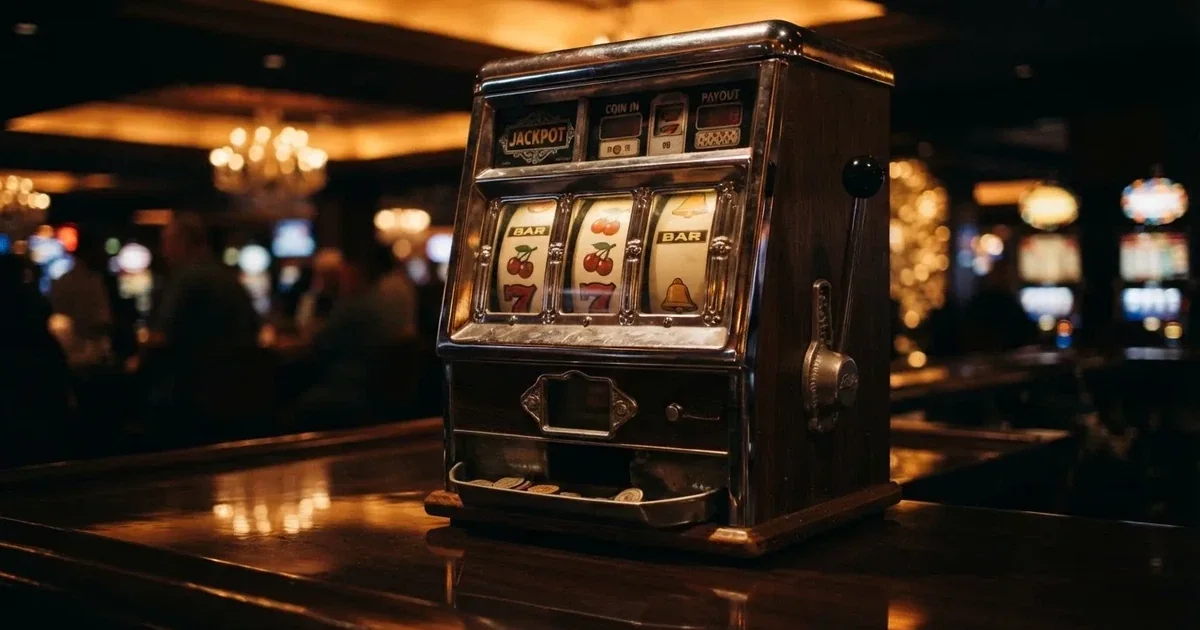
A punter searching for the best three-reel slots in Australia is, in almost every case, chasing a category of game that does not exist as a licensed online product inside the country. Three-reel slot machines — the format Charles Fey popularised in San Francisco in the late nineteenth century, with three spinning drums and a single payline across the middle — remain a fixture of Australian clubs, hotels and pubs. Online, where this article sits, the same format is offered only by offshore operators the ACMA has, in most cases, already named.
This page sets out what the format is, where it is and is not legal to play in Australia, what an offshore three-reel slot actually delivers once the marketing is stripped away, and which operators the regulator has acted against. The angle throughout is consequence — what follows from a given fact, and when that consequence lands on a player who treats the marketing at face value.
Currency and licence data current as of 23 September 2026, cross-checked against the ACMA’s formal warning register and the Interactive Gambling Act 2001 as amended.
Table of Contents
- What a Three-Reel Slot Actually Is, and Why the Format Still Exists
- Why No Three-Reel Online Slot Is Licensed Inside Australia
- How Three-Reel Bonuses and Free-Spin Offers Read Once the Marketing Is Stripped
- Where the Actual Three-Reel Slot Experience Lives in Australia
- What Offshore Three-Reel Operators Are, and What the ACMA Has Done About Each
- What Each Operator Above Actually Represents, and Why the Choice Is the Same in Every Case
- The Blocking Rate: What the ACMA’s Enforcement Output Actually Adds Up To
- What the Payment Side Tells a Punter About an Offshore Three-Reel Site
- Responsible Gambling: What Help Looks Like, and Where to Find It
- What the Search “best 3 reel slots Australia 2026” Actually Returns
- How to Read This Page if You Came Here to Compare Operators
- Frequently Asked Questions
What a Three-Reel Slot Actually Is, and Why the Format Still Exists
The three-reel slot is the original slot machine, in the literal sense. Fey’s 1890s design used three mechanical drums carrying five symbols each — horseshoes, diamonds, spades, hearts and a Liberty Bell — and three bells across the centre payline paid out ten nickels, the top prize of its era. The format is older than electric lighting in most houses, and it persists for a reason: it is the easiest slot to read.

A modern three-reel slot keeps the same skeleton. Three reels spin, each carries a small set of symbols (often around ten per reel rather than five), and a single horizontal payline across the centre decides the win. There are no cascading symbols, no expanding wilds in the video sense, no multi-screen bonus rounds layered on top of the base game. What you see on the reels is what plays. The payout table is printed plainly on the machine face or in the help screen, and a punter can read it without scrolling.
That simplicity is the format’s commercial point. A player who wants a fast spin cycle, a transparent paytable and a low cognitive load will pick a three-reel game over a five-reel video slot with fifty paylines and four bonus features. The trade is mathematical, not aesthetic: a modern video slot can carry fifty symbols per reel and offer combinations with odds as unfavourable as three hundred million to one against the top line, while a classic three-reel machine with ten symbols per reel offers only around one thousand possible outcomes. The narrower symbol set produces a less volatile game in plain English — wins come more often, but the top prize is smaller than a video slot’s progressive jackpot would be.
Bally’s 1963 Money Honey added the bottomless payout hopper, which let a three-reel machine pay out up to five hundred coins without an attendant, and the format then spread into every venue that wanted slot play without staffing a cashier cage for every win. The first video slot arrived in 1976 from Fortune Coin in California; the three-reel format did not vanish with it, because the venues that wanted the simpler game kept ordering it.
Australian venues kept ordering it in unusually high numbers. By 2010 Australia operated an estimated 97,103 gaming machines outside casinos — a per-capita rate roughly five times that of the United States. The most recent state-by-state count available is stark:
| State / territory | Pokies-style machines outside casinos | Snapshot |
|---|---|---|
| New South Wales | 87,298 | June 2023 |
| Victoria | 26,380 | 2021–22 |
| Queensland | 21,122 | October 2023 |
| South Australia | 11,672 | September 2023 |
| Australian Capital Territory | 3,587 | November 2023 |
The numbers above are machines in licensed clubs, hotels and pubs — not online. None of them is a three-reel slot offered over the internet, because no Australian licence covers an online casino game of any reel count.
Why the online three-reel slot is a different object from the pub machine
A three-reel machine in a NSW club and a three-reel slot on an offshore site share an ancestry and a paytable style. The legal status, the consumer protection and the dispute path do not transfer. A pub machine sits inside a venue that holds a state gaming licence, prints a return-to-player on the cabinet or in the help menu, and connects to a state monitoring authority that logs play. An offshore online three-reel slot sits outside every one of those layers.

Concretely: the consumer protection a player has when a pub machine refuses to pay a printed jackpot does not exist for an offshore site. BetStop, the National Self-Exclusion Register, binds Australian-licensed online and phone wagering services, and a pub’s gaming floor operates inside the venue’s own state-based exclusion scheme. An offshore online casino is connected to neither. Self-excluding through BetStop does not stop an offshore three-reel site accepting play, and a balance left on such a site at the moment an ISP block lands has no Australian complaints body to approach.
How a three-reel paytable is normally laid out
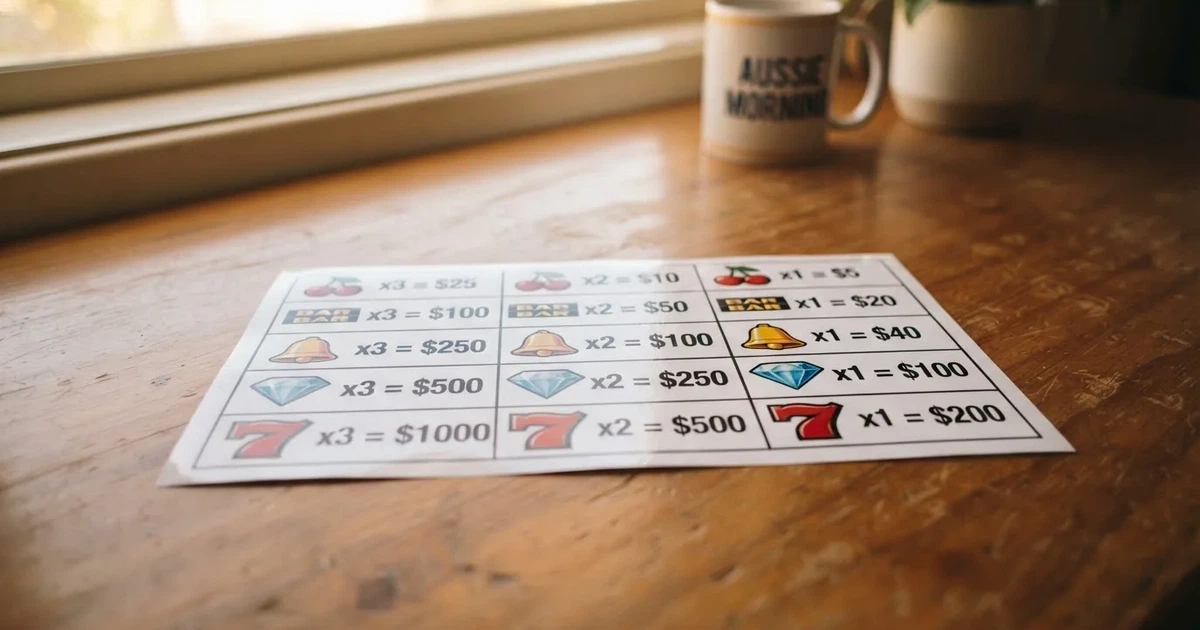
The paytable is the document that tells a player what each symbol combination pays and what combinations exist. For a classic three-reel game it usually covers a small set of outcomes — three of a kind of the top symbol, three of a kind of the second symbol, any three bars, any two of the top symbol with a single bar, and so on, plus the scatter or bonus symbol treatment if the game has one. Each entry carries a multiple of the line bet, expressed either in coins or as a multiplier.
A punter reading the paytable before play is doing the only due diligence the format makes possible. There is no bonus feature tree to memorise, no free-spins retrigger condition to track. The paytable either pays the multiple it prints or it does not, and the variance of the game follows from how heavily the top prizes are weighted relative to the smaller wins. A flat paytable with many small wins produces a steadier bankroll movement; a paytable that skews toward one or two large prizes produces longer dry stretches between hits.
The volatility of a three-reel game is described using the same vocabulary as any other slot — low, medium or high — and the description is set by the gap between the most common win and the top prize, not by the reel count alone. A three-reel game with a single jackpot line and a long tail of smaller wins is high-volatility by definition, however simple the cabinet appears.
Why No Three-Reel Online Slot Is Licensed Inside Australia
The legal position is not a grey area and has not been one for years. The Interactive Gambling Act 2001, strengthened by the Interactive Gambling Amendment Act 2017, makes it an offence to provide online casino games, online pokies or in-play betting to a person physically in Australia. No state or territory issues a licence for any of those products. The only forms of gambling an Australian-licensed operator can offer over the internet are wagering on races and sporting events placed before the event begins, lotteries and keno.
The implication for a punter looking for a three-reel slot is direct. Every offshore site offering three-reel online slots is, by the structure of Australian law, an unlicensed provider, regardless of any other licence the site displays — Curaçao, Anjouan, the Malta Gaming Authority. Those licences are real authorisations in their own jurisdictions; none of them authorises the provision of casino games to a person in Australia. Displaying one does not bring the site inside the Australian regulatory frame.
The Interactive Gambling Amendment (Gambling Reform) Bill 2026 passed Parliament on 19 August 2026, and its advertising and inducement measures commence on 1 January 2027. As of the snapshot above the bill is law with a start date, not yet in force. The pre-existing prohibition on providing casino games to Australians is not changed by it; the bill targets how licensed wagering operators advertise, not whether unlicensed casino sites can offer three-reel slots.
The minimum age for any form of gambling in Australia is eighteen. A site that does not verify age before accepting a deposit is operating outside the Australian rules in a second respect, and age verification on an offshore site is rarely robust enough to be relied on by a parent or by a player who has decided to self-exclude.
What the regulator actually does
The Australian Communications and Media Authority — the ACMA — is the body that investigates complaints about offshore gambling services and acts against providers it finds in breach of the Interactive Gambling Act. The ACMA’s enforcement toolkit has three working parts: a formal warning to the operator, a formal warning published on the ACMA website that names the brand and the parent company, and a request to Australian internet service providers to block the offending site at the network level. The player is not prosecuted under the IGA; the law targets the provider.
The cumulative effect is visible in the numbers. As reported in June 2026, the ACMA had asked Australian ISPs to block 1,751 illegal gambling and affiliate marketing websites since the first blocking request in November 2019, and more than 230 unlicensed gambling services had left the Australian market since enforcement was strengthened in 2017. The June 2026 blocking round alone covered twelve sites — 7Signs, ChromaBet, Donbet, Duospin, Freshbet, Slots Gem, Jacks Club, Lucky Start, Pointsbetz, Spinrise, Vinyl Casino and Wildsino — each named by the ACMA as offering prohibited services to Australians.
A site that appears in an ACMA blocking list stops being reachable through a major Australian ISP the day the block takes effect. The balance on the account at that moment is, in practice, inaccessible from Australia, and the operator is under no obligation to return it because the operator was never inside the Australian regulatory perimeter. A punter who treats an offshore three-reel site as a normal e-commerce subscription is treating it as something other than what it is.
What the regulator does not do, and why that matters
The ACMA does not chase the player. It does not fine an Australian who opened an account, deposited and lost. It does not refund losses. The block falls on the site, and the player is left holding whatever balance was sitting in the account at the moment access was cut. That asymmetry — the operator faces the regulator, the player faces the loss — is the practical shape of offshore online gambling in Australia, and it applies to a three-reel slot in exactly the same way as to a live-dealer blackjack table.
State-based monitoring does cover the in-club and pub machines. In NSW, the state operates a centralised monitoring system that records play on every connected machine. In Victoria, the VGCCC approves the rules of every table game at Crown Melbourne and the technical standards for gaming machines in clubs and hotels. None of that monitoring extends offshore.
The Northern Territory’s quiet role
The 52 online bookmakers licensed in Australia are, in practice, licensed by the Northern Territory Racing and Wagering Commission — including Sportsbet, Bet365 and Ladbrokes, which are licensed there for tax reasons rather than because the Northern Territory is where the companies operate. The Commission has no full-time staff and meets once a month in Darwin. The arrangement is a quirk of historical federalism: the IGA carves out online wagering on racing and sport from the prohibition, and the Northern Territory has become the licensing hub for that carves-out product.
Three-reel slots are not racing and they are not sport. They fall on the prohibited side of the carve, which is why no operator — NT-licensed or otherwise — offers a licensed three-reel slot online to Australians.
How Three-Reel Bonuses and Free-Spin Offers Read Once the Marketing Is Stripped
A three-reel bonus slot is a marketing category, not a regulatory one. The promotional language groups games with a free-spin feature, a pick-a-prize bonus round or a simple second-screen prize ladder under the “bonus” label, irrespective of reel count. A three-reel game with a single free-spin trigger behaves more like a five-reel video slot with a free-spin feature than it does like a pure three-reel classic. Reading the bonus terms is what determines whether the offer is worth the time it costs to clear.
Three-reel free slots with bonus offers follow the same structure as any other deposit-gated casino promotion: a headline figure that becomes a multiple of the deposit once the wagering requirement is applied, plus free-spin bundles that pay out in bonus money subject to the same requirement. A player who skips the terms page is accepting the headline at face value, and the headline is the least informative number in the offer.
For a punter considering an offshore three-reel bonus, the consequence of the offshore status is that none of the consumer protections a licensed site offers apply. A bonus dispute on an Australian-licensed wagering site can be escalated to the free dispute resolution scheme the operator is required to belong to. An offshore site has no such obligation. If the operator refuses to pay a withdrawal on the grounds that the bonus terms were breached, the punter has no Australian body to complain to. That risk is not theoretical — it is the most common shape a complaint takes, and the absence of a recourse is structural rather than incidental.
What a wagering requirement does to a bonus, in plain arithmetic
A wagering requirement is a multiple applied to either the bonus amount alone or to the deposit plus the bonus, and the punter must wager that total before withdrawing. A 35-times bonus requirement on a A$100 bonus is a A$3,500 turnover obligation before the bonus becomes withdrawable cash. If the bonus carries free spins as well, the cash value of the free-spin winnings is added to the bonus balance and the same multiple applies.
The time cost of clearing a bonus is set by the game, the stake and the requirement. A three-reel slot with a one-dollar line bet, spinning roughly once every five seconds, produces 720 spins an hour. Against a A$3,500 turnover that is just under five hours of continuous play; against a A$10,000 turnover that is just under fourteen hours. None of those numbers is a promise of outcome — every spin is independent — but the time obligation is real and the house edge is collected on every spin regardless of whether the bonus is cleared or lost.
The house edge on a three-reel slot is not printed in the way a baccarat or craps edge is, because slots do not declare a single universal figure. The slots side of the casino floor is where the house keeps the largest cut of the action by product design. As a comparison, the Pass line at craps carries a 1.41 per cent house edge, the Banker bet at baccarat 1.06 per cent, and blackjack under liberal Strip rules about 0.28 per cent. A typical three-reel online slot will sit noticeably above all three; the help screen or the paytable footer is where the return-to-player lives, and the difference between that figure and 100 per cent is the house edge.
Why a max-cashout clause matters more than the headline
A free-spin or no-deposit bonus will often carry a maximum cashout cap — a ceiling on what can be withdrawn from winnings earned on the bonus, regardless of how much is won. A A$50 no-deposit bonus with a four-times max cashout caps withdrawals at A$200 even if the bonus runs up a A$5,000 balance before losing it back. The cap is the figure that decides whether the bonus is worth the time, and the cap is almost always smaller than the bonus sounds.
The consequence for a player who treats the headline as the offer is straightforward: the headline is the ceiling under the most generous reading, and the actual ceiling is set by the smaller of the cashout cap, the bonus balance after wagering, and the wagering completion itself. Reading both numbers together is what the bonus is worth; reading only the headline is what the marketing wants.
Where the Actual Three-Reel Slot Experience Lives in Australia
The legal three-reel slot in Australia is the pub and club machine. NSW legalised slot machines in 1956, and the state-by-state counts above describe the venue footprint a punter can actually walk into. Every machine in a licensed venue operates under state technical standards, prints a return-to-player, and connects to a state monitoring body. None of those layers travels offshore.
A punter inside a NSW club who wants a three-reel slot will find one without difficulty — the format is heavily stocked in club machine floors, alongside five-reel video slots. The venue handles age verification on entry and operates its own responsible-gambling measures, including the option to self-exclude from the venue through the state scheme. The machine pays out at the venue cashier.
What the venue does not do is offer online play. A punter who leaves the club wanting to continue playing the same format has only offshore sites to choose from, and the regulator’s view of those sites is in the next section.
Why the search “best 3 reel slots Australia” lands where it does
A search for three-reel slots in Australia will return three broad categories of result, and the order is informative. First, venue marketing pages from clubs and pubs, which describe the in-house machine floor. Second, offshore casino review pages ranking the three-reel games the offshore site hosts. Third, regulator and consumer-protection pages describing the offshore market’s legal position.
The first category is the only one that points at a legal product. The second is the largest by volume, and it is the category this page addresses in the section that follows. The third is the smallest and the most informative.
What Offshore Three-Reel Operators Are, and What the ACMA Has Done About Each
Every operator profiled in this section has been the subject of an ACMA formal warning under the Interactive Gambling Act 2001. The list is not a ranking and not a recommendation. Each brand appears because the regulator itself named it as offering prohibited services to Australians, and the publication of that warning is on the ACMA’s website.
A formal warning is not a prosecution. It is a written notice to the operator that the ACMA considers the service to breach the Interactive Gambling Act, and the operator is given a chance to take corrective action. Continued non-compliance leads to a request to ISPs to block the site, and continued non-compliance after that to civil penalty proceedings. The ACMA does not publish a schedule of brands it has investigated without consequence; the formal warning is the public step.
The brands below are the ones the regulator has named in public. The pattern that emerges from the list is the same pattern the ACMA’s enforcement record describes: the same parent company appears under several brand names, the brands are rebranded and re-launched when a warning is published, and the product offered is, in every case, online casino games including three-reel slots.
The offshore operator landscape, in the order the regulator acted
| Brand | ACMA action and date | Operator named by the ACMA | Subject support |
|---|---|---|---|
| RocketPlay | Formal warning, March 2026 (and earlier May 2022) | Pulsup Ltd; previously Dama N.V. | — |
| Level Up Casino | Formal warning, May 2022 | Dama N.V. | listings-only (per Bgaming) |
| Woo Casino | Formal warning, March 2025 | Dama N.V. | — |
| Spirit Casino | Formal warning, May 2025 | Dama N.V. | — |
| National Casino | Formal warning, July 2025 | Consolutetish S.R.L. | listings-only (per Wikipedia listings) |
| Bizzo Casino | Formal warning, July 2025 (and earlier 2022) | Consolutetish S.R.L.; previously TechSolutions | — |
| Ignition Casino | Formal warning, July 2025 | Bamboo Media | — |
| Instant Casino | Formal warning, February 2025 | EOD Code SRL | — |
| Jackbit | Formal warning, April 2026 | Ryker B.V. | — |
| Casino Intense | Formal warning, April 2025 | Sterplay Holding Ltd | listings-only (per ABC and ACMA publications) |
| Sky Crown | Formal warning, September 2022 | Hollycorn N.V. | — |
The table above is built from the ACMA’s own published formal warnings. The right-hand column reflects what independent listings carry for each brand, not what the operator itself declares: where the operator’s own marketing was the only available source, the cell is left blank rather than repeat the marketing claim. The subject support column exists to make that distinction visible.
The same names recur because the same parent companies run several brands. Dama N.V. appears in five of the eleven entries across different periods — Level Up, Woo Casino, Spirit Casino, Bizzo Casino and RocketPlay at different dates — and the rebrands follow the warnings. When a brand is named in a warning, the parent typically launches a near-identical site under a new name within weeks, and the new name appears on the ACMA’s list several months later. The cycle is the practical shape of the offshore market as the regulator experiences it.
A punter comparing brands should read the table as a structural finding rather than a per-brand judgement. The brands differ in name, theme and the slot library they advertise; they do not differ in their legal position, which is identical in every case — prohibited interactive gambling service under the IGA, no Australian consumer protection, no BetStop coverage.
What Each Operator Above Actually Represents, and Why the Choice Is the Same in Every Case
The block below reviews each operator in the table above by name and gives the page’s own read of what the brand is and is not. The order is the regulator’s order, not a recommendation order. A formal warning from the ACMA is the only thing every brand on the list has in common, and that is also the only thing that distinguishes one from another for a reader comparing the eleven.
RocketPlay
RocketPlay is the most recent of Dama N.V.’s brands to be named in an ACMA formal warning, with the March 2026 action against Pulsup Ltd sitting on top of a May 2022 warning over Dama N.V. itself. The brand has been through two parent companies and is the same product under each. For a punter who arrived via an affiliate link and treats the marketing as the offer, the consequence is that the parent company history is the offer — the same back-end, the same terms template, the same withdrawal dispute pattern. The licensed-jurisdiction badge the site displays does not authorise service to Australians.
Level Up Casino
Level Up is the Dama N.V. brand the ACMA named in May 2022 alongside Bambet, Dazard, Rocketplay, Wild Tornado and Cobra Casinos. Independent listings carry Level Up as a Bgaming-hosted title, which is the closest the research comes to confirming the slot library — the operator’s own marketing pages were the only sources otherwise. The brand has not been re-warned since 2022, which can mean either that the site ceased Australian-facing operations or that the ACMA moved to other Dama N.V. brands first. The legal position has not changed either way.
Woo Casino
Woo Casino is a Dama N.V. brand the ACMA named in March 2025, after the May 2022 wave had already covered the parent. The fact that the same parent required a second round of warnings tells the reader what the cycle looks like from the regulator’s side: the brand continued or resumed Australian-facing operations, and the regulator had to name it again. Woo’s marketing positions it as a “playful” brand, which is a tone choice, not a regulatory one.
Spirit Casino
Spirit Casino is the most recent of the Dama N.V. brands to be named, with a May 2025 formal warning. Spirit is the brand the regulator went after after Woo, and the chronology suggests the parent continued re-launching under fresh names faster than the warnings could be issued. The brand’s own marketing was the only source for its bonus structure, which is why no bonus terms are reported on this page.
National Casino
National Casino is a Consolutetish S.R.L. brand named in the same July 2025 warning round as Bizzo. Independent listings carry National Casino in their catalogues, and that is the only third-party confirmation the research found. The brand is a typical mid-tier offshore casino in presentation, with a slot library that includes the classic three-reel format the format focuses on, and the same legal position every other brand on the list carries.
Bizzo Casino
Bizzo is a Consolutetish S.R.L. brand in 2025 and a TechSolutions brand in 2022 — the same site under two different parent companies across two formal warnings. A punter comparing operators for trustworthiness would have to factor the rebranding history in: the company behind the brand has cycled twice, and the regulator has followed it across both cycles. The slot library carries the usual three-reel classics.
Ignition Casino
Ignition is a Bamboo Media brand named in July 2025. The brand name echoes a US-facing site of the same name; the ACMA’s action is over the Australian-facing operation, which is the only one this page addresses. Bamboo Media has not appeared elsewhere in the warning register within the research window, so the brand is a single entry rather than a cycle entry.
Instant Casino
Instant Casino is an EOD Code SRL brand named in February 2025. The name markets the speed of withdrawal, which is the marketing promise offshore operators most often break in practice. A punter reading the marketing should weigh the ACMA’s view of the operator’s compliance against the headline, because the marketing promise and the regulator’s view are in tension on the same point.
Jackbit
Jackbit is a Ryker B.V. brand named in April 2026 alongside CasinOK. The Ryker entry is the most recent in the warning register, and the fact that the regulator named two brands from the same parent in the same warning indicates the parent had both sites operating. Jackbit markets itself as a crypto-friendly site, which puts it on the wrong side of the Australian payment rules for licensed wagering and aligns it with the offshore segment the ACMA polices.
Casino Intense
Casino Intense is a Sterplay Holding Ltd brand named in April 2025. Independent listings reference the brand on regulator-adjacent pages, which is the strongest third-party signal in the table for that brand. Sterplay has not been named elsewhere in the register, so Casino Intense is a single entry. The brand’s marketing emphasises the “intense” gameplay, which is again a tone choice rather than a regulatory fact.
Sky Crown
Sky Crown is a Hollycorn N.V. brand the ACMA named in a September 2022 formal warning over both Sky Crown and Blue Leo. Hollycorn runs a portfolio of similar offshore brands, and Sky Crown is the one the regulator named on the record carried here. The brand has not been re-warned within the research window, which is the same situation Level Up sits in: absence of a follow-up warning is not a positive signal, it is the absence of a follow-up warning.
The Blocking Rate: What the ACMA’s Enforcement Output Actually Adds Up To
The ACMA’s blocking record is the single public measurement of the offshore market the regulator polices. The arithmetic here is the page’s own, and the inputs are the ACMA’s own published figures.
The first blocking request was issued in November 2019. By June 2026, the ACMA had asked Australian ISPs to block 1,751 illegal gambling and affiliate marketing websites. That figure includes affiliate marketing pages as well as the operator sites themselves, because the affiliate pages are part of the marketing channel the regulator considers part of the offer. Stripping the affiliate pages down to operator sites only would require a per-site count the ACMA does not publish separately.
Expressed as a rate, the ACMA’s blocking output runs between roughly 260 and 290 site blockings a year, depending on the comparison window — closer to 265 a year if measured across the full November 2019 to June 2026 span, and closer to 290 a year if measured against the post-2017 strengthening enforcement window in which the bulk of the action occurred. That figure includes the affiliate pages and the operator sites together, and the per-operator count is lower because most of the blockings cover one operator under several affiliate domains.
For the offshore three-reel slot segment specifically, the blocking rate is a smaller number inside the larger one. The formal warning register names eleven distinct operator brands for the period covered by the research, and the blocking round reported in June 2026 named a further twelve. Twenty-three distinct operator-or-affiliate brand names within a roughly six-and-a-half-year window, against a market that re-launches under new names as quickly as the regulator names the old ones, gives a brand-replacement cycle the ACMA is running at full pace but not closing. The block removes one front door; the parent company opens another under a different name; the cycle continues.
The condition on this rate matters. It is a rate of sites named, not a rate of consumers affected or a rate of revenue removed from the offshore market. H2 Gambling Capital’s 2025 estimate is that Australians lose about A$3.9 billion a year to illegal gambling sites, and the share of gambling going through legal channels fell from 74 per cent in 2021 to 64 per cent. The legal-channel share is moving in the wrong direction for the regulator’s enforcement output, which is itself the practical finding. The block rate has held; the consumer share has not.
What the Payment Side Tells a Punter About an Offshore Three-Reel Site
The payment rules that bind Australian-licensed wagering sites do not bind offshore casino sites, which is the same observation as the legal-status point but useful in a different register. A licensed Australian wagering site cannot accept a credit card, a credit-related product or a digital currency as deposit; the ban took effect on 11 June 2024 and the penalty for breach runs up to A$247,500. The legal deposit routes for licensed wagering are debit card, bank transfer, PayID/Osko and BPAY.
A three-reel slot site that asks an Australian player for a credit-card deposit or a crypto deposit is, on the payment side alone, operating outside the Australian rules. That signal travels in both directions: it tells a punter the site is offshore, and it tells the punter the site is not bound by the rules the licensed side is. The licensed side has to refuse a credit card; the offshore side has to accept it, because the credit-card rails are how most of its deposit volume moves.
For a punter who values the protection the credit-card ban represents — and the ban was introduced for consumer-protection reasons, not for tax reasons — the payment method a site asks for is a leading indicator of where the site sits relative to Australian law. The offshore site is offshore on the deposit as well as on the game.
What happens to a balance when a block lands
A punter with an open balance on an offshore three-reel site at the moment the ACMA’s blocking request reaches the major Australian ISPs loses access to that balance through the Australian network. The site itself remains online outside Australia. The operator is under no obligation under Australian law to refund the balance, because the operator is not within Australian law. Some operators voluntarily refund balances to Australian players on request; others do not. The punter’s recourse is the punter’s own complaint to the operator, with no Australian body to escalate to.
That structural risk is the cost of the offshore three-reel slot in the most literal sense. The bonus is paid out in site balance, and the site balance is access-dependent. A punter weighing an offshore site against the legal in-club alternative is weighing an accessible product at full consumer protection against an inaccessible-on-block product with no protection. The marketing never mentions this comparison, and the regulator’s enforcement record describes exactly how the comparison resolves in practice.
Responsible Gambling: What Help Looks Like, and Where to Find It
If play on any gambling product — pub machine, online offshore slot, licensed wagering — starts to feel compulsive, stressful or financially harmful, free confidential help is available around the clock through Gambling Help Online, with the National Gambling Helpline on 1800 858 858. The line is free, the service runs 24/7, and chat support is available online. The service is independent of every operator profiled on this page and is funded by the Australian government.
BetStop, the National Self-Exclusion Register, has been live since August 2023. A punter who registers with BetStop is excluded from every Australian-licensed online and phone wagering service simultaneously, and from the physical environments of participating venues. The exclusion is binding on the licensed side. It is not binding on offshore three-reel sites, because offshore sites are not connected to BetStop — the register was not designed to reach operators outside Australian jurisdiction. A punter who self-excludes and continues to access offshore sites is excluding only from the licensed segment, which is the segment the register was built to cover.
The asymmetry matters in two directions. A punter who self-excludes believing the exclusion covers all online play in Australia will find offshore sites still accessible; the punter should treat BetStop as covering licensed services only and use the additional tools available through Gambling Help Online if the offshore segment is also part of the pattern. The reverse asymmetry — a punter who believes offshore play is covered by Australian consumer protection because it is reachable from Australia — will find, on the first dispute, that the protection does not exist.
The legal three-reel slot in Australia, the in-club pokie, sits inside state-based exclusion mechanisms that bind the venue and the machine. The offshore three-reel slot sits inside no exclusion mechanism. That gap is the responsible-gambling finding of this page: the offshore segment is the segment with the weakest responsible-gambling overlay, and it is also the segment that includes the slot’s product category.
What the Search “best 3 reel slots Australia 2026” Actually Returns
The search result a punter sees is shaped by the operators the page compares, and the operators are, by and large, the offshore sites the ACMA has named. The affiliate pages rank above the regulator pages because the affiliate pages match the search term more tightly and because affiliate marketing is the channel the IGA targets alongside the operator.
A punter who clicks through from an affiliate page lands on a deposit page. The deposit page is, in most cases, the offshore site directly. The age verification on entry is minimal compared with what an Australian-licensed site is required to perform. The bonus terms sit two clicks away on a page most punters will not read. The marketing is, on the legal side, what the ACMA’s warning describes: a prohibited interactive gambling service.
The conflation the punter is at risk of is between the venue product — the in-club three-reel pokie, legal, monitored, age-verified — and the offshore online product, which carries the same name, the same look and a fundamentally different legal position. The two are not the same game in any operational sense, and the difference appears only when the punter tries to act on the consumer protections the marketing implies.
The same point holds at the supplier level. The slot provider is one side of the relationship and the operator is the other; the slot itself is a software product, and the same product can be hosted on a licensed site in another jurisdiction and on an unlicensed site serving Australians. The status follows the operator, not the game. A three-reel slot developed by a major provider does not become legal in Australia because the provider has a regulatory licence elsewhere.
How to Read This Page if You Came Here to Compare Operators
The comparison the page draws is not a recommendation. No operator on the list is recommended to a reader as a place to play, and no operator is reviewed as a positive choice. Each block above describes what the ACMA has done, who the parent company is, and what the consequence of those facts is for a reader’s decision. A punter reading the page for a positive endorsement will not find one, because the legal position makes a positive endorsement inappropriate for every brand in the set.
What the page does offer is the structural finding. Eleven brands, all on the ACMA’s warning list, all offering the same legal product (prohibited interactive gambling service), all sharing the same consumer-protection status (none under Australian law). The differences between the brands are in tone and slot library, not in legal position. The choice between them is not a meaningful choice for an Australian reader, because the action the ACMA has taken is the same in every case.
The legal alternative is in-club and pub play, with state-licensed machines, state-run responsible-gambling overlays and the venue’s own age verification on entry. A punter who wants the format should weigh the legal alternative against the offshore segment in the same terms the regulator weighs them — accessibility, consumer protection, recourse in a dispute.
The remaining sections answer the questions that come up most often when a punter arrives at this comparison.
Frequently Asked Questions
What makes a three-reel slot different from a standard five-reel video slot?
A three-reel slot uses three spinning reels with a small symbol set, usually a single payline across the centre, and a paytable that fits on one screen. A five-reel video slot uses five reels, fifty or more symbols per reel, and multiple paylines with cascading symbols, wilds, free-spin triggers and bonus rounds layered on top. The three-reel format is easier to read and tends toward steadier, smaller wins; the five-reel format offers larger top prizes and a wider feature set.
Can three-reel slot machines be found in licensed Australian pubs and clubs?
Yes. Pokies-style slot machines in licensed venues numbered 87,298 in NSW alone as of June 2023, and the format is heavily stocked across clubs and hotels in every state and territory that allows them. State-licensed pub and club machines are the legal three-reel slot in Australia; no online three-reel slot is licensed inside the country.
Do three-reel slots typically pay out differently than newer five-reel formats?
The payout structure differs by design. A classic three-reel slot with ten symbols per reel produces roughly one thousand possible outcomes and tends toward frequent small wins. A modern five-reel video slot with fifty-plus symbols per reel can produce combinations with odds as high as three hundred million to one against the top prize, with rarer but larger wins. The return-to-player is set per game and is printed on the help screen or the cabinet, not implied by the reel count.
Is a three-reel slot online the same game as a three-reel machine on a casino floor?
The game format is the same — three reels, a small symbol set, a simple paytable — but the legal and consumer-protection layers are not. A pub machine sits inside a state-licensed venue with state monitoring, age verification on entry and a state complaints path. An offshore online three-reel slot sits outside every one of those layers, and the only consumer protection a player has is the operator’s own terms page.
Are three-reel slots for real money available legally from an Australian-based site?
No. The Interactive Gambling Act 2001, as amended in 2017, prohibits the provision of online casino games and online pokies to anyone in Australia, and no state or territory issues a licence for them. Every online three-reel slot offered to an Australian player is offered by an offshore operator, and the ACMA has issued formal warnings over the brands that operate in this segment. The legal real-money three-reel slot in Australia is the pub or club machine.
Do reel count and paytable structure affect how a slot’s volatility is described?
Yes. Volatility is set by the gap between the most common win and the top prize, and the gap is set by the paytable structure and the symbol distribution. A three-reel game with a flat paytable and many small wins has low volatility; a three-reel game that skews toward a single large jackpot has high volatility. Reel count is one input into the volatility description, not the only one. A five-reel low-volatility game can be steadier than a three-reel high-volatility game.
Created by the ”Casino Sign Up Hub” editorial team.