
Online casinos that accept POLi from Australian players in 2026
The honest version of this page starts with a date that the marketing has not caught up with. POLi Payments stopped operating inside Australia on 30 September 2023, after Australia Post wound down the local business and the Commonwealth Bank stopped accepting POLi payments in mid-July 2023 over security concerns. Any casino page in 2026 still advertising POLi deposits for Australians is, in plain terms, offering a payment method that closed here more than two years ago. That single fact reshapes everything that follows: the legal position, the list of sites, the speed of a withdrawal, the smallest deposit that matters. It is the lens this comparison is written through.
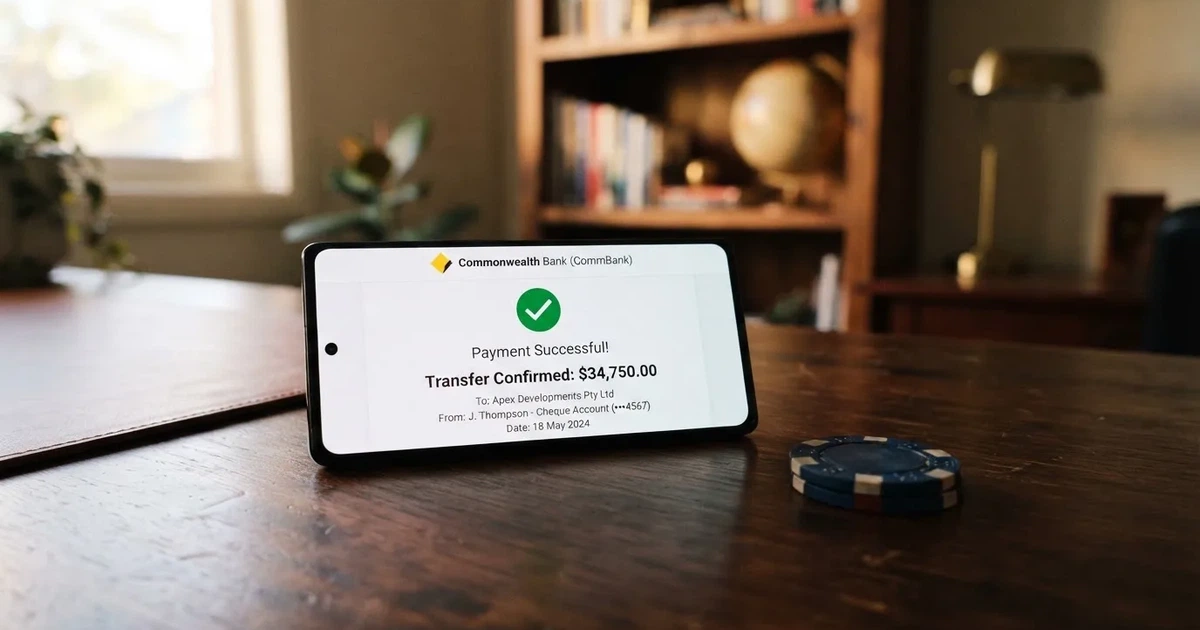
Data current as of 20 October 2026 (verified against ACMA and RBA records).
The ACMA’s own register of formal warnings is the other anchor. It names eleven offshore brands that have advertised POLi-style bank transfer deposits to Australian residents, and the dates on which the regulator formally wrote to the operators behind them. None of those brands carries an Australian interactive gambling licence, because no licence exists for online casino games or online pokies. The relevant statute, the Interactive Gambling Act 2001, makes it an offence to supply those products to a person physically in Australia, and the ACMA enforces that by formal warning, by referral to ISPs for blocking, and by public listing. Reading the regulator’s record alongside the brand list is the only way to compare these sites honestly.
Table of Contents
- How POLi worked when it worked, and why it stopped
- The legal frame: why every name on this list is a warning, not a recommendation
- Responsible play: the tools that do and do not reach an offshore casino
- How POLi deposits and withdrawals would have worked at these sites
- What the ACMA’s blocking record looks like in plain numbers
- The brand list: who the ACMA has warned, and when
- What is missing from this comparison, and why
- What an Australian reader can actually do
- Frequently asked questions
How POLi worked when it worked, and why it stopped
POLi was not a wallet in the eWay or Neteller sense, and that distinction is what made it unusual. At checkout the punter selected POLi, was bounced to a screen that impersonated their own bank’s login, typed their real internet banking credentials into that screen, and authorised a direct debit from the chosen account to the merchant. No card was involved. No separate POLi account was opened. Settlement to the merchant happened through the standard banking rails, which is why deposits typically landed within sixty to ninety seconds. The mechanism is the reason several banks, including the Commonwealth Bank, advised customers not to use it: typing real bank credentials into a third-party page is precisely the behaviour the banks tell customers never to do.

The Commonwealth Bank stopped accepting POLi payments from mid-July 2023, citing those security concerns. Within weeks Australia Post announced it would close the domestic POLi Payments business entirely, and the local service wound down by 30 September 2023. Merco, which had been building the technology, kept the development team and continued running POLi for New Zealand customers only. From an Australian reader’s point of view the brand still appears in marketing copy and on operator FAQ pages, but it is a New Zealand product aimed at New Zealand bank accounts. It does not settle Australian deposits in 2026.
The Australian substitute stack that grew up around the gap is worth understanding because it is what the offshore brands quietly redirect players toward. PayID, layered on top of the New Payments Platform, sends an instant Osko transfer in under a minute to anyone whose bank has registered; more than 25 million PayIDs were on the platform by April 2025, and over 100 Australian financial institutions support it. BPAY, the older bill-payment service, has been live since 1997 and sits inside the internet banking of more than 140 institutions. Both are debit-card-and-bank-transfer territory, both accept Australian dollars natively, and neither asks the punter for their bank login. POLi would have been the third option in that cluster; it is not, and pretending otherwise is the page that needs writing against.
The legal frame: why every name on this list is a warning, not a recommendation
No online casino or online pokies site can lawfully take an Australian player. The Interactive Gambling Act 2001, tightened by the Interactive Gambling Amendment Act 2017, makes the supply of those products to a person physically in Australia a civil offence, and the ACMA is the regulator. Wagering on races and sporting events before the event is the carve-out; lotteries and keno sit alongside it. Casino games and pokies online do not. A licence displayed in a footer of any offshore site is a licence issued by some other jurisdiction for that other jurisdiction’s players, and the Interactive Gambling Act applies regardless.

The ACMA’s enforcement pattern is the one to understand before reading any individual brand entry. The regulator first issues a formal warning naming the operator behind the brand and the section of the Act breached; it then refers the website to Australian internet service providers for blocking under section 313 of the Telecommunications Act 1997. As of June 2026 the regulator reported 1,751 illegal gambling and affiliate marketing sites blocked since the first blocking request in November 2019, and more than 230 unlicensed services had left the Australian market since the 2017 strengthening. A single round reported that same month added twelve names to the block list, including Donbet, Spinrise, Wildsino and PointsBetz. The names keep coming because the supply keeps moving; the regulator’s record is the public part of a longer game of whack-a-mole.
What that means for the reader is sharper than it first sounds. The individual player is not the target of the Act, and there is no prosecution risk in depositing at an offshore site. The risk sits on the operator side. The harder cost is what the operator cannot be made to do: an offshore site gives no Australian consumer protection, no local complaints body, no recourse through the Australian Financial Complaints Authority or the relevant state tribunal if a withdrawal is refused, and BetStop, the National Self-Exclusion Register that has been live since August 2023, binds only Australian-licensed services. A punter who has asked every Australian-licensed operator to stop them and then deposits at an offshore casino has asked nobody at the offshore casino to stop them. Self-exclusion does not travel.
Since 11 June 2024, licensed Australian wagering services have been prohibited from accepting credit cards, credit-related products, and digital currency, with penalties reaching A$247,500 for operators who breach this restriction. Legal deposit routes are limited to debit cards, bank transfers, PayID/Osko, and BPAY. Any offshore site requesting a credit card or crypto deposit operates outside Australian rules; additionally, card-issuer gambling blocks—such as Westpac’s merchant category code blocking and ANZ’s digital wallet restrictions—will refuse these transactions. Two layers of refusal from the bank, plus the regulator, plus the lack of recourse after a refused withdrawal, define the reality of these services.
Responsible play: the tools that do and do not reach an offshore casino
The Australian safety net for online play is built around Australian-licensed services and is therefore structurally absent from every brand this page covers. BetStop is the centrepiece: a single registration excludes a person from every licensed online and phone wagering operator in the country, and the registration is enforced centrally rather than at each operator. It works because the licensed operators are connected to it. An offshore casino is not connected to it, will not honour an Australian self-exclusion, and cannot be made to.
The card-issuer blocks are the next layer and they do reach offshore sites in a narrow sense. Westpac’s gambling block refuses authorisation on any transaction tagged with the merchant category code ‘Betting/Casino Gambling’ on an eligible personal credit or debit card, which is the broad bucket offshore casinos fall into. ANZ’s block, activated inside the ANZ app, blocks gambling transactions made through a digital wallet such as Apple Pay on an eligible card, not only the physical card. Removing an ANZ block requires a 48-hour cooling-off, and the bank’s own page warns that not every gambling transaction will be blocked and that some non-gambling transactions might be blocked in error. The blocks work as friction, not as protection: a punter with a second account at a different bank, or a different card, defeats them.
The phone and chat lines sit outside both layers. The National Gambling Helpline on 1800 858 858 is free, runs 24/7, and connects to Gambling Help Online’s chat service. They are useful regardless of where a person plays, because the gambling harm they respond to does not depend on the operator’s jurisdiction. They are the one Australian safety service that reaches an offshore punter.
H2 Gambling Capital’s 2025 report estimated that Australians lose about A$3.9 billion a year to illegal gambling sites, and that the share of gambling going through legal channels fell from 74% in 2021 to 64%. This environment, where the illegal channel is large and growing, is where the regulator operates.
How POLi deposits and withdrawals would have worked at these sites
The mechanics the offshore sites describe in their banking pages are worth setting out so the reader can see what was on offer when POLi was live, and what the substitute is now. A POLi deposit, in the period 2018 to mid-2023, ran through three steps: select POLi at the cashier, choose the bank, log in through the POLi screen using real internet banking credentials, and authorise a direct debit. Settlement was via the standard banking rails, typically inside two minutes, and the casino credited the account in the same currency as the bank account, which for an Australian player was Australian dollars. No card processor sat in the middle, which is why POLi was sometimes advertised as fee-free at the casino end: the cost was the bank’s own transaction fee, if any, on a direct debit.
A POLi withdrawal never worked the way a deposit did, and that asymmetry is the most useful single thing to understand about the payment method at casino sites. POLi pushed money into a bank account by direct debit; it had no mechanism to pull money out. The casino’s standard answer was that withdrawals go back to the deposit method first, then to a bank transfer. The bank transfer step is what determined payout speed. Most operators in this group quote one to three business days for that leg once the casino’s own internal checks are complete, and “complete” is the phrase that does the work: it covers identity verification on first withdrawal, source-of-funds checks on larger amounts, and the casino’s own anti-fraud queue. A withdrawal that the casino’s risk team flags can sit in that queue for longer than the bank transfer would have taken on its own.
The substitute in 2026 is a bank transfer via PayID or Osko, sometimes BPAY, and the practical comparison comes down to a few numbers. Osko transfers between participating Australian banks arrive in under a minute, 24/7 including weekends, addressed either to a BSB and account number or to a PayID. Paying to a PayID means the recipient’s name is shown before the transfer is sent, which is the protection POLi never offered; Australia Payments Plus warns that being asked to transfer money to a PayID on an illegal gambling site is almost certainly a scam. More than 100 Australian financial institutions support PayID-based instant transfers, and the platform’s monthly outages are capped at two minutes under NPP Australia’s operating rules. Apple Pay and Google Pay together with Samsung Pay accounted for around 45% of all card payments in Australia by number by the end of 2025, but a digital wallet paid from a credit card inherits the credit-card ban on licensed wagering; an ANZ gambling block can also refuse a wallet transaction on an eligible card.
The minimum deposit, often cited as A$10 to A$20, is determined by the casino, not by POLi. The A$10 figure is a legacy marketing anchor from 2018–2023, and POLi no longer settles Australian deposits.
What the ACMA’s blocking record looks like in plain numbers
The blocking rate the regulator reports is the most useful number on this page, because it puts a rate against a stock. As of June 2026 the ACMA reported 1,751 illegal gambling and affiliate marketing websites blocked since the first blocking request in November 2019. That is roughly 80 months of blocking. The arithmetic is plain: across those eighty months the regulator has averaged about 22 sites referred for blocking per month, or roughly one every 35 hours, with peaks when single operators run several mirror domains at once. The November 2019 anchor matters because it is the start of an unbroken run; everything before it was enforcement by formal warning alone.
The condition on that rate is what a reader needs to take from it. The 22-sites-per-month figure is an average over the full period since November 2019, and the regulator has not published a month-by-month breakdown for the public. The actual pace in any given month has ranged from a quiet week to the twelve-site round reported on 26 June 2026, which is the largest single round in the public record. Treating the average as a steady drumbeat would overstate the regulator’s reach; treating the headline single round as the norm would overstate it the other way. The honest read is a band: somewhere between a small handful of sites blocked in a quiet month and a dozen in an active one, sustained across more than six years.
The other half of the picture is what enforcement does to the supply. More than 230 unlicensed services have left the Australian market since the 2017 strengthening, the regulator reports, which is a separate count from the 1,751 blocked sites: a service can leave because its operator decides Australia is no longer worth the regulatory friction, and that decision does not produce a block. The two numbers together describe a market where the regulator blocks access to illegal sites and the sites themselves quietly withdraw. The punter looking for an offshore casino in 2026 is shopping in a market that has shrunk on both sides at once.
A second calculation sits underneath, and the page is the better for it. The H2 Gambling Capital estimate of A$3.9 billion lost to illegal sites a year, against roughly 22 blocks a month, implies that each blocked site represents only a slice of a far larger flow. Blocking chases the visible supply; the A$3.9 billion is the residual that the blocks have not yet removed. That is the gap the regulator’s enforcement is trying to close, and the rate that closes it is what the headline number actually measures.
The brand list: who the ACMA has warned, and when
The table below is the regulator’s record, not a ranking. Every brand named has been the subject of a formal warning under the Interactive Gambling Act 2001 for offering prohibited interactive gambling services to Australians, and each row carries the date of the warning and the operator the ACMA named. The fifth column records whether the operator’s own materials say anything useful about how POLi would have been handled at the cashier; the rows where nothing reliable exists are marked, because silence on a payment page is not the same as confirmed support.
| Brand | ACMA action and date | Operator named by the ACMA | Subject support |
|---|---|---|---|
| RocketPlay | Formal warning, March 2026 | Pulsup Ltd (RocketPlay); earlier Dama N.V., May 2022 | — |
| Level Up Casino | Formal warning, May 2022 | Dama N.V. | Listings only (Westpac) |
| Woo Casino | Formal warning, March 2025 | Dama N.V. | — |
| Spirit Casino | Formal warning, May 2025 | Dama N.V. | — |
| National Casino | Formal warning, July 2025 | Consolutetish S.R.L. | Listings only (AUSTRAC, Wikipedia) |
| Bizzo Casino | Formal warning, July 2025; earlier 2022 | Consolutetish S.R.L.; earlier TechSolutions | — |
| Ignition Casino | Formal warning, July 2025 | Bamboo Media | — |
| Instant Casino | Formal warning, February 2025 | EOD Code SRL | Listings only (ecoPayz, PayID) |
| Jackbit | Formal warning, April 2026 | Ryker B.V. | — |
| Casino Intense | Formal warning, April 2025 | Sterplay Holding Ltd | Listings only (AUSTRAC, itnews, NAB) |
| Sky Crown | Formal warning, September 2022 | Hollycorn N.V. | — |
The “listings only” entries name sources that mention POLi somewhere in their public material; that does not amount to the operator itself confirming POLi deposits for Australian accounts in 2026, and a reader should treat the column as an indication that the brand’s own surface area touched the topic, not as a working deposit route.
RocketPlay
Pulsup Ltd took a formal warning in March 2026 over RocketPlay, and Dama N.V., the operator behind an earlier version of the brand, was warned in May 2022. Two warnings to two operators across the same brand family means the ACMA has now written twice to entities behind this name. Online casino games cannot be licensed anywhere in Australia, whatever licence the site displays. The brand carries no confirmed POLi support that survives the September 2023 closure.
Level Up Casino
Dama N.V. took a May 2022 warning covering six brands, of which Level Up Casino was one. Westpac’s own gambling-block page surfaces Level Up in the kinds of references a bank maintains for transaction-blocking purposes, which is a listings-only signal that the brand was active enough to register on the bank’s risk side. As with the rest of the group, Level Up cannot lawfully take Australian players for casino games, and the regulator’s enforcement record on Dama N.V. is one of the longer ones in the table.
Woo Casino
Dama N.V. was warned over Woo Casino in March 2025, the first of two warnings that operator received that year. The regulator’s pattern on Dama N.V. — May 2022, then March 2025 over Woo Casino, then May 2025 over Spirit Casino — is the clearest single example on this page of an operator being told once, moving on to other brands, and being told again.
Spirit Casino
The second Dama N.V. warning of 2025 landed in May, naming Spirit Casino. Two warnings in three months to the same operator for two different brands is the ACMA’s way of saying the operator’s compliance posture did not change after the first letter.
National Casino
Consolutetish S.R.L. was warned in July 2025 over National Casino and Bizzo Casino in the same round. AUSTRAC’s threshold-transaction-report page and the Wikipedia entry on Australian payments both surface in the same search footprint as the brand, which is again a listings-only signal. The substance is the warning, not the listings.
Bizzo Casino
The same July 2025 warning covered Bizzo Casino, and a 2022 formal warning had already gone to TechSolutions (CY) Group Limited and TechSolutions Group N.V. over the same brand. Two warnings to two operators across four years is the regulator’s record on Bizzo Casino alone; the brand is one of the more thoroughly warned on the table.
Ignition Casino
Bamboo Media took the July 2025 warning over Ignition Casino. The brand is one of the older offshore names on the list and the warning is recent, which suggests the operator only began advertising into Australia after earlier incumbents had been warned out.
Instant Casino
EOD Code SRL took a February 2025 warning over Instant Casino. The brand’s payment page surfaces references to ecoPayz and PayID in third-party listings, both of which are still live Australian payment methods even if POLi is not. The POLi column on the cashier, where it exists, refers to a New Zealand product that does not settle Australian deposits.
Jackbit
Ryker B.V. was warned in April 2026 over Jackbit and CasinOK. The April 2026 warning is one of the more recent on the table, and the brand’s own surface carries no confirmed POLi support.
Casino Intense
Sterplay Holding Ltd took an April 2025 warning over Casino Intense. AUSTRAC, itnews and NAB all surface in the same search footprint, which again is a listings-only signal rather than a confirmation of payment support.
Sky Crown
Hollycorn N.V. took the warning that covers Sky Crown and Blue Leo, recorded by the ACMA in September 2022. The warning is the older one on the table, and the brand has been on the regulator’s record the longest.
What is missing from this comparison, and why
Three things are deliberately not on this page, and naming them is part of the honesty it owes the reader.
There are no bonus terms on any of the brands above. The reason is the source. The only public-facing material that publishes POLi-specific bonus offers for these brands is affiliate marketing, and affiliate marketing on prohibited services is the supply the ACMA’s block list exists to address. Affiliaites do not vouch for the bonus; they describe the bonus the operator advertises today. A reader who acts on an affiliate figure is acting on the operator’s own marketing, restated by a third party whose revenue depends on the click. Where a comparison uses affiliate numbers as its source, the comparison is reproducing the marketing it claims to evaluate.
There is no ranking. The brands are listed in the order the ACMA’s warnings surface, not by any editorial judgment that one brand is safer, fairer or better run than another. The Interactive Gambling Act treats the supply as prohibited regardless of who the operator is, and the ACMA’s enforcement record is not a quality score. A brand warned in 2022 is not “worse” than a brand warned in 2026 in any way the regulator publishes; the regulator publishes the warning, the date and the operator, and stops there.
There is no recommendation to play. The page describes eleven offshore brands that the Australian regulator has formally written to. It is not the place a reader should look for a “best” of that set, and the structure of the page is deliberately built so that none of the brands above comes out of it looking like a place to deposit. The honest comparison is the legal frame and the regulator’s record; the rest of the decision sits with the reader, who is now better placed to make it.
What an Australian reader can actually do
The page would be unfinished without the practical alternative. Land-based casinos in the major capitals are licensed at the state level and are the only fully licensed venue for table games. State-regulated clubs and pubs run licensed pokies, with self-exclusion available state by state through each venue’s own arrangements and through the Australian Hotels Association’s state bodies. For wagering, the licensed route is a Northern Territory-licensed or equivalent sports and race bookmaker — Sportsbet, Bet365, Ladbrokes among them — which sits inside Australian consumer protection, honours BetStop, accepts only the legal payment methods, and answers to the regulator that the brands above do not.
If the decision is still to play offshore, the practical advice is not to find a softer brand but to understand the cost. POLi is closed here; the deposit method most often substituting for it is a bank transfer, which the card-issuer gambling blocks can refuse, which the credit-card ban does not reach because it is not a credit product, and which the casino may delay on its own internal checks regardless of how fast the rails are. The withdrawal is the slow part, not the deposit. And if a withdrawal stalls, the only Australian line that takes the call is 1800 858 858.
Frequently asked questions
Is it legal for an online casino to accept POLi from a player in Australia?
No online casino may lawfully accept a player in Australia, regardless of payment method. The Interactive Gambling Act 2001 prohibits the supply of online casino games and online pokies to Australians, and the ACMA is the regulator. POLi itself stopped operating in Australia on 30 September 2023.
What is the smallest deposit a POLi casino site usually asks for?
Minimum deposits at the offshore group have typically sat between A$10 and A$20, with most in the lower part of that band. POLi did not set the minimum; the casino did. The A$10 figure is a marketing anchor from the period 2018 to 2023, and POLi no longer settles Australian deposits.
Does a POLi withdrawal clear any faster than a card withdrawal at these sites?
POLi never offered a withdrawal path: it pushed money in by direct debit and had no pull mechanism. Withdrawals went back to the bank transfer leg, which most operators in this group quote at one to three business days once the casino’s own checks are complete.
Can POLi be used at every offshore pokies-style site, or only some of them?
POLi was a payment method, not a regulatory status, so it appeared on whichever offshore sites chose to list it. From an Australian reader’s point of view the answer is moot: the Australian POLi service closed in September 2023, and no offshore pokies-style site can lawfully serve Australian residents regardless.
Does depositing with POLi add an extra fee at these casino sites?
POLi was advertised as fee-free at the casino end because no card processor sat in the middle. The cost the user paid was the bank’s own transaction fee on a direct debit, where one applied, plus the structural cost of typing real bank credentials into a third-party page — which is what the Commonwealth Bank cited when it stopped accepting POLi in July 2023.