
Tasmania’s Two Casinos and the Online Sites That Don’t Belong in the Same Conversation
The best casino in Tasmania isn’t a ranking question at all. Tasmania has two licensed casino venues, and only two: Wrest Point in Hobart, the country’s first legal casino when it opened on 10 February 1973, and the Country Club Casino and Resort in Launceston, opened by Federal Group in 1982. The rest of the Australian market that comes up when someone searches this term — offshore casino sites, online pokies rooms, the brand names that fill comparison lists — sits in a different legal category entirely, and that category has been actively dismantled by the Australian Communications and Media Authority (ACMA) for years. This page works through both halves: what’s on the floor at the two Tasmanian venues, and what the ACMA’s blocking record says about the offshore alternative a Tasmanian player might otherwise be pointed toward.

Current as of 21 October 2026, with ACMA enforcement actions cross-checked against the register published by the regulator itself.
Table of Contents
- The Two Licensed Venues in Tasmania
- The Specific Games on Offer
- The Side-by-Side: Wrest Point and the Country Club
- The ACMA Record: Why an Online Casino Isn’t Part of This Conversation
- What a Punter Pays for an Offshore Casino Once It Gets Blocked
- Responsible Gambling Around the Tasmanian Casinos
- The Choice a Tasmanian Reader Is Actually Making
- Frequently Asked Questions
The Two Licensed Venues in Tasmania
Wrest Point, Hobart — Australia’s first legal casino
Wrest Point sits on the Derwent River waterfront in Sandy Bay, about three kilometres south of Hobart’s central business district, and has held continuous Tasmanian casino licence status since the doors opened in 1973. The licence sits inside a family-owned structure: Federal Group, which originated as the Federal Coffee Palace Company Limited in Melbourne in 1885, was acquired in majority by the Farrell family by 1989 and privatised in 1990, and it remains Tasmanian family-owned. Federal Group’s gambling-licence holding company, Mulawa Holdings, reported profit of $24.4 million on revenue of $543 million in the year to 30 June 2018, against gaming taxes and licence fees to the Tasmanian government of about $75 million in the same period — a useful indicator of the venue’s weight in the state’s gambling revenue, and a reminder that the operator here isn’t a brand competing for affiliate clicks but the holder of a state-issued monopoly right.
The venue itself is a hotel-and-casino complex, with bars, restaurants and accommodation on site, and a rooftop bar that has run as one of Hobart’s better-known function spaces. Wrest Point’s gaming floor covers the standard Australian casino product: table games including baccarat, blackjack and roulette, electronic gaming machines, and poker. The rooftop is the drawcard for non-gaming visitors and appears in searches alongside the venue itself — the term “Tasmania casino rooftop bar” maps onto this venue specifically, not onto a generic Tasmanian casino.
Country Club Casino and Resort, Launceston
The Country Club sits in the rural landscape outside Launceston, in northern Tasmania, and runs as a resort property rather than a city casino. The architecture was modelled on the stately homes of the American South in a Georgian style deliberately chosen for the rural setting, which is part of what distinguishes it from Wrest Point’s waterfront feel. Federal Group operates both venues, so the licensing, regulatory and consumer-protection frame is the same; the product on the floor is the same Australian casino product, and the surrounding accommodation, restaurants and bars are the principal reason a visitor chooses one over the other rather than the gambling itself.

The two venues split Tasmania roughly by population: Wrest Point serves the south, the Country Club the north. Neither is closer to the other than a couple of hours by road, which matters when a Tasmanian punter is choosing which to visit for a particular evening.
What both venues offer on the floor
The gaming product across the two venues covers the conventional Australian casino spread: blackjack, baccarat, craps and roulette on the table side, electronic gaming machines and poker on the machine side, and a bar and restaurant trade that runs alongside. There’s no meaningful difference between the two venues at this level of generality — the same licences, the same operator group, the same regulator (the Tasmanian Liquor and Gaming Commission). What differs is the setting: Wrest Point’s waterfront and rooftop, the Country Club’s rural resort grounds.
Online pokies don’t appear on either floor in the way the term usually reads. The “pokies” in Australian English are the electronic gaming machines — what’s on the floor at Wrest Point and the Country Club, available in person, not delivered to a phone or laptop. The phrase “tasmania casino online pokies” carries that distinction built in: there is no licensed online pokies product anywhere in Australia, which the ACMA’s enforcement record spells out in detail further down this page.
Age limit and identification at the door
Tasmania’s casino age limit is 18, the same floor that runs across all Australian casinos and licensed wagering. Entry to either venue requires photo identification, and staff check it at the door — Wrest Point and the Country Club both run standard Australian casino entry practice, with the ID also required for any cash transaction above the venue’s reporting threshold and for the venue’s own self-exclusion process. The age floor matters here for the same reason it matters across Australian gambling law: it’s not a marketing line, it’s a condition of the licence, and a venue admitting an underage patron risks its licence status.
The Specific Games on Offer
Table games: blackjack, baccarat, craps and roulette
Both Wrest Point and the Country Club run the conventional table-game quartet: blackjack, baccarat, craps and roulette. Australian casinos don’t run poker rooms on the same scale as the larger North American floors, and what they call “poker” in the gaming-machine sense is the electronic video-poker product rather than a dedicated poker room — relevant to anyone who has searched for “tasmania casino blackjack” or “tasmania casino baccarat” and expected a poker room with cash tables. The two venues’ table-game minimums and maximums vary with the time and the table, which is the standard pattern; what is fixed by licence is the regulatory ceiling on the games themselves, which is the Australian casino licence regime rather than something the operator sets unilaterally.
Electronic gaming machines and the Tasmanian cashless card
The bulk of the floor at Wrest Point and the Country Club is electronic gaming machines, and on this product the Tasmanian regulator has imposed a regime that doesn’t exist in the same form elsewhere. Under Tasmania’s cashless gaming card reform, mandatory carded play on hotel and club poker machines began in December 2025, with default loss limits of $100 per day, $500 per month and $5,000 per year, raisable only after a minimum 24-hour wait. The Tasmanian Liquor and Gaming Commission oversees the system.
A casino rollout date had not been set as of September 2024, which is the relevant nuance for a 2026 visitor: the same cashless regime is in force across the rest of the state’s machine estate, but on a casino visit the rules on the floor may still be the older cash regime, with the carded system scheduled to follow. That distinction is worth knowing in advance, because it changes the practical experience of a session at either venue — a punter budgeting to a $100 daily limit on the pokies is budgeting against a different system inside the casino than outside it, at least for now.
Why the online equivalent is the wrong comparison
A search for “tasmania casino pokies” or “tasmania casino slots” can surface offshore results that look like the same product. They aren’t. The Interactive Gambling Act 2001, strengthened by the Interactive Gambling Amendment Act 2017, makes it an offence to provide online casino games, online pokies or in-play betting to a person physically in Australia, and no Australian jurisdiction issues a licence for any of that. The licensed casino product in Tasmania is the in-venue product, played on the floor at Wrest Point or the Country Club, with the regulator’s age and identification checks, the venue’s own responsible-gambling staff, and the consumer-protection regime that an Australian licence carries. An offshore casino delivers the same gameplay to a screen, in the same currency, under none of those conditions — which is the rest of this page’s subject.
The Side-by-Side: Wrest Point and the Country Club
The table below lines up the two venues against the comparison points a visitor actually weighs. Tasmania’s residential convention is the practical one: Hobart or Launceston, waterfront or rural resort, what’s on the floor versus what’s around it. The two venues aren’t substitutes for each other in the strict sense — they sit at opposite ends of the state — and a reader weighing which to visit is choosing a setting and a trip as much as a casino.
| Venue | Setting | Operator | Licence status | Position for a visitor |
|---|---|---|---|---|
| Wrest Point | Hobart waterfront (Sandy Bay) | Federal Group | Tasmanian casino licence, continuous since 1973 | South-of-state visitors, those wanting a city and rooftop bar on site |
| Country Club Casino and Resort | Launceston, rural resort grounds | Federal Group | Tasmanian casino licence, since 1982 | North-of-state visitors, those wanting a resort stay and quieter setting |
The two venues share the same operator, the same regulator and the same floor product; they differ in location, atmosphere and the kind of trip they fit. For a Hobart resident or a southern visitor, Wrest Point is the closer and the more obviously urban. For a Launceston resident, a Cradle Mountain visitor or anyone routing through the north, the Country Club is the practical choice and the architecture is part of the experience. Neither is “better” in a way that survives the question of where the visitor is staying.
The ACMA Record: Why an Online Casino Isn’t Part of This Conversation
How the Interactive Gambling Act works
The Interactive Gambling Act 2001 (the IGA), strengthened by the Interactive Gambling Amendment Act 2017, is the federal prohibition that makes offering online casino games, online pokies or in-play betting to a person in Australia an offence. The target is the provider, not the player: no Australian is arrested for opening an offshore casino on a phone, but the site itself operates outside any Australian consumer-protection regime, with no Australian complaints body, no Australian regulator to escalate a refused withdrawal to, and no guarantee the site will still resolve a withdrawal request before the ACMA’s next blocking request takes the domain offline.
What is licensable in Australia is wagering on races and sport placed before the event, lotteries and keno — in practice licensed by the Northern Territory through the Northern Territory Racing and Wagering Commission (NTRWC), a commission with no full-time staff that meets once a month in Darwin and that regulates 52 of Australia’s online bookmakers (Sportsbet, Bet365 and Ladbrokes among them). The NTRWC is the de facto federal wagering regulator, licensed through the Territory for tax reasons, and is the reason an Australian can place a bet with a licensed online bookmaker but cannot open an online casino account.
A site that displays an “overseas licence” — Curaçao, Malta, Gibraltar, Costa Rica — is licensed in that jurisdiction for that operator’s relationship with its own regulator; that licence does not authorise the site to take Australian customers, and an Australian player using such a site has no route through the IGA or through any state regulator if a withdrawal is refused or a bonus term is invoked.
The ACMA’s enforcement record as a window onto the market
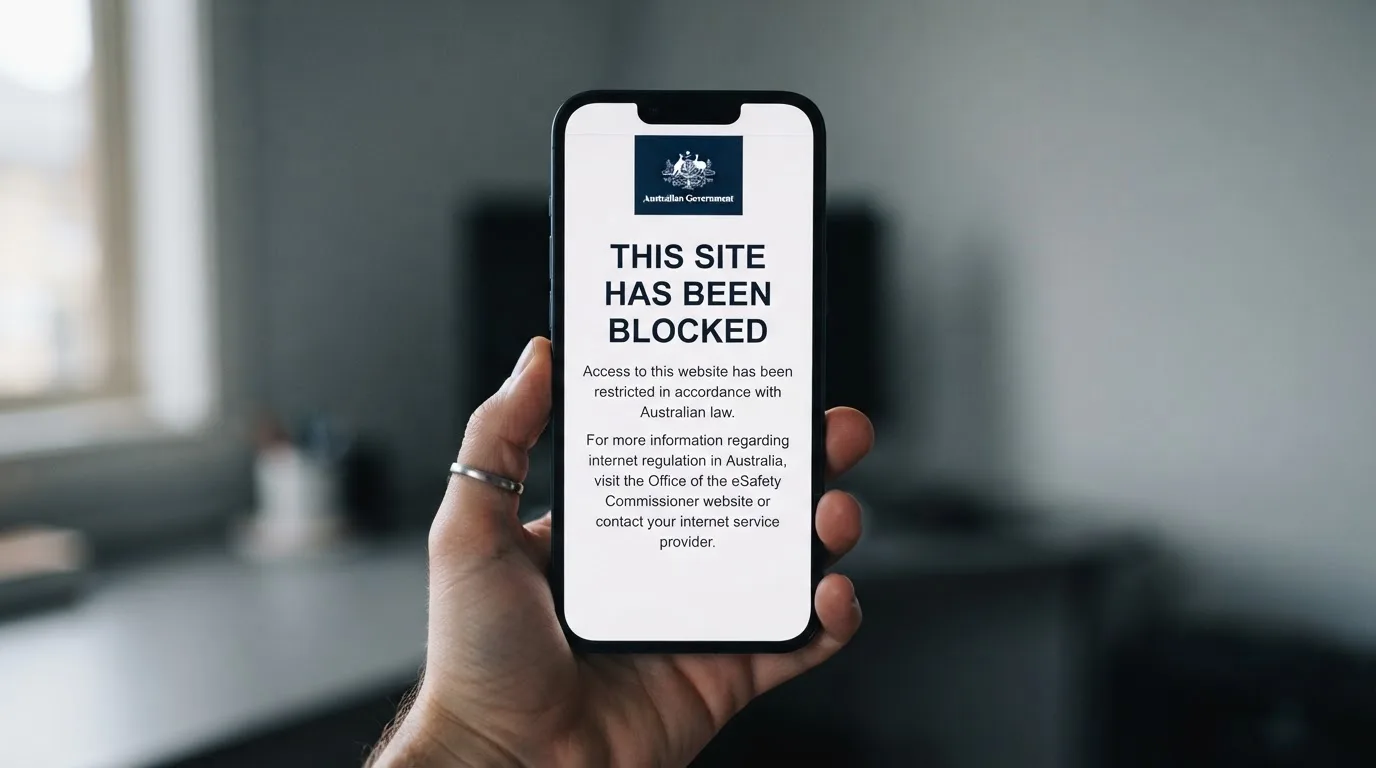
The ACMA doesn’t publish a “list of bad sites”, but it does publish the formal warnings it issues and the blocking requests it sends to Australian internet service providers, and that record functions as the most reliable Australian-language source on what’s targeting Australian customers. By the ACMA’s own figures as reported in June 2026, a total of 1,751 illegal gambling and affiliate marketing websites had been blocked since the first blocking request in November 2019, and more than 230 unlicensed gambling services had left the Australian market since enforcement was strengthened in 2017. The June 2026 round alone asked Australian ISPs to block 12 more sites: 7Signs, ChromaBet, Donbet, Duospin, Freshbet, Slots Gem, Jacks Club, Lucky Start, Pointsbetz, Spinrise, Vinyl Casino and Wildsino.
That running total is the most direct figure on how much of the offshore market has been pushed out of reach of Australian customers in the seven years since the IGA was strengthened. It is also a useful framing for the rest of this page’s prescribed calculation.
The eleven brands the ACMA has acted against
The brands below are not a ranking and not a recommendation. They are listed because the ACMA itself issued a formal warning over each for offering prohibited services to Australians. Each brand is named here because that is the most useful way to show what the offshore market targeting Australian players actually consists of: the same handful of operator companies, repeatedly warned, occasionally renamed, sometimes operating the same brand through a different corporate vehicle when one entity is named.
The brief on each brand carries the ACMA action, the operator named in the formal warning and the date published by the regulator. None of these brands is licensed to offer online casino games to Australians, and any licence the site itself displays is the operator’s relationship with its own regulator, not an authorisation to take Australian customers.
| Brand | ACMA action and date | Operator named by the ACMA | Subject support |
|---|---|---|---|
| RocketPlay | Formal warning, March 2026 (Pulsup Ltd); earlier Dama N.V., May 2022 | Pulsup Ltd / Dama N.V. | No data |
| Level Up Casino | Formal warning, May 2022 | Dama N.V. | Listings only (Wikipedia, VGCCC) |
| Woo Casino | Formal warning, March 2025 | Dama N.V. | Listings only (Wikipedia) |
| Spirit Casino | Formal warning, May 2025 | Dama N.V. | No data |
| National Casino | Formal warning, July 2025 | Consolutetish S.R.L. | Listings only (ABC News, infrastructure.gov.au) |
| Bizzo Casino | Formal warning, July 2025; earlier TechSolutions, 2022 | Consolutetish S.R.L. / TechSolutions | No data |
| Ignition Casino | Formal warning, July 2025 | Bamboo Media | No data |
| Instant Casino | Formal warning, February 2025 | EOD Code SRL | No data |
| Jackbit | Formal warning, April 2026 | Ryker B.V. | No data |
| Casino Intense | Formal warning, April 2025 | Sterplay Holding Ltd | Listings only (ABC News, ASGAM, CBS SA) |
| Sky Crown | Formal warning, September 2022 | Hollycorn N.V. | Listings only (Wikipedia) |
The table’s right-hand column says only what independent listings — Australian media, regulator notices, encyclopaedic references — have recorded about each brand’s own operator company. Where no such listing surfaced, the column is empty rather than filled with a guess; the absence is itself information, because it means an Australian reader has no independent Australian source to verify the operator behind the site.
The pattern across the eleven is informative rather than incidental: Dama N.V. alone accounts for four of the brands (RocketPlay, Level Up, Woo Casino and Spirit Casino), and Consolutetish S.R.L. accounts for two of the recent ones (National Casino and Bizzo Casino). The brand names rotate faster than the operator companies do, which is why the ACMA’s formal warnings repeatedly name the same handful of corporate vehicles — when one warning sticks, the operator rebrands the customer-facing site and the next round of marketing targets Australians again under a new front.
What the operator write-ups do, and what they don’t
These eleven entries describe what the ACMA has published. They are not operator reviews in the affiliate-marketing sense, and they don’t carry bonus terms, payout speeds, game catalogues or welcome offers — the only sources for those were the affiliate marketing pages themselves, and an affiliate’s terms are not independent of the brand they advertise. The page describes the offshore market the ACMA has acted against; it doesn’t direct a reader to any of these sites as a place to play. A Tasmanian punter reading this section is reading it to understand what the ACMA has been doing to the offshore market targeting them, not to find an alternative to Wrest Point or the Country Club.
For a punter weighing the practical question of whether to play online or visit Wrest Point or the Country Club, the comparison collapses on a single point: an Australian-licensed venue carries the regulator’s oversight of age, identity, dispute resolution and responsible-gambling tools, and an offshore site offers none of that. The price of convenience is the protection regime, and on the evidence of the ACMA’s blocking record, the offshore sites are increasingly not even reachable through Australian ISPs.
What a Punter Pays for an Offshore Casino Once It Gets Blocked
The blocking rate as a window onto the market
The ACMA’s own running total is the cleanest single figure on how much of the offshore market has been pushed out of Australian reach. From the first blocking request in November 2019 to the June 2026 report, the regulator’s own count is 1,751 illegal gambling and affiliate marketing websites blocked. That’s the cumulative count over roughly six and a half years, and it’s the ACMA’s published total — the figure the regulator itself uses in its communications to industry and to the public.
The June 2026 round alone added 12 more sites, and it’s a representative single-round count rather than the largest; rounds of 12 to 20 have been common across the period. The total is what it is because each round adds to a running figure, and the regulator’s enforcement under the strengthened 2017 IGA has been continuous through changes of government and through the post-pandemic period when online gambling turnover grew.
The arithmetic and its condition
For a rough sense of the pace: 1,751 sites blocked across 81 months from November 2019 to June 2026 works out to roughly 21.6 sites blocked per month on average, or about 259 per year. That’s the average pace across the full enforcement period, and it includes both gambling sites and affiliate marketing sites (the ACMA counts both together in the published total).
A more useful figure for a reader is the band rather than the single number: in active rounds, the ACMA has been blocking at a pace of around 20 to 30 sites per month, with the 12-site June 2026 round at the lower end. A reader who treats the average as a steady state will underestimate the rate at which any individual offshore brand can be reached by a blocking request; a reader who treats the round-by-round variation as the steady state will overestimate it. The honest framing is a band of roughly 20 to 30 sites blocked per month, with the cumulative total already past 1,750.
The condition on this band: it counts both illegal gambling sites and affiliate marketing sites that promote them. The ACMA’s own published total mixes the two because affiliate sites are part of the same enforcement stream — affiliate marketing for an illegal gambling service is itself a prohibited service under the IGA — but a reader who is thinking only about casino brands specifically will see a smaller subset of the cumulative total.
What that pace means in practice
For a Tasmanian punter, the practical meaning of the blocking rate is twofold. First, any given offshore casino brand can be on a blocking list within weeks of an ACMA formal warning, and the brand names that survive one round are not the same brands that survive the next. The list above shows that pattern: a brand warned in 2022 (Bizzo Casino via TechSolutions, Sky Crown via Hollycorn) can be on a fresh warning in 2025 under a different corporate vehicle. The cumulative blocking total isn’t a list of 1,751 currently-operating offshore brands; it’s a list of 1,751 brand-domain combinations that have been pushed out of Australian reach, with the operators typically returning under new names.
Second, the sites an Australian actually reaches via search results in any given month are a moving subset of the wider offshore market. A Tasmanian who searched for an online casino in early 2026, opened a site, deposited, played and then watched the domain go dark on a blocking round has experienced the operational consequence of that running total — and has done so with no Australian regulator to help recover the balance left on the site when it was blocked. That consequence is the lived version of the figure.
The blocking rate is therefore not just a regulatory statistic. It’s the rate at which the offshore alternative to Wrest Point and the Country Club falls out from under the punter who chose it. The two licensed Tasmanian venues don’t have that problem.
Responsible Gambling Around the Tasmanian Casinos
The cashless card regime in Tasmania
Tasmania’s responsible-gambling regime is one of the more restrictive in the country. The cashless gaming card reform set mandatory carded play on hotel and club poker machines from December 2025, with default loss limits of $100 per day, $500 per month and $5,000 per year, raisable only after a minimum 24-hour wait. A punter who wants to lift their daily limit past $100 has to wait 24 hours, then make the request in person, then wait the processing period the venue sets. The 24-hour wait is the operational expression of a “cooling-off” requirement — the limit can’t be lifted on impulse within the same session.
The Tasmanian Liquor and Gaming Commission oversees the system. A casino rollout date hadn’t been set as of September 2024, which means the carded regime is in force across hotel and club machines but may not yet apply on the Wrest Point and Country Club floors in the same form. A Tasmanian punter who wants to know what they’ll be playing under at the venue should check with the venue directly on the day; the regulatory floor is the same, but the operational rollout on the casino side is the question that’s still open.
BetStop and the limits of self-exclusion
BetStop, the National Self-Exclusion Register, has been live since August 2023 and is the federal self-exclusion tool for Australian-licensed online and phone wagering services. A punter who registers with BetStop is excluded from every Australian-licensed wagering provider, and the exclusion periods range from three months to a permanent exclusion.
The catch — and it matters for the question of how useful BetStop is to a Tasmanian punter — is that BetStop binds only Australian-licensed services. An offshore casino is not connected to BetStop, so registering with BetStop does not exclude a punter from offshore sites, and the offshore sites targeted in the ACMA’s blocking rounds are precisely the ones BetStop can’t reach. A Tasmanian who wants self-exclusion to be effective across both halves of the market needs BetStop for the licensed wagering side and the venue-level self-exclusion process at Wrest Point or the Country Club for the casino side, with the offshore half as the residual gap.
Gambling Helpline Tasmania and in-person support
Gambling Helpline Tasmania (1800 858 858), run by Anglicare Tasmania’s Gamblers Help Service, provides free 24-hour phone counselling for anyone affected by gambling in Tasmania. The line can also help arrange venue self-exclusion at the casino, which is the path that closes the venue half of the market that BetStop can’t. In-person counsellors are based in Hobart, Launceston, Devonport and Burnie — covering Tasmania’s four population centres, with the regional offices for the north and northwest coasts at Devonport and Burnie. The helpline is free, 24/7 and confidential, and it is the entry point for any Tasmanian who wants both halves of the exclusion regime (BetStop plus venue-level) lined up.
What a Tasmanian punter actually has on hand
Between BetStop (the federal wagering-side tool), the cashless card limits (the state venue-side regime), venue self-exclusion at Wrest Point or the Country Club (the casino floor), and Gambling Helpline Tasmania (the counselling and referral entry point), the responsible-gambling apparatus around Tasmanian casino play is one of the more layered in the country. The gap is the offshore half, which sits outside all four. A punter playing only at the licensed Tasmanian venues has the full regime working; a punter playing offshore as well has only the part that the offshore sites choose to honour, which is none of it.
The Choice a Tasmanian Reader Is Actually Making
The choice isn’t “which casino is best in Tasmania”. It’s whether to play at one of the two licensed venues at all, or to take the offshore alternative. On that question the rest of this page’s material points the same way: the licensed venues offer a regulated product under a Tasmanian licence, with the responsible-gambling apparatus the regulator requires, and the offshore alternative is operating outside the regime that protects Australian players — and being blocked out of Australian reach at a rate the ACMA’s own running total now puts at 1,751 sites since November 2019.
For a Tasmanian punter who wants to play tonight, the choice is between Wrest Point (Hobart, waterfront, rooftop bar, the country’s first legal casino) and the Country Club (Launceston, rural resort, the Georgian-style building), depending on where in the state they’re starting from. For a Tasmanian punter weighing whether to play at all, the responsible-gambling apparatus above is the safety net to know before walking in.
Frequently Asked Questions
What is the name of the main casino in Tasmania?
Tasmania has two licensed casinos rather than a single main one: Wrest Point in Hobart, Australia’s first legal casino when it opened on 10 February 1973, and the Country Club Casino and Resort in Launceston, opened by Federal Group in 1982. Both are operated by Federal Group under Tasmanian casino licences, and the choice between them is largely a question of which end of the state a visitor is in.
Where is the casino in Tasmania located?
Wrest Point is on the Derwent River waterfront at Sandy Bay, about three kilometres south of Hobart’s central business district. The Country Club Casino and Resort sits in the grounds outside Launceston in northern Tasmania. The two venues are a couple of hours apart by road, which is why “which casino” in Tasmania is also a question of which end of the state the visitor is in.
What is the minimum age to enter the casino in Tasmania?
The minimum age is 18, in line with every Australian casino and licensed wagering service. Entry requires photo identification, which is checked at the door, and the same identification is required for any cash transaction above the venue’s reporting threshold and for the venue’s own self-exclusion process.
Does the casino in Tasmania offer table games such as blackjack and baccarat?
Yes. Both Wrest Point and the Country Club run blackjack, baccarat, craps and roulette on the table-game floor. The two venues’ table minimums and maximums vary with the time and the table; the games themselves and the regulatory regime around them are the same across both venues because both are operated by Federal Group under Tasmanian casino licences.
Are there hotels within walking distance of the casino in Tasmania?
Both venues operate as hotel-and-casino complexes, with accommodation on site at Wrest Point (the hotel tower above the gaming floor) and at the Country Club (the resort rooms around the Georgian-style main building). A visitor choosing either venue typically stays on site rather than walking from a separate hotel, which is part of the practical difference between a casino-resort and a standalone casino floor.
Can Australians legally play at an online casino instead of visiting the casino in Tasmania?
No. The Interactive Gambling Act 2001, strengthened by the Interactive Gambling Amendment Act 2017, makes it an offence to provide online casino games or online pokies to a person physically in Australia, and no Australian jurisdiction issues a licence for online casino games. The ACMA’s enforcement record — 1,751 illegal gambling and affiliate marketing websites blocked since November 2019 — is the operational expression of that prohibition, and the licensed wagering services an Australian can use online (sports and race bookmakers licensed in the Northern Territory) are a different product from online casino games.