
The live dealer casino question for Australian readers in 2026
The promise of a “best live dealer casino” page for Australia runs into a single fact on the first page of statute: the Interactive Gambling Act 2001 prohibits providing online casino games to a person physically in Australia, and the statute does not except live-dealer streams from that prohibition. What follows from that fact is the substance of this page — what the regulator has done, what player protection actually reaches an Australian account holder, where the lawful alternative sits, and which eleven brands the Australian Communications and Media Authority has named in the past four years for offering the very product this page would otherwise rank.
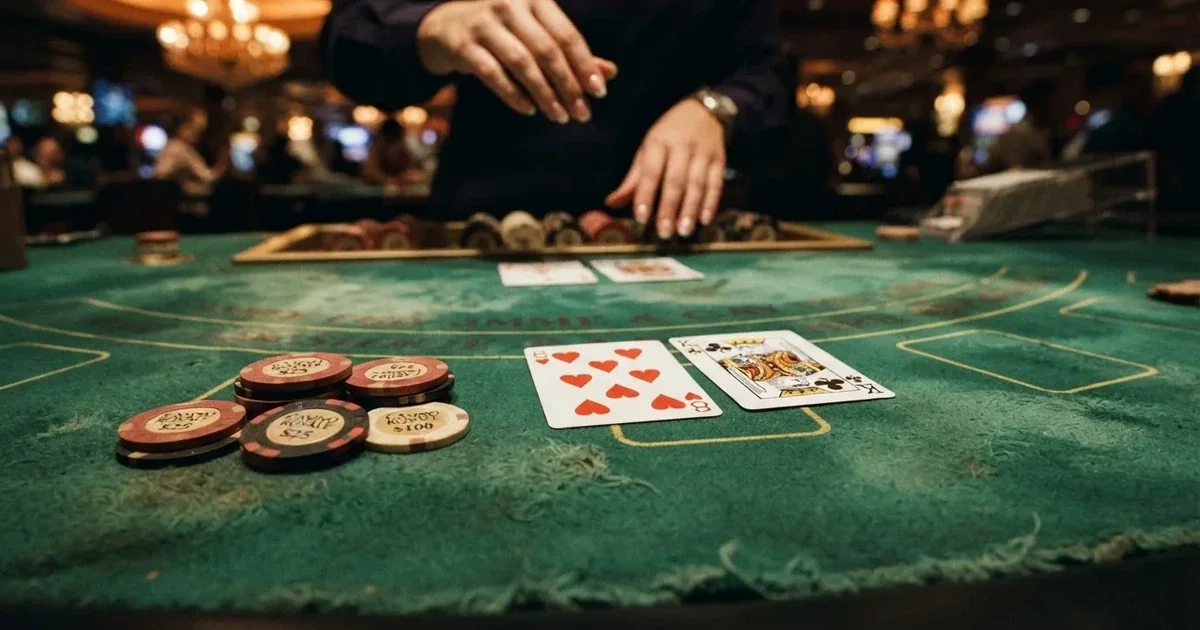
Data current as of 20 October 2026; verified against the ACMA’s formal warnings register.
Table of Contents
- The prohibition and what follows from it
- What player protection an Australian reader can actually reach
- What a cryptocurrency angle changes — and what it does not
- The “live dealer casino bonus” and what it costs the punter
- What a live-dealer table actually runs on
- The ACMA’s paytable of action: eleven brands, eleven warnings
- Fundamentals: what “live dealer casino” actually means in 2026
- Frequently asked questions
The prohibition and what follows from it
The Interactive Gambling Act 2001 (IGA), strengthened by the Interactive Gambling Amendment Act 2017, makes the provision of an “interactive casino-style gambling service” to a person in Australia a prohibited interactive gambling service. Live-dealer tables fall squarely inside that definition. A studio stream of real cards or a real roulette wheel is an interactive service the moment a customer can place a stake from a laptop or a phone.
No state or territory licence covers online casino games. The Northern Territory Racing and Wagering Commission (NTRWC) regulates 52 online bookmakers for tax reasons — Sportsbet, Bet365 and Ladbrokes among them — and the commission runs without full-time staff, meeting once a month in Darwin. The NTRWC covers wagering, not casino games. The Victorian Gambling and Casino Control Commission (VGCCC), which replaced the VCGLR as Victoria’s casino regulator on 1 July 2022, approves table-game rules at Crown Melbourne under the Casino Control Act 1991, which is a licence for a physical premises, not for a streaming product accessible from a Brisbane lounge room.
The IGA targets the provider, not the player. An Australian who opens an account with an offshore live-dealer casino commits no offence under the statute. The casino commits one. That distinction matters, because the consequences of the offence land on the player — they just do it a step removed from the law.
What the player meets, in turn, when they take an offshore live-dealer casino at face value: a licence from somewhere else. Curaçao, Anjouan, the Philippines — the licence is real under that jurisdiction’s law. It does not extend into Australia. The site will display it prominently, and the footer of the page is the natural place. It is the only fact about the licence an Australian reader can verify, and it is the one fact that does not protect them.
Then a complaints pathway that runs through a body with no jurisdiction over a complaint filed from Sydney. The AGCO in Ontario and the UKGC in Britain will sometimes act on complaints about brands they licence; the Curaçao and Anjouan regulators have not built that pathway. An Australian-licensed wagering service answers to the NTRWC, the VGCCC, or the regulator in whichever state issued its licence. An offshore live-dealer casino answers to no one a Sydney-based punter can reach by phone.
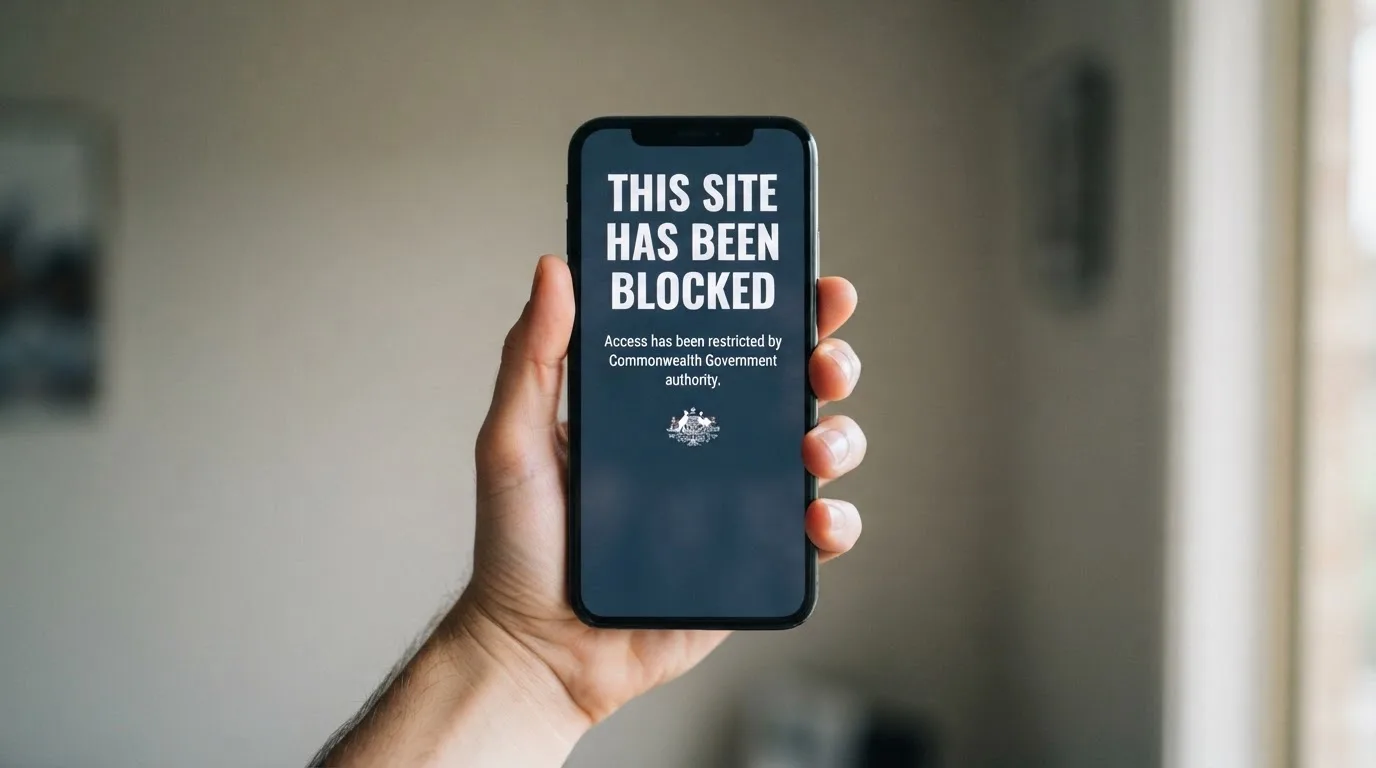
Then the withdrawal risk, which is what the offshore structure makes possible. A casino that gets blocked at the ISP level keeps its own books open. A player with a positive balance can find the website front page replaced with an ACMA notice while the account, the cashier and the withdrawal page live on a domain the ISP is no longer routing. KYC checks are run at withdrawal, not at deposit, and a flagged jurisdiction is reason enough for an operator to refuse a payout. The IGA does not give the player a path back to those funds.
Then the regulator’s own tempo. Since the first blocking request in November 2019 and through the snapshot in June 2026, the ACMA had asked Australian internet service providers to block 1,751 illegal gambling and affiliate marketing websites — averaging between 20 and 25 sites a month, or roughly 265 a year, across that period. The rate has not slowed. In a single round reported on 26 June 2026, twelve more domains were added: 7Signs, ChromaBet, Donbet, Duospin, Freshbet, Slots Gem, Jacks Club, Lucky Start, Pointsbetz, Spinrise, Vinyl Casino and Wildsino. More than 230 unlicensed gambling services had left the Australian market since enforcement was strengthened in 2017.
The 2026 reform sits on top of this. The Interactive Gambling Amendment (Gambling Reform) Bill 2026 passed Parliament on 19 August 2026, and its advertising and inducement measures commence 1 January 2027. That is a law with a start date, not yet in force on a 2026 page, and it changes the inducement side — bonus ads, affiliate marketing, sign-up offers — more than the underlying prohibition.
What an Australian reader is doing, in plain terms, when they open an account with an offshore live-dealer casino: placing money with a provider that is operating illegally under Australian law, in a jurisdiction where the regulator cannot compel a payout, with no deposit-insurance equivalent, on a site that may be on a blocking list tomorrow. Each of those facts is settled before the first hand is dealt.
What player protection an Australian reader can actually reach
The Australian player-protection framework was built around licensed wagering services, and the offshore live-dealer space sits outside it. The gap is not subtle, and what it means in practice is that the tools a player might assume are available just are not, in the moment they would matter.
BetStop, the National Self-Exclusion Register, has been live since August 2023. A person registered with BetStop is excluded from every Australian-licensed online and phone wagering service — exclusion periods run from three months to a lifetime. The register covers wagering on races and sport, which is the licensed product in Australia. It does not cover online casino games, because there are no Australian-licensed online casino games for it to cover. The mechanism does not extend to an offshore live-dealer casino. A punter who has self-excluded from BetStop can still open an account at any of the eleven brands listed later in this article, and none of them is required to ask. The exclusion the player thought they had does not extend as far as they thought.
The National Gambling Helpline, 1800 858 858, is free, 24/7, with chat available through Gambling Help Online. Funded by the Australian government and run by state-based counselling services, the line is jurisdiction-agnostic — a caller from anywhere is answered. It works for the family and friends of someone gambling offshore as much as for the gambler, and the help that follows is financial counselling, referral to face-to-face services, and a self-exclusion pathway through BetStop if the caller is also wagering with licensed operators. The line is the one piece of player protection that does reach across both sides of the legal divide.
Deposit caps and reality checks, the kind a UK or NSW-licensed site now runs by default, are not enforced on offshore live-dealer casinos. The IGA does not require them, and the licence an offshore brand displays does not require them either. An Australian-facing live-dealer casino is free to set its own deposit limits, and most set them high. When a site does set limits, they are voluntary in the legal sense — there is no regulator to enforce them if the brand quietly moves them. This is one of the larger gaps between the licensed Australian wagering environment and an offshore live-dealer casino, and it is where the consequence of the prohibition lands: not on a single decision, but on the daily friction that limits normally introduce.
A second consequence sits inside the payments side. Since 11 June 2024, credit cards, credit-related products and digital currency have been banned as payment for licensed online wagering in Australia, with penalties up to A$247,500 for operators that breach. The legal deposit routes for licensed wagering are debit card, bank transfer, PayID, Osko and BPAY. A site asking an Australian punter for a credit card or a crypto deposit is by construction operating outside the Australian rules. The same logic that puts the site on the ACMA’s list also puts it outside the ban’s protection — a punter using a credit card on an offshore live-dealer casino has no Australian recourse on the transaction either.
The practical answer, in short: BetStop covers the licensed side only. The helpline is always available. Reality checks and deposit caps on an offshore site are the operator’s choice, not a regulatory floor. The protection a player expects from a UK or EU licence does not come free with an offshore one, and the gap is widest at the moment the player needs the protection most.
What a cryptocurrency angle changes — and what it does not
The “bitcoin live dealer casino” search lands on a particular corner of the offshore market. The pitch is straightforward: deposit in BTC or USDT, play live-dealer tables, withdraw back to the same wallet. Some operators add ETH and a handful of altcoins, and a few run their cashier entirely in crypto with no fiat option at all.
What it changes is the payment rail. What it does not change is the legal status of the underlying product. The IGA prohibits the provision of an interactive casino-style gambling service to a person in Australia; it does not distinguish between a customer who funds their account with a debit card and a customer who funds it with a Bitcoin wallet. The site that takes a crypto deposit from an Australian is offering a prohibited service, and the deposit method does not move that fact into a grey area.
The credit-card and digital-currency ban that took effect on 11 June 2024 applies to Australian-licensed online wagering, with penalties up to A$247,500 for operators that breach it. The ban is one reason a properly-licensed Australian wagering service has no crypto cashier: it is not allowed to. An offshore live-dealer casino that does offer a crypto deposit is, by construction, not operating under the Australian regime. It does not have a wagering licence here, and so the ban does not bind it. The presence of a crypto button on the cashier page is itself a tell that the site sits outside Australian rules.
Where crypto does add a layer of friction is at the bank-recourse end. The standard e-KYC path that a debit-card deposit triggers — a customer’s name and address matched against a bank database — does not exist for a Bitcoin transfer. A crypto deposit is also harder for an Australian bank to claw back if the customer later disputes the transaction. This is presented as privacy in the marketing copy. What it is, in plain terms, is a quieter payment rail with less recourse on both sides.
The volatility question is separate, and it sits on top of everything else. A player who deposits A$1,000 worth of BTC and sees the BTC price fall 15% before they withdraw has lost on the conversion before they have placed a bet. A live-dealer casino that prices its tables in crypto is asking the player to take that risk on top of the house edge. Most crypto cashier sites let the player pick a settlement currency, but the price they get on deposit and the price they get on withdrawal are not always the same; the spread sits on the operator’s side. None of this is hidden. It is just the way the rail works, and a player should know it is the way the rail works before they deposit.
A further consequence is the ACMA’s enforcement record. Jackbit, one of the eleven brands named later in this page, was caught in the ACMA’s April 2026 warning to Ryker B.V. on a brand heavily marketed to crypto-using readers. The regulator’s response to a crypto-marketed live-dealer casino is the same warning it has issued against fiat-funded operators. The “privacy” pitch that comes with the crypto rail does not change which side of the prohibition the site sits on, and the regulator’s April 2026 action says so.
The brief, then: crypto does not legalise an offshore live-dealer casino for an Australian reader, does not connect the player to BetStop, and does not protect the deposit from a 15% BTC move between deposit and withdrawal. The marketing pitch is “privacy.” The regulatory reality is that the site is outside Australian rules, and the consequence shows up the moment a player wants to complain or close the account.
The “live dealer casino bonus” and what it costs the punter
A live-dealer casino welcome bonus looks the part. A “100% up to A$500” headline, with maybe A$5,000 of welcome-package value across the first three deposits. Free-spins bundles on the side, sometimes tied to a specific live table. The marketing words cluster around generosity and “extra value”, and the punter who has just opened the cashier for the first time is the target.
What sits underneath, in most cases, is a deposit-gated bonus with a wagering requirement attached. The operator multiplies the bonus by a factor — 30x, 35x, 40x are common — and asks the player to “turn over” that multiple before the bonus and any winnings from it become withdrawable. A A$500 bonus at 35x is A$17,500 of required turnover, all of which has to happen on the live-dealer side if the bonus is table-restricted, which it usually is. A A$5,000 welcome package at 35x is A$175,000 of turnover across the three deposits. The “extra value” the headline promises is, mechanically, A$175,000 of stake the player has to put down before the money can leave.
That figure matters because of the house edge on the games the player is being asked to play. Baccarat’s Banker bet carries a house edge of 1.06%, the Player bet 1.24% and the Tie 14.36%. Blackjack under liberal Las Vegas Strip rules — dealer stands on soft 17, double on any two cards, double after split, resplit aces, late surrender — runs about 0.28% with optimal play. Craps’ Pass/Come bet is 1.41%. These are the games the bonus terms usually require. A player turning over A$17,500 on baccarat’s Banker bet at the table’s optimal house edge gives back, on average, A$17,314.50 — i.e. loses about A$185.50 over the cleared bonus. That is the bonus’s real cost: not the headline amount, but the expected loss the player takes to release it.
The cost figure is sensitive to two qualifiers a marketing page rarely highlights. One is the game weighting — a 100% table-game bonus is one thing, a 10%-weighted table-game bonus is another, and many live-dealer bonuses are 10-20% weighted against a 100% slots bonus. A 10% weighting on a 35x wagering multiple multiplies the effective requirement by ten. The other is the max cashout — a cap on what the player can actually withdraw from bonus-derived winnings, sometimes A$1,000, sometimes A$500, sometimes a multiple of the deposit. A player who wins A$20,000 off a bonus and discovers the max cashout is A$1,000 has just lost A$19,000 of “winnings” to the terms they agreed to. The “extra value” turns out to be the price of admission to a game where the rules sit on the operator’s side.
The marketing word for this arrangement is “bonus.” The mechanism, named accurately, is a wagering requirement with a game weighting and a withdrawal ceiling. The arithmetic that follows from those three terms is, on average, a transfer of several hundred to several thousand dollars from the player to the operator, depending on the bonus size. That is the consequence of the welcome package the headline pitches, and it lands every time the player tries to take the winnings off the platform.
The tax side sits separately, and an Australian punter rarely meets it until it arrives. Gambling winnings of a recreational player are not assessable income under section 6-5 of the ITAA 1997, and losses are not deductible — unless the person carries on a business of gambling. The ATO does not require a recreational punter to declare a big win on a live-dealer baccarat hand. The point is worth flagging only because it is sometimes presented as a reason to play offshore; it is not. The tax treatment applies to the win wherever it is won; it does not authorise the wager.
What a live-dealer table actually runs on
A live-dealer casino game streams from a studio or a land-based casino floor, with optical camera recognition turning the dealer’s physical actions — a card dealt, a roulette result — into the data that appears on the player’s screen. The “live” is real in the sense that the dealer’s hand is real and the wheel is physical; it is software in the sense that the player’s stake, the bet resolution and the payout all sit on a backend the dealer never sees. The marketing language around it tends to treat the format as a distinct, more promising version of an online casino because the human element is supposed to answer the fairness question an RNG-only game cannot. Mechanically, the format is the same product with the same house edge.
Evolution, the dominant supplier of the format, was founded in 2006 by Jens von Bahr and Fredrik Österberg. By 2013 the company operated 100 live tables from its Riga studios — at the time the largest single-site casino operation in Europe — and opened a Malta studio in 2014. Evolution completed its acquisition of NetEnt on 1 December 2020, and the wider group now sits across Evolution, NetEnt, Red Tiger, Big Time Gaming, Nolimit City and Ezugi. More than 700 gambling platforms worldwide offer Evolution’s live-casino games, streamed 24/7 from the studios. An Australian reader looking at a live-dealer lobby is, with very high probability, looking at Evolution — sometimes branded under a white-label deal that buries the studio name.
The games themselves are baccarat, blackjack and roulette, with baccarat the closest thing to a default at Asian-facing studios and blackjack the most common table at European-facing ones. Side bets sit alongside the main hands — Dragon Bonus, Perfect Pairs, 21+3, Bet Behind on baccarat’s Banker bet — and the game-show formats (Crazy Time, Monopoly Live, Deal or No Deal Live) are Evolution-specific products that share the same studio infrastructure.
Baccarat is the simpler of the three to read on the page. Cards 2-9 count at face value, tens and face cards count as zero, and aces count as one, with the hand total taken modulo 10. Punto banco — the variant most played today — was developed in Havana during the 1940s; the casino banks the game at all times and plays both hands to fixed drawing rules. Chemin de fer, a two-player variant, emerged from baccarat banque in the late 19th century and is named for being quicker to play than the original. The Banker bet’s house edge of 1.06% is the most player-favourable main bet in the casino — the reason baccarat dominates Asian high-roller floors and most live-dealer lobbies.
Blackjack carries more rules, and the rules move the house edge by more than they do on baccarat. With optimal play, the house edge under liberal Las Vegas Strip rules is about 0.28%; under Atlantic City rules it sits closer to 0.43%. The English game vingt-un was blackjack’s immediate predecessor, with a Spanish relative — veintiuno — appearing in Miguel de Cervantes’ Rinconete y Cortadillo around 1601-1602. The name “blackjack” came later: historian Thierry Depaulis traces the modern term to around 1899 and the Klondike Gold Rush of 1896-99. Number cards count at their value, face cards at 10, aces at 1 or 11, and a starting two-card 21 is the strongest hand. Variants — Spanish 21, Double Exposure, Blackjack Switch, Super Fun 21 — each add a rule that tilts the edge one way or the other.
Roulette comes in three rule variants on the live-dealer side: European (single zero, house edge 2.70%), French (single zero, with la partage / en prison rules that cut the edge on even-money bets to 1.35%), and American (double zero, 5.26%). The European wheel is the standard at European-facing studios. The American wheel — the version most players outside Europe meet first — gives the house nearly twice the edge. The baccarat edge, the blackjack edge and the roulette edge are the numbers that decide how long a bankroll lasts, and the operator’s bonus terms are written against them.
Craps appears less often on the live-dealer side than the three above, but where it does, the same edge arithmetic applies: Pass/Come at 1.41%, Don’t Pass/Don’t Come at 1.36%, Any Craps at 11.11%. The come-out roll wins on 7 or 11, loses on 2, 3 or 12, and any other number becomes “the point” the shooter must roll again before rolling a 7. The game is denser than baccarat on rules, and it sits on fewer live-dealer lobbies outside the US-facing studios.
The provider question, downstream of all this, is what makes the prohibition visible. A white-label live-dealer casino is almost always an Evolution (or Evolution-group) studio under an operator’s brand, and the studio pays no attention to where the player is sitting. The studio, the game and the edge are all the same on every site. What changes between sites is the licence the operator displays, the payment methods on the cashier, and the bonus terms. The Australian reader looking for the “best” live-dealer experience is, in the large majority of cases, looking at the same studio as every other international reader — the difference between sites is the wrapper, not the wheel.
The ACMA’s paytable of action: eleven brands, eleven warnings
The eleven brands below are not a ranking and not a recommendation. Each is listed because the Australian Communications and Media Authority itself issued a formal warning over it for offering prohibited interactive gambling services to Australians. The ACMA’s enforcement record is the only honest shortlist available for this market, because the prohibition is the starting point and the operators named under it are the ones an Australian reader is most likely to encounter in a “best live dealer casino” search. The column “subject support” describes where the brand appears in third-party listings — not an endorsement, and not a substitute for an Australian regulatory licence.
| Brand | ACMA action and date | Operator named by the ACMA | Subject support |
|---|---|---|---|
| RocketPlay | Formal warning, March 2026 (Pulsup Ltd); earlier May 2022 against earlier Dama N.V. operator | Pulsup Ltd | — |
| Level Up Casino | Formal warning, May 2022 | Dama N.V. | BGaming third-party listing |
| Woo Casino | Formal warning, March 2025 | Dama N.V. | — |
| Spirit Casino | Formal warning, May 2025 | Dama N.V. | — |
| National Casino | Formal warning, July 2025 | Consolutetish S.R.L. | Wikipedia third-party listing |
| Bizzo Casino | Formal warning, July 2025 (Consolutetish); 2022 (TechSolutions) | Consolutetish S.R.L. (2025); TechSolutions (2022) | — |
| Ignition Casino | Formal warning, July 2025 | Bamboo Media | — |
| Instant Casino | Formal warning, February 2025 | EOD Code SRL | — |
| Jackbit | Formal warning, April 2026 | Ryker B.V. | — |
| Casino Intense | Formal warning, April 2025 | Sterplay Holding Ltd | References at ABC News, ACMA and Crown Melbourne |
| Sky Crown | Formal warning (date as published) | Hollycorn N.V. | — |
What follows is a short assessment of each brand, written in the same order as the ACMA’s warnings. The verdict at the end of each block is the page’s own read of what the ACMA action means for an Australian reader considering the brand.
RocketPlay — the most recent formal warning, against a brand already warned in 2022
RocketPlay is the freshest entry on the ACMA’s register. In March 2026 the ACMA issued a formal warning to Pulsup Ltd over RocketPlay. The same brand was caught in a 2022 warning against Dama N.V. alongside five other casino brands — Bambet, Dazard, Level Up, Wild Tornado and Cobra Casinos — making RocketPlay one of the longer-running repeat targets in the ACMA’s enforcement file. A player reading RocketPlay’s homepage in 2026 is looking at a site whose parent operator has been warned twice by Australia’s regulator, in 2022 and again in 2026. The intervening years do not narrow the gap. They confirm that the operator’s business model is unchanged. The brand’s distinguishing feature, in plain terms, is its reappearance: the ACMA’s warning list runs to hundreds of entries and RocketPlay is on it twice. That repetition is, by itself, the case against opening an account.
Level Up Casino — the original 2022 Dama N.V. warning, now rebranded and regrouped
Level Up Casino sits on the May 2022 ACMA formal warning to Dama N.V. alongside RocketPlay and four other brands. The BGaming directory references the brand, which is how it surfaces in a search — third-party directory presence is not a regulatory endorsement. Level Up’s distinguishing feature, in this comparison, is its operator stability: it has stayed under the Dama N.V. umbrella through the ACMA’s 2022, 2025 and 2026 warnings, which tells the reader that the operator’s licence structure has not changed and the ACMA’s underlying concerns have not been addressed. The regulator’s position on this operator is a matter of settled record rather than an ongoing question.
Woo Casino — Dama N.V. returns in March 2025
Woo Casino was caught in the ACMA’s March 2025 warning against Dama N.V. Dama N.V. is the same operator that picked up the May 2022 warning over six other brands, including Level Up above. The pattern is the page’s read: an operator rotating brands under a single corporate umbrella is one operator, not six. Woo’s distinguishing feature, for an Australian reader, is the proximity of its warning to the 2026 reform agenda — March 2025 sits inside the parliamentary run-up of the Interactive Gambling Amendment (Gambling Reform) Bill 2026, and the ACMA’s enforcement tempo picked up across the same window. A player opening a Woo Casino account in 2026 is opening an account with an operator the ACMA named eight months before the Parliament passed its reform bill. The pattern the ACMA is acting on has not changed.
Spirit Casino — Dama N.V.’s May 2025 follow-up
Spirit Casino was caught in the ACMA’s May 2025 warning against Dama N.V., two months after Woo Casino on the same Dama N.V. record. The two warnings two months apart tell the reader the ACMA was not satisfied with the May 2022 outcome and continued to act. Spirit’s distinguishing feature is the speed between Dama N.V. warnings — three across 2022, 2025 (March) and 2025 (May), with RocketPlay returning under a new operator in March 2026. The cluster is dense, and the ACMA’s continued attention is its own commentary on the operator’s response to past warnings. For an Australian reader: this is not a one-off error but a consistent record, and the regulator has made its position clear.
National Casino — Consolutetish S.R.L. takes over from TechSolutions
National Casino was caught in the ACMA’s July 2025 warning against Consolutetish S.R.L., which also caught Bizzo Casino on the same notice. The brand sits on a third-party listing reference at Wikipedia — directory presence, not a regulatory endorsement. National’s distinguishing feature is its corporate succession: the brand was earlier warned as a TechSolutions Group operation and has now been re-warned under a different operator entity on the same conduct. The brand survived the operator change; the conduct the ACMA warned on did not. This record of repeated warnings is the only relevant metric for a player to consider.
Bizzo Casino — the longest-running repeat offender
Bizzo Casino sits on both the ACMA’s July 2025 warning against Consolutetish S.R.L. and the 2022 warning against TechSolutions (CY) Group Limited and TechSolutions Group N.V. The brand has been named twice across two different corporate structures over three years. Bizzo’s distinguishing feature is the duration of the ACMA’s attention: 2022, then 2025, on the same brand across two operators. That is the most direct evidence in this list that a brand’s reappearance under a new operator is not, in practice, the fresh start the new licence suggests. The verdict, in plain terms, is that a brand warned twice under two different operators is the same warning twice. The licence structure has changed; the underlying conduct has not.
Ignition Casino — Bamboo Media takes the July 2025 warning
Ignition Casino was caught in the ACMA’s July 2025 warning against Bamboo Media, a different operator again from the Consolutetish S.R.L. block. The brand is a notable name in the offshore market, and the ACMA’s action in 2025 extends the regulator’s pattern to operators that previously sat outside the warning file. Ignition’s distinguishing feature is its previous absence from the ACMA’s formal-warning list. The 2025 warning is the brand’s first appearance on the register, which tells the reader that “not yet warned” is not a permanent state. History is no shield; the regulator’s action from July 2025 onward is the reality of the brand’s status.
Instant Casino — the February 2025 warning, an early mark on EOD Code SRL
Instant Casino was caught in the ACMA’s February 2025 warning against EOD Code SRL. The warning is one of the earlier entries in the 2025 cluster and stands as the regulator’s first formal action against this particular operator. Instant Casino’s distinguishing feature is the recency of the warning relative to the brand’s marketing reach: the brand surfaces in affiliate material across a wide range of “best live dealer casino” searches, and the ACMA’s February 2025 warning means a reader following those affiliate links is being pointed at a brand the regulator has named. The verdict is straightforward: an affiliate-suggested brand the ACMA has named is not a recommendation.
Jackbit — the April 2026 warning, sharing an operator with CasinOK
Jackbit was caught in the ACMA’s April 2026 warning against Ryker B.V., which the same notice caught CasinOK for. Jackbit is a crypto-heavy brand and its place on the ACMA’s list is the regulator’s response to a brand heavily marketed to crypto-using readers. Jackbit’s distinguishing feature, for an Australian reader, is the combination of the crypto pitch and the ACMA warning. The crypto rail is the marketing’s “privacy” angle; the ACMA warning is what the privacy rail actually delivers in Australian consumer terms. The verdict is that the crypto angle does not move the legal analysis: an offshore brand accepting BTC from an Australian reader is offering a prohibited service, and the regulator’s April 2026 warning says so.
Casino Intense — the April 2025 warning, a longer-running operator
Casino Intense was caught in the ACMA’s April 2025 warning against Sterplay Holding Ltd. The brand carries a longer record than the post-2024 warnings on this list and sits on listings references that include Australian media coverage and the ACMA’s own register. Casino Intense’s distinguishing feature is the wider footprint of its listings presence: it appears across mainstream Australian news coverage of the ACMA’s enforcement and on the regulator’s own publication list. That presence tells the reader the brand has been a notable target for the regulator, not a peripheral one. The verdict is that a brand visible enough to attract Australian news coverage of the ACMA’s action is visible enough to be on a reader’s screen — and the regulator has already said what it has to say.
Sky Crown — Hollycorn N.V.’s warning over a Curaçao-licensed brand
Sky Crown sits on the ACMA’s formal warning to Hollycorn N.V., alongside Blue Leo, on the regulator’s publication list. The brand’s licence displays Curaçao, which is the standard structure for this part of the market. Sky Crown’s distinguishing feature is the company it keeps: Hollycorn N.V. operates multiple brands under a single licence structure, and the ACMA’s warning is over the corporate group, not a single white-label. For an Australian reader, the verdict is that a corporate-group warning reaches every brand the group operates, and the ACMA’s formal action does not differentiate between sister sites within the same umbrella.
The cumulative pattern, taken across the eleven names, is the ACMA’s pace: two warnings in 2022, three in 2025, four in 2026, and the regulator’s tempo has not slowed. The brand list changes; the operator list changes; the conduct under the warning does not. An Australian reader who has read this far already knows the verdict before reaching the bottom of the table — the ACMA’s record is the only shortlist the regulator allows.
Fundamentals: what “live dealer casino” actually means in 2026
A “live dealer casino” describes an online casino product where the player bets on a table game streamed live from a studio or a land-based floor. The studio is a real room with a real dealer, real cards and a real wheel; the player’s stake, the bet resolution and the payout all sit on a backend the dealer does not see. The marketing language around it tends to treat the format as a distinct, more promising version of an online casino, because the human element is supposed to answer the fairness question an RNG-only game cannot. Mechanically, the format is the same product with the same house edge and the same prohibition.

The three live-dealer games offered by virtually every studio are baccarat, blackjack and roulette, with baccarat the closest thing to a default at Asian-facing studios and side bets — Dragon Bonus, Perfect Pairs, 21+3 — clustered around the main hands. Game-show formats (Crazy Time, Monopoly Live, Deal or No Deal Live) sit alongside the classic tables, often on the same studio floor. The house edges carried by the classic three — 1.06% on baccarat’s Banker bet, 0.28% on blackjack under liberal Las Vegas Strip rules, 2.70% on European roulette — are the numbers that decide how long a bankroll lasts.
A “live dealer casino no deposit bonus” is the closest thing the market has to a free-trial pitch. The terms are tighter than a deposit bonus — high wagering multiples, game weighting that pushes play toward specific tables, low max-cashout caps, and a small bonus amount — but the structure is the same: free credit in exchange for play the player has to complete before any winnings can be withdrawn. For an Australian reader, the question is whether the bonus is worth the IGA exposure, not whether the bonus itself is genuine. It is, mechanically, a deposit-free version of the wagering requirement analysed earlier in this article, and the cost arithmetic works the same way.
A “live dealer casino mobile” page is the same product on a phone, with a smaller screen and a slower tap response at the table. The mobile angle does not change the legal analysis; an Australian on a Telstra or Optus connection is sitting at an Australian address regardless of the device. The studios are also the same — most studios run their tables on a single HTML5 client that adapts to screen size. What changes between an iPhone Safari session and a desktop Chrome session is layout, not game.
The lawful alternative, which is what most “best live dealer casino” pages do not name, sits in two places. The first is the licensed Australian wagering market: pre-event betting on races and sport, lotteries and keno, deposit-gated by debit card, bank transfer, PayID, Osko or BPAY, and covered by BetStop and the National Gambling Helpline for self-exclusion and support. None of that is a live-dealer casino. The second is the land-based casino floor: Crown Melbourne’s three approved baccarat variants under the VGCCC, the Sydney tables approved under section 66 of the NSW Casino Control Act 1992, the Adelaide and Perth floors under their own state regulators. Live-dealer play in Australia means a physical premises; the offshore streaming version is the product the IGA prohibits.
What an Australian reader should take from the fundamentals: the product exists. The format works. The studios are well-known and the games are the same three everywhere. The licence an offshore site displays does not extend into Australia, and no operator on this page is licensed to offer online casino games to a person in Australia. The shape of the choice, then, is not between offshore live-dealer casinos. It is between offshore live-dealer casinos — prohibited, no Australian consumer protection, regulator can block at any time — and the licensed Australian wagering and land-based casino market that sits inside Australian law. The page above this point has laid out what the offshore side looks like. The Australian side is the choice the reader is actually making.
Frequently asked questions
How large did Evolution’s live table operation become by 2013?
By 2013, Evolution operated 100 live tables from its Riga studios — then the largest single-site casino operation in Europe. The company opened a Malta studio the following year and now streams to more than 700 gambling platforms worldwide, with NetEnt, Red Tiger, Big Time Gaming, Nolimit City and Ezugi also in the group.
Do live dealer casinos take cryptocurrency deposits?
Many offshore live dealer casinos do. Bitcoin and USDT are the common options, sometimes alongside Ethereum and a few altcoins, with some brands running their cashier entirely in crypto. An Australian-facing site accepting crypto is by construction operating outside Australian rules, and the credit-card and digital-currency ban that took effect on 11 June 2024 does not reach it.
Is it lawful for a live dealer casino to accept Australian customers?
No. The Interactive Gambling Act 2001 prohibits providing online casino games — including live-dealer streams — to a person in Australia. The statute targets the provider, not the player, but the practical consequences are real: no regulator with jurisdiction over a complaint, and the site can be ISP-blocked while an account balance remains.
What responsible-gambling safeguards should a live dealer casino offer?
The Australian-licensed side runs BetStop (the National Self-Exclusion Register, live since August 2023), the 24/7 National Gambling Helpline on 1800 858 858, deposit caps and reality checks. None of these bind an offshore live dealer casino; the offshore site is outside the Australian framework. Deposit limits and session checks are voluntary for an offshore brand.
What conditions are usually attached to a live dealer casino welcome bonus?
A deposit-gated bonus, a wagering multiple (commonly 30x to 40x of the bonus), game weighting that reduces the contribution of live tables, a max-cashout cap on bonus-derived winnings, and a time limit on clearing. The combination is best read as the cost of releasing a headline figure, not as a free extra.