
Online pokies instant withdrawal Australia 2026: the marketing, the law, and the gap between them
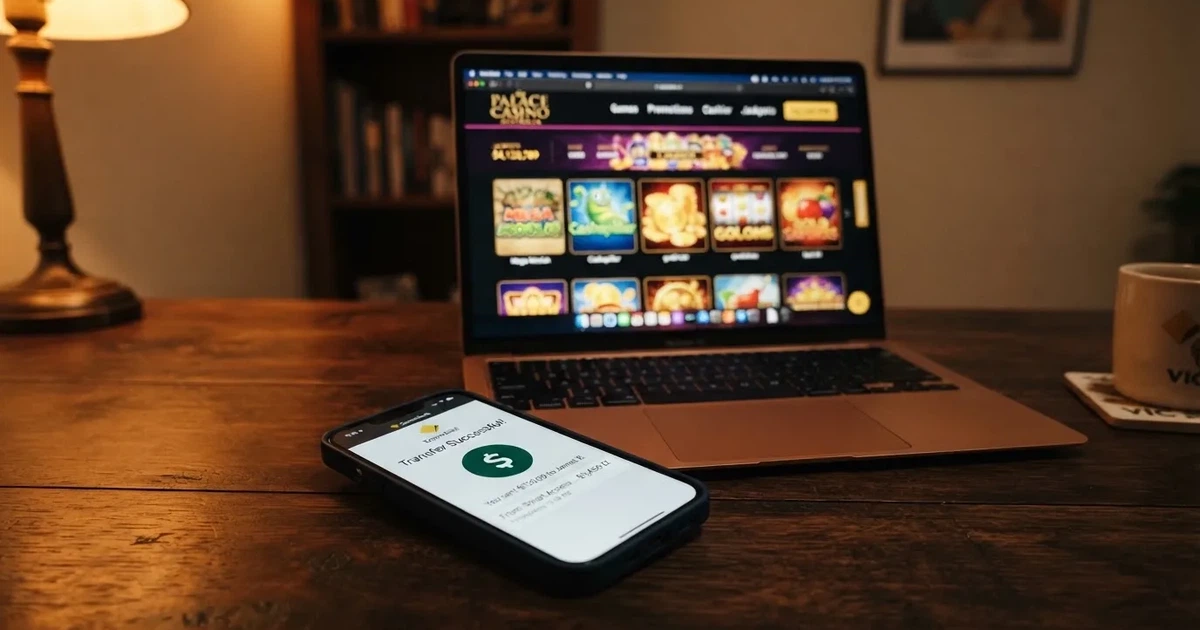
The phrase “instant withdrawal” sits in dozens of offshore pokies ads aimed at Australian players. It travels with PayID logos, “no verification” badges, and screenshots of bank apps showing seconds-old transfers. The legal picture behind those ads is far less tidy than the marketing suggests: no Australian state or territory licenses an online casino, the Australian Communications and Media Authority has been issuing formal warnings and directing internet providers to block offshore sites for years, and the player who picks one of these brands gives up the consumer protections a domestic licence would provide. This page works through what “instant” actually means at offshore pokies, where the regulator has already drawn a line, and what each of the eleven brands most often linked to those ads actually represents. The angle throughout is cost — what the speed claim takes from the player who relies on it. Online pokies instant withdrawal Australia 2026 — More on this topic at casino signup .
Current as of 20 October 2026. Verified against the ACMA’s published formal-warning register and the Interactive Gambling Act 2001.
Table of Contents
- How “instant withdrawal” came to dominate offshore pokies ads in Australia
- The legal prohibition Australians actually face
- The consumer protections a domestic licence carries
- What responsible play looks like under the prohibition
- PayID, Osko, and the speed the ads borrow
- What verification actually sits in front of an “instant” payout
- Why the brands in this space look interchangeable
- The ACMA enforcement picture at a glance
- RocketPlay
- Level Up Casino
- Woo Casino
- Spirit Casino
- National Casino
- Bizzo Casino
- Ignition Casino
- Instant Casino
- Jackbit
- Casino Intense
- Sky Crown
- Blocking rate as a measurement of enforcement pace
- What the reader takes from all of this
- Frequently asked questions
How “instant withdrawal” came to dominate offshore pokies ads in Australia
“Online pokies instant withdrawal Australia” is the search query of someone who has already lost patience with waiting on a payout. Pokies themselves — electronic gaming machines — operate in every Australian state and territory under per-jurisdiction design and operating rules. New South Wales alone had 87,298 machines outside casinos across 2,195 venues as of June 2023, with player losses of A$8.18 billion in 2022-23. Queensland had 21,122 machines in 351 venues in October 2023, and Victoria ran 26,380 outside Crown Casino in 488 venues in 2021-22 under a 30,000-machine statewide cap. These are the legal, on-premises machines. The online version — the thing the ads are selling — is a different product, and the legal status of that product is the first cost a reader pays when they click through.
Australia has roughly 3% of the world’s pub and club poker machines with 0.3% of the global population, and in 2020-21 Australians bet almost A$150 billion through gaming machines and lost A$12.18 billion on them. That money sits in licensed clubs, casinos and pubs. The instant-withdrawal ads do not draw on it. They draw on the offshore market the Interactive Gambling Act 2001 was written to keep out. H2 Gambling Capital’s 2025 figures estimate Australians lose about A$3.9 billion a year to illegal gambling sites, and the share of gambling going through legal channels fell from 74% in 2021 to 64%. The missing ten points of share is, in dollar terms, the audience the offshore instant-withdrawal ads are chasing.

Three things make the “instant” claim feel faster than it is. First, the ads repeat it as a brand attribute, the way pubs repeat a happy-hour price — repetition substitutes for evidence. Second, PayID and Osko genuinely do settle between Australian bank accounts in seconds, and the ads borrow that speed visually without borrowing the rail itself; many of these sites are licensed in Curaçao or another offshore jurisdiction and pay through their own payment processors. Third, the time a withdrawal is “processed” inside the casino is not the time it lands in the player’s account. Pending periods, internal review queues, weekend cuts and bonus-related verification all sit between the click and the bank.
The legal prohibition Australians actually face
The Interactive Gambling Act 2001, as tightened by the Interactive Gambling Amendment Act 2017, makes it an offence to provide online casino games, online pokies or in-play betting to a person in Australia. No state or territory issues an Australian online casino licence. The activity is prohibited at the supply end, not the player end: the individual Australian punter is not prosecuted, but every brand advertised as accepting Australian players is, by definition, sitting outside the Australian regulatory perimeter.

What is licensed is narrower. Wagering on races and sport placed before the event, lotteries and keno — in practice licensed by the Northern Territory. The Northern Territory Racing and Wagering Commission regulates 52 of Australia’s online bookmakers, including Sportsbet, Bet365 and Ladbrokes, all licensed in the Territory for tax reasons. The commission has no full-time staff and meets once a month in Darwin. Bookmakers, not casinos, are the shape of Australian-licensed online gambling. A reader searching for instant withdrawal on pokies has already stepped outside that perimeter.
The 2017 amendments gave the ACMA teeth. Since November 2019 the regulator has been directing Australian internet service providers to block illegal sites, and by June 2026 a total of 1,751 illegal gambling and affiliate marketing websites had been blocked, with more than 230 unlicensed gambling services leaving the Australian market since 2017. In the round reported on 26 June 2026 the ACMA asked ISPs to block a further twelve: 7Signs, ChromaBet, Donbet, Duospin, Freshbet, Slots Gem, Jacks Club, Lucky Start, Pointsbetz.com, Spinrise, Vinyl Casino and Wildsino. The pace of blocking has been steady, not occasional. A reader choosing one of the brands still showing up in search results is choosing a brand that has, in many cases, already been on the ACMA’s radar.
What that prohibition costs in practice. The “cost” framing here is not the bet size; it is the consumer infrastructure an offshore brand does not have. There is no Australian complaints body for an offshore operator, no requirement that a balance be honoured if the site is blocked while funds are still on it, and no guarantee that a withdrawal request will not sit in pending for the same reason a domestic operator’s might. The Interactive Gambling Amendment (Gambling Reform) Bill 2026 passed Parliament on 19 August 2026, and its advertising and inducement measures commence on 1 January 2027. The law exists; it has a start date. In 2026 the inducement landscape the reader is sitting in is the pre-reform one.
The consumer protections a domestic licence carries
The reason a domestic licence matters is not the house edge — the house edge is the same whether the machine sits in a Sydney club or a Curaçao-hosted website. The reason is what sits around the edge. BetStop, the National Self-Exclusion Register, has been live since August 2023 and binds every Australian-licensed online and phone wagering service. An offshore pokies site is not connected to it. A punter who has self-excluded and then opens an offshore account has, in practice, circumvented the register they signed.
A licensed Australian wagering service cannot accept a credit card, a credit-related product or digital currency as payment for a bet — that ban took effect on 11 June 2024, with penalties up to A$247,500 for operators who breach it. Legal deposit routes are debit card, bank transfer, PayID/Osko and BPAY. An offshore pokies site asking for a credit card or a crypto deposit is operating outside those rules. The deposit route is itself a tell: a PayID transfer from an Australian bank account into an offshore operator’s merchant facility is a transfer the Australian bank can, and increasingly does, decline.
When something goes wrong at a licensed operator, the punter has the regulator and a complaints pathway. When something goes wrong at an offshore operator, the punter has an offshore customer-service inbox, and the ACMA’s enforcement is on the supply side, not the consumer side. The instant-withdrawal promise and the lack of consumer recourse are not two separate facts. They are the same fact read from two ends.
What responsible play looks like under the prohibition
Responsible play in this market is not a slogan, and it is not an offshore operator’s “self-exclusion” toggle. The National Gambling Helpline — 1800 858 858 — is free, runs 24/7, and connects callers to Gambling Help Online, where chat is also available. These services are not affiliated with any operator on this page and do not endorse any of the brands discussed below.
The practical version of responsible play, for the reader who has arrived at this page, has three parts. First, recognise that the online pokies ads promising instant withdrawal are selling an offshore product that cannot be licensed in Australia, and that the brand offering it has, in most cases, already been the subject of an ACMA formal warning. Second, recognise that the self-exclusion and limit tools available on licensed Australian wagering sites do not extend to offshore casino products, so any limit-setting has to come from the player’s own side. Third, recognise the signs a session has moved from entertainment to compulsion — chasing losses, hiding play, borrowing to keep going — and call the helpline before those signs harden. The phone is free, the chat is open, and the conversation is confidential.
A reader who is already playing at an offshore site and feels the speed of withdrawal is the only thing keeping them there has not made a gambling decision. They have made a financial one. The phone number above is the more useful of the two next moves.
PayID, Osko, and the speed the ads borrow
PayID and Osko are the New Payments Platform services that genuinely do settle between Australian bank accounts in seconds, around the clock, every day of the year. They are real-time retail payment services operated by Australian banks and built on the Reserve Bank of Australia’s New Payments Platform. A PayID transfer between two Australian accounts, when both banks are live on NPP, is genuinely seconds-fast. The instant-withdrawal ads borrow that speed by association.
What the ads do not surface is which rail the casino is actually using. An offshore operator licensed in Curaçao is unlikely to be a direct participant in NPP. The PayID payout goes through a payment processor, a merchant facility or a partner bank, and each of those layers adds a queue, a cut-off and a check. Pending periods of 24 to 72 hours are common even on sites that advertise instant payouts, because the casino runs an internal “pending” state before the payment is released. The bank is fast. The casino is the bottleneck. The brand that genuinely pays out in under 60 seconds has either bypassed the pending period or has no pending period at all, which is unusual.
What “instant” means in practice, on the best-run offshore sites, is that the release from the casino’s internal queue happens quickly once verification has cleared. What it means on the worst-run sites is that the request is acknowledged quickly, and the actual transfer comes later. A reader evaluating a brand on speed alone has to look at three numbers, not one: the pending period, the verification time, and the transfer rail. The ads usually quote only the third.
What verification actually sits in front of an “instant” payout
Every offshore brand in this space has a Know Your Customer step. The trigger varies — first withdrawal, withdrawal above a threshold, change of payment method, bonus-related withdrawal — but the step is universal. The casino needs to confirm the account holder is the account holder, that the deposit method is in the player’s name, and (for bonus play) that the bonus terms have been met. The verification is what keeps an “instant” payout instant, and the gap between the brand’s advertised speed and the player’s experience is usually a verification gap.
For small wins — withdrawals under a few hundred dollars — verification is often a single document upload and a short review. For large wins — anything that triggers a payout threshold — the casino may ask for source-of-funds documentation, additional identity checks and a manual approval. The brand that advertises “instant withdrawal” is usually advertising the small-win case and not disclosing the large-win case. A punter evaluating speed has to weigh the small-win speed against the large-win reality, because the win they care about is not the one the ad was written for.
Bonus-related withdrawals carry an extra layer: the wagering requirement has to be cleared before any withdrawal is processed, and the brand’s terms set the wagering multiple and the contribution rate of pokies toward clearing it. The “instant” claim does not survive contact with an uncleared bonus. The reader who has accepted a bonus has, in most cases, agreed to a turnover requirement that converts the advertised instant payout into something slower.
Why the brands in this space look interchangeable
A reader scanning the eleven brands discussed below will see a repeating pattern: a Curaçao licence displayed in the footer, a similar lobby of pokies providers, a similar payments page listing PayID, a similar welcome package, and a similar chat widget promising twenty-four-hour support. The pattern is real and it is the result of a small number of operating companies running multiple skins. Dama N.V., for example, has been the subject of ACMA formal warnings covering Bambet, Dazard, Level Up, Rocketplay, Wild Tornado and Cobra Casinos in 2022, and of further warnings covering Woo Casino in March 2025 and Spirit Casino in May 2025. Hollycorn N.V. was warned over Sky Crown and Blue Leo in 2022. TechSolutions was warned over Bizzo Casino in 2022, and Consolutetish S.R.L. was warned over the same brand, alongside National Casino, in July 2025.
The reader who lands on one of these brands is, in many cases, landing on the same operating company through a different URL. The “instant withdrawal” claim is brand-level on the page and operator-level in practice. The reader’s practical recourse runs through the operator, not the brand, and the operator is offshore and outside Australian jurisdiction. That is the structural reason the eleven brands below read as a list rather than as a comparison: the differences are surface, the underlying structure is shared.
The ACMA enforcement picture at a glance
The table below names each brand reviewed below, the ACMA enforcement action recorded against it, and the operating company the ACMA named in its formal warning. Dates are the dates the ACMA published its formal warnings. The table does not include any brand that has not been the subject of a published ACMA formal warning.
| Brand | ACMA action and date | Operator named by the ACMA | Subject support |
|---|---|---|---|
| RocketPlay | Formal warning, March 2026; earlier Dama N.V. warning May 2022 | Pulsup Ltd (2026); Dama N.V. (2022) | — |
| Level Up Casino | Formal warning, May 2022 | Dama N.V. | Listed by Bgaming.com as a partner |
| Woo Casino | Formal warning, March 2025 | Dama N.V. | — |
| Spirit Casino | Formal warning, May 2025 | Dama N.V. | — |
| National Casino | Formal warning, July 2025 | Consolutetish S.R.L. | Listed by en.wikipedia.org |
| Bizzo Casino | Formal warning, July 2025; earlier TechSolutions warning 2022 | Consolutetish S.R.L. (2025); TechSolutions (CY) Group / TechSolutions Group N.V. (2022) | — |
| Ignition Casino | Formal warning, July 2025 | Bamboo Media | — |
| Instant Casino | Formal warning, February 2025 | EOD Code SRL | — |
| Jackbit | Formal warning, April 2026 | Ryker B.V. (Jackbit, CasinOK) | — |
| Casino Intense | Formal warning, April 2025 | Sterplay Holding Ltd | Listed by Abc.net.au, acma.gov.au and Crownmelbourne.com.au references |
| Sky Crown | Formal warning, September 2022 | Hollycorn N.V. | — |
A reader who treats this table as a list of “brands to avoid” is reading it correctly. A reader who treats it as a “shortlist of brands with known operators” is reading it in the opposite direction. The ACMA’s enforcement record is the only published, public, regulator-attributed record of these brands’ Australian-facing activity, and it runs one way.
RocketPlay
RocketPlay is the most recently warned brand in the set, with an ACMA formal warning issued in March 2026 to Pulsup Ltd, the operator behind Rocketplay.com.au. The brand had already been on the ACMA’s radar through Dama N.V., which was warned over it in May 2022 alongside five other casino brands. The two warnings, four years apart, indicate the brand has continued operating toward Australian players through different corporate vehicles, and the ACMA’s enforcement has followed the corporate vehicle rather than the URL alone.
The brand’s display licence is offshore; its acceptance of Australian players is the activity the ACMA’s 2026 warning addressed. RocketPlay’s own subject support for instant-withdrawal claims is unrecorded — the ACMA’s formal-warning register and the brand’s own terms page carry no PayID-specific settlement data. A reader evaluating the brand on speed has only the marketing claim to work from, and the marketing claim is what the ACMA’s enforcement record challenges.
The verdict is short. RocketPlay’s withdrawal-speed story is the marketing word “instant” without any Australian consumer infrastructure behind it. The same warning was issued in 2022 and again in 2026, and the cost of relying on either payout promise is the cost of doing business with a brand the ACMA has had to warn twice.
Level Up Casino
Level Up Casino was named in the ACMA’s May 2022 warning to Dama N.V., one of six brands covered by that single enforcement action. The brand appears in the Bgaming.com listings as a partner, which is the only verifiable third-party reference its subject support carries. There is no record of a subsequent ACMA warning to a different operating company, and no published PayID-specific settlement data on the ACMA register or the brand’s own terms.
Level Up’s position in the Dama N.V. cluster places it in the largest group of ACMA-warned brands in the set, alongside Rocketplay, Bambet, Dazard, Wild Tornado and Cobra Casinos. The clustering matters because it tells the reader the operating-company risk is shared. A withdrawal problem at Level Up is, in practice, a withdrawal problem at Dama N.V., and the operator’s record on Australian-facing withdrawals is what the ACMA’s 2022 warning describes.
Level Up operates as a Dama N.V. skin. The instant-payout promises are marketing-led, while consumer protections reside with the operator, which has been subject to ACMA warnings since 2022.
Woo Casino
Woo Casino received an ACMA formal warning in March 2025, again with Dama N.V. as the named operator. The warning came three years after the original 2022 Dama N.V. warning, and follows the same pattern: a brand that has continued Australian-facing operations through the same operating company across multiple enforcement cycles.
No third-party listings page or brand terms page carries a verifiable PayID-specific payout figure for Woo Casino. The brand’s own advertised settlement times are the only available data point, and those figures come from the same marketing layer as every other brand in the set. The ACMA’s 2025 warning is the most recent regulator-attributed data point.
The verdict is that Woo Casino is a Dama N.V. brand with a 2025 ACMA warning attached. A reader who values the regulator’s most recent word over the brand’s advertised payout speed has the answer already.
Spirit Casino
Spirit Casino received an ACMA formal warning in May 2025, with Dama N.V. named as the operator. It belongs to the same cluster as Woo Casino and is one of the six brands warned in 2022. Public records contain no independent verification of its payout speed.
The reader looking at Spirit in isolation is looking at one brand; the reader looking at Spirit alongside Woo, RocketPlay, Level Up, Bambet, Dazard, Wild Tornado and Cobra Casinos is looking at one operator. The instant-withdrawal claim is brand-level; the ACMA enforcement is operator-level; and the gap between the two is the gap the reader is being asked to fund.
The verdict is that Spirit is best read as the second of two 2025 Dama N.V. warnings, with no published subject-support data to separate it from the cluster. The withdrawal-speed promise sits where it has sat for every other Dama N.V. skin: in the marketing, with the regulator’s record running in the opposite direction.
National Casino
National Casino received an ACMA formal warning in July 2025, with Consolutetish S.R.L. as the named operator. The brand appears in the en.wikipedia.org casino listings as a reference point, which is the only verifiable third-party data its subject support carries. The 2025 warning followed a 2022 warning to TechSolutions over the same brand, Bizzo Casino, indicating Consolutetish took over a brand TechSolutions had already been warned about.
National Casino’s position in the Consolutetish cluster — alongside Bizzo — places it in a smaller group than the Dama N.V. cluster, but a group nonetheless. The operating-company risk is shared. A reader who treats National Casino and Bizzo Casino as separate brands is treating two skins of the same operator as different consumer relationships.
The verdict is that National Casino carries a 2025 ACMA warning and a 2022 ACMA warning, with the operator name changing between them. The withdrawal-speed story the brand tells is the same story Bizzo tells, and the regulator’s record runs against both.
Bizzo Casino
Bizzo Casino has a long ACMA enforcement history. TechSolutions (CY) Group Limited and TechSolutions Group N.V. were warned over Bizzo in 2022; Consolutetish S.R.L. was warned over the brand in July 2025. It is the second brand Consolutetish was warned for, following the same pattern of multiple operators over time. No verifiable third-party data on payout speed is available.
The pattern is the same as the Dama N.V. cluster but with a different operator: a brand that has continued Australian-facing operations across enforcement cycles, with the regulator following the corporate vehicle. The reader evaluating Bizzo on speed has to evaluate it through the ACMA’s two warnings, not through the brand’s current advertised settlement times.
Bizzo represents a brand that has cycled through operators while continuing its Australian-facing advertising. The instant-payout promise is marketing-driven, but the regulatory record shows two ACMA warnings since 2022.
Ignition Casino
Ignition Casino received an ACMA formal warning in July 2025, with Bamboo Media as the named operator. Bamboo Media does not appear as a named operator elsewhere in the set, which makes Ignition the only 2025 warning in this list tied to a previously unwarned operator in the reviewed sample. No third-party listing or brand terms page carries a verifiable PayID-specific payout figure for Ignition, and no separate subject-support data exists.
The single-operator, single-warning structure is unusual in a set where most brands cluster under one or two operating companies. It does not, on its own, indicate anything different about the brand’s withdrawal behaviour, and it does not indicate anything better. The ACMA’s warning is about Australian-facing provision of online casino games, not about payout speed specifically.
Ignition is the only 2025 warning in this list attached to an operator not otherwise represented here. The payout promise is a marketing claim, while the ACMA’s 2025 warning is the documented public record.
Instant Casino
Instant Casino is named to match the speed searches expect. The ACMA issued a formal warning in February 2025, naming EOD Code SRL as the operator. There is no independent or verifiable data supporting the advertised payout speed.
The brand name is often derived directly from the search query. The ACMA’s February 2025 warning is the regulator’s response to the service the brand offers. The match between brand name and the reason a reader visits is not a recommendation.
The verdict is that Instant Casino is the brand in the set most explicitly built around the speed claim the reader is searching for, and the ACMA’s February 2025 warning is the regulator’s word on what that claim is worth to an Australian player. The marketing and the enforcement record run in opposite directions.
Jackbit
Jackbit received an ACMA formal warning in April 2026, alongside CasinOK, naming Ryker B.V. as the operator. This is a distinct enforcement track from the other warned clusters. Like other brands, it provides no verifiable third-party payout speed data.
The 2026 date makes Jackbit one of the most recently warned brands in the set, alongside RocketPlay (also 2026). The reader evaluating Jackbit on speed has a regulator-attributed data point that is six weeks old at most, depending on the date of reading.
The verdict is that Jackbit carries the second of the two 2026 ACMA warnings in this set, with the same operating company also named over CasinOK. The instant-withdrawal claim is the brand’s; the regulator’s 2026 record is the public word; and the consumer-protection gap is the same as for every other brand in the set.
Casino Intense
Casino Intense received an ACMA formal warning in April 2025, with Sterplay Holding Ltd as the named operator. The brand carries more third-party reference data than most in the set: it appears in Abc.net.au reporting, in acma.gov.au’s own enforcement record, and in Crownmelbourne.com.au references — likely in the context of land-based casino reporting, not a commercial relationship. No verifiable PayID-specific payout figure is published by any of those references.
The breadth of third-party references is unusual. The Crown Melbourne reference is interesting because Crown Melbourne is a domestic, licensed Australian casino, and any reference to Casino Intense in that context is most likely a comparative or cautionary mention rather than a commercial relationship. The brand is not, on the available evidence, commercially linked to Crown Melbourne.
The verdict is that Casino Intense is the brand in the set with the widest third-party footprint, and the ACMA’s April 2025 warning sits alongside it. A reader who values third-party references is not, on this evidence, reading past the regulator’s record.
Sky Crown
Sky Crown was part of an ACMA formal warning to Hollycorn N.V. in September 2022, alongside Blue Leo. Hollycorn N.V. does not appear elsewhere in this review, representing a separate enforcement track. There is no verifiable third-party data regarding its payout speed.
The 2022 date is the oldest warning in the reviewed set. A reader evaluating Sky Crown on the regulator’s most recent word has a 2022 record and no published update. The brand has not, on the available evidence, been the subject of a fresh ACMA warning, which is not the same as saying the regulator has cleared it.
The verdict is that Sky Crown carries a 2022 ACMA warning with no published follow-up enforcement on the reviewed record. The instant-withdrawal claim is the brand’s; the regulator’s 2022 warning is the public word; and the absence of a 2025 or 2026 update does not change the legal status of the activity the warning addressed.
Blocking rate as a measurement of enforcement pace
The blocking-rate calculation here uses two figures from research: the cumulative count of blocked sites as of June 2026 (1,751) and the date of the first blocking request (November 2019). The arithmetic is a division: 1,751 blocked sites over the period from November 2019 to June 2026. That period covers roughly six and a half years, and the simple annual rate is around 269 sites per year. The actual pace is not uniform — early rounds were smaller, later rounds have been larger — so the meaningful figure is a band, not a single number.
A reasonable band, based on the published monthly round sizes over the period, runs from roughly 200 to 300 sites blocked per year, with the most recent annualised run-rate sitting toward the upper end of that band as the ACMA has shortened the interval between blocking requests. The condition that makes the band hold is that the ACMA continues to publish a round roughly every month, which it has done consistently since 2019.
What the band tells the reader is the speed at which the regulator catches up to the search results. An offshore brand can be advertised on day one and blocked by month three; a brand that was warned in 2022 can be replaced by the same operator under a different URL within the year. The blocking rate is the regulator’s pace, not the operator’s. The reader who treats the rate as a guarantee is reading past the condition that makes the rate meaningful — the ACMA’s continued monthly publication schedule.
What the reader takes from all of this
The speed claim and the legal status of the product are not two separate conversations. They are one conversation read from two ends. The reader searching for instant withdrawal on online pokies in Australia is searching for a service the Interactive Gambling Act 2001 was written to keep out, and the eleven brands most often linked to that search have each been the subject of an ACMA formal warning. The instant-withdrawal promise is brand-level; the regulator’s enforcement is operator-level; and the consumer protection an Australian punter would have at a domestic wagering operator does not extend to any of these brands.
The page is not a ranking and not a recommendation. It is a description of what is on offer, what it costs, and where the regulator has already drawn a line. A reader who has read this far has the data they need to make the decision themselves.
Frequently asked questions
What does “instant withdrawal” actually mean when a pokies site advertises it — same second, or same day?
It usually means the casino releases the withdrawal from its internal pending queue quickly, often within hours for small wins once verification has cleared. The actual bank transfer then depends on the rail — PayID and Osko genuinely settle in seconds between Australian accounts, but the casino’s release is the bottleneck, not the bank.
Does a PayID withdrawal claim from a pokies site move any faster than an ordinary bank transfer would?
The PayID rail is fast, but most offshore pokies sites do not connect directly to the New Payments Platform. The PayID payout goes through a payment processor or partner bank, and that layer adds its own queue and cut-off. The advertised speed is the rail’s, not the casino’s.
Is an instant-withdrawal claim from an offshore pokies site something Australians can rely on legally?
No. The Interactive Gambling Act 2001 prohibits the supply of online casino games and online pokies to people in Australia, and no state or territory licenses them. Every offshore pokies brand accepting Australian players is operating outside Australian law, and the ACMA has issued formal warnings and directed ISPs to block these sites.
Why do some sites specifically pair a PayID withdrawal claim with an “instant” claim in their ads?
PayID and Osko genuinely settle in seconds between Australian bank accounts, and the ads borrow that speed visually. The casino’s internal pending period, verification step and payment-processor queue sit between the player’s click and the bank transfer, and those steps are not visible in the ad.
What verification step, if any, typically happens before a withdrawal gets processed, instant or not?
Every offshore brand runs a Know Your Customer check — usually on the first withdrawal, on withdrawals above a threshold, or when a bonus is involved. The check typically requires a photo ID and proof of address, and may include source-of-funds documentation for larger wins. The verification is what converts an “instant” payout into a delayed one. See also Quick withdrawal casino australia 2026
How does an instant-withdrawal claim differ between a small win and a large one?
Small wins — under a few hundred dollars — usually clear the pending period and verification quickly. Large wins often trigger enhanced verification, source-of-funds checks and a manual approval step, and the brand’s advertised “instant” figure is typically written for the small-win case rather than the large one.