Online Craps Australia What the 2026 Market Actually Lets a Punter Do
 Available in US
The short version of this page is two sentences, and they settle the headline question before any ranking can start. Online craps cannot be lawfully offered to a person physically in Australia: the Interactive Gambling Act 2001 names the game in the prohibited category, no state or territory issues a licence for it, and the Australian Communications and Media Authority has been systematically warning, fining and blocking the offshore brands that try anyway. Everything below those two sentences is the longer version — how the law works, where the catalogue lives on offshore sites, what the ACMA has done about each of the eleven brands most often named for online craps, and what an Australian reader actually has available when craps is the game they want.
Data current as of 23 September 2026, verified against the ACMA register of formal warnings, blocking requests and prohibited interactive gambling services.
Table of Contents
- What a Craps Bonus Is Worth in Real Play
- The Game Itself Paytable and Where It Lives Online
- Eleven Brands Named for Online Craps and What the ACMA Did About Each
- The Larger Picture Australian Gambling Law and What It Does to This Question
- How the ACMA Enforces the Prohibition and What the Numbers Add Up To
- What the ACMA Has Actually Done Brand by Brand
- What an Australian Punter Can Actually Do
- Responsible Gambling When the Game Is Offshore
- Operator Write-ups
- How the Blocking Rate Reads on the Page
- The Practical Map for a Punter Reading This in 2026
- Frequently Asked Questions
What a Craps Bonus Is Worth in Real Play
The marketing pitch on an offshore craps bonus is the same one a casino uses for any table game: a deposit match, sometimes a no-deposit chip, occasionally a “live dealer” reload aimed squarely at craps tables. The fine print is the only part worth reading, and three numbers decide whether the offer has any value.

The first is the wagering multiple — the number of times the bonus (or the deposit plus the bonus) must be turned over before a withdrawal is allowed. The market sits between 30× and 50× on mainstream terms, with anything under 30× now rare and anything north of 50× a sign to walk away. The second is the game contribution rate: most casinos count table wagers at 10-20% of the equivalent slot turnover, which means a $500 craps playthrough requirement on a bonus credited as $100 still asks for $5,000 in craps bets at 100% contribution, or $50,000 at the more common 10%. The third is the maximum cashout cap that several jurisdictions attach to no-deposit chips and free-play offers, often $100-$200 regardless of how the chips perform. Where any of these three numbers is missing from the bonus terms, the offer is operating on silence rather than generosity, and silence is the marketing word for “aspirational” rather than “withdrawable”.
Behind the Pass Line sits the free odds bet — the only wager on a craps table that pays true odds with a 0% house edge, available once a point is established. A punter who splits their action between the line bet and the odds bet is reducing the effective house edge of their combined wager, and a bonus cleared primarily through craps will play most efficiently when it is cleared on Pass Line plus full odds rather than on the proposition bets at the centre of the table. Proposition bets carry house edges of 5.56% on the Field and 16.67% on Any 7 — a table-game equivalent of feeding a one-armed bandit two coins at a time, and a poor way to grind out a turnover requirement.
The general lesson is the same as it is for any other table bonus: the offer is sized for slots play, table play pays for the privilege through contribution rates, and the withdrawal guardrails are calibrated to keep the bonus circular. A punter who reads the contribution table before depositing keeps the choice to take a bonus or to play cash; a punter who reads it after has already paid for the lesson.
The Game Itself Paytable and Where It Lives Online
Craps is played with two six-sided dice on a marked table. A new round starts with the come-out roll: 7 or 11 wins the Pass Line immediately, 2, 3 or 12 loses it immediately, and any other number becomes “the point”. The shooter then keeps rolling until either the point or a 7 appears; the point wins, the 7 loses, and any other result simply rerolls. The Don’t Pass bet mirrors the structure on the other side: 2 or 3 wins, 7 or 11 loses, 12 pushes, and after a point is established the Don’t Pass wins if a 7 comes before the point does.
The bet structure is unusually rich for a single dice game. Behind any Pass or Don’t Pass bet, a punter can take “free odds” — an additional wager that pays at true odds and carries the 0% house edge noted above, available up to a multiple of the original line bet (commonly 2×, 3× or 5× depending on the point). Come and Don’t Come work the same way as Pass and Don’t Pass once a point is established, and the proposition bets down the centre of the table — Any Seven, Any Craps, the Hardways, the Horn — pay high but carry the highest house edges on the layout. A craps paytable that lists every wager and its true odds versus its payout is the table a punter should be reading before laying the first chip.
The catalogue on offshore sites is thinner than the marketing implies. The same handful of providers supply most of the craps titles a reader will encounter: BGaming, Evolution for the live-dealer versions, Pragmatic Play Live in some jurisdictions, and a small number of in-house studios. Crapless Craps is the main variant offered alongside the standard game — it removes 2, 3, 11 and 12 as come-out losers on the Pass Line, which on paper sounds friendly but in practice raises the house edge on every line bet because it also slows the rate at which points resolve. Street craps — the informal version played without a marked table — exists in the same catalogues but is a sideshow rather than a category. Live dealer craps, where a real stickman runs a real table from a studio, is the form most Australian readers are actually looking for and the form most aggressively advertised; it is also the form the ACMA names explicitly when it warns operators about prohibited services to Australians.
The historical footnote is worth one paragraph for the reader who has not met the game before. Craps descends from the English dice game hazard, which Bernard Xavier Philippe de Marigny de Mandeville brought to New Orleans around 1805 and which was simplified locally to the “Pass” form. The Don’t Pass layout was introduced around 1907 by Philadelphia dice maker John H. Winn, in the version that has run on casino floors ever since. Modern online craps is the same game on the same physics, served through a video stream or a random-number generator.
Eleven Brands Named for Online Craps and What the ACMA Did About Each
This is not a top eleven. It is a list of brands that have surfaced as online craps providers to Australian customers and that the ACMA has acted against, either through a formal warning under the Interactive Gambling Act 2001 or by being named in a blocking request. The page sets them out in the order the ACMA record presents them, and each row tells the reader three things: which operator the ACMA named, when the formal warning was published, and which other regulator or jurisdiction the brand points to when it claims to be licensed. The third column is the part most worth checking; offshore licences are issued in jurisdictions that do not enforce Australian consumer protection, and a Curaçao or Anjouan number on a casino footer does not bring an Australian punter within any of those regimes.
| Brand | ACMA action and date | Operator named by the ACMA | Subject support |
|---|---|---|---|
| RocketPlay | Formal warning, March 2026 (Pulsup Ltd); earlier Dama N.V., May 2022 | Pulsup Ltd · Dama N.V. | — |
| Level Up Casino | Formal warning, May 2022 | Dama N.V. | Listed by BGaming among craps providers |
| Woo Casino | Formal warning, March 2025 | Dama N.V. | — |
| Spirit Casino | Formal warning, May 2025 | Dama N.V. | — |
| National Casino | Formal warning, July 2025 | Consolutetish S.R.L. | Listed on Wikipedia’s craps-providers entry |
| Bizzo Casino | Formal warning, July 2025; earlier 2022 to TechSolutions | Consolutetish S.R.L. · TechSolutions Group | — |
| Ignition Casino | Formal warning, July 2025 | Bamboo Media | — |
| Instant Casino | Formal warning, February 2025 | EOD Code SRL | — |
| Jackbit | Formal warning, April 2026 | Ryker B.V. | — |
| Casino Intense | Formal warning, April 2025 | Sterplay Holding Ltd | Mentioned by ABC reporting and the ACMA register; listed alongside Crown Melbourne’s baccarat and blackjack tables in source material on Australian gaming |
| Sky Crown | Formal warning, September 2022 | Hollycorn N.V. | — |
The pattern the table surfaces is structural rather than accidental. Several operators — Dama N.V., Consolutetish S.R.L. — appear behind more than one brand and have been warned more than once over different skins. The ACMA names the operator, not the brand, in each case; a new domain on the same licence shell will not buy the operator anything beyond another formal warning, and another brand name on the same engine is functionally the same proposition to an Australian punter as the one the ACMA has already named. A punter who recognises the operator behind the brand has read the part of the page that matters.
The “Subject support” column is short for a reason: research did not document craps-specific coverage on most of these brands, and a row filled in from listings only is a row that says “we saw it indexed”, not “we tested it”. Casino Intense’s row carries more material than the others because the source set happened to mention it alongside Australian land-based casino reporting rather than because it offers a better craps product.
The Larger Picture Australian Gambling Law and What It Does to This Question
The Interactive Gambling Act 2001 is the federal statute that defines what can and cannot be offered to a person physically in Australia. As strengthened by the Interactive Gambling Amendment Act 2017, the Act prohibits the supply of online casino games — which includes craps, blackjack, baccarat, roulette and online pokies — and in-play betting on sporting events. The penalties are sharp: an individual faces fines of up to A$220,000 per day, a corporation up to A$1.1 million per day. The Act targets the provider, not the player, but it also creates the legal frame that makes the offshore offer unenforceable in any Australian court.
What the Act does not do is ban wagering on races or sport placed before the event, lotteries, or keno. Those products are licensable and are licensed in practice by the Northern Territory Racing and Wagering Commission, which regulates 52 online bookmakers — Sportsbet, Bet365 and Ladbrokes among them — for tax reasons tied to point-of-consumption arrangements. The Commission’s position in the federal system is unusual: it has no full-time staff, meets once a month in Darwin, and is the de facto regulator of nearly every Australian-licensed online wagering business even though wagering is only a small part of gambling activity by dollars lost. The licence a sports book displays is real, in other words; it is also narrow and says nothing about whether the same operator is licensed to run a craps table, which it is not.
The Interactive Gambling Amendment (Gambling Reform) Bill 2026 passed Parliament on 19 August 2026. Its advertising and inducement measures commence on 1 January 2027, which puts them in a category the careful writer watches for: law passed and signed, not yet in force on the calendar date this page is read. Until 1 January 2027 the existing prohibitions apply, and from that date the inducement side of the regime gets teeth as well.
The minimum age for any Australian-licensed gambling product is 18. Payment rules were tightened in 2024: since 11 June 2024, credit cards, credit-related products and digital currency have been banned as payment for licensed online wagering, with penalties for operators of up to A$247,500. A site that asks an Australian punter for a Visa deposit or a Bitcoin transfer is operating outside the Australian rules from the moment it accepts one. The legal deposit routes for licensed wagering are debit card, bank transfer, PayID/Osko and BPAY.
Tax is the last piece the careful punter asks about. Recreational winnings are not assessable income in Australia and losses are not deductible (section 6-5 ITAA 1997), unless the person carries on a business of gambling — a model rather than a rule, and a check with the ATO is the right move before any assumption is acted on.
How the ACMA Enforces the Prohibition and What the Numbers Add Up To
The ACMA’s enforcement toolkit has three parts: formal warnings issued to operators, blocking requests directed to Australian internet service providers, and civil penalty proceedings in the Federal Court. All three have been used, repeatedly, since enforcement was strengthened in 2017.
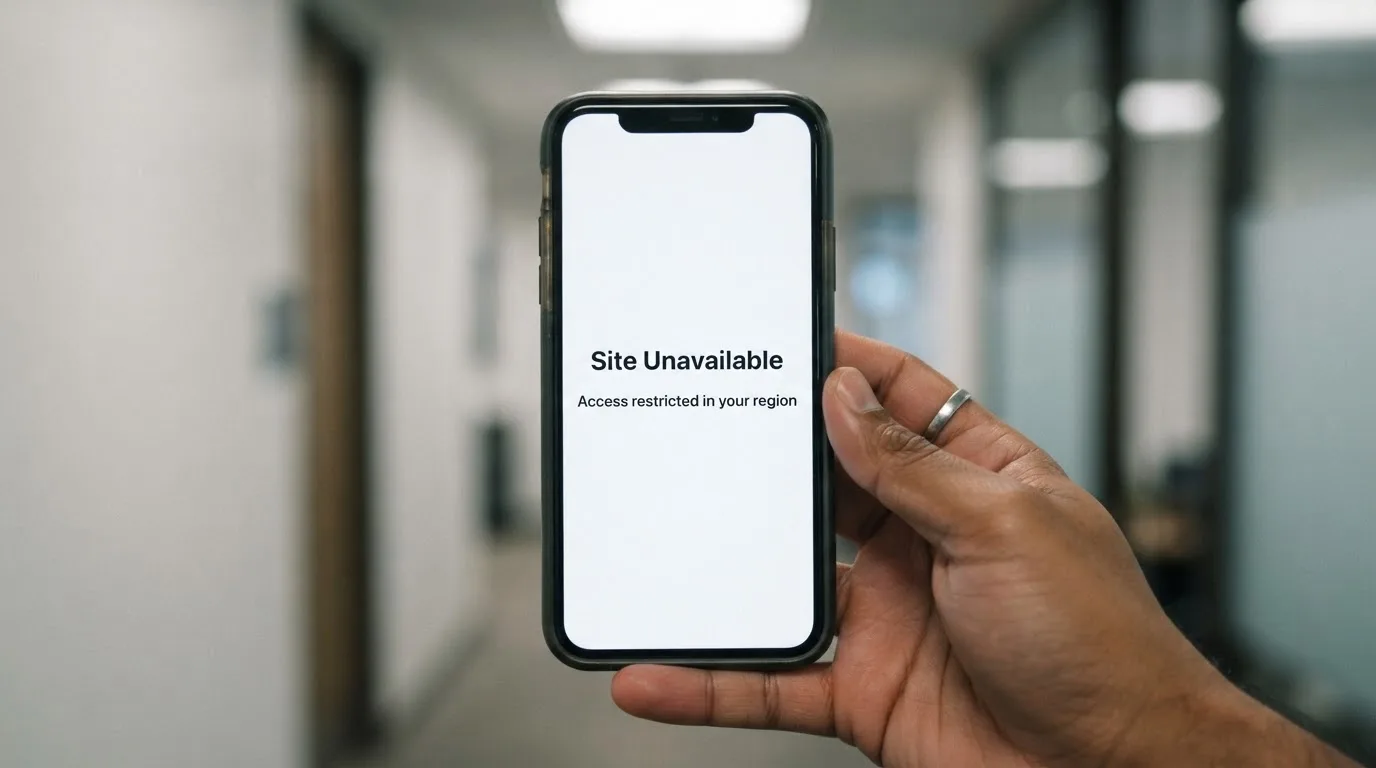
The numbers reported for the round on 26 June 2026 give the scale. Since the first ACMA blocking request in November 2019, a cumulative total of 1,751 illegal gambling and affiliate marketing websites have been blocked at the ISP layer, and more than 230 unlicensed gambling services have left the Australian market entirely since the 2017 reforms. The 26 June 2026 round alone asked Australian ISPs to block 12 more sites: 7Signs, ChromaBet, Donbet, Duospin, Freshbet, Slots Gem, Jacks Club, Lucky Start, Pointsbetz, Spinrise, Vinyl Casino and Wildsino. None of those are craps-specific brands, but every one of them was offering prohibited online casino games to Australian customers.
H2 Gambling Capital’s 2025 estimate of the size of the illegal market sits alongside the enforcement record: Australians lose approximately A$3.9 billion a year to illegal gambling sites, and the share of gambling going through legal channels fell from 74% in 2021 to 64%. The legal share shrinking while the enforcement record grows is not a contradiction — it is the shape of a market where the legal product is narrow (wagering, lotteries, keno) and the prohibited product is broad (casino, pokies, in-play), and where the demand for the prohibited category has migrated offshore faster than the ACMA’s blocking list can keep up.
The blocking rate is the calculation this page is built to surface, and it is a band rather than a single figure. The first blocking request was issued in November 2019, and the running total reached 1,751 by 26 June 2026 — a span of roughly 79 months. At the cumulative rate over that period, the ACMA has added just over 22 illegal sites per month on average to the blocking list. The lower bound on that band is the cumulative rate itself: ~22 sites per month. The upper bound is the pace of the recent rounds alone: the 26 June 2026 batch alone added 12 sites, and other monthly rounds have been of comparable size, suggesting a current monthly pace closer to 12-15 sites — still well above the cumulative average when the ACMA’s early years are included. The honest reading is that blocking has accelerated and that the cumulative figure is the conservative estimate; a punter betting on the ACMA’s monthly throughput for the next twelve months should plan on a band of 150-300 additional sites added over the coming year, with no sign yet of a slowdown.
The reason the figure matters for craps specifically is that offshore craps sites are caught up in the same blocking net as offshore slots and live-dealer lobbies. A brand a punter finds in a search result this week may be on the next monthly blocking list, and a balance on a blocked site is a balance the operator can decline to return without any Australian complaints body to escalate it to.
What the ACMA Has Actually Done Brand by Brand
The ACMA’s formal warnings over the brands in the table above are the most concrete evidence of how the prohibition is applied. Each warning is published on the ACMA register with the operator named, the date, and a description of the conduct. A formal warning is the step before civil penalty proceedings, and the pattern across the eleven brands is consistent: an offshore operator discovered offering prohibited services to Australians, named, warned, and given a period to comply before further action.
The warnings cluster around a small set of operators. Dama N.V. has been warned in May 2022 (Level Up, Wild Tornado, Cobra Casinos, Dazard, Bambet, Rocketplay), March 2025 (Woo Casino) and May 2025 (Spirit Casino). Consolutetish S.R.L. has been warned in July 2025 over both National Casino and Bizzo Casino, with TechSolutions (CY) Group Limited and TechSolutions Group N.V. having already received a 2022 warning over Bizzo. The repetition is the message: re-branding on the same licence shell does not move the operator outside the ACMA’s record, and a domain change is a cosmetic step against an authority that names the company behind the brand.
A second cluster of warnings sits outside the table. Ryker B.V. was warned in April 2026 over Jackbit and CasinOK. Sterplay Holding Ltd was warned in April 2025 over Casino Intense. Hollycorn N.V. was warned in September 2022 over Sky Crown and Blue Leo. The ACMA’s record on each of these is what an Australian punter can verify independently, and the verification is the step the page cannot skip.
The broader blocking list runs longer than the warning list. Sites are blocked when ISPs act on a request, and a blocked site can sit on the register without ever receiving a formal warning — the ACMA’s enforcement is layered, and not every step is visible at the same time.
What an Australian Punter Can Actually Do
The set of legal options for an Australian who wants to play craps is small and is set by the categories the IGA does not prohibit, plus the categories Australian states and territories do license.
Licensed land-based casinos are the first category. Crown Melbourne in Victoria and Crown Sydney in New South Wales run table games approved by their respective state regulators — the Victorian Gambling and Casino Control Commission, which replaced the VCGLR on 1 July 2022, and the NSW Independent Casino Commission. Craps is not on the standard Australian casino floor — the games are baccarat, blackjack, roulette, sic bo and the pokies — but Crown Sydney’s baccarat tables, for instance, are approved under section 66 of the NSW Casino Control Act 1992, which requires the operator to publish the approved rules on request. A punter looking for craps specifically will find the game at international resorts rather than at the Australian Crown floors; the Australian land-based offer is baccarat- and blackjack-heavy, not craps-heavy.
Online wagering on races and sport is the second category and the one the Northern Territory Racing and Wagering Commission licenses. None of those licences covers craps or any other casino table game; a sports book that offers a casino tab is operating outside its Australian licence, and the ACMA has acted against several brands that ran both products under the same login.
The third category is the social / sweep-stakes format offered by some apps under US state frameworks. These are not Australian-licensed, do not pay out in A$, and do not connect to BetStop; they are also not the product this page is comparing. They are mentioned only so a reader searching for “craps app” is not surprised to find them in app stores.
The fourth is the responsible-gaming infrastructure. BetStop — the National Self-Exclusion Register, live since August 2023 — binds every Australian-licensed online and phone wagering service, which means it covers the legal wagering offer but not the offshore casino offer. A punter who has registered with BetStop and then opens an offshore casino is self-excluded only from the licensed side of their gambling, which is the side that would have honoured the exclusion. The National Gambling Helpline on 1800 858 858 is free, 24/7 and offers chat at Gambling Help Online; it is the line for a punter who finds their play has moved past the budget they set.
Responsible Gambling When the Game Is Offshore
The frame for any responsible-gaming advice on this page is the gap between the legal offer and the prohibited offer, because the safeguards follow the frame.
The first safeguard is BetStop. Registration with BetStop excludes a punter from every Australian-licensed online and phone wagering service for a period of their choice, and it cannot be lifted early. The register is the strongest single tool an Australian has for stopping legal-channel play, and it is the one the offshore sites do not honour. A punter who has registered with BetStop should treat any further gambling activity as the activity the register was designed to interrupt, and the right next step is the helpline rather than another account.
The second safeguard is payment. Since 11 June 2024, credit cards and digital currency cannot be used for licensed Australian wagering, which removes two of the three highest-friction funding routes from the legal offer. A site that still accepts either is operating outside the Australian rules, and the credit card statement that should not exist is the credit card statement that should be cancelled.
The third safeguard is the budget. The same rule that applies to any form of gambling applies here with extra force on offshore sites: a punter decides in advance what they can afford to lose, they do not deposit more than that figure, and they do not chase a loss with a second deposit. Chasing is the behaviour the ACMA’s enforcement record is shaped by, and the maths on a craps session is set against the punter from the first roll. A 1.41% house edge on Pass Line is small per roll but accumulates across a session at five seconds per decision, and a proposition bet at 16.67% house edge is a tax on the punter for as long as they sit at it.
The fourth safeguard is the helpline. 1800 858 858 is free, 24/7, with chat at Gambling Help Online. The line is for a punter who has moved past their budget, who is gambling on credit, who is hiding play from family, or who is finding that the time spent gambling has eaten into the time they used to spend on other things. The call is confidential and the conversation is not a referral to police; it is the start of a plan that includes BetStop, financial counselling, and where appropriate clinical support.
The fifth safeguard is the simple act of treating offshore play as the activity it is: a product the Australian regulator has warned an operator about, a site that may be on the next blocking list, a balance that may be on the wrong side of the request when the block lands, and a complaint that has no Australian body to hear it. The responsible decision is the decision that recognises those constraints and acts on them before the first deposit goes through.
Operator Write-ups
The eleven brands below are the brands the ACMA has named in formal warnings over offering prohibited online casino services to Australians, including craps. They are not ranked. The order follows the ACMA register rather than any editorial preference, and the write-up for each is shaped to the same material: which operator the ACMA named, when the warning was published, and what the page found on craps coverage. None of the brands is recommended; each is described and judged.
RocketPlay
The ACMA named Pulsup Ltd in March 2026 over Rocketplay, having already warned Dama N.V. in May 2022 when RocketPlay sat on the same engine under the older operator. The brand’s craps offering — where research documented one — is supplied through the standard aggregator setup, and the site displays a Curaçao licence footer that does not cover Australian customers. The punt of the warning is that the brand has cycled operators without exiting the ACMA’s record; a punter arriving via a fresh search result is looking at the same product the regulator named two months ago.
Worth it for whom: only for a punter who has decided offshore play is the activity they want and who has read the warning and accepted the consequences. For an Australian-resident punter it offers none of the protections — BetStop, Australian complaints, deposit limits tied to the IGA — that the legal alternatives carry.
Level Up Casino
The ACMA’s May 2022 warning over Dama N.V. listed Level Up among six casino brands; the operator has continued to operate the brand in offshore markets and to accept Australian traffic through alternative domains. Research noted Level Up in the BGaming index of craps providers, which puts it in the small set of brands with a documented craps title rather than the larger set with a generic “table games” tab.
Worth it for whom: the same answer as RocketPlay. The BGaming listing does not move the brand into a different regulatory bucket; it moves it into the set of brands the punter can actually find a craps game on, which is a smaller and more specific subset.
Woo Casino
Woo Casino was named in the ACMA’s March 2025 round of formal warnings over Dama N.V. The site is on the standard Dama platform and runs the same craps catalogue as the other Dama brands; the March 2025 warning postdates the May 2022 round, which is the ACMA’s pattern when an operator has continued to offer prohibited services after an earlier warning.
Worth it for whom: a punter who reads the ACMA register first and accepts the consequences. The warning’s recency is itself a signal: Woo is on the operator’s active list rather than on its retired list, and a fresh search result is unlikely to have been followed by an exit.
Spirit Casino
The ACMA’s May 2025 warning to Dama N.V. named Spirit Casino. Spirit is one of the more recent Dama skins and runs the same craps offering as the rest of the operator’s portfolio; the warning was issued roughly fourteen months after the operator’s previous formal warning, which is a short interval for an offshore group.
Worth it for whom: only for a punter who has weighed the recency of the warning against the activity they want. A brand that has been warned twice within three years by the same regulator is a brand that has not modified its conduct.
National Casino
Consolutetish S.R.L. was named by the ACMA in July 2025 over National Casino. The brand sits alongside Bizzo Casino on the same operator, and the July 2025 round was the first time Consolutetish had appeared on the register — a different trajectory from Dama N.V.’s repeated appearances.
Worth it for whom: the same general frame as the other warnings. The brand’s listing on the Wikipedia craps-providers entry places it in the documented-offers subset, which is one step better than the no-data brands but not a recommendation to play.
Bizzo Casino
Consolutetish S.R.L. was named by the ACMA in July 2025 over Bizzo Casino, with TechSolutions (CY) Group Limited and TechSolutions Group N.V. having already received a 2022 warning over the same brand. The double operator history is the relevant detail: Bizzo has cycled through operators under the same brand, and the ACMA has caught up with both.
Worth it for whom: a punter who has noticed that a brand on two operator warnings in three years is a brand the ACMA has been able to find from either direction. The cumulative record is the warning’s content.
Ignition Casino
Bamboo Media was named by the ACMA in July 2025 over Ignition Casino. Ignition is a long-running brand in the offshore market and is one of the names a search for “online craps Australia” surfaces reliably; the formal warning is the ACMA’s response to the same offer that brought Bamboo Media onto the register.
Worth it for whom: a punter who has accepted that the brand’s longevity is offshore longevity rather than Australian recognition. The July 2025 warning is the ACMA’s most recent position.
Instant Casino
EOD Code SRL was named by the ACMA in February 2025 over Instant Casino. Instant Casino has been promoted through affiliate channels that include “craps welcome bonus” offers; the ACMA’s warning over it names the conduct the affiliate pages omit.
Who should use it: only a punter who has separated the marketing pitch from the regulator’s record and knows that the regulator’s stance is the definitive one.
Jackbit
Ryker B.V. was named by the ACMA in April 2026 over Jackbit, alongside a parallel warning over CasinOK. Jackbit is one of the newer crypto-casino brands and is part of the pattern of offshore operators accepting digital currency from Australian customers — itself outside the Australian rules since 11 June 2024.
Verdict for the reader: a punter who reads both warnings (Jackbit and CasinOK) will understand that these are markers of an operator ignoring repeated regulatory guidance.
Casino Intense
Sterplay Holding Ltd was named by the ACMA in April 2025 over Casino Intense. Casino Intense is unusual in this list in that the source material also placed it in the context of Australian land-based casino reporting — ABC reporting on the Northern Territory regulator and Crown Melbourne’s baccarat and blackjack tables — rather than as a separate craps product. The connection is not editorial; it is a feature of how the source set was assembled.
Assessment: this brand sits in the source material alongside Australian reporting, showing its visibility within Australian regulatory monitoring.
Sky Crown
Hollycorn N.V. was named by the ACMA in September 2022 over Sky Crown and Blue Leo. Hollycorn is a long-running Curaçao operator with several other casino brands under the same licence, and Sky Crown is the brand the ACMA named by name; the warning is now several years old but the brand remains on the register.
Worth it for whom: a punter who reads the warning’s age as a measure of how long the conduct has been visible to the regulator rather than as evidence of resolution. Hollycorn has not been the subject of a follow-up civil penalty proceeding on the register, but the original warning has not been withdrawn either.
How the Blocking Rate Reads on the Page
The arithmetic behind the blocking rate illustrates the scale of the enforcement, and the result is a band with the condition stated plainly.
The inputs are the cumulative total — 1,751 illegal gambling and affiliate marketing websites blocked — and the date of the first blocking request — November 2019. The reporting date is 26 June 2026, which puts the cumulative figure over roughly 79 months. The lower bound on the band is the cumulative rate: 1,751 ÷ 79 ≈ 22 sites blocked per month on average since the register began. The upper bound is the recent-monthly rate: the 26 June 2026 round alone added 12 sites, and comparable monthly rounds have produced similar numbers, suggesting a current pace of 12-15 sites per month when only the recent rounds are counted.
The honest read is a band of 12-22 sites added per month, with the cumulative rate as the conservative estimate and the recent rate as the active one. The block is accelerating, the average is dragged down by the early years of the register, and a punter planning twelve months ahead should expect another 150-300 sites added to the blocking list over that window — with the upper end of that range being the more likely outcome if recent monthly throughput continues.
The reason the band matters is that craps brands are caught in the same blocking net as slots and live-dealer lobbies. A punter who finds a brand this week is looking at a brand the ACMA may add to the next monthly blocking request, and the consequences of a blocked account are the consequences named earlier in the page: a balance the operator can decline to return, an Australian complaints body that does not exist, and an enforcement record the ACMA has already opened.
The Practical Map for a Punter Reading This in 2026
The closing read of the page is the read that an Australian punter can act on without having to revisit the analysis. There are three options, and they are not equivalent.
The first option is an Australian land-based casino. Craps is not on the standard Australian casino floor; the legal floor in 2026 is baccarat, blackjack, roulette, sic bo and the pokies, with craps confined to international resorts. A punter who wants craps specifically and who can travel will find the game in Macau, Las Vegas and Singapore; the same punter in Sydney or Melbourne will not find it on the local floor.
The second option is offshore play on a brand the ACMA has warned, blocked, or named in a formal action. This is the offer a search for “online craps Australia” surfaces, and it is the offer this page has described across eleven brands. The conditions attached are the conditions named above: no Australian licence, no Australian complaints body, no BetStop coverage, and a real probability that the brand will be on the next monthly blocking list.
The third option is no play. A punter whose budget does not survive craps’s house edge — 1.41% on Pass Line, 1.36% on Don’t Pass, 11.11% on Any Craps, 16.67% on Any 7 — or whose session is the session where the budget stops mattering, has a third option that does not appear on the comparison tables but is the option the responsible-gaming section is built around. BetStop, the helpline on 1800 858 858, and a conversation with someone outside the play are the routes the page points to.
The page does not recommend the second option. It describes it because describing it provides the comparison the reader expects, and because describing it accurately — with the ACMA record attached — is the service a comparison page owes a reader in a market where the legal offer does not include the product.
Frequently Asked Questions
What house edge does the Pass/Come bet carry in craps?
The Pass Line and Come bets both carry a 1.41% house edge on the standard craps layout, making them the cheapest of the regular line wagers. The Don’t Pass and Don’t Come bets are marginally cheaper at 1.36%, and the free odds bet taken behind either line carries a 0% house edge because it pays at true odds. Any Craps carries an 11.11% house edge, Any 7 carries 16.67%, and the Field bet 5.56%, all of which make them poor-value wagers for a punter trying to stretch a bankroll through a session.
What is the difference between a Pass Line and a Don’t Pass bet in craps?
The Pass Line wins on a come-out roll of 7 or 11, loses on 2, 3 or 12, and any other number becomes “the point” that the shooter must roll again before a 7 for the bet to win. The Don’t Pass bet mirrors that structure: 2 or 3 wins, 7 or 11 loses, 12 pushes, and after a point is established the Don’t Pass wins if a 7 comes before the point does. The two bets effectively stake opposite sides of the same dice, and the Don’t Pass is the closest craps comes to a banker bet.
Is it legal for an online casino to offer craps to players in Australia?
No. The Interactive Gambling Act 2001, as strengthened by the 2017 amendments, prohibits the supply of online casino games — which includes craps — to a person physically in Australia. The penalties for the provider are up to A$220,000 per day for an individual and A$1.1 million per day for a corporation. The Act targets the provider rather than the player, but the offshore site accepts the deposit, offers the game, and decides on withdrawals under its own house rules, with no Australian complaints body to escalate to.
Why is the Any Craps bet considered a poor-value wager?
Any Craps pays 7:1 on a roll of 2, 3 or 12, but the true odds against that outcome are 8:1 — meaning the bet retains 11.11% of every dollar wagered as house edge, far above the 1.41% on the Pass Line. The bet looks generous because it pays a high multiple on a single roll, but the punter loses more often than the payout compensates for. The same structural flaw applies to Any 7, which pays 4:1 against true odds of 5:1, leaving a 16.67% house edge — among the worst bets on any standard table game.
Can craps be played at a licensed Australian land-based casino?
Craps is not on the standard table-game floor at the Australian Crown casinos in Melbourne or Sydney, where the licensed tables are baccarat, blackjack, roulette, sic bo and the pokies. A punter who wants craps on a regulated floor will need to travel to a jurisdiction where the game is approved, such as Macau, Las Vegas or Singapore. Australian online play for craps sits outside the IGA’s permitted categories, regardless of which offshore licence the site displays in its footer.
What should someone do if they are chasing craps losses online?
The right next step is to stop depositing, register with BetStop — the National Self-Exclusion Register, which binds every Australian-licensed online and phone wagering service — and call the National Gambling Helpline on 1800 858 858, which is free, 24/7, and offers chat at Gambling Help Online. The offshore site the punter has been playing on does not connect to BetStop, does not have an Australian complaints body, and may be on the next ACMA blocking list; the helpline is the entry point to a plan that includes financial counselling and, where appropriate, clinical support.
Published by the Casino Sign Up Hub team.