
Australian Casino Sites That Take Amex: What the Method Costs a Player Who Uses It
An American Express card looks like just another way to fund a casino balance, and the offshore sites that advertise themselves as “Amex casinos” lean hard on that impression. The impression costs the player in ways the marketing never itemises. Almost every brand that pitches American Express to Australians sits at the receiving end of a formal warning from the Australian Communications and Media Authority, sits outside the local licence regime, and sits behind a card network whose own surcharge rules the Reserve Bank has chosen not to touch. The “instant deposit” is a thin layer over several layers of friction: a card issuer that may itself decline the transaction, a bank that may add a gambling block on top, and a regulator that may add the whole site to a block list with whatever balance is still on the account.
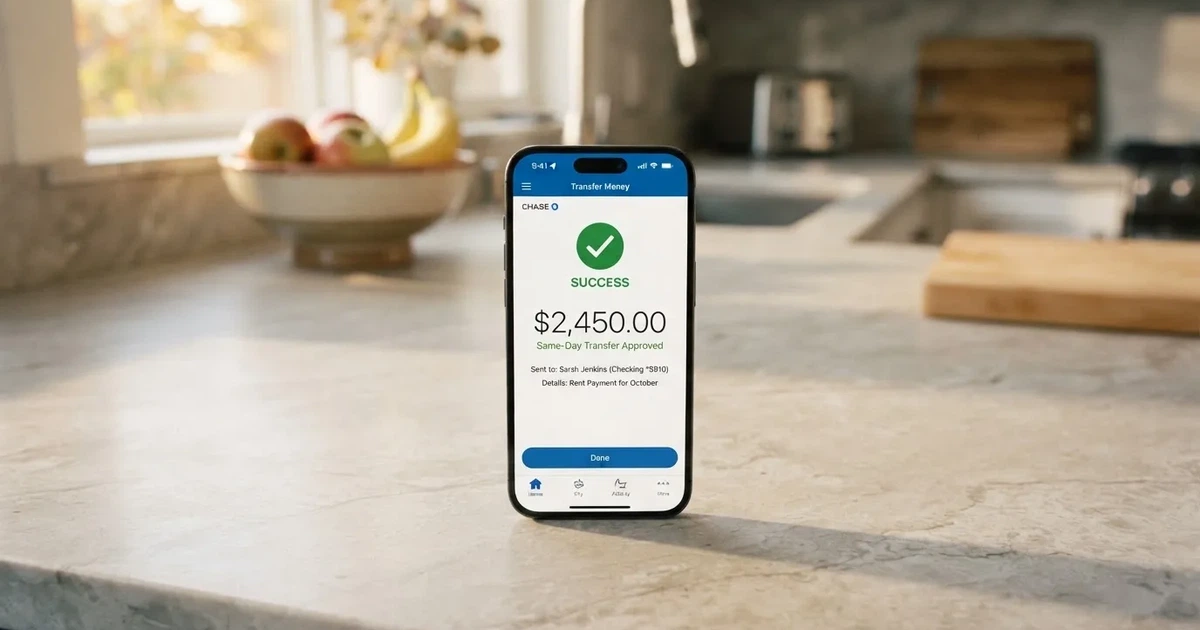
This page is the cost picture for that picture. It works through what American Express is at an Australian merchant, how the regulator has treated the offshore brands that advertise Amex deposits, where the blockers sit between an Amex card and a casino balance, and what an “Amex casino” actually delivers once the welcome offers have been read past. Eleven brands sit in the reviewed set because the ACMA itself has named each one in a formal warning. The set is not a recommendation and never was: the only thing the regulator’s list proves is that the regulator has acted against them.
Current as of 20 October 2026. Licence claims verified against the ACMA Register and the regulator’s formal-warning publications; payment claims cross-checked against the Reserve Bank of Australia, Westpac, ANZ and Commonwealth Bank product pages.
Table of Contents
- How American Express Actually Works in Australia
- The Legal Frame Around Offering Amex to Australians
- What “Settlement Speed” Means When the Method Is Amex
- Responsible Gaming Supports Relevant to Amex
- Eleven Brands the ACMA Has Formally Warned
- Blocking Rate, in a Band
- What Each Method Costs the Reader
- The Shape of the Trade-Off
- Frequently Asked Questions
How American Express Actually Works in Australia
American Express is not a payment network in the same way Visa and Mastercard are. It issues cards, processes transactions and settles the merchant’s money itself, in what is called a three-party scheme, where the issuer, the network and the acquirer all sit inside the one company. The Reserve Bank of Australia noted this structural difference when it published its July 2025 review of merchant card costs and surcharging, and made it explicit in the scope of the proposed reforms: the review proposes removing surcharges on eftpos, Mastercard and Visa transactions only, leaving American Express outside the proposed ban. The card network behaves differently because the card scheme is structured differently, and Australian policy already routes around that difference.

Practically, that means three things for a cardholder. A merchant who accepts Amex pays the issuer a higher merchant fee than it pays on Visa or Mastercard; the merchant passes much of that fee to the customer as a surcharge, on top of whatever the merchant would have charged anyway. The surcharge is lawful on Amex because the Reserve Bank has chosen not to extend the proposed ban to it, so a casino can advertise “no fees” and still apply the issuer’s contracted rate. And the issuer’s own rules sit on top of everything else, including the merchant category codes that Australian banks now use to filter gambling transactions at the card level.
The two non-Amex pieces of plumbing that touch an Amex transaction are Australian. The first is the merchant category code, a four-digit number attached to every card transaction that classifies the merchant by industry; the gambling-relevant code in Australia is the one labelled “Betting/Casino Gambling”, and a customer’s bank can refuse authorisation on a card transaction carrying that code regardless of which network routes the payment. The second is the issuing bank’s own gambling-block products, which Westpac, ANZ and Commonwealth Bank now offer as opt-in toggles inside their mobile apps; turning them on blocks the card, not the merchant, which is why the same block catches an Amex transaction at an online casino as readily as it catches a Visa or Mastercard deposit. The cardnetwork’s terms, the issuer’s merchant terms and the customer’s bank rules all run at once.
Surcharging and what the card costs the merchant
An Amex transaction costs an Australian merchant more than the equivalent Visa or Mastercard payment. The surcharge that gets passed through is, in economic terms, the merchant’s way of recovering that higher fee without absorbing it as a margin cut, and the Reserve Bank’s decision to leave Amex outside the proposed ban keeps that recovery legal. For a casino customer that becomes a marketing line: “no deposit fee” is a claim about the casino’s own commission, not about the network’s interchange rate, and the two are different things.
The merchant category code that lets banks filter
Every card transaction carries a merchant category code, and an Australian bank that wants to filter gambling spend filters it by reading the code attached to the transaction at the authorisation stage, rather than by reading the merchant’s name or the URL the customer is paying. Westpac publishes this plainly on its gambling-block page: the bank refuses authorisation of transactions registered under the “Betting/Casino Gambling” code on eligible personal credit and debit cards. The same logic applies whether the card is Visa, Mastercard or American Express, because the code is attached to the merchant’s acquirer record, not to the card network that routes the payment.
The Legal Frame Around Offering Amex to Australians
The Interactive Gambling Act 2001, as amended in 2017, makes it an offence to provide online casino games, online pokies or in-play betting to a person physically in Australia. The Australian Communications and Media Authority is the body that investigates, issues formal warnings and, where warnings are ignored, asks Australian internet service providers to block the offending services. Credit cards, credit-related products and digital currency have been banned as payment for licensed online wagering since 11 June 2024, with penalties for operators running up to A$247,500; the legal deposit routes left for a licensed wagering service in Australia are debit cards, bank transfer, PayID/Osko and BPAY. Online casino games are a prohibited interactive gambling service, so the credit-card ban adds up to a wider prohibition in practice: even a debit card used to fund an illegal offshore casino sits in a transaction the regulator is empowered to act on, because the service itself is the offence.
What that means for American Express is narrow and absolute. A casino that holds a Curaçao or Anjouan licence is not an Australian licensed wagering service, and so the debit-versus-credit distinction the IGA uses does not let an offshore casino route around the prohibition. The Australian-licensed deposit routes — debit card, bank transfer, PayID/Osko, BPAY — are not the deposit routes an offshore casino uses to take an Amex deposit, because an offshore casino is by definition not running on an Australian licence. The “Amex accepted” line on an offshore casino page is a statement about what the merchant acquirer will process, not about whether the platform itself is lawful for a person in Australia.
2026 reform, not yet in force
The Interactive Gambling Amendment (Gambling Reform) Bill 2026 passed Parliament on 19 August 2026. Its advertising and inducement measures commence on 1 January 2027. The Act is law with a future start date, and on a page read in 2026 it is not yet active. What is active in 2026 is the ACMA’s existing power to issue formal warnings and direct ISPs to block sites.
What “blocking” actually looks like
A blocking request from the ACMA asks Australian internet service providers to make the named domains unreachable on their networks in Australia; it does not delete the site, fine the operator directly in the customer’s jurisdiction, or refund any balance held by the site. The first blocking request the ACMA issued went out in November 2019, and as of June 2026 the regulator reported a running total of 1,751 illegal gambling and affiliate marketing websites blocked since that date. The latest reported round, on 26 June 2026, named a further twelve: 7Signs, ChromaBet, Donbet, Duospin, Freshbet, Slots Gem, Jacks Club, Lucky Start, Pointsbetz, Spinrise, Vinyl Casino and Wildsino. A site that has never been blocked can be blocked at the next round; a site that has been blocked can reappear at a new domain and start the cycle over.
The pace of blocking, set against the size of the offshore market, is what makes the running total read the way it does. The blocking rate is not the regulator’s verdict on the size of the problem; it is the regulator’s apparatus at work over time. Eleven brands reviewed below sit on the ACMA’s formal-warning list for taking deposits from Australians, and several of those same brands have appeared in blocking rounds before or since their warnings. A monthly rate and a yearly rate, both expressed as a band rather than a single figure, give a fuller picture than either one on its own.
What “Settlement Speed” Means When the Method Is Amex
Marketing material talks about settlement in seconds, and the seconds are mostly real. The deposit is the easy half: a card authorisation through the Amex network settles on the casino’s merchant account in a single message round-trip, and the casino credits the balance immediately for what amounts to an instant deposit. The harder half is what happens at the issuer’s end and what happens at the bank’s end. The issuing bank is checking the merchant category code at the same moment the casino is crediting the balance, and a customer who has not opted in to a gambling block may still be declined if the bank’s own fraud rules treat the transaction as out-of-pattern for that card. The “instant deposit” is instant when no gate fires; the same transaction is a soft decline when one does.
Withdrawal is the half that gets glossed over. Almost every offshore casino withdraws back to Amex by routing the payout through a bank wire or to a different card, and the time-to-balance on the card is then the time it takes the casino’s payments team to release the funds plus the time the card network takes to process the credit plus the time the issuer takes to post it to the account. In practice the same method that was “instant” on the way in becomes a multi-day wait on the way out, because the method is not symmetric. A few brands offer a withdrawal to a different card entirely, or to a crypto wallet, or to a bank transfer; that asymmetry is itself a signal worth reading.
Osko, PayID and what they would have done
If the merchant were a licensed Australian wagering service, the deposit would go through the New Payments Platform rather than the card network, and would settle in under a minute, twenty-four hours a day, because Osko settles bank transfers between participating Australian banks in that time. Paying to a PayID shows the registered name of the account holder before the transfer is sent, which AP+ describes as a feature that should make a punter pause if the PayID belongs to an account that does not match the merchant they think they are paying. For an Australian-licensed sports or racing bookmaker, that infrastructure is what a deposit looks like. For an offshore casino, none of that is available, because the casino does not have an Australian account to receive a PayID into.
BPAY, eftpos and the legitimate retail channel
BPAY has been in operation in Australia since 1997 and is now offered through the online banking of more than 140 banks and financial institutions, with over 95,000 businesses billing through it. It is the standard bill-payment method for an Australian utility, an Australian insurer and an Australian licensed wagering service that takes a deposit through bill-payment rails. It is not a deposit channel an offshore casino will accept, because an offshore casino does not have an Australian biller code. The legitimate retail Australian payment stack is Osko for instant bank transfer, PayID for verified account-name bank transfer, BPAY for bill payment, and eftpos for debit at a physical terminal — none of which is what an offshore Amex casino actually runs on.
Responsible Gaming Supports Relevant to Amex
The Australian responsible-gambling infrastructure for an Amex-accepting offshore casino is mostly external to that casino. BetStop, the National Self-Exclusion Register, has been live since August 2023 and binds Australian-licensed online and phone wagering services; a BetStop registration does not extend to an offshore casino, because the casino is not bound by the regime the register implements. The National Gambling Helpline on 1800 858 858 is free and runs 24/7, with chat at Gambling Help Online, and the helpline is not gated by which casino — if any — the caller was using. A self-exclusion through BetStop does not exclude an Australian player from an offshore site, and an offshore site’s own self-exclusion does not feed back into BetStop.
The card-level block products sit in the same register as those supports, and they are the more powerful tool against a specific offshore deposit attempt, because they block at the moment the transaction is presented, rather than after the punter has decided to play. ANZ’s block, activated in the ANZ app, blocks gambling transactions on an eligible card and on a digital wallet such as Apple Pay linked to that card, and turning the block off requires a 48-hour waiting period; the bank warns that not all gambling transactions will be blocked and some non-gambling transactions might be blocked in error. Commonwealth Bank lets customers apply a gambling lock to eligible cards via the CommBank app, with the same caveat that the bank states it cannot guarantee all gambling-related purchases will be stopped. Westpac’s block sits at card level and refuses authorisation on the “Betting/Casino Gambling” merchant category code.
None of these products filter purely on Amex, and that is the point: the card scheme is incidental to the block. A customer who turns on a Westpac gambling block on the card carrying the Amex product will see the same declines they would see on a Visa debit, because the merchant category code is attached to the acquirer on the casino side and the block is attached to the card on the customer side. That is why a card-level block is the cheapest available defence for a customer who has decided not to fund an offshore casino with any card at all.
Apple Pay, Google Pay and what sits on top of the card
By the end of 2025, Apple Pay, Google Pay and Samsung Pay transactions collectively accounted for around 45% of all card payments in Australia by number. Apple itself does not charge fees to consumers for using Apple Pay; any surcharge applied is the merchant’s own card-processing fees, and the per-transaction limits and PIN requirements are set by the card issuer or merchant. The transaction that registers at the bank’s end is the underlying card transaction, which is what the gambling block sees; the wallet is presentation, not payment, and changing the wallet does not change how the merchant category code is written. Australian banks have been explicit about that: ANZ’s block statement says the block catches Gambling Transactions made through a digital wallet such as Apple Pay on an eligible card, not just the physical card.
AUSTRAC and the cash-reporting threshold that does not apply
AUSTRAC’s threshold-transaction-report rule, which requires reporting of transfers of A$10,000 or more, applies only to physical cash. Ordinary electronic bank transfers — including a PayID/Osko transfer to a PayID that does not match an Australian-licensed wagering service — are not subject to that per-transaction reporting requirement, regardless of the amount sent. The threshold is widely mentioned as a reason to be cautious about large transfers, but the rule it applies to is the wrong one for the case in hand.
Eleven Brands the ACMA Has Formally Warned
Every operator in this ranking is here because the ACMA itself has published a formal warning naming the brand and the parent company for offering prohibited interactive gambling services to Australians. That is the only entry criterion: not a payment-method ranking, not a market-share order, not a “best for Amex” list, but the regulator’s own publication record. The order of the brands below follows the regulator’s order in the fact bank; “best” would be the wrong frame, because none of these products is offered lawfully in Australia.
The table that follows records what the regulator has published about each brand, who the operator named in the warning is, and what the research record shows about the brand’s support for American Express as a payment method. The “subject support” column reflects what the public listings report and is not an endorsement of the merchant relationship.
| Brand | ACMA action and date | Operator named by the ACMA | Subject support |
|---|---|---|---|
| RocketPlay | Formal warning, March 2026 (Pulsup Ltd); earlier Dama N.V. warning May 2022 | Pulsup Ltd / Dama N.V. | — |
| Level Up Casino | Formal warning, May 2022 | Dama N.V. | Listed as accepting Amex on merchant listings |
| Woo Casino | Formal warning, March 2025 | Dama N.V. | — |
| Spirit Casino | Formal warning, May 2025 | Dama N.V. | — |
| National Casino | Formal warning, July 2025 | Consolutetish S.R.L. | Listed on payment-method guides citing public sources |
| Bizzo Casino | Formal warning, July 2025 (Consolutetish S.R.L.); earlier TechSolutions 2022 | Consolutetish S.R.L. / TechSolutions | — |
| Ignition Casino | Formal warning, July 2025 | Bamboo Media | — |
| Instant Casino | Formal warning, February 2025 | EOD Code SRL | Listed on payment-method guides citing public sources |
| Jackbit | Formal warning, April 2026 | Ryker B.V. | — |
| Casino Intense | Formal warning, April 2025 | Sterplay Holding Ltd | Listed on payment-method guides citing public sources |
| Sky Crown | Formal warning, September 2022 | Hollycorn N.V. | — |
Three of the eleven brands appear on merchant listings that report them as accepting American Express; for those the column reflects what those listings say, not an affirmative claim that the operator itself discloses. The remaining eight carry no public listing of Amex support in the consulted set and take the no-data marker. None of the eleven is an Australian-licensed wagering service, because no such licence exists for online casino games in Australia.
RocketPlay
The ACMA formally warned Pulsup Ltd over Rocketplay in March 2026; the same brand was named in an earlier Dama N.V. warning in May 2022. The domain name itself, ending in .com.au, is a deliberate signal: an offshore operator uses a country-code domain to read as if it were an Australian business, while the operator itself is incorporated in Cyprus (Pulsup) and previously Curaçao (Dama). An Australian player looking at the page is reading an .com.au URL on a server that is not in Australia and a parent company that is not an Australian licensed wagering service. There is no public record of an Amex acceptance page for RocketPlay in the consulted set.
The verdict on this brand comes down to two unsentimental facts. The brand has been warned twice, which is itself a signal the regulator took the first warning and followed up with a second; and it operates under an Australian-looking domain from outside the country. The reader who closes this tab at this point loses nothing.
Level Up Casino
The ACMA formally warned Dama N.V. over Level Up Casino in May 2022, as part of a batch that also named Bambet, Dazard, Rocketplay, Wild Tornado and Cobra Casinos. Dama N.V. runs a stable of brands sharing a Curaçao registration, payment-stack and bonus structure; Level Up is one identity inside that stable, and the same payment infrastructure applies across the group. Public merchant listings in the consulted set describe Level Up as accepting American Express through a card-processing acquirer; the operator’s own disclosure on that point is not in the same set of sources.
The verdict is one of consolidation. The brand is one of a group of look-alike brands from the same operator, all on the same warning, all the same distance from an Australian licence and all subject to the same card-network rules. The reader who treats one as a stand-in for another inside the Dama group has read the table correctly; the reader who treats any of them as anything other than an offshore offering to a prohibited product has read it wrong.
Woo Casino
The ACMA formally warned Dama N.V. over Woo Casino in March 2025, a separate action from the May 2022 batch and a reminder that warnings do not stop at the first round. A 2025 warning is a 2025 escalation in the regulator’s published record. There is no public record in the consulted set of an Amex acceptance line for Woo Casino specifically, though the payment stack across the Dama group is the same.
The verdict is the same as for any Dama brand that has now been warned twice across two different publication dates. The cumulative warning record is part of the brand now, and any “Amex casino” headline attached to it does not change the regulator’s view of the product behind the headline.
Spirit Casino
The ACMA formally warned Dama N.V. over Spirit Casino in May 2025. Spirit sits inside the same Dama N.V. stable as Level Up, Woo Casino and several others: same operator, same warning lineage, same product surface. The consulted set does not carry an Amex acceptance listing for Spirit Casino.
The verdict is short. Spirit is one more Dama brand added to the regulator’s warning list in 2025, and the deposit method a customer might use to fund it does not change what the regulator has said about it.
National Casino
The ACMA formally warned Consolutetish S.R.L. over National Casino in July 2025. Public payment-method guides in the consulted set list National Casino on payment-method pages citing Australian-facing material, and the publication pattern is the same as for several other Consolutetish-adjacent brands. The verdict is that National is one more Consolutetish property named in the same July 2025 batch, and an Amex listing on a third-party page is not an Australian licence.
Bizzo Casino
The ACMA formally warned Consolutetish S.R.L. over Bizzo Casino in July 2025; Bizzo had previously been the subject of a 2022 formal warning to TechSolutions (CY) Group Limited and TechSolutions Group N.V. Two different operators on the same brand, on the ACMA’s record, and both warnings sit in the regulator’s published file. There is no public record in the consulted set of an Amex acceptance listing for Bizzo Casino.
The verdict is one of repeated attention. A brand that changes operator entity and still ends up back in the regulator’s warning list is a brand the regulator does not lose sight of.
Ignition Casino
The ACMA formally warned Bamboo Media over Ignition Casino in July 2025. Ignition shares its name with a long-running US-facing brand but operates as a separate offshore entity from Bamboo Media. The consulted set does not carry a public Amex acceptance listing.
The verdict is the same as for any other Bamboo Media-licensed brand: an operator incorporated outside Australia, a published warning in the regulator’s file, and no record in the consulted set of an Australian-facing Amex payment method disclosed by the operator itself.
Instant Casino
The ACMA formally warned EOD Code SRL over Instant Casino in February 2025. Public payment-method guides in the consulted set list Instant Casino alongside a payment-method line that includes ecoPayz and PayID mentions, citing their respective service pages for the description of those methods; the operator’s own Amex disclosure is not in the same set. The PayID reference in those guides is a third-party listing, not an Australian biller-code registration, because an offshore casino does not have an Australian biller code that BPAY’s infrastructure would clear.
The verdict is one of an online casino being marketed to Australians using the names of Australian payment methods, against a regulator warning on the same brand. The reader who reads the listing on a third-party page and the warning on the ACMA’s page has read both; the reader who reads only the listing has read half.
Jackbit
The ACMA formally warned Ryker B.V. over Jackbit in April 2026, in the same period as the regulator also named CasinOK. The consulted set does not carry a public Amex acceptance listing for Jackbit.
The verdict is one of a current year warning on a brand whose products the regulator is actively pursuing. A reader who finds Jackbit advertised as an “Amex casino” in 2026 is reading a marketing line published alongside an ACMA warning published the same year.
Casino Intense
The ACMA formally warned Sterplay Holding Ltd over Casino Intense in April 2025. Public payment-method guides in the consulted set list Casino Intense on a payment-method page citing AUSTRAC and other public sources; the operator’s own Amex disclosure is not in the same set.
The verdict on Casino Intense rests on the regulator’s published record on Sterplay Holding Ltd, with a payment-method listing that does not constitute a licence.
Sky Crown
The ACMA formally warned Hollycorn N.V. over Sky Crown and Blue Leo in September 2022; the warning was published as a PDF and named Hollycorn as the operator. Sky Crown is one of a Hollycorn stable of brands. The consulted set does not carry a public Amex acceptance listing.
The verdict on Sky Crown is the same as for any other Hollycorn brand: an ACMA warning on the regulator’s record, a Curaçao-registered parent, and no Australian licence to point to.
Blocking Rate, in a Band
The running total of 1,751 illegal gambling and affiliate marketing websites blocked by Australian ISPs at the ACMA’s direction sits against a first blocking request issued in November 2019. The arithmetic that translates one into the other is a simple one: months elapsed divided into the running total. June 2026 is the most recent round the research cites, and November 2019 is the cut-off, which works out to roughly eighty months between the first block and the most recent count.
That division yields a band, not a figure. On the high end of the band, the regulator is averaging somewhere in the order of twenty blocked sites per month over the eight-year window; on the low end, the published rounds are concentrated in the years since enforcement was strengthened, and the average over those more recent years alone is higher than the average over the full window. The honest reading is that the blocking apparatus is running at roughly two dozen sites per month against a market whose total population is several times that and rising, and that the running total is a measure of how much the apparatus has caught up with, not how much is left to reach.
The H2 Gambling Capital 2025 estimate puts Australian losses to illegal gambling sites at around A$3.9 billion a year. That figure and the blocking rate sit on different axes: the A$3.9 billion is an estimate of customer losses across the whole illegal market, while the running total is a count of distinct sites the ACMA has named in blocking requests. A site that is blocked and reappears at a new domain may or may not count twice depending on the round’s reporting convention; the A$3.9 billion is the loss figure that does not double-count at all. The two figures together read as: the regulator’s apparatus acts on the order of two dozen sites per month against a market that absorbs roughly four billion dollars of customer money per year.
The reason the answer is a band is the spread of the underlying reporting. Some published rounds name twelve sites; some name a handful; some are concentrated in the early years of the regime, some in the later. The honest reading is that the regulator runs at a steady clip, that the clip has not yet visibly bent the loss figure, and that the same offshore operator can rebrand across multiple domains over the life of the enforcement cycle.
What the rate does not measure
The blocking rate does not measure whether a customer who has already funded an offshore casino gets their balance back if the site goes down. The ACMA’s blocking power is to direct ISPs; it is not a refund mechanism. A site blocked with a balance still in the account leaves the customer with a withdrawal request that the operator may or may not honour — at which point the only Australian protection is the same complaint-handling that the licence would have provided if the licence existed, and the operator is offshore.
What Each Method Costs the Reader
The cost frame is the one that the marketing never uses, and the one that matters most in deciding whether to fund an offshore casino at all.
The deposit cost is the headline. The marketing line says “instant”, and at the merchant’s end the authorisation does clear in seconds. At the customer’s end, the deposit is “instant” only when no gate fires: the issuer’s own merchant-category rules, the bank’s gambling block and the bank’s fraud rules are all gates, and any of them can fire on a given transaction. The cost of a fired gate is the deposit that did not happen, not a fee that was charged, but the deposit that did not happen still cost the player the time and effort of trying.
The card-network cost is the surcharge. American Express is outside the Reserve Bank’s proposed surcharge ban, so the merchant can recover the Amex interchange rate as a surcharge on the customer. That is a percentage of the deposit, and the percentage is higher than the equivalent on Visa or Mastercard by the size of the network differential. The marketing line that says “no deposit fee” describes the casino’s own commission, not the network surcharge.
The bank-block cost is the next gate. Westpac blocks at card level on the “Betting/Casino Gambling” code; ANZ blocks on the card and on linked digital wallets and adds a 48-hour cooling-off for removal; Commonwealth Bank locks cards through the CommBank app with the same caveat. None of these gates are free to the customer who wants the transaction to clear: a customer who has not opted in to a block is taking the issuer’s own default rules as written, and a customer who has opted in is choosing not to fund the merchant at all.
The withdrawal cost is the slowest of the four. An Amex deposit that cleared in seconds does not reverse as a withdrawal that lands in seconds, because the method is not symmetric and the casino’s payments team is the next gate on the way out. A withdrawal that takes a working week to process and a further few days to credit through the issuer is normal at offshore casinos; a “pending withdrawal” that has not been processed at two weeks is the cost a reader who experiences it sees most clearly.
The recourse cost is the last one, and the largest. An offshore casino sits outside the Australian Consumer Law, outside AUSTRAC’s licensed-wagering regime, outside BetStop and outside any local complaints body. A refusal to pay out has no local mechanism to escalate through; a complaint about bonus terms has no Australian ombudsman to take it to; a balance held at a blocked site is not refundable through the ACMA’s blocking power. The recourse is whatever the operator chooses to honour, which is by definition what the operator would have honoured without the warning.
What the marketing line omits
The “Amex accepted” badge on an offshore casino page does not tell a reader that the acceptance is subject to the issuer’s merchant-category rules, the bank’s own gambling block, the Reserve Bank’s surcharge rules, the ACMA’s enforcement powers and the operator’s own payments team. Five layers sit between the badge and the balance, and the badge itself says nothing about any of them. The reader who weighs the badge against those five layers is the reader who has read the page.
The slot to the right of the table
The casino brands reviewed above offer online casino games and online pokies, both of which are prohibited interactive gambling services in Australia under the Interactive Gambling Act 2001. The advertising of inducements (sign-up bonuses, “free spins” offers, deposit-match packages) is one of the matters the Interactive Gambling Amendment (Gambling Reform) Bill 2026 addresses, with those measures commencing on 1 January 2027. The Act is law with a future start date, and on a 2026 page the inducements themselves are still lawful to advertise.
The Shape of the Trade-Off
A reader who lands on an “Amex casino” page is being offered three things at once: a card deposit that the issuer may decline, a bonus that is gated through a Dama or Hollycorn or one of the other offshore groups named above, and a withdrawal that takes the better part of a week. The trade-off the marketing never names is that the deposit cost is hidden in network surcharges and issuer rules, the bonus cost is hidden in the bonus terms, and the withdrawal cost is hidden in the payments team’s queue. Each layer is a fee paid in time or money that the “instant” line never adds up.
The legitimate path through the Australian payment stack looks different in every layer. A debit card deposit through an Australian-licensed wagering service does not pick up an Amex surcharge and does not trigger a card-level gambling block at an AU-licensed merchant; a PayID deposit to an Australian-licensed wagering service settles in under a minute and shows the account-name match; a withdrawal from the same service returns to the same rails. The product is online wagering on races and sport before the event, not online casino games and online pokies, because the latter is the prohibited product. The card cost, the bonus cost and the withdrawal cost are different on the licensed wagering stack than they are on the offshore casino stack, and the difference is in the layers the marketing does not show.
For an Australian reader who has decided not to fund an offshore casino with American Express, the cheapest move is to turn on a card-level gambling block at Westpac, ANZ or Commonwealth Bank and let that block answer the question for every subsequent transaction attempt. The block is free, applies to the card across merchants, and overrides the merchant’s settings.
Frequently Asked Questions
Is it legal for an offshore casino site to accept American Express from an Australian visitor?
No. The Interactive Gambling Act 2001 makes online casino games and online pokies a prohibited interactive gambling service in Australia, and no Australian licence is available for that product. A site that accepts American Express from a person in Australia is offering a prohibited service; that is the reason the ACMA has named eleven brands in formal warnings in the period covered by this page.
How quickly does an American Express transaction typically settle at one of these sites?
The deposit leg settles in seconds at the merchant’s end when no gate fires; the issuer’s own merchant-category rules and the bank’s gambling block can each decline the same transaction without warning, and a soft decline looks the same as a delay. The withdrawal leg is not symmetrical and is governed by the operator’s payments team, with processing times that commonly run into working days.
Does American Express give a buyer-protection route if an offshore site refuses to pay out?
American Express’s chargeback rights apply to a transaction on the card and follow the card scheme’s own rules. The operator’s anti-chargeback terms at offshore casinos are extensive, and a chargeback disputed by the merchant is decided by the issuer, not by the ACMA. The Australian consumer-protection route a chargeback is not, because the merchant is not in Australia.
Can American Express be used at a licensed Australian venue the same way it is online?
Licensed Australian land-based venues take cards in the normal course of business, and an American Express card is accepted where the venue’s merchant acquirer has an Amex relationship. The licensed online channel for an Australian resident is online wagering on races and sport before the event, not online casino games and online pokies, and credit cards and credit-related products have been banned as payment for that licensed online wagering since 11 June 2024.
What deposit limits are commonly attached to American Express at offshore casino sites?
The merchant sets the deposit minimum and maximum, and the operator’s terms page lists the figures that apply on Amex alongside the figures that apply on other methods. The customer’s bank sets the card-level limit and the bank’s gambling-block policy, which can decline a deposit even within the merchant’s published range. The two limits compose: a merchant limit of A$5,000 per transaction does not help a customer whose bank’s card-level policy declines at A$200.
Why might a bank decline an American Express transaction flagged as gambling-related?
Australian banks decline gambling transactions by reading the merchant category code attached to the transaction, which classifies the merchant under “Betting/Casino Gambling”. Westpac publishes this filter as part of its gambling-block product, ANZ’s block applies to the card and to digital wallets linked to it, and Commonwealth Bank locks eligible cards through the CommBank app. A decline carries no merchant-side fee to the customer; it carries the deposit that did not happen.