
Live baccarat at online casinos in Australia: the stream, the bank, and the regulator
Current as of 20 October 2026 against the ACMA’s published formal-warning register and the Interactive Gambling Act 2001 as it stands this year.
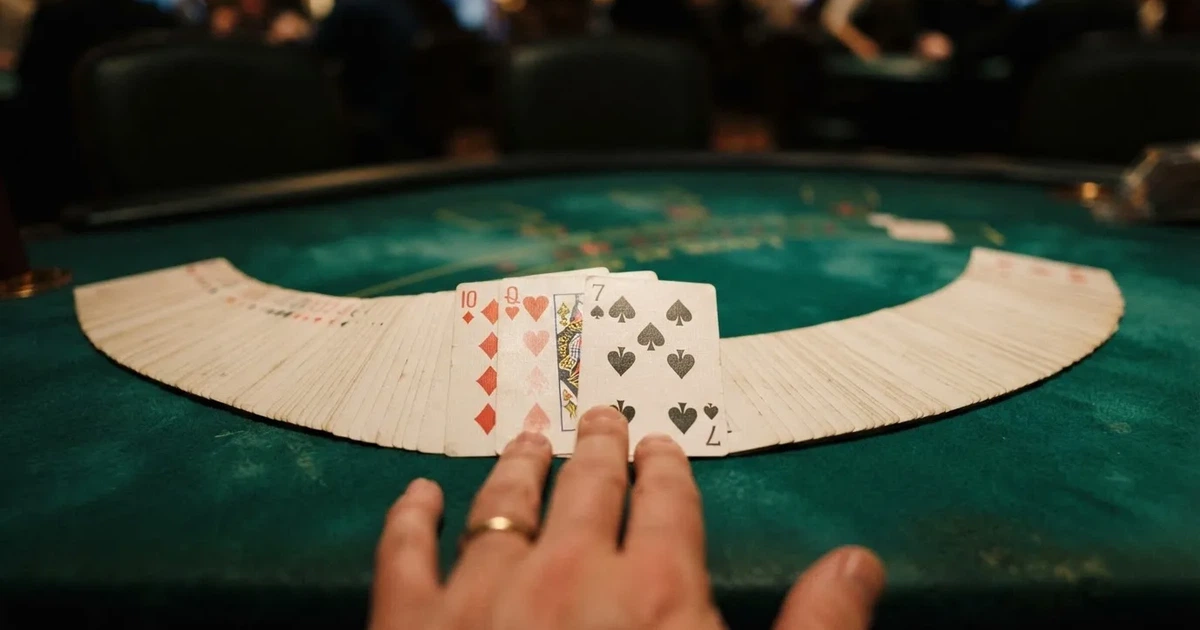
A real person deals real cards on the other side of the stream. That is what a live baccarat table promises, and on the felt it is true: a croupier in a studio cuts a shoe of six or eight decks, burns a card, then turns the Player and Banker hands by the fixed drawing rules of punto banco. The numbers on the layout are the same numbers as at any other baccarat table in the world — Banker 1.06%, Player 1.24%, Tie 14.36% — and the dealing process is not different because the bettor is sitting in Sydney rather than Macau. What is different is the legal status of the act of placing the bet. Under the Interactive Gambling Act 2001, an online casino game streamed to a customer physically in Australia is a prohibited service. The fact that a person, rather than a random number generator, turns the cards does not move it out of the prohibition. This page is about how live baccarat works, what the regulator has done about it, and where the choice actually sits for an Australian player in 2026.
Table of Contents
Crypto and anonymity on a live baccarat table
A bitcoin-funded live baccarat table runs the same dealt cards as a card-funded one. The shoe, the burn card, the draw on five, the draw or stand on six — none of it changes when the deposit rail changes. What changes is who sits between the player and the operator. A bank transfer or PayID leaves a paper trail through an Australian account; a bitcoin deposit leaves, at most, a wallet address on a public ledger. From the felt’s point of view that is irrelevant. From the regulator’s point of view, since 11 June 2024 it has been worse: digital currency is on the banned-payment list for any Australian-licensed wagering service, and an offshore site asking for a bitcoin deposit is, by definition, not on that list.
For a player who wants anonymity, the pitch is straightforward — fewer identifying documents, no Australian bank in the loop, a wallet address instead of a BSB number. The counter-pitch is also straightforward, and it is the one this page will return to: anonymity cuts both ways. It cuts away the player’s identity from the operator, and it cuts away the operator’s accountability from the player. If a withdrawal is refused on a crypto-funded site, the recourse is not the Australian Financial Complaints Authority, because no Australian entity sits behind the brand. The cards were dealt by a person in a studio; the funds were received by a company in a jurisdiction the ACMA has already formally warned. The page keeps that distinction in view through every section that follows.
The bitcoin-funded live baccarat market is, in practice, the offshore market with a different rail. The ACMA’s formal-warning register over the past four years reads as a list of operators that have offered online casino games — live baccarat included — to Australian residents, and it covers Dama N.V., Consolutetish S.R.L., Bamboo Media, Hollycorn N.V., Sterplay Holding, EOD Code SRL, Ryker B.V. and Pulsup Ltd among others. The payment method on the deposit page is a second-order question once the underlying offer is prohibited; it is treated here in that order.
Specific games and providers on live baccarat tables
Punto banco, the variant played on essentially every live baccarat stream aimed at an international audience, was developed in Havana during the 1940s. The casino banks both hands at all times, and the croupier plays them out by fixed rules — the player does not choose whether to draw. Cards two through nine count at face value, tens and picture cards count as zero, and aces count as one, with hand totals taken modulo ten. A shoe of six or eight decks is the norm. The mathematics is the same on a stream as it is at a felt table in a licensed Australian casino, and so is the structure of the paytable.
The house-edge numbers are the first thing a careful reader should fix in mind, because every promotional line about live baccarat eventually bumps into them:
- Banker bet — 1.06% house edge, the lowest of the three.
- Player bet — 1.24% house edge.
- Tie bet — 14.36% house edge, and almost never worth the chips.
The Banker bet pays 0.95 to 1 because the casino takes a 5% commission on Banker wins, and that commission is what keeps its edge below the Player bet’s. A reader who has not seen baccarat before will find the layout familiar from blackjack, but the rules differ sharply: the player does not make hit-or-stand decisions, the dealer does not play against the player, and the only decisions are where to place chips on Banker, Player, Tie, or one of the side bets the studio offers.
Providers of live baccarat streams fall into a handful of names — Evolution, Pragmatic Play Live, Vivo Gaming, Ezugi, Asia Gaming, Lucky Streak — most of them licensed in Malta, Curaçao or the Isle of Man, none of them licensed to provide online casino games to an Australian resident under the IGA. A site may show a provider’s logo on its lobby page; the licence the provider holds is for the studio and the stream, not for the offer of those games to customers in Australia. The studio is licensable in its home jurisdiction; the offer of the streamed game to a person in Australia is not.
Side bets change the picture without changing the underlying prohibition. Pairs, Dragon Bonus, the 8-9 tie variants the live studios offer — each carries its own house edge, generally between 4% and 13%, and each sits on the same prohibited-service footing as the main bet. The page returns to side bets only because they are the part of the live baccarat offer most often advertised to new sign-ups; they do not change the legal status of the table.
Top eleven brands the ACMA has acted against
The following brands are the ones the ACMA itself has named in formal warnings issued under the Interactive Gambling Act 2001 over online casino services offered to Australian customers. They are not a ranking, not a recommendation, and not a shortlist of the best places to play. They are the operators the regulator has, on the record, told to stop. A reader looking for a place to play live baccarat in Australia should read this list as a register of brands the Australian regulator has acted against, full stop.
| Brand | ACMA action and date | Operator named by the ACMA | Subject support |
|---|---|---|---|
| RocketPlay | Formal warning, March 2026; earlier Dama N.V., May 2022 | Pulsup Ltd | — |
| Level Up Casino | Formal warning, May 2022 | Dama N.V. | listings report baccarat tables (BGaming) |
| Woo Casino | Formal warning, March 2025 | Dama N.V. | — |
| Spirit Casino | Formal warning, May 2025 | Dama N.V. | — |
| National Casino | Formal warning, July 2025 | Consolutetish S.R.L. | listings report baccarat coverage (en.wikipedia.org) |
| Bizzo Casino | Formal warning, July 2025; earlier 2022 | Consolutetish S.R.L. (2025); TechSolutions (2022) | — |
| Ignition Casino | Formal warning, July 2025 | Bamboo Media | — |
| Instant Casino | Formal warning, February 2025 | EOD Code SRL | — |
| Jackbit | Formal warning, April 2026 | Ryker B.V. | — |
| Casino Intense | Formal warning, April 2025 | Sterplay Holding Ltd | listings report baccarat coverage (ABC, ACMA, Crown Melbourne) |
| Sky Crown | Formal warning, September 2022 | Hollycorn N.V. | — |
Every brand in this table sits on the same legal footing: online casino games, including live baccarat, are a prohibited interactive gambling service when offered to a person in Australia. The warning dates are spread across four years because the ACMA’s enforcement has been a sustained round of formal warnings rather than a one-off raid — Dama N.V. alone has been warned over six of its brands in May 2022 and warned again over Woo Casino in March 2025 and Spirit Casino in May 2025. The repetition is the regulator’s signal that the warnings are not being heeded.
RocketPlay
Pulsup Ltd received a formal warning from the ACMA in March 2026 over Rocketplay. The brand had already been on the regulator’s record under Dama N.V. in May 2022, when the same corporate group was warned across six of its casino brands. From a player’s perspective the duplicate warning is the more useful data point: a brand warned once may clean up; a brand warned twice across a corporate restructuring is showing a pattern. The live baccarat lobby at RocketPlay runs on the standard punto banco rules, which means the bank edge on a Banker bet is 1.06% and the bank edge on a Tie bet is 14.36% — the same as anywhere else. The legal frame around placing the bet from Australia does not move with the lobby’s design. Worth knowing for an Australian reader; not worth acting on.
Level Up Casino
Dama N.V. received a formal warning in May 2022 covering Level Up alongside five other brands from the same operator. The BGaming listing material the research has access to reports that baccarat tables are present on the Level Up lobby, which is what would be expected from a Curaçao-licensed online casino aimed at an international audience; the listing is not the same as a finding that Level Up is licensed to offer those games to Australians, because it is not. The brand is one of a cluster of Dama N.V. skins that have been named in the same ACMA action, which makes it easier for a reader to see the operator behind the brand. The verdict on Level Up is the verdict on the cluster: an Australian player placing chips on a live baccarat stream at Level Up is using a prohibited service, with no Australian complaints body behind the offer.
Woo Casino
Dama N.V. received a further formal warning from the ACMA in March 2025 specifically over Woo Casino, three years after the original May 2022 warning that covered six of its brands including Woo Casino by extension. Two warnings across three years, against the same operator, are the regulator’s clearest signal that the corporate group has continued offering prohibited services to Australian customers through at least one of its brands after the first warning. The financial product on the Woo Casino site — bonus structures, wagering requirements — is not the subject of this page, because no bonus terms research had any source for other than affiliate marketing pages, and affiliate pages are not the basis on which a reader should pick a casino.
Spirit Casino
Dama N.V. received a further formal warning in May 2025, this time specifically over Spirit Casino. The pattern of two further warnings across 2025 against the same corporate group, on top of the original 2022 warning over six skins, is what an enforcement analyst would call a sustained pattern rather than a one-off. From an Australian reader’s point of view the question is not whether Spirit Casino offers a polished live baccarat lobby — it does, because the international market it serves expects a polished live baccarat lobby — but whether the operator behind the brand is one an Australian customer can hold accountable if a withdrawal stalls. On the available evidence, the answer is no.
National Casino
Consolutetish S.R.L. received a formal warning from the ACMA in July 2025 over National Casino. The Wikipedia listing on National Casino reports baccarat coverage as part of its standard table-game lobby. Like the rest of the Dama N.V. and Consolutetish S.R.L. cluster, the legal status of the offer to Australian residents is the same: a prohibited interactive gambling service under the IGA, with no Australian complaints body in the chain. The verdict is the cluster’s verdict, repeated because the same fact binds.
Bizzo Casino
Consolutetish S.R.L. received a formal warning in July 2025 over Bizzo Casino, and Bizzo had already been the subject of an earlier formal warning in 2022 against TechSolutions (CY) Group Limited and TechSolutions Group N.V. — two warnings across three years for the same brand, on top of the second warning the corporate group has collected this year. The Bizzo file is the clearest in the table: a brand that has been on the ACMA’s record for four years, named twice across two different corporate operators, with no indication on the regulator’s side that the underlying offer to Australian customers has changed. The arithmetic on the live baccarat table at Bizzo is the same as everywhere else. The compliance arithmetic is worse than most.
Ignition Casino
Bamboo Media received a formal warning from the ACMA in July 2025 over Ignition Casino. Ignition’s brand history sits separately from the Dama N.V. and Consolutetish S.R.L. clusters — it was named in the same July 2025 round as National Casino and Bizzo, but the corporate operator behind it is different. The structure is the same: a brand offering online casino games to Australian customers in violation of the IGA, formally warned by the ACMA, with no Australian complaints body in the chain. The page treats it on the same footing as the other ten brands in this section.
Instant Casino
EOD Code SRL received a formal warning from the ACMA in February 2025 over Instant Casino. The brand’s positioning leans heavily on crypto deposits and a fast sign-up flow, which means it sits in the overlap between the crypto-anonymity cluster and the live-baccarat cluster discussed earlier in this page. The pitch is fewer documents, fewer minutes, faster first hand dealt. The trade-off is the one this page has already named: fewer documents also mean fewer ways to recover a balance if a withdrawal stalls. The IGA prohibition applies regardless of how quickly the sign-up runs.
Jackbit
Ryker B.V. received a formal warning from the ACMA in April 2026 over Jackbit (and CasinOK on the same warning). The warning is among the most recent on the ACMA’s record, sitting in the same enforcement year as the Rocketplay action against Pulsup Ltd in March 2026. A reader who treats the ACMA register as a freshness signal will read this entry as the regulator’s most recent statement on the operator behind Jackbit. The IGA status is unchanged.
Casino Intense
Sterplay Holding Ltd received a formal warning from the ACMA in April 2025 over Casino Intense. The listing material research carries for Casino Intense points to broader Australian coverage of the baccarat market — references to the ACMA register itself, to ABC reporting on the regulator and to Crown Melbourne’s own baccarat page — which is consistent with a brand that has attracted enough Australian attention to register on the local news radar. The brand’s IGA status is the same as the rest of the list: a prohibited service offered to Australian customers, formally warned by the regulator.
Sky Crown
Hollycorn N.V. received a formal warning from the ACMA in September 2022 over Sky Crown and Blue Leo. The warning is the oldest on the table — the ACMA’s record on Sky Crown now runs four years — which makes the brand a useful marker for how long an enforcement cycle can run before the regulator moves from a formal warning to a blocking request. The compliance arithmetic on Sky Crown is older but not better: a four-year-old formal warning is still a formal warning, and the IGA prohibition has not aged with it.
Overview of the live baccarat casino landscape
The Australian market for live baccarat is, in 2026, the offshore market. There is no licensed Australian provider of online casino games — no state or territory licenses them, and the Interactive Gambling Act 2001 makes the offer of such games to a person in Australia an offence. What the Australian player can do lawfully is place a wager on a racing or sporting event with an Australian-licensed bookmaker (sportsbet, bet365, Ladbrokes and the rest, licensed in the Northern Territory for tax reasons), buy a lottery ticket, or play keno. None of those are baccarat, and none of them are a live-dealer stream of cards.
What an Australian player cannot lawfully do, but commonly does, is sit at a live baccarat stream offered by an offshore operator. The H2 Gambling Capital estimate for 2026 is that Australians lose about A$3.9 billion a year to illegal gambling sites, and that the share of gambling going through legal channels has fallen from 74% in 2021 to 64%. The bulk of that A$3.9 billion is being lost on prohibited products — online casino games, online pokies, in-play betting — rather than on the racing and sports products the IGA permits. Live baccarat is one of the products in that bulk. The page is written against that backdrop, because the reader searching for “live baccarat online casino australia” is by definition one of the players the H2 figure counts.
The stream itself
A live baccarat stream at an offshore casino runs from a studio in Malta, Curaçao, the Philippines, Colombia or one of the smaller live-dealer hubs. A croupier in the studio cuts the shoe, deals four cards face-down — two to Player, two to Banker — flips them, totals them modulo ten, and applies the fixed drawing rules of punto banco. The Player hand stands on six or seven and draws on five or less. The Banker hand stands on seven, draws on zero through two, and either stands or draws on three through six depending on what the Player hand holds. The croupier does not consult the player, and the player does not make hit-or-stand decisions. The only decisions are where to place chips before the hand: Banker, Player, Tie, or a side bet.
A session of consecutive hands at a live baccarat table is one of the faster-paced products in any online casino lobby. The dealing rhythm is fixed by the shoe and the dealer, not by the player, so a session of an hour at a single live baccarat table will see more hands resolved than an hour at most other table games. The pace is the part of the live baccarat offer the regulator’s responsible-gambling guidance most often flags, and the part the page returns to in the responsible-gaming section below.
How an Australian player arrives at a live baccarat table
The standard arrival path runs through an offshore casino site, often found via a search result or a paid advertisement rather than via an Australian-licensed operator. The site asks for an email address and a deposit method, the deposit method is most often a credit card, a cryptocurrency wallet or an e-wallet rather than PayID, and the live baccarat lobby is usually one click from the homepage. Some sites run a Know Your Customer check on first withdrawal rather than on deposit; some do not run one at all. A bitcoin-funded site typically does not require identity documents at any point in the customer lifecycle.
None of that changes the IGA status. The arrival path is a UX path; the offer being accepted through it is a prohibited service under Australian law. The ACMA’s enforcement record is built up over the operators that have offered the path to Australian customers.
Legality and regulation of live baccarat in Australia
The Interactive Gambling Act 2001, strengthened by the Interactive Gambling Amendment Act 2017, makes it an offence to provide online casino games, online pokies or in-play betting services to a person in Australia. Live baccarat, dealt by a person over a stream, is an online casino game in the same way a computer-generated punto banco is. The provider of the stream faces penalties of up to A$220,000 per day for individuals and up to A$1.1 million per day for corporations. The player is not the target of the IGA — the Act targets the provider, not the customer — but the player is the target of the consumer-protection absence that follows from the offer being prohibited. There is no Australian complaints body for an offshore casino dispute, no AFCA recourse for a refused withdrawal, and no BetStop coverage of the site.
What the regulator has actually done
The ACMA’s enforcement record since 2017 — when the IGA amendments took effect — is the regulator’s own audit of how the prohibited market has responded. By June 2026 the ACMA had asked Australian internet service providers to block a cumulative total of 1,751 illegal gambling and affiliate marketing websites since the first blocking request in November 2019, and more than 230 unlicensed gambling services had left the Australian market entirely since enforcement was strengthened in 2017. The June 2026 round alone added twelve more domains to the blocking list — 7Signs, ChromaBet, Donbet, Duospin, Freshbet, Slots Gem, Jacks Club, Lucky Start, Pointsbetz, Spinrise, Vinyl Casino and Wildsino.
The enforcement statistics
| Metric | Data |
|---|---|
| Period covered | November 2019 – June 2026 |
| Cumulative blocked sites | 1,751 |
| Unlicensed services exited | 230+ |
A blocking request does not end an operator’s offer; it ends Australian ISPs’ carriage of the offer’s website. The brand may still operate from offshore, may still accept Australian deposits, and may still deal cards on a live baccarat stream — the cards do not stop because the website is unreachable through Telstra or Optus. A player who has already registered, deposited and played may find their next session’s URL blocked while their balance remains on the operator’s books. That is the moment the absence of Australian consumer protection is most concrete: the regulator has acted, the player has lost access, and the operator has the money.
The blocking rate, as a measure of enforcement, sits in a band. The first blocking request was issued in November 2019; by June 2026, the running total was 1,751 blocked sites across roughly six and a half years. That works out to an average band of roughly 250 to 280 blocked sites per year, with the actual per-year rate varying significantly as the ACMA moved from warnings to blocking and as operators cycled through new domains. The arithmetic the page works from is: 1,751 blocked sites ÷ 80 months from November 2019 to June 2026 ≈ 22 blocked sites per month on average across the full period. The condition on the band is that it smooths over the ACMA’s own cycles — some months produce no new blocking requests, some months produce a dozen — and the running total is reset upward every time a fresh round is reported. A reader who needs a single figure for the rate will read the band as somewhere between a low single-digit monthly count and a monthly count in the high twenties; a reader who wants the regulator’s own current round will read 12 sites in the June 2026 round, against the cumulative figure of 1,751.
The 2026 reform package
The Interactive Gambling Amendment (Gambling Reform) Bill 2026 passed Parliament on 19 August 2026. Its advertising and inducement measures commence on 1 January 2027, which means the law has a start date and is not yet in force on a page written in 2026. The bill’s content is what a reader would expect from a reform of this kind: tighter rules on advertising and bonus inducements for online wagering, with the bite aimed at the licensed wagering market rather than at the offshore casino market. The offshore market is addressed through the existing IGA prohibition, the ACMA’s enforcement record and the banned-payments list.
Payments the IGA does and does not allow
Since 11 June 2024, credit cards, credit-related products and digital currency have been banned as payment methods for Australian-licensed online wagering. The legal deposit routes for licensed wagering are debit card, bank transfer, PayID and Osko, and BPAY. An operator licensed by the NTRWC cannot accept a credit card deposit or a bitcoin deposit from an Australian customer; penalties for doing so are up to A$247,500 per breach.
An offshore casino is not on the NTRWC’s register, and the banned-payments rule does not bind it. A bitcoin deposit at an offshore site is, from the offshore operator’s perspective, just a deposit. From the Australian regulator’s perspective, the operator asking for the deposit is offering a prohibited service and the payment method is a banned payment for the licensed alternative. The two views sit at right angles to each other, and a reader comparing them needs to keep both in view.
What recourse a player has
An Australian player who has a complaint about an Australian-licensed bookmaker can take it to AFCA, the Australian Financial Complaints Authority. An Australian player who has a complaint about an offshore casino has no equivalent body. The dispute sits between the player and an offshore operator under the operator’s terms, and the operator’s terms are the document the player agreed to at sign-up. If the operator refuses a withdrawal, the player can complain to the ACMA — and the ACMA will, if the complaint fits its enforcement priorities, add the operator to a future blocking round. The ACMA’s enforcement does not return the player’s balance. It blocks the website. The two are different things.
The Crown Melbourne offer — Traditional Baccarat, Crown Baccarat and 2 to 1 Baccarat — sits on the licensed side of this line, regulated by the Victorian Gambling and Casino Control Commission, which replaced the VCGLR as Victoria’s casino regulator on 1 July 2022. A Victorian player who wants a live baccarat table on lawful Australian ground has Crown Melbourne’s three variants. A player outside Victoria, or a player who wants a streamed table rather than a felt table, has nothing comparable on the licensed side.
Responsible gaming at a live baccarat table
The pace of consecutive baccarat hands is what makes a session limit worth setting before the stream starts. Punto banco’s fixed drawing rules give the croupier a dealing rhythm that does not depend on player decisions — the cards turn, totals are called, winners and losers are settled, and the next hand is dealt. A session of an hour at a single live baccarat table will see more hands resolved than an hour at most other table games on the casino floor, and the chips move with each hand in a way that does not require the player to act on every hand.
A session limit is the simplest instrument against the pace. Decide the budget before the stream starts, decide the time, and stop on whichever comes first. The BetStop National Self-Exclusion Register, live since August 2023, binds Australian-licensed online and phone wagering services — sportsbet, bet365, Ladbrokes and the rest — but does not bind offshore casino sites, because offshore casino sites are not on the register and do not connect to it. A player who has registered with BetStop and then opens an offshore live baccarat lobby will find the BetStop registration does not apply.
The National Gambling Helpline is 1800 858 858, free and 24 hours a day, with online chat at Gambling Help Online. The helpline is staffed for problem-gambling support and is the route a reader who has noticed their session drifting should know about, regardless of whether the site is licensed or offshore. The IGA prohibition does not displace the helpline; the helpline serves players regardless of where they play.
The bankroll arithmetic a player should know
The 1.06% edge on Banker means a steady, mechanical bleed. A player who sits at a live baccarat table for an hour, betting A$10 a hand on Banker at 60 hands an hour, will on average lose about A$6.36 over the hour — a small number per hand, a meaningful number across a session. A player who drifts toward the Tie bet at 14.36% will see the bleed accelerate: A$10 a hand on Tie over the same hour comes to an average loss of about A$86.16. The Tie bet is the one the live baccarat studio most prominently advertises, because its 8-to-1 payout looks generous against the Banker’s 0.95-to-1. The arithmetic is the part the advertisement leaves out.
A side bet like Dragon Bonus or a Pairs bet adds another layer of house edge on top of the main bet, generally between 4% and 13% depending on the variant. The studio offers them as a way to make a flat Banker-bet session feel more interesting. The cost of making it more interesting is paid by the player.
What the regulator says about offshore responsible-gaming tools
The ACMA’s formal warnings include repeated findings about the absence of responsible-gaming tools on offshore sites — no deposit limits enforceable in Australian dollars, no session-time warnings tied to Australian consumer law, no connection to BetStop. The regulator’s enforcement record on these gaps is a large part of why the formal-warning register has grown to eleven named brands in four years. A reader who treats the responsible-gaming section as an afterthought is the reader the regulator’s warnings are written for.
FAQ
Is it legal to play live baccarat for real money at an online casino in Australia?
No. The Interactive Gambling Act 2001 makes it an offence to provide online casino games — live baccarat included — to a person in Australia. The provider faces penalties, not the player, but the player has no Australian consumer protection if a withdrawal stalls.
How does a live-dealer baccarat table differ from a computer-generated version?
A live dealer physically cuts the shoe and turns the cards; an RNG version produces outcomes from a random number generator. The paytable is identical — Banker 1.06%, Player 1.24%, Tie 14.36% — and the dealing rhythm on a live table is faster because there is no spin animation between hands.
Does a bitcoin-funded live baccarat table use a different card-dealing process?
No. The shoe, the burn card and the fixed drawing rules of punto banco are the same regardless of the deposit rail. Bitcoin changes who sits between the player and the operator, not how the cards are turned, and the IGA prohibition applies equally to the bitcoin-funded table.
What is the difference between betting on Banker, Player and Tie in baccarat?
Banker carries the lowest house edge at 1.06% but pays 0.95-to-1 because the casino takes a 5% commission on Banker wins. Player is 1.24% and pays 1-to-1. Tie is 14.36% and pays 8-to-1, which makes it the worst of the three main bets.
Can a live baccarat session be joined mid-shoe, or only at the start?
Most live baccarat studios allow a player to join at any point in the shoe, not only at the start of a new one. The croupier will not pause dealing to wait for a bettor, and bets must be placed before the croupier calls “no more bets” for the hand in progress.
How fast do consecutive hands typically run at a live baccarat table?
A live baccarat table will deal roughly 60 to 80 hands an hour, depending on the studio and the shoe size. The pace is fixed by the croupier’s dealing rhythm, not by player decisions, which is why a session limit is the responsible-gaming instrument most suited to this product.