
Platipus-branded slot titles and the offshore sites marketing them to Australians in 2026
A reader typing best platipus online casinos australia 2026 into a search box is doing one of two things. They want to know what Platipus actually makes, or they want to know which of the offshore sites plastered across their search results are worth a closer look. The honest answer sits in the same place for both: an online casino offering Platipus-branded slot titles to a person in Australia is a prohibited interactive gambling service under the Interactive Gambling Act 2001, and the regulator has acted against the named operators repeatedly. The rest of this page is the working out — which sites, which operators behind them, what the ACMA has done, and where a reader who wants slot-shaped entertainment in Australia is actually allowed to find it.
Current as of 20 October 2026; cross-checked against the ACMA’s published formal-warning register and its blocking-request list as reported on 26 June 2026.
Table of Contents
- How this comparison was put together
- What Platipus is — and is not
- The legal prohibition in plain English
- The brands in detail
- A closer read on the ACMA’s blocking-rate
- The Northern Territory’s quiet bookmaker problem
- What the regulator does, and what it cannot
- Responsible play, where it actually connects
- How payments actually work on the offshore sites in this comparison
- What the bonus shelf actually delivers
- What mobile play looks like on the offshore side
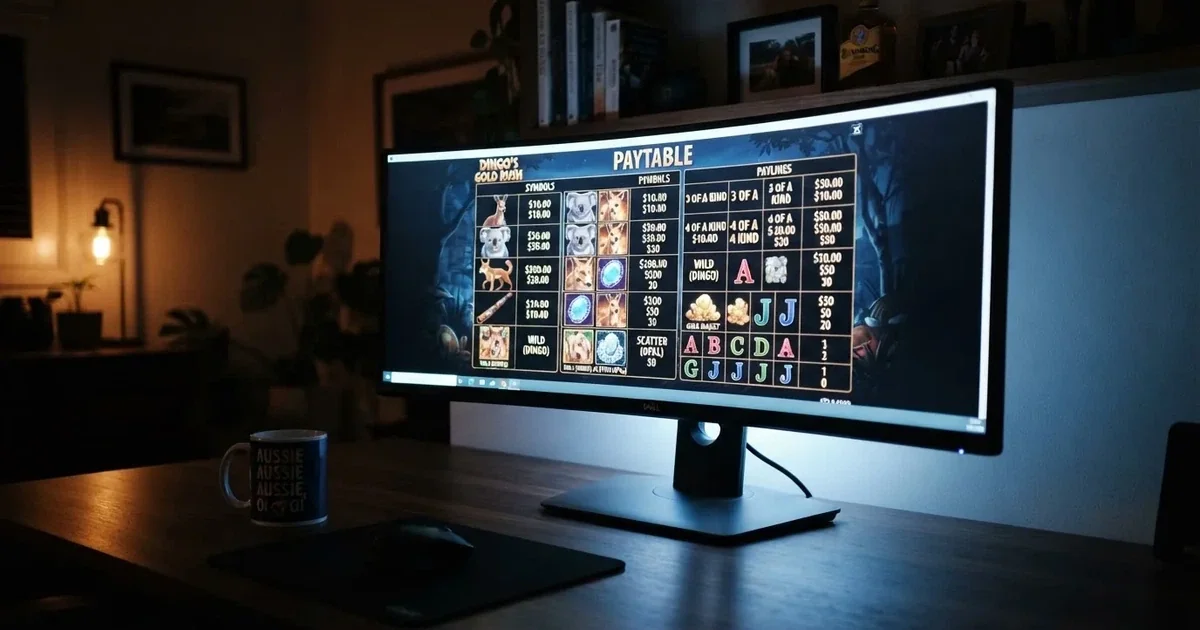
- How to read a paytable on a Platipus slot
- The arithmetic the page owes you
- What to do with this page
- FAQ
How this comparison was put together
Eleven brands sit at the centre of the page. None was selected for its bonus terms, payout speed or welcome package — those details live on affiliate marketing pages and change weekly, and none of them is a reason to use a site the regulator has already acted against. What the eleven share is simpler: each has been the subject of a formal warning from the Australian Communications and Media Authority for offering a prohibited interactive gambling service to people in Australia. The comparison ranks them by the recency and the operator behind the warning, not by any quality the marketing claims.

A shortlist built that way does two things at once. It tells a reader which brands have already drawn the regulator’s attention, and it shows, in the operator column, who actually runs the site — because the same brand name can sit on a different corporate front every eighteen months, and a reader who only sees the marketing skin misses that. The table at the bottom of this section carries both halves side by side. Anything outside the eleven — the rest of the offshore market, the long tail of crypto-only skins, the lookalike brands that pop up to replace the blocked ones — is left where it is. Adding more names does not narrow a field that the law already narrowed.
The angle of this page is choice under constraint. The constraint is the Interactive Gambling Act; the choice is what a reader does with that knowledge. Some readers will read the legal shelf, decide the prohibition is not for them, and stop. Some will keep going to understand which operators are on the regulator’s radar and which are not. A few will read the whole thing and still land where they were going to land — but they will land there having seen the warnings, the operators behind them, and the price of being on a blocked site with money in it.
What Platipus is — and is not
Platipus is a slot studio, not a casino. Founded in 2014, it describes itself as an EU-based outfit with more than 174 HTML5 slots and table games, available in fiat and crypto and twenty languages, and it claims more than 500 operator customers and 24/7 technical support across every time zone. Its own marketing says its recent development has focused on Asian-oriented games. The games it ships carry iTech Labs RNG certification for a roster of regulated markets — the UK, Italy, the AGCC, Denmark, the Isle of Man, Malta, Gibraltar, Sweden and Romania.
None of that makes Platipus an Australian licensee. Australia does not license online casinos, and the studio does not need one to sell its games to offshore operators who, in turn, market those games to whoever lands on the site. The relationship looks like a supply chain: Platipus builds the slot, the operator wraps a casino skin around it, the marketing targets any country the IGA cannot reach. For Australian readers that supply chain ends at the front door of the law.
The slot studio is one of several whose work surfaces on offshore sites Australians encounter. A reader who wants to see the wider supply picture — who else builds for the same market — will meet three adjacent studios in the pages Australians most often land on. 1spin4win, founded in 2021 and headquartered in Curaçao under a Curaçao gaming licence, runs a portfolio of more than 190 online slots built in HTML5 for low-bandwidth connections; it reports more than 1,000 partnerships with online casinos and aggregators and a 46% rise in total bet sum in the first half of 2025 over the same period in 2024. Betsoft, founded in 2006, has a catalogue of more than 200 RNG games across slots, table, video poker and specialty titles; the slot The Slotfather, live since 13 December 2012, has a published RTP of 95.69% on a medium-volatility model with an 8.17% hit rate across 5 reels and 30 paylines, and Good Girl Bad Girl 2 carries a published RTP of 96.22% at very high volatility and a 15.59% hit rate. BGaming’s team has worked on games since 2012; the brand itself debuted in 2018 and now offers more than 250 certified titles spanning video slots, video poker, lottery, card, scratch, crash and casual games. Each is a content vendor, not an Australian licensee.
That distinction is the one the marketing muddies. A reader who lands on an offshore site and sees Platipus in the lobby — or 1spin4win, or Betsoft, or BGaming — sees a recognisable studio name and treats it as a quality mark. It is not. The studio certifies the RNG; the operator decides whether the country it offers to is one where that offering is lawful. A 96.22% RTP is not a defence against the IGA.
The legal prohibition in plain English
Australia’s online gambling law sits on top of the Interactive Gambling Act 2001, strengthened by the Interactive Gambling Amendment Act 2017. The Act makes it an offence to provide online casino games, online pokies or in-play betting to a person who is physically in Australia. Wagering on races and sport placed before the event is licensable, as are lotteries and keno. Online casino is not. No state or territory licenses it. The minimum age for any licensed wagering activity is 18.
The Act targets the provider, not the player. A person in Australia who opens an account on an offshore casino is not the person the regulator is after; the operator is. The reason the rule is written that way is the reason the regulator exists — it is easier to act against the supply side, where the targets are countable, than against the demand side, where they are not. That distinction is small comfort to anyone whose money is on a site the regulator has just blocked, because the same rule means there is no Australian complaints body, no Australian recourse and no Australian seat at the table when the operator decides a withdrawal is going to take a while.
Enforcement runs through the ACMA. The regulator investigates, issues formal warnings, and directs Australian internet service providers to block illegal sites. The first blocking request went out in November 2019. By June 2026, the ACMA had asked ISPs to block a total of 1,751 illegal gambling and affiliate marketing websites, and reported that more than 230 unlicensed gambling services had left the Australian market since enforcement was strengthened in 2017. The most recent published round, reported on 26 June 2026, asked ISPs to block a further twelve names: 7Signs, ChromaBet, Donbet, Duospin, Freshbet, Slots Gem, Jacks Club, Lucky Start, Pointsbetz. Spinrise, Vinyl Casino and Wildsino.
A site on the blocking list stops loading for Australian customers. A reader with a balance on it at that moment has whatever recourse the operator’s own terms page offers — usually a complaints process routed through Curaçao, Malta or none at all. The block list does not return deposits; it returns traffic.
The 2026 enforcement picture, in one table
The brands below are the ones the ACMA has acted against on its own published record. The table is a snapshot of the regulator’s actions, not a ranking of the brands. Each row carries what the regulator named, the operator behind it and the date the warning was published. Where a brand has come back under a different operator after an earlier warning, both rows are kept — the brand name travels; the corporate front often does not.
| Brand | ACMA action and date | Operator named by the ACMA | Subject support |
|---|---|---|---|
| RocketPlay | formal warning, March 2026; earlier warning, May 2022 | Pulsup Ltd; earlier Dama N.V. | — |
| Level Up Casino | formal warning, May 2022 | Dama N.V. | listings on Wazdan’s site only |
| Woo Casino | formal warning, March 2025 | Dama N.V. | — |
| Spirit Casino | formal warning, May 2025 | Dama N.V. | — |
| National Casino | formal warning, July 2025 | Consolutetish S.R.L. | listings on Betsoft, Wikipedia and Pragmatic Play pages |
| Bizzo Casino | formal warning, July 2025; earlier warning, 2022 | Consolutetish S.R.L.; earlier TechSolutions | — |
| Ignition Casino | formal warning, July 2025 | Bamboo Media | — |
| Instant Casino | formal warning, February 2025 | EOD Code SRL | — |
| Jackbit | formal warning, April 2026 | Ryker B.V. | — |
| Casino Intense | formal warning, April 2025 | Sterplay Holding Ltd | listings on 1spin4win, Wikipedia and the UK Gambling Commission pages |
| Sky Crown | formal warning, September 2022 | Hollycorn N.V. | — |
The “Subject support” column needs a gloss. Two of the eleven brands appear in the public-facing listings of slot providers — Level Up in Wazdan’s site, National Casino on Betsoft’s, Wikipedia’s and Pragmatic Play’s pages, and Casino Intense on 1spin4win’s, Wikipedia’s and the UK Gambling Commission’s. Those are the providers listing the brand as a customer or as a carried title; they are not the operator confirming it carries Platipus content, and they are not a regulatory clearance for the Australian market. The remaining eight carry no such listing on any consulted source and are recorded here without one.
The recurring operator is the row a reader should look at twice. Dama N.V. has been the named party on four separate warnings — May 2022, March 2025, May 2025 and the second-line appearance on RocketPlay’s March 2026 record. Hollycorn N.V., Consolutetish S.R.L. and TechSolutions have each surfaced more than once across different brand names. A reader who treats a brand change as a fresh start has not read the operator column.
The brands in detail
What follows is a closer look at each of the eleven. Each entry carries the ACMA’s own record, the operator behind the warning and the date it was issued. Where research carries no Platipus-specific figure for the brand, the entry says so; the absence is information, and it is recorded without a softener. None of the entries recommends play; the page describes what the regulator has said about each one and leaves the choice to the reader.
RocketPlay
The ACMA issued a formal warning to Pulsup Ltd over the Rocketplay brand in March 2026. The same brand had earlier drawn a warning to Dama N.V. in May 2022, alongside five other Dama N.V. casino brands. The operator changed; the brand did not. No consulted source carries a Platipus-specific listing for RocketPlay — neither the studio’s own customer-facing materials nor any aggregator page names the brand as a Platipus operator — and the entry is kept here on the strength of the ACMA’s record alone. A reader who arrives here from a search for Platipus-branded slot titles is reading the regulator’s file on a brand, not a confirmation that the brand runs Platipus content.
The two-warnings-in-four-years pattern is the thing to keep. A site that has cycled operators and kept the marketing skin is not a fresh entrant; it is the same offer with a different corporate address. The regulator’s file treats it that way.
Level Up Casino
Level Up was one of six Dama N.V. brands caught by the ACMA’s May 2022 warning. The operator has not been the subject of a separate warning for Level Up since — but Dama N.V. has been warned over four of its other brands in the years since, which is the same kind of record under a different label. Wazdan’s own site lists Level Up among the operators carrying its content; that is a content-vendor listing, not a regulatory clearance, and it does not say whether Platipus titles are on the brand’s lobby. The page carries the entry with the listing noted and nothing else inferred.
Woo Casino
The ACMA issued a formal warning to Dama N.V. over Woo Casino in March 2025. It is the second Dama N.V. brand on the list after RocketPlay’s earlier warning, and the third in the rolling count once Spirit Casino’s May 2025 warning is added. No consulted source carries a Platipus-specific listing for Woo Casino; the entry stands on the regulator’s record.
Spirit Casino
Spirit Casino drew a formal warning to Dama N.V. in May 2025, two months after Woo Casino’s warning to the same operator. The pattern — Dama N.V. warnings in successive months, against different brand names — is the picture the regulator’s file paints: one operator, multiple skins, warnings meted out as the skins change. No record of Platipus content for this brand appears in consulted databases.
National Casino
Consolutetish S.R.L. drew a formal warning over National Casino in July 2025. The same operator drew a warning for Bizzo Casino at the same time; both are recorded in the same ACMA publication. National Casino surfaces in the listings of three slot providers whose content the brand is reported to carry — Betsoft, the Wikipedia entry for the brand and Pragmatic Play. None of those listings confirms that Platipus titles are on the lobby; they record the brand as a customer of those providers, in a way those providers’ own pages describe.
Bizzo Casino
Bizzo Casino drew a formal warning to Consolutetish S.R.L. in July 2025, on the same publication date as National Casino’s. The brand had already drawn a warning to TechSolutions (CY) Group Limited and TechSolutions Group N.V. in 2022 — a different operator, three years earlier, the same brand skin. No consulted source carries a Platipus-specific listing for Bizzo Casino.
Ignition Casino
Bamboo Media drew a formal warning over Ignition Casino in July 2025, on the same publication date as National Casino’s and Bizzo Casino’s. The brand name is shared with a US-facing poker-and-casino product with a long separate history; the ACMA’s warning concerns the offering made to people in Australia from that brand. No Platipus-specific listing was found.
Instant Casino
EOD Code SRL drew a formal warning over Instant Casino in February 2025 — earlier than the July 2025 cluster and earlier than the Dama N.V. round that followed. No Platipus-specific listing was found for Instant Casino on any consulted source.
Jackbit
Ryker B.V. drew a formal warning over Jackbit and CasinOK in April 2026. Two brands on one warning, one operator. Jackbit is the more visible of the two in the crypto-casino segment; both carry the same warning text. Consulted records contain no evidence linking Jackbit to Platipus software.
Casino Intense
Sterplay Holding Ltd drew a formal warning over Casino Intense in April 2025. The brand surfaces in the listings of three sources — 1spin4win’s own site, the Wikipedia entry and the UK Gambling Commission’s public register — though the Commission’s listing is a record of the brand’s UK-facing status, not an Australian clearance. None of the three listings confirms Platipus content on Casino Intense’s lobby.
Sky Crown
Hollycorn N.V. drew a formal warning over Sky Crown and its sister brand Blue Leo, published by the ACMA in September 2022. Sky Crown’s appearance on the list is the oldest of the eleven. No Platipus-specific listing was found.
A closer read on the ACMA’s blocking-rate
The regulator’s first blocking request went out in November 2019. By the round reported on 26 June 2026, the running total of blocked sites and affiliate pages stood at 1,751, with more than 230 unlicensed services having left the Australian market since 2017. The arithmetic this page is owed is the rate at which those blocks have landed.
From November 2019 to June 2026 is roughly 79 months. 1,751 blocked pages over 79 months is an average of about 22 blocked pages a month — a working band of roughly 18 to 25 a month across the full period, with the early years lighter and the post-2022 enforcement heavier. The exact monthly figure drifts because the ACMA’s rounds are not monthly; some are weeks apart, others are months. A reader who wants a single number gets the band; a reader who wants the trajectory gets the trend — more blocks per round as enforcement has widened, more operator names recurring as the same corporate fronts come back under new skins.
That trajectory is the picture the regulator’s own figures draw. H2 Gambling Capital’s 2025 report estimates Australians lose about A$3.9 billion a year to illegal gambling sites, and that the share of gambling going through legal channels fell from 74% in 2021 to 64% over the same window. The blocks have not slowed the dollars leaving; they have slowed the sites reaching Australian customers, which is a different and more local achievement.
The Northern Territory’s quiet bookmaker problem
The Northern Territory Racing and Wagering Commission regulates 52 of Australia’s online bookmakers — Sportsbet, Bet365 and Ladbrokes among them — under Territory licences taken out for tax reasons rather than for any local presence. The commission has no full-time staff and meets once a month in Darwin. A bill to reform that arrangement was reported in April 2026.
The Commission is not the body that licenses online casinos — it does not, because nobody does — and the 52 names on its register are wagering services, not casinos. The relevance for this page is the picture the regulator’s own thinness paints. The Australian online wagering market runs on a commission that meets monthly; the online casino market does not run at all under any Australian licence; and the offshore casino market runs on operators the ACMA names one by one as they appear on the blocking list.
What the regulator does, and what it cannot
The ACMA’s enforcement reaches the supply side. It can investigate, issue formal warnings, and direct ISPs to block. It cannot refund a balance. It cannot enforce a withdrawal. It cannot hear a complaint against an offshore operator on a player’s behalf. A player who has been paid late or not at all by an offshore casino has, in practice, the operator’s own complaints process — usually routed through Curaçao or Malta — and whatever a chargeback at the card issuer can recover, which is rarely anything once the deposit was made by crypto or by a method the issuer does not cover.
The credit-card and crypto ban is the cleanest signal the regulator has sent about which deposit routes are lawful for Australian customers. Since 11 June 2024, credit cards, credit-related products and digital currency have been banned as payment for licensed online wagering, with penalties up to A$247,500 for operators that accept them. The lawful routes for licensed wagering are debit card, bank transfer, PayID/Osko and BPAY. A site that asks an Australian customer for a credit card or a crypto deposit is, by that single ask, operating outside the Australian rules — even if the rest of its site looks Australian and even if its licence plate in the footer looks regulator-friendly.
The 2026 reform sits alongside. The Interactive Gambling Amendment (Gambling Reform) Bill 2026 passed Parliament on 19 August 2026; its advertising and inducement measures commence on 1 January 2027. That is a law with a start date, not yet in force at the time of writing, and it does not change the IGA’s existing prohibition on offering online casino games to Australians.
Responsible play, where it actually connects
A reader looking for responsible-gambling supports relevant to Platipus-branded slot titles has to know which supports bind offshore casinos and which do not. BetStop — the National Self-Exclusion Register — has been live since August 2023. It binds Australian-licensed online and phone wagering services. An offshore casino is not connected to it. A self-exclusion placed through BetStop stops a person from opening new accounts with Australian-licensed bookmakers and from logging into existing ones; it does not reach an offshore site, which has no Australian register to check.
The National Gambling Helpline — 1800 858 858 — is free and 24/7. Chat is available at Gambling Help Online. Both are reachable from anywhere in Australia, with no requirement that the caller be a customer of any particular operator. State and territory supports sit alongside: each state runs its own problem-gambling programme, with its own self-exclusion arrangements for the land-based venues the state regulates.
The shape of that support matters for this page’s subject. The land-based venues Australian states do regulate — clubs, hotels and casinos in each state and territory — are the legal channel for slot-machine play in Australia. They run under state and territory gambling legislation, with their own self-exclusion registers and their own machine-level harm-minimisation settings. The pokies in a licensed club in Sydney and the slots in a licensed casino in Melbourne are not Platipus titles — they are, more often than not, Aristocrat machines, the Sydney-based manufacturer whose 2025 revenue was A$6.30 billion, whose normalised net profit after tax and amortisation was A$1.55 billion, and whose 7,400 employees work out of North Ryde. Aristocrat is the largest gambling-machine manufacturer in Australia and the second-largest slot-machine manufacturer worldwide, behind International Game Technology. Its online real-money-gambling business, Aristocrat Interactive, was formed in April 2024 by combining the Anaxi unit with the newly acquired NeoGames group. None of that changes the offshore picture — Aristocrat Interactive holds licences in the jurisdictions it operates in, and it does not offer online casino games to Australians any more than any other studio does.
How payments actually work on the offshore sites in this comparison
The column the marketing hides is the deposit-methods column. A site accepting Australian customers almost never lists PayID or BPAY alongside a credit-card field and a Bitcoin wallet; the Australian rules do not allow it, and a site that took PayID would be the site the ACMA had just decided to block. The offshore sites Australians encounter instead list a mix of card payments processed through offshore gateways, e-wallets the operator has chosen to integrate, and crypto — Bitcoin, Ethereum, Tether and a handful of others.
That mix is itself the tell. A credit-card deposit is technically barred under Australian law for any licensed wagering; a crypto deposit is technically barred for any licensed wagering; an offshore casino offering either is operating outside the rules. The withdrawal column is harder still, because the operator chooses the rails. Crypto withdrawals can clear inside an hour if the network is quiet and the operator’s wallet is staffed; bank-transfer withdrawals to an Australian account typically route through an intermediary bank in a third country and can take three to seven working days. The marketing rarely quotes either figure; the affiliate pages that do quote a number carry a different number for every brand.
What that means for a reader comparing the eleven is that the payment picture does not really separate one from another — it separates the licensed wagering market (debit, PayID, BPAY, no credit, no crypto) from the offshore casino market (everything else, no PayID, no Australian complaints body). The eleven sit on the offshore side. There is no Australian-licensed casino to compare them with, because the product is prohibited.
What the bonus shelf actually delivers
The marketing of an offshore casino is built around its welcome package. Free spins, a deposit match, a no-deposit chip on sign-up — the offer sits on the landing page before the player has read a term. Research has not carried any bonus figures for any of the eleven because the only sources for those figures are affiliate marketing pages, and the figures change weekly. The page does not paper over that absence with a guess.
What research does carry is the mechanism a bonus term applies to any slot title, Platipus included. A deposit-match bonus of, say, 100% up to A$500 with a 40-times wagering requirement on the bonus amount means the player must turn over A$20,000 in bets on the bonus before any winnings become withdrawable. On a slot with a published RTP of 96% — close to the median for the genre — the expected loss on A$20,000 of turnover is A$800. The bonus’s headline value of A$500 carries, on those assumptions, an arithmetic cost of A$800 to clear; the player who keeps the bonus pays more than the bonus is worth, on average. Free spins carry a different arithmetic: a fixed number of spins at a fixed stake with the wagering requirement applied to the spin winnings rather than to a deposit, and a maximum-cashout cap that is usually well below what the spin might pay out in an unrestricted setting.
The point of writing that out is not to do the arithmetic for any specific brand — research does not carry the inputs — but to put a cost on the marketing word. A “free” bonus is free at the front door and not free at the back. A 40x requirement on a 96% RTP slot costs the player roughly four-fifths of the bonus amount, before any maximum-cashout cap is applied.
What mobile play looks like on the offshore side
Mobile play on an offshore casino runs in one of two shapes: a downloadable app distributed through the operator’s own site, or a browser-based HTML5 lobby. A reader who has used a licensed Australian bookmaker’s app will notice the difference immediately — licensed wagering apps sit in the Australian App Store and Google Play stores, with the operator’s Australian licence in the listing; offshore casino apps almost never do, and the operator’s download page is the route in.
The HTML5 lobby is the more common shape and the one Platipus titles are built for. Platipus describes its catalogue as HTML5 slots and table games built for the format, with 1spin4win describing the same shape for its own 190-plus titles and Betsoft and BGaming built on the same standard. A modern phone opens the lobby, the games load, the spin runs — the mechanics are the same on a browser tab as on a downloadable app. The differences are at the edges: push notifications (browser play does not have them; an app does), biometric login (either can have it), the operator’s own wallet screen (which is the same either way).
What mobile does not change is the legal position. The IGA binds the operator, not the device. An Australian playing on a phone in a Sydney café is in Australia for the purposes of the Act; an HTML5 lobby that loads on that phone is offered to a person in Australia for the same purposes.
How to read a paytable on a Platipus slot
A paytable is the one piece of the slot a reader can check without depositing. It lists the symbols, the line pays, the scatter pays, the bonus triggers, the published RTP and the volatility class. The published RTP is the one number that does not move spin to spin; the volatility class is the one that does.
Of the providers covered in this page, the Betsoft titles carry the most concrete paytable figures in research. The Slotfather — live since 13 December 2012 — has a published RTP of 95.69% at medium volatility and an 8.17% hit rate across 5 reels and 30 paylines. Good Girl Bad Girl 2 has a published RTP of 96.22% at very high volatility and a 15.59% hit rate across 5 reels and 20 paylines. Neither figure says anything about Platipus content; both are reported here because a reader comparing the broader supply of slot titles will meet them, and because they illustrate the gap between a 95.69% RTP and a 96.22% RTP — narrow on paper, real over ten thousand spins.
Platipus’s own published catalogue runs to more than 174 HTML5 slots, with iTech Labs RNG certification for the regulated markets listed earlier. The studio’s own site carries paytable pages for the bulk of its titles, and a reader who wants to see a paytable before any account is opened can do so without depositing. What the paytable does not say is whether the operator running the lobby is one the ACMA has warned, blocked or investigated.
The arithmetic the page owes you
The calculation this page runs is the ACMA’s blocking-rate. The inputs are the running total of 1,751 blocked sites and affiliate pages at June 2026 and the date of the first blocking request in November 2019. The period between them is roughly 79 months. 1,751 divided by 79 gives a long-run average of roughly 22 blocks a month — a working band of 18 to 25 a month across the full period, with the post-2022 enforcement heavier than the early years.
The result is not one number because the ACMA’s rounds are not monthly. Some are weeks apart, others are months. A reader who treats 22 as a constant is reading a monthly average as if it were a monthly target; it is neither. The regulator’s blocking activity has accelerated since 2022, and the round reported on 26 June 2026 — twelve more names — is consistent with that acceleration rather than the long-run average. What the figure gives the page is the scale: thousands of pages blocked, hundreds of services withdrawn, a regulator acting at the supply end of the market on a near-monthly basis.
What to do with this page
A reader who came here for a list of the best Platipus casinos in Australia has just read eleven names that the ACMA has warned over, a regulator’s blocking record, and a law that prohibits the product. A reader who came here to understand what Platipus is has just read a studio profile, an RNG certification list and the slot-supply picture. Both readers have the same next step, and it is not to choose among the eleven.
The legal channel for slot-machine play in Australia is the licensed land-based venue — clubs, hotels and casinos in each state and territory — under state and territory gambling legislation, with the harm-minimisation settings each state requires and the self-exclusion registers each state maintains. The legal channel for online wagering is the Australian-licensed bookmaker, accepting debit card, bank transfer, PayID/Osko or BPAY, refusing credit and crypto by law since 11 June 2024, and registered with BetStop for self-exclusion. The legal channel for online casino does not exist.
A reader with a gambling concern can reach the National Gambling Helpline on 1800 858 858, free, 24/7, with chat at Gambling Help Online. State and territory supports sit alongside. A reader who has money on a blocked site has whatever recourse the operator’s own terms page offers, which is usually very little, and the ACMA’s record of having acted is the page’s clearest signal about what kind of recourse that is.
FAQ
Is Platipus legally available to players in Australia?
No. Platipus is a slot studio whose games are licensed in other jurisdictions — the UK, Italy, the AGCC, Denmark, the Isle of Man, Malta, Gibraltar, Sweden and Romania — but Australia does not license online casinos. An offshore site offering Platipus titles to a person in Australia is offering a prohibited interactive gambling service under the Interactive Gambling Act 2001.
What kinds of games does Platipus make?
Platipus’s catalogue runs to more than 174 HTML5 slots and table games, available in fiat and crypto and twenty languages, with iTech Labs RNG certification for the regulated markets listed above. The studio’s own site describes a recent focus on Asian-oriented titles; its Australian-facing relevance is as a supplier to offshore operators, not as a directly licensable product.
Are Platipus games offered at land-based venues in Australia?
Not as Platipus titles. Australian clubs, hotels and casinos run electronic gaming machines under state and territory legislation, most often Aristocrat machines — the Sydney-based manufacturer whose 2025 revenue was A$6.30 billion — rather than Platipus content. The studios whose games appear in offshore lobbies and the manufacturers whose machines appear in licensed Australian venues are different supply chains serving different regulatory regimes.
How can Australians check whether a Platipus title is fair before considering play?
A reader can read the paytable on the studio’s own site, where published RTPs and volatility classes appear game by game. That confirms the game’s maths, not the operator’s standing. The ACMA’s formal-warning register and blocking list confirm the operator’s standing in Australia; together, the two tell a reader what the marketing tends to leave out — that a fair game on an unlawful operator is still on an unlawful operator.
Why do offshore sites keep advertising Platipus games to Australian visitors?
Because the IGA’s enforcement reaches the supply side, and the marketing is the supply side’s most reachable surface. A reader who lands on the page is already a target; the affiliate pages the operator pays for are the route in. The blocks stop some of the routes; the warnings name some of the operators; the dollars the ACMA reports — A$3.9 billion a year to illegal sites — are the dollars those routes still bring in.
What should an Australian do if they see a Platipus game promoted by an unlicensed site?
Treat the promotion as a sign, not an opportunity. The ACMA’s formal-warning register and blocking list are public; the operator behind the brand is on both, often more than once. The lawful alternatives for slot-machine play sit in licensed land-based venues in the reader’s state or territory; the lawful alternatives for online wagering sit with Australian-licensed bookmakers taking debit, bank transfer, PayID/Osko or BPAY, refusing credit and crypto. The National Gambling Helpline — 1800 858 858 — is free, 24/7, with chat at Gambling Help Online.