
Best Novomatic online casinos Australia — what the law actually allows
Anyone hunting for a Novomatic casino in Australia runs into the same wall within the first few clicks: there is no such thing, in the legal sense. The Interactive Gambling Act 2001 prohibits offering online casino games — slots, table games, live dealer rooms — to anyone physically in Australia, and no state or territory will license one. The offshore brands that line up in search results for “best Novomatic online casinos Australia” carry their own licences, mostly Curaçao, and the Australian regulator has acted against several of them by name. That gap is the page. The useful question is not which offshore site is the safest pick but what an Australian reader can actually access: licensed land-based venues, licensed pokies at clubs and hotels, licensed sports and race wagering online, and the self-exclusion tools that connect to those licensed services. The rest is marketing noise aimed at a market the law says does not exist.

Current as of 20 October 2026, cross-checked against the Australian Communications and Media Authority register.
Table of Contents
- How this comparison stacks up — the 11 brands the ACMA has warned
- The fundamentals — what Novomatic actually is
- The legal frame — why no online casino can be licensed for Australia
- Player protection — BetStop and what it actually binds
- Money in, money out — how payment actually moves offshore
- Bonuses and free spins — what the marketing actually costs
- The phone screen — what mobile play actually looks like
- The games themselves — what the catalogue looks like
- The arithmetic — what the ACMA’s blocking record actually shows
- Where a reader in Australia actually plays
- The brands, one by one
- The reader’s checklist
- Tax — what happens to winnings
- Frequently asked questions
How this comparison stacks up — the 11 brands the ACMA has warned
The table below is not a ranking. Each brand sits where it does because the ACMA itself issued a formal warning over it for offering prohibited interactive gambling services to Australians. The order follows the ACMA’s own publication dates, most recent first, then by operator. Online casino games cannot be licensed in Australia regardless of what licence a site displays in its footer, and that includes every brand below.
| Brand | ACMA action and date | Operator named by the ACMA | Novomatic / Greentube subject support |
|---|---|---|---|
| RocketPlay | Formal warning, March 2026 | Pulsup Ltd (Rocketplay.com.au) | — |
| Jackbit | Formal warning, April 2026 | Ryker B.V. | — |
| Woo Casino | Formal warning, March 2025 | Dama N.V. | — |
| Spirit Casino | Formal warning, May 2025 | Dama N.V. | — |
| National Casino | Formal warning, July 2025 | Consolutetish S.R.L. | listed by Betsoft, Pragmatic Play catalogues |
| Bizzo Casino | Formal warning, July 2025 (earlier 2022 to TechSolutions) | Consolutetish S.R.L. | — |
| Ignition Casino | Formal warning, July 2025 | Bamboo Media | — |
| Instant Casino | Formal warning, February 2025 | EOD Code SRL | — |
| Casino Intense | Formal warning, April 2025 | Sterplay Holding Ltd | listed by 1spin4win, UK Gambling Commission public register, Wikipedia |
| Sky Crown | Formal warning, September 2022 | Hollycorn N.V. | — |
| Level Up Casino | Formal warning, May 2022 | Dama N.V. | listed on Wazdan’s partner page |
The “subject support” column does what the term says: it records where Novomatic or its online arm Greentube is named by a third-party catalogue, not what any of these brands affirm about their own catalogue. A dash means no third-party listing turned up in the research. An offshore site can rotate its games library, so a third-party listing from six months ago is not a guarantee the title is still live today.
What jumps out of this table is the recurrence of three operators. Dama N.V. appears four times across three years — Level Up Casino and RocketPlay in May 2022, then Woo Casino in March 2025 and Spirit Casino in May 2025. Consolutetish S.R.L. appears twice in one warning in July 2025, covering National Casino and Bizzo Casino. The pattern is the same in both cases: a corporate vehicle absorbs a fresh brand, the ACMA issues a fresh warning, and the warning attaches to the new corporate name rather than to a brand that has already been warned. That is the regulator’s job, not the brand’s, and it explains why a reader scanning search results will see different brand names sitting on top of what is, in regulatory terms, the same operator.
The fundamentals — what Novomatic actually is
Novomatic is an Austrian gambling company founded by Johann Graf in 1980. By the company’s own most recent published figures it ran around 2,000 gaming facilities across roughly 43 to 50 countries, with 2021 revenue of €1.84 billion, operating income of €588 million and 21,173 employees. Gaming operations accounted for 56% of group revenue. The online arm is Greentube, in which Novomatic acquired a controlling stake in 2010. Greentube’s Malta subsidiary holds two Malta Gaming Authority licences — Critical Supply Licence MGA/CRP/120/2006 and B2C Gaming Service Licence MGA/B2C/823/2020 — and is also licensed by the UK Gambling Commission. That is the licence footprint of the studio whose games are at the centre of these searches.

The corporate footprint has grown by acquisition. In 2018 Novomatic paid around €300 million for a 52% stake in ASX-listed Ainsworth Game Technology, an Australian slot manufacturer whose own machines appear in clubs and pubs across the country. In 2022 it bought the Italian gambling business HBG Group, and in 2025 it added 11 French casinos from Vikings Casinos. The German subsidiary Löwen Entertainment runs around 520 Admiral Spielhalle arcades; the UK subsidiary Luxury Leisure, acquired in 2014, runs more than 270 gaming venues. None of that physical footprint translates into an Australian online licence, because Australia does not issue one for online casino games.
A useful way to read the catalogue is to separate three layers. The first is the slots titles that carry the Greentube branding — Book of Ra, Lucky Lady’s Charm, Sizzling Hot — and that circulate widely on offshore sites via aggregator deals. The second is the gaming-machine hardware Novomatic and Ainsworth sell to land-based venues, the cabinets that sit in pubs and clubs from Adelaide to Perth. The third is the broader portfolio of providers whose games show up in the same offshore catalogues — 1spin4win, Aristocrat Interactive, Betsoft, Pragmatic Play — and whose names appear in the same third-party listings even where they do not appear in a casino’s own “providers” page. Aristocrat Leisure, the Australian slot manufacturer founded in 1953 and listed on the ASX under the ticker ALL since 1996, reported 2025 revenue of A$6.30 billion and is described as the largest gambling-machine manufacturer in Australia and the second-largest slot-machine manufacturer worldwide behind International Game Technology. Aristocrat’s regulated online arm, Aristocrat Interactive, was formed in April 2024 from the Anaxi unit and the NeoGames acquisition — but again, the regulated online arm operates under overseas licences rather than an Australian one.
The practical takeaway: a reader looking at an offshore casino’s “providers” page and seeing “Novomatic” or “Greentube” is looking at the result of an aggregator deal, not at a licence held by that site in Australia. The aggregator’s licence is real; the casino’s licence to take Australian play is not.
The legal frame — why no online casino can be licensed for Australia
The Interactive Gambling Act 2001, strengthened by the Interactive Gambling Amendment Act 2017, makes it an offence to provide online casino games, online pokies or in-play betting to a person in Australia. What is licensable is wagering on races and sporting events placed before the event, lotteries and keno. In practice the licensing of online wagering is concentrated in the Northern Territory through the Northern Territory Racing and Wagering Commission, which regulates 52 of Australia’s online bookmakers — including Sportsbet, Bet365 and Ladbrokes — and which has no full-time staff and meets once a month in Darwin. The minimum age for any Australian gambling product is 18.
Enforcement sits with the ACMA, which investigates complaints, issues formal warnings and directs Australian internet service providers to block illegal sites. The individual player is not prosecuted — the IGA targets the provider, not the punter. The consequence lands on the operator, the player’s money, and the availability of the site. A balance sitting on a blocked site is not recoverable through any Australian complaints body, because none exists for offshore operators. The legislative frame is the answer to most of the questions a reader brings to this subject, and the ACMA’s enforcement record is the visible face of it.
A further restriction has applied since 11 June 2024: credit cards, credit-related products and digital currency are banned as payment methods for licensed online wagering, with penalties of up to A$247,500 for operators that breach the rule. The legal deposit routes for licensed wagering are debit card, bank transfer, PayID/Osko and BPAY. An offshore casino asking an Australian customer for a credit card or a crypto deposit is operating outside the Australian rules regardless of what its own terms say, and that is its own information about what protections a player can expect.
The most recent legislative milestone sits one step ahead of this page. The Interactive Gambling Amendment (Gambling Reform) Bill 2026 passed Parliament on 19 August 2026; its advertising and inducement measures commence on 1 January 2027. The law exists, the start date exists, and the two are not yet the same date.
Player protection — BetStop and what it actually binds
Player protection in this market has three layers, and only one of them reaches a person playing Novomatic titles at an offshore casino. BetStop, the National Self-Exclusion Register, has been live since August 2023 and binds every Australian-licensed online and phone wagering service. Registering with BetStop closes a person’s account at every Australian-licensed bookmaker simultaneously and stops marketing from those operators for the period chosen. The mechanism is real and it works, because the licensed wagering services are the only services bound to honour it.
An offshore casino is not connected to BetStop. Self-excluding through BetStop does not stop an offshore site accepting deposits, and the offshore site’s own self-exclusion tool, if it has one, is the only self-exclusion that applies. The National Gambling Helpline — 1800 858 858 — is free, 24/7, with chat available through Gambling Help Online. Both services are reachable from anywhere in Australia, regardless of which gambling product is the trigger, and both are the right first call for someone whose play has moved from recreational into something harder to stop.
The third layer is the practical one. Where a reader’s pattern has changed — late-night sessions, chasing losses, deposits that grew without a plan — the licensed wagering operators offer deposit limits, time-outs and full self-exclusion through the same BetStop channel. None of those tools bind an offshore brand. That is the gap, and it is the gap that explains why the ACMA’s enforcement record keeps growing: the tools that work are attached to products the law makes available, and the products the law does not make available carry no equivalent tools.
Money in, money out — how payment actually moves offshore
The mechanics of depositing at an offshore casino are not in themselves complicated, and that is part of the problem. The standard path is a debit card, an e-wallet such as Skrill or Neteller, a bank transfer in euros or US dollars, or cryptocurrency. Each route sits outside the Australian rules: credit cards and crypto are banned for licensed wagering but not for offshore play, and an offshore casino has no obligation to provide an Australian complaint channel if a withdrawal is refused or a bonus term is read in a way the player did not expect.
The settlement leg — what is often advertised as “fast payouts” — runs through the same channels in reverse. E-wallet withdrawals are usually the fastest, often inside 24 hours once the casino’s internal approval has cleared. Bank transfers into an Australian bank account typically take three to five business days, depending on the receiving bank, and may attract a wire fee on either end. Cryptocurrency withdrawals can settle in minutes once broadcast, but the conversion back to Australian dollars happens at whatever rate the exchange applies, and that rate can move against the player between withdrawal and conversion. None of these paths carry the consumer protection of a PayID or BPAY transfer into a licensed Australian wagering account, because none of them are routed through an Australian settlement system.
A useful test for a reader: if the deposit method the site accepts is not on the Australian list — debit card, bank transfer, PayID/Osko, BPAY — and the site is asking for an Australian customer, the site is operating outside the Australian framework for that transaction. The same applies to the absence of an Australian dollar balance option. Casinos that hold balances in euros or US dollars are passing the currency-conversion risk to the customer, and that risk is invisible until the customer tries to withdraw.
Bonuses and free spins — what the marketing actually costs
Bonuses attached to offshore casino play are uniformly larger than bonuses attached to Australian-licensed wagering, and the gap between the headline figure and what the player actually keeps is the part the marketing copy does not explain. The standard construction is a deposit match — 100% to 200% of the deposit, sometimes more on the first deposit, sometimes spread over the first three or four — plus a bundle of free spins attached to a named slot, with the spins credited in daily batches rather than all at once. The headline figure is the easy part. The wagering requirement is what determines whether the bonus is worth anything to the player who takes it.
A wagering requirement of 35x to 50x the bonus amount is ordinary in this market. Higher figures appear. The math is straightforward and unforgiving: a A$200 bonus with a 40x wagering requirement means A$8,000 of qualifying turnover before any part of the bonus can be withdrawn, and that turnover carries the house edge on every spin. Free-spin winnings are usually credited as bonus funds with their own wagering requirement attached, and the contribution rate of different game types toward the requirement varies — slots typically contribute 100%, table games often 10% or 0%. The maximum bet while a bonus is active is usually capped, and breaching that cap is a common reason for a casino to void the bonus and the winnings attached to it.
A reader who wants the comparison to come down to one line: the bigger the headline, the heavier the requirement, and the requirement is what determines the real value. A A$100 bonus with a 30x requirement is a different proposition from a A$500 bonus with a 50x requirement, even though the second is more eye-catching on a banner.
The phone screen — what mobile play actually looks like
The mobile experience at an offshore casino is a function of two things: the quality of the studio’s HTML5 build and the operator’s own wrapper. Greentube titles, like the rest of the modern slot catalogue, are built in HTML5 and run in a mobile browser without a separate download. Most providers in the same catalogues — 1spin4win’s portfolio of more than 190 slots is built the same way, for low-bandwidth connections — work the same way. The browser-based path is the default and it works on iOS and Android without an install step.
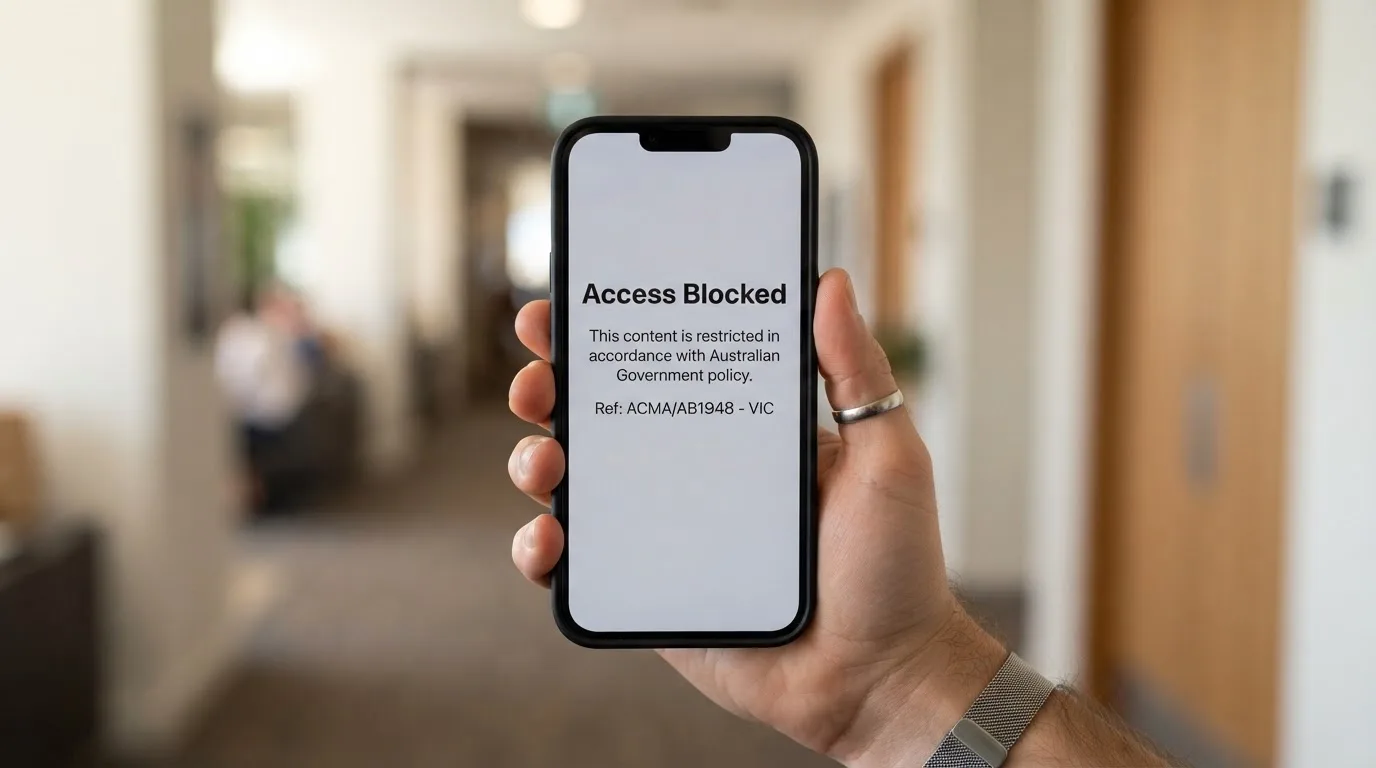
A native app is a different question. Some offshore casinos ship an Android APK outside the Google Play store and an iOS app outside the App Store, and the install path itself — sideloading an APK, installing a profile on iOS — is the first thing an Australian regulator would point to as outside the local rules. The ACMA can direct Australian ISPs to block domains; it cannot uninstall an app that is already on a phone. Sideloading carries that risk on top of the regulatory risk of using the site in the first place.
A practical test: a site whose mobile experience requires no install, no APK and no profile, and that runs a game in a mobile browser at the same speed it runs on a desktop, is offering the same product on both form factors. A site that pushes a native app as the only mobile path is pushing the player into a separate install decision, with its own consequences.
The games themselves — what the catalogue looks like
Novomatic’s headline titles — Book of Ra, Lucky Lady’s Charm, Sizzling Hot — are the names most often seen in third-party listings, and they are the titles most readers associate with the studio. They are not the only titles in the catalogue. Greentube’s online portfolio runs into the hundreds and includes both the classic Novomatic land-based titles and a wider set of online-only releases. The titles sit inside the casino’s lobby alongside games from other studios — Pragmatic Play, Betsoft, Wazdan, 1spin4win — and the mix varies by operator.
The relevant figure on a single slot is the RTP — the percentage of stake the slot is programmed to return over a long run. The figure is published on the studio’s own page for some titles and not for others. Betsoft’s Good Girl Bad Girl 2 carries a published RTP of 96.22%, “Very High” volatility and a 15.59% hit rate, played on 5 reels and 20 paylines. That is one figure for one title from one studio. The catalogue as a whole spans RTPs from the low 90s to the high 97s, with the higher figures attached to specific titles and not to the studio as a whole. A reader who wants to compare one slot against another needs the figure for the specific slot, not the studio average.
Volatility is the other lever. A high-volatility slot pays less often and in larger amounts when it pays; a low-volatility slot pays more often and in smaller amounts. The two profiles suit different bankrolls and different session lengths, and the choice between them is a session-length choice as much as a game-choice. A reader who wants a long session on a small bankroll is looking for a different profile from a reader who wants a short session with a chance at a larger payout.
The arithmetic — what the ACMA’s blocking record actually shows
The ACMA’s blocking record is the cleanest measurable signal of how this market is responding to enforcement. The first blocking request was issued in November 2019. As reported in June 2026, a total of 1,751 illegal gambling and affiliate marketing websites have been blocked since that first request, and more than 230 unlicensed gambling services have left the Australian market since enforcement was strengthened in 2017. In the round reported on 26 June 2026 the ACMA asked Australian ISPs to block 12 more sites in one batch: 7Signs, ChromaBet, Donbet, Duospin, Freshbet, Slots Gem, Jacks Club, Lucky Start, Pointsbetz.com, Spinrise, Vinyl Casino and Wildsino.
The blocking-rate arithmetic, stated as a band: between November 2019 and June 2026, roughly 80 to 85 illegal gambling websites per month were blocked on average across the ACMA’s enforcement period, with the per-month figure rising in the years since 2022 as the regulator’s monthly rounds grew longer. The condition on the band is that the 1,751 figure counts affiliate marketing sites alongside operator sites, so the per-month figure overstates the operator-only rate. Even with that caveat, the order of magnitude is the point: the regulator is not issuing warnings and walking away. The mechanism is operational, the volume is rising, and the brand names keep changing underneath.
The cost side runs the other direction. H2 Gambling Capital’s 2025 report estimates that Australians lose about A$3.9 billion a year to illegal gambling sites, and that the share of gambling going through legal channels fell from 74% in 2021 to 64%. The two figures move together: more blocks and more formal warnings, and a larger loss figure flowing to the offshore end of the market. The arithmetic is not a victory for one side or the other; it is the picture of a market in which enforcement is active and the offshore supply is still finding customers.
Where a reader in Australia actually plays
The honest answer to “where can I play Novomatic slots in Australia” runs through three doors, and none of them is an offshore casino. The first is a licensed land-based casino. Crown Melbourne, Crown Perth, The Star Sydney, The Star Gold Coast, Adelaide Casino and the Skycity Darwin complex operate under state and territory gaming licences and run Novomatic and Ainsworth gaming machines alongside other manufacturers’ cabinets. The second is a licensed club or hotel with poker machines — pokies, in the local term — regulated by the state or territory gaming authority. Ainsworth Game Technology, the Australian-listed manufacturer in which Novomatic holds a 52% stake, is one of the major suppliers to this segment. The third is licensed online wagering on races and sport, which the Northern Territory Racing and Wagering Commission regulates for 52 operators, none of which carry online casino games because the law does not allow them to.
A reader who wants the online experience without the offshore exposure has one further option: sweepstakes-style social casinos that operate as promotional games rather than gambling products. These are not the same as a real-money casino and they do not pay out cash winnings in the same way, but they are available to Australian residents without falling inside the IGA’s prohibited-services definition. The line between a sweepstakes casino and a real-money offshore casino is a legal line, not a marketing line, and it is worth checking which side of it a site sits on before depositing.
The brands, one by one
RocketPlay
RocketPlay sits at the top of the ACMA’s published list because the most recent formal warning was issued in March 2026, naming Pulsup Ltd as the operator of Rocketplay.com.au. The earlier Dama N.V. warning from May 2022 covered six Dama brands, including RocketPlay, and the March 2026 warning attaches to a different corporate entity for the same brand. The pattern is the same one Dama N.V. shows across Level Up Casino, Woo Casino and Spirit Casino. A reader who scanned the operator name and saw a change would not be wrong to read it as the same operator under a new wrapper.
Jackbit
The ACMA issued a formal warning to Ryker B.V. in April 2026 covering Jackbit and CasinOK. Ryker B.V. is the most recent addition to the ACMA’s published list. A reader who came to Jackbit through a sportsbook affiliate page rather than a casino review site is the reader the warning catches: the site operates as a casino-and-sportsbook combination under one licence, and the casino half is the part covered by the IGA.
Woo Casino
Woo Casino received a formal warning in March 2025 with Dama N.V. named as the operator. The third-party listings for Woo Casino do not turn up Novomatic or Greentube in the research set, so the connection between the brand and the page’s subject runs through the broader aggregator catalogue rather than through a direct studio deal. The warning is the same warning that covers the other Dama brands above and below it.
Spirit Casino
Spirit Casino received a formal warning in May 2025, also with Dama N.V. as the named operator. Spirit Casino is the most recent Dama brand on the ACMA’s published list and the one that closes the cluster of four Dama warnings across three years. The aggregator-catalogue connection is the same as Woo Casino’s: no third-party listing turns up Novomatic or Greentube specifically for Spirit Casino.
National Casino
National Casino sits inside the July 2025 warning to Consolutetish S.R.L., which also covers Bizzo Casino. The third-party listings for National Casino do name Novomatic and Greentube-adjacent providers — Betsoft’s catalogue page and the Pragmatic Play partner list both include National Casino — which is the connection the “subject support” column records. The corporate overlap with Bizzo Casino is the closest in the table: same warning, same date, same operator.
Bizzo Casino
Bizzo Casino carries two warnings. The July 2025 warning to Consolutetish S.R.L. is the most recent; the earlier 2022 warning to TechSolutions (CY) Group Limited and TechSolutions Group N.V. is the older one, and the overlap with TechSolutions is what a careful reader would notice — the same brand, two different corporate vehicles, two warnings three years apart.
Ignition Casino
Ignition Casino received a formal warning in July 2025 with Bamboo Media named as the operator. Bamboo Media is a separate operator from Dama N.V. and from Consolutetish S.R.L., which makes Ignition Casino a single entry in the table rather than part of a cluster. The brand is also one of the better-known names in the offshore-poker-and-casino segment outside Australia.
Instant Casino
Instant Casino received a formal warning in February 2025 with EOD Code SRL named as the operator. The February date makes Instant Casino the earliest of the 2025 cluster and the first formal warning of that year. The third-party listings for Instant Casino do not turn up Novomatic or Greentube specifically, so the connection is the broader catalogue rather than a direct studio deal.
Casino Intense
Casino Intense received a formal warning in April 2025 with Sterplay Holding Ltd named as the operator. Casino Intense is the only brand in the table whose third-party listings turn up a direct connection to the broader studio ecosystem: 1spin4win’s partner page lists Casino Intense, the UK Gambling Commission’s public register names the operator, and the Wikipedia entry for Novomatic carries the connection through the broader corporate family. A reader who came to Casino Intense through any of those three routes is the reader the ACMA’s warning reaches.
Sky Crown
Sky Crown sits at the bottom of the ACMA’s published list because the formal warning to Hollycorn N.V. over Sky Crown and Blue Leo was issued in September 2022, making it the earliest warning in the table. Hollycorn N.V. is a separate operator from the rest of the table, and the warning covers both Sky Crown and Blue Leo in one document.
Level Up Casino
Level Up Casino received a formal warning in May 2022 with Dama N.V. named as the operator, and the third-party listing that connects Level Up Casino to the broader catalogue runs through Wazdan’s partner page rather than through a direct Novomatic or Greentube listing. The May 2022 warning is the oldest in the table and the one that begins the Dama cluster of four.
The reader’s checklist
A reader who has read this far and is still weighing an offshore site against the licensed alternatives has a short list of practical checks to run. The site accepts an Australian dollar balance or only euros and US dollars. The deposit method is one of the four Australian-legal options for licensed wagering or one of the offshore-only methods the ACMA would treat as a signal. The withdrawal path runs through an Australian bank account and clears in a known number of business days. The licence displayed in the footer is a Curaçao or Malta licence, both of which are real licences for offshore operation and neither of which is an Australian licence. The brand is not on the ACMA’s published warning list, or it is and the reader is reading this page to understand what that means. Each of those checks is one piece of information, and the picture they build together is more useful than any single one of them.
Tax — what happens to winnings
Gambling winnings of a recreational player in Australia are not assessable income under section 6-5 of the ITAA 1997, and losses are not deductible. The position changes if the person carries on a business of gambling, which is a higher bar than recreational play and applies to a much smaller group. The Australian Taxation Office is the right source for any reader whose situation is on the edge of that line, and the general rule above is the starting point rather than the conclusion.
Frequently asked questions
What kind of games does Novomatic make?
Novomatic’s catalogue centres on slots — Book of Ra, Lucky Lady’s Charm, Sizzling Hot are the headline titles — and the online arm Greentube also carries table games and video bingo. The studio’s land-based business includes gaming machines, casino systems and arcade operations across roughly 43 to 50 countries, and the 2018 acquisition of a 52% stake in Ainsworth Game Technology put the Australian pokies market inside the group’s footprint. The online portfolio sits behind a Malta Gaming Authority licence and a UK Gambling Commission licence; neither is an Australian licence.
Is Novomatic used by any casino licensed to operate in Australia?
No online casino is licensed to operate in Australia for online casino games, so the question reframes to: is Novomatic present in any Australian-licensed product? Yes, through Ainsworth, which supplies gaming machines to licensed clubs, hotels and casinos across the country. The online presence is restricted to licensed wagering on races and sport, which does not include slots, and to offshore casinos whose Australian-facing operations are what the Interactive Gambling Act 2001 prohibits.
Can Australians legally play Novomatic slots at an online casino?
The Interactive Gambling Act 2001 prohibits offering online casino games to anyone in Australia, and the ACMA enforces that prohibition through formal warnings, ISP blocking requests and published lists of named operators. The player is not the target of the law — the provider is — but the consequence for the player is that an offshore site can be blocked with a balance still on it, and the site provides no Australian consumer protection or complaints channel. The lawful route to Novomatic slots runs through licensed land-based venues and licensed clubs and hotels, not through an online casino.
Are Novomatic games available at land-based Australian casinos?
Yes. Ainsworth Game Technology, in which Novomatic holds a 52% stake acquired in 2018 for around €300 million, is one of the major gaming-machine suppliers to Australian clubs, hotels and casinos. Crown Melbourne, Crown Perth, The Star Sydney, The Star Gold Coast, Adelaide Casino and Skycity Darwin all operate under state and territory gaming licences and run Ainsworth cabinets alongside other manufacturers’ machines. The online equivalent of this experience is not available inside Australia because the law does not allow it.
What should someone check before trusting a site that claims to offer Novomatic games?
The site should not be on the ACMA’s published warning list; the deposit method should not be one the Australian rules ban for licensed wagering (credit card, credit-related product, cryptocurrency); the licence displayed in the footer should be understood as an offshore licence and not an Australian one; the withdrawal path should run to an Australian bank account with a stated timeline; and the wagering requirements on any bonus should be read in full before the deposit. None of these checks is conclusive on its own, and a site that fails any one of them is a site the ACMA’s enforcement record treats with suspicion.
Does Novomatic software run on mobile browsers?
Yes. Greentube titles are built in HTML5 and run in a mobile browser on iOS and Android without a separate download. The same is true of the other providers whose titles appear in the same offshore catalogues — 1spin4win’s HTML5 portfolio, Aristocrat Interactive’s mobile builds, Betsoft’s HTML5 slots. A site that pushes a native app or an APK as the only mobile path is making a separate install decision for the player, and that install decision is one the ACMA cannot reverse once it is on the phone.