
New online casino sites for Australian readers in 2026: the law, the record, and the alternatives
Data current as of 20 October 2026, checked against the Australian Communications and Media Authority’s published enforcement actions and the Reserve Bank of Australia’s payment guidance.

A search for “best new online casino sites Australia” turns up the same shape of result almost every time: a shortlist of offshore brands, a photo of a welcome package, and a line about licensing that says everything is in order. The order is, in fact, the problem. Under the Interactive Gambling Act 2001, offering online casino games to anyone in Australia is a criminal offence. No state or territory issues a licence for it. The brands named in those shortlists are precisely the ones the ACMA has been formally warning, blocking and tracking out of the Australian market for years.
This page is not that shortlist. It walks through the questions surrounding what a newly launched site is, why so many of them target Australians anyway, what their welcome packages cost in turnover, and where the payment rails actually leave the reader — and then sets out what does exist lawfully in Australia for someone who wants to play. The choice behind the page is that a reader looking for “new casino sites” deserves to know which of these paths is closed before being walked down it.
Table of Contents
- Bonuses, free spins, and what a welcome package really costs
- The phone-screen experience at new mobile casino sites
- Specific games, providers and the live-dealer shelf
- What “new” actually means at an online casino
- How the ACMA’s enforcement record shapes the market
- The legal frame around online casino in Australia
- Responsible gaming, BetStop and where help sits
- Crypto, anonymity and the offshore route
- Payments, payout speed and what actually lands in an Australian bank account
- What the ACMA’s blocking rate actually shows
- A landscape of brands the ACMA has acted against
- What a reader in Australia can actually use
- Frequently asked questions
Bonuses, free spins, and what a welcome package really costs
A “new casino bonus” usually means a matched deposit plus a bundle of free spins, the headline number stretched across several deposit tiers. The matched deposit looks like the operator’s money; it is not. It is the operator’s terms attached to the player’s own money, with a multiplier that decides how much of the player’s own cash has to be turned over before any of it can be withdrawn.

What the bonus really costs is the turnover requirement multiplied by the house edge on the games it is cleared against. A$1,000 matched at 40x means A$40,000 of wagering before withdrawal opens. Slots at a 96% return-to-player leave an expected loss of A$1,600 across that turnover — the size of the bonus twice over, drawn out of the deposit the player thought they had. Free spins bundles behave the same way. The spin count is the headline; the cap on winnings, the wagering on the spin value, and the eligible games are the cost.
The mechanism repeats across every “new player casino bonus” on offer, and the arithmetic that exposes it does not change with the brand. A 200% match on a smaller deposit inflates the headline without shrinking the wagering factor. A “no deposit” bonus removes the deposit but keeps the wagering, and adds a max-cashout cap that turns the win ceiling into the offer’s actual value. “Cash bonuses” without wagering are rarer than the marketing implies, and the ones that exist tend to compensate with a smaller headline amount, a tighter game list, or a withdrawal ceiling.
Two practical consequences follow. The first is that the bonus’s value to the player is almost always below its face, sometimes dramatically so; a casino offering a 300% match with a 50x wagering factor is paying less than one offering a 100% match with 20x wagering, even though the headline reads the other way. The second is that the only reading of a bonus a reader can act on is the one that puts the wagering factor and the eligible games side by side. The brand-coloured banner with the rocket ship on it is decoration.
For a reader comparing welcome packages, the order of priority is the wagering multiplier, the eligible games list, the max-cashout cap, the expiry window, and the minimum deposit. The bonus amount itself comes last, and even then only to confirm the calculation.
The phone-screen experience at new mobile casino sites
Most new casino sites are built mobile-first. The browser version loads fast, the lobby tiles reflow cleanly, and live-dealer tables stream without a separate app. Where a native app exists, it is usually a wrapper around the same browser product, pushed through the App Store or Google Play to pick up push notifications and a homescreen icon.
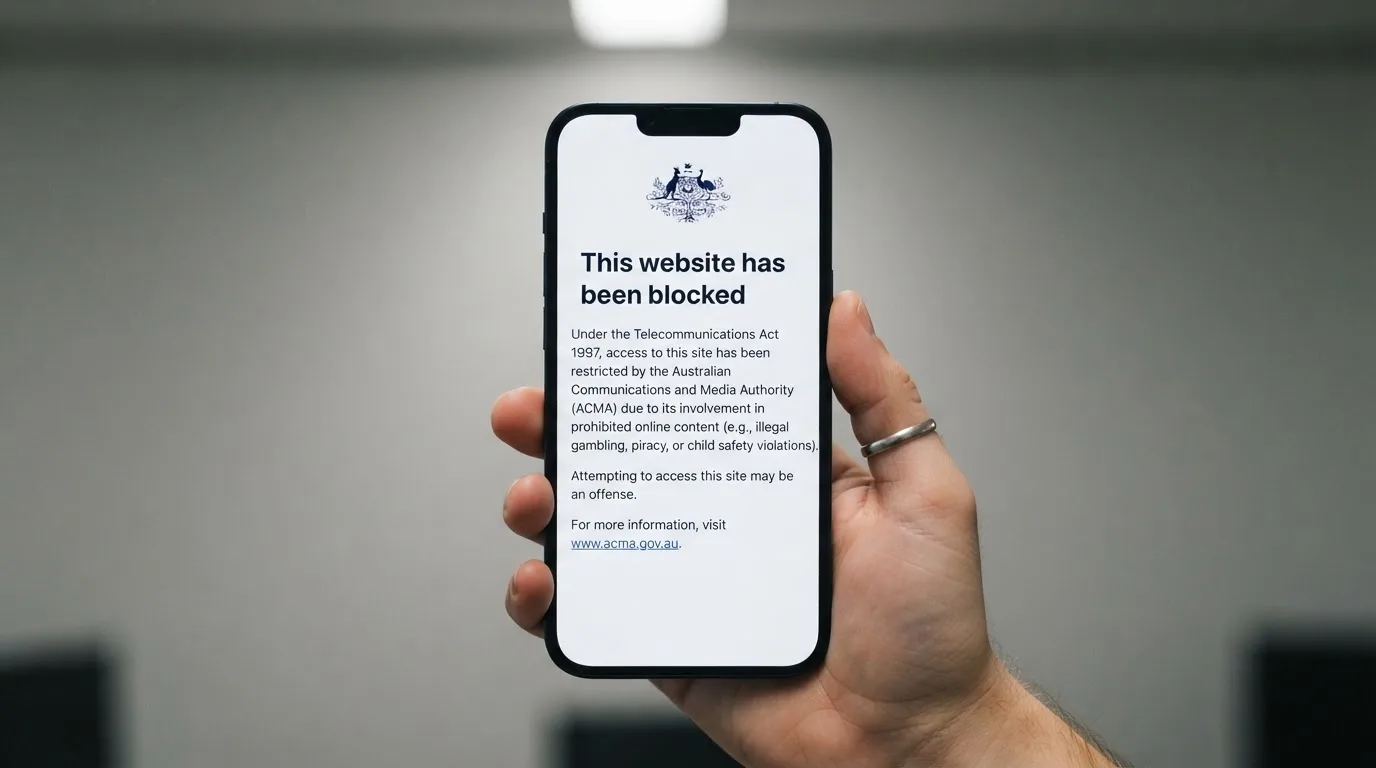
The Australian layer on top is payment. The four major banks — ANZ, Commonwealth Bank, National Australia Bank and Westpac — all offer some form of gambling transaction block that works at the card level. Westpac’s block refuses authorisation on the merchant category code for betting and casino gambling; ANZ’s block, activated in the app, also blocks gambling transactions made via Apple Pay or Google Pay on an eligible card, not just the plastic card itself; Commonwealth Bank’s CommBank app carries a similar gambling lock on eligible cards. The blocks refuse the transaction at authorisation, which means the casino never sees the attempt.
A reader who has turned on a bank’s gambling block and is still seeing deposits land is either on a card the block does not cover, on a payment rail the block does not intercept (a direct bank transfer is the common one), or at an operator that processes under a non-gambling merchant category code. Mobile wallet tokens do not get around the block — the card underneath is still the one being authorised.
The 2023 amendments to the Interactive Gambling Act 2001 also ban credit cards and credit-related products for use with Australian-licensed online wagering, with penalties of up to A$247,500 for operators who breach. A credit-funded digital wallet sits inside that restriction. An offshore casino that accepts a credit card from an Australian is operating outside the rule; a debit card or a bank transfer routes around the credit ban but lands inside the bank-block layer above. The legal status of the operator does not change the bank-side reality of the payment.
Specific games, providers and the live-dealer shelf
The catalogue behind “new casino slots”, “new live casino” and the rest of the cluster is dominated by a handful of studios: Pragmatic Play, Evolution, NetEnt, Play’n GO, Nolimit City, Hacksaw Gaming and a long tail of smaller suppliers. New casino sites tend to lead with the same 200 to 400 titles because the aggregator platforms (SoftSwiss, EveryMatrix, the white-label providers behind most of the brands in this page’s record) hand the operator the same shelf on day one.
The catalogue matters because the wagering requirement on a bonus is only as forgiving as the games it can be cleared on. Slots typically contribute 100% to wagering, table games 10% to 20%, and live-dealer titles somewhere between zero and a small percentage — the exact contribution is in the bonus terms and is worth reading before the deposit. A bonus cleared on low-contribution games is a bonus that takes far longer than its headline suggests, and the expected loss compounds with the time.
Return-to-player percentages are public on most providers’ game info pages and on the regulator’s game registers where the games are independently tested. A 96% RTP is the cluster average for modern video slots; high-volatility titles sit lower on base-game return and rely on feature rounds to reach their published figure. Volatility is the other half of the calculation. A 96% RTP slot at high volatility pays out less often and in larger chunks; over the small number of spins a bonus usually runs to, the variance swamps the average, and a session that should statistically clear the wagering can come up dry.
Live casino has its own feature set: Pragmatic Play Live and Evolution run the bulk of the tables, with Ezugi and a handful of smaller studios filling the gaps. Game-show products — the wheel-spinning, dice-rolling formats — tend to count zero or near-zero against wagering, which makes them entertainment rather than a clearing path. Blackjack and roulette contribution rates vary; the reader who plans to clear a bonus on live tables needs the operator’s contribution table in front of them before the deposit.
What “new” actually means at an online casino
A site launches when the operator registers the domain, sets up the payment integration, and goes live with the catalogue. There is no central registry of casino launches; the only way to date one is the footer copyright line, the domain registration date (public through a WHOIS lookup), the “About” page if the operator chooses to publish one, or the date the first player review appears on a watchdog site. None of these is authoritative on its own. A “launched in 2026” claim on the operator’s own page is a marketing line until corroborated.
The cluster term “new casinos” is doing two jobs in the search results it appears in. It is shorthand for a site that has been live for under a year, and it is shorthand for a site with a fresh brand, a fresh welcome package, and a fresh domain — sometimes after a licence change, sometimes after a rebrand, sometimes after an operator swap behind an existing URL. The reader is usually looking at the second kind, because the first kind is hard to verify and the second kind looks new without being new.
Three signals are worth checking before trusting any “just launched” claim. First, the corporate owner: an ACMA warning over a parent company for one brand often covers sister brands operating under the same company number, and the ACMA enforcement record is searchable by company name. Second, the licence displayed in the footer: a Curaçao or Anjouan number that resolves on the regulator’s public register is a different signal from the same number sitting on twenty unrelated sites, which is what a white-label operation looks like. Third, the payment page: a site that lists only crypto and a handful of obscure e-wallets, with no card processor and no bank transfer, is routing around the parts of the financial system that apply ordinary anti-money-laundering checks.
A reader who wants the genuine newness is looking at a small set: the domain registered inside the last twelve months, the licence issued to a company the regulator’s register recognises, and the absence of the brand from the ACMA’s published enforcement actions. The number of sites that meet all three is short, and none of them accept Australian players lawfully.
How the ACMA’s enforcement record shapes the market
The Australian Communications and Media Authority does not just warn once and walk off. The enforcement record against online casinos has been running for the better part of a decade, and the rate has not slowed. As of the ACMA’s June 2026 blocking round, 1,751 illegal gambling and affiliate marketing websites had been blocked since the first blocking request went out in November 2019, and more than 230 unlicensed services had left the Australian market since enforcement was strengthened in 2017. The June 2026 round alone added twelve names: 7Signs, ChromaBet, Donbet, Duospin, Freshbet, Slots Gem, Jacks Club, Lucky Start, Pointsbetz, Spinrise, Vinyl Casino and Wildsino.
The shape of an ACMA action is a formal warning first, an ISP blocking request second, and the rarer civil penalty proceedings third. Most of the brands in this page’s record sit at the warning stage; some have moved to the second stage; a handful of operators have had multiple brands warned under the same parent company. Dama N.V. alone has been the subject of warnings in 2022 (over Bambet, Dazard, Level Up, Rocketplay, Wild Tornado and Cobra Casinos) and again in 2025 (over Woo Casino and Spirit Casino). The pattern — warn the company, watch the brand list change, warn again — is the rule rather than the exception, because the operator cost of relaunching under a new brand is much lower than the cost of leaving the Australian market.
H2 Gambling Capital’s 2025 estimate puts Australian losses to illegal gambling at roughly A$3.9 billion a year, and puts the share of gambling going through legal channels at 64% — down from 74% in 2021. The trend line is the other way around from what a regulator would want, and it is the trend line the ACMA’s enforcement record has been trying to bend. The block list lengthens; the legal share shrinks. The reader looking at this market is looking at a regulatory push that has not closed the gap.
For a reader comparing two offshore sites, the relevant question is not whether either is licensed — neither is, in the Australian sense — but whether either has been formally warned, blocked or named in a published ACMA round. The published record is searchable, the company names are searchable, and the block list is current. A site whose parent company does not appear on the list is in a stronger position than one whose parent has been named several times, even if neither is lawful.
The legal frame around online casino in Australia
The Interactive Gambling Act 2001, as tightened by the Interactive Gambling Amendment Act 2017, makes it an offence to provide online casino games, online pokies or in-play betting to a person physically in Australia. What can be licensed is wagering on sport and racing placed before the event, lotteries, and keno. In practice the wagering licences sit with the Northern Territory Racing and Wagering Commission, which regulates 52 of Australia’s online bookmakers — including Sportsbet, Bet365 and Ladbrokes — through a commission that, as reported in April 2026, runs with no full-time staff and meets once a month in Darwin. The Northern Territory is the licence-holder of convenience, not a casino regulator.
No state or territory issues a licence for online casino games. A footer line on an offshore site claiming a Curaçao, Anjouan, Kahnawake, Isle of Man or Malta licence is a licence to operate from that jurisdiction, not a licence to take Australian customers. The legal standing of that licence in Australia is nil. The Interactive Gambling Act applies to the provider, not the player; an Australian punter is not prosecuted for placing a bet, but the site that takes the bet is breaking Australian law the moment it accepts a deposit from an Australian IP address.
The 2026 reform layer is the Interactive Gambling Amendment (Gambling Reform) Bill 2026, which passed Parliament on 19 August 2026. Its advertising and inducement measures commence on 1 January 2027, which means it is law with a start date and not yet in force at the time of writing. Its existence is the direction of travel rather than the rule a reader has to follow today, but the direction of travel is the relevant signal: inducements are tightening, not loosening, and the regulatory view of the offshore market is hardening, not softening.
Minimum age across Australian online wagering is 18. Tax position for a recreational player is that winnings are not assessable income and losses are not deductible, unless the player carries on a business of gambling. A reader with a large win at an offshore site is in a more complicated position because the site’s tax treatment does not match Australia’s, and the ATO is the place to confirm the reader’s own position.
Responsible gaming, BetStop and where help sits
BetStop — the National Self-Exclusion Register — went live in August 2023 and is the main self-exclusion tool Australian readers have. It binds Australian-licensed online and phone wagering services, which means the licensed bookmakers and the licensed racing and sports operators. It does not bind offshore casinos. A punter who has registered with BetStop has excluded themselves from every Australian-licensed wagering service, but the offshore site they were playing at yesterday is still open to them. That is the gap in the protective layer, and it is one the ACMA’s enforcement record has not closed.
The National Gambling Helpline is 1800 858 858, free, available 24/7, with web chat at Gambling Help Online. Both are free, confidential and Australian-run. Financial Counselling Australia and the state-based problem gambling services sit in the same network.
The bank-level blocks discussed earlier are the other part of the protective layer. ANZ’s gambling block, once activated, takes 48 hours to remove — a deliberately slow reversal to stop a punter undoing the block during a losing session. ANZ warns that the block cannot guarantee every gambling transaction will be stopped and that some non-gambling transactions may be blocked in error. Commonwealth Bank’s CommBank app carries a similar gambling lock on eligible cards, with the same caveat that not every gambling transaction can be intercepted. The card-level block sits over the bank account and underneath the casino; turning it on is the single most effective step a punter can take who is committed to stopping.
For a reader comparing an offshore offer to a stop, the practical order is BetStop registration first, the bank-level block second, and the helpline in front of the phone from day one. The offshore site does not appear in that order, because it cannot be bound by any of it.
Crypto, anonymity and the offshore route
The “new bitcoin casino” cluster is the version of the offshore offer that markets itself on privacy and speed. Crypto deposits settle quickly, do not route through a bank statement in the player’s name, and the casino’s KYC is lighter than a regulated operator’s. The marketing reads as frictionless; the reality is layered. The casino’s KYC is still triggered at withdrawal, and the Australian end of the transaction — the off-ramp from crypto to Australian dollars — is the part the marketing tends to leave out.
The Interactive Gambling Act 2001 as amended in 2023 prohibits licensed online wagering services from accepting payment by credit card, credit-related products, or digital currency. The rule binds licensed operators. An offshore casino is not a licensed operator, which means the prohibition is a marker of the site’s status rather than a constraint on the deposit: an Australian can still send crypto to an offshore casino, but the site doing so is operating outside Australian rules, and the player’s own anti-money-laundering obligations under Australian law still apply when the funds are converted back.
The Reserve Bank’s guidance, the AUSTRAC framework, and the user’s own tax return are the part of the crypto path that is often missing from the pitch. AUSTRAC’s threshold-transaction-report rule applies only to physical cash transfers of A$10,000 or more; ordinary electronic bank transfers are not subject to that per-transaction reporting regardless of the amount. The crypto exchange the player uses to move funds in or out is itself an AUSTRAC-regulated entity and carries its own reporting obligations. A player who treats crypto as invisible is treating a regulated exchange as unregulated, which is a different proposition from the marketing line.
For a reader specifically asking about the “new crypto casino” cluster, the honest answer is the same as for the fiat cluster: the offer is illegal on the operator side, the protections on the player side are absent, and the privacy claim does not survive the withdrawal.
Payments, payout speed and what actually lands in an Australian bank account
The payment side of an offshore casino is where the marketing diverges most sharply from the experience. The deposit side is fast — instant in most cases, regardless of rail — because the casino’s incentive is to take the funds quickly. The withdrawal side is slower, and the slowness is built into the operator’s terms. Pending periods, processing windows, daily and weekly withdrawal limits, and KYC re-checks at first withdrawal all sit between the casino’s “approved” button and the funds landing.
For a reader in Australia, the legal deposit rails into a licensed wagering service are debit card, bank transfer, PayID/Osko and BPAY. Osko, the instant transfer layer on Australia’s New Payments Platform, moves money between participating Australian banks in under a minute, 24/7, addressed either to a BSB and account number or to a PayID. The New Payments Platform went live on 13 February 2018; PayID registrations passed 25 million by April 2025; over 100 Australian financial institutions offer PayID-based instant transfers. The platform’s owners committed to keeping monthly outages to under two minutes, and in 2021 the ACCC authorised the merger of NPP Australia, BPAY and eftpos into Australian Payments Plus.
PayID has a fraud-screening feature the offshore casinos do not advertise. A transfer to a PayID shows the name of the account holder before the payment is sent; Australian Payments Plus warns that being asked to transfer money to a PayID on an illegal gambling site almost certainly means a scam site. The warning is the inverse of what the offshore offer implies — a PayID deposit that resolves to a recognisable Australian name is the rare case, not the rule, and a request for one is a flag.
BPAY, run by Australian Payments Plus, is a bill-payment rail rather than a person-to-person transfer: the payer enters the Biller Code and the Customer Reference Number (CRN) printed on the bill. BPAY has been live since 18 November 1997, is available at more than 140 banks and financial institutions, and is offered by more than 95,000 Australian businesses. None of those businesses are offshore casinos, which is why an offshore casino accepting BPAY is a contradiction in terms rather than a payment option.
Apple Pay, Google Pay and Samsung Pay collectively accounted for around 45% of Australian card payments by number at the end of 2025, per the Reserve Bank’s data. The wallet is not the card, but the card underneath is still the one being authorised. ANZ’s gambling block covers the wallet path on eligible cards; Westpac’s and Commonwealth Bank’s work at the card level. Apple Pay does not charge fees to the consumer for in-store, online or in-app purchases, and any surcharge is the merchant’s card-processing fee rather than Apple’s. The transaction limits and PIN requirements for Apple Pay are set by the card issuer or merchant rather than by Apple itself — a constraint that means an Australian bank can refuse a gambling transaction through Apple Pay even when the wallet itself accepts it.
American Express sits outside the surcharge reform the Reserve Bank proposed in its July 2025 review. The review proposes removing surcharges on eftpos, Mastercard and Visa transactions only; Amex is explicitly out of scope. Amex’s three-party model — issuer and processor in one — is the historical reason. For an Australian punter, the practical effect is that an Amex-funded deposit at an offshore site is paying the Amex merchant fee the bank is still free to charge, and the Amex chargeback process is the only consumer-protection layer on a payment the bank block may not catch.
What the ACMA’s blocking rate actually shows
The arithmetic behind the ACMA’s published record provides a clear picture. The first blocking request went out in November 2019. By the June 2026 blocking round, 1,751 illegal gambling and affiliate marketing websites had been blocked in total. That puts the running rate somewhere in the range of roughly 250 to 270 sites blocked per year averaged across the period, with the rate skewed upward in the years after 2023 once the enforcement amendments had bedded in and the ACMA’s monthly blocking cadence settled.
The figure is a band rather than a single number because the count includes affiliate marketing sites alongside gambling sites proper, and the published total covers all categories together. The direction, however, is unambiguous: more than a thousand sites blocked inside seven years, with the monthly round adding a dozen names at a time and no sign of the pipeline drying up. Compared against the A$3.9 billion a year H2 Gambling Capital estimates Australians lose to illegal gambling, the block rate is not closing the gap — it is holding the line at a moving target.
The published rate is also the rate a reader can read against the names in any “best new casino” shortlist. A site launched in the last twelve months that has not yet appeared on the ACMA’s list is not, on that basis alone, safer — the warning is reactive, not proactive — but the absence of a parent-company warning is a small positive signal among a field of small negative signals. The reader’s job is to treat the ACMA record as a backstop rather than a primary filter, and to remember that the site’s status under Australian law does not change with the ACMA’s monthly round.
A landscape of brands the ACMA has acted against
The table below lines up the brands in this page’s record by the ACMA’s published action and the operator named in the warning. None of them is licensed for online casino games in Australia, whatever footer line they carry. The subject-support column lists the Australian-facing services and sources that recognise the brand, in the cases where any do — most do not, and the column reads accordingly.
| Brand | ACMA action and date | Operator named by the ACMA | Subject support |
|---|---|---|---|
| RocketPlay | Formal warning, March 2026 | Pulsup Ltd (Rocketplay); earlier Dama N.V., May 2022 | Listings on Gambling Insider |
| Level Up Casino | Formal warning, May 2022 | Dama N.V. | Listings on Westpac block records |
| Woo Casino | Formal warning, March 2025 | Dama N.V. | — |
| Spirit Casino | Formal warning, May 2025 | Dama N.V. | — |
| National Casino | Formal warning, July 2025 | Consolutetish S.R.L. | Listings on acma.gov.au, austrac.gov.au, betstop.gov.au |
| Bizzo Casino | Formal warning, July 2025; earlier 2022 | Consolutetish S.R.L. (2025); TechSolutions (2022) | Listings on Gamblinginsider.com |
| Ignition Casino | Formal warning, July 2025 | Bamboo Media | — |
| Instant Casino | Formal warning, February 2025 | EOD Code SRL | Listings on Ecopayz, PayID |
| Jackbit | Formal warning, April 2026 | Ryker B.V. | — |
| Casino Intense | Formal warning, April 2025 | Sterplay Holding Ltd | Listings on austrac.gov.au, betstop.gov.au, Gamblinginsider.com |
| Sky Crown | Formal warning, September 2022 | Hollycorn N.V. | — |
The operator column is the more useful of the two columns for a reader comparing brands. Dama N.V. appears four times in eleven rows; the ACMA has been warning the same parent under different brands for the better part of four years, and the appearance of a Dama N.V. brand on a new shortlist is a near-certainty given the historical pattern. Consolutetish S.R.L. appears twice. The remainder are single-name operators whose first appearance on the ACMA’s record was within the last eighteen months.
The subject-support column is sparse by design. A brand that appears on the ACMA’s enforcement pages, on AUSTRAC’s reporting pages, and on BetStop’s exclusion register is in a different category of “known” than one that appears only on affiliate marketing sites, and the gap between the two is the gap between an enforcement record and a marketing footprint. The em-dash entries are not endorsements; they are the absence of a recognised Australian-facing footprint.
Lawful Payment Methods
| Method | Role |
|---|---|
| Debit Card | Direct payment, widely accepted |
| Bank Transfer | Secure, regulated transfer |
| PayID/Osko | Instant, P2P transfer |
| BPAY | Bill-payment service |
RocketPlay’s most recent ACMA action was a formal warning to Pulsup Ltd in March 2026, with an earlier warning to the parent Dama N.V. in May 2022. The site’s Australian-facing mirror at Rocketplay.com.au was the named target of the 2026 warning. The brand appears on Gamblinginsider.com’s listings but not on BetStop, AUSTRAC or the ACMA’s blocking register outside the warning itself. The brand’s footprint outside the ACMA record is the standard offshore-market footprint of affiliate listings and review aggregators.
Level Up Casino
Level Up Casino was warned alongside five other Dama N.V. brands in May 2022 — Bambet, Dazard, Level Up, Rocketplay, Wild Tornado and Cobra Casinos — in what was the largest single Dama N.V. action to that point. The brand appears on Westpac’s gambling-block records in the merchant category code data the bank publishes for blocked transactions. The 2022 warning has not been followed by a fresh formal action, but neither has Dama N.V.’s overall pattern of brand rotation slowed.
Woo Casino
Woo Casino was the subject of a fresh formal warning to Dama N.V. in March 2025, four years after the parent company’s 2022 warning round. The interval between the two is the interval the operator has used to rotate the brand list. The Woo Casino brand does not appear in any Australian-facing listing beyond the ACMA’s own warning record.
Spirit Casino
Spirit Casino drew a separate Dama N.V. warning in May 2025, two months after the Woo Casino action. The pattern is the same: parent warned, brand surfaced, brand warned, next brand surfaces. The Spirit Casino brand has no Australian-facing listing outside the ACMA record.
National Casino
National Casino was warned under Consolutetish S.R.L. in July 2025, alongside Bizzo Casino and Ignition Casino (under a different operator, Bamboo Media). The National Casino brand appears on acma.gov.au’s enforcement pages, on austrac.gov.au’s reporting pages and on betstop.gov.au’s exclusion register — a wider Australian-facing presence than most of the brands in this record, and one that reflects a longer operating history rather than a better standing under Australian law.
Bizzo Casino
Bizzo Casino’s July 2025 warning under Consolutetish S.R.L. was its second: the earlier warning, in 2022, went to TechSolutions (CY) Group Limited and TechSolutions Group N.V. The brand has survived a parent-company change since the first warning, which is one of the cleaner examples of why an ACMA warning over a brand does not necessarily close the brand. The brand appears on Gamblinginsider.com’s listings.
Ignition Casino
Ignition Casino was warned under Bamboo Media in July 2025, in the same ACMA round as National Casino and Bizzo Casino. Bamboo Media is a separate operator from Consolutetish S.R.L., and the brand’s Australian-facing footprint is the standard offshore-market one rather than anything tied to the Australian regulatory layer.
Instant Casino
Instant Casino was warned under EOD Code SRL in February 2025, the earliest action in this record. The brand appears on Ecopayz.com and Payid.com.au’s merchant listings, which puts it in a slightly different Australian-facing posture than the brands whose only listing is the ACMA record itself. A PayID listing for an offshore casino is, per Australian Payments Plus’s own warning, a flag rather than a reassurance.
Jackbit
Jackbit was warned under Ryker B.V. in April 2026, alongside CasinOK, in the most recent Dama-style parent-company round in this record. The brand does not appear in any Australian-facing listing outside the ACMA warning.
Casino Intense
Casino Intense was warned under Sterplay Holding Ltd in April 2025. The brand appears on austrac.gov.au’s reporting pages, on betstop.gov.au’s exclusion register, and on Gamblinginsider.com’s listings — a wider footprint than most, and again one that reflects a longer operating history rather than Australian legality.
Sky Crown
Sky Crown was warned under Hollycorn N.V. alongside Blue Leo in September 2022, in the ACMA’s earlier enforcement round. The brand does not appear in any Australian-facing listing outside the ACMA record, and the 2022 warning has not been followed by a fresh formal action over the parent company in the period this record covers.
What a reader in Australia can actually use
The lawful paths for someone in Australia who wants to gamble online are narrower than the marketing suggests. Licensed online wagering is restricted to sport and racing bets placed before the event, lotteries and keno. The licensed bookmakers — Sportsbet, Bet365, Ladbrokes and the rest of the 52 operators under the Northern Territory Racing and Wagering Commission — sit inside that frame. Online casino games and online pokies are not licensed anywhere in Australia, and the offshore offer that markets itself as licensed for Australian play is licensed to operate from Curaçao, Anjouan or another small jurisdiction rather than to take Australian customers.
For casino-style play, the Australian options are the land-based casinos (Crown Melbourne, Crown Perth, The Star Sydney, The Star Gold Coast, Treasury Brisbane, Adelaide Casino, and the Country Club Resorts and Lasseters operations in the Northern Territory) and the licensed pokies venues in each state and territory. The pokies venues are state-regulated, with state-level self-exclusion schemes that sit alongside BetStop. None of this is a substitute for an offshore casino’s catalogue, and that is the gap the offshore marketing is selling across.
The lawful frame also covers the protective tools. BetStop binds every Australian-licensed wagering operator. The bank-level gambling blocks at ANZ, Commonwealth Bank, Westpac and NAB intercept the card-level authorisation before it reaches the casino. The state-based self-exclusion schemes bind the land-based venues and the pokies. None of it binds an offshore casino, which is why the offshore market is the gap the protective layer does not cover.
The honest choice behind this page is that a reader searching “best new online casino sites Australia” is looking at a market where the offer is unlawful on the operator side, the protective layer is absent on the player side, and the genuine Australian options sit in a different category. The brands named above are in this record because the ACMA has formally warned them, and the rest of the offshore market sits in the same legal posture. The reader looking for an honest answer gets the same answer regardless of which shortlist they consult.
Frequently asked questions
How can someone tell how new an online casino site actually is?
Three signals help: the domain registration date (public through a WHOIS lookup), the licence number in the footer cross-checked against the regulator’s public register, and the absence of the parent company from the ACMA’s published enforcement actions. A “launched in 2026” claim on the operator’s own page is a marketing line until corroborated.
Do brand-new casino sites carry more risk than established ones?
The age of the brand is a small signal compared with the operator behind it. A new brand under an operator with a prior ACMA warning carries the same risk as the parent company’s older brands; a new brand under a clean operator with a verifiable licence on the regulator’s register is in a stronger position than the marketing would suggest. The relevant check is the operator, not the launch date.
Is it legal for a newly launched online casino to accept Australian players?
No. Under the Interactive Gambling Act 2001, offering online casino games to anyone in Australia is a criminal offence, and no state or territory issues a licence for it. The provider is the party the law targets; the player is not prosecuted, but the offshore site gives no Australian consumer protection, no complaints body and no recourse if a withdrawal is refused.
What should someone check before trusting a casino site that only just launched?
The parent company against the ACMA’s enforcement record, the licence number against the regulator’s register (and whether the same number appears on unrelated sites, which is the white-label tell), and the payment page for crypto-only and obscure-eWallet-only routes that bypass the parts of the financial system applying ordinary anti-money-laundering checks. None of these make a site lawful for Australian play; they only distinguish the more concerning operators from the less concerning ones.
Do new casino sites typically offer a welcome bonus to attract players?
Yes. The matched-deposit-plus-free-spins structure is standard across the offshore market. The bonus’s real cost is the wagering requirement multiplied by the house edge on the games it is cleared against, and the headline figure is rarely the value the player ends up with. The wagering factor, eligible games, max-cashout cap and expiry window are the numbers that decide whether the bonus is worth taking.
Can a new mobile casino app be verified as genuine before downloading it?
The browser version is verifiable by the same signals as the desktop site — parent company, licence, payment page. A native app adds a wrapper layer; the underlying operator is the same, and a casino app published by an unfamiliar developer under an offshore operator’s name is the place where a typo-squat or clone app is most likely to surface. The safer reading is that an offshore casino’s app carries the same risks as the browser version, plus the app-store-specific ones.