
Best Pokies In Sydney 2026: Licensed Venues, Real Returns And The Offshore Sites That Cannot Advertise Here
Data current as of 28 October 2026 and checked against the Australian Communications and Media Authority register, Liquor and Gaming NSW and the NSW Independent Casino Commission.
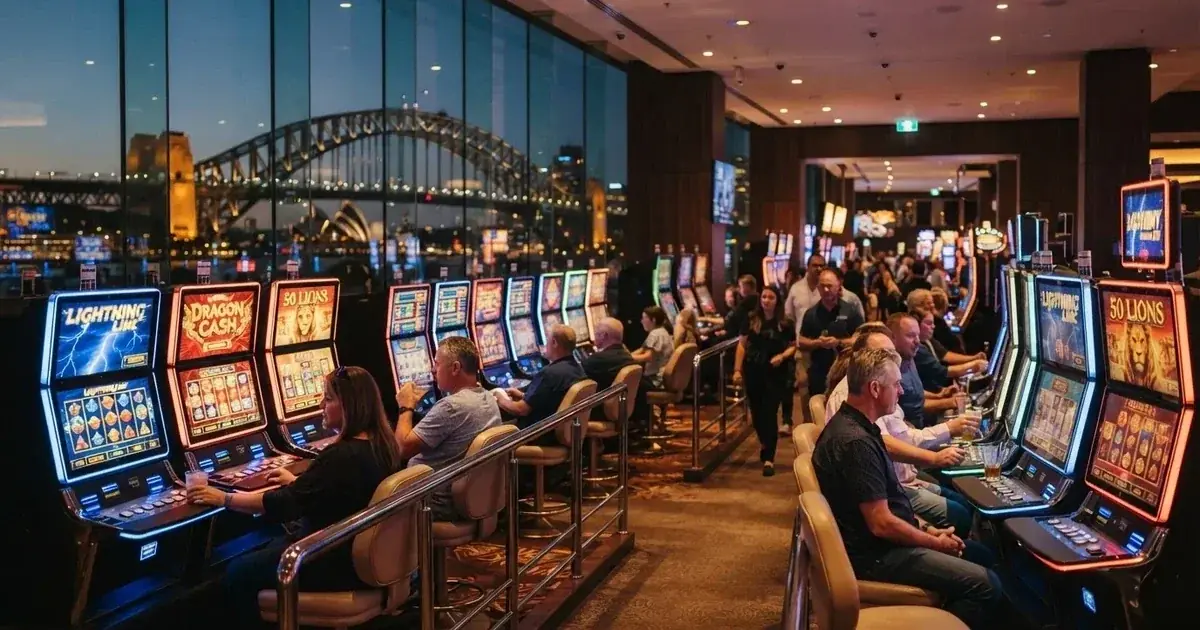
Anyone searching for the best pokies in Sydney in 2026 is usually after a very specific thing: the venue, the floor, the machine that pays better than the next one. Sydney has two licensed casino properties and roughly 87,000 electronic gaming machines sitting in pubs and clubs across New South Wales, and that is the whole of the lawful market for in-person pokies play. Everything else that markets itself as pokies online to someone inside Australia is a prohibited interactive gambling service under the Interactive Gambling Act 2001, and that distinction is what this page works through first.
What follows is a plain reading of where the machines are, who runs them, what return-to-player rate a Sydney punter is sitting at, and what the regulator has been doing about the offshore brands that still try to take Australian play. The arithmetic that closes one section belongs to the page, not to the venues — it is a reader-side number for a reader-side decision.
Table of Contents
- Why “Online Pokies In Sydney” Is Not The Question The Marketing Makes It Sound Like
- Standing In The Venue: The NSW Player Protection Framework
- The Two Floors Sydney Actually Has: Crown Sydney And The Star
- Paying In, Cashing Out: The Mechanics Under The Marketing
- The Games, The Studios And The Mechanics Worth Knowing
- How The Shortlist Is Put Together: What Actually Separates One Sydney Option From Another
- Summary of ACMA Regulatory Actions
- The Eleven Sites The ACMA Has Acted Against
- How Fast The Regulator Is Catching Up
- A Practical Map Of Sydney Pokies, From A Reader-Side Angle
- What The 2026 Reform Changes And What It Does Not
- What A Sydney Reader Should Walk Away With
- Frequently Asked Questions
Why “Online Pokies In Sydney” Is Not The Question The Marketing Makes It Sound Like
The phrase “best pokies in Sydney” gets used by offshore operators as a search term. The product they are selling — online casino games, online pokies, in-play betting — is prohibited for supply to anyone in Australia under the Interactive Gambling Act 2001 (IGA), tightened by the Interactive Gambling Amendment Act 2017. No state or territory licence covers it. The Northern Territory Racing and Wagering Commission, which regulates 52 online bookmakers for tax reasons, has no remit over online casino games; the commission has no full-time staff and meets monthly in Darwin.

The consequence is sharper than the marketing ever lets on. When a site targets an Australian with an “online pokies Sydney no deposit bonus”, it is operating outside the regime that gives Australian players any recourse. An offshore casino is not connected to BetStop, the National Self-Exclusion Register, has no Australian complaints body, and can be blocked at the ISP layer by the ACMA with a player balance still on the account. The IGA targets the provider, not the player — Australian players are not prosecuted — but a refund route from Curaçao or from a Cypriot company over an enforced blocking is the kind of route that runs cold.
The ACMA’s blocking programme is what gives that threat teeth. By the agency’s own running total, 1,751 illegal gambling and affiliate marketing websites had been blocked since the first blocking request in November 2019. A round reported on 26 June 2026 added twelve more domains: 7Signs, ChromaBet, Donbet, Duospin, Freshbet, Slots Gem, Jacks Club, Lucky Start, Pointsbetz, Spinrise, Vinyl Casino and Wildsino. Most blocking requests start from a complaint; most of those complaints start from a player who lost money they cannot get back.
A second layer sits inside the legal wagering regime. Since 11 June 2024, credit cards, credit-related products and digital currency are banned as a payment route for licensed Australian online and phone wagering, with penalties of up to A$247,500 for the operator. The legal deposit routes for licensed wagering are debit card, bank transfer, PayID/Osko and BPAY. An Australian-facing site asking for a credit-card deposit or a crypto deposit is, by definition, not operating inside the Australian rules, and the payment method itself is a tell.
So when an offshore brand offers “the best pokies in Sydney” with a free-spin welcome and no ID check, the reader-side answer is that the product is unlawful to supply in Australia, the operator is unlicensed for this market, and the bank route it asks for is likely one Australian law forbids. That is the legal floor underneath everything that follows, and the rest of this page sits on it.
Standing In The Venue: The NSW Player Protection Framework
New South Wales is the regulator’s home turf, and the practical day-to-day framework a Sydney punter walks into is built by Liquor and Gaming NSW, with the NSW Independent Casino Commission holding the casino-specific line. Together they police the terms under which a venue can keep a pokies floor open: machine density, opening hours, mandatory breaks in play, the cash-input ceiling, the self-exclusion register, and the responsible-gambling signage on the wall.
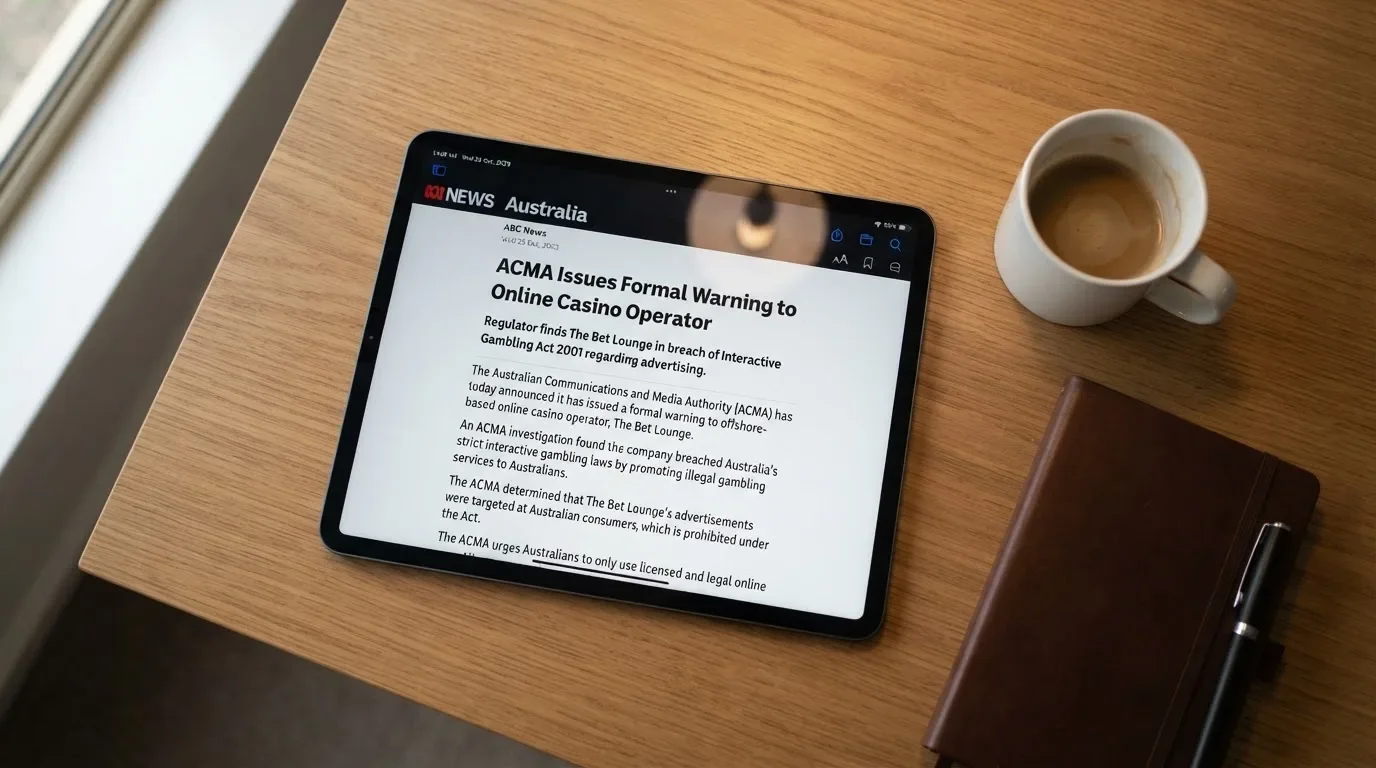
Outside the casino, NSW runs a closed-loop self-exclusion scheme through ClubsNSW and the Australian Hotels Association NSW — a person can be barred from every pub and club gaming machine in the state through one registration. The Star Sydney and Crown Sydney run their own casino-level exclusion schemes, with photo-matching at the door and on the floor. What does not exist, despite offshore marketing, is a joined-up scheme covering the offshore sites — they are not connected to BetStop, and self-excluding at The Star does nothing to stop a Curaçao-licensed brand from accepting the next deposit.
Two wider supports sit on top of that. The National Gambling Helpline — 1800 858 858, free, 24/7 — runs with webchat at Gambling Help Online and is the one number every punter in the country can use without saying which state they are in. BetStop, the National Self-Exclusion Register, has been live since August 2023, but its reach is limited to Australian-licensed online and phone wagering services. Offshore casinos are not bound by it; the register cannot exclude a player from a site the regulator cannot reach.
The hard data on the size of what is being protected, and the size of what is being lost, sits in the regulator’s own ledger. NSW recorded A$8.18 billion in annual player losses from poker machines outside casinos in FY22-23, which works out at A$986 per capita. That is roughly one adult in seven feeding cash into the state’s 87,298 non-casino machines across 2,195 venues at a rate that turns gambling-product tax into the largest single line in the state’s books. Sydney’s share of that ledger is dense — Sydney pubs and clubs host a meaningful slice of the 87,000 — but the per-capita figure is the one that tells the reader how much is leaving the average NSW pocket.
A useful contrast: South Australia, which runs the most player-protective regime in the country, sets a minimum gaming-machine return-to-player rate of 87.5 percent and a general maximum bet of A$5 outside the casino, and Adelaide Casino itself has no maximum-bet limit. Outside Adelaide Casino, South Australia recorded about A$0.92 billion in losses in 2022-23, or roughly A$497 per adult. NSW runs at a per-capita loss roughly double that, with a higher average machine density, fewer per-spin caps and a different operating-hours regime. The difference between the two states is what a tighter regulatory framework looks like in dollars, and the contrast is the closest thing to a controlled experiment the country runs.
The Two Floors Sydney Actually Has: Crown Sydney And The Star
The first place a reader will not find a “pokie” in the marketing sense of the term is a Sydney pub, even though that is where the bulk of NSW’s 87,000 machines sit. Most of those machines are in suburban pubs and clubs — RSLs, leagues clubs, hotels — and the trading pattern of those venues is uniform enough that the marketing has nothing to differentiate them on. The two buildings a Sydney punter can name on sight, the two floors the page is genuinely about, are Crown Sydney at Barangaroo and The Star Sydney at Pyrmont.
Crown Sydney At Barangaroo
Crown Sydney opened to the public in December 2020 inside a 271.3 m, 75-floor tower that is the tallest habitable building in Sydney. The tower sits at Barangaroo, on the harbour-front strip west of the CBD, and the casino occupies the lower floors of a building that also holds a hotel and residential apartments above it. Because of the residential mix, the gaming floor runs under tighter operating-hour and access controls than a freestanding casino floor: it is not a 24-hour operation in the way The Star once was, and the entry policy runs through the building’s broader residential and amenity controls.
The licence sits with the NSW Independent Casino Commission, under the casino-control framework Crown negotiated in 2020 when its Barangaroo approval went through. The building’s signature visual cue — the curved glass sail facing the harbour — is also the cue that the venue is a tourism-and-residential hybrid rather than a pure gaming floor, and that distinction shows up in the dress code, the entry queue, and the demographic mix at the tables. Pokies play here is concentrated on the lower gaming floor, away from the hotel atrium and the residential lobby, and the machine offering is smaller in absolute terms than the older Sydney property next door.
The Star Sydney At Pyrmont
The Star Sydney in Pyrmont, overlooking Darling Harbour, is Australia’s second-largest casino after Crown Melbourne. Owned by Star Entertainment Group, the property has two gaming floors, 351 hotel rooms, the 2,000-seat Sydney Lyric theatre and a 3,000-seat Event Centre. That footprint puts it in the same operational tier as Crown Melbourne and ahead of every other Australian casino except the new Star Brisbane at Queen’s Wharf.
The licence, however, has been under a regulator-appointed special manager since late 2022. On 13 September 2022 the NSW Independent Casino Commission found The Star unsuitable to hold its casino licence over conduct relating to money-laundering risks. In October 2022 Star was fined A$100 million. The licence was suspended and operations placed under a special manager, Nicholas Weeks, with supervision expected to continue through at least September 2025. On 10 February 2025 ASIC sued members of Star’s former board over failures to track money-laundering risks at the property. The venue is open; the corporate governance under which it runs is not, and that gap is what the regulatory supervision is meant to close.
The Queensland arm of the same parent company tells the same story from the other end. In late 2022 the Queensland Government, acting on an independent review by former Court of Appeal judge Robert Gotterson, found Star Entertainment unsuitable to hold its Queensland casino licences, fined the group A$100 million on 9 December 2022, and deferred a 90-day suspension of the Treasury Brisbane and Star Gold Coast licences to 1 December 2023. Treasury Casino closed on 25 August 2024, and the new Star Brisbane at Queen’s Wharf opened in stages from 29 August 2024 in a A$3.6 billion precinct developed jointly with Hong Kong-based Chow Tai Fook Enterprises. The Star at Pyrmont is the Sydney end of a group-level remediation programme that runs across more than one state regulator.
What A Reader Walks Into On Either Floor
Both Crown Sydney and The Star run responsible-gambling signage at entry, photo-matching on the gaming floor, and a venue-level self-exclusion register. NSW requires that gaming machines in clubs and pubs display a return-to-player rate; both casinos go further, with the machine itself showing the RTP on screen in most cases. The casino-specific protections at the venues — carded play, mandatory cash breaks, exclusion schemes — apply in addition to the underlying NSW regime, not as a substitute.
What neither floor can offer is a 100 percent return, and the marketing language around “high payout pokies” in Sydney collapses the moment the reader looks at the math. The advertised RTP on a given machine is a long-run average across millions of spins, not a per-session guarantee, and the difference between an 87 percent machine and a 92 percent machine at the same A$5 bet is roughly A$25 per thousand dollars cycled. Sydney punter behaviour at those numbers is what produces the A$8.18 billion ledger number for the state — the math holds over a population, and the population is large enough to make the loss visible.
Paying In, Cashing Out: The Mechanics Under The Marketing
The payment story for Sydney pokies is two-sided, and both sides are tightly constrained by the regulator and by the cash economics of the venue itself. On the casino floor at Crown or The Star, a player buys chips or tokens at the cashier or top-up terminal, plays them through the machine, and either redeems the printed ticket at the cashier or feeds the printed ticket straight back into another machine. Pub and club machines work the same way at a smaller scale — cash in, printed ticket out, ticket redeemable at the bar. NSW requires that pub and club machines pay out only as a printed ticket, not as cash at the machine, and a ticket over A$2,000 has to be redeemed at the bar’s cashier with photo ID.
That cash-in, ticket-out mechanic is what determines the practical settlement time. There is no “withdrawal” the way an online casino frames it: the cycle is cash in, play, ticket out, and the ticket is redeemable on the spot. The bottleneck on payout speed is not a banking rail — it is the bar queue at the end of the session, and whether the venue’s cashier has change for the printed amount. For larger wins at Crown or The Star, the printed ticket converts to a hand-paid jackpot, with photo ID, a tax withholding check if the win is large enough, and the same wait-time logic as a high-end gaming floor anywhere in the country.
The offshore “deposit and withdrawal” story is the inverse, and the differences are what the regulator has been tightening. Since 11 June 2024, credit cards, credit-related products and digital currency are banned as payment routes for licensed Australian online and phone wagering. The legal deposit routes for licensed wagering are debit card, bank transfer, PayID/Osko and BPAY. An offshore site targeting Sydney punters with a credit-card deposit form is operating outside the Australian regime and is also taking a payment the licensed bookmakers are forbidden from taking — which is the simplest way to spot, from the deposit form alone, whether a site is operating in or out of the rules.
What the offshore “payout percentage” claim actually refers to is the theoretical RTP of the games the site hosts, not a payout the venue itself runs. A site advertising 96 percent RTP for one title is quoting a number supplied by the game studio, not by the casino, and the casino takes a cut of every spin before any of that RTP reaches a player. In a venue on Sydney soil the operator is the casino; offshore, the operator is a brand that has been issued a formal warning by the ACMA, which is a different kind of cut entirely.
The Games, The Studios And The Mechanics Worth Knowing
The two Sydney casinos run a mixed-fleet gaming floor: legacy poker-machine hardware from Australian and international suppliers, new-generation EGMs with multi-screen interfaces, and a slate of linked progressives shared across the property. Most machines are leased and maintained by major gaming suppliers under arrangements with Liquor and Gaming NSW, and the specific titles in the rotation change with the lease cycle — what is on the floor in January is rarely the full list by Easter.
The mechanics worth knowing for a Sydney punter are the regulator-required ones. NSW mandates a return-to-player disclosure on every pub and club gaming machine — the percentage must be visible on the machine’s help screen — and a maximum cash-input limit per spin, set by venue class. The Star and Crown run their own internal RTP bands as part of the licence conditions, and the machines on the casino floor generally return more than the pub-and-club floor average. The headline numbers from the regulator’s own data put pub and club RTP in NSW in the low-to-mid 90s range, well above the South Australian 87.5 percent minimum but below the theoretical ceiling of newer games.
Two specifics on what is on the floor. Crown Sydney’s gaming floor, by virtue of being newer and smaller than The Star’s, runs a higher proportion of recent EGMs and a smaller proportion of legacy titles; the practical consequence is a higher average return on Crown’s floor relative to a comparable budget at The Star, although both venues run a mix. The Star’s two-floor setup separates the main gaming floor from the premium gaming rooms, and the premium floor runs a higher concentration of higher-denomination machines with a different maximum-bet regime than the main floor. A punter choosing between the two on a given night is making a venue-class decision as much as a machine-class decision.
Sydney Airport sits in a separate regulatory frame. The pokies inside the airport terminal — there is no formal Sydney Airport casino — run under different jurisdictional arrangements depending on which terminal and which operator holds the lease. Any reader searching for “pokies in Sydney Airport” or “pokies near Sydney Airport” is looking at a different product category: machine gaming inside a transport hub, with a faster-cycle player base and a different responsible-gambling enforcement regime than a CBD casino floor. The Sydney CBD itself hosts a handful of high-volume pub and club venues, mostly in the CBD hotel district, with the bulk of the city’s 87,298-odd NSW non-casino machines sitting in suburban venues rather than in the city centre.
How The Shortlist Is Put Together: What Actually Separates One Sydney Option From Another
A list of “the best pokies in Sydney” that ranks pubs and clubs is mostly a fiction: the machines inside any given venue are leased from the same suppliers under the same Liquor and Gaming NSW rules, and the per-spin return is set by the machine, not by the venue. What differs across venues is the wider product — opening hours, ATM and cash-handling policy, food and drink service while playing, the quality of the responsible-gambling signage, the strictness of the entry-age checking, and the practical wait time at peak hours.
Five matters actually separate one option from another:
-
Venue class and licensing authority — pub, club, RSL or casino. The casino floors (Crown Sydney, The Star) run a different regulatory regime than pubs and clubs, with a higher average RTP band and a tighter responsible-gambling overlay. Within pubs and clubs, the machine fleet is regulated by Liquor and Gaming NSW; within the two casinos, the relevant authority is the NSW Independent Casino Commission for The Star and Crown Resorts’ casino-control framework at Barangaroo.
-
Return-to-player band and maximum bet — what the machine actually returns to a player over a long run, and the per-spin ceiling. NSW sets the ceiling by venue class; the casino floors operate inside their own licence bands. The Star’s main floor and its premium gaming rooms run at different bands, and a player choosing between them is choosing between a faster-cycle lower-ceiling machine and a slower-cycle higher-ceiling one.
-
Self-exclusion coverage and responsible-gambling overlay — the rigour of the entry ID check, the venue-level exclusion scheme, the cash-handling safeguards for high-value tickets, and the on-site signage. The casino floors run photo-matching; pub and club venues run the NSW Pub and Club Self-Exclusion Scheme.
-
Operating hours and peak-hour crowding — whether the venue runs an early-morning quiet session, a peak-evening crowded session, or a 24-hour cycle. Crown Sydney, by virtue of the residential mix at Barangaroo, runs shorter hours than The Star; The Star’s two-floor setup allows a split between a quieter main floor and a busier premium floor.
-
Cash-cycle practicality — how easy it is to cash a printed ticket, whether the bar queue runs long on a Saturday night, whether hand-paid jackpots at the casino cashier are processed in the same shift or require a follow-up. The faster the cash cycle, the smaller the friction cost; the friction cost is invisible on a single visit and visible over a year.
The list that follows leans on the first four of those five matters, because they are the matters a reader can act on without visiting the venue. The fifth matters most for high-stakes play, which is a different conversation.
Summary of ACMA Regulatory Actions
| Brand | ACMA action and date | Operator named by the ACMA | Subject support |
|---|---|---|---|
| RocketPlay | Formal warning, March 2026 (earlier May 2022) | Pulsup Ltd; Dama N.V. | no-data |
| Level Up Casino | Formal warning, May 2022 | Dama N.V. | Listings-only |
| Woo Casino | Formal warning, March 2025 | Dama N.V. | Listings-only |
| Spirit Casino | Formal warning, May 2025 | Dama N.V. | no-data |
| National Casino | Formal warning, July 2025 | Consolutetish S.R.L. | Listings-only |
| Bizzo Casino | Formal warning, July 2025 (earlier 2022) | Consolutetish S.R.L.; TechSolutions | no-data |
| Ignition Casino | Formal warning, July 2025 | Bamboo Media | no-data |
| Instant Casino | Formal warning, February 2025 | EOD Code SRL | no-data |
| Jackbit | Formal warning, April 2026 | Ryker B.V. | no-data |
| Casino Intense | Formal warning, April 2025 | Sterplay Holding Ltd | Listings-only |
| Sky Crown | Formal warning, September 2022 | Hollycorn N.V. | Listings-only |
The Eleven Sites The ACMA Has Acted Against
The eleven brands below are not a ranking, not a recommendation, and not a comparison set on which is a better place to play. Each is on this page because the Australian Communications and Media Authority has issued a formal warning over it for offering prohibited interactive gambling services to Australians, and because the marketing for each one uses the search term this page is built around. The page would be incomplete without them, and the page would be wrong if it framed any of them as a place to play. The point of listing them is to name what the regulator has done, in the regulator’s own terms, with the date the regulator published.
Two follow-up actions sit alongside that list and are worth naming in the same breath. In April 2026 the ACMA issued a formal warning to Ryker B.V. over both Jackbit and CasinOK, so the entry above covers both brands under one operator. In May 2022 the ACMA issued a formal warning to Dama N.V. covering six casino brands: Bambet, Dazard, Level Up, Rocketplay, Wild Tornado and Cobra Casinos — so the RocketPlay and Level Up entries above sit inside a wider Dama N.V. action whose footprint is six brands and a single regulator finding.
RocketPlay
The ACMA issued a formal warning over Rocketplay to Pulsup Ltd in March 2026, having already named Dama N.V. over the Rocketplay brand in May 2022. The intervening four years is the regulator’s working window on this brand: same product, same kind of warning, different operator entity at the front of the company. Rocketplay’s online casino games are prohibited interactive gambling services for anyone in Australia regardless of the licence the site displays, and the ACMA’s two actions make the regulator’s reading of the operator’s history plain.
A reader who finds Rocketplay marketing itself to Sydney players in 2026 is looking at a brand whose Australian-facing operations have been formally warned twice, four years apart, by the same federal regulator under the same statute. There is no reader-side situation in which that history reads as benign. The product itself — online pokies — is what the Interactive Gambling Act 2001 prohibits the supply of, and the supply is what the regulator has acted on twice.
Level Up Casino
Level Up Casino sits inside the Dama N.V. May 2022 formal warning, alongside Bambet, Dazard, Rocketplay, Wild Tornado and Cobra Casinos. The single warning covered six brands from one operator group, which is the regulator’s preferred mechanism for addressing a group rather than a brand. Level Up appears in public-facing gaming directories, including a Victorian commission reference and an open encyclopedia entry, but those listings do not establish any Australian licence for the product — they record that the brand exists, not that the brand is licensed here.
The brand’s Australian-facing position is the same as every other Dama N.V. brand in the warning: a site that takes Australian play for an online casino product is operating outside the Interactive Gambling Act 2001, and the ACMA has named the operator group by name. A punter choosing to play at Level Up despite the warning is choosing to play outside the Australian regulatory perimeter, with the payment and recourse consequences that follow.
Woo Casino
The ACMA issued a separate formal warning over Woo Casino to Dama N.V. in March 2025, three years after the May 2022 group-level warning. The pattern matters: the operator was warned once for a group of six brands and warned again for an additional brand from the same operator group, in a different month, under the same statute. The ACMA’s record on Dama N.V. now extends to at least seven brands across two formal warnings, and the Woo Casino warning is the second of them.
Woo Casino appears in public-facing directories but not in any Australian register. The product on offer is the same prohibited interactive gambling service as the rest of the Dama N.V. group; the warning is the regulator telling the operator that the brand is on the ACMA’s record, and the consequence is the same blocking and ISP-level intervention that the ACMA’s 1,751-blocked-sites running total represents.
Spirit Casino
Spirit Casino sits inside the Dama N.V. May 2025 formal warning. By that point the operator group had accumulated a third formal warning from the ACMA — 2022, 2025 (Woo), 2025 (Spirit) — across at least eight brands. The escalation is the regulator’s own pattern, not a reader’s interpretation: the same operator group, the same product, the same statute, three formal warnings over three years.
A reader who finds Spirit Casino marketing to Sydney players in 2026 is looking at the third brand from an operator group that has been formally warned three times. The marketing language may have changed; the regulator’s record has not.
National Casino
National Casino sits inside the Consolutetish S.R.L. July 2025 formal warning, alongside Bizzo Casino. The warning covers two brands from one operator; National Casino appears in public-facing directories including an ABC report and an infrastructure-portal reference, which is the listings-only support the research carries. Those listings do not establish an Australian licence, and the ACMA’s action makes the regulatory position plain.
National Casino’s reader-side situation is identical to the other brands on this list: a prohibited interactive gambling service for Australians, a federal regulator that has named the operator, and no Australian consumer-protection route if a withdrawal stalls. The ABC reference is the regulator-facing context that makes the warning legible — Consolutetish S.R.L. is named in an Australian news context, not just in the ACMA’s own publication.
Bizzo Casino
Bizzo Casino sits inside the same Consolutetish S.R.L. July 2025 formal warning as National Casino, and inside an earlier 2022 formal warning to TechSolutions (CY) Group Limited and TechSolutions Group N.V. The two warnings, three years apart, with different operator names at the front of the action, is the regulator’s way of recording that the brand has changed hands inside the same offshore corporate structure.
A reader looking at Bizzo Casino in 2026 is looking at a brand that has been formally warned twice, under two different operator names, by the same Australian regulator. The listings-only support the research carries for Bizzo is sparse — the page does not name what the public-facing directories say about the brand — and the regulator’s record is what actually matters.
Ignition Casino
Ignition Casino sits inside the Bamboo Media July 2025 formal warning. The action covers a single brand from a single operator, which is the regulator’s narrower mechanism for a brand the ACMA had not previously warned under the operator’s name. Ignition Casino’s Australian-facing position is the same as every other brand on this list, with no listings-only support in the research to either confirm or contradict what those directories show.
For a reader who lands on Ignition Casino via a Sydney-targeted ad, the page says what the regulator has done, names the operator the regulator named, and lets the regulatory record speak for itself. The product on offer is prohibited for supply in Australia, the operator has been formally warned, and there is no Australian consumer-protection framework that applies.
Instant Casino
Instant Casino sits inside the EOD Code SRL February 2025 formal warning. The action predates the second half of the ACMA’s 2025 warning round by a few months and is the first action on the list that named a SRL entity as the operator of record. The regulator’s pattern of warnings to single-brand single-operator structures suggests Instant Casino is a smaller operator within the offshore-targeting-of-Australia cohort, and the February 2025 warning is the ACMA’s first interaction with this operator.
A reader looking at Instant Casino is looking at a brand that has been warned once and has no listings-only support in the research. The brand’s regulatory position is what the regulator has recorded, and the rest is what the marketing says. The marketing is what the regulator is warning about.
Jackbit
Jackbit sits inside the Ryker B.V. April 2026 formal warning, alongside CasinOK. The action is recent, the operator is named, and the brand pair is the cleanest example on the list of the regulator acting on two brands from one operator in a single warning. Ryker B.V. is a Curaçao-incorporated entity, which is the typical corporate vehicle for the brands on this page, and the April 2026 action is the latest entry on the ACMA’s record for offshore casino operators targeting Australia.
A reader looking at Jackbit in 2026 is looking at a brand that has just been warned, in the same month, under the same statute as CasinOK. The two-brand structure is the regulator’s mechanism for handling operators that run more than one front brand, and the underlying product is the same prohibited service.
Casino Intense
Casino Intense sits inside the Sterplay Holding Ltd April 2025 formal warning. The operator name is the only one the research carries for Sterplay Holding Ltd in the ACMA record, and the brand has a thicker listings-only footprint than most entries on the list — an ABC report, an industry-trade reference, and a South Australian Consumer and Business Services reference. The CBS reference is the one that matters, because CBS South Australia is the regulator that handles consumer complaints against licensed operators in that state, and the fact that the brand appears there is a record of consumer-side contact rather than an Australian licence.
A reader looking at Casino Intense is looking at a brand with a public-facing record in Australian news and a consumer-affairs reference in an Australian state, alongside a federal regulator’s formal warning over the offshore supply of prohibited gambling services. The two records are not in tension — they record different things, from different regulators, about different aspects of the same brand.
Sky Crown
Sky Crown sits inside the Hollycorn N.V. formal warning under the Interactive Gambling Act 2001, alongside Blue Leo. The formal warning is the ACMA’s record on the operator group, and Hollycorn N.V. is one of the more frequently-named operator groups on the regulator’s list. Sky Crown appears in public-facing directories, including an open encyclopedia entry, but the listings-only support does not establish an Australian licence.
The Hollycorn N.V. record makes Sky Crown one of several Hollycorn brands the ACMA has acted on. The reader-side position is the same as the rest of the list: a prohibited product, a federal warning, no Australian consumer-protection framework.
How Fast The Regulator Is Catching Up
The arithmetic in this section belongs to the page. The ACMA’s first blocking request under the expanded Interactive Gambling Act regime was in November 2019. By the agency’s own running total, 1,751 illegal gambling and affiliate marketing websites had been blocked as of the most recent published figure, in a round reported on 26 June 2026. That works out to a band of roughly 260 to 270 illegal sites blocked per year across the seven-year window since the first blocking request, and roughly 22 illegal sites blocked per month as a long-run average.
The band is wide because the regulator’s monthly pace is uneven. Some months carry no published action; others carry a single brand warning; some carry twelve or more domains in a single blocking round, as the June 2026 round did. What the band tells the reader is not that the regulator has closed the problem — it has not, and the ACMA’s own statement on its website makes clear that the blocking programme is an ongoing response to a shifting offshore market — but that the response has been continuous and at a non-trivial scale. A reader who finds a fresh offshore brand marketing to Sydney in 2026 is finding a brand that has not yet been on the receiving end of one of these requests, which is a different state from a brand the regulator has already named.
H2 Gambling Capital’s 2025 estimate puts Australians’ annual losses to illegal gambling sites at about A$3.9 billion, and reports that the share of gambling going through legal channels fell from 74 percent in 2021 to 64 percent. The Australian-licensed online wagering product — the only online gambling product the IGA permits — accounts for a small share of that total; the bulk is the offshore product the regulator is acting against. The arithmetic above says the regulator is removing roughly 22 sites a month from the addressable Australian-facing surface, against an estimated A$3.9 billion annual loss to the surface as a whole. The reader-side read is that the regulator is acting at a scale that is material but not yet at the scale of the problem.
A Practical Map Of Sydney Pokies, From A Reader-Side Angle
The most useful map for a Sydney reader is a venue-class map rather than a venue-by-venue list. The CBD and Barangaroo host the two casino floors — Crown at Barangaroo, The Star at Pyrmont — with Crown running tighter hours under the residential-mix constraints of the tower, and The Star running two floors with the regulator-appointed special manager’s oversight. The CBD hotel district hosts a handful of high-volume pub and club venues, mostly in the older pub stock around George Street, Pitt Street and the harbour end of the CBD. Surry Hills, Newtown, the Inner West and the eastern suburbs host the densest concentration of pub and club gaming machines in the inner-Sydney ring, with the RSL and leagues-club venues carrying the larger machine fleets per venue. The western suburbs, the Hills District, the Northern Beaches and the Sutherland Shire carry the bulk of the suburban NSW pub and club stock outside the inner ring, which is where most of the 87,298 non-casino machines in the state sit.
Sydney Airport carries a separate pokies story: the terminals host gaming machines under arrangements that are distinct from the Liquor and Gaming NSW pub-and-club regime, and the player base is transient rather than local. The product category is the same — electronic gaming machines — but the operational environment is a transport hub rather than a licensed venue. A reader who searches for “pokies in Sydney Airport” or “pokies near Sydney Airport” is looking at a different product in a different regulatory environment, and the page is plain about that distinction.
The map matters because the marketing map is the inverse. An offshore brand targeting “best pokies Sydney CBD” or “pokies in Sydney Australia” is targeting a search term that resolves to a venue the searcher cannot legally reach through the offshore brand’s product. The reader-side map is the licensed venues; the marketing map is the search terms that name them. The two should not be confused, and the most useful thing the page can do is keep them apart.
What The 2026 Reform Changes And What It Does Not
The Interactive Gambling Amendment (Gambling Reform) Bill 2026 passed Parliament on 19 August 2026, with the advertising and inducement measures commencing on 1 January 2027. As of 2026, that reform is law with a start date that has not yet arrived, and the section is law that does not yet operate. The advertising measures that will come into force from January 2027 will constrain how licensed operators can market inducements to Australians, and the offshore brands will find it harder to use Australian-facing inducement language once those provisions bite.
What the reform does not change is the prohibition itself. The Interactive Gambling Act 2001, as amended by the 2017 amendments, still prohibits the supply of online casino games and online pokies to anyone in Australia, and the ACMA still has the same enforcement levers it had before the 2026 reform. What the reform adds is a tightening of the inducement and advertising layer that sits on top of the prohibition, which is the layer the offshore brands have been working in. The expectation among industry observers is that the reform will reduce, not eliminate, the offshore targeting of Australian players; the ACMA’s blocking programme will remain the day-to-day enforcement mechanism through 2026 and into 2027.
The tax treatment of gambling winnings is unaffected by the reform and is unaffected by where the gambling happens. Recreational-player gambling winnings are not assessable income in Australia under section 6-5 of the Income Tax Assessment Act 1997, and losses are not deductible, unless the person carries on a business of gambling. That model only applies if there is something to declare, which there will not be for a recreational punter playing within the law, and the offshore brand’s “we will help you with the tax form” line is the line of a business the regulator considers a prohibited service.
What A Sydney Reader Should Walk Away With
The page closes where the marketing opens. The “best pokies in Sydney” are the machines inside the licensed venues on Sydney soil — the Crown Sydney gaming floor at Barangaroo, The Star Sydney’s two gaming floors at Pyrmont, and the 87,298-odd pub, club and RSL machines across NSW’s 2,195 non-casino venues. The Crown floor is the newer product with the residential-mix constraints and a tighter operating-hour window; The Star floor is the larger property under regulator-appointed supervision through at least September 2025; the pub and club stock is where the bulk of the state’s per-capita loss is recorded, in venues that differ from one another mostly by opening hours, cash-handling policy and the quality of the responsible-gambling overlay. The Star and Crown run photo-matching and venue-level exclusion; pubs and clubs run the NSW Pub and Club Self-Exclusion Scheme.
The offshore brands the page lists are not a ranking, not a recommendation, and not a comparison. They are eleven brands the ACMA has named in formal warnings over the past four years for offering a prohibited product to Australians, and the page lists them so a reader who sees the marketing has the regulator’s own record in the same view. The regulator is removing offshore brands at a rate of roughly 22 per month over a seven-year window, against an estimated A$3.9 billion in annual offshore losses, and that ratio is the single most useful number a reader can carry into the decision.
The single best instrument a Sydney punter has is the venue itself. Walk in, look at the return-to-player disclosure on the machine, set a cash budget before the cash is on you, use the venue-level self-exclusion scheme if the budget is failing, and call 1800 858 858 if the budget has already failed. The math that runs through this page is the math that holds over a population; the budget is the math that holds over an evening.
Frequently Asked Questions
Which venues in Sydney are licensed to operate pokies?
Crown Sydney at Barangaroo and The Star Sydney at Pyrmont hold NSW casino licences under the NSW Independent Casino Commission’s framework, with The Star currently operating under a regulator-appointed special manager following the 2022 unsuitability finding and A$100 million fine. Outside the two casinos, around 87,298 gaming machines operate across 2,195 pubs, clubs and RSLs in NSW under Liquor and Gaming NSW oversight. The full venue list is in the Liquor and Gaming NSW register.
Are pokies in Sydney available around the clock?
Not uniformly. Crown Sydney runs shorter operating hours than a freestanding casino because of the residential mix at Barangaroo; The Star runs a more traditional casino operating cycle. Pubs and clubs run their own opening hours, with NSW rules on mandatory gaming-floor breaks in some classes of venue. The reader should check the specific venue’s published hours before travel rather than assume a 24-hour cycle.
What identification do venues in Sydney require before letting someone play pokies?
Crown and The Star run photo-matching at entry and on the gaming floor, and require valid ID for any cash-out over the venue’s threshold. Pubs and clubs require photo ID for any printed-ticket cash-out over A$2,000, and for any transaction flagged by the venue’s responsible-gambling officer. The minimum age for entry to a NSW gaming floor is 18.
Can visitors to Sydney use self-exclusion schemes at local pokies venues?
A visitor can register for self-exclusion at the casino they are visiting, with photo-matching enforced at the door and on the floor. The NSW Pub and Club Self-Exclusion Scheme covers pubs, clubs and RSLs across the state. BetStop, the National Self-Exclusion Register, covers Australian-licensed online and phone wagering but does not extend to offshore casinos or to in-venue pub and club play. A visitor who wants full coverage should register at both the casino scheme and the pub and club scheme.
How does the payout percentage on Sydney pokies compare with other Australian cities?
NSW does not set a single minimum RTP for pub and club machines; each machine displays its own rate on the help screen, and the state average sits in the low-to-mid 90s range on the casino floor. South Australia sets a statutory minimum of 87.5 percent outside Adelaide Casino, with no maximum-bet cap inside Adelaide Casino itself. The headline per-capita loss in NSW (A$986 in FY22-23) is roughly double the South Australian per-capita loss outside Adelaide Casino (about A$497 in 2022-23), which is the closest the country has to a controlled comparison between a tighter and a looser regulatory regime.
Is it legal for an online casino to advertise “pokies” in Sydney the same way a pub or club does?
No. The Interactive Gambling Act 2001 prohibits the supply of online casino games, including online pokies, to anyone in Australia, and the ACMA has issued formal warnings over eleven brands for offering exactly that product to Australian players. The Interactive Gambling Amendment (Gambling Reform) Bill 2026 tightens the inducement and advertising layer further from 1 January 2027, but the underlying prohibition is unchanged in 2026. A pub or club in NSW operates under a Liquor and Gaming NSW licence; an offshore online casino operates under no Australian licence at all, and the marketing language that puts the two in the same sentence is the language the regulator is warning about.