
Lightning Link online pokies in Australia, the law, the bonus round and the blocked sites
A player in Australia searching for Lightning Link online pokies is looking for a specific reel format that, in its licensed form, lives in a club or a casino floor rather than a browser tab. The same name carries an offshore version behind it, and the law treats that version the same way it treats every other online casino game: as a prohibited interactive gambling service. What follows is what an Australian reader is actually dealing with when they search for this title, starting with what the Interactive Gambling Act 2001 does to the offer before the reels ever spin.
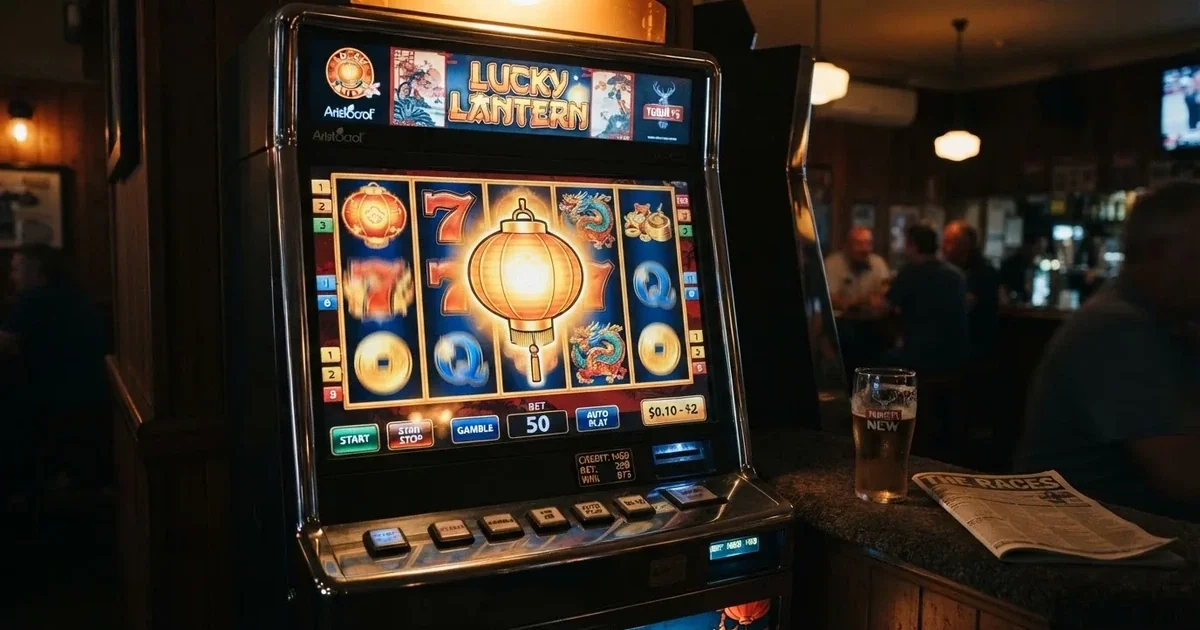
Currency check: data current as of 20 October 2026, against the Australian Communications and Media Authority’s blocking register and the ACMA’s published formal-warning notices.
Table of Contents
- What the Interactive Gambling Act does to Lightning Link online
- Responsible play on a hold-and-spin format
- Bonus spins, promo codes and what an offer actually costs
- Apps, mobile play and the package the offer comes in
- The Lightning Link reel sets and what separates them
- Operators the ACMA has acted against, and the comparison that follows
- Overview, the fundamentals and the choice in front of an Australian player
- Frequently asked questions
What the Interactive Gambling Act does to Lightning Link online
The Interactive Gambling Act 2001, tightened by the Interactive Gambling Amendment Act 2017, makes it an offence for a provider to offer online casino games, online pokies or in-play betting to a person physically in Australia. No state or territory licences any of those services. The only online wagering that is licensable at all is wagering on races and sport placed before the event, lotteries and keno, and in practice those licences sit with the Northern Territory Racing and Wagering Commission, which regulates 52 of Australia’s online bookmakers and meets once a month in Darwin.
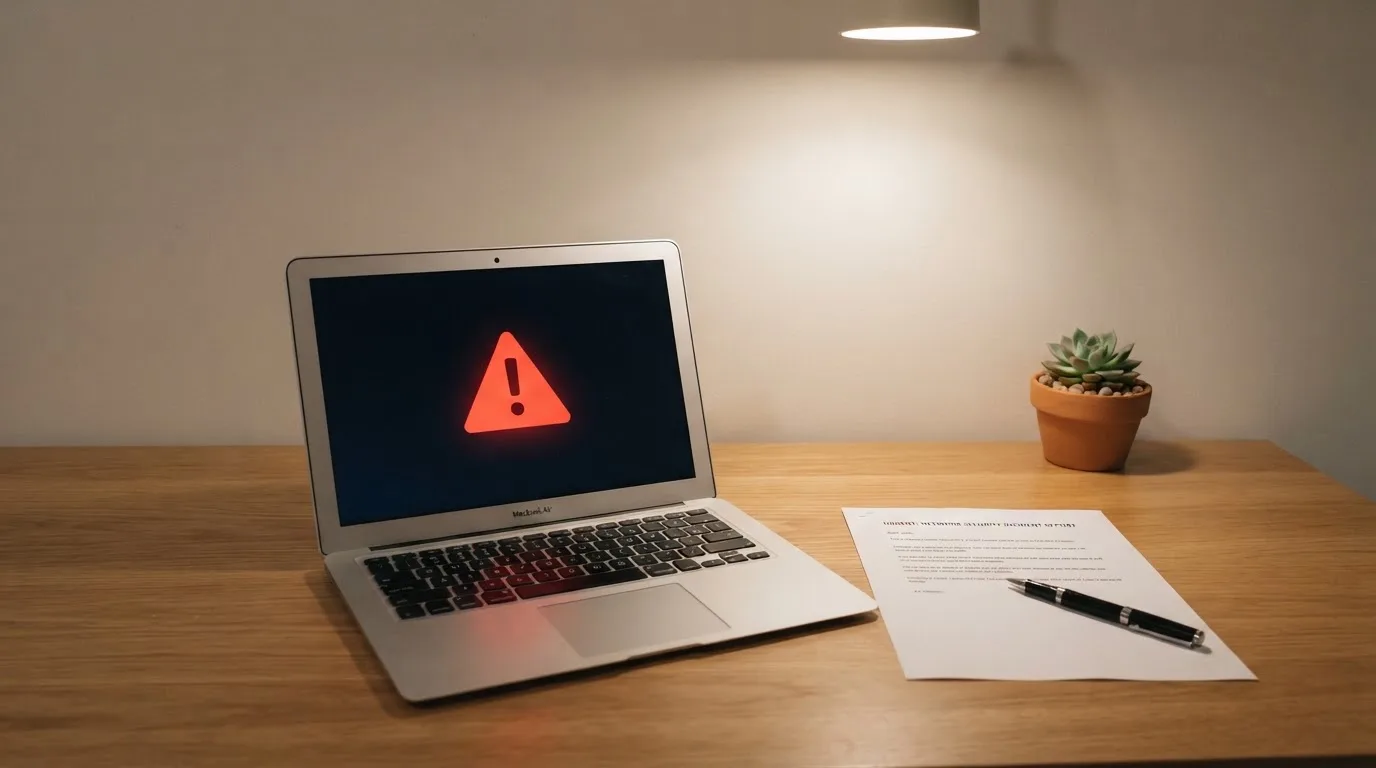
Lightning Link falls on the prohibited side of that line. Aristocrat’s licensed cabinet games run on the floors of registered clubs, casinos and hotels in every state and territory; the moment the same name appears as an online casino game accepting Australian deposits, the provider is offering a prohibited service. The player is not the target of the Act — enforcement runs at the provider and at the network layer — but an offshore operator gives no Australian consumer protection, no complaints body and no recourse if a withdrawal stalls.
How enforcement shows up
The Australian Communications and Media Authority investigates, issues formal warnings and directs Australian internet service providers to block illegal sites. According to the ACMA as reported in June 2026, a total of 1,751 illegal gambling and affiliate marketing websites had been blocked since the first blocking request in November 2019, and more than 230 unlicensed gambling services had left the Australian market since enforcement was strengthened in 2017. The latest published round, reported on 26 June 2026, asked ISPs to block 12 more sites: 7Signs, ChromaBet, Donbet, Duospin, Freshbet, Slots Gem, Jacks Club, Lucky Start, Pointsbetz, Spinrise, Vinyl Casino and Wildsino.
That is the consequence an Australian reader meets first: not a refund, not a complaint outcome, but the site going dark. A balance sitting in an account when the block lands stays there, on an offshore operator with no Australian licence and no Australian obligation to pay it out.
What an offshore licence is not
Offshore operators routinely display Curaçao, Anjouan or Kahnawake numbers in their footers. Those licences govern what the operator may do in the jurisdiction that issued them. They do not cover the provision of a prohibited interactive gambling service to a person in Australia. An Australian-facing site can show any licence it likes and still be offering an unlicensed service under Australian law, because the question is where the player sits when the reels run, not where the licence was printed.
The blocking rate, as a band
Across roughly six and a half years from the first blocking request in November 2019 to the June 2026 figure of 1,751 blocked sites, the ACMA has been directing ISPs to block illegal gambling websites at a long-run rate of about 265 sites a year, or roughly 22 a month. That is an average: real months run faster when a wave of related domains gets caught up in one round, and slower when the ACMA spends that month on formal warnings rather than block requests. The condition on the band is that it counts only sites the ACMA has acted on under section 313 of the Telecommunications Act 1997, not the wider universe of unlicensed offshore casinos an Australian can still reach; the H2 Gambling Capital 2025 estimate puts Australians’ annual losses to illegal gambling sites at about A$3.9 billion, with the share of gambling running through legal channels falling from 74% in 2021 to 64%.
A reader who wants a single number for “how often does a site I am looking at disappear” is asking for the wrong number. The blocking rate describes how fast the regulator clears the queue. What it does not describe is whether a particular site is in the queue yet, or whether the operator simply rebrands under a new domain the week after the block lands.
Responsible play on a hold-and-spin format
Lightning Link’s signature is the hold-and-spin bonus round, the mechanic that locks a set of landed symbols in place and resets the spin counter whenever a fresh matching symbol lands. The format is built to extend a session: every extra ball grants a fresh chance to fill the grid, and a near-full grid adds tension without adding pace. None of this is unusual for a linked-jackpot format, but it sharpens the case for a player-side limit that has nothing to do with the cabinet.
Why a time limit matters more than a session prompt
In-game timers, pop-up reminders and “take a break” prompts are part of the menu on most licensed Australian cabinet machines. They are not present on an offshore site offering the same reel set, and they do not bind to a player’s account on the next session. A fixed time limit — a clock, a calendar reminder, an agreed end-of-session mark — is the only limit a player carries between sessions. For a hold-and-spin format, where one bonus round can run several minutes of attention without spending more money, that limit is what determines whether a session ends inside the budget or over it.
BetStop and what it covers
BetStop, the National Self-Exclusion Register, has been live since August 2023 and binds Australian-licensed online and phone wagering services. An offshore casino is not connected to it. A self-excluded Australian can still reach an offshore pokies site, still deposit, still lose, and still wait on a withdrawal that no Australian regulator can enforce. The register protects a player from the legal Australian wagering market only; for everything else, the only working exclusion is the player’s own discipline or a block on the payment route itself.
Help that actually answers
The National Gambling Helpline on 1800 858 858 is free and runs 24/7, with chat through Gambling Help Online. Both are funded to deal with Australian players, including those playing offshore, and both keep a record the player can come back to. They do not need the player to have lost a specific amount and they do not require a callback. A single call is enough to start the conversation.
Bonus spins, promo codes and what an offer actually costs
A Lightning Link casino bonus, where one is offered, is almost always built around the hold-and-spin mechanic itself. The marketing word — “free spins”, “bonus spins”, “promo credits” — covers a set of in-game rounds where the player does not pay for each spin but the game still runs at the same house edge. The cost of the bonus, then, is the cost of the turns it funds, not the dollar number on the offer.
The mechanics of a “free spin”
A free spin is a paid spin that someone else is paying for. The reels still settle against the random number generator, the hold-and-spin bonus still triggers on its own probability, and the return-to-player on the underlying game still applies to every spin. The player who thinks of a free spin as a free chance is thinking about the spin, not about the bonus that paid for it. The arithmetic is the same in either direction: the cost is the wagering requirement times the bonus, divided by the stake per spin, and the expected loss is that turnover times one minus the RTP.
Promo codes and the offer behind them
A Lightning Link casino promo code is a string that unlocks a specific offer at a specific site, and the offer behind it is the same shape as any other online casino offer: a deposit match, a set of free spins, or both, with a wagering requirement that determines whether the offer is collectable. The codes themselves are tracked on affiliate marketing pages and the offers they unlock vary by week. The shape of the offer — a cash bonus, a deposit-gated package, a no-deposit bundle — is what determines the cost, and the cost is what the player is comparing, not the headline number on the marketing.
Why a no-deposit bonus is not free
A Lightning Link casino no deposit bonus, where one is offered, looks like money for nothing: sign up, receive a credit, play. The wagering requirement attached to it is what turns the credit into real money, and the wagering requirement runs against the same house edge as a paid spin. The expected cost is the credit value times the wagering multiple, divided by the stake per spin, times one minus the RTP. A small credit with a high wagering multiple can cost a player more than the credit is worth before it clears, because every spin of the wagering is a spin the player pays for in expected value.
Apps, mobile play and the package the offer comes in
A Lightning Link casino app, where one exists for an Australian player, is a thin wrapper around the same offshore website the desktop browser would reach. The package changes; the service does not. The Interactive Gambling Act does not care whether the offer runs through Safari, Chrome, a downloaded binary, or a web view embedded in an app icon.
What an app actually adds
The practical differences between an offshore site and its app are speed, push notifications and a home-screen icon. None of those change whether the service is lawful for an Australian player, and none of them bind the app to Australian consumer protection. The faster path is a faster path to the same unlicensed service, with the same withdrawal terms and the same lack of recourse if a payout stalls.
Payment routes on mobile
The June 2024 ban on credit cards, credit-related products and digital currency as payment for licensed online wagering does not extend to offshore casinos. An Australian player on an offshore site can still be asked for a credit card deposit or a crypto transfer, because the offshore operator is not bound by the Australian rule. A request for either is itself a signal: a licensed Australian wagering service cannot ask for it, so a site that does is operating outside the Australian framework.
Push notifications and session length
The other thing an app adds is a steady stream of reminders. A hold-and-spin format already extends a session in the player’s attention; a push notification that drops during a quiet hour is what brings the player back for the next session. For any player who has set a session limit, turning push notifications off is the single most useful setting change available on the app.
The Lightning Link reel sets and what separates them
Lightning Link pokies use a cluster of linked reel sets, each with its own paytable and its own hold-and-spin bonus round. The bonus round is the same shape on every set; what changes is the theme, the volatility curve and the size of the linked jackpot that the bonus can award. The land-based cabinet range that has been licensed in Australian venues over the past decade includes several titles under the Lightning Link umbrella, and the online versions that travel under the same name inherit the theme without inheriting the licence.
The hold-and-spin bonus
The bonus round triggers when enough bonus symbols land on a paid spin. The symbols lock in place, the rest of the grid clears, and the player receives a fresh set of spins where only bonus symbols (and blanks) appear. Every additional bonus symbol resets the spin counter to its starting value, and the round ends when the spins run out without a fresh symbol landing. A full grid of bonus symbols at the end of the round is the largest prize the cabinet offers; partial fills pay out on a published ladder that varies by reel set.
Volatility across the reel sets
Volatility, on a hold-and-spin format, runs higher than on a standard five-reel slot. The base game pays small amounts often enough to keep the reels moving, and the bonus round concentrates the return into a few sessions per hundred. The reel sets differ in how often the bonus triggers and how wide the bonus ladder is, which is the practical difference between them for a player who is choosing one to sit at. The RTP, across all Australian jurisdictions, is at least 85% — the legal floor in New South Wales, the Northern Territory, Queensland and (generally) Victoria, with 87% at Crown Melbourne and in the Australian Capital Territory and Tasmania, 87.5% in South Australia, and 90% in Western Australia. Online versions of the same reel sets do not inherit those floors; the RTP is whatever the offshore operator has set.
The land-based market behind the online name
In 2020-21 Australians bet almost A$150 billion through gaming machines and lost A$12.18 billion on them. The country holds about 3% of the world’s pub and club poker machines with 0.3% of the global population. New South Wales had 87,298 gaming machines outside casinos across 2,195 venues in June 2023, with player losses of A$8.18 billion in 2022-23. Queensland had 21,122 machines across 351 venues in October 2023; Victoria had 26,380 outside Crown Casino in 488 venues under a 30,000-machine statewide limit. Those are licensed cabinets in licensed venues. Online pokies are a separate product and they are prohibited for people in Australia, whatever name they carry.
Operators the ACMA has acted against, and the comparison that follows
The eleven operators below are not a ranking. Each is a brand the ACMA has issued a formal warning to under the Interactive Gambling Act 2001 for offering prohibited services to Australians. None of them is recommended. The table shows the ACMA action, the operator the regulator named, and what each brand claims about Lightning Link support, where a claim exists at all.
| Brand | ACMA action and date | Operator named by the ACMA | Subject support |
|---|---|---|---|
| RocketPlay | Formal warning, March 2026; earlier Dama N.V., May 2022 | Pulsup Ltd | — |
| Level Up Casino | Formal warning, May 2022 | Dama N.V. | Listed by BGaming as a hosting partner |
| Woo Casino | Formal warning, March 2025 | Dama N.V. | — |
| Spirit Casino | Formal warning, May 2025 | Dama N.V. | — |
| National Casino | Formal warning, July 2025 | Consolutetish S.R.L. | Listed on Wikipedia as a casino brand |
| Bizzo Casino | Formal warning, July 2025; earlier TechSolutions, 2022 | Consolutetish S.R.L. | — |
| Ignition Casino | Formal warning, July 2025 | Bamboo Media | — |
| Instant Casino | Formal warning, February 2025 | EOD Code SRL | — |
| Jackbit | Formal warning, April 2026 | Ryker B.V. | — |
| Casino Intense | Formal warning, April 2025 | Sterplay Holding Ltd | Listed on the ABC and on Crown Melbourne’s coverage |
| Sky Crown | Formal warning, September 2022 | Hollycorn N.V. | — |
What the table shows in its gaps is as important as what it shows in its cells. Eight of the eleven operators carry no public, third-party record of hosting Lightning Link content at all; one lists itself as a BGaming casino without naming the title; another surfaces only because a general-interest article and a single casino site happened to mention it. The ACMA action is the line that is the same across every row: a formal warning under the same Act, over the same kind of service, to an operator with no Australian licence.
RocketPlay
Pulsup Ltd received a formal warning in March 2026 over Rocketplay, on top of an earlier May 2022 warning to Dama N.V. that already covered the brand. Two warnings, four years apart, is the regulator’s way of saying the operator’s corporate reshuffle has not changed the service it offers to Australians. The brand has no public record of carrying Lightning Link content, which leaves the offer — whatever its headline number — as an offer on a prohibited service with two formal warnings already on file.
Level Up Casino
Dama N.V. received a formal warning in May 2022 covering six casino brands, of which Level Up Casino was one. The brand appears in BGaming’s public partner list, which is a hosting record, not a content record; BGaming’s portfolio includes hold-and-spin formats but does not specifically carry the Lightning Link name. A reader who reaches Level Up through a search for the title is reaching an unlicensed casino with a 2022 warning still in force and no specific link to the reel set they were looking for.
Woo Casino
Dama N.V. received a second formal warning, over Woo Casino, in March 2025. The first Dama warning covered other brands; Woo was added after the operator opened a new front under the same corporate umbrella. There is no public record of Woo hosting Lightning Link content, which leaves the 2025 warning as the only regulator-side fact the reader can act on. The earlier warning over other Dama brands did not slow the operator down; the Woo warning did not either.
Spirit Casino
Dama N.V.’s May 2025 warning added Spirit Casino to the list of formally warned brands under the same corporate group. Like Woo, Spirit has no public record of carrying the Lightning Link reel set. A reader who arrives at Spirit through a Lightning Link search is being shown a brand whose only connection to the search is the name on a warning notice — not because Spirit runs the game, but because the regulator ran the warning.
National Casino
Consolutetish S.R.L. received a formal warning in July 2025 covering National Casino and Bizzo Casino. National surfaces in general coverage of the offshore casino market, including on Wikipedia, but carries no published link to Lightning Link specifically. The 2025 warning is the freshest regulator-side fact on the brand; what sits behind it is an unlicensed operator with a stated intent to keep serving Australians despite the warning.
Bizzo Casino
Consolutetish S.R.L.’s July 2025 warning covered Bizzo Casino on top of an earlier 2022 warning to TechSolutions (CY) Group Limited and TechSolutions Group N.V. over the same brand. Two warnings, two different corporate groups, the same underlying service. There is no public record of Bizzo hosting Lightning Link content; the brand is in this list because it is one of the brands the regulator has formally warned, not because it has any specific link to the reel set the reader is searching for.
Ignition Casino
Bamboo Media received a formal warning in July 2025 over Ignition Casino. The brand has no public record of carrying Lightning Link content. The warning is the freshest fact on file; what sits behind it is an unlicensed operator that has not been linked, by any third-party listing, to the specific reel set the search was for.
Instant Casino
EOD Code SRL received a formal warning in February 2025 over Instant Casino. The brand has no public record of hosting Lightning Link content. The warning is the regulator-side fact the reader can act on; everything else about the brand is marketing, not evidence.
Jackbit
Ryker B.V. received a formal warning in April 2026 over Jackbit and CasinOK. There is no public record of either brand carrying Lightning Link specifically. Jackbit’s appearance on a search for the title is the operator’s marketing doing the work, not the reel set itself.
Casino Intense
Sterplay Holding Ltd received a formal warning in April 2025 over Casino Intense. Casino Intense is the brand with the most third-party coverage on this list, surfacing on the ABC and in the same coverage as Crown Melbourne — but that coverage does not connect the brand to the Lightning Link reel set. The warning is the regulator-side fact; the third-party mentions are a sign the brand has drawn media attention, not that it carries the title the reader is searching for.
Sky Crown
Hollycorn N.V. received a formal warning in September 2022 over Sky Crown and Blue Leo, in the same notice. The brand has no public record of carrying Lightning Link content. The 2022 warning is older than most on the list, which is itself information: the regulator warned the operator, the operator kept offering the service, and the brand is still being searched for by Australian players.
Overview, the fundamentals and the choice in front of an Australian player
Lightning Link, in its licensed form, is a cabinet game that runs on a club floor, in a casino, or in a hotel. The mechanics are hold-and-spin, the jackpots are linked across a venue or a state, and the RTP floor is set by the jurisdiction the venue sits in. None of those mechanics change when the same name moves online; the law around them does. An Australian player searching for the title online is searching for a prohibited interactive gambling service, and the providers on the other end of the search are, by every entry in the comparison above, brands the ACMA has already formally warned.
What an Australian reader is actually choosing between
The choice in front of an Australian player is not between offshore operators. It is between two entirely different products that share a name: the licensed cabinet format, available at a registered club or casino, and the unlicensed online format, available through an offshore site that the ACMA has, in most cases, already formally warned. The licensed format carries consumer protection, a state-based regulator, and the RTP floor that jurisdiction sets; the unlicensed format carries none of those, plus the realistic prospect of a blocking round ending the session before a withdrawal clears.
What changes with the 2026 reform
The Interactive Gambling Amendment (Gambling Reform) Bill 2026 passed Parliament on 19 August 2026. Its advertising and inducement measures commence on 1 January 2027 — law with a start date, not yet in force on a 2026 page. The reform tightens what licensed Australian wagering operators can advertise and what inducements they can offer, which changes the licensed side of the market without changing the unlicensed side. An offshore casino offering a deposit match to an Australian player in 2026 is doing so under the same prohibition it was under before the Bill passed.
What does not change
The mechanics of the reel set do not change. The hold-and-spin bonus round works the same way on every cabinet, and the licensed versions in Australian venues continue to operate under their existing state-level regulation. The shape of the offer does not change either: an offshore site still asks for a deposit the player has no Australian-protected way to recover, and the ACMA’s blocking queue still runs at a long-run rate of roughly 22 sites a month. The choice in front of an Australian player in 2026 is the same one it was in 2024 and the same one it will be in 2027: between a licensed cabinet format and an unlicensed online version, with the law on one side and the marketing on the other.
Frequently asked questions
Is it legal to play Lightning Link online pokies for real money in Australia?
No. The Interactive Gambling Act 2001, as amended in 2017, prohibits the provision of online casino games, online pokies and in-play betting to a person in Australia. The provider is the target of the law, not the player, but no state or territory licenses the online version and an offshore operator gives no Australian consumer protection.
What triggers the hold-and-spin bonus round on a Lightning Link machine?
A bonus symbol landing on each of a fixed set of reel positions during a paid spin triggers the round. The triggering symbols lock, the rest of the grid clears, and a fresh set of spins begins. Every additional bonus symbol during the bonus resets the spin counter; the round ends when the spins run out without a fresh symbol.
Is Lightning Link available at regulated land-based venues in Australia?
Yes. Lightning Link cabinet games are licensed in Australian clubs, casinos and hotels state by state, with each jurisdiction setting its own RTP floor and operating rules. Online pokies under the same name are a separate, unlicensed product and are not available lawfully to an Australian resident.
Do Lightning Link promo codes work the same way across different cabinet themes?
A promo code on an offshore site unlocks a specific offer at that site, and the offer behind it is the standard online casino shape: a deposit match, a set of bonus spins, or both, with a wagering requirement. The code itself is not portable; the offer is governed by the site’s own terms and the same house edge as any other spin.
Does a Lightning Link app on a phone offer a different game to the desktop version?
No. An app is a wrapper around the same offshore site the desktop browser would reach, with a home-screen icon and push notifications added. The reels, the bonus round, the RTP and the withdrawal terms are the same; the package around them is what changes.
What separates the different Lightning Link reel sets from each other?
Each reel set has its own theme, its own paytable and its own hold-and-spin bonus ladder. The bonus mechanic is the same shape on every set; what changes is the volatility curve and the size of the linked jackpot the bonus can award. The licensed Australian cabinets each sit under the RTP floor of the state they operate in; the online versions do not inherit those floors.