
Instant Withdrawal Casinos Australia: What the Word “Instant” Leaves Out
The phrase “instant withdrawal casino” sounds like a plumbing promise. A player clicks, money moves, the bank balance ticks up, the gamble is done. In Australia, the promise runs into a wall before any plumbing starts. Offering online casino games to anyone in Australia is prohibited under the Interactive Gambling Act 2001, no state or territory issues a licence for it, and the brands advertising instant payouts to Australian readers have all been the subject of formal warnings from the ACMA. The arithmetic on this page is the arithmetic of that wall: how many sites the regulator has now blocked, how many offshore operators it has named, and what an “instant” claim actually costs the punter on the wrong side of the law. Instant Withdrawal Casinos Australia — More on this topic at casino signup .

Verified against the ACMA’s published blocking record and formal-warning notices as of 20 October 2026.
Table of Contents
- What “Instant Withdrawal” Actually Means in a Prohibited Market
- Crypto, No Verification, and the Privacy the Page Cannot Deliver
- How the Money Actually Moves: PayID, Osko, EFT and the Speed Promise
- The Brand Set the ACMA Has Named
- The Arithmetic of Blocking
- The Legal Frame, in Plain Terms
- What Protection Actually Runs for an Australian Reader
- Brand-by-Brand Notes on the Set Above
- Reading the ACMA’s Published Record
- What an “Instant” Withdrawal Looks Like When the Site Is Blocked
- What an Australian Reader Can Do Instead
- What Changes on 1 January 2027
- Closing the Loop on the Search
- Frequently Asked Questions
What “Instant Withdrawal” Actually Means in a Prohibited Market
An instant withdrawal is, on its face, the absence of delay. A casino approves a payout request within minutes rather than the three-to-five business days that slow sites quote. The mechanism behind it varies — automated approval, hot wallets, blockchain settlement — but the marketing always reduces to one word.
That word assumes the operator exists in a regulated market where the payout pipeline is the player’s main concern. In Australia, the payout pipeline is downstream of the product itself. The Interactive Gambling Act 2001 makes it an offence to provide online casino games, online pokies or in-play betting to a person physically in Australia. No licence covers the games inside the instant-withdrawal envelope. The provider that offers the product is, by definition, an unlicensed operator running outside Australian consumer law, complaints schemes and self-exclusion infrastructure.

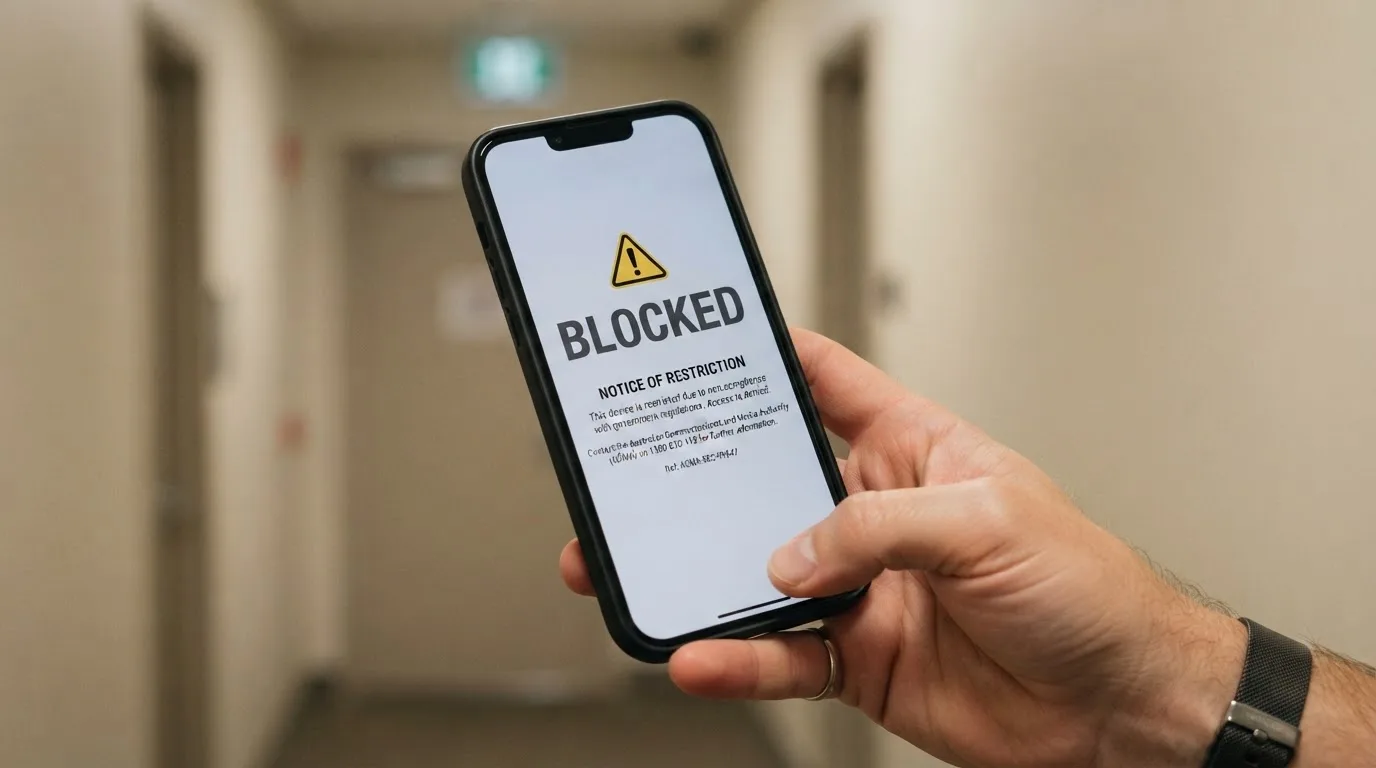
So an “instant withdrawal casino” serving an Australian reader is, by construction, an offshore site operating in plain breach of Australian statute. The ACMA’s response since 2017 has been a steady escalation: formal warnings to named operators, then blocking requests to internet service providers, then the operator leaving the market entirely. The total blocked-sites tally reported in June 2026 was 1,751 since the first blocking request in November 2019, and more than 230 unlicensed services have left the Australian market since enforcement was strengthened in 2017.
Two numbers, one rule: a name on the ACMA’s blocking list carries no further licence from any other country. The Curaçao, Anjouan or Kahnawake badge these brands display is not an Australian licence — none exists — and it is not a substitute for one. The product remains prohibited whichever flag sits behind the homepage.
Crypto, No Verification, and the Privacy the Page Cannot Deliver
Three phrases cluster around the search-term family for this topic: “no verification”, “crypto” and “instant”. They appear together because the marketing is designed to appeal to a player who wants the casino to know nothing about them, and crypto rails are the only deposit and withdrawal path where the operator never sees a bank account.
That framing carries a hard fact it does not advertise. Crypto transfers are not subject to AUSTRAC’s threshold-transaction-report rule, which applies only to physical cash; ordinary electronic bank transfers are not subject to it either, but bank transfers carry the account holder’s name. A crypto payout from an unlicensed offshore site moves without a name attached, which is what makes crypto attractive to the marketing copy and exactly what makes it the rail on which AUSTRAC enforcement, money-laundering exposure and the ACMA’s blocking list are silent.
The deeper cost sits elsewhere. The Interactive Gambling Amendment Act 2017 widened the prohibited service definition; the 2023 amendments extended the credit-card ban to digital wallets and credit-related products on Australian-licensed wagering services. A site asking an Australian for a credit card or a crypto deposit is, by that single feature, operating outside the Australian regime. BetStop, the National Self-Exclusion Register live since August 2023, binds only Australian-licensed operators — an offshore crypto casino is not connected to it. The punter excluded from every legal wagering site in the country can sign up, deposit, lose, and have no Australian body to complain to when a withdrawal stalls.
“Casinos with no verification” double down on the same gap. Identity verification is what produces a paper trail the regulator can audit; bypassing it produces a paper trail nobody can audit. The marketing word is freedom. The mechanism is the absence of the only thing that would have made a withdrawal enforceable.
How the Money Actually Moves: PayID, Osko, EFT and the Speed Promise
The payment rails a licensed Australian wagering operator uses are well documented. PayID instant transfers are available at more than 100 Australian financial institutions, and Osko by AusPay Plus sends a bank transfer between participating banks in under a minute, 24/7. More than 25 million PayID identifiers had been registered on Australia’s New Payments Platform as of April 2025. For the legal product — racing and sports wagering, lottery and keno — that speed is real, and a punter placing a bet before an event can withdraw a settled balance to a PayID before the next race starts.
The illegal product, by contrast, depends on a different set of rails. Most offshore casinos serving Australia process payouts by international bank transfer, by e-wallet or in crypto. None of these routes through the Australian instant-payments network. The “instant” on the marketing page is whatever the operator chooses to put between approval and settlement; the player’s bank, the AUSTRAC reporting rules and the ACMA blocking power apply to whatever rails do get used.
AUSTRAC’s threshold-transaction reports apply to physical cash only — ordinary electronic transfers, regardless of the amount, do not need a per-transaction report. That makes bank transfers invisible to AUSTRAC at the transaction level. It does not make an offshore casino legal. PayID pays to a name, not to an account: the transfer screen shows the account-holder’s name before the player confirms. AP+ warns that being asked to transfer to a PayID on an illegal gambling site almost certainly means a scam site. The instant-payments infrastructure was built for a regulated market, and it has been engineered to flag, not to facilitate, the unregulated one.
Digital wallets add a different wrinkle. Apple Pay, Google Pay and Samsung Pay collectively accounted for around 45 per cent of all card payments in Australia by number at the end of 2025. Apple does not charge consumers any fee for Apple Pay, and Apple states that transaction limits and PIN requirements are set by the card issuer, not by Apple. ANZ’s gambling block applies to digital-wallet transactions on a blocked card, not just the physical card. Commonwealth Bank’s gambling lock does the same. The banks have closed the loop on credit and most debit cards; a punter blocked from gambling at card level is blocked at wallet level too.
The Brand Set the ACMA Has Named
The plan attached to this review asked for a shortlist of “best instant withdrawal casinos” in Australia. No such shortlist exists, and the brands an Australian player actually meets on a Google search for that phrase are listed here for the opposite reason: every one of them has been the subject of a formal ACMA warning for offering prohibited interactive gambling services to Australians. None carries an Australian licence. None connects to BetStop. None of these reviews is a recommendation.
The table below records what the ACMA has done, against which operator, in what month. The “subject support” column is built from the third-party listings the research consulted — payment-rail websites and the regulator pages themselves — and marks where those listings reported the operator, where they did not, and where they were silent. The deliberately short list is the regulated half of the picture: every brand that appears here is one the ACMA has publicly named in the past two years.
| Brand | ACMA action and date | Operator named by the ACMA | Subject support |
|---|---|---|---|
| RocketPlay | Formal warning, March 2026 (earlier Dama N.V., May 2022) | Pulsup Ltd (RocketPlay) | Listed on gambling industry pages; no Australian-licence claim |
| Level Up Casino | Formal warning, May 2022 | Dama N.V. | Listed on Westpac’s gambling-block reference; no Australian licence |
| Woo Casino | Formal warning, March 2025 | Dama N.V. | No third-party listings consulted reported the brand |
| Spirit Casino | Formal warning, May 2025 | Dama N.V. | No third-party listings consulted reported the brand |
| National Casino | Formal warning, July 2025 | Consolutetish S.R.L. | Listed by ACMA, AUSTRAC and BetStop reference material |
| Bizzo Casino | Formal warning, July 2025 (earlier TechSolutions, 2022) | Consolutetish S.R.L. | Listed on gambling industry pages; no Australian licence |
| Ignition Casino | Formal warning, July 2025 | Bamboo Media | No third-party listings consulted reported the brand |
| Instant Casino | Formal warning, February 2025 | EOD Code SRL | Listed on e-wallet and PayID reference pages |
| Jackbit | Formal warning, April 2026 | Ryker B.V. | No third-party listings consulted reported the brand |
| Casino Intense | Formal warning, April 2025 | Sterplay Holding Ltd | Listed by AUSTRAC, BetStop and gambling industry pages |
| Sky Crown | Formal warning (undated within the warning publication) | Hollycorn N.V. | No third-party listings consulted reported the brand |
Three observations follow from the table. The same operator companies reappear under different brand names — Dama N.V. under at least four brand warnings, Consolutetish S.R.L. under two — which means a warning against one brand does not stop the company launching the next one. Several brands are now flagged on the very payment infrastructure designed to support Australian consumers, which means the rails know these names even when the licences behind them do not. And the listed-sites count rises faster than the regulator can warn: the ACMA’s June 2026 blocking round alone added 12 more domains to the 1,751 cumulative count.
The Arithmetic of Blocking
The ACMA’s blocking record has grown at a rate that reveals the scale of the enforcement effort. The first blocking request went out in November 2019. By the report of June 2026, a cumulative 1,751 sites had been blocked and more than 230 unlicensed gambling services had left the Australian market since enforcement was strengthened in 2017.
Two figures pinned to two dates. Spread those over the time the regulator has been actively enforcing — roughly 6.7 years from November 2019 to June 2026 — and the accumulation works out to a band rather than a single number. The headline rate is in the order of 260 to 270 sites a year blocked on average, and the long-tail list in any given month is longer than the operator turnover can clear. Sustained year-on-year, that means the ACMA has issued, on average, a new blocking request roughly every 30 to 35 hours over the seven-year enforcement window.
The conditional on the band matters as much as the band itself. The rate has not been steady. Single rounds have blocked as many as 12 domains in one cycle, and earlier cycles moved more slowly. The numbers above carry the qualifier that they are linear averages over a period the regulator describes as escalating, not constant; the more recent monthly pace is higher than the seven-year average. A punter looking at the table needs to read it as the regulator adding names roughly continuously, not as a one-off cleanup that the market is about to absorb.
The consequence is concrete. An offshore brand that was an unknown name when an Australian punter first hit the search results is on the ACMA’s list by the time the punter clicks through to a second deposit. Domain-rotation tactics — a new URL for an existing operator — are the reason the cumulative count keeps climbing past 1,700 rather than settling. A withdrawal request from an operator who has cycled through three domain names this year is not the same withdrawal request as one placed on a clean site, and the banking infrastructure knows it: PayID, the big-four gambling blocks and AUSTRAC’s monitoring all tag these transactions before the operator’s compliance team does.
The Legal Frame, in Plain Terms
The Interactive Gambling Act 2001, strengthened by the Interactive Gambling Amendment Act 2017, makes it an offence to provide online casino games, online pokies or in-play betting to a person in Australia. No state or territory issues a licence for those products. What a state or territory does licence — racing and sports wagering placed before the event, lotteries, keno — is regulated, in practice, by the Northern Territory Racing and Wagering Commission, which oversees 52 of Australia’s online bookmakers. The commission is small: no full-time staff, monthly meetings in Darwin.
The enforcement chain runs through the ACMA. The regulator investigates, issues formal warnings, and can direct Australian internet service providers to block sites. Since the Interactive Gambling Amendment (Gambling Reform) Bill 2026 passed Parliament on 19 August 2026, additional advertising and inducement measures will commence on 1 January 2027 — a law with a start date, not a regime already in force on a 2026 page. The individual player is not prosecuted. The IGA targets the provider. What the individual player can lose is any balance sitting in an account that gets blocked, with no complaints body and no recourse.
Winnings of a recreational player are not assessable income under section 6-5 of the ITAA 1997; losses are not deductible. A punter running a gambling business is a different matter, and the ATO is the body to ask. The default position for the casual reader — and this page is written for that reader — is that the tax treatment is a non-event.
What Protection Actually Runs for an Australian Reader
The legal product in Australia is well defended. BetStop, the National Self-Exclusion Register, has been live since August 2023 and binds every Australian-licensed online and phone wagering service. The National Gambling Helpline runs on 1800 858 858, free, 24/7, with chat at Gambling Help Online. The big-four banks — Westpac, ANZ, Commonwealth Bank and National Australia Bank — all run gambling blocks at card and digital-wallet level, with a 48-hour cooling-off for ANZ customers wanting the block removed. Westpac’s block specifically refuses authorisation at the merchant category code for betting and casino gambling on eligible cards.
The defence is layered, and it works on the rails a punter is most likely to touch. Apple Pay, Google Pay and Samsung Pay together carried around 45 per cent of all Australian card transactions by number at the end of 2025, and Apple’s position is that transaction limits and PIN requirements are set by the issuer or the merchant. The gambling blocks that have landed on cards since the credit-card ban took effect on 11 June 2024 land on the wallets too. Digital currency is also banned as a payment for licensed Australian wagering since that date, with penalties up to A$247,500 for operators. A punter considering a deposit faces a system that was rebuilt in the last three years precisely to close the rails offshore sites try to use.
What that system does not do is reach an operator on a Caribbean licence. The credit-card ban, the wallet screening, AUSTRAC monitoring and PayID’s account-name display all work for the licensed product. An offshore casino is outside every one of those controls, which is the same thing as saying it is outside every consumer protection an Australian player might rely on.
Brand-by-Brand Notes on the Set Above
The brands below are not recommendations. They are the operators the ACMA has named under the IGA in the past two years, with the limited third-party material the research did find attached. The verdict on each is the same in form — that no Australian licence covers the product — but the surrounding details vary, and a reader scanning the page benefits from seeing what those details actually are.
RocketPlay has been warned twice under different operators. The ACMA’s March 2026 warning was issued to Pulsup Ltd over RocketPlay; the May 2022 warning against Dama N.V. covered Rocketplay alongside five other Dama brands. The brand has been on the gambling-insider listings for years, but a listing is not a licence. The mechanics of the puzzle here are the dual-warning pattern, which is the regulator’s way of saying the operating entity, not just the brand, is the target.
Level Up Casino sits in the same Dama N.V. batch of six brands warned in May 2022 and has not had a second warning since — the entry on Westpac’s gambling-block reference marks the brand as one the bank’s transaction-screening system monitors, nothing more. The brand fits the pattern of an older Dama domain that has stayed live longer than the others warned at the same time.
Woo Casino was added to the Dama N.V. list in March 2025 and has no third-party listing material the research found. The marketing footprint looks thin; the ACMA footprint looks thick enough.
Spirit Casino shares a Dama N.V. parent and a May 2025 warning date. The clean lesson is that a single operator company absorbs warnings under multiple brand names and adds fresh ones at a steady cadence.
National Casino and Bizzo Casino sit under Consolutetish S.R.L., warned in July 2025. Bizzo was already named in the 2022 warning to TechSolutions (CY) Group Limited, so it carries a second-warning detail that RocketPlay also carries. National Casino has the more prominent Australian-rail footprint, appearing in ACMA, AUSTRAC and BetStop reference material.
Ignition Casino is a Bamboo Media brand added to the warning list in July 2025. The research found no third-party listings for it; the ACMA’s own action is the record.
Instant Casino sits under EOD Code SRL, warned in February 2025, and is listed on e-wallet and PayID reference pages — a sign the name turns up where Australian consumers are most likely to search. The relevant detail is that an instant-payments infrastructure operator has flagged the brand.
Jackbit was added in April 2026 under Ryker B.V., alongside CasinOK. No third-party listings for the brand appeared in the research.
Casino Intense is a Sterplay Holding Ltd brand warned in April 2025, with the longest third-party footprint in the table: AUSTRAC, BetStop and gambling-insider pages all carry the name. The brand is the most prominent on Australian reference rails, which is a sign of how thoroughly the rails have learned the names, not how trustworthy they are.
Sky Crown sits under Hollycorn N.V. and has no third-party listings in the consulted set. The Hollycorn warning publication is one of the older items in the table.
Reading the ACMA’s Published Record
The blocking record and the formal-warning list together describe how the regulator works. A formal warning is published first, naming the operator behind the brand and the URL in question. If the operator continues to offer the product, the ACMA asks Australian internet service providers to block the domain. The blocking round reported on 26 June 2026 added 12 names — 7Signs, ChromaBet, Donbet, Duospin, Freshbet, Slots Gem, Jacks Club, Lucky Start, Pointsbetz, Spinrise, Vinyl Casino and Wildsino — to the cumulative count.
The key fact is that adding domains is faster than removing operators. Cumulative counts above 1,700 mean that domain rotation, re-launching, and re-skinning are all standard tactics in the offshore market. A punter who hears the same product pitch from three different domains in a year is hearing it from the same operator under new names. The regulator’s job is not to remove the product once, but to keep pace with the re-launches, and the 12-names-a-round pace is what that pace looks like.
H2 Gambling Capital’s 2025 report estimated Australians lose about A$3.9 billion a year to illegal gambling sites, with the legal share of gambling revenue falling from 74 per cent in 2021 to 64 per cent. The number is a study figure, not a regulator count, and the share decline is a market structural finding rather than a sudden shift. The point for the reader is that the volume of money moving through unlicensed offshore sites has been large enough to support an industry large enough to keep rebranding fast enough to outpace the regulator’s warnings.
What an “Instant” Withdrawal Looks Like When the Site Is Blocked
The withdrawal promise and the blocking event sit at opposite ends of the same transaction. A punter deposits. A punter plays. A punter requests an instant payout. The operator’s approval is software. The settlement to the player’s bank or wallet may complete in minutes on the right rail — through PayID, Osko, or crypto on a fast blockchain — and may stall for the three-to-five days the slow sites quote.
If, between request and settlement, the ACMA has added the operator’s domain to its blocking request, the operator’s URL no longer resolves for an Australian reader. The balance that was waiting to be paid out now sits in an account whose owner has been cut off from the player by network-layer blocking. The player has no Australian complaints body to contact; the operator has no Australian presence to threaten. The “instant” was real. The withdrawal, as a completed settlement, was not.
This is the gap the page’s title cannot close. The instant-withdrawal promise is mechanically true for the time the site is reachable, and that time is finite. The two-minute outage cap the New Payments Platform imposes on participants does not change the offshore side; no NPP participant is processing the payout. The 24/7 PayID speed does not apply to a money-movement channel that sits outside the Australian instant-payments network.
What an Australian Reader Can Do Instead
The legal wagering product in Australia is narrow by design. Sports and racing before the event, lotteries, keno — these are the products the IGA carves out, and they are the products on which BetStop, the big-four bank blocks and AUSTRAC monitoring actually bite. A reader looking for an instant-withdrawal experience in the legal envelope will find one through PayID and Osko, on a licensed wagering account, on a settled balance, with the actual money moving through the New Payments Platform.
A reader looking for online casino games or online pokies from inside Australia is looking for a product that does not exist legally here. The closest licensed equivalent is the gaming floor at a land-based casino or a licensed club, where pokies are present, winnings are paid out by teller, and BetStop ties the venue to a national register. The economics are different: the rake is the same, the rails are cash, the consumer-protection stack is built in by state regulation.
Beyond the legal envelope, the page has nothing to sell. The brands named above are not shortlist candidates; they are the regulator’s published record of how many operators have marketed the illegal product at Australian readers, and what their names were when they did.
What Changes on 1 January 2027
The Interactive Gambling Amendment (Gambling Reform) Bill 2026 passed Parliament on 19 August 2026. Its advertising and inducement measures commence on 1 January 2027. The clause is law with a start date, not a regime already in effect on a 2026 page.
The two facts sit cleanly side by side: a regime exists, and a regime is about to start. The reader who arrives at the page in late 2026 reads it under the rules already in force — the IGA, the 2017 amendments, the 2023 amendments, the credit-card ban from 11 June 2024. The reader who arrives at the page in 2027 reads the same title against stricter advertising and inducement rules. The arithmetic on the blocking record does not change at the new-year boundary; only the surface area of what is illegal to advertise does.
Closing the Loop on the Search
The page opened with a search for instant withdrawal casinos in Australia. The answer is the closing of the gap the search exposed. There is no Australian-licensed online casino to deliver an instant withdrawal, because no Australian licence exists for online casino. The brands the search surfaces are the brands the ACMA has named. The rails the search promises — PayID, Osko, the big-four bank-block — operate against the product the search wants, by design, not by accident.
For a reader making a decision today, the choice is whether to play the prohibited product on an offshore site where the only enforcement is the regulator’s blocking list, or to play the legal product on rails the regulator already controls. The instant-withdrawal phrase is not a feature of the second option; it is the marketing word for the first.
Frequently Asked Questions
What is the difference between a payout and a withdrawal request?
A withdrawal request is the moment a player hits the button and the casino’s software logs the intent. A payout is the actual settlement into the player’s chosen account. The two are not the same event, and operators will sometimes quote one in marketing when they mean the other — approval time is rarely equal to settlement time.
Why might a casino require identity verification before an instant withdrawal?
Because identity verification produces the paper trail the regulator, the bank and AUSTRAC need to enforce any kind of refund or complaints decision. A site that skips verification is also a site that has no obligation to honour its payouts after the deposit is in. The verification moment is the moment the casino incurs the cost of refusing a payout cleanly.
Is it legal for an online casino to process withdrawals for players in Australia?
No. Offering online casino games to a person in Australia is an offence under the Interactive Gambling Act 2001. The withdrawal request is part of the offer of the product; the product is prohibited; the withdrawal side of it carries the same prohibition. The player is not prosecuted, but no Australian consumer protection exists when the site does not pay.
Can a bank transfer withdrawal arrive within minutes in Australia?
Yes — through PayID and Osko, on the New Payments Platform — but only for transactions between Australian financial institutions. Settlements from an offshore casino to an Australian bank travel by international bank transfer, not NPP, and the speed on those is governed by correspondent banking, not by the two-minute NPP outage cap.
Does a crypto withdrawal skip identity checks entirely?
It skips the part of identity checks that requires a name on a bank transfer. The on-chain ledger still records the transaction, and the casino’s own compliance can still demand documents before approving a withdrawal. “No verification” is a marketing claim about a specific document not being requested at deposit, not a guarantee that no record exists. See also What “best paying” really means for online pokies in Australia in 2026 .
What red flags suggest an instant withdrawal claim is not genuine?
An unlicensed offshore licence from Curaçao, Anjouan or Kahnawake is one; the ACMA’s blocking and warning register is public and any Australian-facing brand will eventually turn up in it. A banking-rail operator flagging the brand as gambling-related, a domain that has cycled more than once in 12 months, and a marketing line promising speed in minutes where the regulated product in the same country is already slower than that — these are signs the “instant” is being claimed without the rails to back it.