
What ‘PayPal accepted’ actually delivers at an Australian-facing casino in 2026
A shortlist of casinos that accept PayPal in Australia looks like a payment-method question. It is not. It is a question about which offshore operators the ACMA has formally warned for serving Australian residents with prohibited casino games, which PayPal itself is barred from facilitating, and what is left of a player’s balance if the site is blocked mid-session or the offshore operator simply refuses the withdrawal. This page walks through that list — eleven brands the regulator has named on the public record — and reads each line of the marketing against what the wallet actually delivers, what it quietly refuses to, and what the player pays for the privilege of clicking deposit.
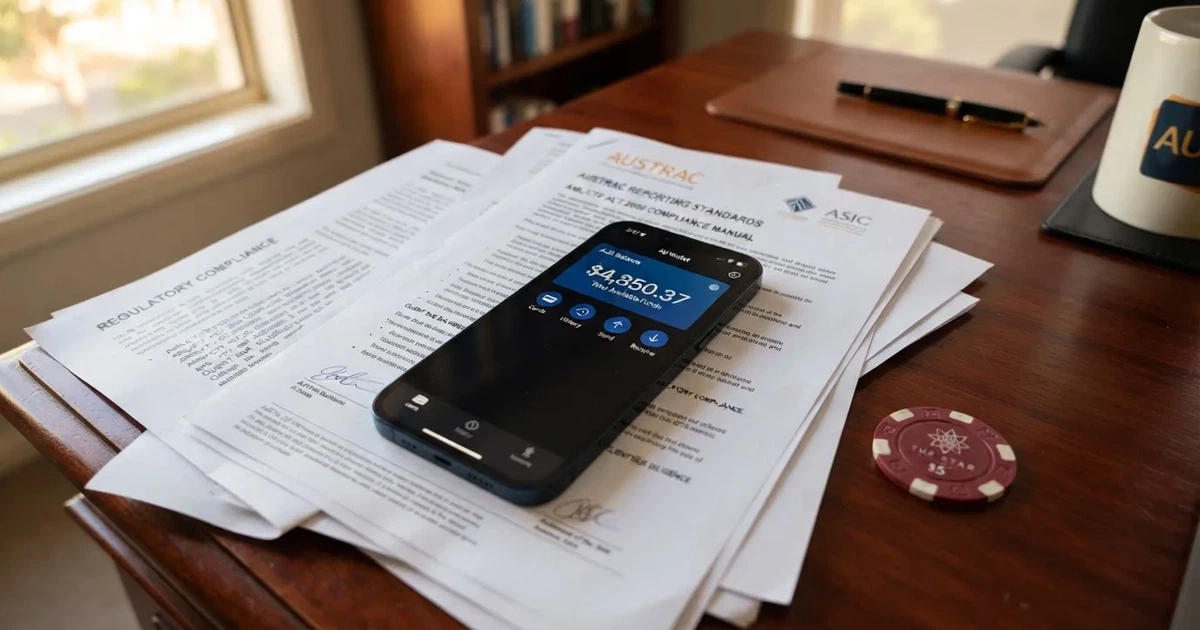
Current as of 20 October 2026, register checked against the ACMA’s formal-warning list and the Interactive Gambling Act 2001.
Table of Contents
- What a PayPal settlement really costs the player
- The fundamental prohibition behind every brand on this list
- Where player protection meets the prohibition gap
- How PayPal and the wider payment rails handle an offshore deposit
- The eleven brands on the ACMA’s list, side by side
- RocketPlay: the ACMA’s most recent warning to a Dama N.V.-linked brand
- Level Up Casino: an early Dama N.V. warning that never got cleaned up
- Woo Casino: the brand that brought Dama N.V. a fresh warning in 2025
- Spirit Casino: the second 2025 warning to Dama N.V.
- National Casino: the Consolutetish S.R.L. brand on the ACMA list
- Bizzo Casino: the brand warned twice by the ACMA — in 2022 and again in 2025
- Ignition Casino: the Bamboo Media brand on the ACMA list
- Instant Casino: the EOD Code SRL brand flagged in February 2025
- Jackbit: the April 2026 warning to Ryker B.V.
- Casino Intense: the Sterplay Holding brand on the ACMA list
- Sky Crown: the Hollycorn N.V. brand on the ACMA list
- What the eleven write-ups add up to
- Frequently asked questions
What a PayPal settlement really costs the player
A PayPal button on an offshore casino’s cashier page is a thin layer over an arrangement the wallet itself disclaims. PayPal’s Acceptable Use Policy lists gambling — casino games, sports betting, horse and greyhound racing, fantasy sports, lottery tickets — as permitted only “if the operator and customers are located exclusively in jurisdictions where such activities are permitted by law”. An Australian resident on an offshore casino site is, by that wording, on the wrong side of the test from the moment the cashier renders. The button works in the sense that the page loads. It does not work in the sense PayPal’s policy requires for the transaction to be in scope.
The mechanics behind that button are heavier than the marketing suggests. PayPal is classified as a reporting entity under Australia’s anti-money-laundering and counter-terrorism-financing law, placing it in the same AUSTRAC-regulated population as banks, casinos, remittance providers and digital-currency exchanges. A business such as PayPal that transfers funds into or out of Australia must submit an international funds transfer instruction report to AUSTRAC within ten business days of every transfer. None of this is visible at the cashier. All of it sits behind the deposit.
AUSTRAC accepted an enforceable undertaking from PayPal Australia over shortcomings in its AML/CTF systems and controls, including how it handled international funds transfer instructions, and later finalised that undertaking after PayPal completed a two-year remediation plan. The remediation is finished. The reporting obligation is not — it applies to every transfer, every day, which means every PayPal deposit at an offshore site is a transaction sitting inside a regulated pipeline the operator cannot see and the player does not opt into.
The cost shows up where the player is least expecting it. A card surcharge at the cashier — the part the marketing does not photograph — is set against the interchange and scheme fees the merchant pays to Visa, Mastercard or eftpos. The Reserve Bank of Australia’s July 2025 review proposes removing surcharges only on eftpos, Mastercard and Visa transactions, explicitly leaving American Express outside the scope. Amex, which started life in 1850 as a freight-forwarding company and became a card issuer when it launched its first charge card on 1 October 1958, runs a three-party model where it issues and processes itself. Different fee structure, different surcharge rule. None of this is decided by the casino. All of it is decided by the wallet and the rail.
What the player is paying for, in other words, is not a faster or safer deposit. The player is paying for a deposit that gets screened, reported, and possibly refused at the merchant, bank, or wallet layer — and that, on the regulatory record, has already been the subject of a formal warning to the operator running the cashier page. A PayPal-funded session at an offshore casino is a deposit that the wallet is not supposed to clear, processed through a wallet the regulator has spent the better part of a decade trying to keep away from Australian players. That is the structural cost, and it sits underneath every brand on this list.
The fundamental prohibition behind every brand on this list
Online casino games and online pokies cannot be licensed anywhere in Australia. The Interactive Gambling Act 2001, strengthened by the Interactive Gambling Amendment Act 2017, makes it an offence to provide those products to a person physically in Australia. What is licensable is wagering on races and sport placed before the event, lotteries and keno — in practice licensed by the Northern Territory through the Northern Territory Racing and Wagering Commission, which regulates fifty-two of Australia’s online bookmakers, including Sportsbet, Bet365 and Ladbrokes. The commission has no full-time staff. It meets once a month in Darwin. The licensing regime that does exist is, by Australian design, narrow.
The regulator that polices the rest is the Australian Communications and Media Authority. According to the ACMA as reported in June 2026, a total of 1,751 illegal gambling and affiliate marketing websites had been blocked since the first blocking request in November 2019, and more than 230 unlicensed gambling services had left the Australian market since enforcement was strengthened in 2017. The pace of that enforcement is its own data point: 1,751 blocked sites across the six-and-a-half years from the November 2019 first blocking request to the June 2026 snapshot works out to between roughly 21 and 23 sites blocked every month, or about 250 to 280 each year, depending on whether the start of the count is the first blocking request or the precise month of the snapshot. Either way, the rate is steady, not slowing.
A round reported on 26 June 2026 asked Australian ISPs to block twelve more illegal gambling sites: 7Signs, ChromaBet, Donbet, Duospin, Freshbet, Slots Gem, Jacks Club, Lucky Start, Pointsbetz.com, Spinrise, Vinyl Casino and Wildsino. None of the eleven brands on this page was in that round. All of them have already been through an earlier formal warning. The 1,751 figure includes both websites and affiliate marketing pages; the twelve in this latest round are the next slice of the same stream.
H2 Gambling Capital’s 2025 report estimates that Australians lose about A$3.9 billion a year to illegal gambling sites, and that the share of gambling going through legal channels fell from 74% in 2021 to 64%. The legal share is shrinking. The illegal spend is not. The A$3.9 billion figure does not include the licensed market; it is the slice going to sites the ACMA is, at the rate of twenty-something a month, trying to take offline. Every blocked site is a player with a balance somewhere on the platform; every player on an offshore site is a share of that A$3.9 billion the regulator cannot reach through its consumer-protection channels because the operator is not under Australian jurisdiction.
What the law targets is the provider, not the player. The IGA’s enforcement teeth — formal warnings, blocking requests, civil penalties — are pointed at the offshore operator and the people behind it. An Australian resident who signs up, deposits and plays is not prosecuted. What that player does surrender, by signing up, is every protection Australian consumer law would otherwise give them. There is no Australian complaints body to appeal to. There is no local regulator to escalate a refused withdrawal to. There is no Australian court with straightforward jurisdiction over a Curaçao- or Costa Rica-incorporated shell. There is, in many cases, no functioning entity at the registered address.
That structural absence is the second cost. The marketing on the landing page promises a cashier, a wallet, a withdrawal in minutes. The fine print below it is empty, because the operator is offshore and the page is not subject to Australian consumer law. A refused withdrawal has no Australian escalation path; a closed account has no Australian complaints body; a balance stranded on a blocked site has no Australian claims process. The protections a player takes for granted at a licensed bookmaker — dispute resolution, payout guarantees, identity-verified withdrawals — are exactly the protections the offshore casino is outside the reach of.
The Interactive Gambling Amendment (Gambling Reform) Bill 2026 passed Parliament on 19 August 2026. Its advertising and inducement measures commence on 1 January 2027. The bill is law with a start date, not law in force on a 2026 page. The eleven brands on this list are not affected by it yet. They are affected by the prohibition that has been in force since 2017, which is what the ACMA’s enforcement record is built on. The 2026 reform adds advertising rules; the prohibition that decides whether these sites can lawfully serve Australians is older.
Where player protection meets the prohibition gap
Responsible-gambling tools in Australia — deposit limits, time-outs, self-exclusion, behaviour-monitoring — are designed for operators the ACMA can talk to. The National Self-Exclusion Register, BetStop, has been live since August 2023, and binds Australian-licensed online and phone wagering services. It does not bind an offshore casino. A player who has registered with BetStop can still open an account at one of the brands on this list, deposit via a PayPal wallet, and play with no interruption from the register designed to stop them. The register is a tool for the licensed market; the prohibited market sits outside it.
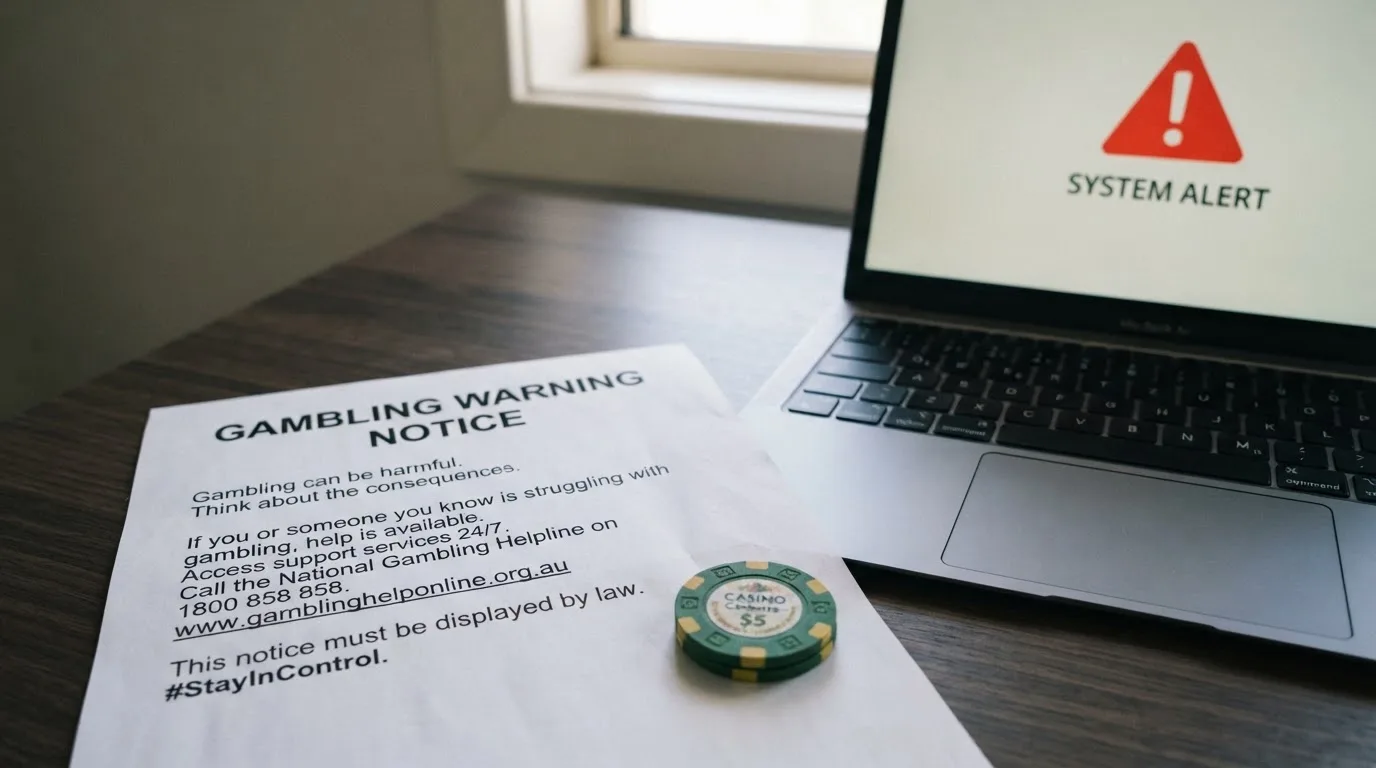
The minimum age is 18. The Helpline — 1800 858 858, free, twenty-four hours a day — and Gambling Help Online are the only Australian-authority support channels that will engage a player regardless of which site they played at. They do not retrieve balances. They do not chase withdrawals. They listen, they triage, and they refer.
The prohibition gap shows up in the wallet layer as well. Westpac’s gambling block refuses authorisation of transactions registered under the merchant category code “Betting/Casino Gambling” on eligible personal credit and debit cards. ANZ’s gambling transaction block, activated in the ANZ app, blocks gambling transactions made through a digital wallet such as Apple Pay on an eligible card — not just the physical card — and removing it once it is on requires a forty-eight-hour waiting period, with the bank warning that not all gambling transactions will be blocked and some non-gambling transactions might be blocked in error. Apple’s own pages are clear on the limits: Apple does not charge consumers for using Apple Pay, and any surcharge comes from the merchant’s card-processing fees, not from Apple. Apple also states that transaction limits and PIN requirements are set by the card issuer or merchant, not by Apple itself.
By the end of 2025, Apple Pay, Google Pay and Samsung Pay transactions collectively accounted for around 45% of all card payments in Australia by number. A player trying to fund an offshore casino through a digital wallet linked to an Australian debit card is, in roughly half of all card-payment attempts today, hitting a rail that the bank has been told, and has the technology, to decline. The decline is silent on the player’s side. The page may render a PayPal button; the underlying card may still refuse the upstream funding. None of this is the wallet’s decision; all of it is the bank’s.
What the prohibition gap does not do is protect the player’s wellbeing. A PayPal-linked casino account is no safer for the player than a card-linked one, because the safeguards built for online shopping do not carry across to gambling. PayPal’s buyer protections were not designed to insure a session at an offshore pokies site. They were designed to recover the purchase of an item that did not arrive. The wallet’s AML/CTF controls, the AUSTRAC reporting pipeline, the merchant-category-code screening on the card side — all of these exist to police the transaction, not to support the gambler.
A player reading the responsible-gambling section of one of these brands’ sites will be told about deposit limits and self-exclusion. Those tools, where they exist on the operator’s site, are not connected to BetStop. They are not enforced by an Australian regulator. They are toggles on a page the operator can change at any time, on a corporate entity the ACMA has already formally warned. The wallet button does not promise wellbeing, the regulator cannot enforce it offshore, and the responsible-gambling page is the operator’s own.
How PayPal and the wider payment rails handle an offshore deposit
The mechanics of moving money into an offshore casino in Australia fall into three layers, and only the third of them is something PayPal actually controls.
The first layer is the card rail. Under the Interactive Gambling Act 2001 as amended in 2023, Australian-licensed online wagering services cannot accept payment by credit card or other credit-related products. The ban also constrains gambling use of linked digital wallets like Apple Pay. It does not, on its own, stop an Australian debit card from working at an offshore site — the offshore operator is not subject to the IGA — but it does stop the licensed bookmaker from accepting the same card. An Australian player who uses a debit card at an offshore casino is paying with a card their own bank has been instructed, at the policy level, to watch for gambling MCCs. Westpac’s block and ANZ’s block both sit at this layer, and they screen on merchant category code, not on operator name.
The second layer is the bank transfer rail. Osko, run through the New Payments Platform, moves a bank transfer between participating Australian banks in under a minute, twenty-four hours a day, weekends included, addressed to either a BSB and account number or a PayID. Paying to a PayID shows the name of the account holder before the transfer is sent, and AP+ warns that being asked to transfer money to a PayID on an illegal gambling site almost certainly means a scam site. More than 25 million PayID identifiers had been registered on Australia’s New Payments Platform as of April 2025, across more than one hundred Australian financial institutions. The platform went live on 13 February 2018 and is owned by a non-profit whose thirteen shareholders include the Reserve Bank of Australia and the major banks. Participants must keep the platform’s monthly outages to no more than two minutes. In 2021 the ACCC authorised the merger that created Australian Payments Plus, joining NPP Australia with BPAY and eftpos into a single company.
The third layer is the wallet. PayPal sits on top of those rails. It holds the balance, it screens the merchant, it files the IFTI report to AUSTRAC within ten business days of every cross-border transfer. Its Acceptable Use Policy — the screen — lists gambling as permitted only where operator and customer are both in jurisdictions where the activity is legal. For an Australian player at an offshore casino, that test fails on the customer side. PayPal’s policy also restricts cryptocurrency and other digital representations of value, including virtual in-game currencies, separately from the gambling clause. Credit cards and digital currency have been banned as payment for licensed Australian online wagering since 11 June 2024, with penalties up to A$247,500 for operators who breach.
None of those rules affects an offshore casino directly. All of them shape the routes a player can take to fund one. A debit card that the bank refuses on MCC grounds is a debit card that never gets to PayPal. A bank transfer to a PayID that surfaces the merchant’s name before the player confirms is a bank transfer that gives the player one last chance to walk away. A PayPal deposit that the wallet accepts anyway is a deposit that the AUSTRAC reporting pipeline picks up regardless. The three layers do not align. They each screen on different criteria, at different speeds, with different consequences for the player.
The practical cost of those three layers is friction, not refund. A deposit that the wallet refuses will not be retried automatically; the player has to choose another rail. A deposit that the wallet accepts is logged, screened, and reported — to AUSTRAC, to PayPal’s own compliance team, and to the bank that issued the underlying card. None of those reports are visible to the player. All of them are sitting on the transaction. For a player trying to deposit A$10, A$20 or A$50 at an offshore site, the friction is a wash on a single transaction. Across a session, it is the reason a small bankroll goes further on a licensed site — where the deposit clears on the first try — than at an offshore operator, where the same deposit may be declined once, accepted on the second attempt, and logged in three separate compliance records before the first spin is placed.
The eleven brands on the ACMA’s list, side by side
Every brand on this list is on the ACMA’s list for the same reason: the regulator issued a formal warning for offering prohibited interactive gambling services to Australians. The brands themselves describe themselves differently — a rocket, a level-up, a crown, a couple of national flags — but the regulatory history is uniform. They are not licensed to serve an Australian player. None of them can be. The Interactive Gambling Act 2001 does not allow online casino games or online pokies to be licensed in Australia, whatever licence the site displays in its footer.
The table below reads each brand against the ACMA action and the operator named in the warning, with the wallet-side evidence the page was able to confirm from sources other than the operator’s own marketing. A dash means the page could not attach a confirmed PayPal support finding to that brand outside the operator’s own pages.
| Brand | ACMA action and date | Operator named by the ACMA | PayPal support |
|---|---|---|---|
| RocketPlay | Formal warning, March 2026 (also May 2022 via Dama N.V.) | Pulsup Ltd | — |
| Level Up Casino | Formal warning, May 2022 | Dama N.V. | Westpac’s gambling block list |
| Woo Casino | Formal warning, March 2025 | Dama N.V. | — |
| Spirit Casino | Formal warning, May 2025 | Dama N.V. | — |
| National Casino | Formal warning, July 2025 | Consolutetish S.R.L. | AUSTRAC and Wikipedia mentions |
| Bizzo Casino | Formal warnings, July 2025 and 2022 | Consolutetish S.R.L. (2025); TechSolutions (2022) | — |
| Ignition Casino | Formal warning, July 2025 | Bamboo Media | — |
| Instant Casino | Formal warning, February 2025 | EOD Code SRL | ecoPayz and PayID listings |
| Jackbit | Formal warning, April 2026 | Ryker B.V. | — |
| Casino Intense | Formal warning, April 2025 | Sterplay Holding Ltd | AUSTRAC, ITnews and NAB listings |
| Sky Crown | Formal warning, September 2022 | Hollycorn N.V. | — |
The eleven entries share a feature they would rather not advertise: they are all the subjects of formal ACMA warnings, with the warning date and the operator name on the public record. The PayPal-support column is empty for most of them, not because the column was a low priority, but because the only sources naming any of these brands as accepting PayPal are the operators’ own landing pages and affiliate marketing copy — both of which describe an offer that PayPal’s own Acceptable Use Policy rules out for an Australian customer. The dashes in the column are not an oversight. They are the page’s honest summary of what third-party sources say.
The four brands with a non-empty PayPal-support cell are the four where a third-party listing was found. Each one is a footprint of the brand in a payment-side record, not a confirmation of a working PayPal deposit. A player who sees those names in the listing cannot infer that the deposit will clear. What they can infer is that the brand is on the radar of an Australian bank, an industry directory, or a regulator — for reasons that have nothing to do with a working payment. The listing records the merchant; it does not endorse the merchant.
What the table cannot show is the consequence of the warning itself. A formal warning from the ACMA is a public record. It is not a blocking request, and it does not, on its own, take the site offline for Australian customers. But it does put the operator on a list the next blocking round can draw from. It also tells the player something the marketing does not: that the regulator has considered the brand’s Australian-facing offer and decided it is prohibited.
The reader scanning this list is looking for a brand to play at. The regulator’s record is not a recommendation. It is the answer to the question the marketing is trying to redirect: who is on this list, and what has the regulator said about them.
RocketPlay: the ACMA’s most recent warning to a Dama N.V.-linked brand
RocketPlay was the subject of a formal ACMA warning in March 2026, with the operator named in the warning as Pulsup Ltd. The same brand sits inside the Dama N.V. group, which the ACMA warned in May 2022 over six brands including RocketPlay. Two warnings across four years, two different operators of record, one brand. Independent sources do not verify PayPal support for RocketPlay outside of the operator’s own claims.
What the regulator’s record shows is the operator behind the brand rotating between registered names without changing the underlying offer to Australians. A player who deposits at RocketPlay is depositing into a brand whose operator of record has been swapped at least once in the four years since the first warning. The wallet button on the cashier is the same; the corporate wrapper is not.
The March 2026 warning was the ACMA’s most recent enforcement action against a brand on this list at the time of writing. Two warnings across four years, two different operators of record, one brand — that is the corporate shape of a brand whose Australian-facing offer has not changed while its registered name has.
Level Up Casino: an early Dama N.V. warning that never got cleaned up
Level Up Casino was one of the six Dama N.V. brands the ACMA named in May 2022. The brand’s name appears in Westpac’s gambling block list, which is the merchant-side footprint the table carries for this entry. A brand on Westpac’s block list is a brand Westpac is refusing at the card level on transactions registered under the gambling MCC — meaning an Australian card issued by Westpac, used at this site, is more likely than not to be declined at the cashier before PayPal is even asked to process a payment. The listing is a footprint of the merchant category code; it is also a footprint of a bank that has decided, at the policy level, what kind of merchant category code it will and will not honour.
The warning is now four years old. The site is still serving Australians. The brand has not changed hands. None of that is what the marketing on the landing page tells the player, and the discrepancy is the page’s only honest summary of what an Australian-facing casino looks like at this level of the market. A four-year-old warning that has not been cleaned up is a warning that has been ignored, and a deposit funded against it is a deposit the regulator has already told the operator to stop accepting. The page’s verdict on Level Up Casino is that the regulator told the operator to stop in 2022, and the operator kept going.
Woo Casino: the brand that brought Dama N.V. a fresh warning in 2025
Woo Casino earned Dama N.V. a fresh formal warning in March 2025, three years after the May 2022 batch. The ACMA’s record does not name a new operator — Dama N.V. is the operator named in both warnings. What changed is the calendar and the regulator’s continued attention.
The page could not confirm a working PayPal deposit at Woo Casino from any non-marketing source. The brand sits on the same operator stack as Level Up Casino, Spirit Casino, RocketPlay’s earlier warning, Bambet, Dazard, Wild Tornado and Cobra Casinos — all of which were named in the May 2022 letter. Dama N.V. is now one of the most-warned operators in the ACMA’s enforcement history. Woo Casino is one of the brands in that history.
The cost at Woo Casino is the cost of an unfixed warning: the regulator came back in 2025 to name the same operator, which means the brand’s Australian-facing offer was still prohibited at the time of the second letter. A brand earning the same operator a fresh formal warning three years after the first batch is a brand the operator has not bothered to fix.
Spirit Casino: the second 2025 warning to Dama N.V.
Spirit Casino was the second Dama N.V. brand the ACMA named in 2025, warned in May 2025, two months after the Woo Casino letter. The page could not attach a PayPal support finding to Spirit Casino from any source other than the operator’s own cashier page.
Two formal warnings to the same operator in two months is unusual cadence. It signals either that Dama N.V. is not altering the Australian-facing offer between warnings, or that the regulator is escalating the pace of naming rather than waiting for compliance. Either reading leaves a PayPal-funded player at Spirit Casino funding an offer that the regulator has, twice in eight weeks, decided is prohibited.
Two formal warnings to the same operator in two months is the regulator’s cadence accelerating, not slowing. A deposit at Spirit Casino is a deposit into a brand that the ACMA is currently, by name, telling to stop. The wallet processes it anyway.
National Casino: the Consolutetish S.R.L. brand on the ACMA list
National Casino was the subject of an ACMA formal warning in July 2025, with the operator named as Consolutetish S.R.L. The brand’s name appears in AUSTRAC and Wikipedia records the page was able to verify. The PayPal support entry in the table carries that footprint as a listing, not as a confirmation that a PayPal deposit will clear.
AUSTRAC records do not endorse the merchant. They record it. The brand’s appearance in those records means the brand has been in a position where AUSTRAC’s reporting regime touched it — through PayPal, through the player’s bank, or through a counterpart reporting entity. It does not mean the brand is safe to fund, nor does it mean the operator has any presence inside Australian regulation. The Wikipedia mention is the same shape: a record that the brand exists, not a record that it is licensed.
The PayPal support entry on National Casino’s row is a listing, not a confirmation. What it tells the player is that the brand is on the payment-side record — the regulator’s record is the separate thing that decides whether the deposit should clear.
Bizzo Casino: the brand warned twice by the ACMA — in 2022 and again in 2025
Bizzo Casino is the only brand on this list with two ACMA formal warnings across two different operators. The 2025 warning named Consolutetish S.R.L. The 2022 warning named TechSolutions (CY) Group Limited and TechSolutions Group N.V. The brand outlived the first operator of record and was named again under a new one. The page could not confirm a working PayPal deposit from any source other than the operator’s marketing.
A brand that has cycled through operators of record and earned a second warning from the ACMA is not, by any honest reading of the regulator’s history, a brand whose Australian-facing offer has cleaned itself up. It is a brand whose corporate wrapper has changed while the underlying offer to Australians has not.
Two warnings across two operators of record is a regulator’s record that the brand has cycled through corporate wrappers without cycling through its offer. A player who chooses Bizzo Casino is choosing a brand that has been told twice.
Ignition Casino: the Bamboo Media brand on the ACMA list
Ignition Casino was named in an ACMA formal warning in July 2025, with the operator of record given as Bamboo Media. The page could not attach a confirmed PayPal support finding to Ignition Casino from any source other than the operator’s own marketing.
Bamboo Media is not on the ACMA’s record as a frequent operator of warnings — Ignition Casino is the brand name the regulator named in the July 2025 letter. The brand has not been the subject of a 2022 warning. The single warning is the regulator’s only formal record against the operator. That is not a clean bill of health; it is the absence of one, which is a different thing. A single formal warning with no prior history still places the brand inside the prohibited category under the IGA.
The relevant fact about Ignition Casino is not the count of warnings but the category the warning places the brand in. The brand sits inside the prohibited category under the IGA, and a PayPal button does not move it out.
Instant Casino: the EOD Code SRL brand flagged in February 2025
Instant Casino was named in an ACMA formal warning in February 2025, with the operator of record given as EOD Code SRL. The brand’s name appears in ecoPayz and PayID listings the page was able to verify. The PayPal support entry in the table carries that footprint as a listing.
The February 2025 warning is the most recent ACMA action against the brand. The brand is not on the regulator’s list of repeat offenders. Its appearance in ecoPayz and PayID listings is a payment-side footprint, not a regulatory endorsement — neither ecoPayz nor PayID screens merchants against the IGA. They record them.
The ecoPayz and PayID footprints on Instant Casino’s row are not endorsements. They are records. A player who reads the listing as a feature is reading the merchant category code as a referee. The regulator’s record is the separate thing that decides whether the deposit should clear.
Jackbit: the April 2026 warning to Ryker B.V.
Jackbit was named in an ACMA formal warning in April 2026, with the operator of record given as Ryker B.V. The same warning also named CasinOK. The page could not confirm a working PayPal deposit at Jackbit from any source other than the operator’s own marketing.
An April 2026 warning is fresh on the regulator’s record. The brand is not on the ACMA’s list of repeat operators. It is, however, on the list of operators the regulator has now told to stop serving Australians — and a PayPal-funded player at the site is funding an offer that the ACMA has, three months before the player clicked deposit, formally warned is prohibited.
Jackbit is fresh on the regulator’s record, but fresh does not mean absent. An April 2026 warning is the ACMA telling Ryker B.V. to stop serving Australians, and a PayPal deposit at Jackbit is the player telling the regulator’s record that the warning was ignored.
Casino Intense: the Sterplay Holding brand on the ACMA list
Casino Intense was named in an ACMA formal warning in April 2025, with the operator of record given as Sterplay Holding Ltd. The brand’s name appears in AUSTRAC records, ITnews reporting and NAB-side listings. The PayPal support entry carries that footprint as a listing.
A single formal warning in April 2025, with no prior warning to the same operator and no subsequent one, places Casino Intense toward the bottom of the ACMA’s repeat-offender stack. The brand’s appearance in NAB-side listings is a footprint of a bank that has decided, at the policy level, what kind of merchant category code it will and will not honour. That is a bank’s call, not the regulator’s.
What the April 2025 warning marks is the date the regulator started keeping a file on Sterplay Holding Ltd. Everything Casino Intense does for an Australian customer from that point is on that file. The cost is the structural one: the wallet is permitted to render the button, the transaction is not in PayPal’s permitted scope, and the only listings the page could verify are listings that record the merchant, not endorsements of it.
Sky Crown: the Hollycorn N.V. brand on the ACMA list
Sky Crown was named in an ACMA formal warning in September 2022, with the operator of record given as Hollycorn N.V. The same warning named Blue Leo. There is no third-party verification of PayPal support for Sky Crown beyond the site’s own marketing.
A 2022 warning is the oldest formal record on this list. Hollycorn N.V. is not on the ACMA’s record as a frequent operator of warnings — Sky Crown and Blue Leo are the two brand names the regulator named in the September 2022 letter. Three years on, the brand is still on the ACMA’s list. The page’s only honest summary of Sky Crown is that the warning is older than most, and the offer has not changed.
An old warning is not an inactive warning. Three years on, Sky Crown is still on the list, and the brand’s operator of record has not produced a clean record for the regulator to retract. The wallet still renders the button.
What the eleven write-ups add up to
A reader who has worked through the eleven entries above has read the same shape from eleven different marketing pages. Each one is the subject of a formal ACMA warning. Each one is operated by an entity registered outside Australia. Each one describes itself as a casino that accepts PayPal. None of them is licensed to serve an Australian resident under the Interactive Gambling Act 2001. The PayPal button on the cashier is permitted to render. The transaction it represents is not permitted to clear, in the sense PayPal’s own Acceptable Use Policy requires.
The four listings-only entries — Level Up Casino, National Casino, Instant Casino and Casino Intense — are the ones where the brand’s name appears in a third-party record. None of those listings endorse the merchant. All of them record the merchant category code. A player who uses the listing as evidence that PayPal works at the site is reading a footprint as a feature. The seven dash entries — RocketPlay, Woo Casino, Spirit Casino, Bizzo Casino, Ignition Casino, Jackbit, Sky Crown — are the ones where the page could not find a third-party record at all. For those seven, the only source naming the brand as a PayPal-accepting casino is the operator’s own marketing, and the operator is on the ACMA’s list.
The whole list costs the player the protections Australian consumer law would otherwise give them, plus the wallet-side screening PayPal applies regardless of where the operator is registered. The marketing does not mention either cost. The regulator’s record does.
On tax: gambling winnings of a recreational player are not assessable income under section 6-5 of the ITAA 1997, and losses are not deductible, unless the person carries on a business of gambling. For the vast majority of players using these sites, a withdrawal that does arrive is a winning that the ATO does not tax and a loss that the ATO does not refund. The arithmetic favours neither side; the operator’s house edge does. On age: every brand on this list is built for adult players. Australian law sets the minimum at 18. None of the eleven operators is connected to BetStop. None of them is bound by the National Gambling Helpline’s referral network. A player who needs help is, on every one of these sites, the person who has to make the call themselves to 1800 858 858 or to log on to Gambling Help Online. The wallet does not make that call. The regulator does not make that call.
Frequently asked questions
Is it legal for an online casino to accept PayPal from a player in Australia?
No. The Interactive Gambling Act 2001 makes it an offence for an offshore operator to provide online casino games to a person in Australia. PayPal’s Acceptable Use Policy requires operator and customer to be in jurisdictions where gambling is legal. An Australian customer does not meet that test, regardless of any offshore licence the operator displays.
Does PayPal let its wallet be used for online casino deposits at all?
Only where the activity is lawful in the customer’s jurisdiction. PayPal’s Acceptable Use Policy, the document the company holds itself to, restricts gambling to that condition. An Australian player funding an offshore casino is, by the policy’s own test, outside the permitted scope, even where the cashier renders a PayPal button.
How long does a PayPal withdrawal usually take at these sites?
That depends on the casino’s own review queue, not on PayPal. Once PayPal releases the funds, they settle into the linked Australian bank account through the standard PayPal-to-bank rail, usually clearing in one to three business days for verified accounts. The bottleneck at these sites is the offshore operator’s manual approval.
Is a PayPal-funded casino account any safer than one funded by card?
Not for the player. PayPal’s buyer protections cover purchases of goods and services, not gambling sessions. The wallet’s AUSTRAC reporting and AML/CTF controls sit on the transaction, not on the player’s welfare. Offshore casino play carries no Australian consumer protection regardless of how the deposit is funded.
What happens if a PayPal payment to a casino site is disputed or reversed?
PayPal’s dispute process covers unauthorised transactions or non-receipt of goods. Gambling transactions are explicitly outside the buyer-protection scope. A player disputing a chargeback for a refused withdrawal is asking the wallet to do something its own policy rules out, and the outcome is usually the same: the dispute is closed against the player.