
Real money casino table games in Australia: where the law stands, where the maths bites, and where to actually play them
20 October 2026 · figures checked against the ACMA register and the Victorian and NSW casino regulators.
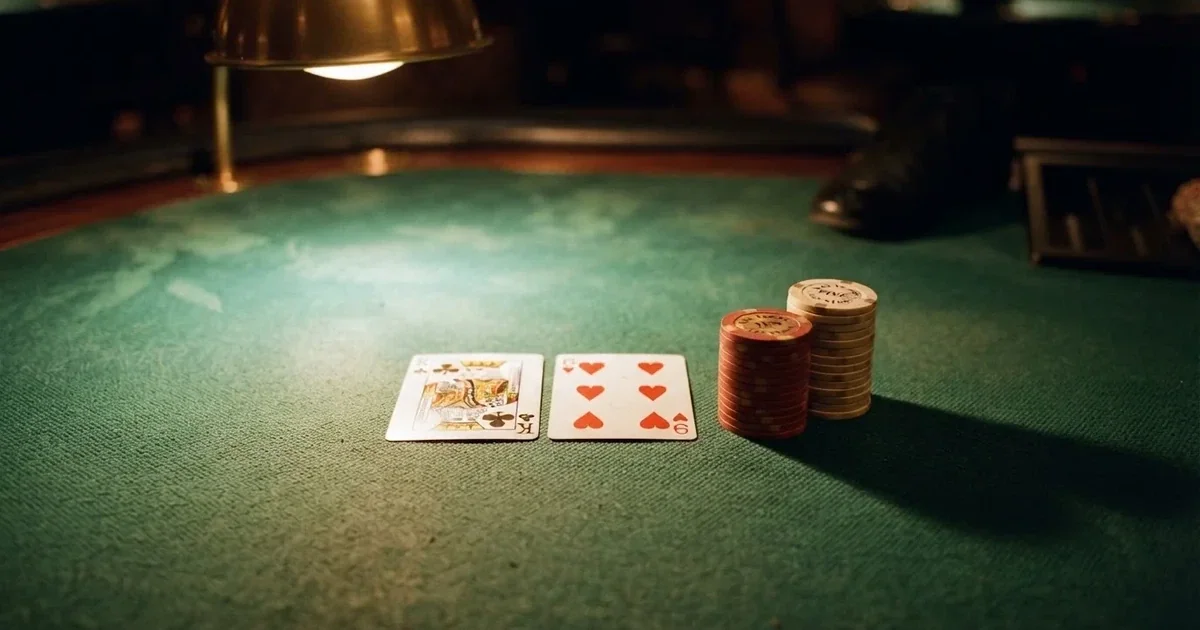
A real-money casino table game is a contest against the house over cards, dice or a spinning wheel, with every wager settled against a fixed house edge. Australians cannot lawfully place those wagers online — no state or territory licences an online casino to offer real-money blackjack, roulette, baccarat or craps. They can, however, walk into a licensed casino, club or hotel and sit down at one, and that is the seat the figures below are really about. The offshore sites that promise the same thing carry no Australian licence, no Australian complaint body and no guarantee that a balance can be withdrawn before the site is blocked.
This page closes on what the numbers actually do, not on which offshore site looks liveliest. The house edge is the only figure that survives across decades of rule changes, and it is the one to compare when a paytable or a crypto gimmick is being dangled.
Table of Contents
- Legality: what the Interactive Gambling Act actually prohibits
- Responsible gaming: tools that only bind the Australian end
- Land-based venues: the lawful seat at the table
- Crypto and anonymity: speed is real, the licence is still missing
- Paytables and providers: the figures behind the felt
- The blocking rate: how fast the ACMA is closing the gap
- Brands the ACMA has acted against: a breakdown of the warning register
- Overview and core: what the reader is actually comparing
- Frequently asked questions
Legality: what the Interactive Gambling Act actually prohibits
The Interactive Gambling Act 2001 (IGA), strengthened by the Interactive Gambling Amendment Act 2017, makes it an offence for a provider to supply online casino games, online pokies or in-play betting to a person in Australia. No state or territory issues licences for those products, so an offshore brand displaying a Curaçao or Anjouan seal has not been licensed for Australia — it has been licensed somewhere else, for somebody else. The individual player is not the target of the IGA; the provider is. The consequence for a player falls elsewhere, and it falls hard.

The Australian Communications and Media Authority (ACMA) investigates complaints, issues formal warnings and can direct Australian internet service providers to block illegal sites. As of June 2026 the running total stands at 1,751 illegal gambling and affiliate marketing websites blocked since the first blocking request in November 2019, with more than 230 unlicensed services having left the Australian market since enforcement was tightened in 2017. A single round reported on 26 June 2026 asked ISPs to block twelve more: 7Signs, ChromaBet, Donbet, Duospin, Freshbet, Slots Gem, Jacks Club, Lucky Start, Pointsbet, Spinrise, Vinyl Casino and Wildsino. A site blocked with a positive balance is a real-world outcome the marketing does not mention.
H2 Gambling Capital’s 2025 estimate puts Australian losses to illegal sites at about A$3.9 billion a year, with the share of gambling going through legal channels falling from 74% in 2021 to 64%. The IGA’s reach now extends to payments: credit cards, credit-related products and digital currency have been banned as payment for licensed online wagering since 11 June 2024, with operator penalties up to A$247,500. An offshore site asking an Australian for a credit card or a crypto deposit is therefore operating outside the Australian rules on both the product and the rails.
A second wave of reform is in flight. The Interactive Gambling Amendment (Gambling Reform) Bill 2026 passed Parliament on 19 August 2026; its advertising and inducement measures commence on 1 January 2027. It is law with a future start date, not in force on a page read in 2026.
Responsible gaming: tools that only bind the Australian end
BetStop, the National Self-Exclusion Register, has been live since August 2023 and binds every Australian-licensed online and phone wagering service. Offshore casinos are not connected to it. A self-excluded Australian who opens an offshore account has, in practice, excluded themselves from the licensed market while leaving the unlicensed one wide open, which is the opposite of what the tool was meant to deliver. That gap is the single most important thing to know about responsible gambling in this market, because the offshore casino will not enforce the exclusion.
The National Gambling Helpline is 1800 858 858, free and open 24/7, with online chat at Gambling Help Online. Both channels sit outside any operator and they are the correct first call when the question is about a person’s own play or someone else’s. Counselling, financial advice and family support are all routed through the same line. Voluntary deposit limits and time-outs are features licensed wagering sites must offer; offshore sites may mirror them on the settings page but they are not enforceable by an Australian regulator, and the operator can change them unilaterally.
Tax is the part most players never think about until April. Gambling winnings of a recreational player are not assessable income under section 6-5 of the ITAA 1997, and losses are not deductible, unless the person is carrying on a business of gambling. That last bracket is narrow and audited; a punter reading these pages does not sit in it. The model answer for any other case is “check with the ATO”.
Land-based venues: the lawful seat at the table
Every Australian state and territory licenses at least one casino floor where real-money table games are dealt under rules the regulator has signed off on. In Victoria the VGCCC must approve any casino table-game rule or change before it is introduced, under the Casino Control Act 1991, and it has ruled on amendments to baccarat, blackjack and roulette including new side bets. Crown Melbourne offers three baccarat variants — Traditional Baccarat, Crown Baccarat and 2 to 1 Baccarat — as approved table games regulated by the VGCCC, which replaced the VCGLR as Victoria’s casino regulator on 1 July 2022.
In NSW, Liquor & Gaming NSW — acting under delegation from the NSW Independent Casino Commission since 5 September 2022 — approves the games and rules played at the state’s two casinos; earlier approvals were issued by the Independent Liquor and Gaming Authority under the Casino Control Act 1992. Under section 66 of that Act a casino operator must not permit a game such as baccarat to be played unless the game and its rules are approved by the regulator, and the operator must make a copy of the approved rules available to patrons on request. Sydney and Melbourne are the two seats Australians most often name, but the same approval regime covers the casino floors in Adelaide, Perth, Brisbane, the Gold Coast, Hobart, Darwin and Canberra.
Beyond the casino floors, licensed clubs and hotels in most states offer electronic table game terminals and, in some jurisdictions, traditional tables under a pub or club gaming licence. The rule set is the same one the casino regulator approves; the dress code and the minimum bet are usually not. The ACMA’s enforcement targets the online product, not the pub terminal, which is why the legal position is so different between the two: a pokies machine in a suburban RSL is licensed; the same product on an offshore site is not.
Crypto and anonymity: speed is real, the licence is still missing
Crypto casino table games run on the same RNGs and live-dealer streams as ordinary online table games; what changes is the payment rail. Bitcoin, Ethereum and stablecoin deposits settle faster than a bank wire and the player is identified by a wallet address rather than a name and address. None of that is what makes the site legal in Australia. What makes it legal is whether the provider holds an Australian licence for the product being offered, and no crypto casino does. A faster deposit into an unlicensed site is a faster way to reach an unlicensed site.
The legal frame around crypto payments reinforces the point. Since 11 June 2024 digital currency has been banned as a payment method for licensed online wagering in Australia. A licensed site cannot lawfully accept it; an unlicensed site accepts it precisely because it is not bound by the licensed rule set. The crypto payment is therefore a marker of where the operator sits, not a bonus feature. Anonymity on a wallet does not translate into anonymity at the cash-out: most crypto casinos run KYC at withdrawal, so the wallet hides nothing the casino does not already ask for, and the operator can refuse the withdrawal on grounds that have nothing to do with the chain.
Live-dealer streams add one further wrinkle. A live studio licensed in Curaçao dealing blackjack to a viewer in Sydney is the same product under the IGA as an RNG game; the camera and the shoe do not change the law. The provider still does not hold an Australian licence, the ACMA still has jurisdiction to act, and the player still has no Australian complaint body to approach if a balance is held.
Paytables and providers: the figures behind the felt
Every table game on a felt, on a screen or on a live stream pays out at a rate set by the rule book, and that rate is what the marketing calls the “odds”. The honest figure is the house edge: the percentage of every dollar wagered that the house expects to keep over the long run. The house edge is the only number that survives across rule changes, and it is the one to anchor a comparison to.
Blackjack sits at the bottom of the table. Under liberal Las Vegas Strip rules — dealer stands on soft 17, double on any two cards, double after split, resplit aces, late surrender — optimal play gives the house about 0.28%. Atlantic City rules push that to roughly 0.43%. Basic strategy, played correctly, holds the long-run loss to under 1% of action, which is why blackjack is the game mathematicians write about. The card values are simple: number cards at face value, jack/queen/king at ten, ace as one or eleven; a starting two-card 21 is a “natural”, the strongest hand, paid before the dealer plays out. Established variants include Spanish 21 (no 10s, liberal player rules), Double Exposure (both dealer cards face up), Blackjack Switch (swap cards between two hands) and Super Fun 21 (up to four splits). The first written reference to a blackjack-style game sits in Miguel de Cervantes’ Rinconete y Cortadillo, written around 1601–1602 in Castile; the modern name is conventionally dated to 1899, with Klondike prospectors credited with popularising it.
Roulette’s edge depends entirely on the wheel. A single-zero wheel gives the house 2.70%; a double-zero wheel, the American configuration, lifts that to 5.26%. That is a near-doubling of the take for the player doing nothing different at the felt — same bets, same numbers, just one extra green pocket. The wheel itself is often traced to a 1720 gaming wheel combined with the Italian game Biribi, with roulette played in close to its present form in Paris from about 1796. The maths is older than the felt.
Baccarat’s house edge sits between the two on the main bets: 1.06% on the Banker bet, 1.24% on the Player bet, in an 8-deck-shoe Punto Banco deal. The Tie bet is the figure to avoid: 14.36% on the standard 8-to-1 payout, or 4.85% on a 9-to-1 payout. Punto Banco, the variant most played today, was developed in Havana during the 1940s; the casino banks the game permanently and both hands are played out by fixed drawing rules, which is why there is no real “skill” decision for the player beyond the bet. Chemin de fer, the French variant, is a two-player game that emerged from baccarat banque in the late 19th century and is named for being quicker to play than the original. Cards count simply: 2–9 at face value, 10/J/Q/K at zero, ace at one, hand totals taken modulo 10.
Craps rewards the patient player and punishes the side-bet bettor. The Pass line carries a 1.41% house edge. The Field bet jumps to 5.56%. Any 7 runs 16.67%. Hard 4 or Hard 10 sit at 11.11%. Craps developed in the United States as a simplification of the European game Hazard, which Bernard de Marigny brought from London to New Orleans around 1805; the simplified American version had spread throughout the country by the 1910s. The Pass line is the bet the maths rewards; everything else is the bet the felt advertises.
Keno sits at the top of the table and the bottom of the expected return: house edges typically run between 25% and 29%. There is no version of keno that competes with blackjack on the maths, and a casino that puts keno at the top of its “table games” menu is sorting by familiarity, not by edge.
For comparison, the standard house edges in one line:
| Game | House edge |
|---|---|
| Blackjack (liberal Vegas Strip rules) | 0.28% |
| Baccarat — Banker bet (8-deck shoe) | 1.06% |
| Craps — Pass line | 1.41% |
| Baccarat — Player bet (8-deck shoe) | 1.24% |
| Single-zero roulette | 2.70% |
| Double-zero roulette | 5.26% |
| Keno | 25–29% |
The numbers do not need a table to read; they need a reader who knows what each game costs per dollar. The 0.28% blackjack line is the one the maths writes about, and the 5.26% roulette line is the one the felt usually offers.
The wider catalogue behind those titles includes game-show formats, dice-shooter hybrids and live-dealer variants that ride the same rule book under a different name. They are sold as variety. They are sold against a paytable the house has already written.
The blocking rate: how fast the ACMA is closing the gap
The rate of ACMA enforcement is a barometer for the volume of illegal gambling services targeting Australia. Since November 2019, the ACMA has blocked 1,751 illegal gambling and affiliate websites, with the enforcement frequency accelerating in the years following the 2017 legislative amendments. This averages out to roughly 270 websites blocked each year, with recent trends showing an even higher volume of activity. The June 2026 round alone added twelve sites to the blocklist, following on from earlier rounds that have consistently removed unlicensed operators from the market. For the average player, these figures serve as a practical indicator: a site operating without a licence is not a long-term venue, and a balance held on one is at constant risk of being blocked by an ISP.
Brands the ACMA has acted against: a breakdown of the warning register
Eleven brands sit below because the ACMA issued a formal warning over each one for offering prohibited services to Australians. This is not a recommendation; the ACMA’s own register is the only source that put them here, and each brand’s only verified attribute is its appearance on that register. No bonus terms are recorded — the only sources for those were affiliate marketing pages, which the ACMA’s own actions render unreliable as a description of what an Australian would actually receive. The column “Subject support” reflects whether independent listings or background sources connect the brand to real-money table games specifically; absent that, the brand is named but not described as a table-games venue.
| Brand | ACMA action and date | Operator named by the ACMA | Subject support |
|---|---|---|---|
| RocketPlay | Formal warning, March 2026 (Pulsup Ltd); earlier May 2022 (Dama N.V.) | Pulsup Ltd | — |
| Level Up Casino | Formal warning, May 2022 | Dama N.V. | Listed on Bgaming.com as a venue carrying its table-game content |
| Woo Casino | Formal warning, March 2025 | Dama N.V. | — |
| Spirit Casino | Formal warning, May 2025 | Dama N.V. | — |
| National Casino | Formal warning, July 2025 | Consolutetish S.R.L. | Listed in background references as carrying table games |
| Bizzo Casino | Formal warning, July 2025; earlier 2022 (TechSolutions) | Consolutetish S.R.L. | — |
| Ignition Casino | Formal warning, July 2025 | Bamboo Media | — |
| Instant Casino | Formal warning, February 2025 | EOD Code SRL | — |
| Jackbit | Formal warning, April 2026 | Ryker B.V. | — |
| Casino Intense | Formal warning, April 2025 | Sterplay Holding Ltd | Listed across Abc.net.au and Crownmelbourne.com.au references; no Australian licence |
| Sky Crown | Formal warning, September 2022 | Hollycorn N.V. | — |
A reader who treats this table as a shortlist is reading it the wrong way round. Each entry is a brand the Australian regulator has named; the rank order is the order the ACMA itself used, not a quality order. A reader who treats the table as a way to avoid a brand is reading it the right way round.
RocketPlay
The ACMA’s most recent formal warning over RocketPlay was issued in March 2026 against Pulsup Ltd, the operator behind the Rocketplay service. An earlier May 2022 warning covered the same brand under Dama N.V. Two operators, one brand, both on the warning register. No background source connects RocketPlay to a real-money table-game offering independently of its own marketing. The brand is named because the regulator named it; nothing in this page says it is a place to play.
Level Up Casino
A May 2022 formal warning covered Level Up Casino under Dama N.V., one of six brands named in that single ACMA action. Independent listing pages describe it as a venue that carries table-game content from providers like BGaming, though those listings are not the regulator’s own assessment. The brand sits on the warning register; the listing pages are not an endorsement.
Woo Casino
The ACMA issued a fresh formal warning over Woo Casino in March 2025 under Dama N.V., a separate action from the 2022 round. No independent source connects the brand to specific table-game content, leaving the regulator’s formal warning as the only verified detail regarding its operation.
Spirit Casino
Spirit Casino joined Dama N.V.’s warning register in May 2025. No independent source verifies its table-game offering, and the warning is the only verified fact on the page. The brand is on the register because the regulator placed it there.
National Casino
A July 2025 warning was issued to Consolutetish S.R.L. over National Casino. Background references list the brand as carrying table games, though those listings are not the regulator’s own judgement. The brand sits on the warning register; nothing here describes it as a place to play.
Bizzo Casino
The July 2025 warning over Bizzo Casino was issued to Consolutetish S.R.L. — and the brand was already on the register, having been the subject of an earlier 2022 warning to TechSolutions (CY) Group Limited and TechSolutions Group N.V. With two operators and two separate warnings, the brand’s presence on the register is the only confirmed fact regarding its status.
Ignition Casino
A July 2025 formal warning over Ignition Casino was issued to Bamboo Media. No independent source connects the brand to a specific real-money table-game offering, and the warning is the verified record. Ignition’s Australian-facing marketing has at times drawn on offshore licensing arrangements the ACMA does not recognise for Australian players.
Instant Casino
The ACMA issued a formal warning over Instant Casino in February 2025 against EOD Code SRL. Independent verification of the brand’s table-game offering remains unavailable, and the warning serves as the sole official documentation concerning the operator.
Jackbit
A April 2026 formal warning was issued to Ryker B.V. over Jackbit (the same action also named CasinOK). Jackbit is one of the more recent additions to the register, and no independent source verifies its table-game offering. Crypto-focused brands on the warning register combine two enforcement problems: the IGA breach and the digital-currency payment ban that took effect in June 2024.
Casino Intense
A April 2025 formal warning over Casino Intense was issued to Sterplay Holding Ltd. Background references on Abc.net.au and Crownmelbourne.com.au list the brand as carrying table games, though those listings are not the regulator’s assessment, and the warning sits over the top of them. The Australian-licensed casino in those same references is Crown Melbourne — a separate operator the ACMA has not acted against because Crown holds a Victorian licence.
Sky Crown
The ACMA issued a formal warning over Sky Crown (along with Blue Leo) to Hollycorn N.V., with the action published in September 2022. Sky Crown is the oldest warning in the table, and no independent source verifies its table-game offering beyond its own marketing.
Overview and core: what the reader is actually comparing
Real-money casino table games, set against the Australian legal frame, reduce to a small number of decisions. The first is whether to play at all, and the IGA makes that decision for the online channel: don’t. The second is where, and the licensed casino, club or hotel is the answer. The third is which game, and that decision is the one the maths should drive.
Blackjack under liberal rules is the cheapest game on the felt for a player who plays basic strategy correctly. Baccarat on the Banker bet is the cheapest game for a player who does not want to think between hands. Craps on the Pass line is the cheapest game for a player who wants the social energy of a crowded table. Roulette on a single-zero wheel is the cheapest roulette. Everything else on the felt costs more per dollar wagered, and the difference is what a sharp player keeps. The marketing rarely advertises the 0.28% blackjack line, because it does not sell product.
For Australians reading in 2026, the practical path is short. The legal online channel does not exist. The licensed land-based channel does, and it is the only place where a real-money table-game wager carries an Australian-approved rule book, an Australian complaint body and an enforceable self-exclusion tool. The offshore channel is what the ACMA’s register exists to disrupt, and the register has been growing at roughly 200 to 300 sites a year since 2019. The numbers are the page’s argument, and they hold together without anyone needing to recommend a brand.
Frequently asked questions
How does the house edge on blackjack compare with roulette or craps at a typical casino?
Blackjack under liberal Las Vegas Strip rules runs about 0.28% with optimal play, against 1.41% on the craps Pass line, 1.06% on the baccarat Banker bet and 2.70% on a single-zero roulette wheel. A double-zero roulette wheel lifts that to 5.26%, which is why the wheel configuration is the single most expensive detail on the felt.
Are live-dealer table games treated any differently under Australian law compared with RNG-based ones?
No. The Interactive Gambling Act 2001 targets the provider and the product, not the delivery mechanism. A live studio licensed in Curaçao dealing blackjack to a viewer in Sydney is the same prohibited product as an RNG game; the camera and the shoe do not change the regulator’s jurisdiction or the absence of an Australian complaint body.
What is the difference between American and European roulette in terms of odds for the player?
The double-zero pocket. A European (single-zero) wheel gives the house 2.70%; an American (double-zero) wheel lifts that to 5.26%. Same bets, same numbers, one extra green pocket — and a near-doubling of the long-run take.
Do crypto casino table games use the same rules as a standard online table game, just with a different currency?
The rules are the same; the payment rail is the only thing that changes. Bitcoin or stablecoin deposits settle faster than a bank wire, but the underlying game pays out at the same house edge, the operator holds the same non-Australian licence, and the ACMA’s enforcement reach is identical. Digital currency has been banned as a payment for licensed Australian wagering since 11 June 2024, so a crypto deposit is itself a marker that the operator is outside the Australian rules.
Where can someone actually play real-money table games legally near them in Australia?
At a licensed casino, club or hotel. Crown Melbourne, the Sydney casinos, the Adelaide casino, the Perth casino, Brisbane’s Treasury Brisbane, the Gold Coast casino, the Wrest Point and Country Club casinos in Tasmania, the Mindil Beach and Lasseters casinos in Darwin and Casino Canberra all operate under state or territory casino control legislation, with the regulator approving the rule book before any new game or side bet is introduced. A reader in any state capital or major regional centre is within reach of an approved table-game floor.