Best international casinos for Australian players in 2026: what an offshore shortlist actually buys you
 Available in US
A page that promises “best international casinos for Australian players” is, in plain terms, promising a list of offshore casino sites a person sitting in Sydney or Perth can log into and play. That promise cannot be honestly delivered, because no state or territory in Australia licenses online casino games, and offering them to anyone in Australia is an offence under the Interactive Gambling Act 2001. What follows is the rest of that sentence — what the ACMA has done about it, what is licensable in Australia instead, how the local payments stack handles gambling transactions, and which offshore brands the regulator has already named.
Data current as of 23 September 2026, verified against the ACMA register of formal warnings and blocking requests.
Table of Contents
- What an international casino means, and why the marketing does not match Australian law
- How the ACMA has enforced the prohibition — the running numbers
- What is legal in Australia, and where the money that is spent on gambling actually goes
- Responsible gambling tools that work — and what does not reach an offshore site
- How the Australian payments stack treats an offshore deposit
- The eleven brands the ACMA has named, side by side
- Brand-by-brand: what the regulator has said, and what that leaves a reader
- The interactive gambling reforms in force, and the one on the way
- What an Australian reader actually has
- Frequently asked questions
What an international casino means, and why the marketing does not match Australian law
“International casino” is the umbrella term offshore operators use to mean a casino site licensed somewhere other than the country the player sits in. Curacao, Anjouan and Malta issue the licences most commonly displayed by these brands; a few carry a Kahnawake or Isle of Man credential. None of those licences is an Australian one, and an Australian licence for online casino games does not exist. The Interactive Gambling Act 2001, tightened by the Interactive Gambling Amendment Act 2017, makes it an offence to provide online casino games, online pokies or in-play betting to a person physically in Australia. The IGA targets the provider, not the individual player — an Australian punter is not at risk of prosecution for logging in. What the player does not get, by logging in, is any of the protections the Australian framework was built to provide.

The distinction matters in three practical ways. A site licensed in Australia is connected to BetStop, the National Self-Exclusion Register, and an Australian complaints body; an offshore site is connected to neither. A site licensed in Australia cannot accept credit-card deposits; an offshore site can, because it sits outside the Australian rule. A site licensed in Australia is bound by Australian consumer law if it refuses a withdrawal; an offshore site is bound by whatever its own licence says, in whatever jurisdiction issued it. The marketing often flattens these into “fully licensed and regulated”, and that wording, stripped of the country that did the licensing, is doing most of the work.
How the ACMA has enforced the prohibition — the running numbers
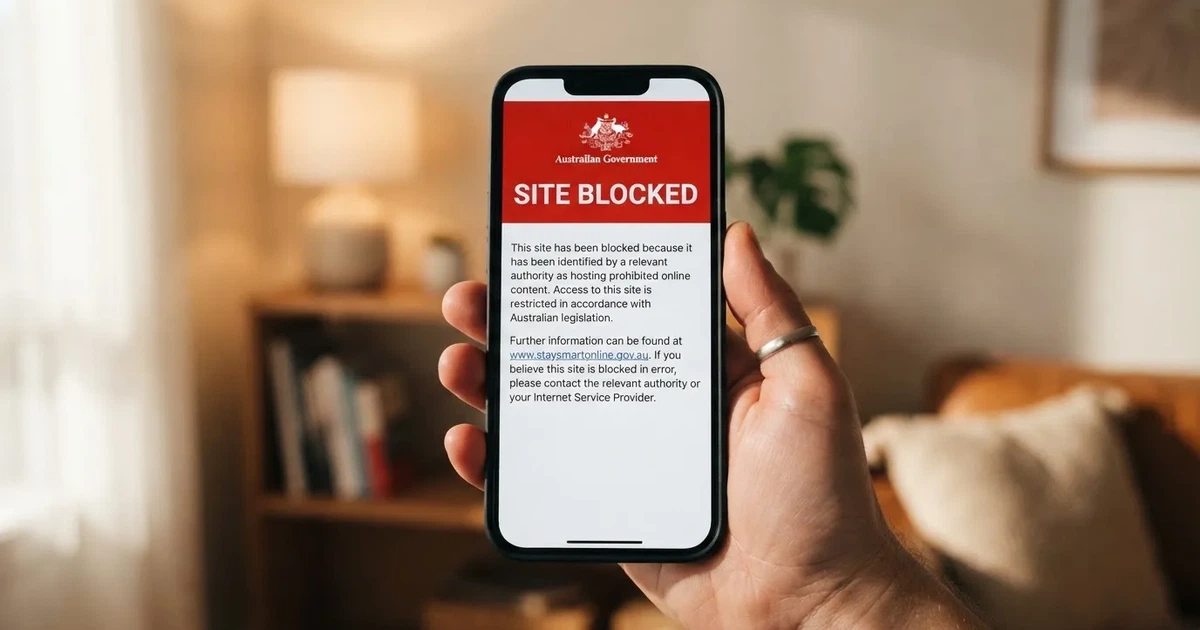
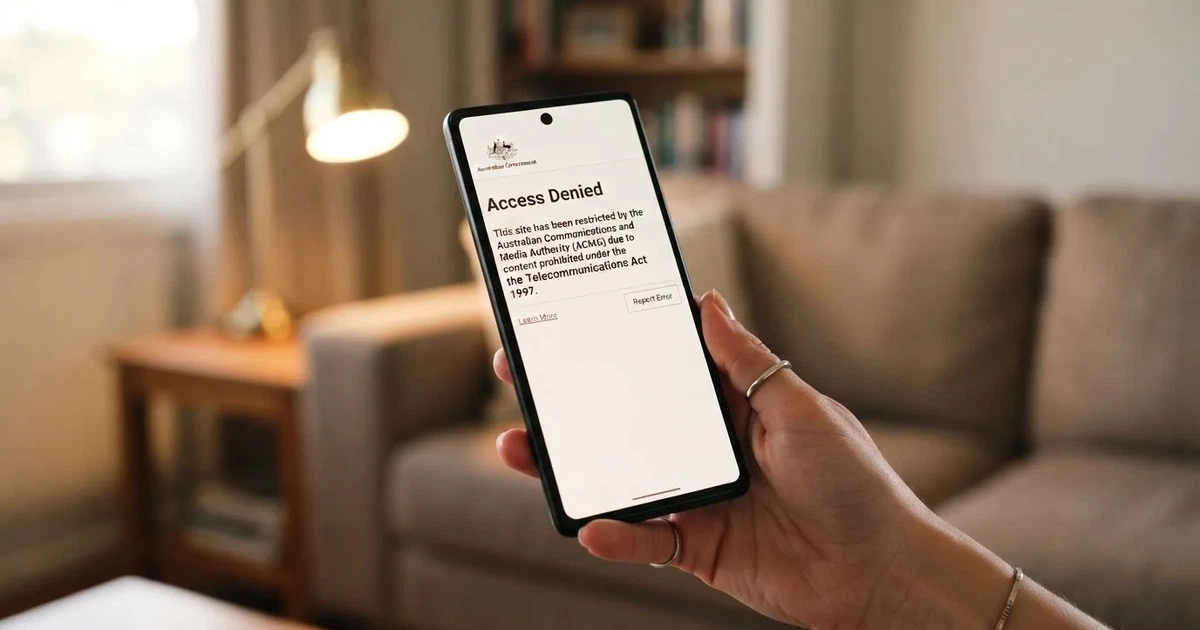
The ACMA’s enforcement has two prongs. It issues formal warnings to operators it judges to be providing prohibited services to Australians; and it asks Australian internet service providers to block illegal sites at the network level. As reported in June 2026, a total of 1,751 illegal gambling and affiliate marketing websites had been blocked since the first blocking request in November 2019. More than 230 unlicensed gambling services had left the Australian market since enforcement was strengthened in 2017.

The rate at which sites are being added to the block list is the number that has changed shape over the years. From the first blocking request in November 2019 to the round reported on 26 June 2026, the ACMA had added 1,751 sites to the block list — a band of roughly 250 to 280 sites a year, with the latest single round alone adding 12: 7Signs, ChromaBet, Donbet, Duospin, Freshbet, Slots Gem, Jacks Club, Lucky Start, Pointsbetz.com, Spinrise, Vinyl Casino and Wildsino. That arithmetic is an estimate, not a contract; some rounds are smaller, some larger, and a single brand sometimes surfaces under several domains. The directional read is the useful one: the block list is not closing in on the offshore market, it is being extended against it at a fairly steady clip, and any operator an Australian reader meets today has either not yet been noticed by the ACMA, has been noticed and is the subject of a current action, or has already been blocked under a previous domain.
The second prong is the formal warning. A formal warning is published on the ACMA website and identifies the operator behind a brand; it is the regulator’s name attached to a specific site. The roster of warnings over the last four years reads like a cross-section of the offshore market: Dama N.V. was warned in May 2022 over six brands, then again in March 2025 over Woo Casino and in May 2025 over Spirit Casino. In February 2025 the ACMA named EOD Code SRL over Instant Casino. In April 2025 it named Sterplay Holding Ltd over Casino Intense. In July 2025 it warned Bamboo Media over Ignition Casino and Consolutetish S.R.L. over National Casino and Bizzo Casino, the latter already warned back in 2022 under a different operator. In March 2026 Pulsup Ltd was named over Rocketplay.com.au, and in April 2026 Ryker B.V. was named over Jackbit and CasinOK. Hollycorn N.V. was warned over Sky Crown and Blue Leo in a September 2022 publication still standing on the register.
The pattern underneath the dates is that operators rotate. A warning issued to one company does not stop a brand reappearing under another; Dama N.V., TechSolutions Group, Consolutetish S.R.L. and Hollycorn N.V. are different registered entities, and several of the brand names above have been through more than one. The ACMA’s lever is against the operator it can name and serve, not against the brand the player sees.
What is legal in Australia, and where the money that is spent on gambling actually goes
Australia runs a deliberately narrow version of legal online gambling. What is licensable, in practice, is wagering on races and sport placed before the event, lotteries and keno. Online casino games and online pokies are not licensable in any state or territory, and in-play betting on sport — placing a bet after the event has started — is prohibited as well.
The body that regulates most of the online bookmaking that does exist is the Northern Territory Racing and Wagering Commission, which regulates 52 of Australia’s online bookmakers, including Sportsbet, Bet365 and Ladbrokes. The Commission has no full-time staff and meets once a month in Darwin — a structural detail that surfaces every few years when a reform bill is put forward, including an NT bill reported in April 2026.
What the IGA does not prohibit is the land-based side. Australia’s casinos are licensed state by state — Crown Melbourne and Crown Perth under Victorian and Western Australian regimes respectively, The Star in Sydney and The Star Gold Coast under NSW and Queensland regimes, plus smaller venues in Tasmania, the ACT and the Northern Territory. These venues run pokies, table games and the full casino floor under Australian licences. For an Australian resident who wants to play casino games lawfully, the licensed venue is the lawful answer; the offshore site is not an alternative to it, it is a different category of thing.
H2 Gambling Capital’s 2025 report estimates that Australians lose about A$3.9 billion a year to illegal gambling sites, and that the share of gambling going through legal channels fell from 74% in 2021 to 64%. That figure is the closest thing in the public record to a measure of how much of what is searched for and clicked through has ended up at an offshore site rather than a licensed one. It is also an estimate, not an audited number; H2 is an industry forecaster, not a regulator.
Responsible gambling tools that work — and what does not reach an offshore site
The Australian responsible-gambling framework has three parts worth knowing about, and an offshore site sits outside all three.
BetStop, the National Self-Exclusion Register, has been live since August 2023. A person who registers with BetStop is excluded from every Australian-licensed online and phone wagering service at once. The exclusion is the strong version: it cannot be lifted during the chosen period, and the minimum exclusion is three months. What BetStop does not do is reach an offshore casino. The register binds Australian-licensed operators only; the moment an account is opened at an offshore site, BetStop is no longer in the loop. For a person trying to stop, this is the practical reason an offshore account undermines the very exclusion the Australian framework was built to provide.
The National Gambling Helpline is 1800 858 858, free and 24/7, with web chat at Gambling Help Online. The helpline is for any Australian whose gambling has become a problem, regardless of where they have been playing; the advice it gives is Australian advice, in the Australian context, and it points back into the licensed system.
The third leg is the bank-level gambling block. ANZ, Commonwealth Bank and Westpac each let a customer turn on a card-level block that refuses authorisation of transactions registered under the merchant category code for betting and casino gambling. ANZ’s block, once activated, extends to gambling transactions routed through a linked digital wallet such as Apple Pay on an eligible card; the bank warns that not all gambling transactions will be blocked and some non-gambling transactions might be blocked in error, and removing the block requires a 48-hour cooling-off period. Commonwealth Bank’s CommBank app offers a gambling lock with the same caveat. Westpac’s block works at the card level on eligible personal credit and debit cards. These tools are useful, and they are blunt: they do not know which offshore brand is on the other side of a transaction, they only know the merchant category the merchant filed under, so a brand that miscategorises itself slips past.
How the Australian payments stack treats an offshore deposit
A licensed Australian wagering service cannot accept credit cards, credit-related products or digital currency as payment — a restriction in force since 11 June 2024, with penalties of up to A$247,500 for the operator if it does. The legal deposit routes for licensed wagering are debit card, bank transfer, PayID and Osko, and BPAY. An offshore casino is not bound by any of this and will take whatever it likes; a request for a credit card or a crypto deposit is the operator’s own choice, not an Australian rule.
For an Australian punter deciding how to fund an account, the practical difference is that a credit-card deposit at an offshore site is not protected by the Australian prohibition, because the prohibition is on the operator accepting it for licensed wagering, not on the cardholder handing one over. Cardholders can ask their bank for a chargeback if a withdrawal is refused, and the bank’s gambling block is the more reliable line of defence than the chargeback process.
Apple Pay, Google Pay and Samsung Pay together account for around 45% of all card payments in Australia by number as of the end of 2025. A digital wallet is not a payment method in its own right; it is a way of presenting an underlying card to a terminal, and the underlying card’s rules apply. The bank-level gambling block extends to a digital wallet on an eligible card where the bank has built it in — ANZ’s does. Apple itself charges no consumer fee for Apple Pay; any surcharge on an Apple Pay transaction is the merchant’s own card-processing fee, not Apple’s. Transaction limits and PIN requirements are set by the card issuer or merchant, not by Apple.
PayID and Osko are the local instant-transfer layer. A bank transfer between participating Australian banks arrives in under a minute, 24/7 including weekends, whether addressed by BSB and account number or by a PayID. Over 100 Australian financial institutions support PayID-based instant transfers; more than 25 million PayID identifiers were registered on the New Payments Platform as of April 2025; the New Payments Platform itself became accessible to the public on 13 February 2018 and is owned by New Payments Platform Australia Ltd, whose shareholders include the Reserve Bank of Australia and the major banks. Participants must keep the platform’s monthly outages to no more than two minutes. Paying to a PayID shows the name of the account holder before the transfer is sent — Australian Payments Plus warns that being asked to transfer money to a PayID on an illegal gambling site almost certainly means a scam site.
BPAY has been around since 18 November 1997, is available in the online banking of over 140 banks and financial institutions and is offered by over 95,000 businesses. It is a bill-payment service: the payer enters the Biller Code and the Customer Reference Number printed on the bill. It is run by Australian Payments Plus, the same operator as PayID and Osko; BPAY, eftpos and NPP Australia were merged under AP+ in a 2021 ACCC authorisation. BPAY is the right tool for a licensed wagering deposit; it is not how an offshore casino is normally funded.
AUSTRAC’s threshold-transaction-report rule, which requires reporting of transfers of A$10,000 or more, applies only to physical cash. Ordinary electronic bank transfers are not subject to that per-transaction reporting, regardless of amount — a fact that surprises some readers and is worth stating plainly.
The eleven brands the ACMA has named, side by side
The table below lists eleven brands the ACMA has named in formal warnings since 2022. Each row is a brand the regulator has decided was providing prohibited services to Australians; the columns are what the regulator said, who was behind it, and what the support picture looks like across the other Australian-facing services the brand touched. This is not a ranking and not a recommendation — every brand here has been the subject of an ACMA action, and an Australian reader’s relationship with any of them is shaped by that fact.
| Brand | ACMA action and date | Operator named by the ACMA | Subject support |
|---|---|---|---|
| RocketPlay | Formal warning, March 2026; earlier warning under Dama N.V., May 2022 | Pulsup Ltd (Rocketplay.com.au) | Australian-facing listings only; no Australian licence |
| Level Up Casino | Formal warning, May 2022 | Dama N.V. | Australian-facing listings only; no Australian licence |
| Woo Casino | Formal warning, March 2025 | Dama N.V. | — |
| Spirit Casino | Formal warning, May 2025 | Dama N.V. | — |
| National Casino | Formal warning, July 2025 | Consolutetish S.R.L. | Australian-facing listings only; no Australian licence |
| Bizzo Casino | Formal warning, July 2025 (Consolutetish S.R.L.); earlier warning, 2022 (TechSolutions) | Consolutetish S.R.L. | Australian-facing listings only; no Australian licence |
| Ignition Casino | Formal warning, July 2025 | Bamboo Media | — |
| Instant Casino | Formal warning, February 2025 | EOD Code SRL | Australian-facing listings only; no Australian licence |
| Jackbit | Formal warning, April 2026 | Ryker B.V. | — |
| Casino Intense | Formal warning, April 2025 | Sterplay Holding Ltd | Australian-facing listings only; no Australian licence |
| Sky Crown | Formal warning, September 2022 | Hollycorn N.V. | — |
The spread across the table is the story. Six of the eleven brands were warned under Dama N.V. or its successor operators; the rest sit across a long tail of small Curacao-registered companies, several of them one-brand shells. The dates cluster in 2025 and 2026 — eight of the eleven actions are from those two years — which tracks the ACMA’s stepped-up enforcement under the amended IGA rather than a sudden burst of new brands. Several brands reappear under different operators, the clearest case being Bizzo Casino, warned under TechSolutions in 2022 and under Consolutetish S.R.L. in 2025; a warning to one company does not stop the brand reappearing under another.
The subject-support column is where the machine-side tokens in the research land. Four brands — National Casino, Casino Intense, Instant Casino and Bizzo Casino — appear in the Australian-facing payment and self-exclusion listings the regulator publishes; the remaining seven do not appear there at all. None of the eleven is connected to BetStop, because BetStop binds Australian-licensed operators only, and none of them holds an Australian licence of any kind.
Brand-by-brand: what the regulator has said, and what that leaves a reader
The write-ups below summarise the ACMA’s published position on each brand. No bonus terms are included: the only sources for those were affiliate marketing pages, and a number written by the operator’s own affiliate is not a figure an Australian reader can rely on.
RocketPlay
The ACMA published a formal warning over Rocketplay.com.au in March 2026, naming Pulsup Ltd as the operator. The brand had already been the subject of a 2022 warning when it ran under Dama N.V., so this is a brand that has changed operators and been warned again. The current Australian-facing listings only reference it through affiliate marketing channels; there is no Australian licence. Verdict: a brand the regulator has had to warn twice under two different operators, and the second warning is the one in force today.
Level Up Casino
The May 2022 formal warning named Dama N.V. as the operator of Level Up, alongside five other brands warned the same week. Dama N.V. is the operator behind more of the names on this list than any other single company, and that recurs across the brands below. Australian-facing listings carry the brand through affiliate channels only. Verdict: one of the older entries on the ACMA’s warning list, still surfacing in Australian-facing traffic, with no licence in this jurisdiction.
Woo Casino
The ACMA warned Dama N.V. over Woo Casino in March 2025, two and a half years after the same operator’s first round of warnings. The gap is the operational picture: a brand can be warned, carry on, and be warned again. Woo Casino appears in none of the regulator’s local listings. Verdict: the case for taking a re-warning as a signal rather than a one-off.
Spirit Casino
The May 2025 warning named Dama N.V. as the operator of Spirit Casino — another brand in the same operator’s portfolio, warned alongside Woo Casino two months earlier. As with Woo Casino, no Australian-facing listings surface Spirit Casino. Verdict: a brand to read alongside Woo Casino, because the regulator’s behaviour is the same and the operator is the same.
National Casino
The July 2025 warning named Consolutetish S.R.L. as the operator of National Casino, in the same enforcement round as Bizzo Casino. National Casino is one of the few brands on this list that does surface in Australian-facing payments and self-exclusion listings — a sign that the brand had been operating visibly enough in Australia to register on the local infrastructure before the warning landed. Verdict: the clearest example of a brand running visible Australian-facing operations and being named for it.
Bizzo Casino
The July 2025 warning named Consolutetish S.R.L. as the operator of Bizzo Casino, and the ACMA’s earlier register already carries a 2022 warning to TechSolutions (CY) Group Limited and TechSolutions Group N.V. over the same brand. A brand warned under two different operators, three years apart, is the textbook definition of operator rotation. Australian-facing listings carry the brand through affiliate channels. Verdict: the brand to watch if the question is how durable an ACMA warning actually is.
Ignition Casino
The July 2025 warning named Bamboo Media as the operator of Ignition Casino. Ignition does not surface in the Australian-facing payment or self-exclusion listings — its Australian footprint, to the extent it has one, is through the affiliate channel. Verdict: a brand the regulator named in the same round as National Casino and Bizzo Casino, with no local infrastructure presence.
Instant Casino
The February 2025 warning named EOD Code SRL as the operator of Instant Casino. The brand does surface in Australian-facing payment listings, which is the more unusual case for a brand named this early in the enforcement cycle. Verdict: one of the brands that had been operating visibly in Australia long enough to register on local payment rails before the warning landed.
Jackbit
The April 2026 warning named Ryker B.V. as the operator of Jackbit, alongside CasinOK. Jackbit does not surface in the Australian-facing payment or self-exclusion listings. Verdict: a brand warned under a small Curacao-registered operator, with no apparent Australian-facing listings presence.
Casino Intense
The April 2025 warning named Sterplay Holding Ltd as the operator of Casino Intense. The brand does surface in Australian-facing payment and self-exclusion listings. Verdict: another brand whose Australian footprint was visible enough to register locally before the regulator named it.
Sky Crown
The ACMA’s September 2022 formal warning publication named Hollycorn N.V. as the operator of Sky Crown and Blue Leo — the older entry on this list, and the one that fixes the IGA’s earlier enforcement pattern. Sky Crown does not surface in the Australian-facing payment or self-exclusion listings. Verdict: the brand that anchors the timeline, since the Hollycorn warning is the earliest action on this list and the operator is still being named.
The interactive gambling reforms in force, and the one on the way
The Interactive Gambling Act 2001 was amended in 2017 to strengthen the prohibition on providing online casino games and in-play betting to Australians, and amended again in 2023 to ban credit cards and credit-related products — including linked digital wallets where the credit is being drawn on — as payment for licensed online wagering, with that credit-card prohibition in force from 11 June 2024 and penalties of up to A$247,500 for operators that breach it.
The Interactive Gambling Amendment (Gambling Reform) Bill 2026 passed Parliament on 19 August 2026 and its advertising and inducement measures commence on 1 January 2027. That is a law with a start date, not a law in force on a 2026 page. For an Australian reader, what changes from 1 January 2027 is the advertising and inducement environment around licensed wagering — the offshore side, which is already prohibited, is not the target of that bill and will not be brought into the Australian framework by it.
What an Australian reader actually has
A useful summary is a short one. Online casino games and online pokies cannot be lawfully offered to anyone in Australia; the ACMA enforces that prohibition by warning named operators and by asking ISPs to block illegal sites; the running total since 2019 is more than 1,750 sites blocked, with another 12 added in the round reported on 26 June 2026; the formal-warning list keeps growing, with eight of the eleven brands in the table above warned in 2025 or 2026. The licensed alternatives are wagering on races and sport before the event, lotteries, keno, and the licensed land-based casino venues in each state. The bank-level gambling block, BetStop, and the National Gambling Helpline are the Australian responsible-gambling tools; an offshore account is not connected to any of them.
For tax: gambling winnings of a recreational player are not assessable income under section 6-5 of the ITAA 1997, and losses are not deductible — except where the person is carrying on a business of gambling, which is the ATO’s framing and the right place to confirm it.
Frequently asked questions
What does international casino mean, as distinct from an Australian-licensed one?
An international casino is a casino site licensed somewhere other than Australia — most commonly Curacao, Anjouan or Malta. An Australian-licensed casino does not exist as an online category, because online casino games cannot be licensed in any state or territory. The distinction is not about the word on the licence but about which country’s consumer law, complaints body and self-exclusion register the operator is connected to.
Can an international online casino legally accept players located in Australia?
No. Under the Interactive Gambling Act 2001, as strengthened by the 2017 amendments, it is an offence to provide online casino games, online pokies or in-play betting to a person in Australia. The IGA targets the provider, not the individual player, but the site is operating outside Australian law. The ACMA enforces this by issuing formal warnings to operators and by asking ISPs to block sites.
Does an overseas gambling licence carry any weight for an Australian player?
It carries whatever the licence issuer’s consumer-protection framework provides, in the country that issued it. It does not connect the player to BetStop, to an Australian complaints body, or to Australian consumer law on withdrawals. An Australian player’s practical recourse against an offshore operator runs through the operator’s own licence terms and through the operator’s home regulator — not through any Australian body.
What protections, if any, apply to an Australian using an international casino site?
The protection that does apply is on the Australian side: the bank-level gambling block at ANZ, Commonwealth Bank or Westpac can be set to refuse gambling merchant transactions; a chargeback can be requested through the card issuer if a withdrawal is refused; and AUSTRAC and the Australian Federal Police have jurisdiction over fraud, regardless of where the operator sits. The protection that does not apply is the Australian-licensed framework — BetStop, the Australian complaints process, the credit-card prohibition — none of these reach an offshore site.
Are international land-based casino resorts different from the international online sites people search for?
Yes, in the relevant sense for an Australian reader. The land-based casino resorts in Macau, Singapore and elsewhere are physical venues that welcome visitors, including Australians. The international online casino sites that turn up in a search are offshore-licensed gambling services, which is the category the IGA prohibits from being offered to people in Australia. The words are similar; the legal status is not.
Who can an Australian contact if an international casino site will not pay out?
The first port of call is the card issuer or bank, for a chargeback on the deposit if it was made by card. The second is the regulator named on the site’s licence, usually the Curacao Gaming Authority or Anjouan licensing body, via the operator’s own complaint route. The Australian body to contact for advice is the National Gambling Helpline on 1800 858 858, free and 24/7, with web chat at Gambling Help Online; the helpline cannot recover a balance, it can point a person toward the Australian supports that do apply.
Written by the editors at Casino Sign Up Hub.