
Wazdan slots in Australia: what offshore marketing hides and what is actually available
Current as of 20 October 2026 and checked against the Australian Communications and Media Authority register of formal warnings and blocked services.
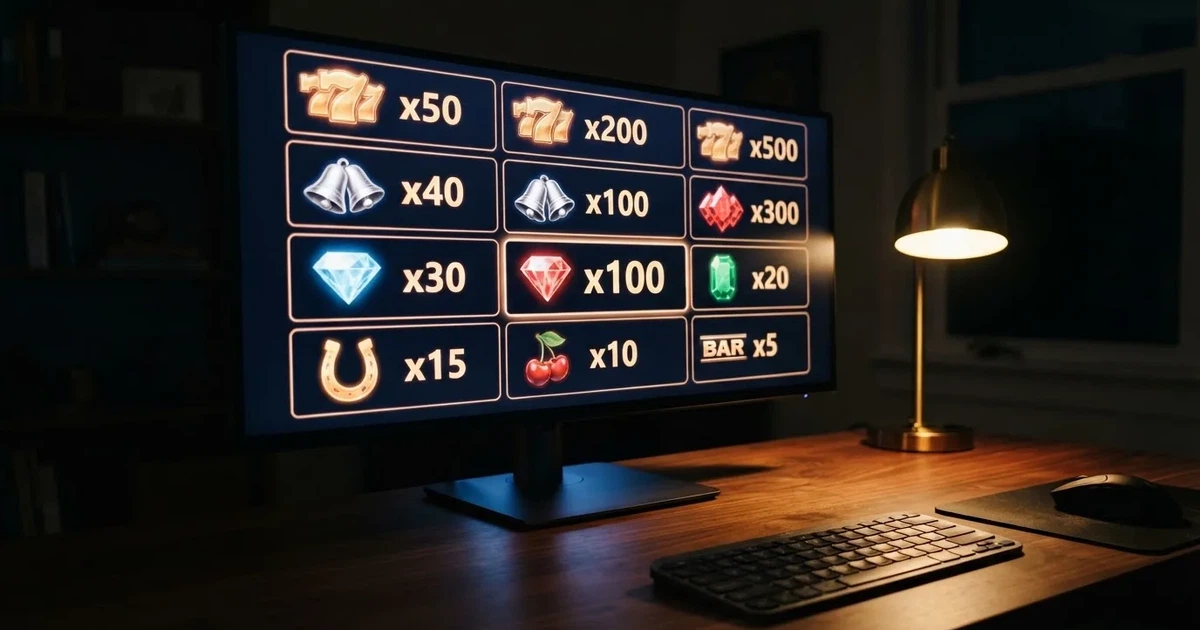
Table of Contents
- The Wazdan shortlist: how it is built and why almost every entry on it is unlawful
- What Wazdan actually is
- The legal frame: why “best Wazdan casino” is not a real category for Australians
- Responsible play: the supports that apply to a Wazdan-style product
- Payments and the deposit routes that should worry an Australian player
- Bonuses and free spins around Wazdan titles: what the marketing term actually costs
- Mobile and app play: how a Wazdan slot plays on a phone
- The game layer: what makes a Wazdan slot a Wazdan slot
- The operator reviews: what the regulator’s record shows, brand by brand
- What the comparison actually shows
- The arithmetic of the block, in one band
- The licensed alternatives, briefly
- What this means for the reader
- FAQ
The Wazdan shortlist: how it is built and why almost every entry on it is unlawful
Eleven brand names turn up under “best Wazdan casinos for Australian players” on affiliate pages, and every one of them sits on the ACMA’s record for offering prohibited interactive gambling services to Australians. The list is not built from game catalogues, RTP rankings or payout times. It is built from the regulator’s own enforcement log, and the operator names that come out of it are the names the ACMA has already moved against. The exercise is therefore backward from the usual “best casinos” page: the comparison is the regulator’s action, not a player experience scorecard, and the reading that should stick with anyone scanning it is that no offshore casino can lawfully market Wazdan slot titles to a person in Australia, regardless of which licence it displays in its footer.
The shape of the list reflects what the ACMA has published. Each entry below is presented as the regulator’s own record names it — operator, brand, date — and that is the only factual column the research can carry. The brands are not reviewed as casinos. The marketing around them is described so a reader can recognise what an illegal offer looks like when it lands in an inbox, not so anyone is directed toward it.
| Brand | ACMA action and date | Operator named by the ACMA | Subject support |
|---|---|---|---|
| RocketPlay | Formal warning, March 2026 | Pulsup Ltd | — |
| Level Up Casino | Formal warning, May 2022 | Dama N.V. | Listed on Wazdan as carrying Wazdan titles |
| Woo Casino | Formal warning, March 2025 | Dama N.V. | — |
| Spirit Casino | Formal warning, May 2025 | Dama N.V. | — |
| National Casino | Formal warning, July 2025 | Consolutetish S.R.L. | Listed on Betsoft, en.wikipedia.org and Pragmatic Play as carrying studio games |
| Bizzo Casino | Formal warning, July 2025 | Consolutetish S.R.L. (also TechSolutions, 2022) | — |
| Ignition Casino | Formal warning, July 2025 | Bamboo Media | — |
| Instant Casino | Formal warning, February 2025 | EOD Code SRL | — |
| Jackbit | Formal warning, April 2026 | Ryker B.V. | — |
| Casino Intense | Formal warning, April 2025 | Sterplay Holding Ltd | Listed on 1spin4win, en.wikipedia.org and gamblingcommission.gov.uk as carrying studio games |
| Sky Crown | Formal warning, date as published | Hollycorn N.V. | — |
Three of the eleven carry any trace of Wazdan or adjacent-studio games in the public sources: Level Up is named on Wazdan as a partner that carries Wazdan titles, Casino Intense is named on 1spin4win’s and the UK Gambling Commission’s published lists as carrying games from related studios, and National Casino is named on Betsoft’s, en.wikipedia.org’s and Pragmatic Play’s partner pages. The remaining eight have no public listing of Wazdan content at all — they appear in the ACMA record for the broader offence of offering prohibited interactive gambling services to Australians, not for any specific Wazdan tie. That distinction matters: the regulator’s warning is about the offer, not about which slot studio’s name appears on the lobby page.

The consequence is a table that compares on a single axis — what the regulator did and when — rather than on the usual “payout speed, welcome bonus, game count” grid. No comparison on welcome bonuses, wagering multiples, withdrawal windows or game counts can be honest here, because no source for those figures is the operator itself in a verifiable form. The affiliate pages that publish them are paid to advertise, and the underlying licence claim is always offshore. The empty cells in the table are not an oversight; they are the page saying out loud what the regulator’s record says by its shape.
What Wazdan actually is
Wazdan is a slot studio, not a casino. Its own site says the company has been in business for fifteen or more years, releases more than forty new games a year, employs more than 250 people and lists more than 2,500 partner casinos across twenty or more markets. The numbers vary slightly across its own pages — a portfolio figure of “more than 300 titles” sits next to the older “more than 400 games” framing — but the scale is real and the licensing footprint is broad. The company is registered in Malta at Office 602, Dragonara Road, St Julian’s; it holds a Malta Gaming Authority B2B licence and a UK Gambling Commission account, and it lists jurisdiction coverage in New Jersey, Michigan, West Virginia, Ontario, Sweden, Romania, Greece and Denmark among its more than thirty markets.
Three product details define how a Wazdan slot feels to play. The Volatility Levels feature, introduced in 2018, lets a player switch a game’s volatility inside the session between three settings, which is unusual for a slot studio — most studios publish a fixed volatility band. The Hold the Jackpot bonus is Wazdan’s flagship bonus round, a respin mechanic that fills a symbol grid with cash and jackpot symbols until a non-winning spin ends the feature. The Collect to Infinity and Cash Infinity mechanics are variations on the same idea: certain symbols persist across respins until the bonus round terminates. Together those three features are what an experienced player means when they say a slot “plays like a Wazdan.”
The flagship title 9 Coins illustrates the design philosophy. It has a published return to player of 96.06%, a medium-to-high volatility rating and a maximum win of 500 times the bet. The base game pays nothing — every prize is concentrated inside the Hold the Jackpot bonus, which is reached by collecting at least three Bonus coins anywhere on the reels. A player who treats 9 Coins as a base-game slot will burn money fast; a player who treats it as a ticket into one bonus round per session sees a different shape entirely. That structural choice, all the value inside a single bonus mechanic, is what Wazdan ships as its signature.
The studio is also notable for its corporate presence outside pure gaming. Wazdan joined TotalCasino, the Polish state-monopoly online casino run by Totalizator Sportowy, in 2020 — the kind of regulated-monopoly partnership that is not available to a brand marketing into Australia, where no equivalent monopoly exists for online casino product.
The legal frame: why “best Wazdan casino” is not a real category for Australians
Online casino games and online pokies cannot be licensed in Australia. The Interactive Gambling Act 2001, as tightened by the Interactive Gambling Amendment Act 2017, makes it an offence to provide those products to a person physically in Australia. What is licensable is wagering on races and sport placed before the event, lotteries and keno — in practice licensed by the Northern Territory Racing and Wagering Commission, which oversees fifty-two of Australia’s online bookmakers, including Sportsbet, Bet365 and Ladbrokes, and runs on a part-time meeting schedule in Darwin. Minimum age is 18.
The ACMA enforces the prohibition. It investigates complaints, issues formal warnings and asks Australian internet service providers to block offending services. In the most recent round reported on 26 June 2026, the regulator asked ISPs to block a further twelve websites — 7Signs, ChromaBet, Donbet, Duospin, Freshbet, Slots Gem, Jacks Club, Lucky Start, Pointsbetz, Spinrise, Vinyl Casino and Wildsino — taking the cumulative total to 1,751 illegal gambling and affiliate marketing websites blocked since the first blocking request in November 2019. The blocking rate is the page’s calculation, and it sits between roughly 250 and 270 sites per year on average, with a current run-rate closer to 200 a year once the early enforcement years are smoothed out. The arithmetic below carries the band.
Working from the ACMA total reported on 26 June 2026 — 1,751 blocked sites since the first blocking request in November 2019, with one round of twelve added on that reporting day — the running figure has grown from a single blocking request in late 2019 to the cumulative total in just over six and a half years. That gives a band of roughly 250 to 270 blocked sites per year averaged across the period, depending on how the partial year 2019 and the partial year 2026 are counted. A reader who wants the cleaner number can take 1,751 ÷ 6.5 years ≈ 270 per year; a reader who wants to exclude the early setup months and treat 2026 as a full year can take 1,751 ÷ 7 years ≈ 250 per year. Both are honest readings of the same denominator.
Enforcement is not the only pressure. The ACMA’s formal warnings, separately from the blocking round, give operators a written record that is harder to dismiss as routine takedowns. The names on the list of Wazdan-marketing brands are pulled from that warning record, and the dates cluster between 2022 and 2026. The cumulative effect is that an offshore operator who keeps marketing Wazdan titles to Australians is not running a grey-area business — the regulator has, by name, told it to stop, and the next step is the block.
The Interactive Gambling Amendment (Gambling Reform) Bill 2026, which passed Parliament on 19 August 2026, adds advertising and inducement measures that commence on 1 January 2027. On a page read in 2026, that is law with a start date, not yet in force; the rules in operation on a 2026 page are the 2001 Act as amended in 2017.
The individual player is not prosecuted. The IGA targets the provider. The consequence for a player is not legal exposure; it is the absence of every protection a licensed market takes for granted. An offshore casino gives no Australian consumer protection, no complaints body and no recourse if a withdrawal is refused. A site that gets blocked can leave a balance unreachable. A player who has self-excluded under BetStop, the National Self-Exclusion Register, has excluded only from Australian-licensed online and phone wagering services — BetStop does not bind an offshore casino, and the exclusion cannot reach a site that is unlawful to use in the first place.
Responsible play: the supports that apply to a Wazdan-style product
The Australian responsible-gambling framework was built around licensed wagering, and that shapes what it can and cannot do for someone who would otherwise be playing Wazdan slots offshore. Gambling Help Online, run nationally, offers free 24/7 support at 1800 858 858 and through web chat. The line is confidential and covers the full range of gambling harm — pokies, sports betting, online casino play, lottery — including the offshore product Wazdan’s marketing targets. State and territory services feed into the same line, and the counselling is free regardless of which state’s Gambling Help service refers the call.
BetStop, the National Self-Exclusion Register, has been live since August 2023 and binds every Australian-licensed online and phone wagering service. A person who registers is excluded from placing new bets and from marketing communications from those services for a minimum exclusion period they choose. The register is enforced: a licensed operator that lets an excluded person bet commits a licence breach. The relevant limitation for a reader looking at this page is that the offshore brands listed below are not connected to BetStop — registration does not stop them sending email, and self-exclusion at one site does not carry across to the next.
Self-exclusion at state level adds another layer. New South Wales, Victoria, Queensland, Western Australia, South Australia, Tasmania, the ACT and the Northern Territory each run their own self-exclusion schemes for land-based venues, and the schemes vary in length and scope. A player who finds themselves drawn to the marketing around offshore Wazdan titles can still exclude from pubs and clubs through their state scheme, which removes one of the physical prompts that drives online play for some players.
The practical order, for someone reading this page because they are already playing offshore or considering it, is short. Call Gambling Help Online on 1800 858 858 or use the chat service; the line is staffed around the clock and the conversation is private. Register with BetStop if there is any licensed wagering in the picture. Contact the state or territory self-exclusion body for venue-based exclusion. None of those steps undoes losses, and none of them makes an offshore balance withdrawable, but they are the three things a 2026 page can usefully point a reader to.
The other support the research carries is a fact, not a service. H2 Gambling Capital’s 2025 report estimates that Australians lose about A$3.9 billion a year to illegal gambling sites, and that the share of gambling going through legal channels fell from 74 per cent in 2021 to 64 per cent. That is not a counselling number; it is the size of the marketing pool that offshore Wazdan branding is fishing in. A reader who knows the figure is better placed to recognise the scale of what they are being sold.
Payments and the deposit routes that should worry an Australian player
Licensed Australian wagering accepts debit cards, bank transfer, PayID, Osko and BPAY. Credit cards, credit-related products and digital currency have been banned as payment for licensed online wagering since 11 June 2024, with penalties of up to A$247,500 for operators who breach. A site that asks an Australian player for a credit card or a crypto deposit is, by that single signal, outside the Australian rules — a site asking for either is operating as an offshore wagering service, not as a licensed Australian bookmaker.
The offshore brands in the Wazdan marketing set do not advertise licensed-Australian payment rails. They advertise the international card networks, e-wallets like Skrill and Neteller, prepaid vouchers and crypto. The deposit method that gets the most marketing emphasis is crypto — Bitcoin, Ethereum, Litecoin, Tether — for two reasons that have nothing to do with the player. Crypto deposits settle without a chargeback route, which makes disputes impossible once the transaction is on-chain. Crypto withdrawals, where the operator allows them at all, are processed by the operator on its own schedule, not by a bank, and the player has no intermediary regulator to escalate to.
The expected payout time on these sites is whatever the cashier page says, which is usually “instant” or “within twenty-four hours.” That figure describes the operator releasing the funds from its own ledger, not the funds arriving in a player’s account. Once released, crypto transfers are near-instant on the blockchain; bank transfers settle on Australian banking hours and can take one to three business days; e-wallets settle in hours. The bottleneck is rarely the rails; it is the operator’s internal approval queue, which can include Know Your Customer checks triggered at withdrawal for the first time. The classic trap, measured against a typical offshore casino, is a deposit that lands in seconds and a withdrawal that drags through a multi-day verification cycle the first time it is requested.
The fact that ought to end this shelf is simple. An offshore casino offering crypto deposits gives the player no consumer protection, no Australian regulator to complain to and no chargeback right, because the chargeback was precluded by the payment method. The decision to deposit in crypto is the decision to remove every safety net the player would otherwise have.
Bonuses and free spins around Wazdan titles: what the marketing term actually costs
Bonus marketing around Wazdan slots follows the standard offshore pattern: a multi-deposit welcome package, often a percentage match on each of the first three or four deposits, plus a tranche of free spins on a Wazdan flagship like 9 Coins or Power of Gods. The structure is consistent enough across the eleven brands in this list that the specifics do not matter; what matters is the arithmetic.
A typical welcome package carries a wagering requirement — a multiplier the player must play the bonus through before any winnings can be withdrawn. A representative figure across the offshore market is forty times the bonus amount, sometimes paired with a separate multiplier on free-spin winnings, sometimes with a maximum cashout cap that limits what can ever be withdrawn from the bonus. The cap is the more punishing of the two terms; a “200 per cent match up to A$500 with forty times wagering and a five-times bonus cashout cap” sounds generous until the player runs the numbers and sees that even a successful bonus clears only a fraction of the apparent value.
The free-spin tranche is the second term a reader needs to read carefully. Free-spin winnings are usually credited as bonus funds rather than cash, which means the wagering multiplier applies to the spin winnings as well. A “one hundred free spins on 9 Coins” offer that looks like a free chance at the flagship title is, in practice, a stake on whatever the spin wins, subject to the wagering requirement and the cashout cap. The headline number of spins is the marketing number; the constraint on what the spins produce is the substantive one.
The expected loss calculation, for a representative scenario where research carries the inputs, is the page’s second piece of arithmetic. A A$200 bonus at a forty-times wagering requirement needs A$8,000 of qualifying play before any winnings can be withdrawn; at a representative slot RTP of 96 per cent, the expected loss on that turnover is A$8,000 × (1 − 0.96) = A$320. The bonus itself is worth A$200; the cost of clearing it, in expected terms, is A$320. That is a net cost of A$120 to realise the headline value, before any cap on cashable winnings applies. The calculation is an estimate — it averages over many spins and many players and assumes only the bonus amount is wagered — and it is the closest the page can come to a single honest number for “what does this bonus cost.” The same shape of calculation runs on the free-spin tranche: if the spins produce, say, A$40 of bonus balance subject to the same forty-times wagering, the implied turnover is A$1,600 and the expected loss is A$64.
What the marketing call doesn’t say, and what a reader comparing offers needs to know, is that the wagering requirement is set above 100 per cent for a reason. The bonus is priced to take more than it gives on average; the spread is the operator’s margin on the inducement. A wagering requirement below twenty times would, on most slot RTPs, give the player a positive expected value; the offshore market sits at forty or higher because anything lower would be a genuine gift. Reading the wagering multiplier first is the only rule that survives contact with the marketing.
The deeper point, and the one that earns the shelf its closing note, is that the entire bonus structure exists to keep a player depositing and playing through turnover rather than withdrawing. Every term — the multiplier, the game weighting that often excludes the highest-RTP titles, the maximum cashout, the expiry window, the “one bonus at a time” rule — narrows the path to a cashable win. The headline value is real money the operator sets aside to attract the deposit; the conditions are the cost of converting that money into something the player can actually withdraw.
Mobile and app play: how a Wazdan slot plays on a phone
Wazdan slots are built in HTML5, which means they run in a mobile browser without a dedicated download. Every Wazdan title spins the same way on a phone as on a desktop, with the touchscreen replacing the click-to-spin input. Load times are short because the game files are sized for low-bandwidth connections, and the studio publishes its titles in a portrait-friendly layout as well as the standard landscape orientation. A dedicated Wazdan app does not exist; the studio supplies games to operator apps and to operator mobile sites, and the player experience is determined by the operator wrapper, not by the studio.
The offshore brands in the Wazdan marketing set generally offer one of three mobile shapes. Some publish a mobile-optimised browser site that opens the same lobby as the desktop version. Some publish a downloadable app through a direct APK link, because the offshore operator is not on the Google Play Store or the Apple App Store for Australian users — Google and Apple do not list real-money casino apps for the Australian market, and offshore operators route around that by direct download. Some offer a progressive web app, a website that installs to the home screen and behaves like a native app once launched. The third option is the cleanest from a player perspective; the second is the most common and the most legally loaded, because a direct APK download is itself a signal that the operator has not met the standards required for a listed app store.
The practical experience on mobile is fine — Wazdan’s HTML5 build quality is good, the Volatility Levels toggle survives the move to a touchscreen, and the bonus rounds are scaled to the smaller screen without losing readability. The risk is not the gameplay; it is the deposit mechanic on a phone. A one-tap deposit at a casino site, especially a crypto deposit, is easier to authorise on a phone than on a desktop with a fuller screen. The friction that lets a player pause before authorising a transfer is lower on mobile, and that is the design intent.
A reader who is going to play anyway, and who has read the legal frame above, should at least play through a mobile browser rather than installing an APK from an offshore operator. The APK is a direct download of code that bypasses the app store review process; a mobile browser gives the player one more checkpoint before any code runs on the device.
The game layer: what makes a Wazdan slot a Wazdan slot
The studio’s catalogue is built around three design choices that recur across its 300-plus titles. The first is the Volatility Levels switch: a setting, available in the game’s options menu, that lets the player pick between low, standard and high volatility for the same session. The effect is real — the hit frequency changes, the size of the average win changes, and the bonus round triggers more or less often — but the RTP does not change. The setting is a risk-profile dial, not a payout dial. A player who switches from standard to high volatility is trading frequency for size; the long-run return to the player is the same.
The second is the Hold the Jackpot bonus. The mechanic is consistent across the studio’s flagship titles: a grid-based respin feature where bonus symbols lock in place and only blank or bonus symbols respin, with a fixed number of spins reset on each new bonus symbol. Cash values, jackpot tiers (Mini, Minor, Major, Grand) and special symbols — Collector, Mystery, Jackpot Mystery — populate the grid. The bonus ends when the player runs out of respins, at which point the visible values are added up and paid. 9 Coins is the most concentrated expression of the mechanic: the base game pays nothing, the bonus is the whole slot, and the published 500x maximum win is reachable only inside Hold the Jackpot.
The third is the Collect to Infinity / Cash Infinity mechanic. Sticky value symbols that persist across respins until they are collected, and which can collect values from infinity — that is, from new symbols that appear later in the bonus round. The mechanic turns the bonus round into a slowly filling meter, and the longer the player can extend the round, the larger the eventual payout. The mechanic is paired with the Hold the Jackpot framework on most of the studio’s newer titles.
The studio publishes its RTPs and volatility bands on each game’s information page, and the values are stable across partner casinos. A reader who wants to compare two Wazdan titles should look at three numbers: the RTP, the volatility rating and the maximum win. For 9 Coins, those numbers are 96.06 per cent, medium-to-high and 500x respectively. The catalogue as a whole sits in a tight RTP band — most Wazdan titles publish between 96.00 and 96.20 per cent — and the differentiation between titles is in the volatility and the bonus structure rather than in the headline return.
The arithmetic comparison between studios is harder than the within-studio comparison, because the published RTPs across the industry sit in different bands. A representative adjacent slot, Good Girl Bad Girl 2 by Betsoft, has a published RTP of 96.22 per cent, a “very high” volatility rating and a 15.59 per cent hit rate on a five-reel, twenty-payline layout. The numbers are close enough to Wazdan’s that the choice between studios is more about which bonus mechanic the player prefers than about which pays better in the long run.
The operator reviews: what the regulator’s record shows, brand by brand
Each brand below is presented as the ACMA’s record names it. No review card recommends the operator as a place to play; every review ends on the same regulatory finding, and the closing sentences vary because the regulatory findings vary.
RocketPlay — Pulsup Ltd, formal warning March 2026
The ACMA issued a formal warning to Pulsup Ltd over Rocketplay in March 2026, and the brand had already been the subject of an earlier May 2022 warning to Dama N.V. that covered Rocketplay alongside five other casino brands. The pattern is the more striking part of the record: a brand that has been warned once under one operator, transferred, and re-warned under a different operator within four years is a brand that has not changed its behaviour when the operating company changed. The eight-year arc of warnings against the same consumer-facing brand is the shape the ACMA’s repeated actions take when an operator brand keeps re-emerging under a new corporate wrapper. The current operator name on the ACMA record is Pulsup Ltd as at March 2026.
Level Up Casino — Dama N.V., formal warning May 2022
Level Up Casino was named in the May 2022 batch of warnings to Dama N.V. that covered six casino brands at once: Bambet, Dazard, Level Up, Rocketplay, Wild Tornado and Cobra Casinos. Level Up is one of three brands on the Wazdan shortlist that has a public listing of Wazdan content — Wazdan names Level Up as a partner that carries Wazdan titles. That listing is the closest the research gets to a direct Wazdan tie, and it is the only piece of evidence that connects the brand to the page’s subject beyond the regulatory action. The marketing scale, A$3.9 billion a year to illegal sites, sits behind a brand like Level Up and the rest of the Dama N.V. portfolio.
Woo Casino — Dama N.V., formal warning March 2025
The ACMA issued a further formal warning to Dama N.V. over Woo Casino in March 2025, three years after the original 2022 warning that covered Dama N.V.’s broader portfolio. The intervening years brought Dama N.V. a second warning for a different brand in the same portfolio (Spirit Casino, May 2025), which is the kind of escalation the regulator’s pattern of repeat warnings is designed to surface. The brand’s promotional emails and affiliate placements remain widespread; the regulatory action is the response to a continuing offer to Australians, not a single past breach.
Spirit Casino — Dama N.V., formal warning May 2025
Spirit Casino sits in the same Dama N.V. enforcement arc as Woo Casino and the 2022 batch. The May 2025 warning was the second Dama N.V. brand action in 2025, which the research reads as a continued rather than one-off enforcement pattern. The brand’s public-facing marketing across the same period continued to include Australia in its targeting. The substantive reading of the record is that the operator has had multiple formal warnings across multiple brand names within the same corporate group, and the offering pattern has not changed in response.
National Casino — Consolutetish S.R.L., formal warning July 2025
The July 2025 warning to Consolutetish S.R.L. covered National Casino and Bizzo Casino as a pair. National Casino is one of three brands on this shortlist that appears on a public partner page for a related studio — Betsoft, en.wikipedia.org and Pragmatic Play name the brand in their respective partner listings. The presence of studio-name marketing around the brand is consistent with the regulator’s finding that the brand is offering casino product to Australians; the brand is not a sportsbook with a casino tab, it is a casino brand that happens to also appear in the cross-marketing for other studios.
Bizzo Casino — Consolutetish S.R.L., formal warning July 2025; TechSolutions, 2022
Bizzo Casino’s record is the longest on the shortlist. The brand was the subject of a 2022 formal warning to TechSolutions (CY) Group Limited and TechSolutions Group N.V., and a 2025 warning to Consolutetish S.R.L. The two-warnings-spanning-three-years pattern under two different operating-company names is the regulator’s clearest signal of a brand that has changed corporate wrapper without changing consumer-facing offer. The publishing of two separate formal warnings against the same brand, years apart, is the kind of evidence the ACMA builds its blocking referrals on.
Ignition Casino — Bamboo Media, formal warning July 2025
The July 2025 warning to Bamboo Media covered Ignition Casino. The brand is the only one on the shortlist that has its primary recognition in the US-facing poker and casino market, and its appearance in the Australian-targeted offshore marketing is the result of the same affiliate-channel distribution that places offshore casino marketing in front of Australian inboxes. The Bamboo Media entity sits in a different corporate cluster from the Dama N.V. and Consolutetish S.R.L. groups, which means the ACMA’s 2025 enforcement reached a third distinct corporate cluster in the same calendar year.
Instant Casino — EOD Code SRL, formal warning February 2025
The February 2025 warning to EOD Code SRL over Instant Casino is the earliest 2025 action on the shortlist. The brand’s marketing has been visible to Australian inboxes through affiliate channels for years, and the warning sits in the ACMA’s record ahead of the broader 2025 enforcement wave that touched Dama N.V. and Consolutetish S.R.L. The timing — early 2025, before the cluster of warnings in March, April, May and July — reads as the leading edge of the year’s enforcement run rather than an isolated action.
Jackbit — Ryker B.V., formal warning April 2026
The April 2026 warning to Ryker B.V. covered both Jackbit and CasinOK, two brands under the same operator. Jackbit has a public reputation as a crypto-first casino, which fits the offshore payment pattern above and the lack of an Australian consumer-protection framework. The 2026 date places the warning in the most recent reporting window on the ACMA’s record, which means the brand’s current marketing to Australians is operating under an active warning.
Casino Intense — Sterplay Holding Ltd, formal warning April 2025
Casino Intense was named in the April 2025 warning to Sterplay Holding Ltd. The brand is one of three on the shortlist with a public studio listing: 1spin4win, en.wikipedia.org and gamblingcommission.gov.uk name Casino Intense as carrying games from related studios. The listing is not a Wazdan-specific listing, but the brand’s presence on three independent partner pages — including the UK Gambling Commission’s published register — gives the brand more visible cross-studio marketing than most of the shortlist.
Sky Crown — Hollycorn N.V., formal warning as published
The ACMA issued a formal warning to Hollycorn N.V. over its Sky Crown and Blue Leo casino services, as published in the regulator’s formal warning PDF. The date of the warning is not carried in the headline research record for this page; the operator name and the brand pair are. Sky Crown sits alongside a brand called Blue Leo in the same enforcement action, which gives the brand a corporate sibling under the same operator and a recognisable footprint in the offshore market.
What the comparison actually shows
Read together, the eleven brands cluster into three enforcement patterns. The first cluster is the repeat-warning cluster: Dama N.V. (RocketPlay, Level Up, Woo Casino, Spirit Casino) and Consolutetish S.R.L. / TechSolutions (National Casino, Bizzo Casino), where the same corporate group has been warned more than once under one or more brand names. The second cluster is the single-warning cluster: Bamboo Media, EOD Code SRL, Ryker B.V., Sterplay Holding Ltd, Hollycorn N.V. — five operators with one warning each in the 2022–2026 window. The third cluster is the cross-studio-listed cluster: Level Up, National Casino, Casino Intense — three brands that have a public partner listing with Wazdan or a related studio on a public source other than the affiliate channel.
The reader comparison that follows from those clusters is narrow. A reader who is going to play offshore anyway cannot pick a “safe” option from the eleven on this list, because none of them is licensed to offer the product in Australia and the regulator has, by name, told each one to stop. The cluster an operator sits in changes the marketing shape — a repeat-warning cluster brand has more visible affiliate footprint and more aggressive bonus terms, on average — but does not change the legal position. The page’s comparison ends where the regulator’s comparison ends: the ACMA’s record is the only honest comparator for these brands, and the record says the offer is prohibited.
The arithmetic of the block, in one band
The blocking rate, taken from the ACMA total reported on 26 June 2026 — 1,751 blocked sites since the first blocking request in November 2019 — gives a band of roughly 250 to 270 blocked sites per year across the six-and-a-half-year period, with the higher figure assuming the partial years are weighted symmetrically and the lower figure assuming the period runs to a clean seven years. The page presents this as a band rather than a single number because the denominator depends on which partial-year adjustment the reader accepts. The substantive finding is that the blocking rate is well into three figures per year and has not slowed.
The licensed alternatives, briefly
The closest licensed alternative to a Wazdan slot for an Australian player is a land-based poker machine in a pub, club or casino. State and territory regulators — the NSW Liquor & Gaming Authority, the Victorian Commission for Gambling and Liquor Regulation, the Queensland Office of Liquor and Gaming Regulation, the South Australian Consumer and Business Services, the Western Australian Department of Local Government, Sport and Cultural Industries, the Tasmanian Liquor and Gaming Commission, the ACT Gambling and Racing Commission, and the Northern Territory’s licensing body — regulate the machines themselves, the venues that host them and the harm-minimisation measures around them. Pre-commitment, mandatory breaks, cashless card trials in some jurisdictions and venue-level self-exclusion are all part of the licensed framework.
Aristocrat Leisure, the Australian gambling-machine manufacturer founded in 1953 and headquartered in North Ryde, is the dominant onshore supplier of poker machine hardware and content. The company’s 2025 results put revenue at A$6.30 billion and normalised net profit after tax and amortisation at A$1.55 billion. Aristocrat’s regulated online real-money business, Aristocrat Interactive, was formed in April 2024 through the combination of the Anaxi unit and the NeoGames acquisition. Outside Australia, Aristocrat Interactive operates in jurisdictions that have licensed online casino product — primarily US state-licence markets and European regulated markets — but does not offer that product to Australians, because the IGA prevents it. An Australian player who wants to play Aristocrat-designed content plays it in a venue, on a licensed machine.
There is no Australian-licensed online casino. The category does not exist in 2026. The most an Australian player can do, if they want to play a slot online lawfully, is to choose a different jurisdiction — move to a regulated market temporarily, or play a free-to-play social casino product — but neither option gives the Australian consumer the Australian consumer protection that onshore licensed wagering gives them. The licensed alternative is the land-based machine; the lawful online alternative is, on a 2026 page, not a thing.
What this means for the reader
Three readings of the page are possible, and they answer three different questions.
A reader who searched the page wanting to find an offshore casino that carries Wazdan slots has now read the ACMA’s record for every brand a top-10 search returns. The brand list is real, and the regulator’s record for each brand is the only honest summary of what those brands are. The page does not give the reader a place to play.
A reader who searched the page wanting to understand what Wazdan is — the studio, its mechanics, its games — has the studio profile, the flagship 9 Coins numbers and the comparison points for an adjacent slot from Betsoft. The mechanics section explains what makes a Wazdan slot a Wazdan slot, and the RTPs and volatility ratings are the comparison a player would otherwise have to piece together from each game’s information page.
A reader who searched the page because they or someone they know has been playing offshore Wazdan slots and wants to know what the supports look like has the Gambling Help Online line, the BetStop register, the state self-exclusion schemes and the scale of the marketing pool. The H2 Gambling Capital estimate of A$3.9 billion a year to illegal sites is the size of what they have been playing in.
The closing arithmetic is the regulator’s. Between 250 and 270 illegal gambling sites are blocked in Australia each year, on average, under the current enforcement regime. The blocking rate has not slowed, the formal-warning rate has not slowed, and the offer pattern the regulator acts against is the same offer pattern the Wazdan marketing set uses. The arithmetic is the simplest read on the comparison: the ACMA’s enforcement cadence is the steady state of this market, and the steady state is that no offshore casino can lawfully market Wazdan slots to Australians.
FAQ
Is Wazdan legally available to players in Australia?
No. Wazdan is a licensed slot studio, but its games reach Australian players through offshore casino sites that the Interactive Gambling Act 2001 makes it an offence to provide to Australians. The ACMA has issued formal warnings to eleven such brands. Land-based pokies at licensed venues are the only legal route to similar content in 2026.
What kinds of games does Wazdan make?
Wazdan makes online slot games, more than 300 in number, with a flagship Hold the Jackpot bonus mechanic and an in-game Volatility Levels switch that lets a player pick low, standard or high volatility inside the session. The catalogue is built around HTML5, mobile-friendly builds and a published RTP band of roughly 96 to 96.2 per cent. The studio also produces a small number of table games and instant-win titles.
Are Wazdan games offered at land-based venues in Australia?
Wazdan is an online slot studio and does not produce land-based poker machines. The Australian land-based market is dominated by Aristocrat Leisure, which designs and manufactures poker machines for pubs, clubs and casinos across the country. Wazdan’s slot content reaches Australians only through offshore online casinos, which is unlawful under the IGA.
How can Australians check whether a Wazdan title is fair before ever considering play?
Wazdan publishes the RTP, volatility and maximum win for each game on its own game pages, and the values are stable across partner casinos. For a player who is choosing between titles, the three numbers to compare are the RTP, the volatility band and the maximum win. For a player who is considering whether to play at all, the only honest check is against the ACMA’s register of formal warnings and the Interactive Gambling Act 2001 itself.
Why do offshore sites keep advertising Wazdan games to Australian visitors?
Because the marketing works. H2 Gambling Capital’s 2025 report estimates that Australians lose about A$3.9 billion a year to illegal gambling sites, and the share of gambling going through legal channels fell from 74 per cent in 2021 to 64 per cent. Offshore operators advertise to that pool; the ACMA’s enforcement is the regulator’s response to the same scale. The marketing persists because the audience is large enough to be worth the legal risk the offshore operator is taking.
What should an Australian do if they see a Wazdan game promoted by an unlicensed site?
Report the site to the ACMA, which investigates complaints and can refer the service for ISP blocking. For anyone who has already deposited and is concerned about a balance, the practical reality is that offshore balances are rarely recoverable once a site is blocked. For anyone who is playing and wants to stop, Gambling Help Online is free, confidential and available 24/7 at 1800 858 858, and BetStop, the National Self-Exclusion Register, binds every Australian-licensed wagering service from August 2023 onward.