
Best RTP pokies Australia: what return-to-player actually costs the punter
20 October 2026 · figures checked against the ACMA’s published actions and the relevant state gaming commissions
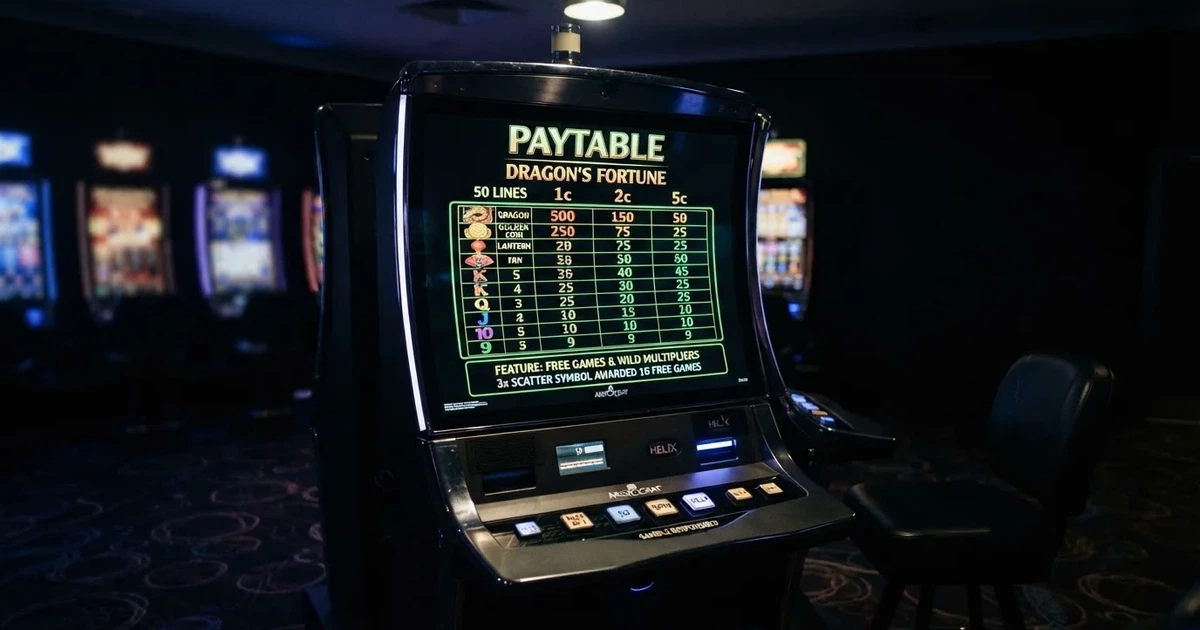
A pokies return-to-player figure is one of the most quoted numbers in Australian gambling marketing, and one of the least understood. It is treated as a promise — the slot that pays back “97%” is sold as a better deal than the one paying back “85%”. That framing collapses the moment a punter sits down at a machine and feeds notes into it. The figure is not a per-spin guarantee; it is a long-run theoretical average calculated across millions of outcomes on a game that is calibrated to keep a slice of every dollar that goes through it. A “high RTP” pokies machine is the one that keeps less, but it keeps something either way.
This page takes that comparison seriously. It walks through what RTP actually describes on a licensed Australian pokies machine, why the minimum is set differently in every state, where the figure must legally be shown and where it is often hidden, and what the practical difference looks like between a machine running at the legal floor and one running above it. It also takes a clear position on the online side of the question — online pokies cannot be licensed in Australia under the Interactive Gambling Act 2001, whatever return figure an offshore site advertises — and walks through the eleven brands the ACMA has most recently moved against for offering them.
Table of Contents
- What “return to player” actually measures on an Australian pokies machine
- Why the minimums differ state by state — and what that means at the cabinet
- Where the figure has to be shown — and where it is usually hidden
- Online pokies and the Interactive Gambling Act — why no offshore site is a legal option for Australians
- The ACMA’s blocking record since November 2019 — how fast enforcement has actually moved
- Why offshore “high RTP pokies” are a category mistake
- Where the high-RTP range sits in practice on a licensed Australian machine
- What the help screen on a real pokies cabinet actually shows
- Game mechanics that move the figure — and why the marketing language around them is unreliable
- Baccarat, blackjack and the table-game side of the RTP question
- Responsible gambling — the supports that apply to a high-RTP pokies session
- The eleven offshore brands the ACMA has moved against — what each one means for the comparison
- What the comparison actually comes down to
- The cost that does not show up on the help screen
- Where this leaves a punter weighing the options
- Frequently asked questions
What “return to player” actually measures on an Australian pokies machine
Return-to-player is the share of every dollar staked that a game is programmed to return to players, on average, over the full cycle of its outcomes. A machine with a 90% RTP keeps, on average, ten cents of every dollar wagered; a machine with a 95% RTP keeps five. The maths is the same whether the figure is stamped on a cabinet in Sydney, painted on a video screen in Townsville, or written into the help file of a digital reel set in Perth’s casino floor.

Two things follow from that definition that matter for anyone holding a wallet.
First, RTP is an average across a very large number of spins — tens of millions, usually. A punter who plays 200 spins does not “experience” 90% RTP; they experience the particular sequence of outcomes that landed during those 200 spins, which can sit anywhere from a small profit to a near-total loss. The marketing phrase “pays back 95%” reads as if it describes the punter’s session. It does not. It describes the machine’s behaviour over a population of sessions so large no individual punter will ever play through it.
Second, RTP is the house edge in reverse. The house edge on a 90% RTP machine is 10%. On a 95% machine, it is 5%. The figure is always the same number viewed two ways; treating RTP as somehow kinder than a house edge because it is expressed as a “return” is a framing trick the maths does not support. A casino’s profit on a $1 bet at a 90% machine is 10 cents, whether you call the remaining 90 cents a “return” or the 10 cents a “house edge”.
The Australian pokies landscape includes both ends of that range, and everything in between. The legal minimum RTP for a poker machine in New South Wales, the Northern Territory, Queensland and most of Victoria is 85% — 87% at Crown Melbourne. The Australian Capital Territory and Tasmania set the floor at 87%. South Australia sits at 87.5%. Western Australia sits at 90%, in the single venue where pokies are legal at all. None of those figures is an average; each is the minimum below which a machine cannot be approved in that jurisdiction.
Why the minimums differ state by state — and what that means at the cabinet
Pokies in Australia are not federally regulated on the design side. Each state and territory sets its own minimum return, its own approval regime for game variants, and its own venue rules. The consequence is a federation of floors: a machine legal in one state can be illegal in the next, and the same game can be deployed at different RTP settings on either side of a state border.
New South Wales carries the largest machine population outside casinos — 87,298 pokies across 2,195 venues as of June 2023, with player losses of A$8.18 billion across the 2022-23 financial year — and it runs on an 85% floor. That floor is the lowest in the country and it ties with the Northern Territory and Queensland at the bottom of the range. South Australia’s 87.5% sits roughly in the middle. Western Australia’s 90% sits at the top, but it has almost no machines to apply to: poker machines were banned in pubs and clubs when Crown Perth opened in 1985, and the only legal pokies in the state are the roughly 2,500 machines inside that one casino, all approved by the state’s Gaming and Wagering Commission.
The Crown Melbourne minimum is the unusual figure in the set: 87% at the casino, against 85% for other Victorian venues. The state also runs a separate statewide cap of 30,000 gaming machines outside the casino, which is what bounds the Victorian non-casino population at 26,380 across 488 venues in 2021-22. Queensland carries 21,122 machines across 351 venues as of October 2023. Tasmania’s path has been different — the Federal Group held a monopoly licence over the state’s machines from 1968 until legislation passed in November 2021 moved oversight to the Tasmanian Liquor and Gaming Commission, and the state has been working on mandatory pre-commitment cards that were originally planned as nation-leading but delayed until late 2025.
These floors matter at the cabinet for a simple reason. Two machines side by side in a pub — one approved in NSW at 85%, the other approved in Victoria at 87% — look identical to the punter. They are not. Over an evening’s play, the second machine keeps 2 cents less from every dollar wagered. That is the difference the floor makes, and it is invisible to anyone who is not reading the help screen.
Where the figure has to be shown — and where it is usually hidden
The legal disclosure regime in Australia is incomplete. The minimum RTP is a publication requirement at the level of the regulator and the venue operator; the current RTP of an individual machine on the floor is not always pinned to the cabinet itself.
On a licensed pub, club or casino machine, a punter can usually find the RTP figure in one of three places: on the game’s information or help screen, on a printed paytable attached to or beside the cabinet, or on the venue’s game information leaflet. NSW requires that player information, including the theoretical return, be available on request. Tasmania requires a player information display at the machine. The other states vary. The actual figure on a given cabinet may also differ from the game’s default RTP, because the regulator’s approval regime usually allows a venue to choose between approved variants — and many do, setting machines to RTP settings near the floor to preserve venue profitability, which is exactly what the floor was set to permit.
That is the most important practical point about RTP on a licensed Australian pokies machine: a punter who does not check is playing a game whose RTP they have not seen. The marketing claim on a game’s box, or on the venue’s promotional material, is not always the figure the cabinet is actually running. Reading the help screen before the first spin is the only reliable way to know what the machine is set to return.
The international offshore sites that advertise “high RTP pokies” to Australians do not face any of those requirements. They are not licensed in Australia and they are not bound by any state disclosure regime. The figure on the help screen may be accurate or it may be marketing copy; there is no Australian regulator the punter can complain to if it is not.
Online pokies and the Interactive Gambling Act — why no offshore site is a legal option for Australians
The Interactive Gambling Act 2001, strengthened by the Interactive Gambling Amendment Act 2017, makes it an offence to provide online casino games or online pokies to a person in Australia. No state or territory licences online pokies. Wagering on races and sport placed before the event is licensable, in practice through the Northern Territory Racing and Wagering Commission, which regulates 52 of Australia’s online bookmakers including Sportsbet, Bet365 and Ladbrokes — but the commission itself has no full-time staff and meets once a month in Darwin, and its writ covers wagering, not casino games. Online pokies are simply outside the licensable product set.
The ACMA, the Australian Communications and Media Authority, is the body that enforces the prohibition on the provider side. Individual players are not prosecuted under the IGA; the act targets the operator. But the practical consequence for a punter sitting at an offshore site is sharper than any criminal exposure. There is no Australian consumer protection, no Australian complaints body, and no Australian recourse if a withdrawal is refused or a balance disappears when the site is blocked. Offshore sites also sit outside BetStop, the National Self-Exclusion Register that has been live since August 2023, because BetStop binds only Australian-licensed online and phone wagering services — and an offshore casino is not one of those.
The payment side has tightened since 11 June 2024. Credit cards, credit-related products and digital currency are banned as payment for licensed online wagering, with penalties up to A$247,500 for operators. Legal deposit routes for licensed wagering are debit card, bank transfer, PayID and Osko, and BPAY. An offshore casino asking an Australian punter for a credit card or a crypto deposit is operating outside the rules the Australian regulator has set for protecting the punter’s wallet, which is itself a signal worth noting.
H2 Gambling Capital’s 2025 report estimates that Australians lose about A$3.9 billion a year to illegal gambling sites, and that the share of gambling going through legal channels fell from 74% in 2021 to 64%. Those are the figures the ACMA’s enforcement activity is meant to push back against.
The ACMA’s blocking record since November 2019 — how fast enforcement has actually moved
The arithmetic the ACMA’s blocking record supports is straightforward. As reported in June 2026, the regulator had asked Australian internet service providers to block 1,751 illegal gambling and affiliate marketing websites since the first blocking request in November 2019, and more than 230 unlicensed gambling services had left the Australian market since enforcement was strengthened in 2017. The most recent round reported on 26 June 2026 added 12 more sites to the block list: 7Signs, ChromaBet, Donbet, Duospin, Freshbet, Slots Gem, Jacks Club, Lucky Start, Pointsbetz, Spinrise, Vinyl Casino and Wildsino.
The first request was November 2019; the count stood at 1,751 by June 2026. That is roughly 265 blocking actions per year on average across the six-and-a-bit-year window, or one action every working day — though the cadence is uneven, with rounds sometimes adding a dozen sites at once and sometimes nothing for months. The cumulative count is what matters for a punter thinking about the offshore side: any figure quoted as “currently legal” in Australia should be tested against that running total, because the ACMA’s block list is the working definition of “offshore site the regulator has noticed” and it grows almost every reporting cycle.
The headline figures — A$3.9 billion a year in losses to illegal sites, the legal-channel share dropping from 74% to 64% in four years — sit beside a blocking programme that has scaled steadily without yet reversing the loss. That is the gap the regulator is trying to close. The trend lines are running in the right direction for the ACMA and the wrong direction for the punter using offshore sites.
Why offshore “high RTP pokies” are a category mistake
An offshore online casino advertising “high RTP pokies” to Australian players is making a marketing claim the punter cannot verify. The site’s regulator is offshore, the help screen is offshore, and the publisher of the RTP figure is the same party taking the punter’s deposit. That is the structural problem with RTP claims made outside the Australian disclosure regime: the punter is asked to take the operator’s word for the single number that determines what the game keeps.
The mechanical claims the marketing pages make are not always false. Some offshore game providers publish RTP figures for their titles — BGaming, for instance, lists per-game theoretical returns on its own site — and those figures may be accurate. The problem is that the punter at the other end of an offshore casino site cannot independently confirm that the cabinet they are playing is set to the figure the provider published, that the RNG in use is the one the provider certified, or that any third-party testing body has tested the deployed version of the game rather than a build the operator has modified. The licensed Australian machine is the alternative where the regulator has already done that work.
This is the practical sense in which “best RTP pokies Australia” is a category question, not just a search query. The best return-to-player figure a punter in Australia can play is on a licensed machine, because on a licensed machine the figure is published, the variant on the cabinet is approved, and the regulator has a record. The best figure an offshore site advertises is one the punter has to take on the operator’s word. They are not the same kind of figure.
Where the high-RTP range sits in practice on a licensed Australian machine
Above the legal minimums, RTP figures on Australian machines run into the low- and mid-90s for some categories. The exact figure depends on the jurisdiction, the game type and the venue’s choice of variant. Crown Perth’s machines, on the 90% Western Australian floor, run in a narrower band than NSW’s 85% floor permits; the higher floor compresses the range above it. In NSW, where the floor is the country’s lowest, the upper end of the deployed range is correspondingly higher.
Two practical readings follow.
For a punter comparing two machines in the same venue, the RTP gap is usually small — a percentage point or two between common variants — but it compounds. A machine at 90% versus a machine at 87% over a session of $200 in wagers keeps $6 more of the punter’s money. That is one fewer drink bought at the bar, or one longer session, depending on which way the punter values it. The cost of not reading the help screen is the difference between those two numbers.
For a punter comparing venues across states, the floor differential is the binding constraint. A WA punter at Crown Perth plays a market whose minimum is the country’s highest. A NSW punter at a pub club in western Sydney plays a market whose minimum is the country’s lowest. The ceiling on return the venue can offer is bounded by the floor; a state that sets 85% lets the venue set its machines near 85%, and many do. A state that sets 90% forces every deployed cabinet above that line. Floor-setting matters.
What the help screen on a real pokies cabinet actually shows
A standard licensed pokies help screen in Australia lists the RTP figure as a percentage, usually with a small label — “theoretical return to player” or “return to player” — alongside the game’s volatility classification, its feature triggers and its paytable. The format varies by venue and by game manufacturer. The figure is stated, in the regulator’s approved phrasing, as a percentage and not as a dollar return, and it is stated for the specific variant the cabinet is running.
Volatility is the second figure on the same help screen and is the more useful of the two for a punter deciding what to play in a single session. Volatility describes the distribution of returns, not their average: a high-volatility game returns less often but in larger amounts; a low-volatility game returns more often in smaller amounts. Two machines with the same RTP figure can have very different volatility profiles, and the punter’s session feels different on each even though the long-run return is the same. A high-RTP, high-volatility machine is the one to play with a long horizon and a bankroll that survives long losing runs; a high-RTP, low-volatility machine is the one to play in a single sitting where the punter wants regular small returns. RTP tells the punter what the average looks like across many sessions. Volatility tells them what one session is likely to feel like.
The headline RTP figure on an offshore site’s marketing page usually does not include a volatility reading, or buries it in a separate help page. That is the second reason licensed Australian machines are a clearer category: the punter can read both numbers on the same screen.
Game mechanics that move the figure — and why the marketing language around them is unreliable
The mechanics that determine a game’s RTP are the paytable weights, the feature triggers, and the bonus round logic. Every licensed Australian pokies machine has those elements approved by the regulator before the cabinet goes on the floor. The variant the venue chooses to deploy is the same variant the regulator approved, with no in-venue tweaking.
Three mechanics matter most for the headline RTP. A higher-paying base-symbol paytable raises RTP. A more frequent or more generous free-spins feature raises RTP. A larger fixed jackpot — a top prize that pays a specific dollar amount rather than a multiple of the line bet — can lower RTP, because the funding for the jackpot comes out of the return. Games with very large fixed jackpots usually show RTPs in the 85-87% band even when their non-jackpot play is generous, because the jackpot pool eats the difference.
The marketing language around these mechanics tends to inflate the RTP picture. “Massive features” and “incredible bonus rounds” are the offshore site’s equivalent of a real disclosure: they tell the punter the game has features, but they do not say whether those features raise or lower the RTP figure. A licensed machine’s help screen lists both the feature triggers and the RTP; an offshore marketing page lists the features and the marketing-team’s preferred superlatives. The punter comparing them on RTP alone is reading two very different documents.
Baccarat, blackjack and the table-game side of the RTP question
The search for “best RTP” on a casino floor does not stop at pokies. Two table games sit near the top of any return ranking.
Baccarat, the Punto Banco variant that dominates Australian casino floors, carries a house edge of 1.06% on the Banker bet, 1.24% on the Player bet and 14.36% on the Tie. That translates to an RTP of roughly 98.94% on Banker, 98.76% on Player and 85.64% on Tie. Banker is the bet the maths points to; Tie is the bet the marketing copy points to because of its headline payout. Crown Melbourne offers three baccarat variants — Traditional Baccarat, Crown Baccarat and 2 to 1 Baccarat — as approved table games regulated by the Victorian Gambling and Casino Control Commission, which replaced the VCGLR as Victoria’s casino regulator on 1 July 2022. Under section 66 of the NSW Casino Control Act 1992, a casino operator must not permit a game such as baccarat to be played unless the game and its rules are approved by the regulator, and the operator must make a copy of the approved rules available to patrons on request.
Blackjack with optimal strategy carries a house edge of about 0.28% under liberal Las Vegas Strip rules — dealer stands on soft 17, double on any two cards, double after split, resplit aces, late surrender — and about 0.43% under Atlantic City rules. That is an RTP of roughly 99.72% on the Strip ruleset, the highest figure on the standard casino floor and the most demanding one in strategy terms. The Australian venues that run blackjack typically deploy their own house rules, and the actual RTP varies accordingly.
These figures matter for this page only as a comparison. The question of “best RTP” on an Australian casino floor has a different answer for table games than for pokies: the table games run at a higher return, with the strategy load that comes with it, and the pokies sit lower on the return scale with a much smaller strategy component. Both are bounded by the operator’s house rules, both are disclosed on the venue’s information materials and both are outside the licensable online market.
Responsible gambling — the supports that apply to a high-RTP pokies session
A high RTP figure does not change what the machine costs a punter over the long run, only what fraction of each dollar the venue keeps. The supports that matter for a punter playing any Australian pokies — licensed or offshore — sit outside the game itself.
BetStop, the National Self-Exclusion Register, has been live since August 2023 and binds Australian-licensed online and phone wagering services. A punter who has registered with BetStop cannot open new accounts or place new bets with those services; existing accounts are closed. The limitation is the binding scope: BetStop does not reach offshore sites, and it does not reach licensed pub or club pokies. A punter using both needs to understand that registering with BetStop closes them out of the licensed wagering side and does not touch the others.
For help at any time, the National Gambling Helpline is 1800 858 858, free, 24/7, with chat available at Gambling Help Online. State-level self-exclusion registers cover licensed venue play. The Victorian Responsible Gambling Foundation, the NSW Office of Responsible Gambling, the Queensland Responsible Gambling Advisory Council and their equivalents in other states each run their own programs. Tasmania’s mandatory pre-commitment cards, originally planned as nation-leading, are now expected to roll out in late 2025 after earlier delays.
The 2026 reform package, the Interactive Gambling Amendment (Gambling Reform) Bill 2026, passed Parliament on 19 August 2026 and its advertising and inducement measures commence on 1 January 2027. On a 2026 page those measures are law with a future start date, not yet in force.
The eleven offshore brands the ACMA has moved against — what each one means for the comparison
The brands below are not ranked, not reviewed and not recommended. They are listed because the ACMA has issued a formal warning over each one for offering prohibited online casino services — including online pokies — to people in Australia. The table that follows sets out the action the regulator took and the operator the warning named; the brief notes under each entry give the page’s own reading of what the action means for a punter comparing options.
The shape of the regulator’s record is the point. Every brand in this section has been formally warned under the Interactive Gambling Act 2001, every brand sits outside any Australian licensing regime, and every brand the page describes is one the ACMA has specifically moved against. None of them is the answer to “where do I find a high-RTP pokies machine in Australia” — there is no such online answer under Australian law — and the entries below say that plainly in their verdict line.
| Brand | ACMA action and date | Operator named by the ACMA | Subject support |
|---|---|---|---|
| RocketPlay | Formal warning, March 2026; earlier warning to Dama N.V. covering this brand, May 2022 | Pulsup Ltd (RocketPlay); Dama N.V. | — |
| Level Up Casino | Formal warning, May 2022 | Dama N.V. | Listed as a BGaming title source |
| Woo Casino | Formal warning, March 2025 | Dama N.V. | — |
| Spirit Casino | Formal warning, May 2025 | Dama N.V. | — |
| National Casino | Formal warning, July 2025 | Consolutetish S.R.L. | Listed in third-party directories |
| Bizzo Casino | Formal warning, July 2025; earlier warning to TechSolutions, 2022 | Consolutetish S.R.L.; TechSolutions (CY) Group Limited and TechSolutions Group N.V. | — |
| Ignition Casino | Formal warning, July 2025 | Bamboo Media | — |
| Instant Casino | Formal warning, February 2025 | EOD Code SRL | — |
| Jackbit | Formal warning, April 2026 | Ryker B.V. | — |
| Casino Intense | Formal warning, April 2025 | Sterplay Holding Ltd | Listed in third-party directories and operator materials |
| Sky Crown | Formal warning, September 2022 | Hollycorn N.V. | — |
RocketPlay
The ACMA issued a formal warning to Pulsup Ltd over RocketPlay in March 2026; the same brand was caught up in the May 2022 warning to Dama N.V. that named six casino operators at once. The site markets itself as an online casino to Australian customers and falls squarely under the prohibition the Interactive Gambling Act sets on online casino games. The 2022 warning to a previous operator and the 2026 warning to the current one are not the same enforcement action, but they describe a brand that has changed hands and continued to offer the same prohibited product to the same Australian audience.
For a punter asking “is this an answer to the RTP question”: no. The site’s advertised RTP figures are marketing copy the operator does not have to back up to any Australian regulator, and the regulator’s enforcement action against the brand specifically covers the category of product the punter would be playing there.
Level Up Casino
The ACMA warned Dama N.V. over Level Up in May 2022, as part of the same notice that named Bambet, Dazard, Rocketplay, Wild Tornado and Cobra Casinos. The brand is listed in third-party game-provider catalogues including BGaming’s, which is how its slot catalogue gets a verified-source stamp in some marketing pages. That stamp is on the game, not on the operator; BGaming’s site lists titles, not licence status.
The verdict the punter needs is on the operator, and the operator has been formally warned for offering prohibited online casino services to Australians. A licensed Australian machine is the alternative where the punter can read the RTP figure and know what the cabinet is set to return.
Woo Casino
The ACMA’s warning to Dama N.V. in March 2025 named Woo Casino as one of the brands under the notice. That makes Woo one of two 2025 Dama N.V. warnings alongside Spirit Casino in May 2025 — the operator was warned more than once across the year, which is a different pattern from the single-warning operators further down the list.
For a punter weighing options, the operator’s pattern of repeated warnings is more relevant than any single notice. A site the regulator has had to warn more than once is a site the regulator has had to return to, and the punter’s recourse if a balance is stuck or a withdrawal is refused is unchanged by the second warning.
Spirit Casino
Spirit Casino was named in the ACMA’s May 2025 warning to Dama N.V., the second 2025 Dama notice alongside Woo Casino in March. The brand is part of the same operator cluster as RocketPlay, Level Up, Woo and the other Dama N.V. brands in the table, and sits outside any Australian licensing regime.
The published claim of a high RTP is unverifiable for an Australian punter. The regulator’s enforcement against the operator is the verified fact about the brand, and it runs in the opposite direction from the marketing claim.
National Casino
The ACMA issued a formal warning to Consolutetish S.R.L. in July 2025 covering National Casino and Bizzo Casino together. The brand appears in third-party directories but those directories do not constitute an Australian licence, and the operator is not licensed to offer online casino games in any Australian state or territory.
The page’s own reading is that the brand’s directory presence is not a substitute for a regulatory disclosure regime, and the regulator’s 2025 warning against the operator is the substantive fact a punter needs.
Bizzo Casino
Bizzo was named in the July 2025 ACMA warning to Consolutetish S.R.L. and had previously been the subject of a 2022 formal warning to TechSolutions (CY) Group Limited and TechSolutions Group N.V. The brand has changed operators and continued to offer the same prohibited product, which is a pattern the page has flagged under RocketPlay as well. Different operator names on the same brand does not mean a different compliance posture under the IGA; the prohibition applies to the service being offered to Australians, not to the corporate vehicle offering it.
For a punter reading this entry alongside RocketPlay: two brands that have changed hands and ended up back on the ACMA’s list make the structural point — the regulatory action is against the offering, and the offering persists.
Ignition Casino
The ACMA issued a formal warning to Bamboo Media in July 2025 over Ignition Casino. The brand is one of two named in the same warning and is one of several offshore operators the regulator has moved against in 2025. There is no Australian licence behind the brand, no Australian disclosure regime, and the punter’s recourse on any dispute is whatever the offshore operator chooses to provide.
The marketing language around the brand’s RTP figures is the same marketing language used by every other entry in this section. It is the operator telling the punter what to expect, not a regulator telling the punter what to expect.
Instant Casino
The ACMA warned EOD Code SRL in February 2025 over Instant Casino. The brand markets to Australian customers under the prohibited category of online casino games and has not been licensed anywhere in Australia for that offering.
For a punter weighing the offshore option against a licensed Australian cabinet: the licensed machine is the one with the regulator’s disclosure regime behind the figure, and Instant Casino is the operator the regulator has specifically warned for offering the alternative.
Jackbit
The ACMA issued a formal warning to Ryker B.V. in April 2026 covering Jackbit and CasinOK together. The brand is one of the more recent additions to the regulator’s warning list and sits alongside the operators in the rest of this section as a brand the ACMA has specifically identified as offering prohibited services to Australians.
The published RTP figures for the games on the site are the operator’s claims and are not backed by any Australian regulator. The punter looking for “best RTP” in Australia is looking for a licensed Australian machine, not for the highest figure an offshore site advertises.
Casino Intense
The ACMA issued a formal warning to Sterplay Holding Ltd in April 2025 over Casino Intense. The brand is listed in some third-party directories and operator materials but those listings are not Australian licensing. The regulator’s 2025 warning against the operator is the substantive record on the brand.
The verdict line for this entry follows the same pattern as the others: the brand sits outside any Australian licensing regime, the regulator has moved against it for offering prohibited services, and the licensed Australian alternative is the option that gives the punter a disclosed RTP figure and an Australian recourse path.
Sky Crown
The ACMA issued a formal warning to Hollycorn N.V. over its Sky Crown and Blue Leo casino services in September 2022, the earliest warning in the table. The brand has been on the regulator’s list longer than any other entry in this section, which is itself a signal about how long the prohibited offering has been running to Australian customers.
For a punter comparing options, the longevity of the warning is not the relevant point — the relevant point is that the brand has never been licensed to offer online casino games in Australia, has been formally warned for offering them, and the licensed Australian machine is the option where the punter’s RTP figure is disclosed by a regulator with jurisdiction.
What the comparison actually comes down to
For a punter looking for the highest return on an Australian pokies machine, the practical comparison is between machines inside the licensed venue network, not between a licensed machine and an offshore site. The licensed machine is the option where the RTP figure is disclosed by the regulator’s approval regime; the offshore site is the option where the figure is supplied by the party taking the punter’s deposit.
Inside the licensed network, the comparison narrows to the state-level floor and the venue’s choice of variant. NSW’s 85% floor permits machines near 85%; Western Australia’s 90% floor at Crown Perth keeps every deployed machine above 90%. The Victorian 87% floor at Crown Melbourne sits between the two. Across the rest of Victoria, the 85% floor applies and venue-deployed variants typically sit close to it. For a punter picking between two licensed machines in the same venue, the comparison is the help screen’s RTP figure; for a punter picking between venues, the comparison is the state floor and the venue’s history of which variants it has chosen.
The Australian Capital Territory and Tasmania sit at 87%, the latter as part of the broader pre-commitment reform programme. South Australia sits at 87.5%. Each floor defines the lower bound of the range a punter will encounter in that jurisdiction, and the gap between the floor and the high end of the deployed range is the room the venue has to position the machine.
The cost that does not show up on the help screen
The help screen lists the RTP figure, the volatility class and the feature triggers. It does not list the cost a punter will pay in a single session, because that cost depends on the punter’s own decisions — how long they play, how much they stake per spin, how they respond to the machine’s bonus features, and whether they walk away from a win or ride it back down.
The arithmetic of a single session is the same regardless of the RTP figure: the punter feeds the machine X dollars, the machine returns Y dollars where Y is some fraction of X set by the RTP, and the difference is what the punter has spent. A 90% machine over $200 in wagers returns $180 on average and costs $20. A 95% machine over the same $200 returns $190 and costs $10. The two figures sit close to each other; what does not sit close is what the punter can do in response — picking the higher-RTP variant when one is available, and walking away from a session that has already cost what they set as their limit.
The offshore site’s “high RTP” pitch does not change any of those mechanics. It changes who is reporting the figure.
Where this leaves a punter weighing the options
Three things follow from the material on this page.
First, the highest RTP figure a punter in Australia can rely on is the figure on a licensed machine’s help screen, not the figure on an offshore marketing page. The licensed figure is published under a regulator’s disclosure regime; the offshore figure is supplied by the operator.
Second, the legal floor in the state where the punter is playing sets the lower bound of the deployed range. A punter playing in NSW at an 85% floor is in a market that permits machines near 85%; a punter playing in WA at Crown Perth is in a market where every cabinet sits above 90%. The state floor is the structural answer to “how high does the return get”.
Third, every offshore online casino the ACMA has formally warned — and the eleven brands listed above are the ones the regulator has specifically moved against — sits outside the licensable product set under the Interactive Gambling Act 2001. The punter playing on any of those sites has no Australian regulator to complain to, no Australian recourse on a withdrawal dispute, and no protection from BetStop. The licensed venue is the option that gives the punter all three.
The “best RTP pokies Australia” question has an Australian answer in licensed machines, and a non-Australian answer in offshore sites. The Australian answer is the one the regulator backs.
Frequently asked questions
What counts as a “high” RTP figure on an Australian pokies machine?
A high RTP on a licensed Australian pokies machine is usually anything materially above the legal minimum in that jurisdiction — 87% and up in NSW, the Northern Territory, Queensland and most of Victoria; 89% and up in the ACT and Tasmania; 89.5% and up in South Australia; 92% and up at Crown Perth, where the WA floor is 90%. The figure on the help screen is the one to read.
Is RTP the same as the chance of winning on a single spin?
No. RTP is a long-run average across millions of spins, not a per-spin probability. A 95% RTP machine pays back 95 cents of every dollar on average, but on any single spin the punter either wins a listed amount or they do not. The figure describes the machine’s behaviour across a population of sessions, not the punter’s experience in one session.
Where is a pokies machine’s RTP figure legally required to be disclosed in Australia?
The disclosure requirement varies by state. NSW requires that player information, including the theoretical return, be available on request. Tasmania requires a player information display at the machine. The other states have their own rules, and the practical answer for a punter is to check the help screen on the cabinet itself, which is the most reliable single source.
Can a venue change a machine’s RTP setting after it is installed?
The regulator’s approval covers a specific variant, and changing the RTP setting on a deployed cabinet typically requires a fresh approval. In practice, venues choose between approved variants before deployment; the cabinet on the floor is set to the variant the regulator has signed off on. The punter who wants to be sure is reading the help screen on the specific cabinet they are playing.
Does a high RTP figure mean smaller or larger individual wins?
Not directly. RTP is independent of volatility, which describes the distribution of wins. A high-RTP, high-volatility game pays less often but in larger amounts; a high-RTP, low-volatility game pays more often in smaller amounts. The punter picking between two high-RTP games is picking on volatility and session length, not on the headline figure.
How does the number of pokies machines vary between Australian states?
The populations are very different. New South Wales carried 87,298 gaming machines across 2,195 venues as of June 2023, with player losses of A$8.18 billion across 2022-23. Victoria had 26,380 outside Crown Casino across 488 venues in 2021-22 under a 30,000 statewide cap. Queensland had 21,122 machines across 351 venues in October 2023. Western Australia has only the machines inside Crown Perth, roughly 2,500, with no pub or club pokies since 1985. Other states sit lower again.