
$1 minimum deposit casino Australia in 2026: a price the law won’t let a site charge you
 Available in US
A one-dollar deposit sounds like the gentlest possible way to test an online casino, and that is exactly why the marketing leans on it. For an Australian reader, though, the price tag is a misdirection. The Interactive Gambling Act 2001 makes it an offence to provide online casino games and online pokies to anyone physically in Australia, and no state or territory issues a licence for them. Every site quoting a one-dollar minimum is an offshore operator of the kind the ACMA warns Australians about — quite separate from the legal pub, club and casino pokies you can walk up to in person.
The number on the deposit button is the cheapest part of the transaction. The actual cost is what the site takes when no Australian regulator is watching, and what happens to the balance sitting there if the site gets blocked mid-session. This page walks through why that small deposit does not exist in the licensed Australian market, who is offering it anyway, and what the same one dollar buys where gambling is actually legal in this country.
This page is current as of 23 September 2026. ACMA action dates and statutory figures are checked against the Australian Communications and Media Authority’s formal-warning register and the Interactive Gambling Act 2001 as published on the Federal Register of Legislation.
Table of Contents
- How an Australian “one-dollar deposit casino” actually sits in the market
- What it costs the reader to play on an unlicensed site
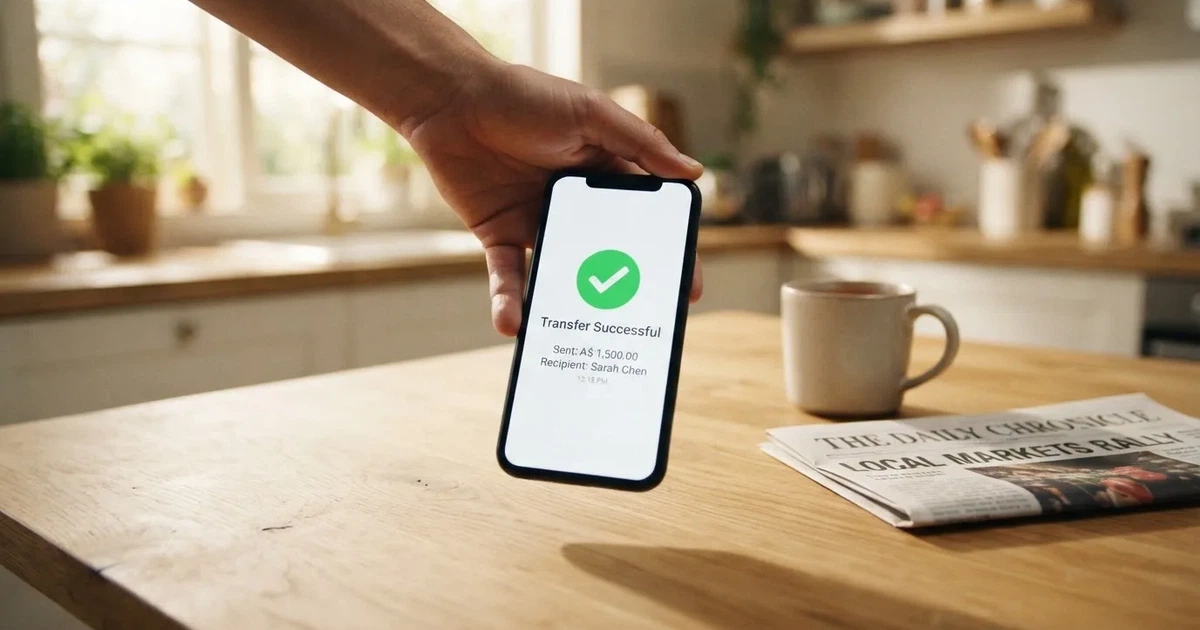
- How one dollar moves through Australian banking — and why a casino deposit is the slowest way to send it
- Responsible play when the cheapest door is the riskiest one
- The brands the ACMA has warned over offering prohibited casino games in Australia
- How fast is the ACMA actually shrinking the offshore market?
- What the reader is actually buying with a one-dollar deposit
- What the small deposit actually looks like through Australian eyes
- Frequently asked questions about one-dollar minimum deposit casinos in Australia
How an Australian “one-dollar deposit casino” actually sits in the market
The phrase sounds like a category — a class of casinos with a low entry point — and the marketing pages that rank them treat it as one. It is not. In Australia the category collapses the moment you ask which regulator licensed the site that accepts the deposit, because the answer for casino games and online pokies is none.

The legal floor for what is licensable sits one category over: pre-event wagering on races and sport, lotteries and keno. The Northern Territory Racing and Wagering Commission supervises most of the country’s online bookmakers, including Sportsbet, Bet365 and Ladbrokes, but the body itself is a skeleton — a part-time commission with no full-time staff that meets once a month in Darwin. It does not licence online casino games, and no state or territory does.
That is the frame the rest of the page works inside. A one-dollar minimum is real on offshore sites. The legal status of those sites, the protections a player has on them and the practical consequences of using them are the same at one dollar, at ten dollars and at five hundred. The amount only changes how much the player stands to lose if the site disappears; it does not change the regulatory fact.
What the marketing copy is selling is the idea of a small stake. A punter who only wants to risk a dollar is treated as a softer target than someone funding a full bankroll, because the impulse to chase the next spin costs the same regardless of the chip behind it. The dollar figure is a hook, not a price.
Why no Australian licence can sit behind a one-dollar casino deposit
The Interactive Gambling Act 2001, as tightened by the Interactive Gambling Amendment Act 2017, makes it an offence for a provider to supply online casino games, online pokies or in-play betting to a person in Australia. The provider, not the player, is the target of enforcement, which is why Australians themselves are not prosecuted for using an offshore site. The same architecture is what makes it pointless to ask whether an offshore casino has a “Curacao licence” or a similar credential for the purposes of Australian consumer protection. Those licences bind the operator to a foreign regulator; they do not give an Australian player a right of action in Australia.

The lawful version of low-stakes gambling in this country is the local pub or club pokie machine, the casino floor at Crown Melbourne or The Star Sydney, or a lottery ticket. Minimum stakes on those are typically a few cents per line on a pokie, set by each venue within a state regulatory cap. They are governed by state and territory laws and by harm-minimisation measures such as mandatory pre-commitment in Victoria, and they are the only channels the IGA leaves open.
The size of the offshore market the ACMA is trying to shrink
The ACMA’s blocking programme began in November 2019 with the first request to Australian internet service providers. As reported in June 2026, the authority had directed the blocking of 1,751 illegal gambling and affiliate-marketing websites since that first request, and more than 230 unlicensed gambling services had withdrawn from the Australian market since enforcement was strengthened in 2017. A single round reported on 26 June 2026 added twelve more names — 7Signs, ChromaBet, Donbet, Duospin, Freshbet, Slots Gem, Jacks Club, Lucky Start, Pointsbetz, Spinrise, Vinyl Casino and Wildsino — to the blocking list.
Estimates indicate Australians lose about A$3.9 billion a year to illegal gambling sites, and the share of gambling going through legal channels fell from 74 per cent in 2021 to 64 per cent in 2025. The drift is not a vote of confidence in offshore products; it is the cost of running an enforcement programme against an industry that can spin up a new domain faster than the regulator can block the old one.
What it costs the reader to play on an unlicensed site
The advertised minimum is what the reader sees. The cost is the rest of the transaction — and on an unlicensed site the rest of it is everything the law would otherwise have paid for.
No Australian complaints body. A withdrawal refusal, a voided win, a bonus term applied retroactively: each is the kind of dispute the operator’s own support handles on its own terms. The licence displayed in the footer binds the site to a foreign regulator that an Australian player has no practical way to reach.
Blocking that can strand a balance. The ACMA’s tool is to ask ISPs to block access to the site. When that happens, the site does not refund Australian players; it simply becomes unreachable. A balance sitting on the site at the moment of blocking is, in practical terms, gone.
Australian bank blocks that complicate deposit and withdrawal. Westpac’s gambling block refuses authorisation of transactions under the merchant category code “Betting/Casino Gambling” on eligible personal credit and debit cards. ANZ’s gambling transaction block, once switched on in the ANZ app, blocks gambling transactions made through a linked digital wallet such as Apple Pay, not just on the physical card, and requires a 48-hour cooling-off period to switch off again. Commonwealth Bank’s CommBank app offers a similar gambling lock on eligible cards, though the bank warns that no block can guarantee every gambling-related purchase is stopped. For a player using an Australian-issued card on an offshore casino, the same protection that prevents the deposit can also prevent the withdrawal.
No BetStop coverage. BetStop, the National Self-Exclusion Register that has been live since August 2023, binds Australian-licensed online and phone wagering services. An offshore casino is not connected to it. A self-excluded Australian who signs up to BetStop has not, by doing so, blocked themselves from the offshore sites where most of the harm actually happens.
Payment friction that is built into the system. Apple Pay, Google Pay and Samsung Pay together account for around 45 per cent of all card payments in Australia by number at the end of 2025, and the Interactive Gambling Act 2001 as amended in 2023 already restricts credit-card use for Australian-licensed online wagering. The same logic, applied through a card-issuer block on gambling MCCs, reaches into the wallet itself. A one-dollar deposit routed through a card that has been blocked never arrives; a deposit that does arrive has been routed around the player’s own protection.
The cumulative effect is that the dollar amount is a smokescreen. What the reader actually pays for is the absence of every safeguard an Australian licence would otherwise have provided.
How one dollar moves through Australian banking — and why a casino deposit is the slowest way to send it
The mechanics of a one-dollar deposit have very little to do with casino law, and a great deal to do with how Australian retail payments are wired. A reader who actually wants to understand why a $1 casino deposit is a strange thing to send should start with the rails underneath.
What “instant” actually means on the New Payments Platform
Australia’s New Payments Platform became accessible to the public on 13 February 2018 and is owned by New Payments Platform Australia Ltd, a non-profit whose thirteen shareholders include the Reserve Bank of Australia and the major banks. Through Osko by Australian Payments Plus, a bank transfer between participating banks arrives in under a minute, 24/7 including weekends, addressed either to a BSB and account number or to a PayID. Participants in the platform must keep monthly outages to no more than two minutes — the system is engineered to a high availability bar because the use cases it serves, from real-estate settlements to weekend dinner splits, are unforgiving of downtime.
By April 2025, more than 25 million PayIDs had been registered on the platform. Over a hundred Australian financial institutions support PayID-based instant transfers. PayID shows the registered name of the account holder before the transfer is sent — a small but consequential feature, because AP+ warns that being asked to transfer money to a PayID on an illegal gambling site almost certainly means a scam site. The warning is direct: the legal wagering channels route through licensed Australian operators, and a PayID prompt on an offshore casino is not where a licensed operator would direct a customer to send money.
What a one-dollar deposit would clear like, if it cleared at all
In an ordinary retail context, one dollar sent through Osko arrives at the recipient’s bank in under a minute, 24 hours a day. The recipient sees the name on the linked PayID before the sender presses confirm, the sender sees the same name, and the transfer posts against the BSB and account number or the PayID. There is no per-transaction reporting threshold for an electronic transfer of any size — AUSTRAC’s threshold-transaction-report rule applies only to physical cash transfers of A$10,000 or more, so an ordinary one-dollar Osko payment is invisible to the regulator’s paperwork.
The wrinkle is the merchant category code on the receiving side. A one-dollar transfer to a friend’s PayID on Saturday night is a personal transfer, classified under a personal-banking MCC. A one-dollar transfer to an offshore casino is classified under “Betting/Casino Gambling”, which is precisely the MCC Westpac’s gambling block refuses to authorise. ANZ’s gambling block extends the same logic to digital-wallet transactions tied to the blocked card. The speed of the rail is irrelevant: what decides whether the deposit arrives is whether the issuer has classified the merchant as gambling and whether the cardholder has asked for that classification to be a hard wall.
Where BPAY sits — and why it is irrelevant to a casino deposit
BPAY has been running since 18 November 1997, is available in the online banking of over 140 Australian banks and financial institutions, and is offered by more than 95,000 businesses. It is run by Australian Payments Plus, the same operator as PayID and Osko, and is owned equally, via Cardlink Services Limited, by ANZ, Commonwealth Bank, National Australia Bank and Westpac. The flow is the inverse of an Osko transfer: the payer enters the Biller Code and the Customer Reference Number printed on the bill, and the money moves the same day, typically overnight.
BPAY is for paying bills to registered billers. It is not a payment rail for casino deposits, and no licensed Australian casino would route player deposits through it — a licensed operator accepts deposits through channels approved under its licence. The relevance of BPAY to a one-dollar casino deposit is that it is what an Australian utility bill looks like on the same online-banking screen, and that the absence of a casino biller in the menu is itself a quiet piece of evidence about which operators are actually licensed to receive money from Australian customers.
Apple Pay, Google Pay and the surcharge exemption that does not apply
Apple does not charge consumer fees for using Apple Pay in stores, online or in apps — any surcharge the payer sees at the checkout is the merchant’s own card-processing cost, not Apple’s. Transaction limits and PIN requirements for Apple Pay purchases are set by the card issuer or merchant, not by Apple. The Reserve Bank of Australia’s July 2025 review proposes removing surcharges only on eftpos, Mastercard and Visa card transactions, explicitly leaving American Express outside the scope of the proposed surcharge ban, a reminder that surcharge regulation is a payment-network-by-payment-network exercise rather than a uniform rule.
For gambling specifically, ANZ’s gambling transaction block activated in the ANZ app blocks gambling transactions made through a digital wallet such as Apple Pay on an eligible card. The wallet is just a tokenised front for the underlying card, and the block follows the card. For a one-dollar casino deposit, the practical upshot is that switching to Apple Pay does not route around an issuer’s gambling block; it routes through the same card the block is on.
Responsible play when the cheapest door is the riskiest one
The legal alternative is the licensed venue — the pokie in a pub or club, the table game on a casino floor, the lottery ticket at a newsagent. Minimum stakes on those are typically a few cents per credit on a pokie, well below the dollar the offshore sites are quoting. The rules around them are state-based, the venues are physically inspectable and the harm-minimisation tools — pre-commitment limits, time-out features, on-screen warnings — are mandated by state regulators, not by the operator’s marketing department.
If the appeal of the offshore site is precisely that it can be opened at 2 a.m. from a phone, the licensed alternative has a counterpart: BetStop, the National Self-Exclusion Register, which has been live since August 2023. BetStop binds Australian-licensed online and phone wagering services, which means it covers licensed sports and race bookmakers but not offshore casinos. A self-excluded Australian who joins BetStop and then tries to deposit at an offshore casino will not be stopped by the register, because the offshore casino is not connected to it. The limits that do reach those sites are the card-issuer gambling blocks described above, and a self-excluded customer who wants to use them as a backstop has to set them up independently.
Free, confidential help is available around the clock through Gambling Help Online and the National Gambling Helpline on 1800 858 858. The helpline is for anyone affected by their own or someone else’s gambling, and the chat service is open whenever the phone line is. The 2026 reform package, the Interactive Gambling Amendment (Gambling Reform) Bill 2026, passed Parliament on 19 August 2026 and brings advertising and inducement measures into force on 1 January 2027 — law on the books with a start date, not yet operative on a page being read in 2026.
The brands the ACMA has warned over offering prohibited casino games in Australia
What follows is not a ranking. Each brand is included because the Australian Communications and Media Authority itself issued a formal warning over it for offering prohibited interactive gambling services to Australians. The information under each brand is drawn from the ACMA’s own formal-warning register and from each operator’s public-facing terms; nothing here is an endorsement, and nothing here changes the underlying legal fact that no Australian state or territory issues a licence for online casino games.
The table below sets out the brands, the ACMA action and date, the operator the ACMA named, and the payment methods research could verify as supported on each brand’s own listings — or, where no listing could be verified, the article-language no-data marker. “Listings-only” means the figure comes from third-party affiliate or payment-method listings rather than from the operator’s own disclosure, and is reported here as what those listings say, not as the operator’s own fact.
| Brand | ACMA action and date | Operator named by the ACMA | Subject support |
|---|---|---|---|
| RocketPlay | Formal warning, March 2026; earlier warning to Dama N.V., May 2022 | Pulsup Ltd (RocketPlay) | Listings-only |
| Level Up Casino | Formal warning, May 2022 | Dama N.V. | Listings-only |
| Woo Casino | Formal warning, March 2025 | Dama N.V. | — |
| Spirit Casino | Formal warning, May 2025 | Dama N.V. | — |
| National Casino | Formal warning, July 2025 | Consolutetish S.R.L. | Listings-only |
| Bizzo Casino | Formal warning, July 2025; earlier warning, 2022 | Consolutetish S.R.L.; earlier TechSolutions | Listings-only |
| Ignition Casino | Formal warning, July 2025 | Bamboo Media | — |
| Instant Casino | Formal warning, February 2025 | EOD Code SRL | Listings-only |
| Jackbit | Formal warning, April 2026 | Ryker B.V. | — |
| Casino Intense | Formal warning, April 2025 | Sterplay Holding Ltd | Listings-only |
| Sky Crown | Formal warning, September 2022 | Hollycorn N.V. | — |
Across the eleven brands, four operators account for almost every warning: Dama N.V., Consolutetish S.R.L., Bamboo Media and Hollycorn N.V. — corporate vehicles that have run warnings against multiple brand names. The ACMA’s blocker has caught the brands; it has not, on the evidence of the table, caught the corporate wrappers behind them.
RocketPlay — same operator, two warnings four years apart
The ACMA’s most recent action on RocketPlay, in March 2026, named Pulsup Ltd as the operator behind RocketPlay. The brand had already been caught once before, in May 2022, when Dama N.V. was warned over six brands including Rocketplay. A formal warning that does not stop the operator re-emerging under a different corporate wrapper, on a domain that Australian customers can still reach until the next blocking round, is the structural reason the ACMA’s site-by-site enforcement is closer to whack-a-mole than to a steady decline in supply.
The pages marketing RocketPlay to Australian readers do not describe the ACMA history. They describe a welcome package, a games catalogue and a deposit button. The gap between those two descriptions is the cost the reader pays for the dollar minimum.
Verdict. The corporate history does not flatter the brand. Two formal warnings, two different operators, four years apart, is a pattern rather than a one-off, and a reader choosing on regulatory exposure should read the ACMA register as the more authoritative source than the affiliate page.
Level Up Casino — the Dama N.V. cluster’s longer shadow
Level Up Casino was named in the May 2022 ACMA warning to Dama N.V. The brand has not, on the ACMA register, been the subject of a separate action since. The single warning is itself an exposure: Dama N.V. is the operator the ACMA has named most often across this set, and a brand under the most-watched operator is not the lowest-risk place to send a one-dollar deposit.
Verdict. A brand with a single ACMA warning is in better shape than one with two. A brand under the same corporate umbrella as several other warned brands is in the same regulatory weather as those other brands — the ACMA’s interest in the operator does not stop at the brand name on the deposit page.
Woo Casino and Spirit Casino — same operator, different quarters of 2025
The ACMA issued formal warnings to Dama N.V. over Woo Casino in March 2025 and over Spirit Casino in May 2025. The two warnings, two months apart, on two brands under the same operator, are the clearest available signal of a corporate structure the regulator has decided to press on. Woo Casino and Spirit Casino are two faces of the same enforcement problem.
Verdict. For a reader looking at either brand, the relevant fact is not the bonus or the games catalogue but the operator name on the ACMA warning. The same warning has now been published twice against the same operator in 2025 alone.
National Casino — new operator name, same offshore model
In July 2025 the ACMA issued a formal warning to Consolutetish S.R.L. over National Casino. The brand is new to the ACMA register on this evidence; the operator name is not — Consolutetish S.R.L. is the same operator the authority warned over Bizzo Casino in the same month.
Verdict. A fresh operator name on the warning does not mean a fresh offshore structure. The regulatory exposure for an Australian player is the operator’s, not the brand’s.
Bizzo Casino — the brand the ACMA has had to warn twice
Bizzo Casino is the rare entry in this set where the same brand has been the subject of two formal warnings under two different operators. The July 2025 warning names Consolutetish S.R.L.; the 2022 warning named TechSolutions (CY) Group Limited and TechSolutions Group N.V. A brand that has cycled through two operators and still ended up on the ACMA register is not a low-risk proposition for an Australian reader, regardless of what the affiliate pages say about its welcome package.
Verdict. Two warnings, two operators, three years apart. The brand has had its chance to clean up its offering to Australians and has not, on this evidence, taken it.
Ignition Casino — a brand the ACMA has caught through its current operator
The ACMA named Bamboo Media as the operator of Ignition Casino in its July 2025 warning. Ignition has been around long enough that older affiliate pages still describe it as a poker-and-casino brand, but the ACMA register is what matters for an Australian reader — and the ACMA register is unambiguous.
Verdict. A single formal warning from the ACMA in the last eighteen months is enough to put the brand in the same regulatory weather as the rest of this set. The bonus and the game catalogue do not change that.
Instant Casino — early 2025 and still reachable
The ACMA issued its formal warning over Instant Casino, naming EOD Code SRL, in February 2025. The warning does not, by itself, block the site — that takes a separate ACMA request to ISPs — and the gap between warning and blocking is the window in which an Australian reader can still reach the brand.
Verdict. A site that has been warned but not yet blocked is a site that is currently reachable from Australia but is being actively moved toward the block list. The deposit window on it is closing by enforcement action, not by the operator’s choice.
Jackbit and Casino Intense — two more operators, two more brands
In April 2026 the ACMA issued a formal warning to Ryker B.V. over Jackbit and CasinOK, two brands under the same operator. In April 2025, the ACMA issued a formal warning to Sterplay Holding Ltd over Casino Intense. The pattern across the set is that the warnings are aimed at operators, not at brand names, and that a brand’s exposure is its operator’s exposure.
Verdict. Neither brand carries a separate Australian licence, and the ACMA register shows both operators as subjects of formal warnings in the last eighteen months. A reader who deposits on either brand is depositing on a site the ACMA has already decided is offering prohibited services to Australians.
Sky Crown and Blue Leo — Hollycorn N.V.’s pair
The ACMA issued a formal warning to Hollycorn N.V. over its Sky Crown and Blue Leo casino services in September 2022. The Hollycorn warning is the oldest in this set by date of issue, but age is not a defence — the operator is still on the register, and the brand has not been re-licensed in Australia because no Australian licence for online casino games exists.
Verdict. Older warnings are warnings the regulator has not retracted. A reader weighing Sky Crown on regulatory grounds is weighing the same fact the ACMA weighed in 2022.
How fast is the ACMA actually shrinking the offshore market?
The plan calls out a calculation: the running total of blocked sites and the date of the first blocking request. The arithmetic, with the figures from §5, works out as follows.
From November 2019 to the round reported on 26 June 2026, the ACMA asked Australian internet service providers to block 1,751 illegal gambling and affiliate-marketing websites. Spread over the roughly 79 months between the first request and the report, that is an average of around 22 blocked sites per month — a useful band rather than a precise figure, because the ACMA publishes blocking rounds as discrete events rather than as a continuous flow. The variability is large: the June 2026 round alone added twelve domains, more than half a typical month’s worth in a single action.
The rate is a band, not a number, because the denominator is the calendar window between the first blocking request and the reporting date, and the numerator is the cumulative count of blocked sites — a count that grew in lumps tied to each blocking round rather than smoothly. Read across the full window, the page reports an average of roughly 20 to 25 sites blocked per month since the first request in November 2019, with a single round capable of clearing a third of a month’s average in one action.
The reading is not that the ACMA is winning — estimates of A$3.9 billion a year in losses to illegal sites, and the fall in the legal-channel share from 74 to 64 per cent, suggest otherwise — but that the ACMA is steadily tightening the choke. The cost of the offshore model is that the supply side is recoverable; the cost to the reader is that the supply side is also recoverable in their direction, with the balance sitting on a domain that may not be reachable by the time they try to withdraw.
What the reader is actually buying with a one-dollar deposit
The dollar is the cheapest thing on the page. Everything around it is the price.
A one-dollar deposit on an offshore casino buys, in exchange for a dollar, the absence of every protection an Australian licence would have provided: no complaints body with jurisdiction over an Australian player, no enforceable withdrawal timeline, no connection to BetStop, no Australian consumer law backstop, and a balance that becomes unrecoverable the moment the ACMA’s next blocking round includes the site the reader is on. The same dollar spent on a state-regulated pokie at a local venue buys, by contrast, a regulated product on a regulated floor, with state-mandated harm-minimisation features and a venue the player can identify and walk back to.
The framing is the trade. The marketing pages that rank “one-dollar minimum deposit casinos” treat the dollar as the headline and the regulatory status as a footnote. For an Australian reader, the order is the other way around. The headline is that no licensed Australian casino exists to take the deposit. The footnote is the dollar.
What the small deposit actually looks like through Australian eyes
A few practical notes that fall out of the same research, useful for any reader weighing the offshore route against the legal alternative.
A one-dollar Osko transfer between Australian bank accounts is a real product and a fast one — under a minute, 24/7, with the recipient’s name visible through PayID before the sender confirms. The rail is the same one a casino deposit would have to use to reach an Australian bank, and the rail does not know or care that the sender intended the transfer as a casino deposit. What decides whether the transfer arrives is the merchant category code on the receiving end and whether the sender’s card issuer has flagged that code as gambling.
The Australian Payments Plus warning that a PayID prompt on an illegal gambling site is almost certainly a scam site is direct and accurate. A licensed Australian wagering operator does not ask a customer to send money to a PayID on a casino deposit page; it routes the deposit through the licensed operator’s own approved channels. A reader who sees a PayID field on what is presented as an Australian casino deposit page is being asked to send money to an account the regulator has flagged.
The card-issuer blocks close the same gap from the deposit side. Westpac’s gambling block works at card level and refuses authorisation under the betting MCC; the ANZ block extends to digital-wallet transactions on the eligible card; the Commonwealth Bank gambling lock operates through the CommBank app. None of these blocks is perfect — the banks themselves say so — but together they are the practical backstop the licensed regime relies on, and they are the backstop the offshore model is designed to route around.
The licensed alternative, for a reader who actually wants to play with a dollar, is the state-regulated pokie or the lottery ticket. A few cents per credit on a pokie is below the dollar an offshore site advertises. The venue is on the player’s street, the regulator is the relevant state body, and the harm-minimisation tools are mandated rather than marketed.
Frequently asked questions about one-dollar minimum deposit casinos in Australia
Is there actually a licensed Australian online casino I can deposit $1 with?
No. Under the Interactive Gambling Act 2001, online casino games and online pokies are prohibited interactive gambling services, and no state or territory issues a licence for them. Every site quoting a $1 minimum is an offshore operator outside Australian law. The dollar is the marketing hook; the legal status is the same at every dollar amount.
Why do so many sites advertise a $1 minimum deposit for Australian players?
Because the dollar figure is a marketing device, not a price floor set by Australian law. The marketing leans on the small amount to make an offshore product feel low-risk, while the regulatory exposure of using one is unchanged. The Interactive Gambling Act 2001 prohibits the supply of these services to Australians regardless of the deposit size.
How would a $1 bank transfer normally clear if it were sent through Osko?
In ordinary retail terms, a $1 Osko transfer between participating Australian banks arrives in under a minute, 24 hours a day, addressed to a BSB and account number or to a PayID. The recipient’s registered name appears before the sender confirms, and over a hundred Australian financial institutions support PayID-based instant transfers. Whether a casino deposit actually arrives depends on the merchant category code on the receiving end and the sender’s card-issuer settings, not on the speed of the rail.
Is a $1 deposit at an offshore casino covered by any Australian consumer protection?
No. An offshore casino is not licensed in Australia, is not connected to BetStop, and gives the player no Australian complaints body or right of action. Card-issuer gambling blocks can stop the deposit reaching the site in the first place, but they do not backstop the relationship once a balance is on the site. If the site is blocked by the ACMA, the balance is, in practical terms, stranded.
What is the legal, land-based alternative to a $1 deposit online casino in Australia?
The legal alternative is the state-regulated product: pokie machines in pubs and clubs, table games on casino floors such as Crown Melbourne or The Star Sydney, and lottery tickets at newsagents. Minimum stakes on pokie machines are typically a few cents per credit, set by each venue within state regulatory caps, and the venues are governed by state harm-minimisation rules. These are the only gambling products in Australia that a $1 budget can buy into through a licensed channel.
Does the Interactive Gambling Act 2001 ban online casino games for people in Australia?
The Act prohibits the supply of online casino games, online pokies and in-play betting to a person in Australia; it targets the provider, not the player. The player is not prosecuted for using an offshore site, but the site itself is offering a prohibited service, and the ACMA can direct ISPs to block it. Australian-licensed wagering services — pre-event race and sport betting, lotteries, keno — are covered by separate rules, including a ban on credit-card payments that has been in force since 11 June 2024.
Created by the ”Casino Sign Up Hub” editorial team.