
Top rated online casinos Australia 2026: the label, the law, and the licensed alternative
A rating is a marketing artefact before it is anything else. It sits on a comparison page, in an affiliate blog, in a sponsored slot of search results, and asks the reader to take an offshore operator at the word of whoever paid for the placement. This page works through what a “top rated” tag actually rests on in Australia in 2026, where the law stands on it, and where the player who would rather stay on the right side of the Interactive Gambling Act 2001 actually sits down to play.

Data current as of 20 October 2026, with the Australian Communications and Media Authority’s register of formal warnings and blocking actions cross-checked against the Australian Transaction Reports and Analysis Centre (AUSTRAC) and the National Self-Exclusion Register (BetStop).
Table of Contents
- How a “top rated” list is built — and built around
- Why “top rated” sits offshore from the Australian framework
- How fast does the ACMA actually move? A reading of the blocking rate
- Responsible play sits inside the licensed perimeter
- Where the licensed product actually is — the pub, the club, the casino floor
- Payments in Australia — the rails the offshore operator cannot promise
- Bonuses, free spins, and the cost the headline never carries
- The brands the ACMA has acted against, in their own context
- What the rating column is really selling
- Mobile and apps — the licensed experience, and what offshore apps actually are
- Games, providers, and the audit the operator does not invite
- The reading the page is asking the reader to do
- Frequently asked questions
How a “top rated” list is built — and built around
The label is a marketing placement
A star count is an editorial decision dressed as a measurement. The affiliate sites that publish “top 10” pages earn a commission when a reader clicks through and opens an account, which makes the ranking an advertisement by another name. The criteria are usually a blend of welcome bonus size, payout speed as advertised by the operator, the breadth of the game lobby, and how lucrative the recurring promotions are. None of those criteria ask whether the site can lawfully take an Australian deposit.

That is the consistent finding across the pages that rank offshore brands: the criteria are the operator’s marketing collateral, transcribed. The reviewer inherits the operator’s claims about payout speed, the operator’s claims about bonus terms, and the operator’s claims about which games are loaded. A reader who treats a five-star ranking as a quality certificate is reading the operator’s own brochure with a number beside it.
Five common criteria, and what each one costs the reader
The criteria recur. They vary in order between lists but rarely in substance.
Bonus size is the first number on the page. A A$5,000 welcome package sounds like value, but it carries a wagering requirement that takes hundreds of times the bonus in turnover before any of it can be withdrawn. Read the small print. The marketing number is the headline; the requirement is the cost.
Payout speed is the second. Offshore operators quote instant or same-day withdrawals; in practice the queue runs the operator’s internal review, any Know Your Customer step it chooses to apply, and the player’s payment method. A reader sitting in Australia with an AUD-denominated wallet and a bank that takes a day to clear may not see the operator’s “instant” claim land.
Game library is the third. Slots count, live dealer count, the dozen or so providers behind them. A library is a count of supplier integrations; it tells the reader nothing about whether the games pay out at the rate the operator claims, because the casino does not run the games itself.
Licence display is the fifth and most misleading. A Curaçao or Anjouan badge at the foot of a page is the operator’s claim that a regulator approves of it. The badge is real; the protection it offers an Australian player is not. No Australian complaints body covers an offshore operator, and no offshore regulator will refund a balance that an Australian player cannot withdraw.
Recurring promotions are the fourth. Cashback, reload bonuses, free spin drops. They are the operator’s way of keeping a player at the table, and the wagering attached to them is the operator’s way of keeping the bonus money.
What is missing from the criteria
None of those five criteria asks whether the brand may lawfully be offered to a person in Australia. None asks whether a player’s funds are protected by an Australian regime if the operator is shut down mid-session. None asks whether the games have been independently tested in a way an Australian player can enforce. A top-rated list, by construction, is a list of brands that pay to be listed.
The reader looking for a top-rated casino in Australia is therefore not shopping for the best of a regulated set. They are choosing between offshore marketing sites that operate outside Australian law. The licensing question sits above the rest. It is not a tie-breaker among criteria; it is the first question, and the one the rating column does not ask.
Why “top rated” sits offshore from the Australian framework
The Interactive Gambling Act 2001, in plain terms
The Interactive Gambling Act 2001 (IGA) makes it an offence for an offshore operator to offer online casino games, online pokies or in-play betting to a person physically in Australia. The 2017 amendments gave the Australian Communications and Media Authority (ACMA) the enforcement power it uses today. No state or territory issues a licence for online casino games. The Crown’s licensed product in this space is wagering on racing and sport placed before the event, plus lotteries and keno.
An Australian reader who opens an account with an offshore casino is not committing an offence. The IGA targets the provider, not the player. But the protection an Australian licensed product offers — recourse to an Australian complaints body, intervention by an Australian regulator, deposit limits that bind the operator — does not extend to the offshore product. An offshore site that refuses a withdrawal has the final word.
What the ACMA actually does
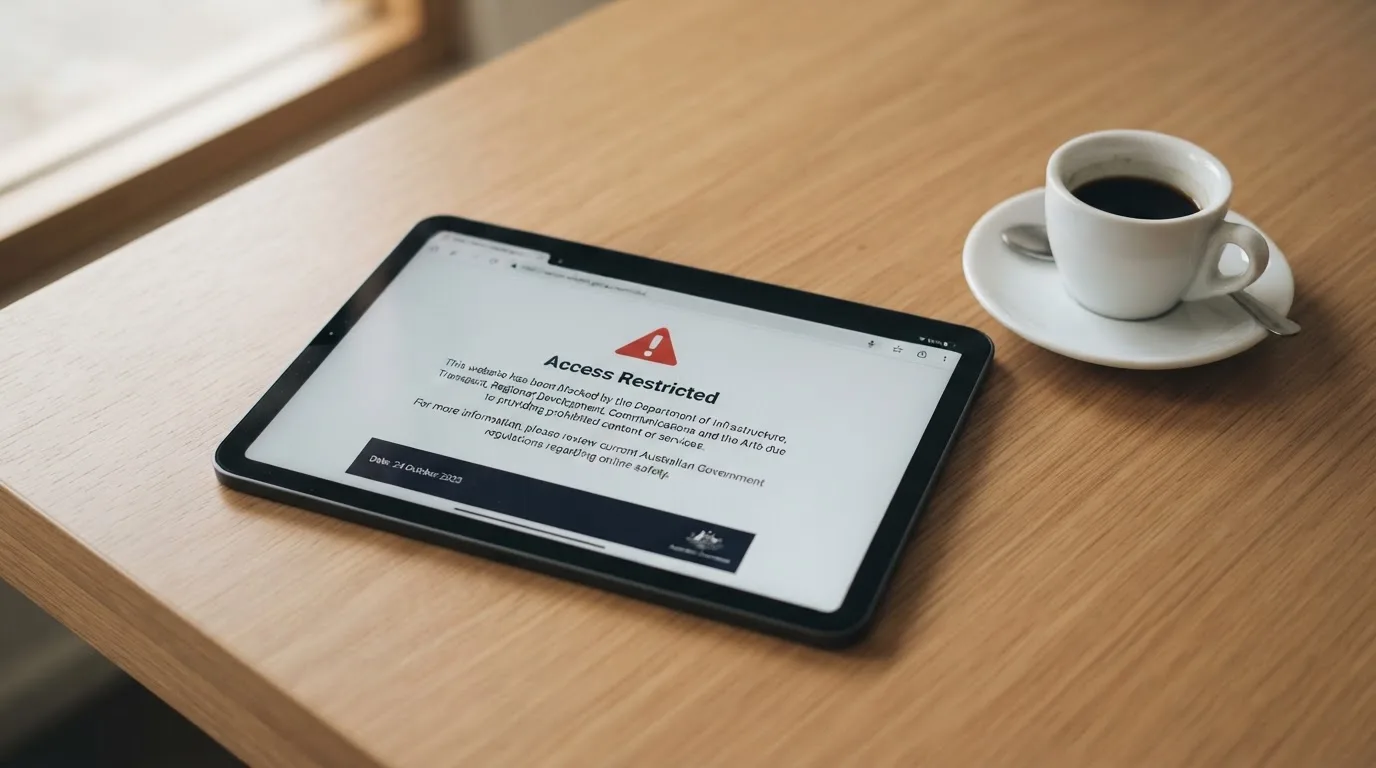
The ACMA investigates complaints, issues formal warnings, and directs Australian internet service providers to block sites. The blocking regime has been running since November 2019, when the first blocking request was filed. By the report of June 2026, the cumulative count of blocked illegal gambling and affiliate marketing websites had reached 1,751, with more than 230 unlicensed services having left the Australian market since the 2017 strengthening of the law.
The latest round, also reported in June 2026, added twelve more domains to the block list: 7Signs, ChromaBet, Donbet, Duospin, Freshbet, Slots Gem, Jacks Club, Lucky Start, Pointsbetz, Spinrise, Vinyl Casino and Wildsino. A site on the block list is unreachable from a major Australian ISP without a VPN, and a player who had a balance with one of those brands when the block landed has no Australian channel to recover it.
Formal warnings sit one step before the block. The ACMA names the operator behind the brand and the date the warning was issued, and gives the operator a window to wind down Australian-facing activity. A formal warning that goes unheeded is the usual prelude to a block.
The cost to the Australian reader, stated plainly
The H2 Gambling Capital 2025 report estimates that Australians lose about A$3.9 billion a year to illegal gambling sites. The same report found that the share of gambling going through legal channels in Australia fell from 74% in 2021 to 64%. The licensed product is being out-competed by the offshore one in dollar terms. That is the size of what the rating column sells to.
How fast does the ACMA actually move? A reading of the blocking rate
The ACMA’s blocking cadence is a number a reader can work with. The first blocking request was filed in November 2019, and the cumulative count of blocked sites reached 1,751 in the report dated 26 June 2026. That is roughly eighty months of activity, against a count of 1,751 — a long-run average somewhere in the mid-twenties per month.
That average is the misleading figure. The monthly rate varies sharply. Months can pass without a fresh round when no formal investigation has closed; in other months a single round can add a dozen or more. The cumulative number is best read as a band: somewhere in the order of low double-digit additions per month across 2026, with occasional quiet months and occasional heavier rounds. The point is that the rate is steady enough that an operator the ACMA has warned is more likely than not to find itself on a block list within a year.
What this means for a reader comparing brands is sharp: a brand with a fresh formal warning is at the head of the queue. A brand with an older warning has either already been blocked or has reached an arrangement with the regulator. A brand with no ACMA action to its name may simply be below the threshold the ACMA has prioritised — many offshore operators do — rather than compliant. The absence of a warning is not a clean bill of health.
Responsible play sits inside the licensed perimeter
What player protection Australia actually offers
BetStop, the National Self-Exclusion Register, has been live since August 2023. A person who registers with BetStop binds every Australian-licensed online and phone wagering service to refuse their account. The protection is meaningful because the licensed product is the product the register covers. An offshore casino is not connected to BetStop; a self-exclusion through BetStop does not stop an offshore account.
The National Gambling Helpline on 1800 858 858 is free and runs 24/7, with chat support at Gambling Help Online. The Helpline is the single best first step for anyone who finds that gambling is no longer a game they can put down.
What protection an offshore brand does not offer
An offshore brand offers no complaints body an Australian player can use. The licence displayed at the foot of an offshore page — Curaçao, Anjouan, occasionally Malta — is a regulator the Australian player cannot approach in a language they speak or in a jurisdiction that will compel the operator to attend. An offshore brand also offers no automatic intervention when play crosses a threshold. The deposit limits, the cooling-off periods, the self-exclusion tools the licensed Australian wagering market requires of itself do not bind an offshore operator.
Bank-side controls Australians can actually use
The bank is a layer the offshore operator does not control. Westpac’s gambling block works at the card level: it refuses authorisation of any transaction that carries the merchant category code “Betting/Casino Gambling” on eligible personal credit and debit cards. ANZ runs a similar block through its app and extends it to digital wallets — a transaction routed through Apple Pay on an eligible ANZ card is also caught. ANZ’s block has a 48-hour waiting period for removal, by design. Commonwealth Bank offers a comparable lock through the CommBank app.
The same merchant category code approach is what powers the Australian ban on credit-card funding for licensed online wagering, in force since 11 June 2024. A licensed wagering operator that accepts a credit-card deposit commits an offence; penalties run up to A$247,500. The rule covers linked digital wallets like Apple Pay when used to fund a credit account. The ban does not bind an offshore operator, but the bank-side block that powers it does.
Where the licensed product actually is — the pub, the club, the casino floor
Pokies and table games on a licensed premises
The lawful way to play a pokie or sit at a blackjack table in Australia is on the premises of a licensed venue. Pub and club gaming machines, casino floors, the product the state and territory regulators license and audit. The machine is in the room. The payout rate is on the machine’s label. The staff are trained to intervene if a player shows signs of harm. The state regulator has the venue’s name and licence number on file.
This is the form “top rated pokies near me” actually takes. The pub at the corner with the highest payout ratio on its bank of pokies is not on an affiliate comparison page. It is on the regulator’s register and on the venue’s own signage.
Crown Melbourne, The Star Sydney, and the state casino operators
Crown Melbourne, in operation under a Victorian licence, is one of two integrated resort licences in Australia, with The Star Sydney as the other. Both venues run the full suite of casino games under state supervision, with cashiers and surveillance and the responsible-conduct officers the licence requires. A punter who wants a casino floor in Australia walks into one of them, or into the smaller state-licensed venues in Queensland, Tasmania, Western Australia and the Northern Territory.
The Northern Territory Racing and Wagering Commission is a separate body, one that does no casino regulation but does licence the online bookmakers most Australian sports bettors use. The Commission regulates 52 of Australia’s online bookmakers, including Sportsbet, Bet365 and Ladbrokes — licensed in the Territory for tax reasons. The Commission runs with no full-time staff and meets once a month in Darwin, which is a fair summary of how lightly staffed a regulator can be while still meeting the legal definition of one.
The payout ratio on the venue’s own machine
The licensed venue publishes the return-to-player (RTP) ratio on each machine’s information screen. Australian gaming machine RTPs sit in the 85%–92% band as a matter of regulatory minimum, depending on the state and the venue class. The reader standing in front of the machine can read the figure on the screen. That is a level of transparency no offshore slot lobby offers, because an offshore slot lobby does not face an auditor who publishes.
Payments in Australia — the rails the offshore operator cannot promise
PayID and Osko, and what the speed claim rests on
PayID and Osko are the two halves of the instant-payments layer Australian banks run through the New Payments Platform. With Osko, a bank transfer between participating Australian banks arrives in under a minute, twenty-four hours a day, including weekends, whether the transfer is addressed to a BSB and account number or to a PayID. More than 25 million PayID identifiers had been registered on the platform as of April 2025, and over 100 Australian financial institutions are participating.
The relevant property for a comparison is what the speed rests on. The New Payments Platform is owned by New Payments Platform Australia Ltd, a non-profit whose shareholders include the Reserve Bank of Australia and the major banks. The platform’s monthly outage allowance is two minutes. The architecture is what makes the speed possible; the operator cannot promise the speed on its own.
PayID as a fraud check
PayID’s name-matching property is what most comparison pages do not mention. When a payer enters a PayID, the system displays the name of the account holder before the transfer is sent. AP+ states plainly that being asked to transfer money to a PayID on an illegal gambling site almost certainly means a scam site. The PayID’s name check is the layer an Australian player can use to verify a destination.
BPAY and the bill-payment rails
BPAY has operated in Australia since 1997 and is available in the online banking of over 140 banks and financial institutions, offered by over 95,000 businesses. The payer enters the Biller Code and the Customer Reference Number (CRN) printed on the bill; the funds arrive on the next business day. The service is run by Australian Payments Plus (AP+), the same operator that runs PayID and Osko. BPAY is a bill-payment rail; it is not a deposit method for an offshore casino, and the major banks’ merchant blocks treat a BPAY deposit to an unknown biller as a flag.
Apple Pay, Google Pay, Samsung Pay — and the surcharging wrinkle
By the end of 2025, Apple Pay, Google Pay and Samsung Pay transactions collectively accounted for around 45% of all card payments in Australia by number. Apple Pay itself charges no fee to the consumer; any surcharge the consumer sees comes from the merchant’s own card-processing fees, set by the card issuer and the merchant’s acquirer. Transaction limits and PIN requirements are set by the card issuer or the merchant, not by Apple.
The surcharging question is the wrinkle the Reserve Bank’s July 2025 review addressed. The review proposes removing surcharges on eftpos, Mastercard and Visa transactions only, explicitly leaving American Express outside the scope of the proposed ban. American Express operates as a three-party scheme — issuer, processor and network under one roof — rather than the four-party model Visa and Mastercard use, which is the structural reason the RBA’s proposal treats it differently.
The A$10,000 reporting rule, and what it does not cover
AUSTRAC’s threshold-transaction-report rule requires reporting of cash transfers of A$10,000 or more. The rule applies only to physical cash; ordinary electronic bank transfers are not subject to that per-transaction reporting requirement, regardless of the amount sent. An AUD$20,000 bank transfer between two Australian bank accounts is not a threshold-transaction report in the AUSTRAC sense. A cash deposit of the same amount at a casino cashier’s window is.
Bonuses, free spins, and the cost the headline never carries
What a welcome bonus actually pays
A welcome bonus is a credit the operator credits to a new account on the strength of a deposit. The headline number — “A$5,000 welcome package”, “200 free spins on the first four deposits” — is the maximum the player can collect if they deposit the maximum across the relevant number of deposits. The headline never carries the wagering requirement that turns the credit into a condition.
Wagering requirements sit between the bonus and a withdrawal. A 40x bonus requirement means the player must place bets totalling 40 times the bonus amount before any of the bonus-derived winnings can be withdrawn. The free-spin winnings are usually credited as bonus funds with their own wagering requirement, often 30x or 40x the winnings. A reader who treats the bonus headline as the value is reading the offer upside down. The value of the offer is the bonus less the expected cost of clearing the wagering at the game’s house edge.
Recurring promotions, and the same arithmetic in a smaller package
Cashback offers, reload bonuses, weekly free spin drops — the recurring offers are the operator’s way of keeping the player at the table. The arithmetic is the same arithmetic the welcome bonus runs, in a smaller envelope. A 25% reload bonus on a A$200 deposit carries the same 35x wagering; the headline is smaller but the percentage attached to the requirement is the same shape.
The cap the small print hides
The maximum-cashout cap is the term the small print hides. A free-spin package that credits “winnings up to A$500” sounds generous; a cap that limits the withdrawal to A$200 makes the offer smaller than the headline. The cap binds the player who wins more than the cap, which is exactly the player the marketing wants to attract.
The volatility the game lobby does not name
The volatility class of the slot the bonus is locked to is the third variable the headline never carries. A high-volatility slot on a 40x wagering requirement is a longer grind than a low-volatility slot on the same requirement. The player who reads only the headline sees a free-spin offer; the player who reads the fine print sees a requirement bound to a particular game’s variance. The variance is not a cost the wagering requirement names; it is the cost the requirement hides behind it.
The brands the ACMA has acted against, in their own context
The brands below are not a recommendation. They are the brands the ACMA has published a formal warning against for offering prohibited interactive gambling services to Australians. Each brand carries an ACMA action, an operator name as the regulator published it, and a date. The point of listing them is not to evaluate them as products. It is to make the regulatory record searchable in one place, in the order the ACMA has published it.
A reader comparing offshore operators should treat the ACMA action as the first column of the comparison, not the last. A brand the ACMA has warned is on the regulator’s radar; a brand the ACMA has blocked is unreachable from a major Australian ISP without a work-around; a brand with no published action is not necessarily untroubled, but its absence from the register is a fact the comparison should note.
RocketPlay
RocketPlay sits at the top of the ACMA’s enforcement list in 2026. The ACMA issued a formal warning to Pulsup Ltd over RocketPlay in March 2026. An earlier warning was issued to Dama N.V. covering RocketPlay in May 2022, as part of a six-brand warning round. Online casino games cannot be licensed anywhere in Australia, whatever licence the site displays at the foot of its homepage.
The relevance to the rating question is structural. A brand that has been named twice by the ACMA across two operator shells is a brand the regulator has not been able to keep out through one enforcement step. A reader looking at RocketPlay is looking at a brand that has reorganised itself around the regulator’s actions at least once. The gaming licence the site displays has not been revoked; it has simply never covered Australian players.
Level Up Casino
Level Up Casino was the subject of a formal warning to Dama N.V. in May 2022, as part of the same six-brand warning round that covered Bambet, Dazard, Rocketplay, Wild Tornado and Cobra Casinos. The Dama N.V. entity has continued to operate Level Up Casino under the same licence; the ACMA’s recourse in 2022 was the formal warning, not the block.
The brand is a useful case for the rating question because it has not changed its offering materially since the warning. It continues to advertise the welcome package; the package is the same shape, the wagering requirements are the same shape, and the licence displayed at the foot of the page is unchanged. The rating column on an affiliate page does not register the ACMA action. The reader’s job is to register it independently.
Woo Casino
The ACMA issued a formal warning to Dama N.V. over Woo Casino in March 2025. The brand sits inside the same operator shell as Level Up Casino, RocketPlay and Spirit Casino, with the same offshore licence behind it. The ACMA’s action in 2025 is the second round of enforcement against the Dama N.V. group; the first round in 2022 covered a different set of brands within the same operator.
A reader comparing Woo Casino to the brands the ACMA has not warned against would see a similar product with the same licence. The difference is the regulator’s record. Woo Casino is a brand the ACMA has named; a brand the ACMA has not named is, on this comparison, an unanswered question rather than a clean bill.
Spirit Casino
The ACMA issued a formal warning to Dama N.V. over Spirit Casino in May 2025, two months after the Woo Casino warning. The brand and Woo Casino share the operator shell and the licence; the comparison between the two is mostly cosmetic. The regulatory record treats them as separate names for the same underlying operator, and the ACMA’s enforcement has followed the brand rather than the licence.
The case is a useful one for the rating question because it makes the structure of the offshore market visible. One operator, several brands, separate ACMA actions. A reader who treats each brand as an independent rating candidate is comparing the same product under different labels.
National Casino
The ACMA issued a formal warning to Consolutetish S.R.L. over National Casino in July 2025. The brand sits inside the same Consolutetish S.R.L. shell as Bizzo Casino, which was named in the same enforcement round. National Casino’s relationship to BetStop and AUSTRAC is through the brand’s own offshore structure rather than the Australian register; the brand is not licensed in Australia and does not appear on BetStop’s participant list.
The reader looking at National Casino is looking at a brand whose operator has been named once by the ACMA. The licence displayed at the foot of the National Casino homepage is an offshore licence; the Australian protection regime does not extend to it.
Bizzo Casino
Bizzo Casino was the subject of two ACMA actions. The first, in 2022, was a formal warning to TechSolutions (CY) Group Limited and TechSolutions Group N.V. The second, in July 2025, was a formal warning to Consolutetish S.R.L. The brand has reorganised its operating entity at least once across the ACMA’s enforcement rounds; the brand name and the marketing have continued through both.
A reader treating Bizzo Casino as the 2022 brand or the 2025 brand is comparing the same offering under different operator names. The ACMA’s action follows the operator entity rather than the brand. The reader comparing Bizzo Casino to other brands should note the brand has been named by the ACMA twice, in two different enforcement rounds, against two different operating entities.
Ignition Casino
The ACMA issued a formal warning to Bamboo Media over Ignition Casino in July 2025. The brand is one of two the July 2025 round covered (the other being National Casino, under a different operator). Ignition Casino’s relationship to the Australian consumer is through the same offshore structure the rest of the market uses; the ACMA’s warning is the most recent entry on the regulator’s record for the brand.
The case is the comparison point for a brand whose warning is fresh. A reader comparing Ignition Casino to a brand with an older warning would see a more recent regulator action. A reader comparing Ignition Casino to a brand with no published action would see a regulator record that exists at all.
Instant Casino
The ACMA issued a formal warning to EOD Code SRL over Instant Casino in February 2025. The brand sits inside a smaller operator shell than the Dama N.V. group or Consolutetish S.R.L. The ACMA’s action in 2025 is the only entry on the regulator’s record for this specific operator; the brand has not been re-warned in subsequent rounds.
The reader looking at Instant Casino is looking at a brand with a single formal warning from early 2025. The next step on the regulator’s timeline would be either a fresh round of action or a quietening of the file. The rating column on an affiliate page does not include that timeline; the reader’s job is to add it.
Jackbit
The ACMA issued a formal warning to Ryker B.V. over Jackbit and CasinOK in April 2026. The April 2026 action is one of the most recent entries on the regulator’s record for the 2026 round. Jackbit’s relationship to the Australian consumer is through the Ryker B.V. shell; the brand has not been the subject of an earlier ACMA round.
A reader looking at Jackbit is looking at a brand with a fresh ACMA action in 2026. The brand sits in the queue for the next blocking round. The rating column does not register the position in the queue; the ACMA’s record does.
Casino Intense
The ACMA issued a formal warning to Sterplay Holding Ltd over Casino Intense in April 2025. The brand sits inside the Sterplay Holding Ltd shell, a smaller operator than the major groups on the ACMA’s list. Casino Intense’s relationship to BetStop and AUSTRAC is through the brand’s own offshore structure; the brand does not appear on BetStop’s participant list.
A reader comparing Casino Intense to the brands above is comparing a brand with a single 2025 warning to brands with longer regulatory records. The comparison is structural: Casino Intense is one warning deep; RocketPlay is two enforcement rounds deep; the rest sit between.
Sky Crown
The ACMA issued a formal warning to Hollycorn N.V. over Sky Crown and Blue Leo, as published in the formal warning PDF of September 2022. The brand sits inside the Hollycorn N.V. operator shell, a smaller group than Dama N.V. or Consolutetish S.R.L. The Sky Crown warning is one of the earlier entries on the ACMA’s enforcement record; the brand has not been re-warned in subsequent rounds.
The case is the comparison point for a brand with an older warning. A reader comparing Sky Crown to a brand with a 2026 warning would see a longer gap on the regulator’s record. The absence of a fresh warning does not mean the regulator has cleared the brand; it means the file is quiet.
Side-by-side: the ACMA action, the operator, the date
The comparison below is a one-line summary of the ACMA’s enforcement record across the eleven brands covered in this section. It is not a recommendation; it is the regulator’s record laid out for comparison.
| Brand | ACMA action and date | Operator named by the ACMA | Subject support |
|---|---|---|---|
| RocketPlay | March 2026 (Pulsup Ltd); May 2022 (Dama N.V.) | Pulsup Ltd; Dama N.V. | listings only — Gambling Insider |
| Level Up Casino | May 2022 | Dama N.V. | listings only — Westpac |
| Woo Casino | March 2025 | Dama N.V. | no data |
| Spirit Casino | May 2025 | Dama N.V. | no data |
| National Casino | July 2025 | Consolutetish S.R.L. | listings only — acma.gov.au, austrac.gov.au, betstop.gov.au |
| Bizzo Casino | July 2025 (Consolutetish S.R.L.); 2022 (TechSolutions) | Consolutetish S.R.L.; TechSolutions (CY) Group Ltd / TechSolutions Group N.V. | listings only — Gambling Insider |
| Ignition Casino | July 2025 | Bamboo Media | no data |
| Instant Casino | February 2025 | EOD Code SRL | listings only — EcoPayz, PayID |
| Jackbit | April 2026 | Ryker B.V. | no data |
| Casino Intense | April 2025 | Sterplay Holding Ltd | listings only — austrac.gov.au, betstop.gov.au, Gambling Insider |
| Sky Crown | September 2022 | Hollycorn N.V. | no data |
The brands with two dates on the ACMA action column are the brands the regulator has chased across more than one operating round. The brands with no data in the subject support column are the brands where the only sources are the operator’s own marketing. The reader looking for an independent view of any of these brands will not find one in the marketing material that gives the rating column its numbers.
What the rating column is really selling
A reader landing on a “top rated online casinos Australia 2026” page is being offered the operator’s own marketing brochure, with a star count beside it. The brochure is the operator’s; the star count is the affiliate’s; the player is the product. The arithmetic the operator does not publish — the wagering requirement at the game’s house edge, the cap the small print hides, the volatility the game lobby does not name — is the cost the reader pays for taking the rating at face value.
The licensed alternative is in the same postcode as the reader. The pub with the highest payout ratio on its bank of pokies, the club with the cashiers and the surveillance cameras, the state-licensed casino floor in Crown Melbourne or The Star Sydney. The RTPs are on the machine’s information screen. The staff are trained to intervene. The regulator has the venue on file. The bet is the bet; the rest is the marketing that comes with it.
Mobile and apps — the licensed experience, and what offshore apps actually are
The licensed wagering app
A licensed Australian wagering app — Sportsbet, Bet365, Ladbrokes, the bookmakers the Northern Territory Racing and Wagering Commission regulates — runs on the same merchant category code regime as the desktop site, with the same credit-card ban, the same bank-side block compatibility, and the same BetStop participation. The app store version is a thinner skin over the same licensed product. A punter who downloads the app is downloading a thin client for the licensed product they would reach on the desktop.
The offshore casino app
An offshore casino app is a different object. It is not available through the Australian Apple App Store or Google Play Store for the simple reason that the App Store and Play Store enforce their own rules against unlicensed gambling apps in Australia. What an Australian reader finds is a “web app” the reader installs by changing the phone’s settings — a process that bypasses the store’s review and the store’s recourse if the app is malicious. The web app is a wrapper around the same offshore website the desktop version runs.
The “top rated casino app” column on a comparison page is rating the wrapper, not the product. The product is the offshore casino; the wrapper is the icon on the home screen. The rating does not register the absence of store-level recourse.
Why no app on the store matters
An app on the Australian App Store or Google Play Store has been through a review process that includes a check on the developer’s identity and the product’s compliance with local law. A web app installed outside the store has not. The store review is not a quality check on the casino’s payout rate; it is a check that the developer can be found if the product misbehaves. An offshore casino with a web-app wrapper cannot be found through the store’s channel, because the store does not have the developer on file.
The “top rated casino app” column conflates two different things: the operator’s product, and the developer’s accountability. The reader who reads the star count is reading the operator’s product. The reader who reads the developer’s accountability is reading the absence of a channel that would have one.
Games, providers, and the audit the operator does not invite
The providers an offshore casino lists
The names that recur on an offshore casino’s provider list are the names any slot fan will recognise: NetEnt, Microgaming, Pragmatic Play, Evolution for live dealer, Betsoft for the 3D slots, and a longer tail of studios. The studios licence the games to the casino under a revenue share; the casino hosts the games on its platform; the player plays the games through the casino’s lobby. The audit the provider does on the game is a contractual check the provider runs on the casino, not an audit the regulator runs on the player.
A “top rated” list of providers is rating the breadth of the lobby, not the payout the player sees. A casino with 50 providers on its lobby is not a casino with a higher payout rate than a casino with 25; it is a casino with more licences to display. The rating column does not include the RTP comparison the player would need to read the lobby properly.
Live dealer and the supplier’s licence
Live dealer games run on the supplier’s licence rather than the casino’s. Evolution, Pragmatic Play Live, and the smaller studios licence the studio, the dealers and the equipment to the casino under the same revenue share the slot games use. A player who sits at an Evolution live dealer table in an offshore casino is sitting at a supplier-licensed game running on a casino-licensed platform. The audit the supplier runs on the game is the audit the player reads; the casino’s audit is the audit the player cannot read.
A “top rated live dealer” column is rating the casino’s choice of supplier, not the casino’s own product. The choice is a marketing choice dressed as a quality claim. The reader who reads the star count is reading the supplier’s brand; the reader who reads the supplier’s audit is reading the report the supplier publishes on its own product.
Pokies and the paytable the operator does not name
An offshore pokie lobby lists the games by their studio and their name; the paytable lives behind the game’s information button. A 5-reel, 25-line video pokie carries a paytable that names the RTP, the volatility class, the bonus feature triggers, and the maximum payout. The paytable is the game’s contract with the player. The contract is published by the studio, hosted by the casino, and read by the player who clicks the information button before spinning.
A “top rated pokies” column is rating the lobby, not the paytable. The lobby is the operator’s choice; the paytable is the studio’s contract. The reader who reads the star count is reading the lobby. The reader who reads the paytable is reading the contract the operator has not asked the player to read.
The reading the page is asking the reader to do
A “top rated” page is asking the reader to do the operator’s marketing work for it. The page is asking the reader to take a star count at face value, to take an advertised payout speed at face value, to take an advertised bonus size at face value, and to take an advertised licence at face value. None of those four “facts” survive a check against the ACMA’s register, against the bank’s merchant block, against BetStop’s participant list, or against the wagering requirement at the game’s house edge.
The reading the page is asking the reader to do instead is the reading the regulator and the bank do. The regulator’s record is published; the bank’s block is on; the offshore brand sits outside both. The licensed alternative sits in the same postcode as the reader. The pub with the highest payout ratio on its pokies, the club with the cashier and the surveillance, the state casino floor in Crown Melbourne or The Star Sydney — the licensed product is the product with the regulator on file.
Frequently asked questions
What actually makes an online casino “top rated” — player reviews, payout speed, or something else?
The label is built on a mix of welcome bonus size, advertised payout speed, the breadth of the game lobby, recurring promotions, and the licence displayed at the foot of the page. None of those criteria asks whether the brand can lawfully accept an Australian deposit. Player reviews are the smallest input; the affiliate business model is the largest.
Do top-rated crypto casino lists use the same rating criteria as top-rated fiat casino lists?
The five criteria above apply to both, with the payment-method column swapped. A crypto-friendly list ranks deposit and withdrawal speed on the crypto rail, and adds a coin-selection column. The wagering-requirement arithmetic is the same shape because the games are the same games; the volatility class is the same class; the house edge is the same edge. The legal status of the brand in Australia is unchanged: the Interactive Gambling Act 2001 makes no distinction between crypto-funded and fiat-funded offshore casino games.
Does a high star rating change whether an offshore online casino is actually licensed for Australians?
No. The Interactive Gambling Act 2001 makes it an offence to provide online casino games to a person physically in Australia, regardless of the licence the operator displays. A Curaçao or Anjouan badge at the foot of the page does not extend to Australian players. A star rating is an affiliate’s editorial placement, not an Australian regulatory approval. The two are different documents issued by different bodies.
What’s the difference between a “top rated” casino app and a “top rated” casino website in these lists?
The website is reached through a browser and is governed by the ACMA’s blocking regime and the bank’s merchant block. The app is a wrapper around the same offshore site, installed outside the App Store or Play Store because those stores will not list an unlicensed casino app for Australia. The wrapper changes the icon on the home screen; it does not change the product, the operator, or the regulatory status. The store-level recourse a reader would normally have does not extend to a web app installed outside the store.
How do top-rated pokies rankings differ from top-rated roulette or slots rankings specifically?
Pokies rankings tend to weight the lobby’s breadth and the provider list. Roulette rankings tend to weight the live dealer supplier. Slots rankings tend to weight the volatility class and the bonus feature frequency. The criteria are different; the underlying constraint is the same. None of the three ranking types asks whether the brand can lawfully take an Australian deposit. The game-level ranking and the legal-status question are two separate columns on a comparison page that should both be read.
Where near someone would a genuinely top-rated, licensed casino venue actually be found in Australia?
A licensed pub, club or casino floor in the state or territory the reader lives in. The state regulator has the venue’s name and licence number on file. Crown Melbourne and The Star Sydney are the two integrated resort licences, with smaller state-licensed venues in Queensland, Tasmania, Western Australia and the Northern Territory. The pokie on the venue’s floor is the pokie the regulator has audited; the payout ratio is on the machine’s information screen. That is the form “top rated pokies near me” actually takes in Australia.