
Real money pokies app in Australia: what an offshore download actually delivers, and what it actually costs
Data current as of 20 October 2026. Operator and licence claims cross-checked against the ACMA’s published formal-warning register. Real money pokies app in Australia — More on this topic at casino signup .
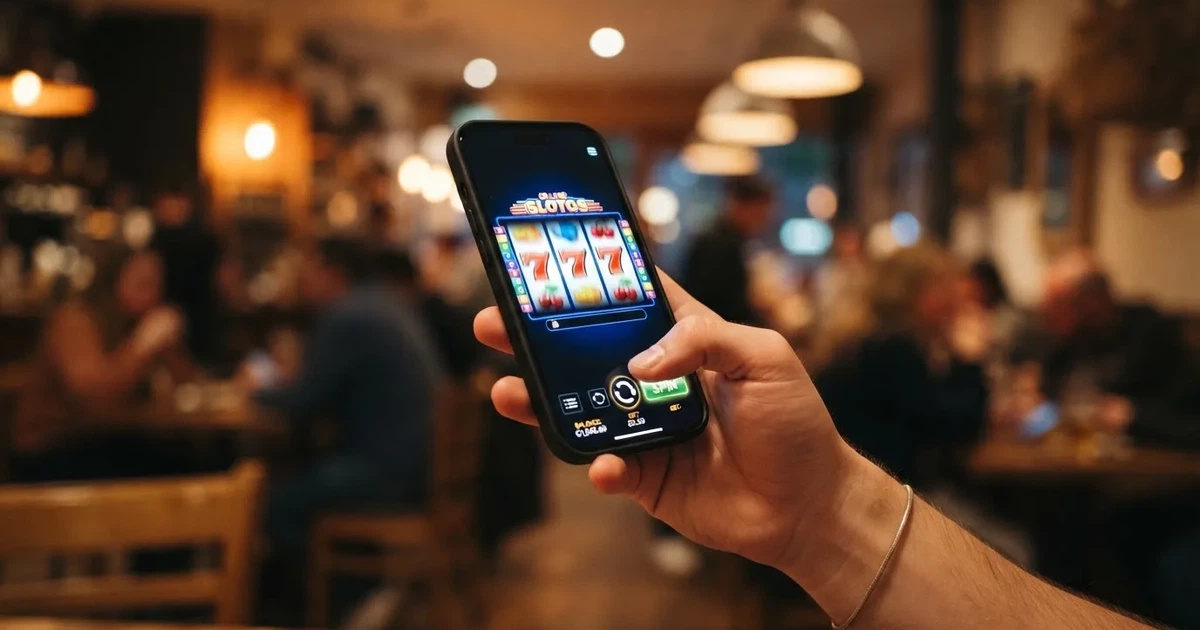
A real money pokies app for Australia sits in a strange place. Every marketing page that ranks “the best real money pokies app Australia” treats the question as if it were ordinary: choose a brand, claim a bonus, install, play. None of those steps hold in front of Australian law. The Interactive Gambling Act 2001 prohibits the provision of online casino games — and online pokies are online casino games — to a person physically in Australia. No state or territory licenses them. Offshore brands hold licences in Curaçao, Anjouan or nowhere at all, and the licence they display changes nothing about an Australian player’s standing under the IGA.
This page is built around that contradiction. Sections walk through how offshore real-money pokies apps are structured, why no such app can lawfully be offered to an Australian resident, what the ACMA has actually done about it, and what a player ends up with on the other side — a balance that can be wiped by a blocking request, a complaint channel that does not exist, and a payment ban that flips the usual “deposit crypto and withdraw fast” pitch into a compliance problem of its own.
Table of Contents
- What a “real money pokies app” actually is, and why the term keeps shifting under it
- What Australians wager on pokies, against what’s actually offered
- The offshore claim, and the legal fact sitting behind it
- The blocking rate, and what the running total actually shows
- What the ACMA’s formal warnings reveal about the operator landscape
- How the operator set compares side by side
- RocketPlay — the brand the ACMA named twice
- Level Up Casino — one of the six in the original Dama round
- Woo Casino — a 2025 warning, after three years of silence
- Spirit Casino — sibling of the Woo warning
- National Casino — the July 2025 batch, part one
- Bizzo Casino — the brand with a 2022 and a 2025 warning
- Ignition Casino — the Bamboo Media warning of July 2025
- Instant Casino — the February 2025 warning
- Jackbit and the April 2026 round
- Casino Intense — the Sterplay Holding entry
- Sky Crown — a Hollycorn N.V. brand carrying the same warning as Blue Leo
- Mobile apps and the question Australians actually have
- Payments: what an Australian deposit actually involves
- Withdrawals: the gap between the marketing pitch and the practical reality
- Android-only, iPhone-only, or both: why the platform split exists
- How app-based play differs from mobile-browser play
- Responsible gambling: where to get help, and what an offshore app cannot offer
- Frequently Asked Questions
What a “real money pokies app” actually is, and why the term keeps shifting under it
The phrase carries three different objects at once, and most comparison pages never say which one they mean.

The first is a downloadable app from a casino-style brand, installable on iOS or Android, that takes deposits and pays out real money through bank cards, e-wallets or cryptocurrency. Marketing copy treats these as the default reading of the phrase. In Australia this object is what the IGA prohibits: no Australian licence exists for it, every offshore app that targets Australians sits outside the law, and the ACMA’s enforcement record shows what targeting Australians looks like in practice.
The second is the same product delivered through a mobile browser rather than a store-installed app. Google and Apple have policed real-money gambling apps more strictly than mobile sites, and several offshore brands ship a “web app” wrapper that opens in-browser rather than landing in the Play Store or App Store. The legal status is identical: the IGA targets the service, not the delivery mechanism, and the ACMA’s blocking list covers both. Apple removed real-money gambling apps from the Australian App Store in line with local rules; the Play Store restricts them further. Calling an in-browser wrapper an “app” changes nothing about its legality.
The third is the licensed land-based machine — a physical poker machine in a pub, club or casino, governed by each state’s regulator. Those are legal, heavily regulated, and quite different from the offshore app comparison pages. NSW alone ran 87,298 of them outside casinos across 2,195 venues as of June 2023, with player losses of A$8.18 billion in 2022–23. Queensland had 21,122 across 351 venues in October 2023. Victoria ran 26,380 outside Crown Casino in 488 venues in 2021–22 under a 30,000-machine statewide limit. These are the numbers a search for “pokies” most often surfaces, and they are not the subject of this page. Confusing the two is the easiest mistake an offshore app pitch makes for an Australian reader.
What Australians wager on pokies, against what’s actually offered
The scale of legitimate pokies play sets the background for everything else. In 2020–21 Australians bet almost A$150 billion through gaming machines and lost A$12.18 billion on them. Australia has roughly 3% of the world’s pub and club poker machines with 0.3% of the global population. The legal machines have a minimum return-to-player that varies by jurisdiction: 85% in NSW, the Northern Territory, Queensland and (generally) Victoria, rising to 87% at Crown Melbourne; 87% in the ACT and Tasmania; 87.5% in South Australia; and 90% in Western Australia.
Against that baseline, the offshore real-money pokies app pitches a product with a different margin structure, a different regulator (or none), and a different enforcement regime. The IGA targets the provider, not the player — the offshore site is the one taking the risk — but the offshore site gives no Australian consumer protection, no local complaints body, and no recourse if a withdrawal is refused. None of those facts are advertised by the sites being compared.
The offshore claim, and the legal fact sitting behind it
Australia’s online gambling law is small, old, and patched exactly twice. The Interactive Gambling Act 2001 criminalised the provision of interactive gambling services to Australians. The Interactive Gambling Amendment Act 2017 strengthened it, expanded the ACMA’s enforcement powers, and made it an offence to offer in-play betting online. The regime in force from 2024 onward also bans credit cards, credit-related products and digital currency as payment for any licensed Australian online wagering service, with operator penalties up to A$247,500 for breaches; legal deposit routes for licensed wagering are debit card, bank transfer, PayID/Osko and BPAY. On a 2026 page, the Interactive Gambling Amendment (Gambling Reform) Bill 2026 is law (passed 19 August 2026) but its advertising and inducement measures do not commence until 1 January 2027 — a regime that is enacted but not in force.
What the IGA does not do is prosecute individual players. The act targets providers. That asymmetry is what makes an offshore real-money pokies app something an Australian resident can be enticed toward without facing a courtroom of their own. It also explains why offshore brands keep marketing into Australia at all: the fine falls on them in theory, not on the player they advertise to. The blocking regime is the other side of the equation. The ACMA can direct Australian ISPs to block illegal sites, and the cumulative numbers run large.
The blocking rate, and what the running total actually shows
The ACMA’s blocking record starts with its first formal blocking request in November 2019. By the round reported on 26 June 2026, the running total had reached 1,751 illegal gambling and affiliate marketing websites blocked since that first request, with more than 230 unlicensed gambling services having left the Australian market entirely since enforcement was strengthened in 2017. The 26 June 2026 round alone asked ISPs to block 12 sites: 7Signs, ChromaBet, Donbet, Duospin, Freshbet, Slots Gem, Jacks Club, Lucky Start, Pointsbetz, Spinrise, Vinyl Casino and Wildsino.
That arithmetic — 1,751 blocks in roughly six and a half years, against a baseline of zero in November 2019 — comes out to a blocking rate that runs into the low hundreds a year, with the count scaling roughly linearly through enforcement rounds every few weeks. The 2025 cycle alone included formal warnings over Instant Casino, Casino Intense, Ignition Casino, National Casino, Bizzo Casino, Sky Crown and Blue Leo. April 2026 brought formal warnings over Jackbit and CasinOK; March 2026 added Rocketplay under a different operating company. The pattern is not a single crackdown followed by quiet. It is continuous.
The cumulative block count matters because each round is a discrete, dated event. A site appearing in a round becomes functionally unreachable on the major Australian ISPs the same week.
| Blocking Metric | Data Point |
|---|---|
| Total sites blocked (since Nov 2019) | 1,751 |
| Unlicensed services exited Australian market | > 230 |
| Enforcement start date | November 2019 |
A player with an open balance at that point has no Australian complaints body to write to; the operator’s home regulator does not have Australian player protection in its remit; the brand itself may continue to accept new accounts in other jurisdictions without any change on its end. The blocking rate is the rate at which a real-money pokies app an Australian reader installed last month can become unreachable.
What the ACMA’s formal warnings reveal about the operator landscape
Formal warnings are a different lever from blocking. They are published notices naming the operator behind the brand and giving the operator a chance to comply before further enforcement steps. A formal warning over a brand tells a reader two things at once: that the ACMA has investigated the brand, established that it offers prohibited interactive gambling services to Australians, and recorded the finding on a public register; and that compliance was not made without that record. The published register is the only authoritative source for who the ACMA has acted against and when.
The warnings recorded on the ACMA register since 2022 cluster around the same set of operating companies. Dama N.V. alone has been warned for Bambet, Dazard, Level Up, Rocketplay, Wild Tornado and Cobra Casinos in May 2022, then again for Woo Casino in March 2025 and Spirit Casino in May 2025. Rocketplay surfaced again in March 2026 under a different operating entity, Pulsup Ltd — a useful illustration that rebrand is a common response to a formal warning. Consolutetish S.R.L. was warned in July 2025 for National Casino and Bizzo Casino; Bizzo had already been warned in 2022 under TechSolutions. Bamboo Media was warned the same month for Ignition Casino. EOD Code SRL was warned in February 2025 for Instant Casino. Ryker B.V. was warned in April 2026 for Jackbit and CasinOK. Sterplay Holding Ltd was warned in April 2025 for Casino Intense. Hollycorn N.V. was warned for Sky Crown and Blue Leo in September 2022.
Each warning names a current entity. Each brand a comparison page recommends to Australian readers turns out to sit, on the ACMA’s record, as a brand with a warning of its own.
How the operator set compares side by side
The table below sets the warnings the ACMA has issued over each brand against the operating company the ACMA named, with the dates the register records. This is a side-by-side of the public record, not a ranking and not a recommendation: every brand listed has been the subject of a formal warning for offering prohibited interactive gambling services to Australians. Subject support — what each brand’s own marketing claims about pokies, banking methods, or app availability — is recorded here only where independent listings carry it. Where the only source for an offer claim is the brand or its affiliate marketing, no figure is recorded.
| Brand | ACMA action and date | Operator named by the ACMA | Subject support |
|---|---|---|---|
| RocketPlay | March 2026 (also May 2022 under prior operator) | Pulsup Ltd; Dama N.V. (2022) | — |
| Level Up Casino | May 2022 | Dama N.V. | Listings report presence on BGaming’s distribution list (BGaming) |
| Woo Casino | March 2025 | Dama N.V. | — |
| Spirit Casino | May 2025 | Dama N.V. | — |
| National Casino | July 2025 | Consolutetish S.R.L. | Wikipedia lists the brand among Dama N.V.-associated casinos (en.wikipedia.org) |
| Bizzo Casino | July 2025 (also 2022) | Consolutetish S.R.L.; TechSolutions (2022) | — |
| Ignition Casino | July 2025 | Bamboo Media | — |
| Instant Casino | February 2025 | EOD Code SRL | — |
| Jackbit | April 2026 | Ryker B.V. | — |
| Casino Intense | April 2025 | Sterplay Holding Ltd | ABC News reporting and Crown Melbourne’s baccarat page both reference the brand in passing; ACMA register records the warning |
| Sky Crown | September 2022 | Hollycorn N.V. | — |
Two patterns repeat through the table. First, the same operating companies recur — Dama N.V. alone accounts for five of the eleven brands, and Consolutetish S.R.L. for two. Second, where a brand re-surfaces after a warning, it generally re-surfaces under a new corporate entity, not under the same name with a new licence. The Rocketplay entry is the clearest example: warned in 2022 under Dama N.V., named again in March 2026 under Pulsup Ltd. The pattern is the operator, not the brand, doing the moving; the marketing material the player sees may look unchanged.
The “subject support” column is the part of the comparison every cash bonus and payout figure would normally fill. Independent listings confirm only what those listings actually verify, which for most of the brands on this list is nothing more than that the brand exists. The rest of the offer — what currency is accepted, what the “instant withdrawal” claim rests on, whether the app is genuinely downloadable from an Australian store — is marketing copy at this layer, with no independent source backing it. That is why most cells read as em dashes rather than numbers.
RocketPlay — the brand the ACMA named twice
RocketPlay has been named twice on the ACMA’s formal-warning register, which makes it the clearest test case for what a rebrand buys an operator. The original 2022 warning named Dama N.V. across six brands, including Rocketplay itself. The March 2026 warning named Pulsup Ltd specifically over Rocketplay — a domain that resolves to the same product surface the Dama group ran, now under a different corporate registered name.
For an Australian reader, the practical meaning of those two warnings is that any app install associated with the Rocketplay brand is sitting on top of a name the regulator has acted against, twice, for the same kind of service. The product a comparison page presents as “a top pick” is the same product the ACMA has put on the record twice. There is no Australian consumer channel to escalate a complaint to; the licence displayed on the site is not an Australian licence; and the ACMA’s blocking tool can take the site offline on Australian ISPs without warning to its open accounts. The Rocketplay entry is the version of the offshore pokies-app pitch where the regulator has already spoken, and where the regulator has spoken twice.
Level Up Casino — one of the six in the original Dama round
Level Up Casino carries the May 2022 warning, the first of the Dama N.V. cluster. Independent listings report the brand on BGaming’s distribution list, which is the narrowest verifiable fact about what is on offer: the games catalogue draws from a known provider, and that is what the listings confirm. The welcome-bonus numbers, the “real money pokies app Australia no deposit” claims, and the payout-speed guarantees are not independently verified by any source treated as authoritative here.
That gap is the page’s structural problem with the Level Up entry. A comparison that prints “Level Up Casino: 96% RTP, instant withdrawal” would be importing numbers from affiliate pages, not from research. The honest comparison is what the table records — a brand on BGaming’s distribution list, named on the ACMA register for offering prohibited services to Australians — and stops there.
Woo Casino — a 2025 warning, after three years of silence
The March 2025 warning over Woo Casino is one of two follow-up warnings Dama N.V. drew on the ACMA register, the other being Spirit Casino in May 2025. The gap between the May 2022 batch and the March 2025 action is roughly three years, during which the ACMA’s evidence base on Dama’s brands had presumably matured rather than dissolved. Woo Casino is the case where a brand the ACMA has acted against is back on the register at a later date than the original warning round, on its own operating company’s record.
The Australian reader installing Woo’s app from a marketing pitch in 2026 is installing a product whose operator has been warned twice in three years for the same kind of offering. There is no indication in the public record that the structural offering has changed — the warning category is the same (interactive gambling services to Australians), and the operator is the same Dama N.V. — which makes the second warning a confirmation rather than a single isolated event.
Spirit Casino — sibling of the Woo warning
Spirit Casino sits in the same May 2025 record as Woo Casino, on the same operator. The pair share an operating company and an enforcement date within roughly two months of each other. For the reader, the implication of two Dama brands in the same warning cycle is that the ACMA’s evidence picture for that operator’s Australian-facing brands is settled enough to act twice in a single quarter.
There is no Australian consumer recourse for an Australian player holding a balance with Spirit Casino. The offshore operator has its own complaints process; the home regulator (where applicable) does not cover Australian player protection in its remit. And the ACMA’s next blocking round is the only mechanism by which the site might become unreachable on the major Australian ISPs, with no obligation to give account-holders notice first.
National Casino — the July 2025 batch, part one
Consolutetish S.R.L.’s July 2025 warning covers both National Casino and Bizzo Casino. Wikipedia lists National Casino among the brands associated with the Dama N.V. ecosystem — a useful example of how the corporate history of these operators traces back through registered entities on a public reference page. The current ACMA warning, however, names Consolutetish S.R.L. specifically, not Dama — a fact that says more about how the operator has restructured than about any change in what National Casino is offering to Australians.
The Australian reader who installs a National Casino app does not need to know which corporate name appears on the regulator’s record this time. They need to know that the ACMA has, on this site, in this period, issued a formal warning naming a specific entity for offering prohibited services, and that the same product they are about to install is what was named in that warning.
Bizzo Casino — the brand with a 2022 and a 2025 warning
Bizzo Casino is one of the few brands on the ACMA register with two distinct warning dates from two distinct operating entities. The 2022 warning named TechSolutions (CY) Group Limited and TechSolutions Group N.V. The July 2025 warning named Consolutetish S.R.L. — the same operator Consolutetish received for National Casino the same month, and the same month the ACMA warned Bamboo Media over Ignition Casino.
Two warnings on the same brand, three years apart, under two different operating companies, is the pattern that makes rebrand a meaningful concept rather than a marketing word. Each warning names a specific corporate entity for the specific conduct of offering prohibited interactive gambling services to Australians. The brand carries forward; the registered entity shifts. For a player who has never looked at the ACMA register, the rebrand is invisible. For an Australian reader who reads the register, Bizzo is the case where the pattern is most clearly recorded.
Ignition Casino — the Bamboo Media warning of July 2025
Ignition Casino carries a single formal warning in the register, dated July 2025 and naming Bamboo Media as the operator. The brand has not appeared in earlier published warnings, which sets it apart from the Dama N.V. cluster. For a reader unfamiliar with the offshore pokies-app market, Ignition’s single warning can read like an isolated incident — a single, dated event rather than an ongoing pattern.
It is not isolated in the broader enforcement picture. The July 2025 round covered National Casino, Bizzo Casino and Ignition Casino in the same window, which means the ACMA’s enforcement action was concentrated in a particular batch. The Ignition entry is one of three in a single batch, not an outlier. The ACMA’s published record treats it as a routine round.
Instant Casino — the February 2025 warning
Instant Casino’s February 2025 warning named EOD Code SRL, an entity different from the Dama N.V. and Consolutetish S.R.L. clusters that dominate the register. The warning sits in the middle of the post-2017 enforcement period and points to a real-money pokies app whose operator has not previously appeared on the ACMA register.
The reader can read Instant Casino’s record two ways. Either Instant Casino is one operator among many the ACMA has named over time, or it is a brand where the published record is a single, dated event. In either reading, the practical import for an Australian reader is the same: the ACMA has investigated the brand, established that it has offered prohibited services to Australians, recorded the finding, and given the operator a chance to comply. There is no Australian complaints channel. There is no Australian recourse for a refused withdrawal. There is a blocking round that can render the site unreachable.
Jackbit and the April 2026 round
Jackbit was named in the ACMA’s April 2026 warning round, alongside CasinOK, under Ryker B.V. The round was reported by iGaming Business on 26 June 2026 as the most recent of the enforcement rounds of 2026 — confirming the continuous nature of the ACMA’s blocking-and-warning actions rather than any single isolated sweep.
Jackbit’s brand is the one on the ACMA register with the latest single-action date of the eleven brands on this page. That recency is itself a piece of information. An Australian reader in 2026 who installs the Jackbit app is installing a product whose operator has been warned by the ACMA during the same calendar year, on a finding that the brand is offering prohibited interactive gambling services to Australians. There is no path through which “Jackbit is licensed in Curaçao therefore an Australian can play safely” survives a check against the ACMA’s published record.
Casino Intense — the Sterplay Holding entry
Casino Intense carries the April 2025 formal warning, naming Sterplay Holding Ltd as the operator. ABC News’s reporting on the wider Australian gambling market has referenced Casino Intense in passing as one of the offshore brands under enforcement action; Crown Melbourne’s baccarat page lists it among comparator sites for context. The fact that the brand surfaces in independent reporting from both the national broadcaster and a regulated Australian casino operator suggests Casino Intense is more legible on the Australian reader’s radar than most of the other brands on this page, which makes the ACMA’s single formal warning more — not less — material to anyone weighing it.
Sky Crown — a Hollycorn N.V. brand carrying the same warning as Blue Leo
Sky Crown sits on the ACMA register alongside Blue Leo, both named under Hollycorn N.V. in the September 2022 warning. The pair carries a single warning date and a single operating company, with the same category of conduct — offering prohibited interactive gambling services to Australians. The Hollycorn record is short and the products are adjacent; an Australian reader looking at Sky Crown is looking at a brand the ACMA named once, on a specific date, for a specific reason.
For a comparison page, Sky Crown is the cleanest example of a brand where the only meaningful verifiable record is the ACMA’s warning itself. No independent listing verifies what the welcome offer is, what the payout time really is, or what games the brand carries beyond what its own marketing states. The honest comparison is the warning, the operator name and the date, and nothing more.
Mobile apps and the question Australians actually have
The marketing pitches all say “the best real money pokies app Australia 2026” — install from the Play Store, deposit, play. The Australian reality is messier.
For an Android device, the Play Store restricts real-money gambling apps by country and content rating and requires operators to hold local regulatory approval for any country where the app is offered. Apps from operators without Australian regulatory approval cannot list in the Australian Play Store; some sideload or use the “Web APK” distribution model that registers like a download but opens in a browser wrapper. The Play Store policy does not change the legal status of the app. The IGA still targets the service.
For an iOS device, Apple has long restricted real-money gambling apps and removed them from the Australian App Store in line with local rules. Comparison pages that link to “Download on the App Store” for an Australian audience are often pointing at an app that exists in another country’s store and is not accessible from an Australian Apple ID.
For a mobile browser, the app is a web app opening in the device’s browser, possibly with a home-screen icon. Apple’s restrictions disappear in this case — a web app is just a website. The IGA still applies. The ACMA’s blocking applies. The real-money offering is still prohibited.
For a desktop browser, the product is the same as for a mobile browser, only on a bigger screen. The legal status is identical and the ACMA’s enforcement tools work the same way.
What this means for an Australian reader is that the device the marketing pitch targets, the App Store or Play Store install they describe, and the marketing screenshot they show are all marketing decisions that sit on top of the legal fact. The legal fact does not change because the install is on iOS, Android or in-browser, and the ACMA’s enforcement does not differentiate either.
Payments: what an Australian deposit actually involves
The same law that prohibits the service also restricts the payment routes for any licensed Australian online wagering service. Since 11 June 2024, credit cards, credit-related products and digital currency are banned as payment for licensed online wagering in Australia, with operator penalties up to A$247,500 for breaches. Legal deposit routes for licensed wagering are debit card, bank transfer, PayID/Osko and BPAY.
An offshore real-money pokies app does not face that ban — it is not a licensed Australian wagering service and is not subject to the Australian Communications and Media Authority’s payment rules. It can, in principle, accept a credit card or a crypto deposit from an Australian resident. In practice, that puts the Australian-issued credit card transaction through a different compliance path: the card issuer’s own rules on gambling transactions still apply, and the cardholder’s bank can decline the transaction. Crypto, similarly, has its own compliance profile — exchanges that serve Australian customers are subject to AUSTRAC’s reporting obligations and may flag offshore gambling activity.
The Australian reader who sees a “deposit with credit card or Bitcoin” pitch on an offshore app is not seeing a route that does not exist. They are seeing a route that the Australian payment system has, since 11 June 2024, removed from the licensed side and never included on the illegal side in a way that treats Australian consumer protection as the priority.
Withdrawals: the gap between the marketing pitch and the practical reality
The withdrawal story is the place where the offshore pitch and the Australian reality diverge most sharply. A real-money pokies app marketed to Australians promises instant or near-instant withdrawals once verification is complete, in crypto or e-wallet rails that do not require an Australian bank to be involved.
For an Australian resident, the practical reality is that the offshore operator’s “instant withdrawal” runs through the operator’s payment processor. If the operator is blocked at the Australian ISP level — which is what a blocking round does — the player can no longer reach the operator’s site to initiate the withdrawal in the first place. The balance is still on the operator’s books, but the player cannot give the instructions to move it.
If the operator’s payment processor is also blocked, or if the processor’s bank correspondent cuts off the relationship, the withdrawal can stall without the operator doing anything wrong by its own lights. The player has no Australian complaints body to escalate to. The ACMA’s blocking power is unilateral; the consumer recourse for refused withdrawals is in the operator’s home jurisdiction, not in Australia.
The honest answer to “how does a real money pokies app withdrawal work for an Australian?” is that it is the operator’s policy, executed on the operator’s schedule, and enforced through a payment processor the ACMA may block tomorrow. The “instant” half of the pitch is about the operator’s payment processor. It says nothing about the ACMA’s blocking tools or the operator’s compliance with the law.
Android-only, iPhone-only, or both: why the platform split exists
A real-money pokies app that markets “Android only” or “iPhone only” is making a statement about its distribution channel, not about its product. Apple’s restrictions on real-money gambling apps are tighter than Google’s. The App Store has historically removed real-money gambling apps from the Australian store, regardless of whether the operator has a licence elsewhere. The Play Store has historically allowed real-money gambling apps in selected jurisdictions and on a country-specific basis, subject to local regulatory approval.
The practical effect for an Australian reader is that an app that is “iPhone only” outside Australia will not appear in the Australian App Store for an Australian Apple ID, even if it appears for users elsewhere. An app that is “Android only” may appear in the Play Store for an Australian Google account if Google’s country-specific approval treats it as permissible — but the ACMA’s enforcement and the IGA’s prohibition apply regardless of which store the app appears in. The platform split is a distribution fact, not a legal one.
How app-based play differs from mobile-browser play
The product side is the same. Both an app and a mobile browser open the same game with the same RTP, the same volatility, the same house edge — none of which is changed by whether the player tapped a home-screen icon or typed a URL into Safari. The differences are about distribution, not play: the app is installed once and presents a fixed entry point; the mobile browser requires a typed or bookmarked URL each session. Both can be blocked by Australian ISPs on the ACMA’s instruction. The game itself, in either case, is an offshore site rendering through whatever surface the player reaches it on.
A reader who is told “real money pokies app Australia no deposit — instant play!” is being told about a marketing surface. The real-money play is the same product, the same house edge, the same deposit and withdrawal mechanics. The “app” is the icon. The “instant play” is the marketing word. What the player is actually doing is depositing real money at a real-money brand on the ACMA’s register.
Responsible gambling: where to get help, and what an offshore app cannot offer
The offshore real-money pokies app pitch lands in the middle of a market with a long history of gambling-harm research and an unusually well-developed support infrastructure. Australia has licensed support services that do not depend on which site a player is using, because they exist for the player rather than for the brand.
The National Gambling Helpline is 1800 858 858, free, 24/7, with chat at Gambling Help Online. The call is independent of any operator, Australian or offshore, and is the place a player can talk through what is happening before talking to anyone whose interest is in their continued play. Each state and territory runs its own problem-gambling service as well, with counselling, financial counselling and self-exclusion support. BetStop, the National Self-Exclusion Register, has been live since August 2023 and binds every Australian-licensed online and phone wagering service — but offshore brands are not on it. A self-exclusion applied to one offshore app does not bind the next. The protection BetStop offers is real and binding on licensed Australian wagering; it does not extend to the offshore real-money pokies app comparison pages promote.
For an Australian reader, the practical question is whether the support they would want is available through the site they are about to install. It is not. The site can offer a responsible-gambling section on its own terms, with limits, time-outs and self-exclusion applied inside its own product surface — but those controls do not flow through to other brands, do not trigger the same blocking BetStop does for licensed wagering, and are not enforceable if the brand is sold, rebranded or closed. Australian-licensed support services do not require the player to be playing on any specific site. They are the layer that exists for the player regardless of which site they have tried.
Frequently Asked Questions
What is the difference between a “best real money pokies app” and a free pokies app?
The real-money version accepts deposits, holds a cash balance, and pays out real currency through bank, e-wallet or crypto rails. A free pokies app is a play-money product: the spins cost nothing real, the balance is virtual, and there is no withdrawal of real funds. In Australia the real-money version is the prohibited product under the Interactive Gambling Act 2001; a free pokies app can be offered by a publisher without offering an interactive gambling service to Australians in the prohibited sense. The terms are not interchangeable, and comparison pages that slide between them are usually comparing real-money offers against free-money products without saying so.
Does a real-money pokies app with no deposit required still count as real-money play?
Yes. “No deposit required” is a marketing phrase about the bonus mechanics — the operator offers a starting balance without a first deposit — but the balance, once played, can be withdrawn only after the operator’s wagering requirements are met. The funds in the account are real currency in the operator’s ledger, and the player is making real-money decisions with them. The IGA does not distinguish between deposit-required and no-deposit-required forms; both are interactive gambling services offered to Australians, and both are prohibited.
Is downloading a real-money pokies app something an Australian resident can lawfully do?
The IGA’s prohibition targets the provider, not the individual player. Downloading an app is not, of itself, an offence for an Australian resident. What is also not in dispute is that the offshore brand offering the download is, on the ACMA’s published record, breaking Australian law by offering the service; that the brand can be blocked at the Australian ISP level by an ACMA direction with no notice to the player; that any balance held at the time of blocking is sitting in an account the player cannot reach; and that there is no Australian consumer protection pathway if the operator refuses a withdrawal. The download is a personal choice; the consequences that flow from it are not symmetric between the provider and the player.
Why do some real-money pokies apps only work on Android and not iPhone, or vice versa?
Because Apple’s restrictions on real-money gambling apps in the App Store are tighter than Google’s. The App Store removes real-money gambling apps from the Australian store; the Play Store restricts them by jurisdiction and regulatory approval. “Android only” and “iPhone only” pitches are about where the app can be installed, not about what the underlying product does. The legal status of the service — prohibited for Australians under the IGA — does not change with the device, and the ACMA’s blocking reaches both.
What withdrawal method do real-money pokies apps typically support once a player wants to cash out?
The marketing pitch usually lists bank transfer, e-wallet and cryptocurrency for an offshore real-money pokies app. For an Australian resident the practical question is different: the credit-card and crypto routes for any licensed Australian online wagering service were closed off from 11 June 2024, leaving debit card, bank transfer, PayID/Osko and BPAY as the legal routes. An offshore brand is not subject to those bans, but the operator’s payment processor can be blocked, the Australian-issued card or bank can decline the transaction on its own compliance grounds, and the AUSTRAC reporting obligations on Australian crypto exchanges flag offshore gambling activity. None of this is in the marketing pitch. The withdrawal story for an Australian is not the operator’s policy. It is the operator’s policy filtered through the Australian payments system, the ACMA’s blocking power, and the AUSTRAC reporting regime. See also Bonuses .
How does app-based pokies play differ from playing the same title through a mobile browser?
The product — the game’s RTP, the volatility, the house edge — is the same regardless of the surface. The differences are at the distribution layer. An app installs once, presents a home-screen icon, and may be reachable even when the operator’s website is blocked by an ISP at the DNS level — depending on how the app routes its traffic. A mobile browser version requires a URL each session but does not require an install. The legal status of both is identical under the IGA. The marketing words “app-based” and “browser-based” describe distribution, not play.