
What high cashback casino bonuses mean for Australian players in 2026
A reader who has been weighing “high cashback” casino offers will already have noticed something odd. The offers exist, the percentages look generous, the marketing words sit comfortably beside names like pokies, PayID and A$, yet no Australian regulator puts its tick on the page. That gap is not a small one, and it is not a quirk of the offer either. It is the law. The Interactive Gambling Act 2001 prohibits offering online casino games to anyone in Australia. Every offshore brand that advertises a cashback bonus to a person sitting in Sydney or Perth is offering a service no Australian licence can cover, and the ACMA has been calling that out by name for years. What high cashback casino bonuses mean for Australian players in 2026 — More on this topic at casino signup .

That makes a reader’s question sharper than it looks. The marketing page promises a high percentage back on losses. The legal frame says the product cannot lawfully be sold to Australians in the first place. The honest answer is not to point to a brand on the list and call it a winner. It is to walk the reader through why the list exists, what it has cost Australian households to keep appearing, and what genuinely lawful alternatives — licensed wagering, land-based venues, BetStop — already do the job without the legal exposure. The cashback number on the offer is the marketing word. The percentage of gambling still going through legal channels, down from 74% in 2021 to 64% in 2025, is the one that costs something.
Data current as of 20 October 2026, verified against the ACMA’s formal warning register and H2 Gambling Capital’s 2025 market estimate.
Table of Contents
- Crypto and anonymity: what “anonymous cashback” actually pays for
- Bonuses and free spins: how a cashback offer is actually built
- The blocking rate: what 1,751 blocked sites and seven years tell us
- The Australian legal frame around offshore casino offers
- Responsible gambling: what the offshore offer does not include
- The shortlist: eleven brands the ACMA has warned by name
- What the reader is actually choosing
- What an Australian punter can actually do
- The cost the marketing page does not print
- Frequently asked questions
Crypto and anonymity: what “anonymous cashback” actually pays for
A reader who has searched for crypto casino cashback is not just looking for a Bitcoin deposit method. They are often looking for a workaround: the impression that a crypto rail puts the transaction outside what an Australian bank can see, and that an offshore operator taking Bitcoin will not end up on a Commonwealth Bank statement. The impression has a grain of truth in it and a much larger error underneath.

The mechanics on the casino side are simpler than the marketing makes them sound. A cashback offer is a percentage of net losses over a period — typically a week, sometimes daily — credited back to the player’s account. The rail the player uses to deposit does not alter what the offer pays. Bitcoin, Ethereum, USDT, Litecoin all funnel into the same bonus engine: the wagering multiple, the maximum cashout cap, the eligible games list, the time window. What changes is what happens before and after the bonus. Crypto arrives faster, settles without a card processor, and on a blockchain the deposit itself leaves a record a bank statement does not. That is the appeal, and it is also where the legal exposure starts.
The deposit rail is not the protection
Westpac’s gambling block works at the card level. It refuses authorisation on transactions registered under the merchant category code for betting and casino gambling on eligible personal credit and debit cards. ANZ’s equivalent, activated in the app, also blocks gambling transactions made through a digital wallet such as Apple Pay on an eligible card, not just on the physical card. Once on, removing ANZ’s block requires a 48-hour waiting period, and the bank warns that not all gambling transactions will be blocked and some non-gambling transactions might be blocked in error. Commonwealth Bank runs the same shape: a gambling lock in the CommBank app, which automatically blocks most gambling transactions, though the bank states it cannot guarantee all gambling-related purchases will be stopped.
A crypto deposit routes around all of that. No card, no Apple Pay token, no merchant code for an Australian bank to refuse. That is the part of the value proposition the offshore marketing leans on, and the part that makes the operator’s offer more attractive to an Australian player than the equivalent fiat one. It is also the part the Interactive Gambling Act 2001 was amended to address. Since 11 June 2024, Australian-licensed online wagering services cannot accept payment by credit card, credit-related products, or digital currency — a restriction that constrains gambling use of linked digital wallets such as Apple Pay as well. The credit-card ban was the part of the rule that was easy to enforce; the digital currency part is harder, because the rail sits outside any Australian network.
What a reader comparing fiat and crypto cashback is actually weighing
Two offers sit on the same operator’s promotions page. One takes Visa and Mastercard and a bank transfer through PayID. The other takes Bitcoin, Ethereum, USDT. The bonus percentages are within a point or two of each other. The wagering multiples are identical. The eligible games overlap almost entirely. The crypto version is not faster to clear — clearing time depends on turnover and RTP, not on the rail. It is faster to fund, and the funding is harder for an Australian bank to see.
A reader weighing those two offers is weighing convenience and visibility, not bonus value. The bonus value is the same. The cost, however, is not. A fiat deposit at a licensed wagering service is governed by Australian rules: a complaints body, a self-exclusion register, a responsible-gambling code. A fiat deposit at an offshore casino is governed by whatever licence the site displays, which is not Australian. A crypto deposit removes the only friction the law had built into the fiat path. That is the trade-off, and a reader who frames it as “the same bonus, just in Bitcoin” has misread the rail.
The PayID case is the inverse of the crypto one
The clearest illustration sits on the other side of the rail. Paying to a PayID shows the name of the account holder before the transfer is sent; AP+ warns that being asked to transfer money to a PayID on an illegal gambling site almost certainly means a scam site. Osko, the underlying instant-transfer service, gets a bank transfer between participating Australian banks to the recipient in under a minute, 24/7 including weekends, whether addressed to a BSB and account number or to a PayID. PayID-based instant transfers are available at over 100 Australian financial institutions. The rail itself is fast, ubiquitous, and built into every major Australian bank’s app.
That is what an Australian-licensed wagering service uses. A crypto rail is the rail an offshore casino prefers, because the alternative — PayID to an account in a name the PayID lookup does not recognise — looks more like a scam than a service. The contrast is not between two equivalent technologies. It is between a rail the law can reach and a rail it largely cannot.
Bonuses and free spins: how a cashback offer is actually built
A cashback offer is the simplest promotional structure in a casino’s wallet, and that simplicity is exactly what makes the marketing word land. The reader is offered a percentage back on net losses over a period. The period is usually a week. The percentage is usually somewhere between 5% and 25%. The credit is usually automatic, sometimes opt-in. The terms attached — the wagering requirement, the maximum cashout, the eligible games — are where the offer stops being simple.
What the percentage hides
Two offers at the same headline number can cost the player very different amounts. The variables are the wagering multiple, the cashout cap, and the eligible games list. A 20% cashback with a 1x wagering requirement and no cashout cap is a different product from a 20% cashback with a 10x wagering requirement and a maximum cashout of A$200. The first pays out almost whatever the player lost back. The second pays out, after the player has turned the credited amount over ten times, whatever is left under the cap.
The reader who is comparing two cashback offers on percentage alone is reading the marketing word, not the offer. The percentage is the front of the card. The wagering multiple is the fine print at the back, and the back is what determines whether the offer is worth taking.
How clearing time depends on the games, not the rail
The arithmetic behind any bonus is the same. The bonus has a value. The wagering multiple says how many times that value must be turned over before it withdraws. The RTP of the games the player chooses to clear the bonus on determines how much of the turnover the player keeps. A bonus cleared entirely on a high-RTP slot at a 1x multiple leaves the player much closer to break-even than the same bonus cleared on a low-RTP table game at a 10x multiple.
The percentage does not enter that calculation at all. It is a multiplier on the losses, not on the bonus cost. A 25% cashback on A$1,000 of losses is A$250 credited back, subject to whatever wagering multiple the terms attach. The size of the credit and the size of the cost are set by different parts of the offer, and conflating them is the error the marketing word is designed to produce.
The cashout cap is the term most often missed
Maximum cashout is the term that turns a generous percentage into a ceiling. A 25% cashback with a A$200 maximum cashout pays out A$200 regardless of how much the player lost. The percentage on the marketing page is a maximum, not a guaranteed return. A reader who loses A$2,000 over a week under that offer is credited A$500 by the percentage and capped at A$200 by the term. The other A$300 simply does not arrive.
Maximum cashout caps are standard in offshore offers aimed at players whose access to Australian consumer protection is the marketing page itself. The cap is the part of the offer that punishes a player for having a bad week, and the part of the term the marketing word leaves out.
Why a bonus value and a bonus cost are different questions
The reader who has been searching for “high cashback” is searching for a number. A 25% offer looks higher than a 10% one, and a 30% offer looks higher than that. The number is the marketing word, and it is what the bonus is worth on the way in. It is not what the bonus costs.
A 30% cashback on A$1,000 of losses, credited at a 5x wagering multiple on a 96% RTP slot, costs the player something like A$200 of expected value. A 10% cashback on the same losses, credited at a 1x multiple on the same slot, costs something like A$40. The 30% offer looks three times as generous. The cost is roughly five times. The percentage and the cost point in opposite directions, and the reader who takes the higher percentage is paying a premium for a number the page has spent the most time printing.
The blocking rate: what 1,751 blocked sites and seven years tell us
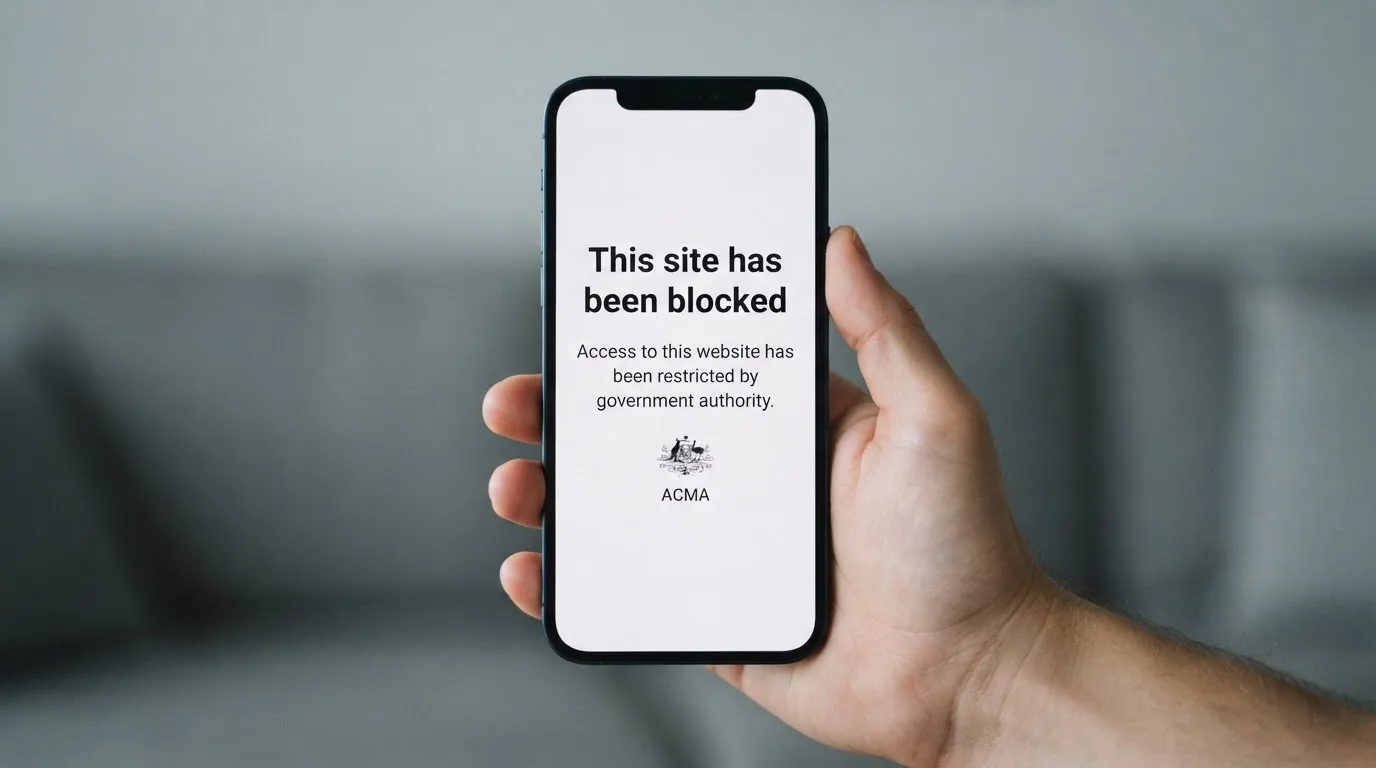
In a round reported on 26 June 2026, the ACMA asked Australian internet service providers to block 12 more illegal gambling websites: 7Signs, ChromaBet, Donbet, Duospin, Freshbet, Slots Gem, Jacks Club, Lucky Start, Pointsbetz.com, Spinrise, Vinyl Casino and Wildsino. That round brought the running total of blocked sites to 1,751 since the first blocking request in November 2019. The arithmetic that matters for a reader is the rate.
The pace has not slowed
From the first blocking request in November 2019 to the June 2026 round is roughly six and a half years. 1,751 blocked sites over that period works out to an average of around 22 sites a month, or just over five a week. The pace has not been steady — some months saw a dozen or more added, others only a handful — but the rate is the point. The ACMA has not stopped needing to act. The supply of new offshore sites willing to take Australian customers has kept up with the blocklist, and the blocklist has had to keep up with the supply.
The wider picture is the same. More than 230 unlicensed gambling services have left the Australian market since enforcement was strengthened in 2017. That number is the services that decided to withdraw, not the services that were forced out by a block request. The voluntary exit is roughly one service every two weeks for nine years. The blocked-site count is roughly one block a day for six and a half years. The two rates, run together, are the shape of the offshore industry’s response to Australian law.
The market has not contracted at the rate enforcement moved
H2 Gambling Capital’s 2025 report estimates that Australians lose about A$3.9 billion a year to illegal gambling sites, and that the share of gambling going through legal channels fell from 74% in 2021 to 64%. The legal-channel share fell by ten percentage points in four years. The enforcement activity did not fall over the same period — the blocklist grew, the formal warning register grew, the number of voluntary exits grew. The market did not move with the enforcement. It moved in the opposite direction.
That is the consequence the headline number hides. A reader who has been watching the ACMA’s enforcement record may reasonably have expected the legal-channel share to recover as the blocklist lengthened. It did not. The illegal market kept the players it already had and recruited enough new ones to grow its share. The blocklist is a list of services that have been removed. It is not a list of services that have lost customers.
What the blocking rate tells the reader comparing offers
An offer from a brand the ACMA has blocked is an offer from a service that has been removed from the Australian internet at the carrier level. A reader who reaches the site has done so through a workaround, and a workaround is exactly the kind of access that disappears without warning. The balance on the account, the bonus in progress, the verification stage halfway through — none of it is protected by an Australian consumer protection framework. The operator is not subject to one. The reader’s only recourse is the operator’s own complaints process, which is whatever the operator’s terms make it.
The blocking rate is the rule the marketing word does not name. The offer is high-cashback. The service is not licensed. The site can be blocked while a balance is on it. The reader is the one carrying that risk, and the reader is the one the offer is being made to.
The Australian legal frame around offshore casino offers
The Interactive Gambling Act 2001, strengthened by the Interactive Gambling Amendment Act 2017, makes it an offence to provide online casino games, online pokies or in-play betting to a person in Australia. The Act targets the provider, not the player — an individual punter is not prosecuted for using an offshore site. The provider is. No state or territory licenses online casino games, online pokies or in-play betting. What is licensable is wagering on races and sport placed before the event, lotteries and keno, in practice licensed by the Northern Territory.
The Northern Territory’s de facto regulator
The Northern Territory Racing and Wagering Commission regulates 52 of Australia’s online bookmakers — including Sportsbet, Bet365 and Ladbrokes — which are licensed in the Territory for tax reasons. The commission has no full-time staff and meets once a month in Darwin. That is the regulator behind every Australian-licensed online sportsbook. A reader who has used Sportsbet, Bet365 or Ladbrokes has used a service licensed by a body that meets twelve times a year.
The Northern Territory arrangement is the legal path. It is the reason licensed wagering is licensable and online casino is not — the Territory licenses wagering because the Territory taxes it. Online casino games do not produce the same tax base, and no state or territory has built a licensing framework around them. The Interactive Gambling Act 2001 closes the gap from the federal side. The state and territory side has not opened a window.
The credit-card ban and what it removed
Under the Interactive Gambling Act 2001 as amended in 2023, Australian-licensed online wagering services cannot accept payment by credit card or other credit-related products, a restriction that also constrains gambling use of linked digital wallets like Apple Pay. The ban took effect on 11 June 2024, with penalties up to A$247,500 for operators. The rule does not reach an offshore casino, because the offshore casino is not an Australian-licensed wagering service. The rule reaches the Australian banks and card issuers, who are required to refuse credit transactions to licensed wagering services. The same friction does not exist for an offshore casino, which is precisely why a reader comparing an Australian-licensed sportsbook to an offshore casino is comparing two products with different rules on the deposit rail.
Apple Pay and Google Pay sit on top of that rail
By the end of 2025, Apple Pay, Google Pay and Samsung Pay transactions collectively accounted for around 45% of all card payments in Australia by number. The wallets sit on top of the underlying card. ANZ’s gambling block, activated in the ANZ app, blocks gambling transactions made through a digital wallet such as Apple Pay on an eligible card, not just the physical card. Westpac’s block works at the card level on the merchant category code. Apple itself does not charge fees to consumers for using Apple Pay in stores, online or in apps; any surcharge comes from the merchant’s own card-processing fees, not from Apple. Apple states that transaction limits and PIN requirements for Apple Pay purchases are set by the card issuer or merchant, not by Apple itself.
The picture is that the friction for an Australian punter using an Australian-licensed sportsbook now sits in three layers: the credit ban on the card, the gambling block on the issuer, and the wallet on top of both. Removing any one layer still leaves the other two. Removing all three is what an offshore casino does, by changing the merchant category code and the country of incorporation.
What the 2026 reform actually changed
The Interactive Gambling Amendment (Gambling Reform) Bill 2026 passed Parliament on 19 August 2026; its advertising and inducement measures commence 1 January 2027. The law is enacted but not in force. Its measures — a ban on inducements aimed at Australians, restrictions on advertising during live sport, sign-off requirements for affiliate marketing — are the next step in tightening the Australian frame. They do not change the IGA’s prohibition on offering online casino games. They close some of the inducement routes the IGA left open.
A reader reading this in 2026 is reading it before the inducement measures commence. The legal position that applies today is the IGA as amended through 2023 and the 2024 credit ban. The inducement measures are a known step, not yet a binding rule. The blocklist, the formal warnings and the credit-card ban are the rules actually in force.
Responsible gambling: what the offshore offer does not include
A reader weighing an offshore casino offer is weighing a product that does not connect to Australia’s responsible-gambling infrastructure. The infrastructure is real. The connection to an offshore site is not.
BetStop is the Australian register that binds only Australian-licensed services
BetStop, the National Self-Exclusion Register, has been live since August 2023. It binds only Australian-licensed online and phone wagering services. An offshore casino is not connected to it. A punter who has self-excluded through BetStop has excluded themselves from Sportsbet, Bet365, Ladbrokes and the other 49 Northern Territory licensees. The exclusion does not extend to a Curaçao-licensed offshore site. The site has its own self-exclusion mechanism, with its own duration and its own compliance.
That is the gap the marketing word does not name. The Australian-licensed sportsbook is bound by BetStop. The offshore casino is bound by nothing an Australian regulator enforces. A punter who has decided to stop has made that decision for one half of the market. The other half operates outside the decision.
The bank-side blocks sit alongside BetStop
Westpac, ANZ and Commonwealth Bank each run a gambling block at the card level. The blocks work at the merchant category code for betting and casino gambling. Once on, removing ANZ’s block requires a 48-hour waiting period. The bank warns that not all gambling transactions will be blocked and some non-gambling transactions might be blocked in error. Commonwealth Bank’s gambling lock works similarly and the bank states it cannot guarantee all gambling-related purchases will be stopped.
The bank-side blocks are the consumer-side half of the framework. They are not perfect — the warnings say so — but they sit alongside BetStop, alongside the credit-card ban, alongside the ACMA enforcement. A punter using a licensed wagering service has four layers of friction built around the deposit. A punter using an offshore casino has zero, because the operator is not an Australian-licensed wagering service and the rails do not reach it.
Where to get help
The National Gambling Helpline is 1800 858 858. Free, 24/7, with chat at Gambling Help Online. The helpline is for any Australian whose gambling has become a problem, regardless of whether the gambling was done through a licensed wagering service, a land-based venue, or an offshore casino. The problem does not change with the channel. The infrastructure that helps with it does.
The shortlist: eleven brands the ACMA has warned by name
The list below is not a ranking. It is not a recommendation. Every brand on it has been the subject of a formal warning issued by the ACMA under the Interactive Gambling Act 2001 for offering prohibited services to Australians. The only sources for bonus terms were affiliate marketing pages; the offer details are deliberately not reproduced here. The list exists so a reader can see which brands the regulator has named, and decide for themselves what that means for the offer.
RocketPlay
Pulsup Ltd received a formal ACMA warning over Rocketplay.com.au in March 2026. Dama N.V. was the operator named in an earlier May 2022 warning covering Rocketplay among six brands. The brand is the same. The operator behind it has changed hands, and the ACMA has tracked the change.
Level Up Casino
Dama N.V. received a formal ACMA warning in May 2022, with Level Up named among six brands. No further formal warning has been issued against the brand since.
Woo Casino
Dama N.V. received a formal ACMA warning over Woo Casino in March 2025. The warning was specific to Woo; the May 2022 warning had covered other Dama brands.
Spirit Casino
Dama N.V. received a formal ACMA warning over Spirit Casino in May 2025. Spirit Casino is one of the more recent brands on the list.
National Casino
Consolutetish S.R.L. received a formal ACMA warning over National Casino in July 2025. The warning is the most recent against the brand.
Bizzo Casino
Consolutetish S.R.L. received a formal ACMA warning over Bizzo Casino in July 2025. TechSolutions (CY) Group Limited and TechSolutions Group N.V. were the operators named in an earlier 2022 formal warning over Bizzo Casino. The brand has changed operators between warnings.
Ignition Casino
Bamboo Media, the operator behind Ignition Casino, faced a formal ACMA warning in July 2025.
Instant Casino
February 2025 saw the ACMA issue a formal warning to EOD Code SRL, the operator of Instant Casino.
Jackbit
The ACMA formally warned Ryker B.V. in April 2026 for its involvement with Jackbit and CasinOK.
Casino Intense
Sterplay Holding Ltd received a formal ACMA warning over Casino Intense in April 2025.
Sky Crown
Hollycorn N.V. received a formal ACMA warning over its Sky Crown and Blue Leo casino services, as published in the ACMA’s formal warning PDF in September 2022.
What the ACMA’s enforcement record looks like across the eleven
| Brand | ACMA action and date | Operator named by the ACMA |
|---|---|---|
| RocketPlay | Formal warning, March 2026 | Pulsup Ltd (Rocketplay.com.au); earlier Dama N.V., May 2022 |
| Level Up Casino | Formal warning, May 2022 | Dama N.V. |
| Woo Casino | Formal warning, March 2025 | Dama N.V. |
| Spirit Casino | Formal warning, May 2025 | Dama N.V. |
| National Casino | Formal warning, July 2025 | Consolutetish S.R.L. |
| Bizzo Casino | Formal warning, July 2025 | Consolutetish S.R.L.; earlier TechSolutions, 2022 |
| Ignition Casino | Formal warning, July 2025 | Bamboo Media |
| Instant Casino | Formal warning, February 2025 | EOD Code SRL |
| Jackbit | Formal warning, April 2026 | Ryker B.V. |
| Casino Intense | Formal warning, April 2025 | Sterplay Holding Ltd |
| Sky Crown | Formal warning, September 2022 | Hollycorn N.V. |
Every operator named on the right is an offshore company. The list above does not repeat their addresses. The right-hand column is what the ACMA publishes in its formal warning register, and what the ACMA publishes is the operator’s own corporate name. A reader who searches the register by brand name will find the operator. A reader who searches by operator name will find the other brands the same operator runs.
Dama N.V. alone has four entries on this list. Consolutetish S.R.L. has two. The repetition on the operator column is the repetition that does not appear in the brand column. A brand can be renamed. The operator behind it cannot. The ACMA’s register tracks the operator.
What the eleven share, and where they diverge
Every brand on the list has been formally warned under the Interactive Gambling Act 2001 for offering prohibited services to Australians. None of them is licensed in Australia. None of them is connected to BetStop. None of them is bound by the credit-card ban in any practical sense, because the ban applies to Australian-licensed wagering services and the operator on the other end of the transaction is not one. Where they diverge is in the date of the most recent warning — September 2022 for Sky Crown, April 2026 for Jackbit — and in the number of formal warnings their operator has accumulated across all of its brands. A reader comparing two brands on the list is comparing two offshore operators, and the operator is the column that carries the most weight.
The thirteen shareholders of New Payments Platform Australia Ltd, the owner of Australia’s New Payments Platform, include the Reserve Bank of Australia and the country’s major banks. The platform became accessible to the public on 13 February 2018 and was authorised by the ACCC in 2021 to merge with BPAY and eftpos into a single company, Australian Payments Plus. More than 25 million PayID identifiers had been registered on the platform as of April 2025. The rail is built. The legal channel runs over it. The brands on the list run over a different rail.
What the reader is actually choosing
A reader who has reached this page has been weighing offers. The percentage on the cashback bonus, the eligible games list, the maximum cashout, the wagering multiple — those are the variables the marketing puts on the page. The variables not on the page are the Australian legal position, the ACMA enforcement record, the blocklist pace, and the responsible-gambling infrastructure the offer sits outside.
The choice is not between a 25% cashback and a 10% cashback. The choice is between a service that does not lawfully exist for the reader, and a set of services that do — licensed wagering on races and sport, lotteries and keno, land-based pokies and casinos, BetStop for those who have decided to step back. The cashback number is the marketing word. The legal position is the part the offer does not name.
The blocklist runs at roughly five sites a week. The legal-channel share of the Australian gambling market has fallen from 74% in 2021 to 64% in 2025. Australians lose about A$3.9 billion a year to illegal gambling sites. Those figures do not move because a single offer looks generous. They move because the legal channel is what the reader can actually use, and the offer is what the reader is being asked to spend that on.
A punter reading this page has one practical decision. The licensed channel or the offshore one. The cashback percentage is a feature of the offshore one. The legal position is what the offshore one does not advertise.
What an Australian punter can actually do
A punter who has been searching for cashback offers has a clearer path than the marketing makes it sound.
Licensed online wagering
Sportsbet, Bet365, Ladbrokes and 49 other bookmakers are licensed in the Northern Territory for tax reasons, regulated by the Northern Territory Racing and Wagering Commission. The commission has no full-time staff and meets once a month in Darwin. The wagering is on races and sport before the event. Cashback-style promotions exist in the licensed market — they are not the same product, and the marketing word is not used the same way, but the reader comparing offers has more to compare than the offshore list.
The deposit rail for licensed wagering is the Australian one: debit card, bank transfer, PayID or Osko, BPAY. Credit cards and credit-related products are banned. Digital currency is banned. Apple Pay, Google Pay and Samsung Pay are constrained by the credit-card ban, because they sit on top of credit cards in most Australian wallets. The rail is slower than crypto, more friction than an offshore deposit, and the friction is the part of the rail that connects the punter to Australian consumer protection.
Land-based pokies and casinos
Pokies are the slot machines Australian venues have run for decades. They are licensed in every state and territory. The cashback-style promotion on a land-based venue is a player’s club card, a points-on-play scheme, a comped meal or room. The product is different from the offshore one, and the legal position is the opposite: every venue offering pokies is licensed to do so, with a responsible-gambling code and a state or territory regulator.
Land-based casinos run a similar shape, with table games, slot machines and a responsible-gambling framework. Crown Melbourne, The Star Sydney, the Brisbane casino and the smaller venues are the Australian-licensed casino operators. They are not the offshore list. They are not offering cashback bonuses in the affiliate marketing sense. They are the channel the law has built.
Self-exclusion
BetStop, the National Self-Exclusion Register, binds Australian-licensed online and phone wagering services. A punter who has registered excludes themselves from Sportsbet, Bet365, Ladbrokes and the rest of the 52 Northern Territory licensees. The exclusion does not extend to an offshore casino, because the offshore casino is not bound by BetStop. A punter who has decided to stop has decided for the licensed half. The other half operates outside the decision.
The National Gambling Helpline is 1800 858 858, free, 24/7, with chat at Gambling Help Online. The helpline is the part of the Australian framework that does not depend on which channel the gambling happened through.
The bank-side block
Westpac’s gambling block works at the card level on the merchant category code. ANZ’s gambling block, activated in the ANZ app, also blocks gambling transactions through a digital wallet such as Apple Pay on an eligible card. Commonwealth Bank’s gambling lock works similarly. The bank-side block is the consumer-side layer of the framework. A punter who has turned on the block has removed a layer of access. The block does not reach an offshore casino — the merchant code is different, the country of incorporation is different — but the block does reach every Australian-licensed sportsbook, every Australian-licensed online lottery, every Australian-licensed keno service.
The combination of BetStop, the credit-card ban, the gambling block and the licensed-channel infrastructure is what an Australian punter is choosing into. The offshore list is what an Australian punter is choosing out of.
The cost the marketing page does not print
The legal-channel share of the Australian gambling market has fallen from 74% in 2021 to 64% in 2025. Australians lose about A$3.9 billion a year to illegal gambling sites. The blocklist runs at roughly five sites a week. More than 230 unlicensed gambling services have left the Australian market since enforcement was strengthened in 2017.
These figures are the reality behind the marketing. The marketing word on the cashback offer is “high”. The percentage the marketing word attaches is whatever the operator has printed. The percentage of gambling still going through legal channels, down by ten points in four years, is the number an Australian punter is sitting inside. The A$3.9 billion a year is what an Australian household is sending offshore. The five-sites-a-week blocklist pace is what the regulator is doing about it.
The cashback offer is high, but that percentage is only half the story. The true cost is the part the marketing page leaves unprinted.
Frequently asked questions
How does a cashback bonus differ from a deposit match bonus?
A cashback bonus credits a percentage of net losses back to the player over a set period, usually a week. A deposit match bonus credits a percentage of the deposit itself, paid up front, and is tied to the deposit event rather than to outcomes. The cashback form rewards a losing one. The deposit match form rewards a depositing one. The marketing words sound similar; the products pay out under different conditions.
Is cashback normally paid as real money or as bonus funds?
It depends on the terms. The cleanest offers credit cashback as real money or as withdrawable cash, sometimes after a 1x wagering requirement. Most offshore offers credit it as bonus funds, with a higher wagering multiple and often a cashout cap. The credit type is the part of the offer that determines whether the cashback actually pays out, and the part the marketing page tends to leave to the linked terms.
Is it legal for an online casino to offer cashback to players in Australia?
No. The Interactive Gambling Act 2001 prohibits offering online casino games to anyone in Australia. A cashback bonus attached to an online casino product is an inducement to use a service the Act prohibits offering. The individual player is not prosecuted. The provider is. The ACMA enforces by formal warning, by directing ISPs to block, and by referring matters for civil penalty proceedings.
Can a crypto casino offer cashback in the same way as a fiat one?
The bonus mechanic does not change with the deposit rail. A cashback offer at a crypto casino is structured the same way as a cashback offer at a fiat casino: percentage, period, wagering multiple, eligible games, cashout cap. What changes is the rail itself. A crypto deposit routes around an Australian bank’s merchant-category-code block. That is the part of the offer that has Australian legal exposure, not the bonus engine.
What terms typically cap how much cashback can be earned?
The two terms are the wagering multiple and the maximum cashout. The wagering multiple says how many times the credited cashback must be turned over before it withdraws. The maximum cashout caps the amount the player can actually withdraw from the credited cashback, regardless of the percentage. A 25% cashback with a A$200 cashout cap pays out A$200 no matter how much the player lost. The cap is the most often-missed term. See also The welcome bonus market that Australia is not licenced to offer .
Does a high cashback percentage make up for other unfavourable bonus terms?
Rarely. The percentage is a multiplier on losses. The wagering multiple is a multiplier on the credited cashback. A high percentage with a steep multiple can leave the player worse off than a moderate percentage with a low multiple. A reader comparing offers should compare the cost of clearing the credited amount at the operator’s RTP, not the percentage on the marketing page.