
Casino dice games and the Australian player in 2026: odds, the law, and the offshore gap
20 October 2026 · figures verified against the ACMA register and the Interactive Gambling Act 2001.
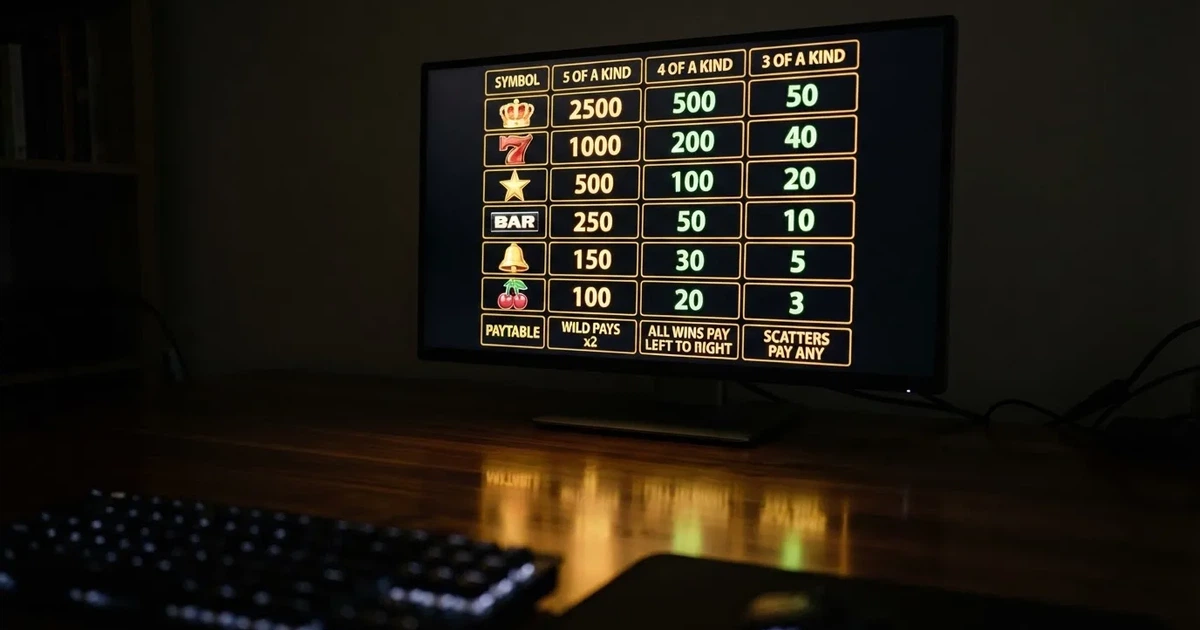
Dice games like craps carry the lowest house edge on any Australian casino floor, yet the online version of the same product is one of the most heavily policed corners of the local market. A punter typing a casino dice game into a search engine in 2026 lands on a page that talks about odds on one hand and an offshore licence display on the other, and the two things are not the same conversation. This guide closes the gap between them.
Table of Contents
- Why the dice game question matters in Australia
- The legal frame around casino dice games in Australia
- What the ACMA has actually done to dice-game advertisers
- The blocking rate, as a band
- Where an Australian punter is actually allowed to play dice
- What the math on dice games actually pays
- How a craps bettor is supposed to think
- Why the offshore version of these games is not a lawful option
- What the payment side tells a reader
- The cost of an illegal-offer market to Australian players
- The featured set: brands the ACMA has warned
- What an Australian player actually has
- Frequently asked questions
Why the dice game question matters in Australia
Dice games are a small slice of a casino floor and a large slice of what an offshore site advertises. Craps sits at the centre of the category because the maths is unusually generous to the player when the right bet is chosen. Sic bo sits beside it because three dice change the structure of every wager. Two-up sits beside both because it is the only dice-style product the law treats as something other than a generic casino game. None of that explains why a search for a “casino dice game Australia” returns mostly offshore brands, and that mismatch is the subject of this page.

A reader who knows the difference between a Pass Line bet and an Any Craps wager is reading a different page from one who does not. The first wants the numbers. The second wants to know whether the site they have just opened is one the ACMA has already named. This guide serves both.
The legal frame around casino dice games in Australia
Online casino games, including online dice products like craps and sic bo, cannot be licensed anywhere in Australia. The Interactive Gambling Act 2001, strengthened by the Interactive Gambling Amendment Act 2017, makes it an offence to provide an online casino game to a person physically in Australia. The offence sits with the provider, not the punter, but the practical effect is the same: no Australian-licensed operator runs an online craps table, no state or territory issues the licence, and any site claiming one is operating outside the regime.

What the law does license is wagering on races and sporting events placed before the event, lotteries and keno. In practice the Northern Territory Racing and Wagering Commission regulates 52 of Australia’s online bookmakers, including Sportsbet, Bet365 and Ladbrokes, through a commission that has no full-time staff and meets once a month in Darwin. A bookmaker licensed there for a pre-event sports wager is not licensed to deal a hand of craps. The distinction matters because a Curaçao or Anjouan seal on an offshore site does not acquire Australian reach by being pasted beside a sportsbook.
The minimum age to gamble in Australia is 18, set by each state and territory. That age applies to the licensed product; the offshore product simply does not recognise it. A site that lets an under-18 Australian register is one no Australian regulator can sanction, and the protection follows.
What the ACMA has actually done to dice-game advertisers
The Australian Communications and Media Authority investigates complaints, issues formal warnings under the Interactive Gambling Act, and directs Australian internet service providers to block offending sites. The cumulative picture as of June 2026 is that 1,751 illegal gambling and affiliate marketing websites have been blocked since the first blocking request in November 2019, and more than 230 unlicensed gambling services have left the Australian market since enforcement was strengthened in 2017. A single round reported on 26 June 2026 alone asked providers to block twelve names: 7Signs, ChromaBet, Donbet, Duospin, Freshbet, Slots Gem, Jacks Club, Lucky Start, Pointsbetz, Spinrise, Vinyl Casino and Wildsino. Blocking is administrative, not criminal, but the balance held on an account at the moment of blocking is gone with the site.
Formal warnings carry the operator name and the date, both published on the ACMA register, and they precede a blocking direction. The register names Dama N.V. several times — for six brands in May 2022, then Woo Casino in March 2025 and Spirit Casino in May 2025 — and names Pulsup Ltd over Rocketplay in March 2026. Other named operators from recent rounds include EOD Code SRL over Instant Casino (February 2025), Consolutetish S.R.L. over National Casino and Bizzo Casino (July 2025), Bamboo Media over Ignition Casino (July 2025), Sterplay Holding Ltd over Casino Intense (April 2025), Ryker B.V. over Jackbit and CasinOK (April 2026), and Hollycorn N.V. over Sky Crown and Blue Leo (September 2022).
The point of naming these is not to assemble a blacklist for the reader. It is to show the shape of the enforcement: the same operator group appears across multiple brands and across multiple years, the warnings precede blocks, and the offshore licence the site displays changes between warnings without changing the underlying offer.
The blocking rate, as a band
The ACMA asks providers to block illegal sites in rounds, and the running total sits at 1,751 blocked sites as of June 2026 against the first blocking request issued in November 2019. That is roughly 270 blocked sites a year over the 79 months since the first request, or about 5.2 a week. The rate is not constant: rounds are clustered around complaints and investigations, and a quiet quarter does not mean the work has stopped.
In a market with several thousand offshore casino brands active at any one time, a blocking rate of around 5.2 sites a week means enforcement removes only the fraction of offenders the regulator and its complaint channels reach. The condition behind the band matters: every additional complaint route an Australian uses adds to the rate, and every round the ACMA announces shows that the rate is set by investigation, not by calendar. The figure is useful as a sense of how much pressure the regime exerts, not as a forecast.
Where an Australian punter is actually allowed to play dice
Dice products on a regulated Australian floor are limited and well defined. Craps, sic bo and two-up all appear in some form, and each one sits under a different rule set and a different regulator.
Crown Melbourne offers baccarat variants including Traditional Baccarat, Crown Baccarat and 2 to 1 Baccarat under rules approved by the Victorian Gambling and Casino Control Commission, which replaced the VCGLR as Victoria’s casino regulator on 1 July 2022. Under section 66 of the NSW Casino Control Act 1992, a casino operator must not permit a game such as baccarat to be played unless the game and its rules are approved by the regulator, and the operator must make a copy of the approved rules available to patrons on request. The same approval regime covers craps and sic bo at Crown Melbourne and at The Star Sydney. The Crown Resorts blackjack log at the VGCCC shows the same mechanism at work: a “Perfect Pairs” side bet renamed to “Crown Pairs” on 23 December 2024, and a “Free Bet” option with a new “Pot of Gold” side bet introduced on 25 March 2024. Dice tables follow the same gate.
Two-up is the narrowest of the three. The game evolved from the 18th-century English and Irish game “cross and pile” and was brought to Australia by convicts. Two-up is illegal in Australia outside specific exceptions: New South Wales permits it on Anzac Day under the Gambling (Two-Up) Act 1998, played in RSL clubs and hotels; Kalgoorlie in Western Australia hosts Australia’s only year-round legal two-up school; and among licensed casinos, two-up was legalised in Australian casinos starting in 1973 at Hobart’s casino and is now offered only at Crown Perth and Crown Melbourne. The market for the game, in short, is two casino floors and a single regional school.
What the math on dice games actually pays
The house edge on dice games is set by the bet the punter chooses, not by the table they sit at. The figures below are the standard structure for each game, taken from the published house-edge tables and the game histories behind them.
Craps. The Pass Line and Come bets carry a 1.41% house edge. Don’t Pass and Don’t Come sit just below at 1.36%, the only bets on a craps layout where the casino is the underdog. Any Craps, the one-roll bet that wins on a 2, 3 or 12, carries an 11.11% house edge — nearly eight times the Pass Line figure. The choice of bet matters more than the game itself.
Sic bo. Three dice, 216 equally likely combinations, of which 56 are distinguishable. The Big/Small bet carries a 2.78% house edge. Specific Triple bets, which pay when all three dice show the same chosen number, run from 11.6% up to 30.09% depending on the ruleset. Sic bo originated in ancient China, where its name literally means “precious dice”, and was introduced to the United States by Chinese immigrants in the early 20th century.
Two-up. Not a standard house-edge calculation: two-up is a heads-or-tails game played with coins, not a casino table game in the structural sense. The bet is between “spinner” and “spinner’s opposite” on the toss of two coins. The 50-50 structure means two-up is closer to a coin flip than to craps, and the relevant risk for a player is the volatility of a single evening’s tosses, not a per-roll edge.
Baccarat sits beside the dice games on the same floors and carries its own structure: 1.06% on the Banker bet, 1.24% on the Player bet, and 14.36% on the Tie. The Banker bet is the cheapest edge on any regulated Australian table. Blackjack, played with optimal strategy, runs about 0.28% house edge under liberal Las Vegas Strip rules and about 0.43% under Atlantic City rules.
For comparison only, the spread between the cheapest craps bet and the dearest is roughly 1.36% to 11.11% — close to a 10-point gap on the same table. The spread between the cheapest and dearest bets on a baccarat layout is 1.06% to 14.36%. A punter who understands the bet structure on one of these games will understand it on the others; the principle is the same even when the maths moves.
How a craps bettor is supposed to think
A “right” bettor in craps backs the Pass Line. They win when the come-out roll is 7 or 11, lose on 2, 3 or 12, and any other number becomes the point, which they want repeated before a 7. The Don’t Pass bettor is “wrong”: they want the opposite, and the 12 is a push rather than a loss. The Pass Line bet has a 1.41% house edge; the Don’t Pass bet has 1.36%. A right bettor plays the more popular side; a wrong bettor plays the slightly cheaper side and accepts the social cost of rooting against the table.
The Any Craps bet sits across both styles as a one-roll wager. It pays 7:1 on a roll of 2, 3 or 12 and loses on every other number. The 11.11% house edge is the price of that instant payoff, and it sits on the layout next to the 1.41% Pass Line bet for a reason — the casino wants the player to see both. The bet a craps player chooses defines more of their session than the table they sit at.
Why the offshore version of these games is not a lawful option
Online casino products, including dice games like craps and sic bo, are prohibited interactive gambling services under the Interactive Gambling Act 2001. An offshore site offering them to a person in Australia is breaking Australian law regardless of the licence it displays, because the prohibition applies to the offer, not to the operator’s jurisdiction. The 230-plus unlicensed services that have left the Australian market since 2017 did not leave voluntarily; they left because the ACMA made staying commercially unworkable.
The individual punter is not prosecuted. The IGA targets the provider. But a punter on an offshore site has no Australian consumer protection, no complaints body, and no recourse if a withdrawal is refused. The site can be blocked by Australian ISPs at the regulator’s direction, with a balance still on it. That is the practical cost of choosing the offshore version of a product the Australian regime has decided not to license.
BetStop, the National Self-Exclusion Register, has been live since August 2023 and binds every Australian-licensed online and phone wagering service. An offshore casino is not connected to it, which means a player who has self-excluded has no protection from an offshore product that respects neither the register nor the regime behind it.
What the payment side tells a reader
Credit cards, credit-related products and digital currency are banned as payment for licensed online wagering since 11 June 2024. Penalties for operators that breach the rule reach A$247,500. Legal deposit routes for licensed wagering are debit card, bank transfer, PayID/Osko and BPAY. A site asking an Australian for a credit card or a crypto deposit is operating outside the Australian rules, and the deposit route is itself a tell.
The rule applies to licensed wagering. An offshore casino accepting a credit card from an Australian is one the regime does not reach, and the payment question is the easiest single check a player can run on whether the offer sits inside or outside the Australian frame.
The cost of an illegal-offer market to Australian players
H2 Gambling Capital’s 2025 report estimates that Australians lose about A$3.9 billion a year to illegal gambling sites, and that the share of gambling going through legal channels fell from 74% in 2021 to 64%. The two figures together describe a market where roughly a third of what Australians wager now goes to operators the regime does not license. The losses are not collected by the Australian Taxation Office as assessable income of a recreational player, so the cost is borne by the player and not recouped. The numbers are model estimates and carry model uncertainty, but the direction — a falling share for legal channels — is consistent across recent rounds of the same series.
A punter who moves from a legal Australian wagering product to an offshore casino dice game is not just moving markets. They are moving out of the BetStop regime, out of the Australian complaints frame, out of the credit-card ban, and into a market where a blocking round can remove their balance overnight.
The featured set: brands the ACMA has warned
The brands below are not a ranking. Each one sits on the ACMA register as the subject of a formal warning over an interactive gambling service offered to Australians, and the table below summarises what the register shows about each.
| Brand | ACMA action and date | Operator named by the ACMA | Subject support |
|---|---|---|---|
| RocketPlay | Formal warning — March 2026 | Pulsup Ltd (Rocketplay); earlier Dama N.V., May 2022 | — |
| Level Up Casino | Formal warning — May 2022 | Dama N.V. | Listed on BGaming as a carrying casino |
| Woo Casino | Formal warning — March 2025 | Dama N.V. | — |
| Spirit Casino | Formal warning — May 2025 | Dama N.V. | — |
| National Casino | Formal warning — July 2025 | Consolutetish S.R.L. | Listed in en.wikipedia.org references |
| Bizzo Casino | Formal warning — July 2025 | Consolutetish S.R.L.; earlier TechSolutions, 2022 | — |
| Ignition Casino | Formal warning — July 2025 | Bamboo Media | — |
| Instant Casino | Formal warning — February 2025 | EOD Code SRL | — |
| Jackbit | Formal warning — April 2026 | Ryker B.V. | — |
| Casino Intense | Formal warning — April 2025 | Sterplay Holding Ltd | Listed in ABC, acma.gov.au and Crown Melbourne references |
| Sky Crown | Formal warning — September 2022 | Hollycorn N.V. | — |
Two things stand out from the table. First, the operator-of-record changes between warnings without the offer changing: Dama N.V. appears against four brands, Consolutetish S.R.L. against two, and Hollycorn N.V. against two. The re-labelling is the operator’s, not the regulator’s. Second, the dates span from 2022 to 2026, which means the same brands cycle back into the register as the same corporate group works around a previous action. The table is the ACMA’s view, not a recommendation set; no row is a place to play.
RocketPlay
Pulsup Ltd drew a formal warning in March 2026 over Rocketplay, and Dama N.V. drew an earlier warning in May 2022 that named the brand among six others. The ACMA register is the source for both. The site carries no licence that authorises it to deal an Australian online casino game; the offshore display is not a substitute.
Level Up Casino
Dama N.V. drew a formal warning in May 2022 covering Level Up Casino among six brands. The brand appears on listings of casinos that carry software from BGaming, which is the source the listings reflect. The warning remains on the register. No additional Australian-facing licence has been issued.
Woo Casino
Dama N.V. drew a further formal warning in March 2025 over Woo Casino, three years after the May 2022 round. The same operator group, the same product category, a fresh formal warning. A reader who saw Woo Casino in 2022 is reading about the same operator-of-record in 2025.
Spirit Casino
Dama N.V. drew a formal warning in May 2025 over Spirit Casino, two months after the Woo Casino warning. The two warnings share an operator and a category, which is the pattern that emerges when an offshore group rebrands products while keeping the corporate entity.
National Casino
Consolutetish S.R.L. drew a formal warning in July 2025 over National Casino, in the same round that named Bizzo Casino. The brand appears in reference lists on Wikipedia. The operator-of-record is the same as Bizzo Casino, which means the same action covers two product labels.
Bizzo Casino
Consolutetish S.R.L. drew a formal warning in July 2025, and TechSolutions (CY) Group Limited and TechSolutions Group N.V. drew an earlier formal warning in 2022. Two operators, one brand, three years apart. The re-labelling is the operator’s, and the ACMA register records each label in turn.
Ignition Casino
Bamboo Media drew a formal warning in July 2025 over Ignition Casino, in the same round that named National Casino and Bizzo Casino. The warning is the most recent action against the brand on the register.
Instant Casino
EOD Code SRL drew a formal warning in February 2025 over Instant Casino, the earliest 2025 warning on the table. The brand has not appeared under a different operator-of-record on the register.
Jackbit
Ryker B.V. drew a formal warning in April 2026 over Jackbit, in the same round that named CasinOK. The same operator group covers two brands and one warning round.
Casino Intense
Sterplay Holding Ltd drew a formal warning in April 2025 over Casino Intense. The brand appears in reference material on the ABC, on the ACMA’s own register, and on Crown Melbourne’s site, where the casino floors that host approved table games are listed.
Sky Crown
Hollycorn N.V. drew a formal warning in September 2022 over Sky Crown and Blue Leo. The September 2022 date is the earliest action in the table and the only 2022 entry that does not name TechSolutions.
What an Australian player actually has
A punter who wants to play craps, sic bo or two-up under Australian law has three live options. Crown Melbourne and The Star Sydney host dice tables under approved rule sets, with the same per-bet maths as the offshore product but inside the regulator’s complaints frame. Two-up has its narrow exceptions: NSW on Anzac Day in RSL clubs and hotels, Kalgoorlie’s year-round school, and the Crown Perth and Crown Melbourne casino floors. Everything else is either a sports wager on a pre-event market — not a casino game — or an offshore offer outside the regime.
The choice between the licensed floor and the offshore site is the choice between a product where the regulator can hear a complaint and a product where the ACMA’s response is to block the site. Both paths involve a real cost; only one of them involves a real protection.
Frequently asked questions
What is the house edge on a Pass Line bet in craps?
Pass Line carries a 1.41% house edge and Come bets the same figure; Don’t Pass and Don’t Come sit just below at 1.36%. The spread across a craps layout runs from 1.36% on the cheapest bet to 11.11% on Any Craps, and the bet chosen matters more than the table chosen.
Why does the Any Craps one-roll bet carry a much higher house edge than Pass Line?
Any Craps pays 7:1 on a single roll of 2, 3 or 12 and loses on every other outcome; the one-roll structure is what produces the 11.11% edge. Pass Line resolves across multiple rolls through the point, which is why it sits at 1.41%. The two bets sit beside each other on the same layout for that reason.
Are dice games like craps offered on licensed Australian casino floors?
Craps and sic bo are offered at Crown Melbourne and The Star Sydney under rules approved by the Victorian Gambling and Casino Control Commission and the NSW regulator. Two-up has its own narrow set of exceptions: NSW on Anzac Day, Kalgoorlie’s year-round school, and Crown Perth and Crown Melbourne among licensed casinos.
What’s the difference between a ‘right’ bettor and a ‘wrong’ bettor in craps?
A right bettor backs the Pass Line, winning on a come-out roll of 7 or 11 and losing on 2, 3 or 12, with any other number becoming the point. A wrong bettor backs Don’t Pass, rooting for the opposite, and accepts that a 12 is a push rather than a loss. The Don’t Pass bet has a 1.36% house edge, slightly cheaper than the 1.41% on Pass Line.
Can an online dice game legally be offered to someone based in Australia?
No. Online casino games, including dice products like craps and sic bo, are prohibited interactive gambling services under the Interactive Gambling Act 2001. The offence sits with the provider, not the punter, but no Australian-licensed operator offers an online craps table, and any offshore site offering one is operating outside the regime.
Do all casino dice games use the same house-edge structure as craps?
No. Sic bo uses three dice and runs 2.78% on the Big/Small bet up to 30.09% on specific triples depending on the ruleset. Baccarat sits at 1.06% on Banker and 14.36% on Tie. Two-up is a coin-style game without a standard house-edge calculation. The structure of the dice and the structure of the bet define the edge, not the table they sit on.