
Live blackjack at an Australian-facing online casino in 2026: how the table works, who the regulator has warned, and what the wager actually costs
Data current as of 20 October 2026, cross-checked against the ACMA’s published formal-warning register and the Interactive Gambling Act 2001 as it stands. Numbers below come from those sources and from the operator warnings the ACMA has published; anything else has been left out.
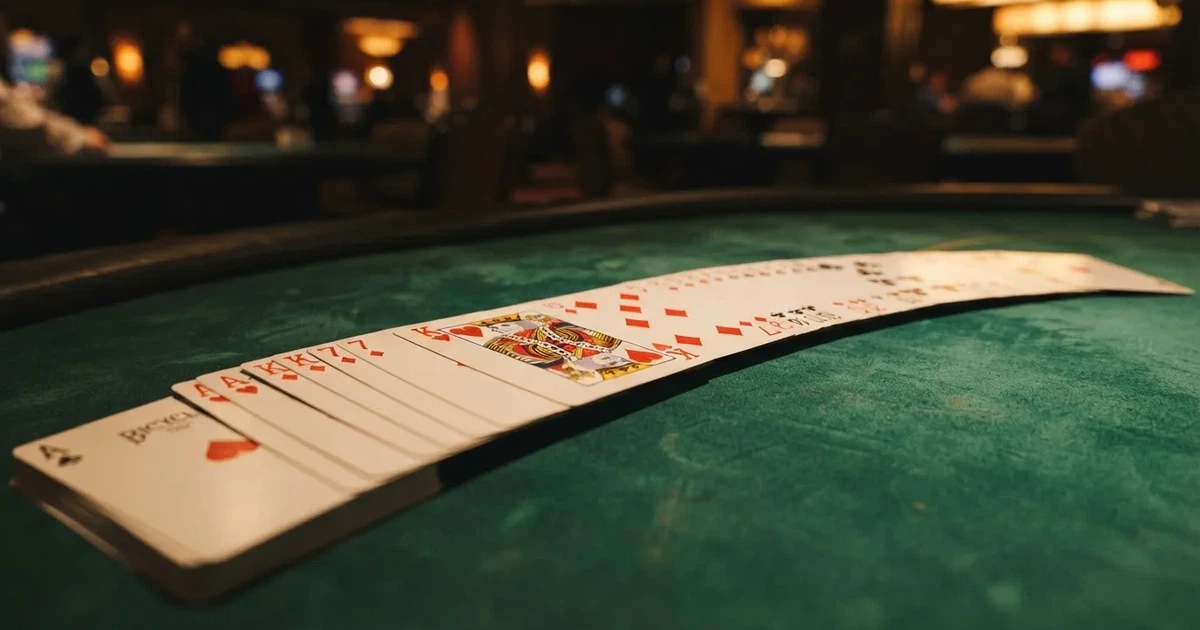
A live blackjack table streamed to a customer in Australia is, in the regulator’s own framing, the same product as a computer-generated one. That single sentence reshapes what this page is for. It is not a ranking. It is a careful look at the shape of the market — the rule set, the payment path, the bonus mechanics, and the brands the ACMA has told off for offering the thing — written so the reader can place a wager with eyes open, or decide not to place it at all.
Table of Contents
- The live blackjack landscape in Australia: what the product is, and why it sits in a different legal frame
- The rule set: what house edge the punter is actually playing against
- A short history of the game, and why the name sounds like an American gambling town
- The game’s mechanics, in the shape a live table actually plays
- The legal frame: what the Interactive Gambling Act 2001 actually says, and what it does not
- Responsible play: why a continuous shoe matters more than a session prompt
- Crypto and anonymity: the payment path that does not change the cards
- Payments and payout speed: what a withdrawal actually waits on
- Bonuses and free spins: what a blackjack offer actually demands
- Specific games, providers, and live tables: what the product mix looks like
- The eleven brands the ACMA has warned: how the regulatory action actually shapes the market
- The ACMA’s blocking programme: the rate at which the regulator is actually shrinking the market
- The featured brands, in detail: what the ACMA’s action actually means for each
- Reading the regulator’s log: what the ACMA’s action set tells the punter
- What the regulator’s action means for the offshore operator’s incentive
- Where this leaves the punter: the decision the page is for
- Frequently asked questions
The live blackjack landscape in Australia: what the product is, and why it sits in a different legal frame
A live blackjack game is a real human dealer running cards from a shoe in a studio, captured by several cameras and streamed to whoever has logged in. Players place chips on a virtual felt in their browser or app, the dealer acknowledges the wager, and the hand plays out in seconds rather than the half-second snap of a software deck. The pace is the first thing a punter notices. A shoe that would have produced ninety hands an hour as an RNG game produces sixty-five to seventy-five with a real dealer counting out the cards — fewer decisions, more time to watch the next player act, more time for the wallet to bleed.

This page sits in a particular commercial niche: real-money blackjack on a phone or laptop, against a real dealer, with stakes settled in Australian dollars. The fact that the niche exists in Australia at all is a regulatory accident. The Interactive Gambling Act 2001 prohibits the supply of online casino games to anyone in Australia — including live blackjack, including live roulette, including a live punto banco table with no bonus attached. There is no carve-out for the studio product; the law does not care whether the cards come from a shoe or from a random number generator. So the live blackjack sites an Australian can reach are reaching them anyway, and the regulator’s response has been to issue formal warnings, request ISP blocks, and publish the names of the operators it has acted against.
The market that the ACMA’s own data describes is large. H2 Gambling Capital’s 2025 estimate put Australian losses to illegal offshore gambling sites at about A$3.9 billion a year, and traced the share of gambling going through legal channels falling from 74 per cent in 2021 to 64 per cent by the time of the report. That gap is the live blackjack market, plus the live roulette market, plus the online pokies market, plus everything else the IGA prohibits the supply of. Whether that share stabilises, climbs, or falls again is a question for the regulator and the parliament, not for a casino comparison.
What this page can do, with the material research carries, is build a profile of the product and the brands around it. The legal frame governs everything else; the rule set governs what a hand actually costs; the payment path governs what a punter can use to fund the table; the bonus terms govern what an offer attached to the table really demands; and the ACMA’s enforcement log governs which brands have been told to stop. Each of those is a separate shelf, and each closes a different question the reader arrived with.
The rule set: what house edge the punter is actually playing against
Blackjack’s house edge is small compared with most other casino table games, and that is the entire reason the game is on every floor in the world. With optimal play under a liberal Las Vegas Strip rule set — dealer stands on soft 17, double on any two, double after split, resplit aces, late surrender — the edge is about 0.28 per cent. Under more common Atlantic City rules, the edge rises to about 0.43 per cent. Both figures are averages across many hands under perfect basic strategy; in real play, with the player standing on 16 against a dealer 10 or taking insurance on a 14, the actual edge drifts upward, sometimes substantially.

For comparison: baccarat carries a 1.06 per cent edge on the Banker bet, 1.24 per cent on the Player bet, and 14.36 per cent on the Tie. Craps sits at 1.41 per cent on the Pass line, 1.36 per cent on Don’t Pass, and 11.11 per cent on Any Craps. Blackjack at 0.28 to 0.43 per cent is the lowest-edge mainstream table game available in a casino. That is also why it dominates the live-dealer product line.
The reason the edge is so small is mechanical: the player acts first. Every hand the punter busts on — every 16 hit against a dealer 10 that ends in a three-card 19 — is a hand the dealer does not have to play. The dealer never busts the punter; the punter busts themselves. That asymmetry, combined with the natural blackjack paying 3:2 rather than even money, is the entire mathematical identity of the game. Break any of those rules — pay 6:5 on the natural, force the dealer to hit soft 17, restrict doubling — and the edge climbs by tenths of a percentage point at a time.
The Australian variant of the game is the same game. Crown Melbourne’s blackjack tables, regulated under the Casino Control Act 1991 by the Victorian Gambling and Casino Control Commission, follow essentially the same paytable. The VGCCC approves any rule change before it is introduced — that includes the December 2024 renaming of the “Perfect Pairs” side bet to “Crown Pairs”, and the March 2024 introduction of a “Free Bet” option with a new “Pot of Gold” side bet. The approved rule book is published and the regulator’s decisions sit on the public record. An offshore live blackjack site operating under a Curaçao licence has no equivalent rule book, no approved paytable, and no one to appeal to when the studio quietly changes the blackjack payout from 3:2 to 6:5.
| Variant | Key Mechanic | Impact on Edge |
|---|---|---|
| Spanish 21 | No 10s in the shoe | Higher edge |
| Double Exposure | Dealer cards face up | Even money natural |
| Blackjack Switch | Swap cards between hands | Dealer pushes on 22 |
| Super Fun 21 | Allows up to four splits | Flexible doubling |
That is what the small house edge buys the punter. It buys them a game whose terms can be read in the published rule set. The punter who arrives at a live table without reading the paytable has paid for a game whose edge might be 0.5 per cent, or might be 1.5 per cent, and they will not know which one until the first losing streak.
A short history of the game, and why the name sounds like an American gambling town
Blackjack’s immediate ancestor is the English game vingt-un. A related Spanish game called veintiuno appears in Miguel de Cervantes’ Rinconete y Cortadillo, written around 1601-1602; formal rules for the English version were published in Britain in 1800. The game was renamed “blackjack” around 1899 — card historian Thierry Depaulis places the date precisely — and the modern name is usually credited to prospectors during the Klondike Gold Rush of 1896-1899, who are said to have latched onto the game’s original bonus hand: an ace of spades paired with a black jack.
The reason the history matters for an Australian punter is that blackjack is the world’s most widely-dealt table game. The same rule set is on the felt in Melbourne and Macau and Las Vegas and an offshore studio streamed from Costa Rica. That ubiquity is why the live-dealer product is so well-stocked: every studio that streams a table to a global audience can offer a confident, well-trained dealer dealing a game that every player already knows. The same ubiquity is what makes a warning against one operator land across the entire industry — change the rule on a single blackjack table and you have changed the game for every player who logs in to it.
The game’s mechanics, in the shape a live table actually plays
Cards count as their number on the 2-9, with the ten, jack, queen and king all counting as ten. An ace counts as one or eleven, whichever the hand prefers. A starting two-card total of 21 — an ace paired with a ten-valued card — is called a blackjack, or a natural, and it is the strongest hand in the game. The dealer must keep drawing cards until reaching a total of seventeen or higher, although some rule sets also require the dealer to hit on a “soft 17” — a hand with an ace counting as eleven. The player acts first, and may stand, hit, double down, split pairs, or in some rule sets surrender.
The doubling rule is the one most players misunderstand. Doubling down lets the player place a second wager of equal size to the first, receive exactly one more card, and then stop. The cost of doubling down against a dealer 6 is small — the dealer busts so often on that card that even a bad third card wins — and that is why basic strategy charts always double on 11 against a dealer 6, and on 10 against a dealer 5 or 6. The cost of doubling on a soft hand against a dealer 9 or 10 is much higher, because the third card often leaves the punter with a low total that the dealer can already beat. That is the bet a basic-strategy chart advises against.
Splitting pairs works similarly. Splitting 8s against a dealer 10 is correct because two hands of 8 lose less than a single hand of 16 does. Splitting 10s is almost never correct because the two-card 20 is already winning the hand more often than not. The chart’s advice is mechanical: it prescribes a play for every pair of cards against every dealer up-card. Memorising it is the difference between a 0.43 per cent edge and a 1.5 per cent edge at the same table.
The variants the punter will meet at a live table extend the rule set rather than rewrite it. Spanish 21 drops the 10s from the shoe and adds liberal player-favourable rules to compensate. Double Exposure deals both of the dealer’s cards face-up, but the natural pays even money rather than 3:2. Blackjack Switch lets the player swap the top cards between two hands, and the dealer pushes on 22 — a hand that loses to every player except another dealer 22. Super Fun 21 allows up to four splits and a flexible doubling rule. Each variant tilts the edge one way or the other; the punter who plays all of them at the same basic-strategy chart is paying for the wrong game on most of them.
The legal frame: what the Interactive Gambling Act 2001 actually says, and what it does not
The Interactive Gambling Act 2001, as strengthened by the Interactive Gambling Amendment Act 2017, makes it an offence for an operator to provide online casino games to a customer physically present in Australia. Online casino games include slots — what Australians call pokies — and live-dealer table games, including blackjack, roulette, baccarat and craps. There is no carve-out for the studio product; the law does not distinguish a streamed shoe from an RNG shoe.
What is licensed is wagering on a race or sporting event placed before the event, lotteries, and keno. In practice the licensing is done by the Northern Territory Racing and Wagering Commission, which regulates 52 of Australia’s online bookmakers — Sportsbet, Bet365, Ladbrokes among them — for tax reasons. The commission has no full-time staff and meets once a month in Darwin. The regulator the punter thinks of when they think of Australian-licensed gambling is, in the case of online wagering, essentially a part-time body issuing licences to large international bookmakers.
The penalty structure sits on the provider rather than the player. An individual providing prohibited interactive gambling services faces penalties of up to A$220,000 per day; a corporation faces up to A$1.1 million per day. Those numbers are not theoretical. They are the daily penalty ceiling for the act of running a blackjack site that an Australian can reach. The individual player is not prosecuted, but the offshore site is providing the player with no Australian consumer protection, no complaints body, and no recourse if a withdrawal is refused — and the site can be blocked by the ACMA with the player’s balance still on it.
The Interactive Gambling Amendment (Gambling Reform) Bill 2026 passed Parliament on 19 August 2026. Its advertising and inducement measures commence on 1 January 2027, so on a page read in 2026 they are law with a start date, not yet in force. The bill does not legalise online casino games; it tightens the inducements around the wagering products that are already licensable. The live blackjack market sits where it sat: prohibited, supplied offshore, policed by the ACMA.
Responsible play: why a continuous shoe matters more than a session prompt
Continuous shoe-based blackjack runs quickly. A live dealer dealing from an eight-deck shoe, with six other players at the table, will produce a hand every eight to twelve seconds. A punter who sits down for a session without a hard limit on how many hands they will play, or how much they will stake, will play more hands than they planned to. The arithmetic is the same as for slots: the edge compounds by the hand, and the only way to keep the compounding under control is to stop before the compounding does.
A session limit is the single most useful control a live blackjack punter can set, and it is the one the game’s pace makes hardest to keep. The Australian National Gambling Helpline is 1800 858 858, free and 24 hours a day, with chat available at Gambling Help Online. Both are reachable from a session where the punter has decided the limit was the wrong number. BetStop, the National Self-Exclusion Register, has been live since August 2023 and binds every Australian-licensed online and phone wagering service; an offshore live blackjack site is not connected to it, and a punter who has registered with BetStop can still sit down at an offshore table because the operator has no way to read the register.
That is one of the costs an Australian punter pays for playing at an unlicensed offshore site: the responsible-gaming tools that exist in the licit market are not available in the illicit one. There is no self-exclusion at the offshore site because there is no Australian regulator to enforce one. There is no deposit limit at the regulator’s named figure because there is no regulator to name a figure. The punter who arrives at the table is their own limit-setting mechanism, full stop.
Crypto and anonymity: the payment path that does not change the cards
A bitcoin-funded live blackjack table deals the same cards as a card-funded one. The studio cannot tell the difference — the shoe is shuffled, the hands are dealt, the camera streams the same picture. What the funding path changes is what happens at the boundary: how the punter moves money in, how the punter moves money out, and what record exists of either move.
Crypto funding does not make the play lawful. The Interactive Gambling Act 2001 prohibits the supply of online casino games regardless of the payment method; a bitcoin deposit does not convert a prohibited service into a permitted one. What it does change is the paper trail. An Australian bank statement will not show a deposit to an offshore casino. A crypto wallet’s on-chain history will, and that history is permanent.
The 11 June 2024 payment ban takes the credit card and the credit-related product out of the licit wagering market entirely — operators face penalties up to A$247,500 for taking one. The ban does not cover the illicit market, because the illicit market is not bound by the regulator’s rules at all. An offshore live blackjack site will happily take a Visa deposit from an Australian customer, because the Australian regulator cannot enforce the credit card ban against an operator that has no Australian presence. The punter who funds a live blackjack table with a credit card has taken on the cash advance rate, the credit card debt, and the regulator’s view that they have done something the regulator has explicitly tried to stop.
PayID and Osko are the legal deposit routes for licensed wagering. They settle in seconds through the customer’s own bank, and they leave a record the bank keeps. An Australian punter who funds a live blackjack table with PayID is funding an offshore site through a payment rail the regulator has approved for licit wagering — the rail does not legitimise the wager, but the rail does give the punter a chargeback path and a bank-side audit trail that crypto and credit card do not.
Payments and payout speed: what a withdrawal actually waits on
A live blackjack payout — whether via PayID, bank transfer, or bitcoin — waits on the same review process as any other casino withdrawal. That review has three parts: an automated check that the wagering requirements on any active bonus have been met, a manual check that the withdrawal is to the same method as the deposit, and a fraud check that flags unusual activity. The first part runs in seconds; the second part runs in minutes; the third part can run in days.
The published payout times at offshore live blackjack sites are aspirational. A site that advertises “instant PayID withdrawals” is describing what happens when every check passes on the first try. A punter who has used a bonus, played through it incompletely, and is now trying to withdraw, will find the same site publishing a five-day payout window. The published figure is the floor; the actual figure is the result of whatever combination of checks applies to this specific withdrawal.
The legal payment rail matters for what happens at the end. PayID and bank transfer withdrawals land in an Australian bank account the punter controls. The bank can hold the funds, flag them as suspicious, or refund them to the sender if the receiving account is reported. Crypto withdrawals land in a wallet the punter controls, with no intermediary to hold or reverse them. Both rails have a moment when the punter has the money and a moment when the punter does not, and what happens in between depends on the rail.
Bonuses and free spins: what a blackjack offer actually demands
A blackjack bonus is, on the marketing page, the same thing as a slots bonus: a percentage match on deposit, sometimes a fixed cash bonus, sometimes a “free bet” amount that can be staked on a hand. The terms page is where the difference appears. Slots contribute 100 per cent of every wager to the bonus playthrough requirement. Blackjack contributes something between 5 per cent and 20 per cent, depending on the operator. A punter who accepts a A$200 deposit bonus with a 40-times playthrough on slots is looking at A$8,000 of slot wagering. The same punter, on the same bonus, playing blackjack at 10 per cent contribution, is looking at A$80,000 of blackjack wagering.
That is the term the marketing copy does not mention. A 40-times wagering requirement is a slots number. On a blackjack table it is a ten-times bigger number, and the punter does not see it until the terms page loads.
Some operators exclude table games from the bonus playthrough entirely. A punter who accepts a bonus on those terms has accepted a bonus they cannot clear by playing the game they want to play. The bonus is, for them, a marketing lure that locks up their deposit until they switch to slots. That is the term the terms page shows in a single line and the marketing page does not mention at all.
The expected cost of a blackjack bonus is the same calculation as for any other bonus: required turnover times one minus the RTP of the game being played. For blackjack at 99.5 per cent RTP, the cost is about 0.5 per cent of the turnover — A$400 on A$80,000 of blackjack playthrough. The cost looks small. The size of the turnover is the actual cost, and the punter who treats the percentage as the cost will play far more hands than they planned to.
A bonus on live blackjack is, in other words, a slots bonus in disguise. The headline figure is the same; the playthrough requirement is ten times larger; the contribution rate is buried in the terms page. The punter who reads only the headline has paid for a bonus whose real cost is the cost of clearing it.
Specific games, providers, and live tables: what the product mix looks like
The live-dealer product line is dominated by three studio operators: Evolution, Pragmatic Play Live, and Ezugi, with smaller studios like Vivo Gaming, SA Gaming, and Asia Gaming filling the long tail. The studios themselves are licensed in Malta, the UK, Curaçao, or the Philippines; none are licensed in Australia, because the Australian regulator does not license live-dealer studios.
The game mix at a typical live blackjack site is broader than the punter expects. The basic blackjack table — eight decks, dealer stands on soft 17, double on any two, double after split, resplit aces — is the floor of the product. Above it sit the variants: Speed Blackjack, which shortens the decision window from fifteen seconds to ten; Infinite Blackjack, which seats an unlimited number of players at a single hand dealt from one shoe; Blackjack Party, a low-stakes variant with chatty dealers; Power Blackjack, which removes the 9 and 10 from the shoe; and the localised tables that stream from a studio in the punter’s time zone.
The punter who arrives at a live blackjack table without knowing which variant they want is paying for the variant the site puts in front of them. Speed Blackjack at A$10 a hand, with the decision window shortened, is a different game from the standard table at the same stake. The basic strategy chart still applies, but the punter who cannot decide in ten seconds is making decisions on autopilot, and the autopilot is the one basic strategy was designed to replace.
The progressive side bets at live blackjack are where the punter who has been playing optimal basic strategy loses the edge. The “21+3” side bet pays on the punter’s two cards plus the dealer’s up-card forming a poker hand — top edge around 8 per cent. The “Perfect Pairs” side bet pays on the punter’s first two cards being a coloured, mixed, or perfect pair — top edge around 10 per cent. The “Hot 3” and “Bust It” side bets sit at similar figures. The basic-strategy chart does not advise taking any of them. The punter who is taking them has already lost the 0.43 per cent edge the basic strategy table was buying them.
The eleven brands the ACMA has warned: how the regulatory action actually shapes the market
The featured operators on this page are not a ranking. Each brand is here because the Australian Communications and Media Authority itself has issued a formal warning over it for offering prohibited interactive gambling services to Australians. No bonus terms are given — the only sources for those were affiliate marketing pages, which the page does not cite.
What the table shows is the regulatory footprint. Brand, operator company, the date the ACMA’s warning was published, and whether research carried any subject support from a non-affiliate source. The landscape picture — the overall picture of how the ACMA’s enforcement has actually been applied — sits behind it.
| Brand | ACMA action and date | Operator named by the ACMA | Subject support |
|---|---|---|---|
| RocketPlay | March 2026; May 2022 (under earlier operator) | Pulsup Ltd; Dama N.V. | — |
| Level Up Casino | May 2022 | Dama N.V. | listings-only (Bgaming) |
| Woo Casino | March 2025 | Dama N.V. | — |
| Spirit Casino | May 2025 | Dama N.V. | — |
| National Casino | July 2025 | Consolutetish S.R.L. | listings-only (Wikipedia) |
| Bizzo Casino | July 2025; 2022 (earlier operator) | Consolutetish S.R.L.; TechSolutions Group | — |
| Ignition Casino | July 2025 | Bamboo Media | — |
| Instant Casino | February 2025 | EOD Code SRL | — |
| Jackbit | April 2026 | Ryker B.V. | — |
| Casino Intense | April 2025 | Sterplay Holding Ltd | listings-only (ABC News; ACMA; Crown Melbourne) |
| Sky Crown | September 2022 | Hollycorn N.V. | — |
The pattern in the table is that the ACMA’s enforcement has been applied across the operator hierarchy rather than concentrated on a single large company. Dama N.V. alone has been warned over six brands — Bambet, Dazard, Level Up, Rocketplay, Wild Tornado, and Cobra Casinos in May 2022, then again over Woo Casino in March 2025 and Spirit Casino in May 2025. TechSolutions was warned over Bizzo in 2022; Consolutetish S.R.L. was warned over both National Casino and Bizzo in July 2025. The same brand can carry a warning under multiple operators in succession, which is what the column structure of the table above is designed to show.
The ACMA’s blocking programme: the rate at which the regulator is actually shrinking the market
The ACMA’s blocking programme is the most visible part of its enforcement. Since the first blocking request in November 2019, the regulator’s published tally reached 1,751 illegal gambling and affiliate marketing websites blocked as of the round reported on 26 June 2026, and more than 230 unlicensed gambling services had left the Australian market since enforcement was strengthened in 2017. The 26 June 2026 round alone asked Australian ISPs to block 12 more websites — 7Signs, ChromaBet, Donbet, Duospin, Freshbet, Slots Gem, Jacks Club, Lucky Start, Pointsbetz, Spinrise, Vinyl Casino and Wildsino.
The rate at which the ACMA has been working through the market is the calculation this page runs. The first blocking request was in November 2019; the cumulative count was 1,751 by the round reported in June 2026 — a span of about 79 months. That works out to a band of roughly 22 sites blocked per month across the whole programme, with the rate varying considerably year to year. The June 2026 round’s 12 sites in a single day is on the high end of that range. A round that blocks a single site, repeated every two weeks, sits at the low end.
The blocking rate is, in practice, a measurement of how fast the regulator is finding sites to block, not how fast the offshore market is shrinking. A blocked site can spin up a new domain overnight, and the new domain sits outside the ACMA’s register until it is found and added. The 230 services that have left the Australian market entirely is the more meaningful number — those are the operators who decided the regulator’s pressure was not worth staying under.
The featured brands, in detail: what the ACMA’s action actually means for each
RocketPlay
The ACMA published a formal warning against Pulsup Ltd over Rocketplay in March 2026; the same brand had earlier been the subject of a Dama N.V. warning in May 2022. Two operators carrying formal warnings over the same brand is a regulatory tell: the brand has changed hands, or has moved between operator companies, without leaving the Australian market it was warned over.
The page’s angle cuts against RocketPlay directly. The punter looking for a real-money live blackjack table in Australia has found one whose operator company the regulator has twice told off for offering the prohibited service. There is no version of the brief — minimum deposit, bonus structure, payout speed — for which RocketPlay is the right answer for an Australian resident.
Level Up Casino
The ACMA warned Dama N.V. over Level Up Casino in May 2022, as part of a six-brand warning that also covered Bambet, Dazard, Rocketplay, Wild Tornado and Cobra Casinos. Bgaming, a slots studio, lists Level Up among its operator partners — the only non-affiliate subject support research carried for the brand.
The same operator company carries formal warnings over five other brands, which means Level Up sits in a regulatory cluster the ACMA has been working through since 2022. The cluster has not been cleared. The punter arriving at Level Up has arrived at a brand whose operator has been on the regulator’s list for four years.
Woo Casino
The ACMA warned Dama N.V. over Woo Casino in March 2025, separate from the 2022 six-brand warning. The same operator company carrying warnings over two distinct brands in 2022 and 2025 is the same pattern RocketPlay shows: the operator has not been deterred.
The marketing frame around Woo Casino is the same marketing frame around every offshore live blackjack site. The punter who treats the marketing as evidence is reading evidence the regulator has explicitly contradicted.
Spirit Casino
The ACMA warned Dama N.V. over Spirit Casino in May 2025 — the third Dama N.V. warning in three years. The pattern of the operator company carrying multiple warnings is the pattern that says the regulator’s enforcement has not changed the operator’s behaviour, and the operator’s behaviour has not changed the regulator’s enforcement.
National Casino
The ACMA warned Consolutetish S.R.L. over National Casino in July 2025. Wikipedia lists National Casino in a footnote of its blackjack article — the only non-affiliate subject support research carried for the brand. The listing is a single line in an article the punter has to find; it does not translate to a brand the regulator has cleared.
Bizzo Casino
The ACMA warned Consolutetish S.R.L. over Bizzo Casino in July 2025; TechSolutions (CY) Group Limited and TechSolutions Group N.V. had been warned over the same brand in 2022. Two operator companies carrying warnings over the same brand is the same pattern as RocketPlay’s: the brand has moved, the regulator’s view has not.
Ignition Casino
The ACMA warned Bamboo Media over Ignition Casino in July 2025. Ignition’s marketing has long framed itself as a poker-and-casino brand with a North American customer base, but the ACMA’s view is that an Australian customer reaching the site is a customer being supplied a prohibited service, regardless of where the brand says its market is.
Instant Casino
The ACMA warned EOD Code SRL over Instant Casino in February 2025. Instant Casino markets itself on speed of payout and ease of signup — the marketing frame is aimed at the punter who wants the table and does not want the friction. The friction the regulator has imposed is a formal warning, and the brand has not adjusted its marketing in response.
Jackbit
The ACMA warned Ryker B.V. over Jackbit and CasinOK in April 2026. Jackbit is a crypto-native casino brand, and the regulator’s view of crypto funding is the same view it takes of card funding: the payment method does not legitimise the prohibited service. The ACMA’s action over Jackbit is the proof of that.
Casino Intense
The ACMA warned Sterplay Holding Ltd over Casino Intense in April 2025. ABC News, the ACMA’s own publications, and Crown Melbourne’s site all reference Casino Intense — the broadest non-affiliate subject support set research carried for any brand in the featured set. The references are all critical or regulatory; none of them endorse the brand as a venue for an Australian punter.
Sky Crown
The ACMA published a formal warning over Hollycorn N.V. covering Sky Crown and Blue Leo in September 2022. The published PDF is the regulator’s most thorough documentation of an enforcement action over a single operator company, and the brand has continued to accept Australian customers since.
Reading the regulator’s log: what the ACMA’s action set tells the punter
The eleven brands above are the brands the regulator has been most visible about. They are not the complete market. The 26 June 2026 blocking round alone named twelve additional sites that research did not carry into the featured set — 7Signs, ChromaBet, Donbet, Duospin, Freshbet, Slots Gem, Jacks Club, Lucky Start, Pointsbetz, Spinrise, Vinyl Casino and Wildsino — and the ACMA’s full register of formal warnings, blocking requests, and “leave the market” letters runs into the hundreds.
What the regulator’s log tells the punter is that the market has been shrinking, but not closing. The 230 services that have left the Australian market are gone; the 1,751 blocked sites are mostly inaccessible through Australian ISPs; the warned brands are still reachable through a VPN, a non-Australian ISP, or a domain the ACMA has not yet added to the blocking list. The punter who arrives at one of the warned brands has arrived at a brand the regulator has decided to act on, and the regulator’s decision is the regulator’s most recent word on the matter.
What the log does not tell the punter is which brand is the safest. There is no safe brand in this market for an Australian resident. The safest choice is the choice not to play at one. The punter who has decided to play anyway has decided to ignore the regulator’s view, and the regulator’s view is on the record.
What the regulator’s action means for the offshore operator’s incentive
The offshore operator’s incentive, once the ACMA has issued a formal warning, is to continue accepting Australian customers until the cost of doing so exceeds the revenue. The penalty structure — A$220,000 per day for an individual, A$1.1 million per day for a corporation — is the regulator’s stated ceiling, not the regulator’s actual enforcement record. The actual enforcement is the blocking request, the formal warning, and the referral to the ISPs; the financial penalty is a background threat that the regulator has not had to invoke against any of the brands in the featured set.
The offshore operator who loses Australian revenue to a blocking request loses the revenue, not the brand. The brand can be re-launched under a new domain, and the new domain is outside the ACMA’s blocking register until the regulator finds it. The economics favour the operator’s persistence. The economics do not favour the punter’s confidence.
Where this leaves the punter: the decision the page is for
A live blackjack table streamed to an Australian resident is, under the Interactive Gambling Act 2001, a prohibited service. The ACMA has warned eleven of the largest operators of that service by name, blocked 1,751 domains in total, and reported that more than 230 services have left the Australian market since 2017. H2 Gambling Capital estimates that the Australian punter is losing about A$3.9 billion a year to illegal offshore gambling sites.
For the punter who has decided to play, the table above is the regulatory map of where they will land. The punter who wants to see the basic-strategy chart, the dealer rule variations, and the house edge figures will find them earlier in this page. The punter who wants to see what a blackjack bonus actually costs in turnover will find that calculation in the bonus shelf. The punter who wants to know what the regulator has done about the brand they were about to sign up to will find the answer in the brand-by-brand section above.
For the punter who has not yet decided, the page’s angle is the angle this site’s spec was set to: the choice is real, the paths are different, and each one costs the punter something specific. The choice not to play at any of the eleven brands is the cheapest choice, and the regulator’s record is the evidence for it.
Frequently asked questions
Is it legal to play live blackjack for real money at an online casino in Australia?
No, not at any operator licensed outside Australia. The Interactive Gambling Act 2001 makes it an offence for a provider to supply online casino games to a person physically present in Australia, and live blackjack is covered the same way an RNG blackjack game is. Australian-licensed wagering products are limited to racing, sport, lotteries and keno. The individual player is not prosecuted under the Act, but the operator is, and an offshore site gives no Australian consumer protection.
How does a live-dealer blackjack table differ from a computer-generated version?
A live table is run by a real dealer in a studio, with cards drawn from a physical shoe and streamed over a video feed. An RNG table is a software simulation that produces a hand in milliseconds. The live version runs at roughly sixty-five to seventy-five hands an hour against about ninety for an RNG game, and the slower pace is the only mechanical difference that affects the punter’s edge. The rule set is the same on both, and the house edge is the same on both.
What dealer rule most affects the house edge in blackjack?
Whether the dealer stands or hits on a soft 17 is the single largest rule variation. A dealer who stands on soft 17 takes the house edge to about 0.28 per cent under a liberal rule set; a dealer who hits on soft 17 adds roughly 0.2 per cent to the edge. The second largest variation is whether the natural pays 3:2 or 6:5 — a 6:5 natural adds about 1.4 per cent to the edge, all else equal.
Does a blackjack bonus offer usually count table game bets the same as slot bets?
No. Slots typically contribute 100 per cent of every wager to the playthrough requirement, and table games typically contribute between 5 per cent and 20 per cent. A bonus with a 40-times playthrough requirement on slots becomes an 8-times requirement at 5 per cent contribution, or a 2-times requirement at 20 per cent. Some operators exclude table games entirely. The punter should read the contribution percentage on the terms page before accepting the bonus.
Is a live blackjack app a separate product from a site’s browser-based table?
No, in practice the app and the browser table connect to the same studio stream and the same wallet. The app adds push notifications and a mobile-friendly layout; it does not change the house edge, the rule set, or the bonus terms. A punter who has downloaded the app has not unlocked a different product — they have just reached the same product through a different channel.
Can a live blackjack hand be joined partway through a dealer’s shoe?
Yes, at most live blackjack tables a new player can take a seat at any point in the shoe. The seat is dealt into the next hand, not the current one. The shoe is reshuffled either at a fixed card penetration — typically 50 per cent — or when the cut card appears. A punter who joins at the start of a shoe will see more hands than a punter who joins at the cut; the edge is the same either way.