
CashtoCode casinos in Australia: what a 20-digit voucher actually buys you
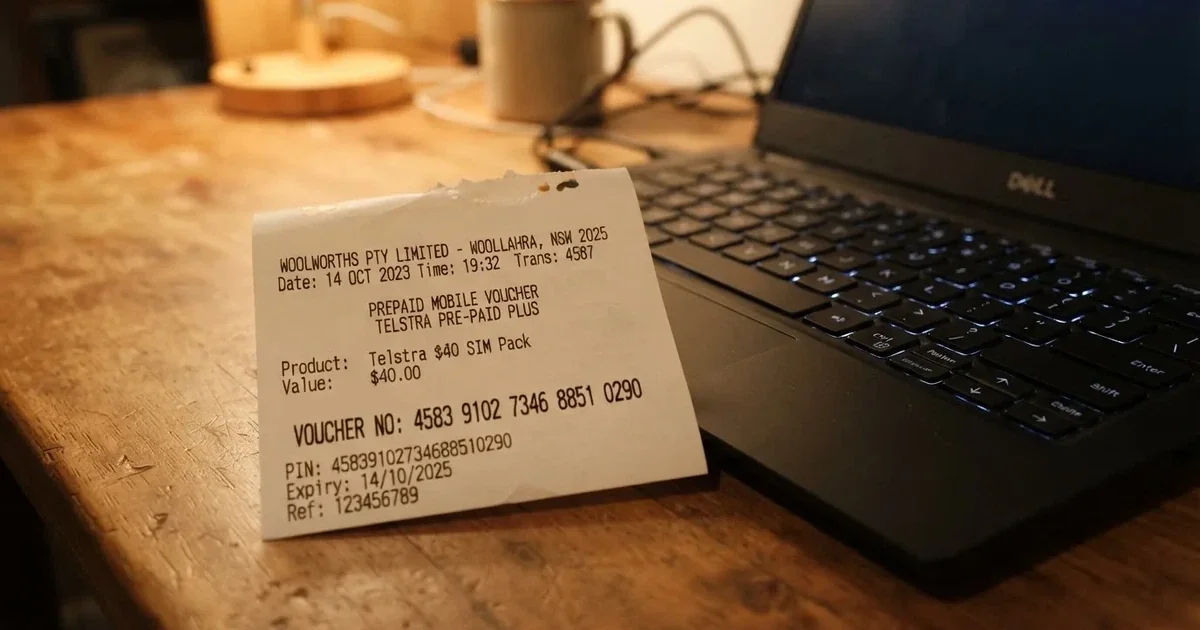
A CashtoCode eVoucher is, on paper, a tidy answer to a question many Australian players would rather not ask: how do I fund an online casino without handing over a card number or a bank login? The code is twenty digits, sold at convenience stores and online, redeemable at the cashier of dozens of offshore sites that market themselves to Australian players. The convenience is real, and so is the price of it.
Under the Interactive Gambling Act 2001, no online casino may lawfully take Australian players at all. The offshore sites that list CashtoCode are not licensed for this market, do not have to be, and are not protecting anyone who plays at them. The Australian Communications and Media Authority has spent the past several years naming operators one by one, blocking websites by the thousand, and warning the rest. Every brand in this guide carries a formal warning from the ACMA. That is the frame in which the rest of the page sits.
What follows is a working read of how CashtoCode deposits and withdrawals behave at these sites, what the deposit really costs in time and money, and which brands the regulator has acted against. The legal position is set out plainly, with no softening. The point is not to recommend a place to play; the law has already answered that question.
Current as of 20 October 2026; the licence claims and ACMA enforcement record were checked against the ACMA’s published formal warnings and blocking notices.
Table of Contents
- How CashtoCode actually works at an offshore casino
- What the law actually says about CashtoCode casinos in Australia
- What a CashtoCode deposit costs in real money
- Responsible gambling when the casino is offshore
- The ACMA’s record against the brands in this guide
- The eleven brands the ACMA has named
- Where CashtoCode fits in the wider Australian payments picture
- Tax, winnings and what a player actually keeps
- What to do before depositing
- Frequently asked questions
How CashtoCode actually works at an offshore casino
CashtoCode is run by Eightball Marketing Services LLC, and the brand has been on the market since 2013. The product itself is straightforward. A player walks into a participating reseller — anywhere from a local convenience store to a digital platform — and buys a voucher denominated in one of more than twenty-five supported currencies. The voucher comes back as a twenty-digit code. That code is typed into the deposit field at the casino cashier and the funds appear, usually instantly, on the player’s account.

The selling point to the buyer is that no personal details are attached to the code. There is no card number to leak, no bank account to compromise, no e-wallet to verify. Any unused balance keeps its full value, and the voucher itself is free to the customer — no per-transaction usage fee sits on the customer’s side of the line.
The catch, and there is always a catch, sits on the other side. A CashtoCode deposit is a one-way transaction. The same official site that sells the eVoucher offers no withdrawal option, because the product was never designed to receive money back. A player who wins and wants to cash out is dependent on whatever second payment method the casino chooses to offer, and the casino’s own manual checks and processing times apply. The “no personal details” promise that made the deposit attractive is also the reason a withdrawal cannot ride the same rails.
CashtoCode’s own catalogue is candid about where the product is sold. The marketing filters list gambling game providers — Pragmatic Play, Evolution, NetEnt and Playtech among them — which is the polite way of saying the company knows exactly who its customers are.
What the law actually says about CashtoCode casinos in Australia
The Interactive Gambling Act 2001, as strengthened by the Interactive Gambling Amendment Act 2017, makes it an offence to provide online casino games, online pokies or in-play betting to a person physically in Australia. No state or territory licenses the product. The only licensable forms of online gambling are wagering on races and sport placed before the event, lotteries and keno. In practice the Northern Territory Racing and Wagering Commission handles the wagering side, regulating 52 online bookmakers — Sportsbet, Bet365 and Ladbrokes among them — for tax reasons. The commission has no full-time staff and meets once a month in Darwin.
The ACMA does the enforcing. It investigates complaints, issues formal warnings to operators, and asks Australian internet service providers to block illegal sites. As of June 2026, the ACMA has asked ISPs to block 1,751 illegal gambling and affiliate marketing websites since the first blocking request in November 2019, and more than 230 unlicensed gambling services have left the Australian market since enforcement was strengthened in 2017. The latest single round, reported in June 2026, blocked another twelve: 7Signs, ChromaBet, Donbet, Duospin, Freshbet, Slots Gem, Jacks Club, Lucky Start, Pointsbetz, Spinrise, Vinyl Casino and Wildsino.
The IGA targets the provider, not the player. No Australian has been prosecuted for placing a bet. That is the only piece of good news, and it is a small one: an offshore site gives no Australian consumer protection, no complaints body with jurisdiction over it, and no recourse if a withdrawal is refused. The site can be blocked in the morning with a balance still on it. None of this changes because the deposit method was anonymous.
H2 Gambling Capital’s 2025 estimate puts annual losses to illegal gambling sites at roughly A$3.9 billion. The share of gambling going through legal channels fell from 74 per cent in 2021 to 64 per cent in the same report — a ten-point drift in four years.
Credit cards, digital wallets and the 2024 ban
From 11 June 2024, Australian-licensed online wagering providers have been banned by law from accepting credit cards, credit-linked digital wallets or digital currencies as payment. ACMA enforces the rule, with penalties of up to A$247,500 for non-compliance. The practical deposit routes for a licensed Australian bookmaker are debit card, bank transfer, PayID/Osko and BPAY. None of those restrictions bind an offshore casino, which is another way of saying that the offshore market does not have to follow the rules that govern the licensed one.
The 2026 reform package
The Interactive Gambling Amendment (Gambling Reform) Bill 2026 passed Parliament on 19 August 2026, and its advertising and inducement measures commence on 1 January 2027. The law exists, the start date has been set, and the new rules are not yet in force on a page dated within 2026. Worth noting, not yet worth counting on.
What a CashtoCode deposit costs in real money
The voucher itself carries no usage fee. That part is clean. What a CashtoCode deposit costs is the vig the player pays in two other places: the casino’s deposit rails, and the time spent waiting for a withdrawal that the voucher cannot carry.
Minimum deposits at the sites that accept CashtoCode typically start at A$10, which puts the method in the low-stakes bracket a casual player looks for. The deposit clears in seconds once the code is keyed. There is no surcharge on the customer’s side and no exchange rate loss if the voucher is bought in Australian dollars — though many offshore sites denominate balances in EUR or USD, and the conversion then runs at whatever rate the casino’s cashier applies.
A withdrawal is a different story. Because CashtoCode cannot receive funds, the casino has to route the payout through a second method — a bank transfer, an e-wallet, occasionally a cryptocurrency withdrawal — and every one of those routes carries the casino’s own pending period on top of the payment network’s settlement time. The hardening rule is that nothing is instant on the way out, even when the way in was.
Players who have turned on a bank-level gambling block — available at NAB, Commonwealth Bank, Westpac, St George and ANZ, set inside the banking app — will find those blocks refuse transactions tagged under the merchant category code for betting and casino gambling. The block fires immediately, on the card or through a linked wallet such as Apple Pay on an eligible card. ANZ’s block even warns that lifting it takes a 48-hour cooling-off period, and that not every gambling transaction will be caught, and some non-gambling transactions will be refused by mistake. A bank-level block is the single most reliable barrier between an Australian player and the cashier at any of these brands.
The cost of CashtoCode in time, not in fees
CashtoCode’s drawcard is the absence of friction on deposit. The product costs nothing to use, accepts cash at a corner store, and never asks for a name. None of those properties change the cost on the way out, and none of them put the casino on the right side of the Interactive Gambling Act 2001. The cheapest way to fund an account is not the cheapest way to play, and it is not the legal way either.
Responsible gambling when the casino is offshore
The standard Australian safety net is built for Australian-licensed operators. BetStop, the National Self-Exclusion Register, has been live since August 2023 and binds every Australian-licensed online and phone wagering service. An offshore casino is not connected to it. A player who has registered with BetStop can still open an account at any of the brands in this guide, because none of those brands check the register.
The same gap applies to bank-level gambling blocks, which work at the card-network level rather than at the casino’s own cashier. They are the most reliable barrier available, but they catch only the transaction, not the player.
The National Gambling Helpline, 1800 858 858, is free, 24/7 and routes to counselling services in every state and territory. Chat is available through Gambling Help Online. Neither service is bound by what casino a caller has been playing at; both will work regardless.
A bank transfer through PayID has its own quiet safety feature. The system shows the registered name of the account holder before the transfer is sent. The PayID operator warns that being asked to send money to a PayID on an illegal gambling site almost certainly means a scam site. The advice is targeted at victims of fraud, but it tells a player something useful about who is on the other end of the line.
The ACMA’s record against the brands in this guide
Every brand in the table below has been the subject of a formal warning from the ACMA. The warnings are published on the regulator’s site, name the operator behind the brand, and follow the same pattern: the regulator notifies the operator that providing prohibited interactive gambling services to Australian customers is an offence under the Interactive Gambling Act 2001, and that further enforcement action may follow. Several of the operators have been warned more than once, in some cases over different brands under the same corporate umbrella.
The blocking record reinforces the pattern. Across every enforcement round since November 2019, the regulator has asked ISPs to block 1,751 illegal gambling and affiliate marketing websites. The first blocking request went out in November 2019; the latest figure, reported in June 2026, runs to 1,751 sites. That is an average of roughly 250 sites per year since the regime began, every one of them named individually in a published notice.
The ACMA’s enforcement bands in this guide sit across two operators. Dama N.V. was warned in May 2022 over six brands — Bambet, Dazard, Level Up, Rocketplay, Wild Tornado and Cobra Casinos — and again in March 2025 over Woo Casino, and again in May 2025 over Spirit Casino. Consolutetish S.R.L. was warned in July 2025 over National Casino and Bizzo Casino; Bizzo had already been the subject of a 2022 warning to TechSolutions (CY) Group Limited and TechSolutions Group N.V. The pattern is the same Dama story repeating under different brand names, and a second operator cycling through new front companies.
| Brand | ACMA action and date | Operator named by the ACMA | CashtoCode acceptance |
|---|---|---|---|
| RocketPlay | Formal warning, March 2026 (Pulsup Ltd); earlier Dama N.V., May 2022 | Pulsup Ltd | — |
| Level Up Casino | Formal warning, May 2022 | Dama N.V. | Listed in third-party payment guides |
| Woo Casino | Formal warning, March 2025 | Dama N.V. | — |
| Spirit Casino | Formal warning, May 2025 | Dama N.V. | — |
| National Casino | Formal warning, July 2025 | Consolutetish S.R.L. | Listed in third-party payment guides |
| Bizzo Casino | Formal warning, July 2025; earlier TechSolutions, 2022 | Consolutetish S.R.L. | — |
| Ignition Casino | Formal warning, July 2025 | Bamboo Media | — |
| Instant Casino | Formal warning, February 2025 | EOD Code SRL | Listed in third-party payment guides |
| Jackbit | Formal warning, April 2026 | Ryker B.V. | — |
| Casino Intense | Formal warning, April 2025 | Sterplay Holding Ltd | Listed in third-party payment guides |
| Sky Crown | Formal warning, September 2022 | Hollycorn N.V. | — |
The CashtoCode column follows the source pattern in research. Where a payment-method directory or a casino’s own listing page names the brand as accepting CashtoCode, the row says so. Where neither source confirms it, the row carries an em dash rather than a guess. This is not a comment on whether the brand would, in practice, accept a CashtoCode voucher at the cashier today; it is a comment on what the publicly visible sources confirm.
What the blocking rate looks like over time
The arithmetic behind the ACMA’s blocking programme is a useful frame for thinking about how aggressive the enforcement has actually been. The first blocking request went out in November 2019; the running total of blocked sites reached 1,751 by the report dated June 2026. That is just over six and a half years of enforcement, and a working average of roughly 250 sites blocked per year. Across the most recent reporting round alone — June 2026 — twelve sites were added in a single batch.
The rate is not falling. The 2026 reform package and the 2024 credit-card ban have not slowed the addition of new sites to the blocking list; if anything the rate at which new front companies appear has accelerated. Dama N.V.’s three warnings across three years, over six different brands in 2022 and then two more in 2025, is the clearest pattern in the table. A blocked brand is rebuilt under a new name, the warnings start again, and the cycle continues.
The blocking rate matters because it is the regulator’s only published scorecard. There is no public tally of formal warnings that did not lead to a block, no list of operators who changed behaviour after a warning, and no account of how many Australians have funds sitting in accounts at sites that no longer resolve at an Australian IP. The 1,751 figure is what the ACMA can show; the rest is in the unenforced margins.
The eleven brands the ACMA has named
Each entry below sets out what the regulator has published about the brand, where the brand sits in the CashtoCode ecosystem according to third-party sources, and what playing there actually costs the person doing it. The frame stays the same across all eleven: formal warning from the ACMA, an offshore operator with no Australian licence, and a product the Interactive Gambling Act 2001 prohibits from being offered here at all.
RocketPlay
Pulsup Ltd was the operator named in the ACMA’s March 2026 formal warning over RocketPlay, with an earlier warning to Dama N.V. covering the same brand back in May 2022. Two warnings across four years, two different front companies, the same casino product. The RocketPlay brand has cycled through operators; the ACMA has caught up with each.
RocketPlay’s CashtoCode status is not confirmed by any source the page can cite. Payment-method directories that cover Dama N.V. brands do not single RocketPlay out, and the brand’s own cashier pages are not part of the verified record. There is no working answer to whether a CashtoCode deposit would clear at this brand today.
The reader RocketPlay is wrong for is any Australian. The reader it would be wrong for even if it were legal is anyone who has set a bank-level gambling block and would find it defeated by an offshore cashier. The reader who would still find something here is, candidly, hard to construct.
Level Up Casino
Dama N.V. was the operator named in the ACMA’s May 2022 warning covering Level Up alongside five other brands. Third-party payment-method directories do list Level Up as accepting CashtoCode at the cashier, which makes it one of the more visible entries in the Dama portfolio for the Australian market. The brand has not been the subject of a fresh ACMA notice since the 2022 batch, but the Dama front company has — over Woo Casino in March 2025 and Spirit Casino in May 2025 — and the same operator typically shares infrastructure across the brands it runs.
Level Up is the entry point most often named in payment-method guides for CashtoCode at an Australian-facing casino. That is a usage signal rather than an endorsement: it means the brand appears in the same directories that route Australian players to these sites, and that those directories name CashtoCode as a deposit option for it. What the directories do not name is the legal position, which is the same as the rest of the table.
Woo Casino
Dama N.V. received the ACMA’s March 2025 formal warning specifically over Woo Casino, four years after the same operator was warned over the original Dama portfolio. The brand sits inside the same corporate structure that produced RocketPlay and Level Up. None of the public payment-method directories confirm CashtoCode acceptance at Woo Casino, and the brand’s own cashier is not part of the verified record.
The verdict on Woo Casino is the same as the verdict on every other Dama brand on the table: an Australian player using it is on the wrong side of the IGA, and the ACMA has put the regulator’s own name on that finding.
Spirit Casino
Dama N.V. received the ACMA’s May 2025 formal warning specifically over Spirit Casino. It is the third Dama N.V. brand in the table, and the most recent. The pattern is now unmistakable: the operator changes the brand name, runs the casino product, gets warned, and the cycle repeats. Spirit Casino’s own cashier is not covered by any CashtoCode source the page can cite.
The reader Spirit Casino costs the most is the one who does not realise they are walking into the same operator that has been warned three times since 2022.
National Casino
Consolutetish S.R.L. was the operator named in the ACMA’s July 2025 formal warning over National Casino. The same operator was warned over Bizzo Casino in the same notice. Third-party payment-method directories list National Casino among the brands that accept CashtoCode at the cashier, putting it in the small minority of the table where the deposit method is publicly confirmed.
National Casino’s operator name is newer than the brands in the Dama cluster — Consolutetish S.R.L. has not been on the ACMA’s published list as long — but the warning’s date is the more recent of the two in this guide. The same legal frame applies.
Bizzo Casino
Consolutetish S.R.L. was the operator named in the ACMA’s July 2025 formal warning over Bizzo Casino, and Bizzo had already been the subject of a 2022 formal warning to TechSolutions (CY) Group Limited and TechSolutions Group N.V. Two warnings, two operators, one brand. The brand has cycled through the same way the Dama brands have, which is to say the regulator has had to chase it twice.
No public source confirms CashtoCode acceptance at Bizzo’s cashier. The brand’s deposit methods are not part of the verified record.
Ignition Casino
Bamboo Media was the operator named in the ACMA’s July 2025 formal warning over Ignition Casino. Ignition is a long-established offshore brand and has been the subject of payment-method coverage for years, but no public source in the verified set confirms CashtoCode acceptance at its cashier. The deposit-method question is open; the legal question is not.
The verdict on Ignition is the same as the verdict on every brand in the table, and the same reasoning gets there. Different operator, same outcome.
Instant Casino
EOD Code SRL was the operator named in the ACMA’s February 2025 formal warning over Instant Casino. Third-party payment-method directories list Instant Casino among the brands that accept CashtoCode at the cashier. Like Level Up and National Casino, it sits in the minority of the table where the deposit method is publicly named.
EOD Code SRL is a more recent name in the ACMA’s register than the Dama and Consolutetish fronts. The warning was issued; the brand remains in operation at an Australian IP; the legal frame has not changed.
Jackbit
Ryker B.V. was the operator named in the ACMA’s April 2026 formal warning over Jackbit and CasinOK. The warning is the most recent in the table, and the only one covering two brands under the same notice. No public source confirms CashtoCode acceptance at Jackbit’s cashier. Jackbit is the newest entry on the ACMA’s register in this guide.
The verdict on Jackbit is set by the same frame. The recency of the warning does not soften it.
Casino Intense
Sterplay Holding Ltd was the operator named in the ACMA’s April 2025 formal warning over Casino Intense. Third-party payment-method directories list Casino Intense among the brands that accept CashtoCode at the cashier, putting it alongside Level Up, National Casino and Instant Casino in the public-payment-method minority.
Sterplay Holding Ltd is a smaller operator name than the Dama or Consolutetish groups, and the April 2025 warning is the only one the ACMA has issued for it so far. None of that changes the legal frame, and none of it changes the deposit method’s status as a one-way rail.
Sky Crown
Hollycorn N.V. was the operator named in the ACMA’s formal warning over Sky Crown and Blue Leo, published in September 2022. Sky Crown is the oldest entry on the ACMA’s register in this guide, and the only one whose warning dates to the period immediately after the ACMA’s blocking regime began scaling up.
No public source confirms CashtoCode acceptance at Sky Crown’s cashier. The Hollycorn N.V. portfolio covers multiple brands and the operator has run casinos for years, but the deposit method’s status at this specific brand is not part of the verified record.
Where CashtoCode fits in the wider Australian payments picture
The same logic that makes CashtoCode attractive to an offshore casino cashier — anonymity on the way in, no card number on file — is the property that puts it outside Australia’s regulated payments architecture. The credit-card ban that took effect on 11 June 2024 covers credit cards, credit-linked digital wallets such as Apple Pay when attached to a credit card, and digital currencies. A CashtoCode deposit is none of those things; it is a prepaid voucher purchased with cash. The 2024 ban does not catch it, which is exactly why offshore operators list it.
Australia’s licensed online wagering market uses PayID and Osko for instant bank-to-bank transfers, available at more than 100 Australian financial institutions and settling in under a minute, 24/7. Apple Pay, Google Pay and Samsung Pay together accounted for roughly 45 per cent of all card payments in Australia by number at the end of 2025. None of those rails are available at an offshore casino cashier, and the licensed market is the only one that has any interest in offering them.
AUSTRAC’s threshold-transaction-report rule applies to physical cash transactions of A$10,000 or more. Ordinary electronic bank transfers are not subject to that per-transaction reporting rule, regardless of the amount sent. The practical implication is that a bank transfer through PayID to an offshore casino cashier sits below the reportable threshold for most players, which is a comfort that exists independently of whether the destination is licensed.
Tax, winnings and what a player actually keeps
A recreational gambler’s winnings are not assessable income under section 6-5 of the Income Tax Assessment Act 1997, and losses are not deductible. The rule has two edges: the ATO does not tax a winning at the point of withdrawal, and the ATO also does not allow the same player to offset a losing year against any other income. The exception is a person who carries on a business of gambling, which is a higher bar than offshore pokies play and not the situation of anyone reading this page.
The tax position is the one piece of this market that is genuinely simple. The legal position, the consumer-protection position and the withdrawal-risk position are not.
What to do before depositing
The default advice is the same advice the regulator has been giving since 2017: do not play at offshore casinos from Australia. For a reader who has decided to ignore that, the practical safety steps are these.
Turn on a bank-level gambling block. NAB, Commonwealth Bank, Westpac, St George and ANZ all offer one through the banking app. The block fires at the card-network level, refuses transactions tagged under the merchant category code for betting and casino gambling, and applies immediately. ANZ’s block extends to linked wallets such as Apple Pay on an eligible card. Lifting a block at ANZ takes a 48-hour cooling-off period; at the other banks the same delay applies.
Register with BetStop. The National Self-Exclusion Register binds every Australian-licensed online and phone wagering service. An offshore casino is not connected to BetStop, which is the limit of what the register does. It does not catch offshore play; it does stop the licensed side, which is where the bulk of an Australian player’s gambling usually sits.
Keep the National Gambling Helpline, 1800 858 858, somewhere visible. The service is free, runs 24/7, and the chat option through Gambling Help Online handles the after-hours calls. Neither channel asks where the player has been playing; both will help.
Treat any bonus offer as marketing. The sources for bonus terms at these offshore brands are affiliate marketing pages whose business model is the click-through. No bonus terms are reproduced on this page for that reason, and no bonus code is published on this page for that reason.
Treat the deposit method as a one-way rail. CashtoCode cannot receive a withdrawal. Whatever payout method the casino offers is what the player has to use, and the withdrawal will run on the casino’s pending period plus the payment network’s settlement time, with no shortcut from the deposit side.
The cheapest part of using CashtoCode is the voucher. The most expensive part is the deposit that comes after it.
Frequently asked questions
Is it legal for an online casino to accept CashtoCode from a player in Australia?
No. Under the Interactive Gambling Act 2001, no online casino may lawfully provide casino games, online pokies or in-play betting to a person in Australia. The deposit method does not change that. Every offshore site that lists CashtoCode for Australian players is operating outside the IGA, and the ACMA has acted against all eleven of the brands in this guide. The player is not prosecuted; the provider is.
What is the smallest deposit a CashtoCode casino site usually asks for?
CashtoCode casinos that target Australian players typically set the minimum deposit at A$10, which puts the method at the low end of the offshore market. The voucher can be bought in larger denominations at the reseller, but the casino’s own minimum is what governs what clears at the cashier.
Does a CashtoCode withdrawal clear any faster than a card withdrawal at these sites?
CashtoCode eVouchers are deposit-only — there is no withdrawal rail, so a payout has to go through a separate method such as a bank transfer, an e-wallet or a cryptocurrency withdrawal. The speed depends entirely on the casino’s pending period and the second method’s settlement time, not on CashtoCode itself.
Can CashtoCode be used at every offshore pokies-style site, or only some of them?
Only some. CashtoCode is not a universal cashier option. The third-party payment-method directories name Level Up, National Casino, Instant Casino and Casino Intense as accepting it; the other brands in this guide either do not list it in publicly visible sources or do not carry the listing the page can verify. A small handful of the offshore market takes the voucher; most do not.
Does depositing with CashtoCode add an extra fee at these casino sites?
CashtoCode states the voucher is free of charge to the customer and carries no usage fee, with any unused balance keeping its full value. The deposit itself is therefore zero-cost at the point of sale. The cost of playing is in the casino’s edge on every spin, not in the deposit method’s fee structure, and that cost is the same whatever rail funded the account.
What should a player do if a CashtoCode deposit does not appear in a casino account?
CashtoCode vouchers typically settle at the cashier within seconds of the code being keyed in. If the balance has not appeared after a few minutes, the working steps are to recheck the twenty-digit code for a transcription error, then contact the casino’s support with the code and the time of the attempted deposit. The voucher is single-use, so an unsuccessful redemption is not a security risk in the way an exposed card number is, but the casino’s support team is the right first contact.