
Real-money PayID withdrawals from Australian-facing casinos in 2026
PayID is fast. A transfer between two participating Australian banks arrives in under a minute, twenty-four hours a day, including weekends. That is the small piece of technology this page sits on. The larger piece is the legal one: online casino games cannot be licensed anywhere in Australia, which means every offshore brand offering a real-money PayID withdrawal to an Australian resident is doing so against the Interactive Gambling Act 2001, and the ACMA has been telling those operators exactly that since enforcement was strengthened in 2017. The speed of the rail and the status of the train running on it are two different stories, and a reader who only heard the first one has not been told the second.
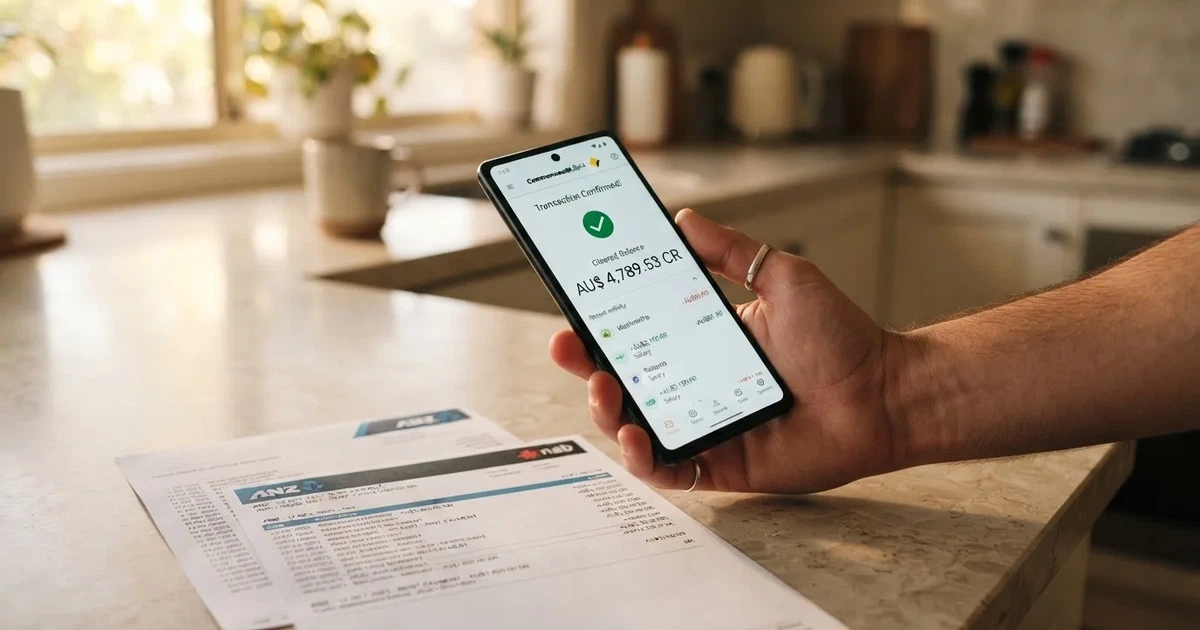
Current as of 20 October 2026, with licence and ACMA enforcement claims cross-checked against the ACMA’s published formal-warning register and the Reserve Bank of Australia’s New Payments Platform information.
Table of Contents
- Why an “instant PayID withdrawal” sounds faster than it is
- The legal frame an Australian player walks into
- Where the protection actually sits
- The brands the ACMA has acted against — and what that means for a real-money PayID withdrawal
- The arithmetic an Australian player is actually doing
- The PayID scambling problem by name
- A reader-side note on what the rest of this page is not
- What an Australian reader actually does with this
- Frequently asked questions
Why an “instant PayID withdrawal” sounds faster than it is
The marketing line is built on three confusions worth separating. First, PayID is the addressing layer, not the settlement guarantee — the rail underneath it is Osko, which settles individually in close to real time through the Reserve Bank’s Fast Settlement Service. Second, “instant” in this context describes the time between a casino pressing release and the funds showing in a bank app, not the time between a player requesting a withdrawal and that release happening. Third, every operator on this page’s list runs from outside Australia, and the speed a brand advertises is the speed the brand controls — the verification step before a first withdrawal is the one a player cannot speed up, and it is the one most often skipped in the marketing copy.
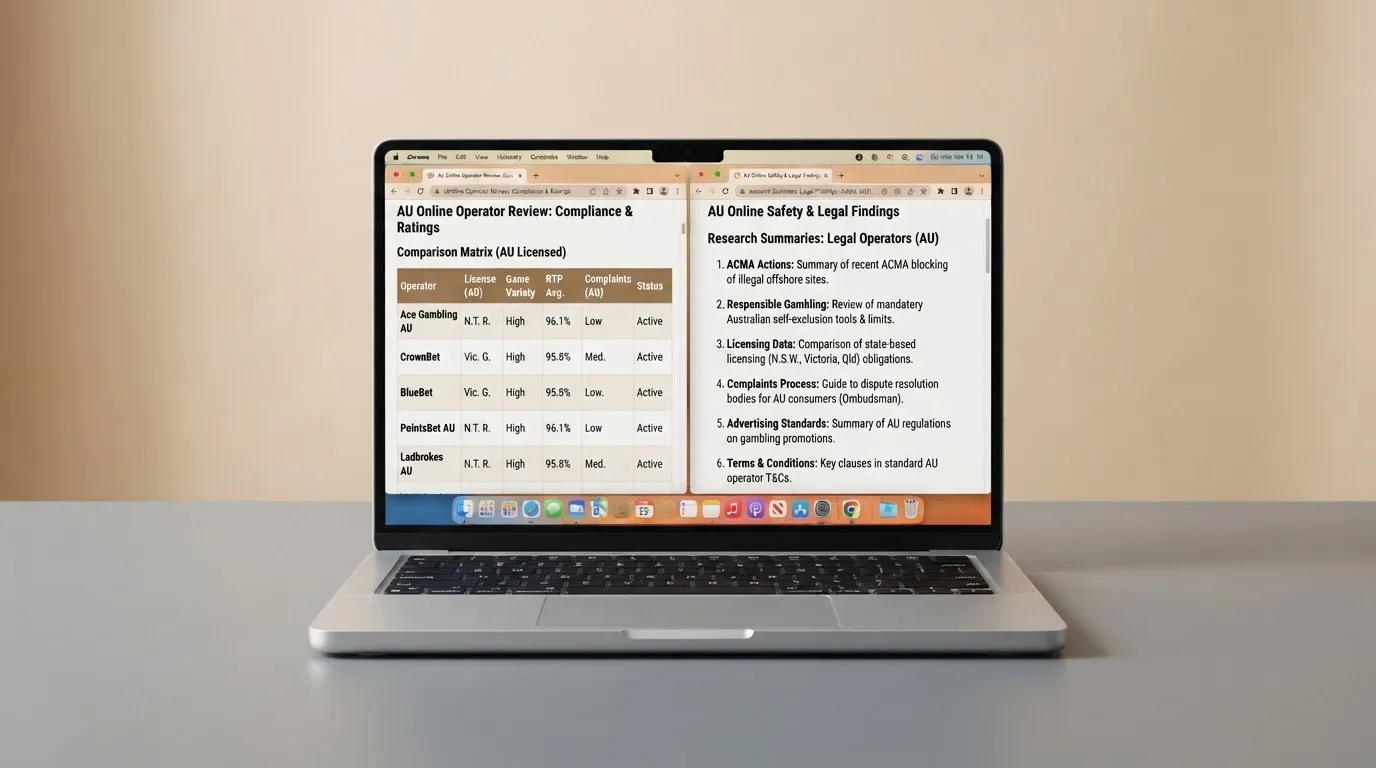
What that adds up to in practice: a first cash-out usually needs identity documents, a verified bank account, and sometimes a source-of-funds check before any PayID payment is queued at all. The PayID leg is genuinely fast once that queue opens. The wall in front of it is not.
The PayID rail underneath the marketing
PayID is operated by Australian Payments Plus, the country’s domestic payments provider, and is offered by more than one hundred Australian financial institutions. A PayID itself is just an easy-to-remember identifier — a mobile number, an email address, an ABN or an Organisation Identifier — linked to a bank account. The rail it sits on is the New Payments Platform, which launched in February 2018 specifically to let households, businesses and government agencies send simply-addressed, near real-time payments around the clock. By April 2025 there were more than 25 million registered PayIDs in Australia. Osko, the brand under which most Australian banks expose that rail to customers, completes transfers between participating banks in under a minute, twenty-four-seven, whether the payment is addressed to a BSB and account number or to a PayID.
The speed is real. The transfer itself is not the slow part of any real-money PayID withdrawal flow on this list.
Where the time actually goes
A withdrawal request enters three queues before PayID is involved at all. The first is internal: an offshore operator’s payments team reviews the request, sometimes automatically, sometimes by hand, and the automated path is the one the marketing screenshots are taken from. The second is compliance: a Know Your Customer check on the player, and on the bank account the PayID points to, runs once and is reused on later cash-outs. The third is the bank leg, which is genuinely fast and which PayID’s name-check on the recipient protects — when paying to a PayID, the payer sees the name attached to it before sending, which is the check that protects against mistaken payments and against the scams AP+ has been warning about directly.
The brand-controlled part of this is the first queue only. Everything downstream runs on Australian infrastructure.
The legal frame an Australian player walks into
The Interactive Gambling Act 2001, strengthened by the Interactive Gambling Amendment Act 2017, makes it an offence to provide online casino games, online pokies or in-play betting to a person in Australia. No state or territory licenses them. What is licensable is wagering on races and sport placed before the event, lotteries and keno — in practice licensed by the Northern Territory, where the Racing and Wagering Commission regulates fifty-two online bookmakers including Sportsbet, Bet365 and Ladbrokes for tax reasons, and meets once a month in Darwin. The minimum age is eighteen. The individual player is not prosecuted; the IGA targets the provider. None of that changes what happens to a player who wins and cannot get the money out.
A site licensed in Curaçao, Anjouan or any other offshore jurisdiction is not licensed in Australia for casino games, regardless of what its footer says. The licence it displays covers its own operations in its own jurisdiction; it does not cover the act of offering prohibited interactive gambling services to a person physically present in Australia.
What enforcement has looked like to date
The ACMA, the Australian Communications and Media Authority, investigates, issues formal warnings and directs Australian internet service providers to block illegal sites. According to the ACMA as reported in June 2026, a total of 1,751 illegal gambling and affiliate marketing websites had been blocked since the first blocking request in November 2019, and more than 230 unlicensed gambling services had left the Australian market since enforcement was strengthened in 2017. In a round reported on 26 June 2026 the ACMA asked ISPs to block twelve more illegal gambling sites: 7Signs, ChromaBet, Donbet, Duospin, Freshbet, Slots Gem, Jacks Club, Lucky Start, Pointsbetz, Spinrise, Vinyl Casino and Wildsino.
What blocking means for a player with an open balance: the site stops resolving on an Australian connection, but the operator behind it does not. The withdrawal queue, if there is one, sits on that operator’s servers, and the player’s only path back into it is a virtual private network or a direct line to support. Both are slower than the PayID leg would have been.
What enforcement has cost the illegal market
H2 Gambling Capital’s 2025 report estimates that Australians lose about A$3.9 billion a year to illegal gambling sites, and that the share of gambling going through legal channels fell from 74% in 2021 to 64%. The pipeline that handles PayID withdrawals from those sites is part of that larger flow, and the share going through it is shrinking because the sites themselves are being shut off, not because Australian players have stopped showing up.
The 2026 reform that has not yet started
The Interactive Gambling Amendment (Gambling Reform) Bill 2026 passed Parliament on 19 August 2026. Its advertising and inducement measures commence on 1 January 2027. That is law with a start date, not law in force on a page dated 2026. The bank-blocking and the ACMA formal-warning rounds described above are the active state of enforcement, and they are the ones any Australian-facing brand has been on the wrong end of since at least 2022.
Where the protection actually sits
Three named bodies matter to an Australian player who has a real-money balance somewhere they cannot reach. The first is the ACMA, which investigates and acts against providers, not against individual players. The second is BetStop, the National Self-Exclusion Register, live since August 2023 — it binds Australian-licensed online and phone wagering services only, so an offshore casino is not connected to it, and registering does not stop an offshore site from accepting a deposit or holding a balance. The third is the National Gambling Helpline on 1800 858 858, free, twenty-four-seven, with chat through Gambling Help Online.
For an offshore site refusing a withdrawal: there is no Australian complaints body with jurisdiction over the operator. The path is through the licence issuer the operator displays in its footer — a Curaçao sub-licence is the commonest one — and that body is set up to license, not to mediate disputes. This is what the absence of consumer protection actually looks like in practice.
Banking-layer blocks that run ahead of the regulator
Several Australian banks run gambling blocks at the card level, and these operate before any PayID leg even starts. Westpac’s gambling block refuses authorisation of transactions registered under the merchant category code for betting and casino gambling on eligible personal credit and debit cards. ANZ’s gambling transaction block, activated in the ANZ app, also blocks gambling transactions made through a digital wallet such as Apple Pay on an eligible card, and once it is turned on, removing it requires a forty-eight-hour waiting period. ANZ also warns that not all gambling transactions will be blocked and that some non-gambling transactions might be blocked in error — the block is at merchant-category-code level, not at a per-brand whitelist, so the false-positive rate is built in.
By the end of 2025, Apple Pay, Google Pay and Samsung Pay transactions collectively accounted for around 45% of all card payments in Australia by number. A gambling block that includes digital-wallet transactions is doing something different from one that targets a physical card, because most of the traffic now is wallet traffic.
The payment-method rules an Australian-licensed wagering site has to follow
Under the Interactive Gambling Act 2001 as amended in 2023, Australian-licensed online wagering services cannot accept credit cards or other credit-related products as payment, a restriction that also shapes how PayID-linked bank transfers can be used for wagering. Credit cards, credit-related products and digital currency are banned as payment for licensed online wagering since 11 June 2024, with penalties of up to A$247,500 for operators. Legal deposit routes for licensed wagering are debit card, bank transfer, PayID through Osko, and BPAY. An offshore casino asking for a credit card or a crypto deposit is operating outside the Australian rules for licensed wagering, and that is the cleanest test of which side of the line a brand sits on.
American Express is a separate case: unlike Visa or Mastercard’s four-party network, Amex traditionally issues cards and processes transactions itself as a three-party scheme, and the Reserve Bank of Australia’s July 2025 review of merchant card payment costs and surcharging proposes removing surcharges only on eftpos, Mastercard and Visa transactions, explicitly leaving American Express outside the scope of the proposed surcharge ban. For an Australian player, that means a surcharge decision on Amex is a merchant decision, not a regulator decision, and it will keep being one.
The brands the ACMA has acted against — and what that means for a real-money PayID withdrawal
Every brand below has been the subject of a formal warning from the ACMA over the provision of prohibited interactive gambling services to Australians. The list is not a ranking and not a recommendation. It is the published record of who has been told to stop, in roughly the order the ACMA itself acted. The brand’s own marketing may describe an “instant PayID withdrawal” with a screenshot and a one-minute timer. The legal status of that withdrawal is the same for every entry below.
Two shared caveats apply to the whole table. First, no entry here is a lawful real-money casino option for an Australian resident; the ACMA’s formal-warning register says exactly that about each one. Second, none of these brands’ own advertised withdrawal times have been independently verified — the only sources for those times were affiliate marketing pages, and that is the kind of source a reader should not rely on for the one figure that determines whether a balance ever arrives.
RocketPlay
The ACMA issued a formal warning to Pulsup Ltd over Rocketplay in March 2026. Dama N.V. had already been warned in May 2022 over Rocketplay among five other brands. The page’s subject cuts against this brand in the most direct way possible: an offshore site marketing an “instant PayID withdrawal” to Australians, where the ACMA has twice named the operator behind it. For a reader who has decided to ignore that, the brand’s own withdrawal claims are the only ones available, and there is no source for them other than the brand.
Level Up Casino
The ACMA issued a formal warning to Dama N.V. in May 2022 covering six brands, of which Level Up was one. The brand’s PayID and instant-withdrawal marketing exists; the legality of accepting a real-money PayID deposit from an Australian and returning winnings the same way is the same as every other entry here. Listings sources place the brand in Westpac’s merchant code data, which is the surface the gambling block operates on, not a permission.
Woo Casino
The ACMA issued a formal warning to Dama N.V. over Woo Casino in March 2025, and a separate warning to the same operator over Spirit Casino in May 2025. The Dama N.V. cluster is the most-warned single operator in the ACMA’s published register. A brand carrying two warnings two months apart from the same operator is a brand that has been told, in writing, twice.
Spirit Casino
The second of the May 2025 Dama N.V. warnings. The pair with Woo Casino, two months apart, tells a reader that enforcement against this operator was not a one-off. The ACMA publishes its formal warnings and the names of the operators they cover; the register is the part of this page that does not paraphrase.
National Casino
The ACMA issued a formal warning to Consolutetish S.R.L. over National Casino in July 2025. Listings data places the brand against AUSTRAC transaction-reporting references and in general directory entries. AUSTRAC reporting is not a licence; it is a reporting obligation that applies to any entity providing the relevant services. National Casino had not been previously warned by the ACMA at that point, which makes it a different shape of case from the Dama N.V. cluster above.
Bizzo Casino
The ACMA issued a formal warning to Consolutetish S.R.L. over Bizzo Casino in July 2025. The brand had already been the subject of a 2022 formal warning to TechSolutions (CY) Group Limited and TechSolutions Group N.V. — so Bizzo is the clearest case on this list of a brand that has changed hands and stayed on the ACMA’s register. The pattern matters more than the names: operator changes do not clear the warning, because the ACMA’s register is a register of services offered to Australians, not of corporate entities.
Ignition Casino
The ACMA issued a formal warning to Bamboo Media over Ignition Casino in July 2025. Ignition is a brand long associated with offshore poker and casino products, and the warning places it on the same side of the line as the rest of this list. The withdrawal mechanism it markets is the PayID leg plus its own first-withdrawal verification, and the verification is where the queue sits.
Instant Casino
The ACMA issued a formal warning to EOD Code SRL over Instant Casino in February 2025. Listings sources place the brand against ecoPayz’s payment-method directory and against PayID’s own published scam-alert page. The second of those is the more important placement, because AP+ warns directly about gambling: if a player is asked to transfer funds to a PayID on an illegal gambling site, it is almost certainly a scam website. A brand that lands on that warning page is a brand whose PayID leg is exactly what AP+ is telling people to be suspicious of.
Jackbit
The ACMA issued a formal warning to Ryker B.V. over Jackbit and CasinOK in April 2026. Jackbit is the newest brand on this list by date of formal warning, and the warning is the freshest data point about who the ACMA is currently acting against. A reader looking for the most recent published ACMA action on this list reads April 2026.
Casino Intense
The ACMA issued a formal warning to Sterplay Holding Ltd over Casino Intense in April 2025. Listings data places the brand against AUSTRAC, an ITNews registry entry, and an NAB merchant-category reference. The NAB reference is the relevant one for a player who banks with NAB and has a card-level gambling block active: the brand is exactly the kind of MCC-coded transaction those blocks are designed to decline.
Sky Crown
The ACMA issued a formal warning to Hollycorn N.V. over its Sky Crown and Blue Leo casino services, published in September 2022. Sky Crown is the oldest formal warning still being acted on this list, and the Hollycorn cluster is the most-published individual operator in the ACMA’s register alongside Dama N.V.
The arithmetic an Australian player is actually doing
The pace of ACMA enforcement can be measured by the rate at which the ACMA has been shutting these sites down, expressed against the total that have been blocked since the regime began. The figures demonstrate how the total volume of blocked sites has been increasing.
The first blocking request under the current enforcement regime was made in November 2019. As reported in June 2026, the ACMA’s running total stood at 1,751 illegal gambling and affiliate marketing websites blocked since that first request. The window between those two dates is roughly six years and seven months, or about seventy-nine months. That is an average of roughly twenty-two blocked sites per month across the life of the regime, with the rate accelerating visibly in the rounds since 2024 — the June 2026 round alone added twelve, and earlier rounds added comparable batches.
Stated as a band: under the current pace of ACMA action, a brand that has not yet been the subject of a formal warning or a blocking request is more likely than not to be on the register within a year of a reader landing on this page, and a brand already on the register faces a meaningful chance of an additional warning or a fresh blocking round inside the same window. The band depends on the assumption that ACMA resourcing and enforcement priority continue at the level reflected in the 2025 and 2026 rounds — that is the pace the published numbers describe, not a forecast.
What the arithmetic does not do is predict any single brand’s status. A reader who wants to know whether a specific site is on the current register has to check the ACMA’s published formal-warning list, which is updated as new warnings are issued, and that is the one check worth doing before any deposit, PayID-linked or otherwise.
The PayID scambling problem by name
AP+ uses a specific word for the case the ACMA’s blocking rounds describe: scambling, slang for illegal online gambling platforms advertised on social media and messaging apps that trick people into gambling on a scam website. The organisation’s published guidance tells anyone who thinks they have been scambled to contact their financial institution, and the warning is published on the same page that explains how PayID works. A reader who reads one without the other has read half the page.
PayID will never contact a customer directly, and any email or text message claiming to be from PayID is a scam. PayID never asks anyone to send money in order to receive money, and never asks anyone to “upgrade” an account to release a balance. Those are the lines an actual scam uses, and the lines a player chasing an unpaid withdrawal is most exposed to, because the moment a real-money balance is held on a site that is no longer reachable through normal Australian internet connections, an out-of-band message offering to release it for a fee is the most predictable next step.
A reader-side note on what the rest of this page is not
This page does not recommend any operator. The list above is the ACMA’s formal-warning register, not a shortlist of acceptable sites, and the kind of “best PayID withdrawal casino” ranking that the search-engine query implies does not exist for an Australian resident. A reader who treats the formal-warning register as a buying guide has read the register exactly backwards.
A reader who treats this page as a guide to the PayID rail itself is on better ground. PayID is fast, PayID is widespread, and the name-check before sending is the protection the rail was built around. None of that depends on the casino at the other end being a lawful option. The rail does not know which side of the Interactive Gambling Act 2001 the payment sits on, and neither does the receiving bank. The regulator does, which is why the blocking and the formal warnings are the regulator’s job and not the rail’s.
What an Australian reader actually does with this
For a reader who has already deposited at one of the brands above and has a balance on it: the ACMA’s formal-warning register is the public record that the brand has been told to stop, and the site may already be blocked on an Australian connection. The available paths to a withdrawal are the operator’s own support channel, the payment method the deposit came in through, and — if those stall — the licence issuer’s complaints process, which is the slow one. None of those paths are improved by the PayID leg at the end; the queue is in front of it.
For a reader who has not yet deposited: the test of whether a brand is on the lawful side is whether the deposit route is one an Australian-licensed wagering service would accept under the credit-card and digital-currency ban in force since 11 June 2024. Debit card, bank transfer, PayID through Osko, and BPAY are the four legal routes for licensed wagering. A site asking for a credit card or a crypto deposit is operating outside the Australian rules for licensed wagering, and the brand’s footer is not a substitute for that test.
For a reader who wants help with gambling-related harm: BetStop, the National Self-Exclusion Register, binds Australian-licensed services, and an offshore casino is not on it. The National Gambling Helpline on 1800 858 858 is free, twenty-four-seven, with chat at Gambling Help Online, and it is the line that is set up to handle this case regardless of which side of the regulatory line the brand sits on.
Frequently asked questions
Is it legal for an online casino to pay out real money through PayID to a player in Australia?
No. The Interactive Gambling Act 2001 prohibits providing online casino games to a person in Australia, and that prohibition covers the payment leg as much as the gameplay leg. An offshore brand paying out real winnings through PayID to an Australian resident is offering a prohibited interactive gambling service, which is the conduct the ACMA’s formal-warning and blocking rounds are aimed at.
What is the difference between withdrawing bonus credit and withdrawing real money through PayID?
A bonus balance is house money held on the operator’s ledger until its conditions are met; a real-money balance is the player’s own funds, returned through a payment rail. The PayID leg is the same on both, but the verification step before the first withdrawal is the one most often skipped on bonus-funded cash-outs and the one that runs in full on real-money ones, which is the usual reason a later real-money withdrawal takes longer than an earlier bonus-funded one felt.
Does a no-deposit bonus balance need to be converted before a real-money PayID withdrawal is possible?
Yes. A no-deposit bonus is a credit on the operator’s account, not a deposit the player made, and almost every bonus structure requires the credit to be wagered through specified conditions before any portion of it — winnings included — becomes withdrawable. Until that conversion is complete, the balance is not a real-money balance and the PayID cash-out path is not open to it.
What identity documents are usually required before a first real-money PayID withdrawal?
An offshore operator running standard KYC will ask for a government-issued photo ID, proof of address dated within a recent window, and proof of ownership of the bank account the PayID is linked to. The exact set varies by operator; the requirement that the set be supplied once before the first cash-out does not.
Is there a minimum real-money balance needed before a PayID withdrawal can be requested?
Almost always. Operators set a minimum withdrawal amount below which a cash-out request is refused or accumulated, and that minimum is usually higher than the equivalent minimum deposit. The exact figure is in the operator’s terms, and it is the figure most often missed because it sits behind a link rather than on the cashier page itself.
Why might a real-money PayID withdrawal take longer than an earlier bonus-funded one?
Because the first real-money withdrawal is usually the first one the operator runs full KYC on, and KYC is a manual step on the operator’s side. Bonus-funded cash-outs earlier in the same session are typically automated and clear before the compliance queue opens. The PayID leg is the same speed in both cases; the queue in front of it is not.