
Australian online pokies in 2026: the law, the brands, and the comparison that actually counts
Anyone searching for the best online pokies Australia has to offer this year runs straight into the same wall: the offering they have in mind does not legally exist. The Interactive Gambling Act 2001, as tightened by the Interactive Gambling Amendment Act 2017, prohibits the supply of online casino games, online pokies and in-play betting to anyone in Australia. No state or territory issues a licence for online pokies. What the search returns is a marketing layer draped over offshore sites, and the Australian Communications and Media Authority has spent the better part of a decade formally warning and blocking them.
This page works through that gap rather than around it. It explains what the prohibition actually covers, what consumer protection it does and does not give an Australian player, how the ACMA has acted against offshore operators in 2026, what a fair comparison of these sites would weigh, and what a punter considering them should know before they click. The honest answer to “best online pokies Australia” turns out to be a more useful answer than a ranking of brands that have all been told, by name, to stop.
Current as of 20 October 2026, licence and enforcement claims verified against the ACMA register.
Table of Contents
- Legality and the shape of the prohibition
- Responsible gambling and where help actually stands
- Payments: what is allowed, and what offshore sites actually ask for
- Bonuses and free spins as background, not as a buying signal
- What an online pokie actually is: paytables, RTP, and the catalogue
- The brands the ACMA has acted against
- The comparison the search is actually asking for
- What this page is not
- Putting it together
- Frequently asked questions
Legality and the shape of the prohibition
The Interactive Gambling Act 2001 is a federal statute, and its prohibition sits at the provider level rather than the player level. An individual Australian who opens an account on an offshore site is not personally prosecuted; the operator is the one the law targets. What that means for someone weighing whether to play: the site itself can be investigated, warned, and directed to be blocked by Australian ISPs, and a balance sitting on a blocked site may be hard to recover.

The 2017 amendments widened the prohibition and gave the ACMA its enforcement teeth. Since then, more than 230 unlicensed gambling services have left the Australian market, and 1,751 illegal gambling and affiliate websites have been blocked since the first blocking request in November 2019. In a single round reported on 26 June 2026, the ACMA asked Australian ISPs to block another twelve sites: 7Signs, ChromaBet, Donbet, Duospin, Freshbet, Slots Gem, Jacks Club, Lucky Start, Pointsbetz, Spinrise, Vinyl Casino and Wildsino.
The 2026 reform wave moved further. The Interactive Gambling Amendment (Gambling Reform) Bill 2026 passed Parliament on 19 August 2026, with its advertising and inducement measures commencing 1 January 2027. That is law with a future start date, not something binding on a 2026 reader yet, but it tells you where the regulatory direction is pointed: the inducement layer around these sites, the bonuses and free spins that drive a lot of the search traffic, is the next thing the Act intends to squeeze.
What the Act does not prohibit is wagering on races and sport placed before the event, lotteries, and keno. These are licensable, and in practice they are licensed by the Northern Territory Racing and Wagering Commission (NTRWC), a body that regulates 52 of Australia’s online bookmakers, including Sportsbet, Bet365 and Ladbrokes. The NTRWC has no full-time staff and meets once a month in Darwin. The “Australian licensed” badge that turns up on some offshore pages typically refers to this kind of wagering licence, not to casino or pokies play, which cannot be licensed here at all.
A secondary misconception worth clearing up: the minimum age to use licensed Australian wagering services is 18, and an offshore site that takes an Australian customer is asking that customer to verify age through the site itself, with no Australian regulator behind the check.
Enforcement, blocking, and what it leaves on the table
Blocking is the ACMA’s lever of last resort. It runs through Australian internet service providers, which are directed to make the named domain unreachable from Australian IP addresses. The numbers carry weight: a total of 1,751 illegal sites blocked since November 2019, against the first blocking request in that month. That is the running total the ACMA itself reports.

Blocking does not pull money back. A player with a balance on a site that gets blocked has no Australian complaints body to take it to, no local regulator to escalate to, and no BetStop-style registration covering what just happened. The National Self-Exclusion Register (BetStop), live since August 2023, binds only Australian-licensed online and phone wagering services; an offshore casino is not connected to it. The whole point of playing through a licensed channel is precisely the consumer protection an offshore site does not provide — and that protection falls away entirely once the site sits outside the regime.
The ACMA’s blocking-rate across the years of enforcement is its own story. Taking 1,751 blocked sites over the period from the first blocking request in November 2019 to the round reported on 26 June 2026, the average runs roughly to a few hundred blocks per year, with the rate varying as the ACMA cycles through operators it has warned. That is not a uniform annual rate — the ACMA moves in rounds, sometimes dozens of sites at a time, sometimes longer gaps — but it gives a sense of the scale of what has been removed from Australian reach since the IGA’s enforcement teeth were sharpened.
The blocking itself is administrative; it is the formal warning that comes first, and the public register of warnings is what makes the comparison on this page possible. Every brand in the table further down has a formal warning entry attached to it, published by the ACMA, with a date and a named operating company.
How offshore “Australian” branding works — and why it doesn’t change the licence
The “Aussie” branding on offshore sites is a marketing label, not a regulatory category. The site may take deposits in Australian dollars, accept PayID, run a customer service team in Australian hours, and put a koala on the homepage. None of that puts it under Australian law. What determines its legal position is which jurisdiction issued its gambling licence, and whether that jurisdiction’s regulator has authority over what the site actually does.
This is the gap the rest of the page lives in: an Australian player searching for “best aussie pokies” gets a comparison layer designed to look local, sitting on top of operations licensed in Curaçao, Anjouan or similar offshore jurisdictions, with no Australian authority behind them. The ACMA’s formal warnings over these operators, issued under the IGA, are the public evidence of the gap. A licence from Curaçao is what the offshore site carries; the absence of an Australian licence is what the prohibition requires.
Responsible gambling and where help actually stands
If thinking about online pokies play starts to affect your wellbeing, free confidential help is available any time through Gambling Help Online, the national service backed by all Australian state and territory governments. The National Gambling Helpline is 1800 858 858, free and 24/7, with web chat available through Gambling Help Online.
This service is the one consumer protection that follows an Australian player wherever they play. It works whether the underlying gambling is licensed or offshore. It is also independent of BetStop, which is a self-exclusion register rather than a counselling service.
What BetStop does and does not cover is worth stating plainly, because it is a common source of confusion. BetStop, the National Self-Exclusion Register, lets a person exclude themselves from Australian-licensed online and phone wagering services — sports books and the like — for a chosen period. It does not cover offshore casino or pokies sites. Registering with BetStop closes off the licensed wagering channels; it does not close off an offshore pokies account. The two things need separate action, and offshore sites carry no equivalent mechanism.
The page keeps these two routes — counselling and self-exclusion — as separate because they are. Anyone weighing play on an offshore site should be aware that BetStop will not affect the site’s ability to take their bets.
Payments: what is allowed, and what offshore sites actually ask for
For Australian-licensed wagering, the payment rules are clear. Credit cards, credit-related products and digital currency (crypto) are banned as payment for licensed online wagering since 11 June 2024, with penalties up to $247,500 for operators who take them. The legal deposit routes for a licensed Australian wagering account are debit card, bank transfer, PayID/Osko and BPAY. That is the set of payment options that fits inside the Australian regime.
For an offshore pokies site, the picture is different and not in the consumer’s favour. These sites typically process deposits through a mix of card payments, e-wallets, and crypto. PayID does show up on some offshore pages — the PayID network itself does not restrict who receives payments, and the payments clear through normal Australian banking rails. But a PayID deposit to an offshore site does not put the site under Australian regulation. The payment method is Australian; the gambling operator is not.
This is the part of the comparison that costs the reader the most and gets the least attention in marketing material. A credit card ban exists in the licensed regime because research showed problematic gambling correlates strongly with credit-funded play. The same logic applies to crypto-funded offshore play, but the ban does not reach it. An offshore site asking for a credit card or a crypto deposit is operating outside the Australian rules; an Australian player using those routes has no Australian consumer protection behind the deposit.
Withdrawal timing at offshore sites is variable and not regulated by an Australian body. The licensed wagering channels settle to Australian bank accounts on predictable timelines through PayID/Osko, BPAY and direct transfer. An offshore site’s payout speed is whatever its own terms say it is, with no Australian complaints body to escalate a refused withdrawal.
A note on PayID
PayID is a real piece of Australian payments infrastructure: it lets you send money to a mobile number, email or ABN through the New Payments Platform, settled in seconds through Osko. It is fast, it is widely supported by Australian banks, and it is built into the licensed wagering deposit flow.
The same PayID can be used to send money to an offshore pokies operator, because PayID does not screen recipients. The speed that makes PayID useful for licensed wagering deposits makes it equally fast for moving money to an offshore site, and equally fast for an offshore site to argue about a withdrawal. The technology is neutral; the protection around it is what the licence provides.
Bonuses and free spins as background, not as a buying signal
The bonus layer on offshore pokies sites is the most heavily advertised part of the offering and the least informative for a buyer. A welcome bonus of “100% up to A$500 plus 200 free spins” looks like value at first reading. Read it again with the wagering requirement attached and it looks like a loan the player is taking from the operator, payable in real money turnover before any withdrawal clears.
For online pokies play, this page treats the bonus layer as background reading rather than a ranking input, and there is a reason. Australian law treats inducements to gamble as something no licensed local product may extend. The 2026 reform bill extends that approach further, with advertising and inducement measures commencing 1 January 2027. The bonus structure that fills offshore pokies sites is not just background — it is the inducement mechanism the next round of Australian law is built to limit.
That is the frame for the next two sections: what an offshore bonus is mechanically, and why comparing bonuses is a less useful exercise than comparing the licence situation, the consumer protection and the enforcement history of the operators offering them.
What an offshore bonus actually costs in turnover
The standard offshore welcome package combines a deposit match and a bundle of free spins. Both are gated by a wagering requirement — typically 35x to 50x the bonus amount, sometimes calculated on bonus plus deposit. Free-spin winnings are usually credited as bonus funds and carry their own wagering requirement.
The arithmetic of clearing a bonus on pokies is mechanical: a player with A$200 in bonus funds at a 40x wagering requirement must turn over A$8,000 before any of the bonus balance becomes withdrawable cash. At a typical A$1 stake per spin and an average spin length of about three seconds, that is roughly 8,000 spins and around six to seven hours of continuous play. The expected loss across that turnover, at a return-to-player in the 95% to 96% band typical of online pokies, lands somewhere around A$320 to A$400. The bonus gave the player A$200 in extra balance and cost them, on average, more than that in expected house edge over the clearing play.
This is not a comment on any specific brand’s bonus; it is the shape of the bonus mechanism itself, and it is the shape the inducement legislation of 2027 is built around. A bonus that costs more to clear than it pays out is a feature of the structure, not a bug in the offer. Reading any welcome package with the wagering requirement, the game-weighting table and the max-cashout cap open is the only way to see it.
What an online pokie actually is: paytables, RTP, and the catalogue
A pokie — short for poker machine — is an electronic gaming machine. The “pokies” name is Australian, and the machines themselves are a long-standing part of Australian gambling culture: registered clubs operated Australia’s first legal poker machines from 1956, in New South Wales, and the machines have been part of the pub, club and casino floor ever since.
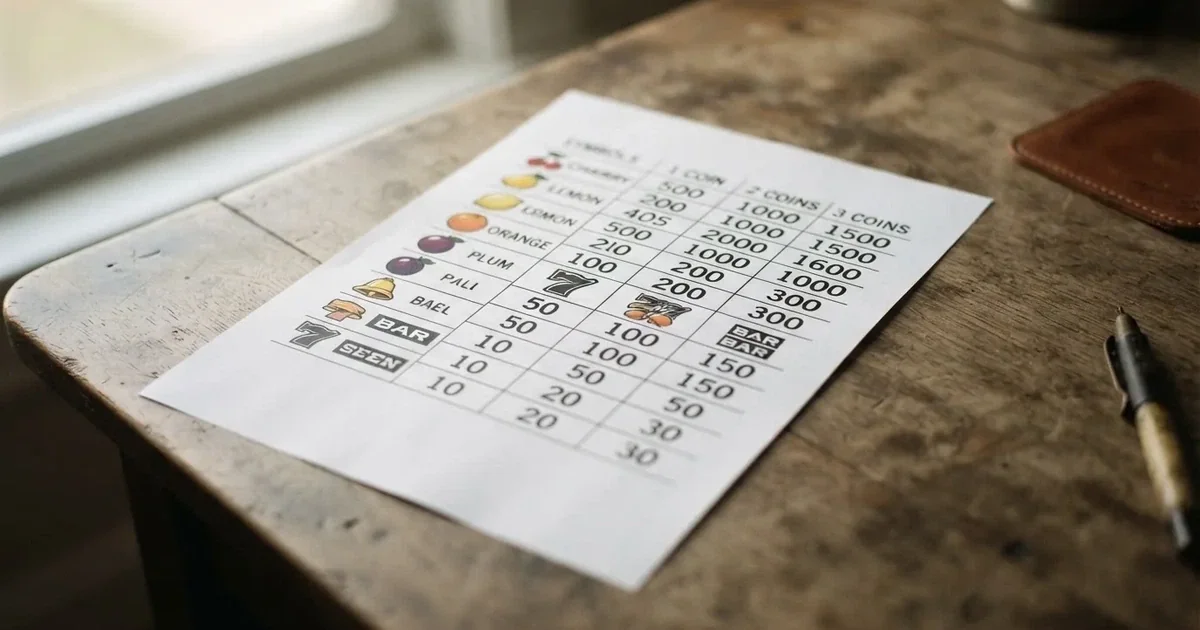
The online version is a software port of the same idea. A spin is initiated, reels (or their video equivalent) display symbols, and a paytable determines what combinations pay what. The legal minimum return-to-player for poker machines varies by Australian jurisdiction — 85% in New South Wales, the Northern Territory, Queensland and generally Victoria (87% at Crown Melbourne), 87% in the ACT and Tasmania, 87.5% in South Australia and 90% in Western Australia. Those are the floors for the land-based machines in licensed venues. Online pokies on offshore sites are not bound by these floors; they run on whatever the software’s RTP is set to, which is typically published in the game’s information panel but not regulated by any Australian authority.
A catalogue of online pokies is typically organised by provider, theme, volatility and feature set. The major studios supplying offshore sites include BGaming and a handful of others; their games are licensed to operators, not to jurisdictions. A game from a reputable studio carries consistent RTP and volatility across the operators that run it, but the operator’s terms — bonus eligibility, game weighting toward wagering, max bet while a bonus is active — change the player experience considerably.
The land-based comparison
The land-based pokie market is its own story and the legitimate Australian equivalent of the search the reader is making. In 2020–21, Australians bet almost A$150 billion through gaming machines and lost A$12.18 billion on them; Australia has about 3% of the world’s pub and club poker machines with 0.3% of the global population. New South Wales alone had 87,298 gaming machines outside casinos across 2,195 venues as of June 2023, with player losses of A$8.18 billion in 2022–23. Queensland had 21,122 gaming machines in 351 venues in October 2023; Victoria had 26,380 outside Crown Casino in 488 venues under a 30,000 statewide limit.
These machines are licensed and regulated state by state, which is the legitimate answer to “where do Australians legally play pokies”. Western Australia has the most distinctive profile: poker machines were banned in pubs and clubs when Crown Perth opened in 1985, and Crown Perth’s own machine count has since grown from about 200 in 1985 to roughly 2,500, all approved by the state’s Gaming and Wagering Commission. Tasmania held the machines under a monopoly licence held by Federal Group from 1968; legislation passed in November 2021 ended that monopoly and moved oversight to the Tasmanian Liquor and Gaming Commission, with nation-leading mandatory pre-commitment cards planned but implementation delayed until late 2025.
The point of these numbers is not to recommend land-based play over offshore online play. It is to show that a large, regulated, jurisdictionally supervised pokie market already exists in Australia — and the online offshore market sits entirely outside it.
The brands the ACMA has acted against
This page closes its ranking by naming eleven operators the ACMA has issued formal warnings to for offering prohibited interactive gambling services to Australians. Each is presented on the same fields, drawn from the ACMA’s own published register. The order follows the research’s §6 listing rather than any ranking this page constructs.
The table below lays out the brand, the ACMA action against it, the operating company named by the ACMA in its formal warning publication, and what verifiable material the brand carries for the page’s subject. Subject support is a marker of whether research located any independently verifiable material on the brand’s product offering for this subject; absence of that material is itself information.
| Brand | ACMA action and date | Operator named by the ACMA | Subject support |
|---|---|---|---|
| RocketPlay | Formal warning, March 2026 (also earlier Dama N.V. action, May 2022) | Pulsup Ltd (Rocketplay) | — |
| Level Up Casino | Formal warning, May 2022 | Dama N.V. | listings report BGaming titles |
| Woo Casino | Formal warning, March 2025 | Dama N.V. | — |
| Spirit Casino | Formal warning, May 2025 | Dama N.V. | — |
| National Casino | Formal warning, July 2025 | Consolutetish S.R.L. | listings report the brand on a third-party index |
| Bizzo Casino | Formal warning, July 2025 (also earlier TechSolutions warning, 2022) | Consolutetish S.R.L. | — |
| Ignition Casino | Formal warning, July 2025 | Bamboo Media | — |
| Instant Casino | Formal warning, February 2025 | EOD Code SRL | — |
| Jackbit | Formal warning, April 2026 | Ryker B.V. | — |
| Casino Intense | Formal warning, April 2025 | Sterplay Holding Ltd | listings report coverage on Australian media and regulator pages |
| Sky Crown | Formal warning, September 2022 | Hollycorn N.V. | — |
The table is the ACMA’s own work, transcribed. Every brand has been told, by name, to stop offering prohibited services to Australians. The “—” in subject support is the honest answer for most of the brands — research did not find independently verifiable material on their product offering for the subject this page covers, and a writeup that fabricated one would be the one a reader cannot use.
RocketPlay
RocketPlay has been on the ACMA’s register twice. The earlier action names Dama N.V. as the operator in May 2022; the more recent action names Pulsup Ltd over Rocketplay in March 2026. Two separate formal warnings across the same brand indicate an operator that has not stopped offering prohibited services to Australians despite the IGA framework. Research did not surface independently verifiable material on RocketPlay’s product offering for the subject of online pokies, and the page leaves the brand on the ACMA record rather than on imagined specifications.
A player weighing RocketPlay on the strength of its welcome package is weighing it against an operator the Australian regulator has named, by company, twice in four years. The lack of verifiable product material is itself information: a brand whose marketing pages carry the specifications but whose independent footprint does not is a brand whose specifications exist to be marketed, not to be checked.
Level Up Casino
Level Up Casino sits on the May 2022 Dama N.V. warning, the same publication that covered five other Dama brands. Listings on third-party game-provider sites (BGaming’s catalogue) reference Level Up as one of the operators carrying their titles, which is the only independently verifiable material research located on the brand’s product offering for this subject. The product footprint is real but thin: a game provider names the operator, and that is the limit of what can be checked from outside the site itself.
For a player comparing Level Up against the rest of the table, the comparison turns on the question of what a BGaming catalogue reference is worth. It confirms the brand exists and runs the games it claims to run. It does not confirm the operator is licensed in Australia, because no operator of this kind can be.
Woo Casino
Woo Casino was the subject of an ACMA formal warning over Dama N.V. in March 2025. Research did not locate independently verifiable material on Woo Casino’s product offering for this subject, and the page carries the ACMA record without supplementing it. The brand’s appearance in this comparison rests entirely on the regulator’s own publication.
Spirit Casino
Spirit Casino carries an ACMA formal warning over Dama N.V. dated May 2025. The brand sits in the same Dama cluster as Woo Casino and Level Up Casino, with the same gap in independently verifiable product material for this subject. A reader choosing between Spirit Casino and any other brand in the table is choosing between brands that all share the same regulatory posture, with the ACMA action as the only data point that distinguishes them.
National Casino
National Casino carries an ACMA formal warning naming Consolutetish S.R.L., published in July 2025. Listings on a third-party index reference the brand, which is the extent of independently verifiable material research located for the subject. The pattern matches Level Up: a brand whose footprint on a game-provider or aggregator page is real but thin, and whose primary verifiable identity is the ACMA warning itself.
Bizzo Casino
Bizzo Casino has two ACMA entries: the July 2025 warning to Consolutetish S.R.L. and an earlier 2022 warning to TechSolutions (CY) Group Limited and TechSolutions Group N.V. Two warnings, two different operating-company names, the same brand surface — a signal that the operating entity behind the brand has changed while the offering to Australians has not. Research did not surface independently verifiable material on Bizzo’s product offering for this subject beyond the ACMA record.
For a reader comparing Bizzo against the rest of the table, the dual-warning record is the headline. The brand has been told to stop offering prohibited services to Australians once under one operating company and again under another. The product specifications on the brand’s own pages are not the data point that distinguishes it from the rest; the ACMA record is.
Ignition Casino
Ignition Casino carries an ACMA formal warning naming Bamboo Media as the operator, published in July 2025. Research did not locate independently verifiable material on Ignition’s product offering for this subject. The brand’s marketing carries the specifications; the ACMA’s publication is the only external data point on it. The position in the table matches the position in the market: a brand whose external footprint is the regulator’s warning, and nothing else.
Instant Casino
Instant Casino carries an ACMA formal warning over EOD Code SRL dated February 2025. Research did not locate independently verifiable material on Instant Casino’s product offering for this subject. The brand is recent on the warning list — earlier than the 2026 cluster — and the ACMA action is the main external data point on it.
Jackbit
Jackbit carries an ACMA formal warning naming Ryker B.V. as the operator, published in April 2026. Research did not locate independently verifiable material on Jackbit’s product offering for this subject. The brand appears in the same ACMA cluster as CasinOK, which was named in the same formal warning, and the action against the operating company covers both.
Casino Intense
Casino Intense carries an ACMA formal warning over Sterplay Holding Ltd dated April 2025. Independent listings — Australian media coverage and regulator pages — reference the brand, which is the most verifiable footprint of any brand in the table beyond the ACMA record itself. The brand is the one in the comparison with the largest external surface outside the ACMA register, though none of that surface is a licence.
Sky Crown
Sky Crown carries an ACMA formal warning naming Hollycorn N.V., published in September 2022 as part of the same formal warning that covered Blue Leo. The warning is older than most of the table’s other entries, and research did not locate independently verifiable material on Sky Crown’s product offering for this subject beyond the ACMA publication.
The comparison the search is actually asking for
A fair comparison of “online pokies sites” in Australia would weigh the things that matter to a player who actually has to make a decision: who is licensed to operate in Australia, who is not, what consumer protection follows from that, what the ACMA’s enforcement record looks like for the brands in question, and what recourse a player has if a withdrawal stalls. By that measure, the comparison ends quickly — none of the operators in the table is licensed to offer online pokies in Australia, all have been formally warned by the ACMA, and none carries the consumer protection framework an Australian player would have on a licensed wagering channel.
The comparison the marketing pages run is different. It weighs welcome bonus size, free spin count, game catalogue breadth, payout time and loyalty programme tiers. None of those move the needle on the underlying issue: every site being compared sits outside Australian law, and the differences between them are differences in marketing execution, not in regulatory standing.
For a player who has decided to play on an offshore site despite the prohibition, the practical questions narrow. What is the wagering requirement on the welcome bonus, and what does it cost in expected loss to clear? What is the maximum cashout cap on bonus-derived winnings? What payment methods does the site accept, and are any of them outside the Australian rules (credit card, crypto)? What does the site’s own withdrawal history show, since no Australian regulator enforces it? These are real questions, and they matter more than which site has the bigger headline number, because every site in the comparison has the same regulatory status and the same absence of Australian consumer protection.
What this page is not
This is not a recommendation to play on any of the operators named above. Every one of them has been the subject of a formal ACMA warning for offering prohibited services to Australians, and the legal status of playing on them is the legal status of using an unlicensed operator outside Australian jurisdiction. The page describes what is on offer so that a reader who is going to make the comparison has the comparison laid out honestly; it does not argue that the comparison should end with a deposit.
A page about licensed Australian wagering would look different. It would feature Sportsbet, Bet365, Ladbrokes and the other 49 NTRWC-licensed bookmakers, with a discussion of BetStop, the credit card ban and the PayID deposit flow. That page is a different page for a different search, and it sits alongside this one rather than replacing it.
Putting it together
The best online pokies Australia has to offer are, in 2026, the pokies inside a licensed pub, club or casino. The online search returns a marketing layer over offshore sites the ACMA has been warning and blocking since 2017, with the pace of formal warnings and blocking requests accelerating rather than slowing. The 2026 reform bill, with its advertising and inducement measures commencing in 2027, points the regulatory direction further in the same way.
For a reader weighing an offshore site on its bonus size or game catalogue, the comparison laid out above is the comparison that is actually useful: every brand has been warned, none is licensed for this product in Australia, and the consumer protection that follows from a licence does not follow from any of them. The wagering requirement, the bonus clearing cost, the payment methods and the withdrawal history are the practical questions. They are also the questions the marketing pages are least interested in answering.
The honest answer to “best aussie pokies online australia” is that the offering the search describes does not legally exist onshore, the offshore sites offering it are under formal ACMA warnings, and the licensed alternative is a different product in a different venue. A reader who wants to make the comparison anyway has the data to do it; a reader who wants the licensed alternative has a clearer path.
Frequently asked questions
Does calling an online pokies site ‘Aussie’ change where it is actually licensed?
No. The branding is a marketing label. The site is licensed in whatever jurisdiction granted its gambling licence — typically Curaçao, Anjouan or another offshore regime — and the absence of an Australian licence is what the Interactive Gambling Act 2001 requires. The koala on the homepage is not a regulatory category.
Are the bonus credits and free spins on an ‘Aussie pokies’ site legal to advertise here?
The advertising and inducement measures of the Interactive Gambling Amendment (Gambling Reform) Bill 2026 commence on 1 January 2027. Until then, the prohibition sits at the provider level rather than the advertising level, but the regulatory direction is clear: inducements around unlicensed offshore play are the next target. The bonus mechanism itself remains the same regardless of the advertising law around it.
Is there a dedicated app for Aussie-branded online pokies that’s legal to install locally?
No. Online pokies cannot be licensed in Australia, and an app that offers them sits in the same legal position as the website it mirrors. Apps from licensed Australian wagering operators cover sports and racing only; an app offering online pokies for real-money play to an Australian account is operating outside the regime, the same as the website version.
Do state gaming regulators recognise any ‘Aussie online pokies’ brand as licensed?
No. State and territory regulators license land-based gaming machines, and they license wagering on races and sport before the event, lotteries and keno. None of them licenses online casino games or online pokies, because the Interactive Gambling Act 2001 prohibits the supply of these services to anyone in Australia. The NTRWC licenses online bookmakers, not online pokies.
How does an Aussie-branded online pokies catalogue differ from a licensed pub’s machines?
A licensed pub or club machine sits inside a state-regulated regime with a minimum return-to-player floor (85% in NSW, the NT and Queensland, generally 87% in Victoria with 87% at Crown Melbourne, 87% in the ACT and Tasmania, 87.5% in South Australia, 90% in Western Australia) and jurisdictional oversight of design and operation. An offshore online pokie has no Australian minimum RTP, no Australian regulator and no Australian consumer protection framework behind it. The game mechanics are similar; the regulatory frame around them is not.
Can an Aussie-branded online pokies site accept a PayID deposit and still be unlicensed?
Yes. PayID is a payments rail, not a regulatory check. It settles through the New Payments Platform in seconds via Osko, and it does not screen the recipient. A licensed Australian wagering operator accepts PayID as part of its regulated deposit flow; an offshore pokies site can accept PayID for the same reason, without that putting the site under Australian regulation. The payment method is Australian; the gambling operator is not.