
New Australian Online Pokies: What the Market Looks Like in 2026
The search results promise a shortlist: the best new pokies, fresh from the studios, ready to play with a PayID deposit and a welcome bonus. The honest answer is shorter and less comfortable. No online casino, offshore or otherwise, can lawfully offer pokies to a person in Australia. The Interactive Gambling Act 2001 (IGA) prohibits it, the Australian Communications and Media Authority (ACMA) has spent seven years making the prohibition bite, and 1,751 illegal sites have now been blocked since the first request went out in November 2019. This page works through what that means for someone searching from Australia — what is actually available, what the ACMA’s record shows about the operators that target Australians anyway, and where regulated money still flows.
Data current as of 20 October 2026, verified against the ACMA’s published formal warnings and the IGA 2001 register.
Table of Contents
- Payment Rails and Payout Reality for Australians
- What “New Pokies” Actually Means
- Comparing the Brands the ACMA Has Acted Against
- The Single Casino That Should Stop the Search
- The Legal Frame Around New Online Pokies
- The ACMA’s Enforcement Record
- How the ACMA’s Enforcement Actually Works
- Player Safety Where the Law Actually Reaches
- What the Reader Should Take Away
- Where to Read More
- Frequently Asked Questions
Payment Rails and Payout Reality for Australians
The deposit question comes first because it decides everything downstream. A reader looking up “new PayID pokies Australia” wants to know whether the payment method they already use for everyday banking will work on a new release. The answer depends on which side of the law the operator sits.

For wagering that is licensed in Australia — sports and racing bookmakers licensed by the Northern Territory Racing and Wagering Commission (NTRWC) or another state regulator — PayID through the Osko network is a standard deposit route. Debit card, bank transfer and BPAY work alongside it. Credit cards, credit-related products and digital currency have been banned as payment for licensed online wagering since 11 June 2024, with penalties of up to A$247,500 for operators that breach the rule. PayID settles near-instantly into an Australian bank account, and withdrawals back to a verified Australian account typically clear inside twenty-four hours at the licensed bookmakers.
For online casino games and online pokies, no such rail exists in the Australian regulatory frame. The offshore sites that take Australian customers route payments through crypto, e-wallets and occasionally voucher systems. A withdrawal from those sites is not regulated by any Australian body. The site’s own terms govern it: a pending period, a daily or weekly cap, and a KYC review that can stretch across weeks. The promised “instant payout” applies only to the casino’s internal queue, not to the money arriving in an Australian bank account. Where a reader sees “PayID” advertised on an offshore casino page, it is the offshore operator connecting to PayID at its end — a useful shortcut, but not one backed by any Australian consumer protection if the casino refuses the withdrawal.
The constraint matters at the moment a reader is choosing between a licensed bookmaker and an offshore casino. The licensed bookmaker loses every comparison on game variety — there are no pokies, no live dealer roulette, no baccarat. The licensed bookmaker wins every comparison on what happens when the customer wants their money back: the payout goes through, the dispute goes to a regulator, and the self-exclusion register applies.
What “New Pokies” Actually Means
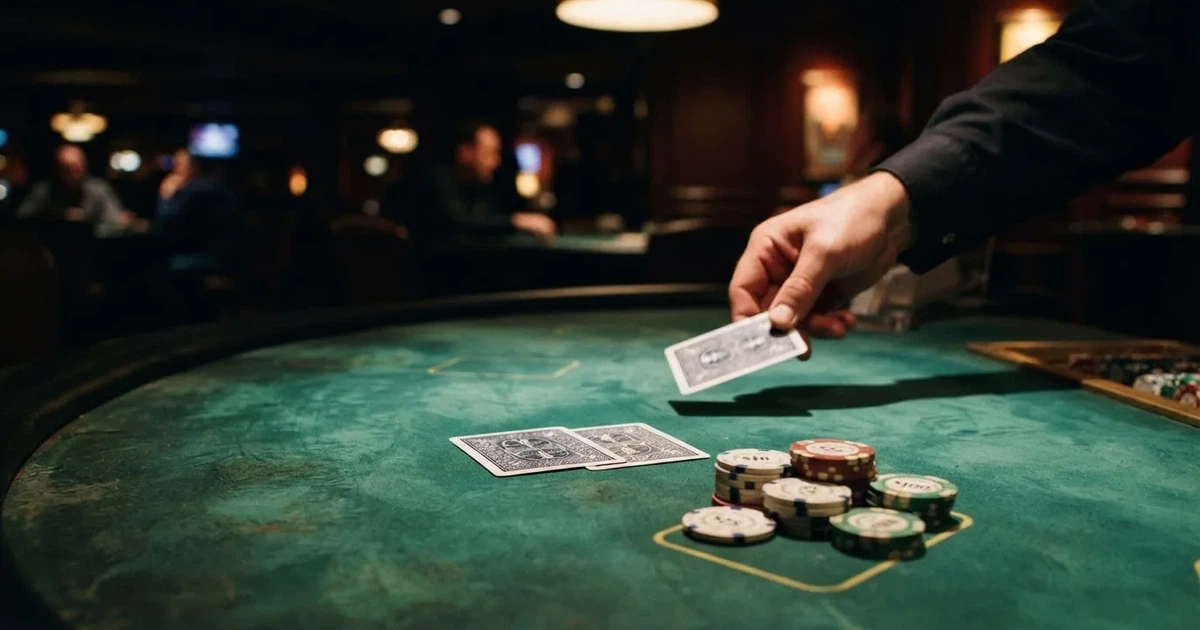
The phrase “new online pokies” covers two different products, and the search results tend to blur them. A new pokie release in Australia usually refers to a new cabinet game — a new title on a server-based gaming machine installed in a licensed club, pub or casino. Studios like Aristocrat and IGT (the latter’s Australian studio is in Sydney) ship new releases onto licensed floors throughout the year, and the games go through a state-by-state approval process before they appear on a venue floor.
The online version of these games is a different product. It is the same mathematics on a different platform — usually a browser-based HTML5 build, sometimes a downloadable client — and it is the online version that the IGA 2001 prohibits from being offered to anyone in Australia. The studios themselves hold the licences to the games; the offshore casinos offering them to Australian players are doing so without any Australian licence at all.
The phrase “new release pokies” in the affiliate marketing sense usually means whatever the offshore casino has added to its catalogue in the last month, regardless of whether the title is genuinely new to the studio or simply new to that particular casino’s lobby. A reader comparing two new-release pages on the same day may be looking at the same two titles rebranded.
Where the legal landscape splits, in practical terms:
- A licensed Australian pub or club pokie is new because the state regulator approved it for venue play. Each state has its own approval body and its own minimum return-to-player (RTP): 85% in New South Wales, the Northern Territory, Queensland and most of Victoria (87% at Crown Melbourne), 87% in the ACT and Tasmania, 87.5% in South Australia, and 90% in Western Australia, where poker machines in pubs and clubs are otherwise banned. The game is new on a venue floor when the venue installs it; before then it is unlisted, after which it sits on the floor for years.
- An offshore casino’s “new release” is new because the operator added it to its lobby. There is no Australian approval step. The studio that built it may have shipped the same title to hundreds of other casinos under the same game name.
The second product is what the search results are usually pointing at, and it is what this page is mostly about — because that is where the ACMA’s enforcement record sits.
Comparing the Brands the ACMA Has Acted Against
The table below lists eleven casino brands that the ACMA has formally warned for offering prohibited online casino games to Australians. The point of listing them is not to recommend any of them — none of them can lawfully take an Australian customer — but to show the enforcement record side by side, with the operator the ACMA named, the date of the formal warning, and what is publicly known about each brand’s support for the broader subject. Every brand in this table has been the subject of a formal warning under the IGA 2001.
| Brand | ACMA action and date | Operator named by the ACMA | Subject support |
|---|---|---|---|
| RocketPlay | Formal warning March 2026; earlier May 2022 | Pulsup Ltd (2026); Dama N.V. (2022) | — |
| Level Up Casino | Formal warning May 2022 | Dama N.V. | Listed by BGaming as a carrying casino |
| Woo Casino | Formal warning March 2025 | Dama N.V. | — |
| Spirit Casino | Formal warning May 2025 | Dama N.V. | — |
| National Casino | Formal warning July 2025 | Consolutetish S.R.L. | Referenced in a general gambling history overview |
| Bizzo Casino | Formal warning July 2025; earlier 2022 | Consolutetish S.R.L. (2025); TechSolutions (2022) | — |
| Ignition Casino | Formal warning July 2025 | Bamboo Media | — |
| Instant Casino | Formal warning February 2025 | EOD Code SRL | — |
| Jackbit | Formal warning April 2026 | Ryker B.V. | — |
| Casino Intense | Formal warning April 2025 | Sterplay Holding Ltd | Referenced in mainstream Australian reporting and by the ACMA itself |
| Sky Crown | Formal warning (ACMA, September 2022) | Hollycorn N.V. | — |
The pattern across the table is the point. Eight of the eleven operators named are companies registered in Curaçao or similar offshore jurisdictions, often behind a chain of holding companies that change hands as the ACMA’s enforcement catches up with them. Dama N.V. alone appears four times across separate formal warnings — RocketPlay, Level Up, Woo Casino and Spirit Casino — spanning 2022 to 2026. The brand names change faster than the corporate structures behind them. A reader who recognises a “new” casino brand from a YouTube ad has usually seen the same operator group under a different name within the last two years.
The Single Casino That Should Stop the Search
RocketPlay is the brand whose ACMA file is the most current. The ACMA issued a formal warning to Pulsup Ltd over RocketPlay in March 2026, sitting on top of an earlier May 2022 warning to Dama N.V. that covered the same brand among six others. The fact that the ACMA had to warn the operator twice, under two different corporate names, for offering the same prohibited service is the closest thing to an answer the page can offer a reader who was about to type their card details in.
The framing matters here. RocketPlay is not a “bad casino among bad casinos” in any relative sense. It is one of many offshore operators that has been formally warned for offering prohibited online casino games to Australians, with the most recent warning landing within the last few months of this page being read. The “best” comparison a reader can make is between RocketPlay’s marketing and what the ACMA has actually said about it.
Level Up Casino
Level Up Casino was one of the six Dama N.V. brands the ACMA warned in May 2022. BGaming, one of the studios whose games appear in the Level Up Casino lobby, lists it among the carrying casinos on its own site. The connection is not an endorsement — BGaming is a game supplier, not a regulator — but it does confirm that the brand exists as an active operator within the BGaming distribution network, and that an Australian player reaching Level Up Casino would find BGaming titles in the catalogue.
The five-year gap between the 2022 warning and the ACMA’s more recent action against Dama N.V. brands (Woo Casino in March 2025, Spirit Casino in May 2025, RocketPlay under Pulsup Ltd in March 2026) suggests the brand is still operating under a Dama N.V. group licence and has not yet attracted a fresh formal warning of its own.
Woo Casino
Woo Casino received its own formal warning in March 2025, with Dama N.V. again the operator the ACMA named. By the time the warning landed, Dama N.V. had already been on the ACMA’s record for nearly three years over its earlier portfolio. Woo Casino’s appearance in the warning round suggests the ACMA’s enforcement had moved beyond the 2022 batch and was working through Dama N.V.’s remaining brands.
The page has no further published data on Woo Casino’s specific operations, and the public record carries no figures for its catalogue, payout times or bonus terms. The ACMA’s warning stands as the primary verified detail regarding this brand, serving as the sole reliable reference for Australian readers.
Spirit Casino
Spirit Casino’s formal warning arrived in May 2025, again with Dama N.V. named. By that point the ACMA’s enforcement push against Dama N.V. had covered at least three brands in five months, and the pattern was clearly a sweep rather than a one-off.
Spirit Casino has no additional verified data in the public record. The page stays with the ACMA’s published warning and does not impute bonus terms or payout times from any other source.
National Casino
The ACMA’s July 2025 formal warning over National Casino named Consolutetish S.R.L. as the operator. The brand is referenced in an English-language gambling history overview, but the reference is general rather than substantive — it does not carry any specific Australian-facing data. The ACMA’s warning is the substantiated fact.
A reader comparing National Casino against the licensed Australian alternatives will find that the licensed alternatives do not include a casino product at all, because no Australian jurisdiction issues an online casino licence. National Casino is therefore being weighed against a category of operator that does not legally exist for Australians, and the comparison itself collapses once the IGA 2001 is read.
Bizzo Casino
Bizzo Casino’s formal warning history is the longest in the table. The ACMA warned Consolutetish S.R.L. in July 2025, but a separate ACMA formal warning over Bizzo Casino had already gone to TechSolutions (CY) Group Limited and TechSolutions Group N.V. back in 2022. The 2025 warning therefore covers an operator that had already been told once, under a different corporate name, that offering prohibited online casino games to Australians would attract formal action.
The page has no additional verified data on Bizzo Casino’s current operations. The dual-warning record is what the page carries, and the reader has to weigh that record against the fact that no Australian jurisdiction licenses the service the brand offers.
Ignition Casino
Ignition Casino received its formal warning in July 2025, with Bamboo Media the operator the ACMA named. The brand is distinct from the operator group behind the other July 2025 warnings (Consolutetish S.R.L., which covered National Casino and Bizzo Casino). Bamboo Media is a separate entity in the ACMA’s record, and the warning appears to be the ACMA’s first action against it.
There is no additional verified data on Ignition Casino’s specific operations from Australian-facing sources. The ACMA’s warning is the page’s only substantiated reference.
Instant Casino
The ACMA’s February 2025 formal warning over Instant Casino named EOD Code SRL as the operator. The warning is the ACMA’s earliest action in 2025 against any of the brands in this table, predating the Woo Casino warning by a month and the National Casino / Bizzo Casino / Ignition Casino warnings by five months.
No additional verified data is available on Instant Casino’s Australian-facing operations. As of the time of writing, the brand has remained on the regulator’s published warning list for well over twelve months, with the warning itself serving as the only verified fact available.
Jackbit
Jackbit’s formal warning arrived in April 2026, with Ryker B.V. the operator the ACMA named. The brand is grouped in the same warning with CasinOK, which the ACMA treated as a single enforcement matter — Ryker B.V. operating two prohibited brands at once.
No additional verified data is available on Jackbit’s Australian-facing operations. The April 2026 warning is the most recent ACMA action against any of the brands in this table.
Casino Intense
Casino Intense received its formal warning in April 2025, with Sterplay Holding Ltd the operator named. The brand has the unusual distinction of being referenced both by mainstream Australian reporting (ABC News) and in the ACMA’s own publications. That visibility does not translate into a positive record — the ABC News reference is to the brand’s offshore status rather than to any Australian endorsement — but it does mean a reader who has heard of Casino Intense outside the affiliate marketing circuit will find the brand’s name in the ABC’s coverage of Australia’s offshore gambling landscape.
The ABC and ACMA references are still negative facts about the brand. They are also the only substantiated facts the page carries.
Sky Crown
Sky Crown’s formal warning from the ACMA, naming Hollycorn N.V., was published in September 2022. Sky Crown is grouped in the same warning with Blue Leo, and Hollycorn N.V. is the operator covering both. The warning is the ACMA’s only formal action against Hollycorn N.V. in the public record at the time of writing, but Hollycorn N.V. is a Curaçao-registered operator with multiple brands, and the ACMA’s actions against Curaçao operators have historically moved from one brand to the next across the same group.
No additional verified data is available on Sky Crown’s Australian-facing operations. The ACMA’s September 2022 warning is the page’s substantiated fact.
The Legal Frame Around New Online Pokies
The IGA 2001 is the controlling statute, strengthened by the Interactive Gambling Amendment Act 2017. It prohibits the supply of online casino games, online pokies and in-play betting services to a person physically in Australia. “Supply” is the word that matters: the offence is committed by the operator offering the service, not by the customer using it. An Australian player is not prosecuted for playing on an offshore site, but the operator is. What that means for the player is that no Australian regulator has standing to enforce any complaint they bring against the offshore operator.
What is licensable in Australia is wagering on races and sporting events placed before the event, lotteries and keno. The NTRWC regulates 52 of Australia’s online bookmakers — Sportsbet, Bet365 and Ladbrokes among them — under a Northern Territory licence that exists primarily for tax reasons. The commission has no full-time staff and meets once a month in Darwin, which has drawn periodic criticism from Australian commentators about the depth of that regulatory scrutiny, but it is the structure that exists.
Minimum age for any wagering in Australia is 18. The 2026 reform — the Interactive Gambling Amendment (Gambling Reform) Bill 2026, which passed Parliament on 19 August 2026 — tightens advertising and inducement rules but does not commence until 1 January 2027. For the period this page covers, the IGA 2001 in its pre-amendment form is the controlling law.
Player winnings are not assessable income for a recreational gambler under section 6-5 of the ITAA 1997, and losses are not deductible unless the person carries on a business of gambling — a thin category in practice.
The ACMA’s Enforcement Record
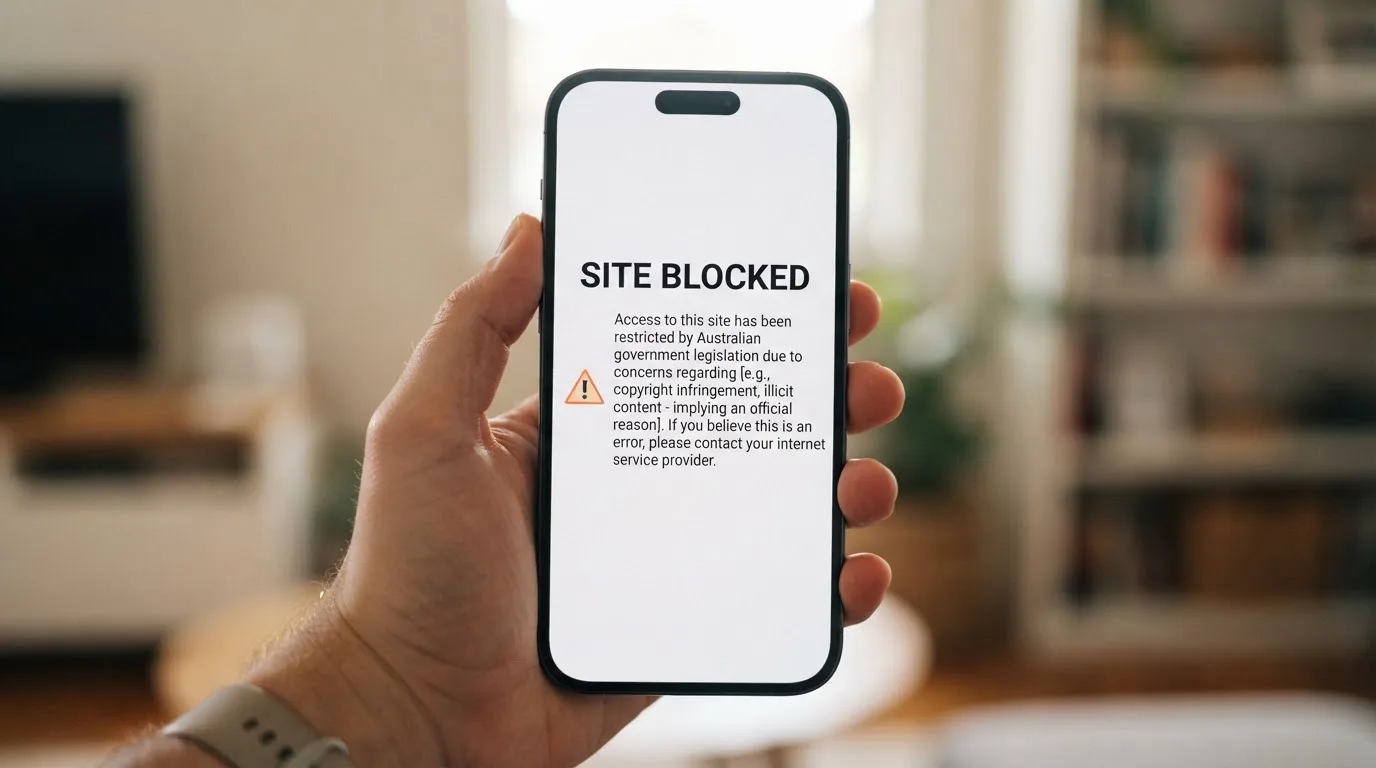
The ACMA’s enforcement tools are formal warnings, civil penalty orders, and — since 2017 — the power to direct Australian internet service providers to block illegal sites. The blocking power is the one that has produced the headline figures: 1,751 illegal gambling and affiliate marketing websites blocked since the first blocking request in November 2019, with the 230-odd figure representing unlicensed services that have voluntarily left the Australian market since 2017 enforcement was strengthened.
The blocking total of 1,751 is the running figure the ACMA reports, and the rate of new blocks is steady rather than tapering. In the round reported on 26 June 2026, the ACMA asked ISPs to block 12 more sites: 7Signs, ChromaBet, Donbet, Duospin, Freshbet, Slots Gem, Jacks Club, Lucky Start, Pointsbetz, Spinrise, Vinyl Casino and Wildsino. Some of those names had been on the ACMA’s formal warning list earlier; others appear in the blocking round without a prior warning. Either way, the rate at which new prohibited sites appear on the ACMA’s list is roughly matching the rate at which existing ones get blocked.
The blocking-rate arithmetic is worth working through, because it tells the reader what the ACMA’s published totals imply about the scale of the problem. The first blocking request went out in November 2019; the running total of 1,751 blocked sites is reported as of June 2026. That spans roughly 79 months, which works out to an average of around 22 illegal sites blocked per month across that period — with the most recent round alone clearing 12 in a single block. The honest reading of that figure is a band, not a single number: in steady months the ACMA’s blocking activity runs at a few sites per month; in active rounds it clears a dozen at a time. The published total is the accumulation of both rhythms.
That 22-sites-per-month average is a useful comparator against the ACMA’s formal-warning volume over the same window. The table above covers 11 brands across formal warnings spanning 2022 to 2026 — substantially fewer than the 1,751 blocked sites, but each warning also typically precedes a blocking round for the same brand. The two enforcement tools are complementary: a formal warning goes out first, and if the operator does not withdraw from the Australian market, a blocking request follows. The 1,751 figure and the eleven brands in the table are different views of the same enforcement system.
The other ACMA-published figure is from H2 Gambling Capital’s 2025 report: an estimated A$3.9 billion a year flowing to illegal gambling sites from Australia, with the share of gambling going through legal channels falling from 74% in 2021 to 64%. The 10-percentage-point drop in four years is the clearest single indicator of how fast the offshore market has grown, and the ACMA’s enforcement record is the regulator’s response to it.
How the ACMA’s Enforcement Actually Works
The practical sequence runs in three stages, and a reader who understands it will read an offshore casino’s “regulated by” footer with sharper eyes.
The first stage is a formal warning. The ACMA publishes these on its website, naming the operator and the prohibited service. The warning gives the operator a window to comply — to stop offering the prohibited service to Australians — before the ACMA moves to the next stage. The eleven brands in the table above are at this stage or have moved past it.
The second stage is a civil penalty proceeding or an infringement notice. The ACMA can seek penalties in the Federal Court for continued non-compliance, and the courts have ordered penalties running into the millions of dollars for repeat offenders.
The third stage is the blocking request. The ACMA asks Australian ISPs to enforce the block at the DNS level, and the site becomes unreachable from an Australian IP address. This is the stage that produces the 1,751 running total. The block does not affect a balance a customer has already deposited with the offshore operator; it simply prevents new Australian customers from reaching the site, and existing customers from logging in.
The offshore operator’s response, when it comes, is usually to spin up a new domain. A blocked site under one name reappears under another name within weeks, sometimes still operated by the same company. The blocking round on 26 June 2026 caught 12 sites at once, and the next round will likely catch a similar number of fresh domains operating under the same groups.
Player Safety Where the Law Actually Reaches
For an Australian player, the protections that exist are the ones that apply to the licensed Australian wagering market. The National Self-Exclusion Register — BetStop — has been live since August 2023 and binds Australian-licensed online and phone wagering services. A person who signs up to BetStop is excluded from opening new accounts and from using existing ones across every participating licensee. The exclusion periods run from three months to a permanent exclusion.
BetStop does not bind offshore casinos. An Australian who signs up to BetStop has self-excluded from the licensed bookmakers, but the offshore casino in Curaçao is not connected to the register and will continue to take deposits if the customer reaches it through a different route. The self-exclusion is a behavioural tool rather than a technical block, and it works only against the operators that have agreed to honour it.
The National Gambling Helpline is 1800 858 858, free and available 24 hours a day, with a chat service at Gambling Help Online. The helpline covers all forms of gambling harm and is the right first call for anyone whose gambling has moved past what they intended. State-based problem gambling services sit alongside the national line.
A second line of consumer protection is financial. The credit card ban for licensed online wagering, in force since 11 June 2024, removes the most common way Australians got into trouble on licensed wagering accounts. The same ban does not apply to offshore casinos, and an offshore site that accepts credit cards is operating outside the Australian regime. The deposit method is itself a tell.
What the Reader Should Take Away
For a reader in Australia looking up “new online pokies” or “new PayID pokies,” the practical question is what to do with the gap between the marketing and the law. Three things follow from the ACMA’s record:
The first is that the offshore sites the search results point at are not licensed by any Australian regulator. The “Curacao licence” or “Kahnawake licence” they display is a foreign regulator’s licence, not an Australian one, and it does not give an Australian consumer any standing in any Australian disputes body. If the casino refuses a withdrawal, the only recourse is the casino’s own complaints process and, ultimately, the foreign regulator — neither of which has Australian enforcement teeth.
The second is that the ACMA’s enforcement is moving faster than the offshore operators can rebrand. The same corporate group — Dama N.V. is the clearest example — has been warned across four different brand names between 2022 and 2026. The corporate structure survives; the brand name does not.
The third is that the licensed Australian market offers sports and racing wagering through operators that are regulated, that honour BetStop, and that pay out to an Australian bank account through PayID or BPAY within a day. It does not offer pokies, because no Australian jurisdiction does. The reader has to decide whether the unlicensed offshore casino’s pokies catalogue is worth the loss of every protection that comes with the licensed market. For most readers the calculation will resolve against the offshore site. For the rest, the rest of this page is on the record.
Where to Read More
The ACMA’s formal warning list, the IGA 2001 register, and the IGA’s full text are all published on the ACMA’s own site. The blocking round totals are republished in industry trade press after each round, with the 26 June 2026 round covered in igamingbusiness.com. The H2 Gambling Capital 2025 estimate of A$3.9 billion a year in illegal gambling losses is the figure behind most of the ACMA’s “Why this matters” framing in its public communications.
BetStop is at betstop.gov.au, with the National Gambling Helpline on 1800 858 858 and the chat service at gamblinghelponline.org.au.
The state-by-state data on licensed pokies — NSW’s 87,298 machines across 2,195 venues, Queensland’s 21,122 across 351 venues, Victoria’s 26,380 outside Crown under a 30,000 statewide cap — sits in the state gaming regulators’ annual reports, which are public documents.
Frequently Asked Questions
How much do Australians lose on gaming machines in an average year?
According to the Australian Bureau of Statistics data referenced in the public gambling statistics, Australians bet almost A$150 billion through gaming machines in 2020–21 and lost A$12.18 billion on them. The losses figure covers land-based pokies at licensed venues, which is the regulated product; the offshore online market is estimated at an additional A$3.9 billion per year in H2 Gambling Capital’s 2025 report, though that estimate covers all forms of illegal online gambling rather than pokies alone.
What counts as a new pokie release versus an established one?
In the licensed Australian venue market, a new release is a title that a state gaming regulator has approved and a venue has installed, with a clear trail from approval to deployment. In the offshore online market, “new release” usually means whatever the casino has added to its lobby in the last few weeks, which may be a genuinely new studio title or a rebranding of an existing game. The two definitions do not match, and an Australian reader searching for a new release is most often being pointed at the offshore version.
Is it legal for an online casino to offer new pokies titles to Australians?
No. The Interactive Gambling Act 2001 prohibits the supply of online casino games and online pokies to a person in Australia, with no state or territory licensing that supply. An offshore casino offering new pokies titles to Australians is committing an offence under the IGA, which is why the ACMA maintains a formal warning list of operators that have done so. The Australian player is not prosecuted for using the site, but the site is the wrongdoer and has no Australian regulatory obligation to honour withdrawals, complaints or self-exclusion.
Can a new pokie bonus be claimed through a PayID deposit?
PayID through Osko is a permitted deposit method for Australian-licensed wagering services, but those services do not offer pokies. An offshore casino offering pokies may advertise PayID as a deposit route, but the PayID connection is the offshore operator’s, not an Australian licensed wagering service’s. A deposit made that way is not protected by Australian consumer law, and any bonus terms the casino attaches to the deposit are governed by the casino’s own terms rather than by any Australian regulation.
Are new pokie titles tested before they appear on licensed club or pub floors?
Yes. Each Australian state and territory has its own approval process for new gaming machine titles, covering the game’s mathematics, its return-to-player percentage, and its compliance with state-level harm-minimisation requirements. Western Australia requires 90% RTP at its casino, with the state having banned poker machines in pubs and clubs outright when Crown Perth opened in 1985. Tasmania, having ended Federal Group’s monopoly in November 2021, planned nation-leading mandatory pre-commitment cards for its machines, with implementation delayed to late 2025. The offshore online market has no equivalent Australian approval step.
Why does Australia have such a large share of the world’s poker machines?
Australia has about 3% of the world’s pub and club poker machines with 0.3% of the global population, a ratio that has accumulated since registered clubs in New South Wales first operated legal machines in 1956. Each state and territory has regulated the machines separately, with Western Australia the outlier in banning them outside Crown Perth, and Tasmania the most recent to overhaul its regime after ending Federal Group’s monopoly in 2021. New South Wales alone had 87,298 machines outside casinos as of June 2023, with player losses of A$8.18 billion in 2022–23 — the single largest concentration of pokies in the country.