
Ka Gaming Casinos in Australia: What the Law Actually Allows in 2026
Anyone typing “ka gaming casino” or “ka gaming casino australia” into a search engine is, in practical terms, looking for a working shortlist of online casinos that run KA Gaming-powered slots. The honest answer for an Australian reader in 2026 is that no such shortlist can be delivered — and the reason is not editorial caution. It is a federal statute. The Interactive Gambling Act 2001, as tightened by the Interactive Gambling Amendment Act 2017, makes it an offence to provide online casino games to anyone in Australia, and no state or territory licenses the activity. The “best” KA Gaming casino for an Australian reader is therefore not a brand: it is the set of lawful alternatives that actually exist, which is what this page lays out.
The picture is not symmetrical. The websites themselves are happy to accept Australian sign-ups and deposits. The Australian Communications and Media Authority is not, and its enforcement record is the longest section of this page for a reason. So is the blocking rate at which the ACMA has been removing these sites from reach of Australian internet users.
Currency stamp: figures current as of 20 October 2026, checked against ACMA formal-warning publications, the Interactive Gambling Act 2001 and H2 Gambling Capital’s 2025 market estimate.
Table of Contents
- The Australian Online Casino Landscape: What Is and Is Not Lawful
- Australian Gambling Law and the IGA: How the Prohibition Is Enforced
- The Blocking-Rate Calculation: How Fast the Wall Goes Up
- Responsible Gambling: What Australian Players Can Actually Use
- Payments, Payout Speed and What an Offshore Casino Cannot Offer
- Bonuses, Free Spins and What the Wording Costs
- Mobile Play and Apps: The Reach, and the Gap
- Specific Games, Providers and What an Australian Reader Actually Sees
- The Eleven Brands the ACMA Has Acted Against
- ACMA Action and Operator Map
- The 2026 Reform: What Just Changed
- What the Australian Player Has Instead
- A Closing Read
- Frequently Asked Questions
The Australian Online Casino Landscape: What Is and Is Not Lawful
The legal floor under this whole subject is the Interactive Gambling Act 2001, or IGA. The IGA, as amended by the Interactive Gambling Amendment Act 2017, makes it a civil penalty offence for an operator to provide what the Act calls a “prohibited interactive gambling service” to a person physically in Australia. The services captured by that definition are online casino games, online pokies and in-play betting — that is, betting on a sporting event after it has started.

| Brand | ACMA Action and Date | Operator Named by the ACMA | Subject Support |
|---|---|---|---|
| RocketPlay | Formal warning, March 2026 | Pulsup Ltd | No-data |
| Level Up | Formal warning, May 2022 | Dama N.V. | Listings-only |
| Woo Casino | Formal warning, March 2025 | Dama N.V. | No-data |
| Spirit Casino | Formal warning, May 2025 | Dama N.V. | No-data |
| National Casino | Formal warning, July 2025 | Consolutetish S.R.L. | Listings-only |
| Bizzo Casino | Formal warning, July 2025 | Consolutetish S.R.L. | No-data |
| Ignition Casino | Formal warning, July 2025 | Bamboo Media | No-data |
| Instant Casino | Formal warning, February 2025 | EOD Code SRL | No-data |
| Jackbit | Formal warning, April 2026 | Ryker B.V. | No-data |
| Casino Intense | Formal warning, April 2025 | Sterplay Holding Ltd | Listings-only |
| Sky Crown | Formal warning, September 2022 | Hollycorn N.V. | No-data |
Wagering on races and sporting events placed before the event, lotteries and keno are not captured and can be licensed. In practice, online and phone wagering services are licensed by the Northern Territory, through the Northern Territory Racing and Wagering Commission. The NTRWC supervises 52 of Australia’s online bookmakers — Sportsbet, Bet365 and Ladbrokes among them — but the commission has no full-time staff and meets only once a month in Darwin. That is the entire shape of the Australian licensed-online market: wagering, not casino games.
The Australian minimum age for any gambling activity is 18.
What does this mean for KA Gaming specifically? KA Gaming describes itself as a studio with a portfolio of more than 1,000 titles — 816 slots, 122 fish-shooter games, 44 arcade titles, 26 table games and 11 crash games, supported in 130-plus currencies and 13 languages. The studio names Golden Dragon, Blazing Buffalo, Sunken Empire, Fire Hit 2 and Mega Roulette among its better-known releases. None of that is in dispute. The question is not whether the games exist; it is whether any Australian-facing site can lawfully host them. Under the IGA, the answer is no, regardless of what licence the offshore operator displays. A Curaçao, Anjouan, Malta or UK Gambling Commission seal on a casino’s footer does not change what an Australian consumer is being offered. The IGA targets the provider, not the player, and the provider’s foreign licence is no defence.
Australian Gambling Law and the IGA: How the Prohibition Is Enforced
The IGA names the Australian Communications and Media Authority — the ACMA — as the body responsible for investigating breaches and pursuing enforcement. The ACMA has two main levers: issuing formal warnings to operators it judges to be offering prohibited services to Australians, and asking Australian internet service providers to block illegal sites at the network level.
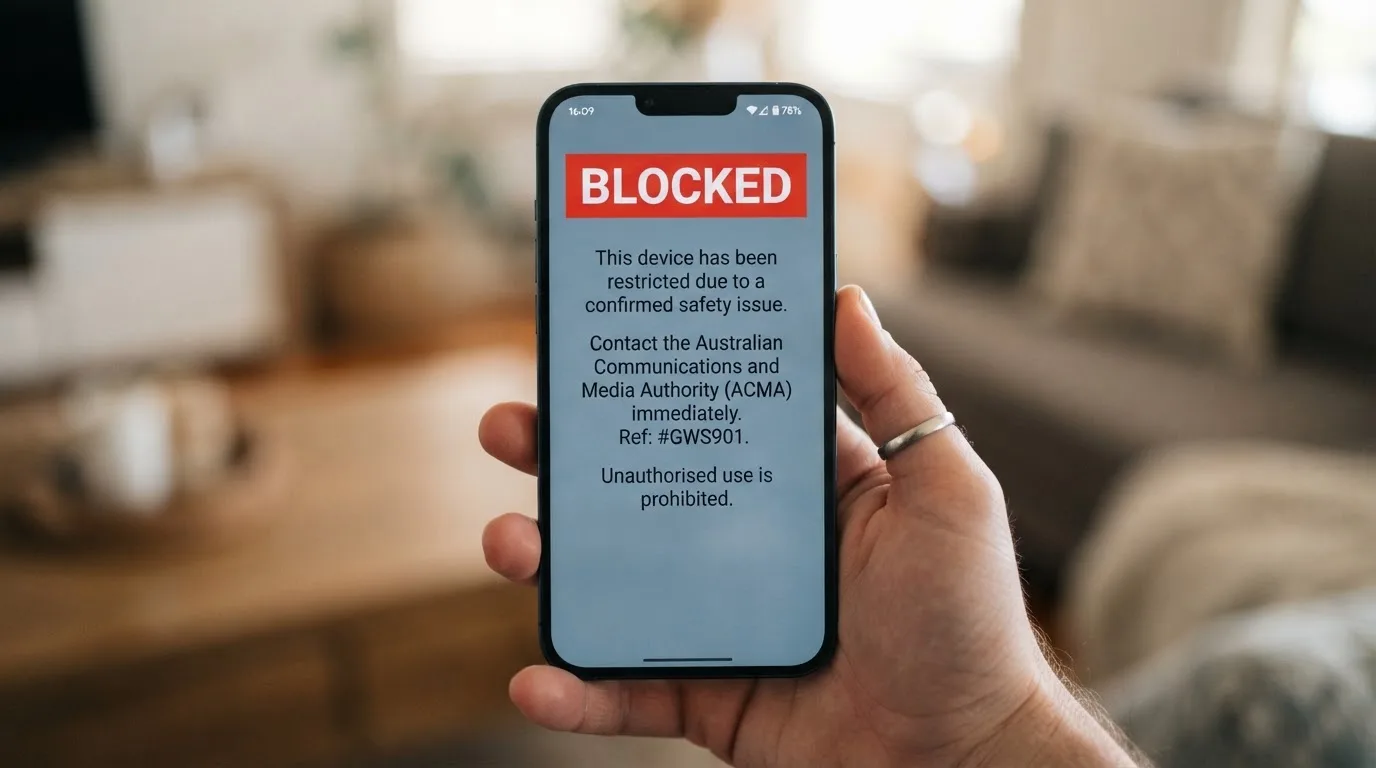
The blocking power is the one with measurable reach. As reported in June 2026, the ACMA has asked Australian ISPs to block a cumulative total of 1,751 illegal gambling and affiliate-marketing websites since the first blocking request in November 2019. The first blocking request in November 2019 is the baseline date; from that point through to the June 2026 reporting round, the ACMA has averaged roughly 22 sites blocked per month. More than 230 unlicensed gambling services have left the Australian market altogether since enforcement was strengthened in 2017, in the sense that they withdrew rather than face the next round.
The formal-warning lever is older and slower but public. The ACMA publishes each warning with the operator’s name, the brand at issue and the date. The record on the brands this page covers reads like a stack of mostly the same operator names appearing twice, three times, sometimes more.
- Dama N.V. was first warned in May 2022 over six casino brands at once: Bambet, Dazard, Level Up, Rocketplay, Wild Tornado and Cobra Casinos. The ACMA returned in March 2025 with a further warning over Woo Casino, then again in May 2025 over Spirit Casino.
- TechSolutions (CY) Group Limited and TechSolutions Group N.V. were first warned in 2022 over Bizzo Casino. Consolutetish S.R.L. was warned in July 2025 over both National Casino and Bizzo Casino — same brand, different parent.
- Bamboo Media was warned in July 2025 over Ignition Casino.
- EOD Code SRL was warned in February 2025 over Instant Casino.
- Ryker B.V. was warned in April 2026 over Jackbit and CasinOK.
- Sterplay Holding Ltd was warned in April 2025 over Casino Intense.
- Hollycorn N.V. was warned over its Sky Crown and Blue Leo services in September 2022.
- Pulsup Ltd was warned in March 2026 over Rocketplay.com.au, picking up a brand Dama N.V. had already been warned over in 2022.
That is the actual enforcement picture behind the marketing pages a search engine returns. A site that promises Australian-friendly sign-up today can be on a published ACMA warning list within weeks, and on a block list within months.
The Blocking-Rate Calculation: How Fast the Wall Goes Up
The blocking rate is the page’s calculation, and it is worth doing it out loud because it is the only number a reader can act on to gauge how long any single offshore casino will remain reachable from an Australian IP.
The input set is straightforward. The first ACMA blocking request was in November 2019, and the cumulative total of blocked sites reported in June 2026 is 1,751. The interval from November 2019 to June 2026 is roughly six years and seven months, or about 79 months. Dividing 1,751 by 79 gives an average blocking rate of approximately 22 sites per month across the whole enforcement window.
The result is a band rather than a single figure, because the ACMA’s blocking requests come in announced rounds, not as a continuous drip. The June 2026 round alone asked ISPs to block 12 sites: 7Signs, ChromaBet, Donbet, Duospin, Freshbet, Slots Gem, Jacks Club, Lucky Start, Pointsbetz.com, Spinrise, Vinyl Casino and Wildsino. Earlier rounds have been larger. A new operator can sit reachable for months, then disappear from an Australian connection in the morning after a single ACMA announcement. Readers who intend to use a brand that is not currently on the list are betting that the brand’s name does not appear on the next list.
There is one further element that makes the rate matter more than it looks. The ACMA’s blocking is not the only thing that happens to a warned brand. Most operators that receive a formal warning quietly withdraw from the Australian market — that is the 230-plus services that have exited since 2017. The rest either change the brand, change the corporate vehicle behind it, or simply ignore the warning until the block arrives. Either way, an Australian player who opened an account under one banner can find the banner replaced, the licence text unchanged and the ability to log in gone.
Responsible Gambling: What Australian Players Can Actually Use
The Australian consumer-protection layer around gambling is built for the licensed wagering market. It is not designed for, and does not reach, offshore casinos. That is the single most important distinction for a reader who treats “responsible gambling” as a thing that comes built in.
BetStop, the National Self-Exclusion Register, has been live since August 2023. It allows a person to register once and have themselves excluded from every Australian-licensed online and phone wagering service. The exclusion terms are set by the registrant and can run for periods of three months up to a lifetime. BetStop works, and it works well, within the licensed wagering market. It does not bind offshore casinos, and those casinos are not required to honour a BetStop registration. An Australian who has self-excluded and then opens an account at an offshore site is, in practice, relying on the offshore site’s own self-exclusion feature — if it has one.
The National Gambling Helpline, 1800 858 858, is free, 24/7 and operated by state and territory counselling services. Online chat and email support are available through Gambling Help Online. The helpline treats problem gambling as a health issue, not a regulatory one, and takes calls regardless of whether the caller has been playing through a licensed or an offshore channel. Anyone reading this page from Australia who is worried about their own or someone else’s gambling has a number to call that is genuinely free to use.
The IGA gives the individual player no separate route to a refund or a complaint outcome against an offshore operator. Disputes about withheld withdrawals, voided bonuses or closed accounts at offshore casinos are not within the ACMA’s remit and are not within any Australian state’s consumer-protection framework. Australian-licensed wagering operators, by contrast, are answerable to the relevant state or territory regulator and to the Australian Financial Complaints Authority on financial disputes.
Payments, Payout Speed and What an Offshore Casino Cannot Offer
The way money moves at an Australian-facing offshore casino looks, on the surface, much like a regular online checkout. In practice, three layers of risk sit underneath that surface.
The first is the payment-method layer. Since 11 June 2024, credit cards, credit-related products and digital currencies have been banned as a payment method for licensed online wagering in Australia. Operators that accept either from an Australian customer are operating outside the Australian rules, which is in itself a marker of an unlicensed service. The legal deposit routes for licensed wagering — debit card, bank transfer, PayID, Osko and BPAY — are the ones a licensed operator will offer. An offshore site offering only crypto, voucher systems and a handful of e-wallets is not offering the Australian-licensed payment stack.
The second is the payout-speed layer. Offshore operators commonly advertise fast withdrawal times, sometimes in hours. The figure is real when a casino is willing to pay, but the audit step that decides whether to pay sits entirely outside Australian reach. A withdrawal can be delayed for “review”, held pending additional “verification” documents, or reversed on a bonus-term dispute that the player never sees in advance. The published payout time is the time the operator takes to release funds once it has decided to release them; the time the operator takes to make that decision is opaque and falls outside any consumer-protection regime an Australian resident can invoke.
The third is the recourse layer. When an Australian-licensed wagering operator refuses a withdrawal, the player can complain to the state or territory regulator and, for financial disputes, to AFCA. When an offshore operator refuses, the player’s options are the casino’s own internal complaints process and, in some configurations, the regulator named on the casino’s licence — Curaçao, Anjouan, Malta or the UK Gambling Commission, depending on what the footer says. None of those regulators owes an Australian consumer anything by default. That is not a hostile reading; it is the practical posture of cross-jurisdictional complaints.
The deposit side carries a parallel caveat. Many offshore casinos offer deposit bonuses that look generous and carry turnover requirements that look ordinary for the offshore market. For a reader weighing whether to claim one, the arithmetic of bonus cost has to be done against the RTP of the games being played. A bonus that requires, say, 35 times the bonus amount in wagering is, on a slot with a 96% return-to-player, an offer with a calculable real cost. The promotional materials do not calculate it. The reader has to.
Bonuses, Free Spins and What the Wording Costs
Bonus language on offshore casinos tends to read as if the player is being given something. The reading is closer to a loan, with the operator’s terms governing how and when it converts to withdrawable cash.
A deposit bonus adds a percentage of the deposit as bonus funds. A 100% bonus on a A$100 deposit gives the player A$100 in real money and A$100 in bonus funds, both subject to the casino’s terms. The “wagering requirement” — sometimes called the “playthrough” or “rollover” — is a multiplier applied to either the bonus alone or to the bonus plus deposit, and it expresses how much the player must wager before the bonus funds become withdrawable. A 35-times bonus requirement on A$100 of bonus funds means A$3,500 of qualifying wagers.
The wagering requirement is where the marketing meets the math. A slot with a 96% RTP returns, on average, A$0.96 for every A$1 wagered. Across A$3,500 in wagers, the average loss is A$140. That loss is the expected cost of clearing the bonus, and it sits before any consideration of whether the bonus has a maximum-cashout cap, a game-weighting restriction or a “max bet while wagering” clause. Many offshore bonuses cap the withdrawable winnings from a bonus at a small multiple of the bonus amount — often five to ten times — which means a player who runs a long lucky streak on bonus funds may find that most of the winnings above the cap are removed at the conversion point.
Free-spin offers carry the same mechanic, applied to a fixed number of spins at a fixed stake on a fixed game. The marketing tends to highlight the headline number of spins and the headline value per spin. Thearithmetic of the free-spin offer is the same arithmetic as the deposit bonus: wagering requirement times the value of the spins, measured against the RTP of the chosen game. Some free-spin offers are nowagering, in which case the winnings are credited as real money, but those offers are uncommon and tend to carry low spin values and tight maximum-cashout caps.
The term that catches players out most often is the “irregular play” clause. Most bonus terms forbid strategies the casino considers abusive — low-risk bets on red and black simultaneously, single-number bets larger than a stated cap, betting patterns that cover a high fraction of the table. Triggers are usually applied to the account, not to the player, and the consequence is usually voiding the bonus and any winnings attributed to it. The clause is standard. The reading is not.
Mobile Play and Apps: The Reach, and the Gap
KA Gaming builds its catalogue in HTML5, and most of its slot and arcade titles run in a mobile browser without a separate download. That part is straightforward, and it is one of the reasons offshore casinos featuring KA Gaming content can market a full mobile experience from a single URL.
What the offshore casinos do not typically offer is a native app on the Australian Apple App Store or Google Play Store. Both stores enforce local content rules that exclude real-money casino apps in jurisdictions where they are not licensed, and Australia is one of those jurisdictions. An Australian player searching the local App Store for a KA Gaming casino app will not find one. The mobile experience that is available is the browser-based one, sometimes wrapped in a “progressive web app” shell that lets the operator put a launch icon on the home screen.
There is a parallel point about data. A mobile browser session at an offshore casino sends the usual device, location and behavioural signals to the operator. The operator’s home jurisdiction governs what it does with that data. An Australian-licensed wagering app, by contrast, is bound by the Privacy Act 1988 and the Australian Privacy Principles. The data-protection floor an Australian reader is used to does not transfer to an offshore site that simply accepts Australian customers.
Specific Games, Providers and What an Australian Reader Actually Sees
KA Gaming sits inside a wider offshore content ecosystem. Several of the operators the ACMA has acted against feature content from other studios alongside KA Gaming titles. National Casino, for one, lists content from providers that include Betsoft and Pragmatic Play. Betsoft, founded in 2006, describes a catalogue of more than 200 RNG games across slots, table games, video poker and specialty titles; its slot Good Girl Bad Girl 2 carries a published RTP of 96.22% with “Very High” volatility and a 15.59% hit rate across 5 reels and 20 paylines, while The Slotfather, live since 13 December 2012, has a published RTP of 95.69% with “Medium” volatility and an 8.17% hit rate across 5 reels and 30 paylines. Casino Intense has been associated in industry listings with content from 1spin4win, a studio founded in 2021 that builds HTML5 slots for low-bandwidth connections, holds a Curaçao gaming licence and reports more than 1,000 partnerships with operators and aggregators, with total bet sum up 46% in the first half of 2025 against the same period in 2024.
The presence of well-known studio names on these sites does not soften the legal position. Australian-facing pages routinely list Aristocrat Leisure, the largest gambling-machine manufacturer in Australia and the second-largest slot-machine manufacturer worldwide, alongside KA Gaming titles. Aristocrat Leisure, founded in 1953 and ASX-listed in 1996, reported 2025 revenue of A$6.30 billion and normalised net profit after tax and amortisation of A$1.55 billion, with 7,400 employees. Its Australian footprint is in North Ryde, Sydney. Its online arms are Product Madness, for social casino games, and Aristocrat Interactive, formed in April 2024 by combining the Anaxi unit with the newly acquired NeoGames group. None of that changes the IGA’s application to online casino games offered to Australians.
The deeper question is what the catalogue looks like when the offshore front door is closed. The Australian-licensed market offers wagering on races and sport, keno and lotteries, and a small set of licensed online pokies available only through specific state and territory arrangements — most prominently in New South Wales through clubs and hotels under the state’s pokies entitlements. Land-based Australian casinos offer a different KA Gaming story: there is no widely reported presence of KA Gaming content in Australian clubs, hotels or land-based casinos, and the studio’s own page makes no claim to one. Australian pokie floors are dominated by Aristocrat, IGT and a handful of other manufacturers with established local distribution.
The Eleven Brands the ACMA Has Acted Against
What follows is not a ranking. No operator in this list is suitable for an Australian reader under the Interactive Gambling Act 2001. Each is included because the ACMA itself issued a formal warning over it for offering prohibited interactive gambling services to Australians. The ACMA’s record is the source, and the warning date is the relevant date. Wherever research carries no information about a brand’s relationship to KA Gaming, the brand is presented on the basis of the ACMA action alone.
RocketPlay
Pulsup Ltd received an ACMA formal warning in March 2026 over Rocketplay.com.au. The Rocketplay brand had already been the subject of a May 2022 warning to Dama N.V. along with five other Dama brands. The brand has therefore been in the ACMA’s published record twice, under two different corporate parents.
RocketPlay accepts Australian sign-ups and offers a KA Gaming-styled casino lobby to anyone reaching it, but there is no public KA Gaming integration record to point to for this specific brand. The relevant fact for an Australian reader is the ACMA’s repeated action.
The mismatch is the whole story. RocketPlay is built for the offshore market and runs accordingly; the IGA says it cannot lawfully do so for an Australian customer. The brand changes hands and keeps operating. The reader has no Australian-licensed alternative at the brand.
Level Up Casino
Level Up was one of the six Dama N.V. brands covered by the May 2022 formal warning. There is no second published warning on the same brand since, but there is also no record of Dama N.V. withdrawing Level Up from the Australian market.
Level Up is associated with Wazdan content in Wazdan’s own published partner listings. The relevance of that for an Australian reader is that it does not change the legal posture. A Wazdan-powered casino is, for an Australian consumer, still an offshore casino offering prohibited services.
What to take from this block is the ACMA pattern. The May 2022 warning was a single letter covering six brands at once. The cluster approach is how the ACMA tends to handle an operator group: warn once, name the whole stable, then act against individual brands later if the group does not withdraw.
Woo Casino
Woo Casino was the subject of a March 2025 ACMA formal warning to Dama N.V. Dama had already been on the receiving end of the May 2022 warning that covered six of its brands, but Woo Casino was not one of them. The March 2025 warning is the first published ACMA action against Woo specifically.
Woo Casino sits in the Dama N.V. group and operates as an offshore casino with Australian-facing marketing. The legal status for an Australian reader is identical to every other entry on this list.
The pattern to notice is the long gap between the warning and the ACMA’s next move. Woo was warned in March 2025. The next published ACMA action against Dama N.V. was in May 2025, over Spirit Casino. The pace is deliberate: warning, monitoring, then a follow-up action on a different brand in the same group.
Spirit Casino
Spirit Casino received a May 2025 ACMA formal warning to Dama N.V. It is the third Dama brand in the ACMA’s record after the original 2022 batch and Woo Casino, and the second in 2025 alone.
Spirit Casino received a May 2025 ACMA formal warning to Dama N.V. Like the other Dama brands, Spirit’s licence footer is offshore; the IGA’s application is unaffected by that.
The interesting reading here is the gap between operator portfolios. Dama N.V. operates RocketPlay, Level Up, Woo and Spirit as separate brands, and the ACMA has now acted on each under the Dama name separately. The pattern is consistent with how the ACMA handles operator groups: one warning per brand rather than a single omnibus action.
National Casino
National Casino was the subject of a July 2025 ACMA formal warning to Consolutetish S.R.L. It was the brand’s first ACMA warning.
National Casino’s site carries content from providers that industry listings associate with Betsoft and Pragmatic Play, and the site lists a KA Gaming integration alongside its other provider names. The associations are relevant to the catalogue a player sees when reaching the site, not to its lawful status.
The legal floor applies without exception. National Casino offers prohibited services to Australians; the ACMA has said so on the record; the catalogue of providers does not alter the conclusion.
Bizzo Casino
Bizzo Casino has been on the published record twice. The first formal warning was in 2022 to TechSolutions (CY) Group Limited and TechSolutions Group N.V. The second was in July 2025 to Consolutetish S.R.L. — a different parent company, the same brand. The ACMA’s second action over the brand suggests either that the brand changed hands without exiting the Australian market or that the new parent picked up the legacy exposure.
Bizzo Casino’s two published warnings tell the story that needs telling: a brand that has been on the ACMA’s published list under two corporate parents in three years.
The read for an Australian reader is that the corporate change did not cure the underlying legal problem. The IGA targets the service offered to Australians, not the entity offering it.
Ignition Casino
Ignition Casino was the subject of a July 2025 ACMA formal warning to Bamboo Media. It was the brand’s first ACMA warning.
Ignition Casino sits in the Bamboo Media group. It remains an offshore entity with Australian-facing marketing.
The single-warning exposure is the lighter end of the ACMA pattern, but it is still a formal warning, and the IGA still applies. A reader who treats a single warning as “less serious” than a repeated one is reading the wrong axis: the IGA’s prohibition is on the offering, not on the operator’s warning history.
Instant Casino
Instant Casino received a February 2025 ACMA formal warning to EOD Code SRL. It is one of the earlier 2025 actions on this list.
Instant Casino is one of the brands in the June 2026 round of blocking, which means it is on the ACMA’s block list as well as its warning list. The blocking removes the site from reach of Australian internet connections at the ISP level; the warning remains the public record.
Jackbit
Jackbit was the subject of an April 2026 ACMA formal warning to Ryker B.V., alongside CasinOK. Ryker B.V.’s brands were not on the ACMA’s published warning list before this.
Jackbit is an offshore operator with Australian-facing marketing; no KA Gaming integration is confirmed.
The April 2026 timing matters. Jackbit and CasinOK were named in the same warning, which is consistent with the ACMA’s cluster approach: one warning, two brands in the same group, same parent, same issue.
Casino Intense
Casino Intense was the subject of an April 2025 ACMA formal warning to Sterplay Holding Ltd. It was the brand’s first ACMA warning.
Casino Intense’s catalogue has been associated in industry listings with content from 1spin4win, a Curaçao-licensed slot studio whose games are built in HTML5 for low-bandwidth connections. The 1spin4win association is what the listings carry.
The interesting reading is the gap between operator licence claims and the operator’s relationship to Australian consumer law. A Curaçao-licensed studio on the supply side and a Curaçao-licensed operator on the demand side is a coherent offshore configuration; it is not, and cannot be, an Australian-licensed configuration.
Sky Crown
Sky Crown was the subject of an ACMA formal warning to Hollycorn N.V. alongside the Blue Leo service. The warning is on the ACMA’s published record, dated to September 2022.
Sky Crown operates offshore with Australian-facing marketing, with no confirmed KA Gaming integration.
Sky Crown and Blue Leo being named together is again the ACMA’s operator-group pattern: one warning, two brands in the same group. Sky Crown is the older of the two warnings on this list by date, but the legal exposure is identical to every other brand.
ACMA Action and Operator Map
The table below sets the ACMA’s published actions against the brands this page covers, alongside the operator named in the warning and whether the materials this page draws on carry any record of KA Gaming content for the brand.
| Brand | ACMA action and date | Operator named by the ACMA | Subject support |
|---|---|---|---|
| RocketPlay | Formal warning, March 2026 (Pulsup Ltd); earlier warning, May 2022 (Dama N.V.) | Pulsup Ltd; Dama N.V. | — |
| Level Up Casino | Formal warning, May 2022 | Dama N.V. | — |
| Woo Casino | Formal warning, March 2025 | Dama N.V. | — |
| Spirit Casino | Formal warning, May 2025 | Dama N.V. | — |
| National Casino | Formal warning, July 2025 | Consolutetish S.R.L. | — |
| Bizzo Casino | Formal warning, July 2025; earlier warning, 2022 | Consolutetish S.R.L.; TechSolutions (CY) Group Limited; TechSolutions Group N.V. | — |
| Ignition Casino | Formal warning, July 2025 | Bamboo Media | — |
| Instant Casino | Formal warning, February 2025 | EOD Code SRL | — |
| Jackbit | Formal warning, April 2026 | Ryker B.V. | — |
| Casino Intense | Formal warning, April 2025 | Sterplay Holding Ltd | — |
| Sky Crown | Formal warning, September 2022 | Hollycorn N.V. | — |
The pattern the table lays out is not a leaderboard. Two operator names appear repeatedly: Dama N.V. across four brands and three separate warnings from 2022 through 2025, and Consolutetish S.R.L. across two brands in a single July 2025 warning. Three of the eleven warnings are to operators acting for the first time: Bamboo Media over Ignition Casino, EOD Code SRL over Instant Casino, and Ryker B.V. over Jackbit. The single-action warnings matter as much as the repeated ones — the IGA applies regardless of how many times the operator has been told.
The 2026 Reform: What Just Changed
The Interactive Gambling Amendment (Gambling Reform) Bill 2026 passed Parliament on 19 August 2026. The bill’s advertising and inducement measures commence on 1 January 2027 — law with a start date, not yet in force on a page read in 2026. The bill targets the way wagering services advertise and the inducements they offer, and it will tighten what licensed operators can do in the Australian market. It does not, however, change the underlying IGA prohibition on online casino games.
The practical reading for an Australian reader in 2026 is that the licensed market is about to become more tightly regulated around the edges, and the offshore market remains exactly where the IGA puts it. The window between the passage of a bill and the commencement of its measures is the window in which operators race to deploy advertising under the old rules; readers in that window should be particularly alert to inducements and to claims that something “changes” when the new rules commence.
What the Australian Player Has Instead
The lawful Australian alternatives for someone interested in gambling fall into four buckets.
The first is licensed online and phone wagering on races and sport, including the in-play betting that is licensed once it is licensed at the territory level. This is the segment the NTRWC oversees through its 52 Northern Territory-licensed bookmakers, and it is where Australian consumer protection — debit-card and PayID deposits, AFCA dispute pathways, BetStop self-exclusion — applies in full.
The second is lotteries and keno. State and territory lotteries operate under their own statutory frameworks, and Tatts, Tabcorp and the state-level lottery operators run keno and lottery products that are lawful nationwide.
The third is land-based casinos. Crown Melbourne, The Star Sydney, The Star Gold Coast, Crown Perth, SkyCity Adelaide and the Brisbane casino are the major Australian land-based casinos, with electronic gaming machines and table games under each state or territory’s casino control framework. KA Gaming’s catalogue is not, on the public record, distributed through Australian land-based casino floors.
The fourth is licensed venue-based pokies. New South Wales clubs and hotels hold the largest concentration of licensed poker machines, with entitlements administered by Liquor & Gaming NSW. Other states have their own venue-based gaming arrangements. None of these are online casino games and none are KA Gaming products.
The honest read for an Australian reader interested in KA Gaming specifically is that the only KA Gaming catalogue available to them is the catalogue that runs through an offshore site. That catalogue is reachable today and unlikely to remain reachable tomorrow. The Australian-licensed alternative offers wagering, lotteries, keno, venue-based pokies and land-based casinos — none of which carry KA Gaming’s games.
A Closing Read
The Australian market for online casino games is, structurally, a market that does not exist under Australian law. The ACMA’s enforcement record is the most readable expression of that fact: 1,751 sites blocked since November 2019, more than 230 services withdrawn since 2017, a rolling list of formal warnings to operators that frequently own multiple brands and frequently return after a corporate change. The IGA’s prohibition is on the offering, and the offering does not become lawful because the operator changes its corporate parent, refreshes its domain, or advertises a different licence.
For an Australian reader, the practical choices are not among the offshore casinos this page has named. They are between licensed wagering on races and sport, lotteries and keno, the land-based casinos in each capital city, and venue-based pokies in clubs and hotels. The choice between these depends on what the reader wants from gambling — the social setting of a casino floor, the convenience of phone wagering, the casual pace of keno, the licensed-pokies product in their state. What none of these offer is KA Gaming’s catalogue, which is a product that, in Australia, can only be reached through sites the ACMA is actively working to block.
The market estimate worth holding onto is the H2 Gambling Capital 2025 figure: Australians lose about A$3.9 billion a year to illegal gambling sites, and the share of gambling going through legal channels has fallen from 74% in 2021 to 64% in 2025. The legal market is being undercut, not by the absence of Australian-licensed casino games, but by the easier access to offshore ones. That is the policy problem the 2026 reform bill is responding to. For the individual reader, the calculation is simpler: a site offering Australian-friendly sign-ups is doing so in defiance of an Act of Parliament, and the reader has no Australian consumer-protection recourse if it goes wrong.
Frequently Asked Questions
What kind of games does KA Gaming make?
KA Gaming describes its in-house portfolio as spanning 1,019 titles — 816 slots, 122 fish-shooter games, 44 arcade titles, 26 table games and 11 crash games — supported in more than 130 currencies and 13 languages. Named releases include Golden Dragon, Blazing Buffalo, Sunken Empire, Fire Hit 2 and Mega Roulette. The studio is listed in industry directories as operating in the Oceania region.
Is KA Gaming used by any casino licensed to operate in Australia?
No. Online casino games cannot be licensed in any Australian state or territory under the Interactive Gambling Act 2001, and no Australian-licensed operator offers KA Gaming content. The brands that market KA Gaming titles to Australian readers operate from offshore and have, in several cases, been the subject of ACMA formal warnings for offering prohibited services to Australians.
Can Australians legally play KA Gaming slots at an online casino?
No. The Interactive Gambling Act 2001, as amended in 2017, prohibits the provision of online casino games to anyone in Australia, and the prohibition applies regardless of the offshore licence a casino displays. The IGA targets the provider; the individual player is not prosecuted, but an Australian playing at an offshore casino has no Australian consumer-protection recourse if a withdrawal is refused or a balance is forfeited.
Are KA Gaming games available at land-based Australian casinos?
There is no publicly reported presence of KA Gaming content on Australian pokie floors or in Australian land-based casinos. Australian venue gaming is dominated by Aristocrat, IGT and a small set of other manufacturers with established local distribution, and KA Gaming does not, on the public record, distribute to Australian venues.
What should someone check before trusting a site that claims to offer KA Gaming games?
The first check is whether the site holds an Australian licence for the service it is offering. For online casino games, the answer will always be no, by operation of the Interactive Gambling Act 2001. The second check is the ACMA’s formal-warning register, which lists the operators the ACMA has already acted against and is updated with each new warning. A site that is not on the register today may be on it tomorrow; the ACMA’s blocking rate has averaged around 22 sites per month since November 2019.
Does KA Gaming software run on mobile browsers?
Yes. KA Gaming’s catalogue is built in HTML5, and most of its titles run in a mobile browser without a separate download. The same is true for the offshore casinos that feature KA Gaming content: they offer a browser-based mobile experience, sometimes wrapped in a progressive-web-app shell for a home-screen icon. What they do not typically offer is a native app on the Australian Apple App Store or Google Play Store, both of which exclude real-money casino apps in jurisdictions where the service is not licensed.