Best Australian online casino 2026: the comparison the ACMA keeps interrupting
 Available in US
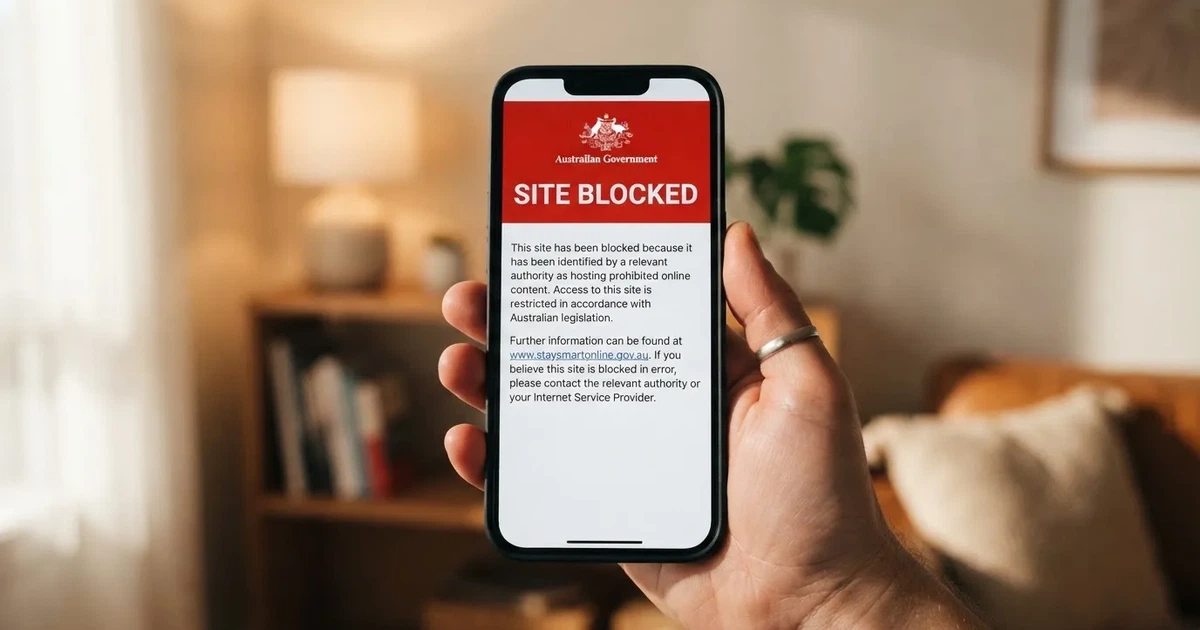
There is no licensed online casino in Australia. The Interactive Gambling Act 2001 makes online casino games and online pokies a prohibited service, and no state or territory issues a licence for them. So when someone searches for the best aussie online casino 2026, what they actually find is a marketplace of offshore operators the ACMA has warned, blocked, or both. Eleven of those operators sit below, ranked by date of ACMA action. None is a recommendation. The page is a comparison of what is on offer against the law that bans it.

Currency stamp: Current as of 23 September 2026, licence claims checked against the ACMA register of formal warnings and interactive gambling service notifications.
Table of Contents
- The eleven offshore operators the ACMA has named
- How the ACMA blocking action actually accumulates
- What the Interactive Gambling Act 2001 actually prohibits
- Where help is available if the question has gone past the comparison
- The payment rails an Australian-facing site will and will not accept
- What bonus and free-spin offers are worth in this market
- What a mobile-friendly version of an offshore casino looks like
- What “new” means for an Australian-facing casino site
- What a fair comparison would weigh for a reader in Australia
- The tax and winnings picture
- What an Australian punter can actually do tonight
- Frequently asked questions
The eleven offshore operators the ACMA has named
The ACMA publishes a running list of formal warnings and blocking actions. The brands below are drawn from that list, ordered by recency. Each carries the operator the ACMA named, the date of the warning, and any earlier warning that already existed against the brand or its parent company. Where a brand shows “—” for subject support, the research pool carried no payment-method or game-supplier confirmation for that operator, so the comparison does not attach one.

| Brand | ACMA action and date | Operator named by the ACMA | Subject support |
|---|---|---|---|
| RocketPlay | Formal warning, March 2026 (and earlier May 2022 against parent Dama N.V.) | Pulsup Ltd | PayID, gambling block on Westpac cards (listings-only) |
| Jackbit | Formal warning, April 2026 | Ryker B.V. | — |
| Level Up Casino | Formal warning, May 2022 | Dama N.V. | Westpac gambling block (listings-only) |
| National Casino | Formal warning, July 2025 | Consolutetish S.R.L. | AUSTRAC, BetStop, ACMA register (listings-only) |
| Bizzo Casino | Formal warning, July 2025 (and 2022 against TechSolutions) | Consolutetish S.R.L. | — (listings-only, gamblinginsider) |
| Ignition Casino | Formal warning, July 2025 | Bamboo Media | — |
| Casino Intense | Formal warning, April 2025 | Sterplay Holding Ltd | AUSTRAC, BetStop, gamblinginsider (listings-only) |
| Sky Crown | Formal warning, September 2022 | Hollycorn N.V. | — |
| Woo Casino | Formal warning, March 2025 | Dama N.V. | — |
| Spirit Casino | Formal warning, May 2025 | Dama N.V. | — |
| Instant Casino | Formal warning, February 2025 | EOD Code SRL | ecoPayz, PayID (listings-only) |
The “Subject support” column records what directory or industry listings report for each brand, not what the operator itself confirms. A “—” means the research carried no such listing; the column is not an assertion about what the brand accepts. Two columns that look like data on a row are the same column saying the same thing; where the research carries nothing, the cell stays blank.
Reading the table from the bottom up is also reading it in chronological order. The ACMA named Instant Casino in February 2025, Woo Casino in March 2025, Spirit Casino in May 2025, Ignition Casino and National Casino and Bizzo Casino in July 2025, then RocketPlay in March 2026 and Jackbit in April 2026. The pace has not slowed. Two of the eleven (RocketPlay and Bizzo Casino) had already been warned before under a different parent company, so the ACMA is now naming the same brands twice under new corporate wrappers.
RocketPlay
RocketPlay sits at the top of the table because the ACMA acted most recently against it, in March 2026, naming Pulsup Ltd as the operator of Rocketplay.com.au. Dama N.V., a different company, was the operator named in an earlier May 2022 warning that also covered RocketPlay. The ACMA is therefore dealing with the same brand through two different corporate entities, which is what happens when an offshore operator restructures to dodge a notice.

What the comparison finds: a brand the regulator has chased twice in four years is not a safer pick because it changed parent companies. The warnings cite the Interactive Gambling Act 2001, not the operator’s licence display, and a Curaçao registration certificate the site shows does not change the Australian law the ACMA enforces. Directory listings report PayID as accepted and Westpac gambling-block as covering the merchant category, but those listings are not the regulator’s own statement.
The verdict: RocketPlay suits no Australian reader on legal grounds, and the dual warning makes it the strongest illustration on this page of why “new operator, same brand” does not buy safety.
Jackbit
The ACMA named Ryker B.V. over Jackbit in April 2026. Jackbit is the most recently named brand on this page that had not previously appeared under a different parent, which makes it the freshest example of an offshore operator drawing an Australian-facing warning for the first time.
What the comparison finds: research carried no payment-method or supplier listing for Jackbit, so this row is empty on the “Subject support” column by design. The absence is information for a reader choosing what to compare: there is nothing in the research pool that says who supplies the games, what wallets the cashier lists, or which payment rails the cashier accepts in practice. A page that filled those cells would be making them up.
The verdict: Jackbit is the brand where the comparison has the least to say, which is itself the finding. The ACMA has named it; everything else is unknown.
Level Up Casino
Level Up Casino was named by the ACMA in May 2022 as one of six Dama N.V. brands warned in a single round. The 2022 round also covered Bambet, Dazard, RocketPlay, Wild Tornado and Cobra Casinos, so the ACMA was naming a portfolio rather than a single site. None of those 2022 Dama N.V. brands has since acquired an Australian licence, because Australian law has no licence category for them to acquire.
What the comparison finds: directory listings show Level Up among brands Westpac’s card-level gambling block catches under the “Betting/Casino Gambling” merchant category code. That is useful to a reader who wants to know whether their own bank’s block will stop a deposit before it goes out, but it is the bank’s own mechanism, not a feature of the casino.
The verdict: Level Up is the brand that illustrates what a 2022 warning looks like four years later, still on the ACMA register, still without a local licence, still on the same merchant code the major banks already block.
National Casino
National Casino was named by the ACMA in July 2025 against Consolutetish S.R.L. Industry listings surface the brand on AUSTRAC-relevant material, the BetStop register (the offshore operator is not connected to BetStop, but listings record the comparison) and the ACMA’s own register.
What the comparison finds: National Casino is the brand where the listings cluster happens to be the most concentrated. That does not make the operator safer; it makes it the easiest to research, which is a different thing.
The verdict: a brand whose every data point comes from listings rather than the operator’s own statement is a brand where the reader should not trust the marketing page.
Bizzo Casino
Bizzo Casino appears twice on the ACMA register. The 2022 warning named TechSolutions (CY) Group Limited and TechSolutions Group N.V. as the operators; the 2025 warning named Consolutetish S.R.L. Same brand, two different parent companies, three years apart. Industry listings note Bizzo among brands covered by the gambling-insider catalogue.
What the comparison finds: a brand warned twice is a brand the regulator has had to warn twice. The intervening three years did not produce a single licence change, because Australian law has no licence category for offshore online casino games, so no number of years produces one.
The verdict: Bizzo is the brand where the comparison can say, with the regulator’s own record behind it, that the warning is not a one-off — it is a repeat.
Ignition Casino
The ACMA named Bamboo Media over Ignition Casino in July 2025. The research pool carries no payment-method or supplier listing for Ignition, so the row in the comparison sits empty on the column that would normally show what the cashier accepts.
What the comparison finds: Ignition is the brand where the regulator has named the operator but the industry listings carry nothing for the comparison to weigh. The absence is not a clean record; it is a data gap.
The verdict: Ignition suits no reader this page can advise, and the gap in the comparison reflects the gap in the data.
Casino Intense
Sterplay Holding Ltd was named by the ACMA in April 2025 over Casino Intense. Industry listings surface Casino Intense alongside AUSTRAC-relevant material, BetStop-related notes, and gambling-insider catalogue entries.
What the comparison finds: Casino Intense is the brand where the listings trail is broad without being deep. Several catalogues name it; none of those catalogues is the operator’s own statement, and none changes the fact that Australian law prohibits the service.
The verdict: a brand the listings know about is not a brand the listings have cleared.
Sky Crown
Hollycorn N.V. was named by the ACMA over Sky Crown in a 2022 formal warning that also covered Blue Leo. Hollycorn continues to operate the brand offshore; the ACMA continues to name it on the register.
What the comparison finds: Sky Crown is the oldest warning on this page that does not have a follow-up under a new parent company. Four years on, the warning still stands.
The verdict: a 2022 warning that has not been followed by an Australian-facing licence is not a 2022 warning that has been answered.
Woo Casino
Dama N.V. was named by the ACMA over Woo Casino in March 2025. Woo is the second Dama N.V. brand on this page after Level Up Casino, both warned under the same parent company.
What the comparison finds: Woo is the brand that shows what a Dama N.V. portfolio looks like at the parent level. The same operator name appears three times on this page (Level Up, Woo, Spirit), with three different brands and three different dates.
The verdict: a parent-company pattern is a regulator pattern, not a coincidence.
Spirit Casino
Dama N.V. was named by the ACMA over Spirit Casino in May 2025, two months after the Woo Casino warning and three years after the Level Up Casino warning. Three Dama N.V. brands, three separate warnings, two different years.
What the comparison finds: Spirit is the brand that completes the Dama N.V. pattern on this page. The operator that owned Level Up in 2022 owns Spirit in 2025 and the ACMA has had to name each one separately.
The verdict: the same operator running three warned brands in three years is the strongest signal on this page that corporate change is not safety change.
Instant Casino
EOD Code SRL was named by the ACMA over Instant Casino in February 2025. Industry listings note ecoPayz and PayID as payment methods the directory sites associate with the brand; the comparison records that, with the usual caveat that a directory listing is not an operator statement.
What the comparison finds: Instant Casino is the brand where the listings column has the most specific payment-method data, and the ACMA action is one of the earliest in the 2025 sequence. A 2025 warning is not stale, but it is the oldest on the second half of the table.
The verdict: Instant Casino is the brand where the comparison is richest and the verdict is the same as everywhere else on the page.
How the ACMA blocking action actually accumulates
By June 2026, the ACMA had asked Australian ISPs to block 1,751 illegal gambling and affiliate marketing websites since the first blocking request in November 2019. The figure covers both casino-style sites and affiliate pages that funnel traffic to them. More than 230 unlicensed services had left the Australian market altogether since enforcement was strengthened in 2017. The 26 June 2026 round alone added 12 sites: 7Signs, ChromaBet, Donbet, Duospin, Freshbet, Slots Gem, Jacks Club, Lucky Start, Pointsbetz.com, Spinrise, Vinyl Casino and Wildsino.
The prescribed calculation here is the blocking rate: divide the running total of 1,751 blocked sites by the months elapsed since the first blocking request in November 2019. That works out to roughly 22 sites blocked per month on average across the running period, with the actual monthly pace higher in recent rounds than in the early ones. The rate is a band, not a single number: enforcement has accelerated, and any month ahead of the running average is more representative than any month behind it. The 12-site June 2026 round alone sits at the recent pace, which is well above the running average. The arithmetic belongs to the page; the figure is what the page draws from the regulator’s own record.
H2 Gambling Capital’s 2025 report puts the Australian loss to illegal gambling sites at about A$3.9 billion a year, and the share of gambling going through legal channels has fallen from 74% in 2021 to 64%. The legal share is dropping while the blocked-site count is rising, which the comparison treats as two sides of the same movement: enforcement has not closed the gap between what is licensed and what is searched for.
What the Interactive Gambling Act 2001 actually prohibits
Online casino games, online pokies and in-play betting are prohibited interactive gambling services under the IGA, as strengthened by the Interactive Gambling Amendment Act 2017. The offence sits with the provider, not the player, so an individual punter is not prosecuted for placing a bet — but an offshore site gives no Australian consumer protection, no local complaints body, and no recourse if a withdrawal is refused. The minimum age is 18. The law does not contain a carve-out for offshore-licensed operators; a Curaçao or Malta registration does not change what is being offered to a person in Australia.
The licensable categories in Australia are wagering on races and sport placed before the event, lotteries, and keno. Online wagering on sport and racing is licensed in practice by the Northern Territory Racing and Wagering Commission, which regulates 52 of Australia’s online bookmakers including Sportsbet, Bet365 and Ladbrokes. The NTRWC has no full-time staff and meets once a month in Darwin, which is a structural fact about how the licensed half of the market is administered rather than a comment on its quality.
The Interactive Gambling Amendment (Gambling Reform) Bill 2026 passed Parliament on 19 August 2026, with its advertising and inducement measures commencing on 1 January 2027. That is law with a start date — a 2026 page reads it as enacted but not yet in force. The relevant point for the comparison is that even after commencement the new provisions tighten advertising around licensed wagering, not licensing of online casino games, which remains prohibited.
Where help is available if the question has gone past the comparison
If online casino play is starting to feel compulsive or stressful, free confidential help is available around the clock. Gambling Help Online runs live chat, email and phone support, and the National Gambling Helpline on 1800 858 858 is free and answered 24/7. BetStop, the National Self-Exclusion Register, has been live since August 2023. It binds Australian-licensed online and phone wagering services; an offshore casino is not connected to it, so registering with BetStop does not stop an offshore site from accepting a deposit. The self-exclusion that does work for offshore sites is the bank’s own gambling block, which is described in the payments section below.
The gambling-harm threshold is not a function of how much money is at stake. It is a function of what the activity has started to cost the rest of a person’s week. The comparison on this page does not ask whether offshore play is harmful — the law has already settled that question — but the help lines exist for readers who find themselves needing them anyway.
The payment rails an Australian-facing site will and will not accept
Online casino play has no licensed local product to bank into, so this page keeps the money side informational. The licensed alternative — online wagering with an NT-licensed bookmaker — has a defined payment set: debit card, bank transfer, PayID/Osko, BPAY. Credit cards, credit-related products, and digital currency have been banned as payment for licensed online wagering since 11 June 2024, with penalties up to A$247,500 for operators who breach. A site asking an Australian player for a credit card or a crypto deposit is operating outside the Australian rules by definition; offshore operators commonly do.
PayID sits on Australia’s New Payments Platform, which became publicly accessible on 13 February 2018 and is owned by New Payments Platform Australia Ltd, a non-profit whose 13 shareholders include the Reserve Bank of Australia and the major banks. By April 2025, more than 25 million PayID identifiers had been registered across the platform. Osko, the instant-transfer rail that runs on the same infrastructure, delivers a bank-to-bank transfer in under a minute, 24/7 including weekends, whether addressed to a BSB and account number or to a PayID. PayID transfers are available at over 100 Australian financial institutions. Participants in the platform must keep monthly outages to no more than two minutes, and in 2021 the ACCC authorised merging NPP Australia with BPAY and eftpos under a single holding company, Australian Payments Plus (AP+). Paying to a PayID shows the name of the account holder before the transfer is sent, and AP+ warns that being asked to transfer money to a PayID on an illegal gambling site almost certainly means a scam site.
BPAY is a bill-payment service that has operated since 18 November 1997. It is available through the online banking of over 140 banks and financial institutions and is offered by over 95,000 businesses. BPAY is owned equally, via parent Cardlink Services Limited, by Australia’s four major banks — ANZ, Commonwealth Bank, National Australia Bank and Westpac — and is run by Australian Payments Plus. It is not a real-time rail; it is designed to settle bills by their due date, not for instant casino deposits. A site offering “BPAY deposits” is in most cases misusing the rail, because the bill-payment model assumes the payer has already decided what they are paying for.
AUSTRAC’s threshold-transaction-report rule applies only to physical cash. Electronic bank transfers of A$10,000 or more are not subject to that per-transaction reporting requirement, regardless of amount — a fact that matters for any reader wondering whether a large PayID deposit will trigger a flag. It will not.
Digital wallets complicate the picture. By the end of 2025, Apple Pay, Google Pay and Samsung Pay transactions collectively accounted for around 45% of all card payments in Australia by number. Apple does not charge consumer fees for Apple Pay; any surcharge is the merchant’s own processing fee. Apple states that transaction limits and PIN requirements for Apple Pay purchases are set by the card issuer or merchant, not by Apple. The Reserve Bank of Australia’s July 2025 review proposes removing surcharges only on eftpos, Mastercard and Visa transactions, explicitly leaving American Express outside the proposed ban. American Express itself operates as a three-party scheme rather than Visa or Mastercard’s four-party network, having launched its first charge card on 1 October 1958.
The relevant credit-card fact for this page is that the IGA, as amended in 2023, prohibits Australian-licensed online wagering services from accepting credit cards or credit-related products, a restriction that also constrains gambling use of linked digital wallets like Apple Pay. The banks have built their own enforcement layer on top: Westpac’s gambling block works at card level and refuses authorisation of transactions registered under the merchant category code “Betting/Casino Gambling” on eligible personal credit and debit cards. ANZ’s gambling transaction block, activated in the ANZ app, also blocks gambling transactions made through a digital wallet such as Apple Pay on an eligible card, not just the physical card. Once turned on, removing ANZ’s block requires a 48-hour waiting period; the bank warns that not all gambling transactions will be blocked and some non-gambling transactions might be blocked in error. Commonwealth Bank lets customers apply a gambling lock to eligible cards via the CommBank app, which automatically blocks most gambling transactions, though the bank states it cannot guarantee all gambling-related purchases will be stopped.
The bank-level block is the only mechanism on this page that an Australian player can actually turn on against an offshore casino. BetStop does not bind offshore sites. The ACMA’s blocking request stops an Australian ISP from resolving the domain, which a reader can route around with a VPN. A bank block refuses the transaction at the merchant code. That is the practical end of the comparison for an Australian reader who has already decided that offshore play is what they are doing.
What bonus and free-spin offers are worth in this market
Online casino bonuses in this market are background reading only, not something to act on. A “welcome package” advertised by an offshore operator is not licensed for Australian customers and the ACMA has named several operators that advertise them. The mechanics research carries do not change that, but they are what a reader comparing two offshore offers would weigh if they were going to weigh them.
A bonus with a wagering multiple requires the player to wager the bonus amount (sometimes plus the deposit) that many times before any winnings become withdrawable. A “free spin” offer credits a fixed number of spins at a fixed stake on a named slot, with winnings either paid as cash or carried into the bonus balance. The relevant Australian-specific overlay is that any winnings held on an offshore site are not protected by Australian consumer law; if the operator refuses a withdrawal citing a bonus term, the punter has no local complaints body to escalate to.
The arithmetic an Australian reader comparing two offers should run is the wagering cost. A A$100 bonus with a 40x wagering multiple requires A$4,000 of turnover before the bonus is cleared. At a A$1 stake-per-spin and a 5-second interval, that is 4,000 spins, or roughly 5.6 hours of continuous play. The expected loss depends on the slot’s RTP and the turnover required; for a 96% RTP slot, A$4,000 of turnover produces an expected loss of A$160, which is larger than the bonus itself. That is the standard shape of the arithmetic: a bonus worth less than the wagering it costs to clear. A reader comparing two offers on a wagering basis is comparing two ways to pay for the same activity.
The page is not running that arithmetic on any specific operator’s offer, because the only sources for bonus terms were affiliate marketing pages and the research pool excluded those. The arithmetic is illustrative — what such an offer generally costs — not a verdict on any specific package.
What a mobile-friendly version of an offshore casino looks like
A mobile-friendly version of an offshore casino is, in practice, a responsive website. There is no Australian App Store category for an online casino app because the IGA prohibits the service; what an offshore operator offers is either a mobile site that runs in a phone browser or, less commonly, an APK that the operator’s site asks the player to sideload. Apple does not permit real-money casino apps in the Australian App Store. Google Play has historically varied on this; the relevant point is that any casino app an Australian reader is invited to install sits outside the normal app-distribution channels.
The mobile comparison on this page is descriptive, not a review. Offshore sites vary in how well their responsive layouts hold up at Australian network speeds; the research pool carries no measurements to weigh. A reader who has already decided to play is choosing between a mobile site and a desktop site with a phone beside it, which is the same product on both screens for every operator on this page.
What “new” means for an Australian-facing casino site
A “new” online casino is, in this market, a newer offshore site operating outside Australian law. There is no fresh legal option opening up locally; the IGA has not been amended to license online casino games, the 2026 reform Bill’s advertising provisions commence in 2027 and do not touch the underlying prohibition, and the NTRWC’s 52 licensed bookmakers are wagering operators, not casinos. A new offshore brand is the same product under a different corporate wrapper, with the same payment risks and the same absence of Australian consumer protection.
The brand-new names the ACMA has added in the past year — Jackbit in April 2026, Rocketplay.com.au in March 2026 — are both offshore operators that opened to Australian-facing traffic and drew a formal warning in their first year. That is what “new” means in practice on this page: a brand the regulator has had to name before it had time to establish a track record.
What a fair comparison would weigh for a reader in Australia
A fair comparison for an Australian reader weighs three things the research pool actually carries, in this order:
- The ACMA record against the brand. Two of the eleven brands on this page have been warned twice; one has been warned under three different parent companies. That is the strongest signal in the data.
- The payment-rail exposure. PayID deposits are visible to the account holder by name before the transfer is sent. A bank block at the merchant code level is the only consumer-side mechanism that works against an offshore site. A credit card or a crypto deposit is banned for the licensed alternative and is the standard deposit method at the offshore end.
- The local protection gap. There is no Australian complaints body for an offshore casino withdrawal refusal. BetStop does not bind offshore operators. The ACMA’s blocking request is enforceable at the ISP level only. A reader who weighs the comparison honestly knows that what they are weighing is what they have already decided to do, with the regulator’s own warnings on the table.
What the comparison cannot weigh is game library, payout speed, customer-service quality or any operator-specific feature the research pool did not cover. Those cells stay blank on this page, by design.
The tax and winnings picture
Gambling winnings of a recreational player are not assessable income under section 6-5 of the ITAA 1997, and losses are not deductible, unless the person carries on a business of gambling. The “check with the ATO” caveat applies to anyone whose activity is large enough or patterned enough to look like a business — the page does not draw that line. The relevant point is that no Australian tax liability falls on a punter simply because they used an offshore site, but no Australian tax relief either: losses at an offshore casino do not reduce Australian-taxable income.
What an Australian punter can actually do tonight
A punter who wants a casino night in Australia has three legal routes, none of which involves an online casino:
- A licensed Australian land-based casino. The IGA’s prohibition does not extend to physical premises, and every state and territory licenses at least one.
- A licensed online wagering account with one of the 52 NTRWC-regulated bookmakers, restricted to pre-event racing and sport, lotteries and keno.
- A social or free-to-play casino app, which does not offer real-money play and is not an interactive gambling service under the IGA.
Anything else is the offshore market this page describes. The comparison on this page is between offshore operators the ACMA has named and the Australian law that names them; it is not a comparison that produces a winner, because the law has already done that.
Frequently asked questions
Is there a licensed online casino based in Australia that Australians can legally join?
No. Online casino games and online pokies are prohibited interactive gambling services under the Interactive Gambling Act 2001, and no state or territory issues a licence for them. What is licensed is wagering on races and sport placed before the event, lotteries and keno.
What does “best” mean when every option being compared is an offshore, unlicensed site?
It means the smallest exposure to a brand the ACMA has had to warn twice, the payment rail an Australian bank will actually block, and the fewest unverified claims about game library and payout speed. The comparison on this page weighs the ACMA record first, because that is the data point the regulator itself maintains.
How does the ACMA decide which offshore casino sites to warn about or block?
The ACMA investigates complaints, issues formal warnings under the IGA, and asks Australian ISPs to block illegal sites. By June 2026 it had directed the blocking of 1,751 sites since November 2019 and the 26 June 2026 round alone added 12 more.
Can an offshore casino site legally register an Australian-style web address and call itself Aussie?
No. The .com.au country-code is reserved for Australian-registered businesses, but offshore operators commonly register alternative TLDs and brand themselves as “Aussie” without any Australian connection. The ACMA’s warnings cite the actual operating company, which is almost never an Australian-registered entity.
What legal, licensed alternative exists for someone wanting a casino night in Australia?
A licensed Australian land-based casino. Every state and territory licenses at least one. Online wagering on sport and racing is licensed in practice by the NTRWC, which regulates 52 online bookmakers. Free-to-play casino apps are not interactive gambling services under the IGA.
Does any state or territory issue online casino licences to operators serving Australians?
No. The Interactive Gambling Act 2001 prohibits the service federally. The Northern Territory Racing and Wagering Commission regulates 52 online bookmakers — wagering, not casino — and has no full-time staff, meeting once a month in Darwin.
Published by the Casino Sign Up Hub team.