
Best offshore casinos for Australian players in 2026: the legal landscape, the ACMA record, and what an Australian reader is actually choosing between
Updated as of 20 October 2026 against the Australian Communications and Media Authority’s public register of formal warnings and website blocking actions.
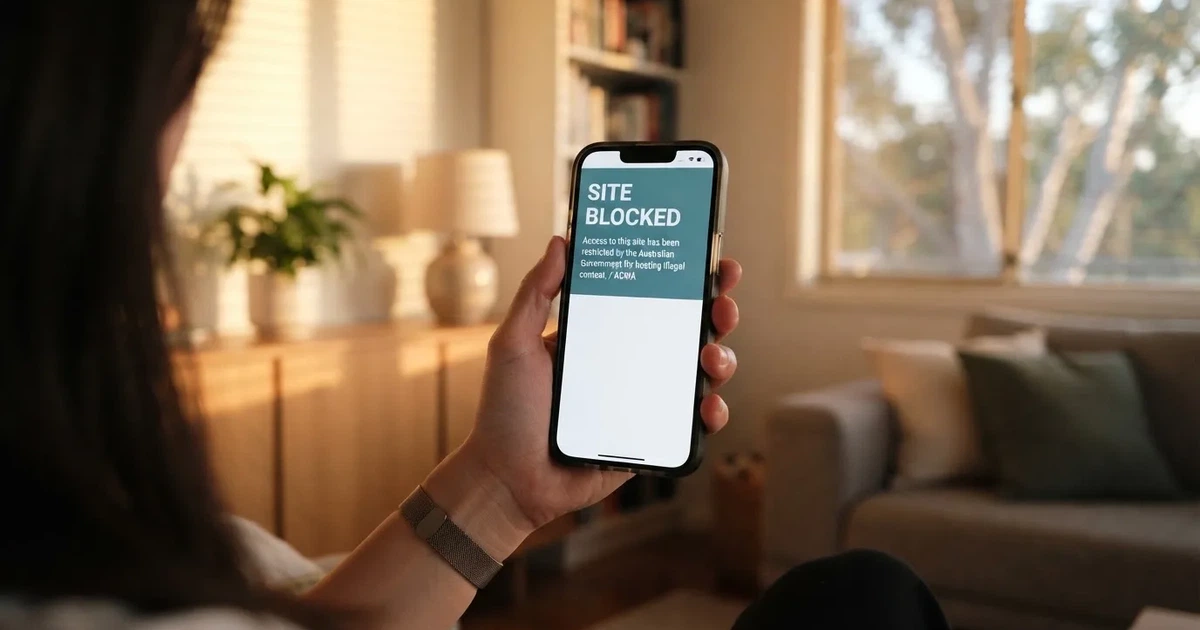
A reader typing “best offshore casinos for Australian players” into a search bar expects a ranked list. The ranking this page delivers is of a different kind, and the difference is the article. No Australian-licensed online casino exists; offering casino games to anyone in Australia is prohibited under the Interactive Gambling Act 2001; the Australian Communications and Media Authority (the ACMA) has spent the last several years formally warning and blocking offshore sites that try it. What follows is not a buyer’s guide to offshore casinos, because that page would tell an Australian reader to do something the page cannot lawfully recommend. It is the next honest thing: an account of which offshore brands the ACMA has acted against, what those actions cost the operator and the punter, and where an Australian reader who wants to gamble can actually do so without falling outside the regime the IGA sets up. The “cost” the angle of this site takes, in other words, is the cost of the prohibition itself: a prohibition that pushes readers onto offshore sites that promise everything and answer to nothing, and a prohibition that, on the legal side, leaves only licensed wagering, licensed pokies venues and land-based casinos.
Table of Contents
- Why this ranking is built the way it is
- The legal shelf: what the IGA actually says and what the ACMA actually does
- What the ACMA blocking list looks like in practice
- Responsible play and what an Australian reader can actually use
- Payment routes, and why the way an Australian pays to an offshore casino is itself a clue
- The eleven brands the ACMA has formally warned
- What the ACMA blocking rate has actually been
- What the offshore site’s offer looks like from the Australian side
- The legal alternatives an Australian reader actually has
- How the cost framing changes the picture
- What an Australian reader who has been on an offshore casino should do
- Frequently asked questions
Why this ranking is built the way it is
The Interactive Gambling Act 2001 (the IGA), tightened by amendments in 2017 and again in 2023, makes it an offence to provide online casino games, online pokies or in-play betting to a person physically in Australia. The offence sits with the provider, not the player, so an Australian punter who signs up with an offshore casino will not be prosecuted. What the player loses is the entire layer of consumer protection that an Australian licence would have given them: a complaints body, an enforceable payout obligation, a self-exclusion register that the offshore site actually honours, and a regulator who will act if a withdrawal stalls. The brand promises a jackpot; the page cannot promise a payout. That gap is the gap this article exists to spell out.

A shortlist of “the best offshore casinos for Australian players”, in the sense a search query asks for, is not a list any honest Australian page can write. The list that can be written is the list the ACMA itself has built up over six years of enforcement action, and that is the list this page assembles. Eleven brands sit in it: RocketPlay, Level Up Casino, Woo Casino, Spirit Casino, National Casino, Bizzo Casino, Ignition Casino, Instant Casino, Jackbit, Casino Intense and Sky Crown. Every one of them carries a formal warning from the ACMA for offering prohibited online gambling services to Australians. Several carry more than one. Three of them belong to the same operator network. None of them is licensed anywhere in Australia, and none of them can be.
The legal shelf: what the IGA actually says and what the ACMA actually does
The Interactive Gambling Act 2001 has been the law of the land for online gambling for almost a quarter of a century, but the shape that matters today is the 2017 amendments and the further tightening that followed. Before the amendments, the IGA covered the offering of “interactive gambling services” to Australians, but the prohibitions had gaps that the offshore industry routed around. After 2017, it became unambiguously an offence to provide online casino games, online pokies or in-play betting to anyone physically in Australia, regardless of where the operator was incorporated or where its servers sat.

In 2023 the law was widened again. The relevant change for this page is the credit-card ban that commenced on 11 June 2024: from that date, no Australian-licensed online wagering service may accept payment by credit card or other credit-related products, with penalties of up to A$247,500 for operators who breach the rule. The ban extends in practice to digital wallets like Apple Pay when those wallets are funded by an Australian credit card, because the issuer’s block sits at the card, not at the wallet.
The Interactive Gambling Amendment (Gambling Reform) Bill 2026 passed Parliament on 19 August 2026. Its advertising and inducement measures commence on 1 January 2027. For a reader using this page in 2026, that reform is a law with a start date that has not yet arrived; it is not yet in force.
What can be licensed in Australia, then, is narrower than the search query expects. Wagering on racing and sporting events placed before the event is licensable, and in practice the bulk of Australia’s online bookmakers — Sportsbet, Bet365, Ladbrokes and others, 52 in total — are licensed through the Northern Territory Racing and Wagering Commission for tax reasons. The Commission has no full-time staff and meets once a month in Darwin, which says something about the regulator that does the licensing even if it does not say it directly. Lotteries and keno are licensable separately. Online casino games and online pokies are not licensable in any state or territory.
The ACMA is the regulator that does the enforcing of the offshore side. Its tools are formal warnings (a public, named step that records the operator, the brand and the legal basis), the power to direct Australian internet service providers to block illegal sites at the network level, and the publication of enforcement statistics that put the work on the record. As of June 2026 the ACMA had asked ISPs to block 1,751 illegal gambling and affiliate-marketing websites since the first blocking request in November 2019, and more than 230 unlicensed services had withdrawn from the Australian market entirely since enforcement was strengthened in 2017. The running total is not the whole enforcement picture, but it is the figure that says how hard the prohibition is being applied.
What the ACMA blocking list looks like in practice
The ACMA’s blocking requests go in rounds. A typical round adds a dozen names at a time, and the round reported on 26 June 2026 added twelve: 7Signs, ChromaBet, Donbet, Duospin, Freshbet, Slots Gem, Jacks Club, Lucky Start, Pointsbetz.com, Spinrise, Vinyl Casino and Wildsino. None of those names is on the eleven-brand list this page walks through below; they are the background traffic against which the eleven sit. The eleven have already moved past blocking. Each has received a formal warning, which is a more pointed step in that the regulator has named an operator as well as a brand, and on a fresh visit the site’s Australian-facing payment routes can be expected to be closed off if it cooperates, or its site blocked outright if it does not.
H2 Gambling Capital’s 2025 report puts an annual figure on what the prohibition is up against. Australians lose roughly A$3.9 billion a year to illegal gambling sites, and the share of gambling that goes through legal Australian channels fell from 74% in 2021 to 64%. That is a ten-point fall in four years, and the fall measures exactly the gap this article is about: legal wagering holding its ground, illegal offshore play taking share, and the regulator catching up one round of warnings and one block list at a time.
Responsible play and what an Australian reader can actually use
BetStop is the National Self-Exclusion Register, live since August 2023, and it is the single most useful tool an Australian reader worried about their own play can sign up to. Its scope matters here: BetStop binds Australian-licensed online and phone wagering services. It does not bind offshore casinos, because an offshore casino has not agreed to the regime and the ACMA cannot make it. A self-exclusion registered on BetStop stops the licensed bookmakers from offering credit, sending marketing material, accepting bets and processing deposits; it does not stop an offshore casino from accepting the next deposit, and the offshore casino will not. That asymmetry is the reason this page is honest about the gap.
For readers who want to act, the National Gambling Helpline is 1800 858 858, free and 24/7, with web chat at Gambling Help Online. The helpline is the same whether the reader’s worry is licensed wagering, an offshore casino or a poker machine at the pub. Two of the larger Australian banks, Commonwealth Bank and ANZ, also offer gambling blocks on eligible cards that can be turned on in the app; the Commonwealth Bank’s “gambling lock” applies to most gambling transactions on eligible cards, and the bank warns that it cannot guarantee that every gambling-related purchase will be stopped. ANZ’s block works similarly and, once turned on, requires a 48-hour cooling-off period before it can be removed. Westpac’s block sits at card level and refuses authorisation of transactions registered under the merchant category code for betting and casino gambling on eligible personal credit and debit cards.
These bank-level blocks close off a useful chunk of the deposit routes an Australian reader would otherwise use to fund an offshore casino, but they do not close them off completely, and they do not retrieve a balance once it has been sent. The block is prevention, not recovery. The section on payment routes below goes through what each route actually does.
Payment routes, and why the way an Australian pays to an offshore casino is itself a clue
The credit-card ban that came into force on 11 June 2024 covers Australian-licensed wagering. It does not, on its face, ban an Australian consumer from using a personal credit card to fund an offshore casino; the ban sits with the operator and the merchant processing the transaction. The bank-level gambling blocks above sit at the issuer’s merchant category filters and do close that route off in practice for readers who have turned them on. American Express is, by structure, an unusual case: Amex traditionally issues cards and processes transactions itself in a three-party scheme rather than the four-party scheme Visa and Mastercard run. The Reserve Bank of Australia’s July 2025 review proposes removing surcharges on eftpos, Mastercard and Visa transactions, and explicitly leaves American Express outside the proposed ban, which means Amex surcharges continue to be the merchant’s call where they apply. None of that turns a credit card into a usable route for an Australian punter at an offshore casino in practice; it is the issuer block, not the regulator, that does the closing.
Apple Pay and Google Pay are wallet-side facades. The wallet passes through whatever instrument is on the card, and the block sits on the card. ANZ’s gambling block, for instance, extends to gambling transactions made through a digital wallet on an eligible card, not only to transactions on the physical card. By the end of 2025, Apple Pay, Google Pay and Samsung Pay together accounted for around 45% of all card payments in Australia by number, which makes the wallet layer the typical layer an Australian punter pays through, and therefore the layer the bank-level block needs to cover. Apple itself does not charge consumer fees for Apple Pay; any surcharge a reader sees is the merchant’s card-processing fee, and the transaction limits and PIN rules on Apple Pay are set by the card issuer or the merchant, not by Apple.
PayID and Osko are the Australian instant-transfer rails. Osko sends a bank transfer between participating Australian banks in under a minute, twenty-four hours a day, seven days a week, whether the transfer is addressed to a BSB and account number or to a PayID. PayID is the address book: a phone number, an email or an ABN linked to a bank account. The PayID layer shows the name of the account holder before the transfer is sent, and the operator of PayID, Australian Payments Plus, warns that being asked to transfer to a PayID on an illegal gambling site is almost certainly a scam. More than 25 million PayIDs had been registered by April 2025, and the platform is available at more than 100 Australian financial institutions.
Two consequences fall out of that warning. The first is the practical one: an offshore casino that wants an Australian reader to send money to a PayID is asking for an instant transfer to a named Australian account that the reader can see before pressing send. That is a setup in which the casino’s argument that it is not Australian-facing collapses on contact with its own deposit page. The second consequence is the AUSTRAC threshold-transaction-report rule, which applies only to physical cash transfers of A$10,000 or more; ordinary electronic bank transfers are not subject to that per-transaction reporting rule, so the threshold does not do any work on a PayID or Osko deposit.
BPAY is the older bill-payment rail. The payer enters a Biller Code and a Customer Reference Number; BPAY has been running since November 1997 and is available at more than 140 banks and financial institutions and at more than 95,000 businesses. It is a bill-payment scheme rather than a person-to-person one, and an offshore casino asking an Australian reader to pay by BPAY is asking for a bill-payment to a biller the reader has not been billed by. None of the eleven brands this page walks through publishes a BPAY deposit route, because BPAY does not work for the business model.
The eleven brands the ACMA has formally warned
What follows is the list the ACMA itself has built up. Each block carries the operator named by the ACMA, the date of the formal warning, and what the warning actually means for a reader landing on the site today. The page’s verdict on each block sits at the foot of the block, and the verdict is the angle of this site in action: not a recommendation, but a judgement on what each brand costs an Australian reader who tries to use it.
RocketPlay
The ACMA issued a formal warning to Pulsup Ltd over Rocketplay.com.au in March 2026, on the basis that the site was offering prohibited online gambling services to Australians. RocketPlay had already been the subject of an earlier formal warning, in May 2022, when the warning went to Dama N.V. for six brands at once; RocketPlay was one of the six. Two warnings, four years apart, for the same brand under two different operators tells the reader something about the brand’s record without saying it: a brand that has cycled operators and kept the ACMA’s attention is a brand that has not changed what it does. The site is also named on listings pages that an Australian reader looking for an offshore casino would meet in search results. The verdict on RocketPlay is the angle this page takes in plain words: a brand that has been formally warned twice under two different operators in four years is not a misclassification, and the safest reading is that the brand’s business model is the kind of offering the IGA prohibits.
Level Up Casino
Level Up Casino was named in the May 2022 Dama N.V. batch of formal warnings, alongside Bambet, Dazard, Rocketplay, Wild Tornado and Cobra Casinos. The warning names the operator that ran Level Up at the time of the warning; the brand has since moved between operators, which is a familiar pattern in this market and not by itself exculpatory. There is no second formal warning on the public record at the time this article is written, which leaves Level Up in a different position from RocketPlay: one warning rather than two. The verdict is unchanged in substance. One formal warning from the ACMA is enough to put the brand on the wrong side of the IGA, and an Australian reader landing on the site is using a service the regulator has named as prohibited.
Woo Casino
The ACMA issued a formal warning to Dama N.V. over Woo Casino in March 2025. Dama N.V. is the operator the ACMA has named on more than one of these warnings, and Woo Casino’s appearance on the list shows how a single operator can carry several brands through the regulator’s enforcement queue. The site is not, on the public record, on any of the listings the ACMA itself names, but the formal warning is enough on its own. An Australian reader landing on Woo Casino today is being asked to sign up to a service the ACMA has formally warned the operator for offering to Australians. The verdict on Woo is the same as the verdict on the other Dama brands: the regulator has done its work, and the operator has not changed what it is doing.
Spirit Casino
Spirit Casino received its formal warning in May 2025, again over Dama N.V., two months after the Woo Casino warning. Two warnings to the same operator in two months is the kind of timing the ACMA’s enforcement record tends to take when an operator has not corrected course after the first warning. The site does not appear on any of the public lists this page references. The verdict on Spirit Casino is the same as on Woo Casino: a brand that has just been the subject of a second formal warning against its operator, with the IGA behind the warning, is a brand that should be read as prohibited for Australian readers.
National Casino
The ACMA issued a formal warning to Consolutetish S.R.L. over National Casino in July 2025. National Casino’s listing on the ACMA’s own warning register, on the AUSTRAC threshold-report register and on BetStop’s scope is the most institutionally documented of the eleven, because Consolutetish S.R.L. is named across more than one register. The verdict on National Casino is the institutional angle in plain prose: a brand that has been formally warned by the ACMA, that sits in the AUSTRAC register of entities that Australian reporting entities deal with, and that sits outside BetStop’s coverage because it is not Australian-licensed, is a brand whose three-fold absence from the consumer-protection side is the answer to the question an Australian reader is asking.
Bizzo Casino
Bizzo Casino was the subject of a July 2025 formal warning to Consolutetish S.R.L. and, before that, of a 2022 formal warning to TechSolutions (CY) Group Limited and TechSolutions Group N.V. Two warnings across three years and two operators is the same pattern RocketPlay shows. The brand appears on listings pages the ACMA references, and the brand has had enough operator changes that any single “operator” line on the brand is provisional. The verdict on Bizzo is the RocketPlay verdict in a different costume: a brand whose business has been the subject of two formal warnings under different operators across a three-year window is a brand whose model has not changed, regardless of the operator’s name on the back end.
Ignition Casino
The ACMA issued a formal warning to Bamboo Media over Ignition Casino in July 2025. Ignition Casino has been around long enough to have a name Australian readers will recognise, which is part of what makes the warning useful: a brand that an Australian reader can name without thinking is also a brand the ACMA has named on the warning register. The site does not appear on any of the public lists this page references. The verdict on Ignition is the Bamboo Media verdict: a brand whose operator has been formally warned for offering prohibited services to Australians is a brand that an Australian reader should read as off-limits, and the brand’s recognisability does not change what the IGA says about it.
Instant Casino
The ACMA issued a formal warning to EOD Code SRL over Instant Casino in February 2025. Instant Casino is on listings at ecopayz and on PayID’s operator page, which is significant for a different reason than the warning itself. An offshore casino asking an Australian reader to fund through PayID is asking for a transfer to a named Australian account that PayID will display before the reader confirms it. The PayID operator, Australian Payments Plus, has publicly warned that being asked to transfer to a PayID on an illegal gambling site is almost certainly a scam. The combination of the formal warning and the PayID route is the page’s angle in one transaction: the brand has been warned by the regulator, and the brand’s deposit route is the kind of route the regulator of that deposit route has publicly warned about. The verdict on Instant Casino is the sharpest on the page: a brand that combines a formal ACMA warning with a deposit route that the rail operator itself warns Australians against is a brand whose two warnings reinforce each other.
Jackbit
The ACMA issued a formal warning to Ryker B.V. over Jackbit in April 2026, and a second formal warning in the same month over CasinOK, which is Ryker B.V.’s other brand on the warning register. The double warning in a single month tells the reader what the ACMA’s enforcement record already shows: an operator with a brand on the register typically accumulates more than one before correcting course, if it corrects course at all. Jackbit is not found on those public industry listings. The verdict on Jackbit is the Ryker B.V. verdict: an operator warned twice in one month for two brands is an operator whose business model the ACMA has identified as prohibited, and the brand is, by inheritance, on the wrong side of the IGA.
Casino Intense
The ACMA issued a formal warning to Sterplay Holding Ltd over Casino Intense in April 2025. Casino Intense is named on the AUSTRAC register of reporting-entity counterparts, on the BetStop coverage register and on listings pages the ACMA references. Like National Casino, Casino Intense sits across more than one register, which makes the brand’s institutional documentation denser than most on this list. The verdict on Casino Intense is the institutional verdict in plain prose: a brand whose presence on the AUSTRAC and BetStop-adjacent registers is itself a function of being named by the regulator, and whose BetStop coverage is the absence of BetStop coverage because the brand is not Australian-licensed. The institutional documentation does not protect the reader; it documents what the reader is being asked to opt into.
Sky Crown
The ACMA issued a formal warning to Hollycorn N.V. over Sky Crown and Blue Leo casino services. Sky Crown does not appear on the lists the ACMA makes public. The verdict on Sky Crown is the page’s angle in the form this list has settled into: a brand whose operator the ACMA has named on a formal warning is a brand that should be read as off-limits to Australian readers, regardless of the licence number the site itself prints in its footer. The footer licence is an offshore regulator’s licence; the IGA does not accept it.
What the ACMA blocking rate has actually been
The ACMA has been blocking illegal sites since November 2019. Since then, the authority has blocked 1,751 sites, a process that has accelerated significantly over the last six and a half years. While the early pace was moderate, recent blocking rounds are heavier, and the current frequency sits at a dozen or more sites per round, with multiple rounds occurring each year. On average, this amounts to roughly 20 to 25 sites blocked every month across the life of the regime, a pace that has recently intensified. This volume highlights the scale of the ACMA’s enforcement efforts. Separately, over 230 unlicensed operators have withdrawn from the Australian market entirely to avoid the risk of being named. For an Australian reader, this is the reality: the prohibition is being applied comprehensively, and any of the eleven brands listed above has already been identified by the regulator as operating illegally.
What the offshore site’s offer looks like from the Australian side
The eleven brands on this page all run the same kind of offer: a sign-up package, usually a deposit match with a wagering multiple attached, a library of slot titles and live-dealer tables, and a withdrawal promise that the brand’s own terms page qualifies in the small print. The offer is the reason an Australian reader searches for “best offshore casinos” in the first place. The angle of this page is to say what that offer costs an Australian reader beyond the deposit.
The cost is not the deposit. The cost is the absence of the Australian consumer-protection layer: no complaints body, no enforced payout obligation, no self-exclusion register the site actually honours, no Australian regulator to appeal to if a withdrawal stalls, and a real chance that the site is blocked or its payment routes shut down with a balance still on the account. A deposit-gated welcome package that the site describes as generous is, in cost terms, the same A$ back whether the punter sees it again; the question is whether the punter sees it again. The IGA does not require the operator to make good on that question.
A second cost sits in the payment route. An Australian punter using a credit card at an offshore casino is using a route the issuer may have blocked; using a debit card is using a route the bank-level gambling block can refuse; using PayID or Osko is using a route that displays the destination account holder’s name before the transfer is sent and that the rail operator has publicly warned Australians against using for illegal gambling. Each route has its own friction, and the friction sits on the reader’s side, not the operator’s.
A third cost sits in the recovery question. If the site refuses a withdrawal, the punter has no Australian regulator to complain to. The site may belong to an offshore regulator, and the punter may be able to file a complaint with that regulator, but the punter is the only Australian in the queue, and the regulator is the regulator the site chose to be regulated by. The IGA cannot help.
The legal alternatives an Australian reader actually has
A reader who wants to gamble legally from Australia has three routes, and three routes only.
The first route is licensed online wagering on racing and sport, placed before the event. The bulk of this market runs through the Northern Territory Racing and Wagering Commission’s 52 licensees, which include the big names. The route is regulated, the operator is answerable to an Australian regulator, BetStop applies, the bank-level gambling blocks are calibrated to it, and the credit-card ban applies to it. In-play betting is not part of the licence; online casino games and online pokies are not part of the licence.
The second route is licensed pokies venues and the land-based casinos in each state. The Australian casinos in Melbourne, Sydney, Perth, Brisbane, Adelaide, Hobart, Darwin, Cairns and the Gold Coast are licensed venues under state regimes, with their own self-exclusion arrangements, their own responsible-gambling officers and the same 18+ minimum age that the IGA enforces online. The pokies in a licensed pub or club are subject to state-level harm-minimisation measures that vary from state to state but that include pre-commitment, mandatory breaks and venue-level exclusion. None of this is an offshore site, and none of it is online casino.
The third route is lotteries and keno, which are licensable in their own right and run under state and territory regimes. Tatts, Tabcorp and the state lottery operators carry the licences; the offerings are limited to draw games, instant-win tickets and keno. Online casino games are not part of the licence.
A reader who wants none of those routes has the third route that is not on this list: the offshore casino. The page’s angle on the offshore casino is the cost laid out above, and the page does not recommend the route.
How the cost framing changes the picture
The “best offshore casinos for Australian players” query assumes the reader has a free choice among offshore brands, and the comparison this page makes is therefore the comparison the regulator has already made: which brand the ACMA has warned, when, and over what. The cost framing does the work of explaining why this is the only comparison the page can honestly offer.
A free-choice comparison would list a welcome bonus, a wagering multiple, a withdrawal time, a game count and a licence footer, and it would treat those as the reader’s actual choice variables. None of those variables is under the reader’s control, because none of them survives contact with the IGA. The bonus is a deposit match that the site can stop paying out at any time, with no Australian regulator to complain to; the wagering multiple is the site’s own small print; the withdrawal time is whatever the site decides; the game count is whatever the site has licensed; the licence footer is whatever the offshore regulator the site chose to register with has issued. The reader’s actual choice variables are whether to sign up at all, and that choice is the cost framing of this page.
A reader who signs up anyway should know three things before sending the first deposit. The first is that the site can be blocked with a balance on it; the ACMA’s blocking rate of about 20 to 25 sites per month across the lifetime of the regime, with the recent pace above that, is what the site is up against. The second is that the site’s deposit route is the reader’s own risk; the bank-level gambling blocks do not retrieve a deposit, they prevent it. The third is that the site’s self-exclusion register is the site’s own register, and BetStop does not bind the site. These three points are the cost the page’s angle takes its stand on.
What an Australian reader who has been on an offshore casino should do
The answer is the same as the answer for any Australian punter worried about their play. Sign up to BetStop at betstop.gov.au; the register binds every Australian-licensed online and phone wagering service, and signing up is the single most consequential step the reader can take. Turn on the bank-level gambling block in the issuing bank’s app; Commonwealth Bank, ANZ and Westpac all offer them, and the ANZ block in particular requires a 48-hour cooling-off period before it can be removed, which is the kind of friction the block is meant to add. Call the National Gambling Helpline on 1800 858 858, free and 24/7, or use the chat at Gambling Help Online. The helpline is staffed for the question the reader is asking; the reader does not need to be in crisis to call.
A reader who has a balance stuck on an offshore site that is now blocked, or whose withdrawal the offshore site is refusing, has fewer routes. The site may be answerable to an offshore regulator, and the reader can file a complaint with that regulator through the regulator’s own complaints process, but the route is slow and the outcome is uncertain. The reader’s Australian bank can sometimes recall a card transaction in the case of fraud, which is what the PayID warning above is aimed at, but the route is narrow and the time window is short. The reader’s best protection is the protection taken before the deposit: BetStop, the bank-level block, and the credit-card ban that closes off the route that offshore sites prefer.
Frequently asked questions
What makes a casino offshore rather than Australian-licensed?
An Australian-licensed online casino does not exist; no state or territory issues a licence for these prohibited interactive gambling services. A casino is “offshore” when it is incorporated outside Australia, holds a licence from a non-Australian regulator and accepts Australian customers in violation of the Interactive Gambling Act 2001. The licence printed in the site’s footer is the offshore regulator’s licence, not an Australian one.
Does the ACMA block offshore casino websites for Australian users?
Yes. The ACMA asks Australian internet service providers to block illegal gambling sites at the network level. As of June 2026 the ACMA had asked ISPs to block 1,751 sites since the first blocking request in November 2019, with the recent monthly pace running well above the lifetime average of around 20 to 25 sites per month.
Is it legal for an offshore online casino to accept Australian players?
No. Offering such prohibited services to anyone in Australia is an offence under the Interactive Gambling Act 2001. The offence sits with the provider, not the player, so an Australian punter who signs up is not prosecuted; what the punter loses is the entire layer of Australian consumer protection the licence would have provided.
What enforcement action has the ACMA taken against offshore casino operators?
The ACMA has issued formal warnings to operators including Pulsup Ltd, Dama N.V., Consolutetish S.R.L., Bamboo Media, EOD Code SRL, Ryker B.V., Sterplay Holding Ltd and Hollycorn N.V., and has asked ISPs to block more than 1,750 illegal sites since 2019. More than 230 unlicensed services have left the Australian market entirely since 2017 without waiting for a block.
Why doesn’t BetStop cover offshore online casino sites?
BetStop binds Australian-licensed online and phone wagering services. An offshore casino is not licensed in Australia and has not agreed to BetStop’s terms, so the register cannot stop the casino from accepting deposits. BetStop is a protection an Australian reader can use against licensed wagering, not against the offshore sites the IGA prohibits.
What should someone do instead of chasing a new offshore casino after a bad experience?
Sign up to BetStop, turn on the bank-level gambling block in the issuing bank’s app, and call the National Gambling Helpline on 1800 858 858 or use the chat at Gambling Help Online. The legal alternatives for an Australian reader are licensed online wagering on racing and sport, licensed pokies venues and land-based casinos, and lotteries and keno.