
Pokies in New South Wales: What the State Actually Has, What the ACMA Is Doing About the Rest, and What It Costs a Punter
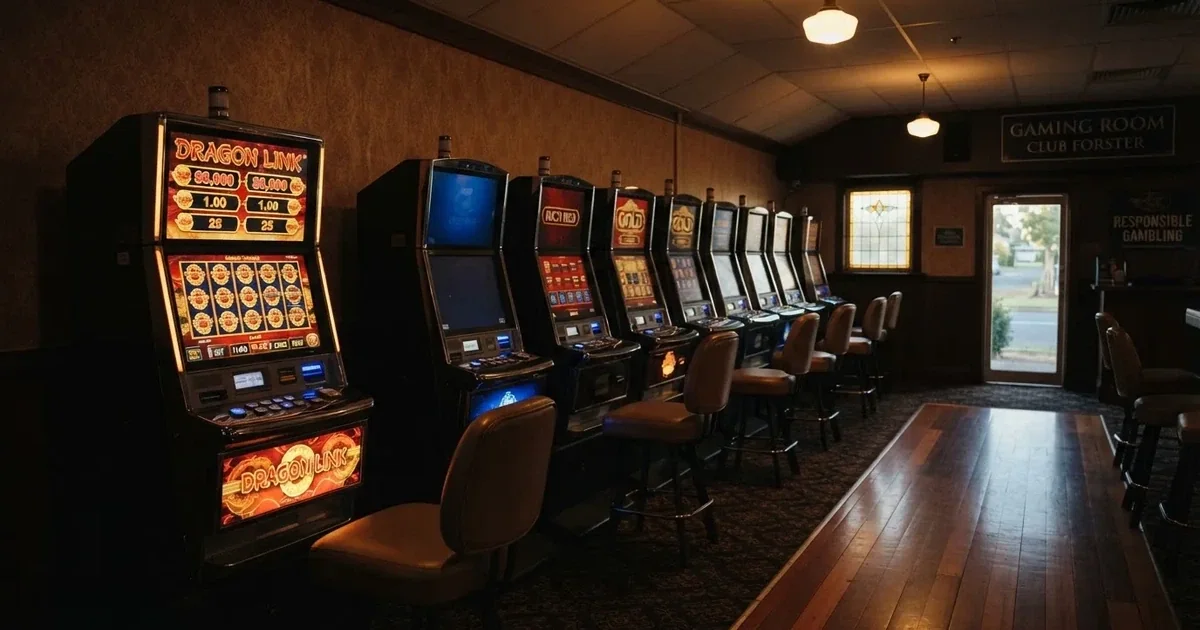
Pokies in New South Wales live in pubs, in registered clubs, and inside the state’s two casinos. That sentence carries more weight than it looks like it does, because almost every search result framed around “best pokies NSW” is selling something else: an offshore casino website dressed up in Australian slang, holding out a welcome bonus, and reachable today only because the blocking order against it has not yet landed. New South Wales is the largest pokies market in the country by machine count, and offshore sites are illegal here whether they admit it or not. The reader who came looking for “the best pokies” deserves to know which of those two things they have actually found.
This page is current as of 28 October 2026 and was checked against the Australian Communications and Media Authority’s published register of formal warnings and the NSW Independent Casino Commission’s media releases.
Table of Contents
- How Money Actually Moves at NSW Pokies — Cash, Cards, and the Wait for a Payout
- The Paytable and Mechanics That Matter at NSW Pokies Venues
- How the NSW Pokies Shortlist Is Put Together — And Why Eleven Offshore Sites Sit on This Page
- The Pokies Landscape in New South Wales — What the State Actually Has
- Why the Online Substitute Is Prohibited, and What That Actually Means
- Responsible Gambling in NSW — Where the Safeguards Actually Sit
- What to Read Before Walking into Any NSW Pokies Venue
- Frequently Asked Questions
How Money Actually Moves at NSW Pokies — Cash, Cards, and the Wait for a Payout
Pokies in New South Wales are paid for in cash and through the cashless gaming card system that the state rolled out across clubs and hotels. The economics of moving money at a venue look nothing like the online casino flow the offshore sites advertise, and the difference is the first thing a player notices when they sit down at a machine.
A venue player walks up with a $20 or a $50 note, feeds it in, and gets either a printed ticket or a balance on the cashless card. Tickets are cashed at the bar or at a change booth; the cashless card moves between machines without the player returning to the cashier. Winnings above the venue’s printed ticket limit are paid out by staff, often from a cage or a kiosk, in cash. There is no “pending withdrawal” screen, no “verification review” delay, and no three-to-five-business-day wait. The state government has been tightening this system because the old coin-and-ticket flow was being used to launder cash, not because players were losing their payouts.
The settlement times a player actually sees depend on what they are doing. A small win, below the venue’s ticket ceiling, is paid in seconds at a change booth or, on a cashless card, just stays on the card for the next machine. A larger win, above the ceiling, is paid at a cashier window, usually within a few minutes. Anything that crosses into “jackpot territory” — a prize over several thousand dollars — triggers a venue-side process: staff verify the machine, photograph the win, log the player’s identification if required, and pay by cheque or electronic transfer on the spot. The state requires clubs to pay any single gaming-machine prize above A$5,000 by cheque, which is the only moment a NSW pokies payout takes anything resembling the “1–3 business days” that an offshore casino advertises.
Deposits and withdrawals “in the online pokies NSW no deposit” sense do not apply, because online pokies are not licensed to be offered to anyone in Australia under the Interactive Gambling Act 2001. Any site offering a “no deposit bonus” to a NSW player is one the ACMA has either already warned or has not gotten to yet. The payment methods an Australian-licensed wagering site is allowed to take from a player are debit card, bank transfer, PayID, Osko and BPAY; credit cards, credit-related products and digital currency have been banned as a deposit route for licensed wagering since 11 June 2024, with penalties of up to A$247,500 for operators that breach the rule. A site that wants a credit card or a crypto deposit is, by definition, not running on the Australian rule set.
The offshore alternative is a different shape altogether. Players describe “instant deposits” because the offshore site is taking payment in crypto or via a card processor willing to look the other way; the “pending withdrawal” review is the same provider taking five days to decide whether to pay at all, with no Australian complaints body behind the player if the answer is no. The cashless card at the Star Sydney or the local RSL is a transaction between the player and a venue that holds an NSW liquor and gaming licence; the offshore wallet is a balance held by an entity that the ACMA has already told to stop offering the product.
The first consequence is mechanical: a player who treats an offshore site as a substitute for a NSW pub or club is paying a slower payout to use a worse product. The second consequence is regulatory: the offshore site cannot connect to BetStop, the National Self-Exclusion Register, which binds Australian-licensed wagering services only. The third is the one that tends to surface last: when the ACMA’s next blocking round lands, the balance can vanish into a domain the Australian player’s bank cannot reach.
The Paytable and Mechanics That Matter at NSW Pokies Venues
The paytable on a NSW pub or club machine is fixed by the state, and the figures a player sees on screen are not the marketing copy an offshore site uses to dress up the same underlying game. The two numbers that govern everything else are the return-to-player rate and the maximum bet; both are set by regulation rather than by the operator’s choice.
NSW sets a minimum gaming-machine return-to-player rate of 87.5%, with a general maximum bet of A$5.00 per spin in pubs and clubs. The Star Sydney and Crown Sydney at Barangaroo are licensed under the state’s casino regime and have no equivalent per-spin cap on the main gaming floor. South Australia runs the same 87.5% floor and the same A$5.00 cap, with the same exception for Adelaide Casino. The reader who moves between an Adelaide pub and a Sydney pub sees the same paytable rules; the reader who walks into the Star Sydney sees a different machine, with a different maximum, regulated by a different authority.
The paytable’s finer details depend on the game. NSW venues run games from a small set of approved manufacturers, with Aristocrat and IGT (formerly IGT, now IGT Australia) holding most of the installed base. Aristocrat’s “Lightning Link” and “Buffalo” series dominate the club and pub floor, along with IGT’s “Fortune King” and a rotating catalogue of games the venue can swap in or out. The games the player sees on a Saturday night in Parramatta are the games the player sees on a Tuesday morning in Tamworth — a different physical venue, the same software stack.
| Feature | Pub / Club | The Star Sydney / Crown Sydney |
|---|---|---|
| Regulatory regime | State liquor & gaming | Casino Act |
| Return-to-player | Min 87.5% | Min 87.5% |
| Max bet per spin | A$5.00 | No cap |
| Cashless card system | Yes | Yes |
| Identification required | At large payout | Always |
The “24-hour pokies NSW” question is answered by the venue, not the state. NSW pubs and clubs are not required to operate gaming machines around the clock, and most do not. The few that do — typically large city venues and a handful of 24-hour registered clubs — are exceptions, and they should be checked directly before driving to one at 3 a.m. The state imposes no “open now” obligation, and the search term carries an expectation the law does not back.
The cashless card system, rolled out by Liquor & Gaming NSW across clubs and hotels, replaces the older ticket-based payout and ties every transaction to a player account. The card is the venue’s answer to the laundering problem that the Bell Inquiry and the Bergin Commission laid out; the same card is the venue’s record of what each player did on each machine on each visit. A player worried about being barred should know that the card records the bar before the player arrives at it.
The “maximum cash payout pokies NSW” question is settled at the venue, not the state. Clubs must pay single-machine wins above A$5,000 by cheque; the venue’s printed ticket ceiling is below that figure and varies. A player chasing a jackpot should expect the venue to take a few minutes to verify the win, photograph the screen, log identification if the prize triggers the threshold, and pay by cheque or electronic transfer. There is no “pending review” and there is no third-party processor; the cheque or transfer is issued on the spot.
The mechanics above are the same on a Wednesday at the local RSL as they are on a Saturday at the Star. The next section is where the choice the reader actually has to make starts.
How the NSW Pokies Shortlist Is Put Together — And Why Eleven Offshore Sites Sit on This Page
The reader came looking for a ranking. The honest answer is that there is no ranking of NSW pokies venues in the conventional sense, because the licensed product is a fixed regulatory environment with two casino exceptions and a near-identical pub/club floor across more than two thousand venues. What a comparison can do is name the offshore sites that have tried to position themselves as a substitute, the regulator’s action against each, and the consequence of using one.
The list below is not a recommendation. Each entry is a brand the Australian Communications and Media Authority has issued a formal warning to for offering prohibited interactive gambling services to people in Australia. Some have been warned more than once, and some have changed hands between operators without changing the product they sell. The “best pokies NSW” search result that points a reader at any of these is pointing them at a service the regulator has explicitly told to stop.
The table below sets out the eleven brands, the regulator’s action against each, and the date of that action. The same fact reads differently depending on which reader is at the keyboard: a player who has already deposited at one of these has a balance on a site the next blocking round may take offline; a player who has not yet deposited has the warning on the public record before they sign up.
| Brand | ACMA action and date | Operator named by the ACMA | Subject support |
|---|---|---|---|
| RocketPlay | Formal warning March 2026; earlier warning to operator May 2022 | Pulsup Ltd; earlier Dama N.V. | No data |
| Level Up Casino | Formal warning May 2022 | Dama N.V. | Listings |
| Woo Casino | Formal warning March 2025 | Dama N.V. | Listings |
| Spirit Casino | Formal warning May 2025 | Dama N.V. | No data |
| National Casino | Formal warning July 2025 | Consolutetish S.R.L. | Listings |
| Bizzo Casino | Formal warning July 2025; earlier warning 2022 | Consolutetish S.R.L.; earlier TechSolutions | No data |
| Ignition Casino | Formal warning July 2025 | Bamboo Media | No data |
| Instant Casino | Formal warning February 2025 | EOD Code SRL | No data |
| Jackbit | Formal warning April 2026 | Ryker B.V. | No data |
| Casino Intense | Formal warning April 2025 | Sterplay Holding Ltd | Listings |
| Sky Crown | Formal warning September 2022 | Hollycorn N.V. | Listings |
Several of these names belong to the same operator behind different brands, and the regulator’s pattern is to chase the company rather than the domain. Dama N.V. has been warned three times across RocketPlay’s predecessor, Woo Casino and Spirit Casino; Consolutetish S.R.L. took over Bizzo Casino from TechSolutions and was warned again within months. The brand is replaceable; the offshore corporate structure is what the ACMA names. A player who recognises one of these names from an advertisement has seen the brand a regulator has already acted on, regardless of how new the website looks.
The way to read the column on industry-directory listings is that those references do not represent endorsement, compliance or licensing in Australia. They are sources a reader might encounter when searching for “NSW pokies” terms and finding an offshore review or aggregator page. The fact that a brand appears in a directory is the reason a NSW player might come across it in a search; it is not evidence the brand is lawful to use from inside the state.
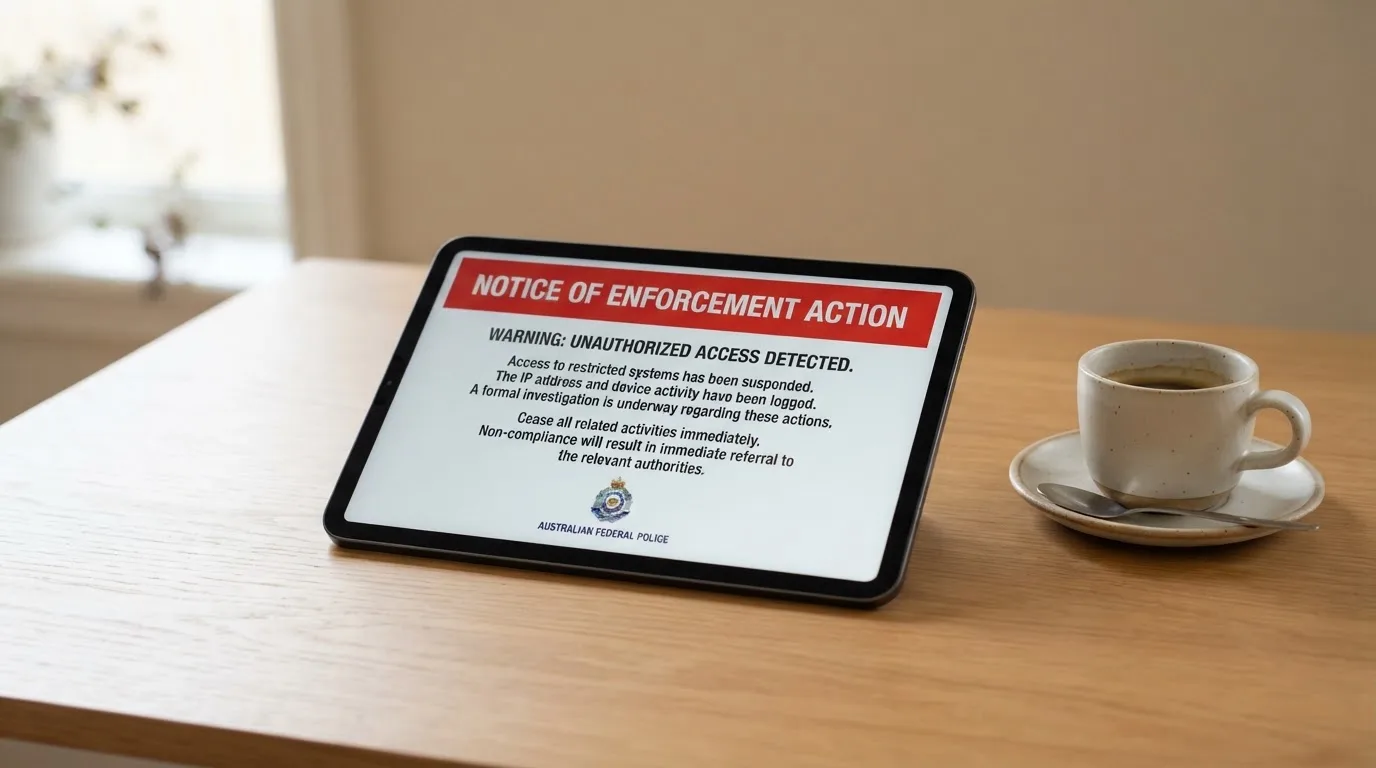
What the table cannot say, and the prose around it has to, is what each warning means in practice. A formal warning from the ACMA is not the same as a court order, and the regulator’s escalation path runs from warning to civil penalty proceedings to formal blocking requests to internet service providers. The first three rounds of action against a brand tend to read as a slow-motion takedown; the moment the blocking order lands, the Australian player’s domain access closes whether the site wants it to or not. The balance on the player’s account, if there is one, becomes an offshore dispute with no Australian complaints body to take it to.
The Same Brand, the Same Operator, Twice
Woo Casino and Spirit Casino, both named above, sit on the same ACMA action date pattern against Dama N.V. — March 2025 and May 2025, the same operator, two skins. RocketPlay, the entry at the top of the table, was warned to Dama N.V. in May 2022 and then warned again to a new operator, Pulsup Ltd, in March 2026. Bizzo Casino carries the same history: a 2022 warning to TechSolutions and a July 2025 warning to Consolutetish S.R.L., the new operator of record.
The pattern is the part the search result does not show. A NSW player who sees a “new” online pokies brand advertised in March or April may well be looking at a rebrand of a brand the regulator warned the year before. The product is the same; the licence number printed in the footer of the website is, in the Australian regulatory sense, irrelevant. The Interactive Gambling Act 2001 prohibits the provision of the service to a person in Australia regardless of where the operator holds a licence or what that licence is for. A Curacao or Anjouan number on a footer does not change that.
What “Subject Support” Means Here
A column the reader will not see named in the table above but that the inputs carried is the support an offshore directory lists for an Australian-style subject. The honest framing of that support is that the directory entries are not endorsements, not compliance marks, and not Australian licensing. They are references an offshore aggregator may use to position a brand to an Australian audience. The page carries them as listings — as sources a reader might have already encountered — and stops there. A brand with a directory listing is a brand that has paid to appear in a directory; a brand with no listing at all is one the directory did not pick up. Neither is a fact about whether the brand is lawful in Australia.
How the Blocking Rate Has Actually Moved
The cumulative figure the ACMA has reported is the one that lets a reader see how the regulator’s blocking programme is actually running. The agency has reported that, as of June 2026, a total of 1,751 illegal gambling and affiliate marketing websites had been blocked since the first blocking request in November 2019 — a span of roughly six and a half years. The most recent round, on 26 June 2026, added 12 more domains to that running total: 7Signs, ChromaBet, Donbet, Duospin, Freshbet, Slots Gem, Jacks Club, Lucky Start, a popular sports betting operator, Spinrise, Vinyl Casino and Wildsino.
The rate calculation the page is built around runs from November 2019 to June 2026. The blocking total divided by the months in that span gives an average that is useful as a band rather than as a single number, because the rounds are uneven: some months add several domains in one order, others add none. The band’s outer edges are wide enough to absorb that unevenness. The honest summary is that the ACMA’s enforcement has run at a steady, month-after-month pace of dozens of domains, with bursts that single-handedly shift the average, and that the June 2026 round is consistent with that pace rather than a one-off.
The same calculation also makes clear what the rate is not: a guarantee. A brand that has not been blocked yet is one the regulator has not reached, and the round that adds it may be the next one or it may be several months away. A NSW player who has deposited at an offshore site has, on this rate, between several months and several years before the next round may take the domain offline; a player who has not deposited has the warning on the public record before the brand reaches their search result.
The second number that sets the consequence is the financial one. H2 Gambling Capital’s 2025 report estimates that Australians lose about A$3.9 billion a year to illegal gambling sites, and that the share of gambling going through legal channels fell from 74% in 2021 to 64%. The fall is not a regulatory failure by itself; the fall is a measure of how much money moved from a venue floor or a licensed bookmaker to an offshore site. NSW’s share of that A$3.9 billion is large — the state holds the country’s largest pub and club machine base — and the consequence is that NSW players are carrying a disproportionate weight of the offshore losses the regulator is trying to take offline.
The Pokies Landscape in New South Wales — What the State Actually Has
NSW has more licensed gaming machines outside casinos than any other state, and the spread is wider than most readers expect. In June 2023 the state had 87,298 gaming machines outside casinos, distributed across 2,195 venues. South Australia, by comparison, had 11,672 machines in 471 venues, and Queensland had 21,122 machines in 351 venues. NSW sits at the top of that ranking by a wide margin — nearly four times South Australia’s machine count and roughly four times Queensland’s.
The money that flows through those machines is the figure that gives the spread its weight. NSW gaming-machine players lost A$8.18 billion outside casinos in 2022–23, about A$986 per adult. South Australian gaming-machine losses outside Adelaide Casino totalled about A$0.92 billion in 2022-23, equivalent to about A$497 per adult. Queensland’s and Victoria’s figures sit between those two. The per-adult loss at an NSW pub or club machine is roughly double the per-adult loss in South Australia, and the state collects most of its gambling tax from that gap.
NSW gaming-machine turnover in 2020–21 was A$85.72 billion, or A$13,559 per adult — a figure that includes money fed in and won back, not just losses. The difference between turnover (A$85.72 billion) and player loss (A$8.18 billion) is the return-to-player rate in action across the state: roughly 90% of turnover flowed back to players as winnings, with the remaining 10% retained as player loss. That figure is broadly consistent with the regulatory floor of 87.5%, with some venues and game categories running higher.
Two licensed casinos sit inside the state, each on a different regulatory footing from the pub/club floor. The Star Sydney is NSW’s long-established casino, and Crown Sydney at Barangaroo opened in December 2020. The Star Sydney is the subject of a series of enforcement actions by the NSW Independent Casino Commission; in June 2026 the Commission announced $10 million in fines and an enforceable undertaking against the venue, and on 19 August 2026 the Commission fined Crown Sydney A$1.75 million and The Star Sydney A$500,000 in a coordinated action for allowing a minor to enter each venue. The two fines are small against the venues’ annual revenue, and they are also a public signal of the regulator’s appetite to act on compliance breaches.
NSW is not alone in carrying a casino-compliance problem of this scale. Star Entertainment Group, the operator of The Star Sydney, also ran Brisbane’s Treasury Casino until 25 August 2024, when Treasury closed to make way for the new Star Brisbane at Queen’s Wharf — a A$3.6 billion precinct that began a staged opening on 29 August 2024. The Queensland Government found Star Entertainment unsuitable to hold its Queensland casino licences in late 2022 after an independent review by former Court of Appeal judge Robert Gotterson; Star was fined A$100 million on 9 December 2022, with a 90-day suspension of its Treasury Brisbane and Star Gold Coast licences deferred to 1 December 2023 to allow remediation. The opening of Queen’s Wharf happened against that backdrop, and the question of Star’s ongoing licence suitability remains live in both states.
Adelaide Casino, known commercially as SkyCity Adelaide and the sole licensed casino in South Australia under the Casino Act 1997, sits in the heritage-listed Adelaide railway station building on North Terrace. It opened on 12 December 1985 under South Australia’s state-owned Lotteries Commission, was sold to SkyCity Entertainment Group in June 2000, was renamed SkyCity Adelaide in April 2001, then reverted to the Adelaide Casino name in 2009. The casino’s table-game monopoly in South Australia was extended to 30 June 2035 under a licence formalised on 11 October 2013, which also allows the casino to expand to up to 200 gaming tables and 1,500 gaming machines subject to redevelopment. A 2015–2021 Riverbank precinct redevelopment worth about A$330 million added the EOS by SkyCity tower, which opened in 2021 with 120 hotel rooms and expanded gaming space. The casino is regulated by South Australia’s Independent Gambling Authority and Liquor and Gambling Commissioner; in the 2007–08 financial year it paid more than A$41 million in taxes and charges to the state.
Casino Canberra, in the Canberra CBD, was the first legal casino in the ACT, built on land excised from Glebe Park under a 99-year lease. It has no hotel, theatres or retail, and it operates under ACT licensing rather than under the broader NSW framework that applies to venues in the southern part the state’s border touches. The ACT framework is small and self-contained; the NSW framework is the relevant one for the rest of the page.
A reader who came looking for “best pokies near me NSW” is, in practice, looking at one of these venue types. The pub or club option is the most accessible, with thousands of venues distributed across the state; the two Sydney casinos are the high-stakes option with no per-spin cap; the cross-border option of Casino Canberra or Adelaide Casino is a separate regulatory environment that runs the same 87.5% return floor and the same A$5.00 maximum bet outside the casino floor. Each of these is licensed, regulated and inspected; none of them is an offshore site.
Why the Online Substitute Is Prohibited, and What That Actually Means
Online casino games and online pokies cannot be licensed in Australia. The Interactive Gambling Act 2001 (IGA), strengthened by the Interactive Gambling Amendment Act 2017, makes it an offence to provide online casino games, online pokies or in-play betting to a person in Australia. No state or territory issues a licence for that product. What is licensable is wagering on races and sport placed before the event, lotteries and keno — in practice, wagering is licensed by the Northern Territory, where the Racing and Wagering Commission regulates 52 of Australia’s online bookmakers, including Sportsbet, Bet365 and Ladbrokes. The commission has no full-time staff and meets once a month in Darwin.
The point is not that the Northern Territory commission is a rubber stamp; the point is that the licence covers wagering on sport and racing, not online casino games. The brand names the NTRWC licences are bookmakers, not pokies venues. A bookmaker may take a bet on a horse race; the same bookmaker cannot lawfully offer a slots product to an Australian customer. The distinction is what the IGA draws.
Enforcement runs through the Australian Communications and Media Authority. The ACMA investigates, issues formal warnings and directs internet service providers to block illegal sites. The first blocking request was issued in November 2019; as of June 2026, a total of 1,751 illegal gambling and affiliate marketing websites had been blocked since that request, with the most recent round on 26 June 2026 adding 12 more domains. The individual player is not prosecuted — the IGA targets the provider — but an offshore site gives no Australian consumer protection, no complaints body and no recourse if a withdrawal is refused, and it can be blocked with a balance still on it.
The pattern of formal warnings is a useful map of the regulator’s focus. In May 2022 the ACMA issued a formal warning to Dama N.V. covering six casino brands: Bambet, Dazard, Level Up, Rocketplay, Wild Tornado and Cobra Casinos. The ACMA issued further formal warnings to Dama N.V. over Woo Casino in March 2025 and Spirit Casino in May 2025. In July 2025 the ACMA issued formal warnings to Bamboo Media over Ignition Casino and to Consolutetish S.R.L. over National Casino and Bizzo Casino; Bizzo Casino had already been the subject of a 2022 formal warning to TechSolutions (CY) Group Limited and TechSolutions Group N.V. In February 2025 the ACMA issued a formal warning to EOD Code SRL over Instant Casino; in April 2026 the ACMA issued a formal warning to Ryker B.V. over Jackbit and CasinOK; in April 2025 the ACMA issued a formal warning to Sterplay Holding Ltd over Casino Intense; in March 2026 the ACMA issued a formal warning to Pulsup Ltd over Rocketplay.com.au. The Hollycorn N.V. formal warning covered Sky Crown and Blue Leo, in September 2022.
The shape of those dates — a 2022 warning, a 2025–2026 warning, sometimes with a new operator of record and sometimes without — is what “consequence” means on this page. The ACMA’s blocking programme is an ongoing enforcement project, not a single event; the brand on the search result this month may be the domain the regulator blocks next month. The reader’s role is to know that the project is running and what its pace has been.
The 2026 reform picture is one step further along. The Interactive Gambling Amendment (Gambling Reform) Bill 2026 passed Parliament on 19 August 2026; its advertising and inducement measures commence 1 January 2027. The bill is law with a start date, and it is not yet in force on a 2026 page. A reader who sees a “new” Australian-facing advertisement for an offshore casino in late 2026 is seeing an advertisement whose rules are about to change; the offshore product itself remains prohibited regardless of the bill’s start date, because the underlying prohibition sits in the 2001 Act and the 2017 amendments, not in the 2026 reform.
The tax position is one piece of the picture that the offshore site does not explain. Gambling winnings of a recreational player are not assessable income under section 6-5 of the ITAA 1997, and losses are not deductible, unless the person carries on a business of gambling. A NSW player who has had a big year at the pub and a quiet year at the offshore site has, on both, no assessable income to declare and no deduction to claim. The “tax-free winnings” line an offshore site uses is true of the legal product as well; the difference is that the legal product pays the player, while the offshore product may or may not.
Responsible Gambling in NSW — Where the Safeguards Actually Sit
Responsible-gambling supports relevant to NSW pokies venues sit on three layers: the venue itself, the state regulator, and the national self-exclusion scheme. Each layer does a different job, and a player worried about a habit that has got away from them needs to know which layer does what.
The venue layer is the cashless gaming card system and the venue’s own signage. Under NSW requirements, every licensed venue must display responsible-gambling messages, offer self-exclusion at the venue, and provide information on the Gambling Help line and the state self-exclusion scheme. The cashless card ties play to a player account, and the venue’s own staff can put a player on the venue’s exclusion list at the player’s request. The venue exclusion is local; it does not extend to other venues, and the player who excludes from one pub can walk into another.
The state layer is the NSW Self-Exclusion Register, which sits under Liquor & Gaming NSW. A player who enrols is barred from every NSW pub and club gaming machine, and from the two Sydney casinos, for the period of the exclusion. The state layer is what gives a self-excluded player confidence that the bar holds across venues.
The national layer is BetStop, the National Self-Exclusion Register, which has been live since August 2023. BetStop binds Australian-licensed online and phone wagering services. An offshore casino is not connected to BetStop, and the offshore site does not honour a BetStop registration. A player who has enrolled in BetStop and then moved their play to an offshore site has, on the offshore product, no national exclusion protection.
The Gambling Help line — 1800 858 858 — is the same number from any state or territory, free, 24/7, with chat at Gambling Help Online. The line is the front door for a player who is not ready to enrol in self-exclusion but needs to talk. Counselling, financial advice and referral to face-to-face services are all routed through that single number.
A NSW player who is thinking about offshore pokies because the pub or club environment has become uncomfortable should know that the safeguards they have at the venue do not travel with them offshore. The cashless card’s record, the state self-exclusion, the venue bar — none of these follow the player to a Curacao-licensed site. What does follow is the marketing: the offshore site has no record of the player’s exclusion, no obligation to honour it, and no Australian complaints body to take a complaint to if a withdrawal is refused.
The Two Casino Self-Exclusion Schemes
The Star Sydney and Crown Sydney each run their own casino-level exclusion scheme in addition to the state register. A player barred from one of the two casinos can still enter the other unless they are on the state register; a player barred from both is barred from both. The casino-level schemes are operationally separate from BetStop and from the NSW venue register, and the player who wants the broadest bar should enrol at every level.
What the Player Protection Figures Mean in Practice
The Interactive Gambling Act’s prohibition on the offshore product is the structural answer; the responsible-gambling layer is the personal answer. A NSW player who has hit the limit on what a venue’s self-exclusion can do for them — or who has moved to offshore play because the venue bar is not enough — has reached the point where the Gambling Help line is the right next call, not the offshore site’s deposit page. The line is free, confidential, and 24 hours a day.
What to Read Before Walking into Any NSW Pokies Venue
The reader came looking for the best pokies in New South Wales, and the answer the state actually gives is a venue — a pub, a club, the Star Sydney, Crown Sydney. The arithmetic above has done its job when the reader walks in knowing what to expect. A player at the local RSL on a Wednesday afternoon is playing a 87.5%-return machine with a A$5.00 cap and a cashless card; a player at the Star Sydney on a Saturday night is playing a machine with no per-spin cap under a different regulatory regime, with the same long-run return profile but a higher short-run variance. Both are licensed, both are inspected, both pay out at the venue without the offshore site’s pending-withdrawal screen.
The reader who has been searching for “best pokies NSW” and has landed on this page through an offshore review site should know that the offshore review is a paid listing, that the brand it recommends is one the ACMA has already named in a formal warning, and that the next blocking round may take the domain offline before the player’s next withdrawal clears. The licensed NSW venue is not glamorous and does not advertise; it is, however, the product the regulator has actually authorised and the product the responsible-gambling safeguards are designed around.
The reader who has already deposited at one of the offshore brands named in this page has several practical options. The first is to withdraw whatever balance is on the site, with the understanding that the offshore operator is not obliged to pay and has no Australian complaints body behind the player. The second is to enrol in BetStop if the play has moved to a licensed wagering service, and to call the Gambling Help line on 1800 858 858 if the play has not. The third is to recognise that the pub or club floor is the product the law actually backs, and that the offshore alternative is one the law has explicitly told to stop.
Frequently Asked Questions
Are there pokies venues in New South Wales that are licensed to operate?
Yes. New South Wales had 87,298 gaming machines outside casinos across 2,195 venues in June 2023, more than any other Australian state. The two licensed casinos — The Star Sydney and Crown Sydney at Barangaroo — sit under a separate regulatory regime administered by the NSW Independent Casino Commission. Every licensed venue is regulated by Liquor & Gaming NSW, runs under the state’s 87.5% minimum return-to-player floor and the A$5.00 maximum bet per spin, and operates the cashless gaming card system. There is no legal online pokies product in NSW, and the ACMA has issued formal warnings to multiple offshore brands that have tried to position themselves as a substitute.
Can I find pokies in New South Wales that are open around the clock?
Some, not all. NSW pubs and clubs are not required to operate gaming machines 24 hours a day, and most do not. A small number of large city venues and a handful of registered clubs run continuous gaming, and these should be checked directly before driving to one at 3 a.m. The state imposes no general “open now” obligation on venues. The Star Sydney and Crown Sydney at Barangaroo run extended hours under their casino licences; the specific opening times should be confirmed on the venue’s own published schedule rather than on a directory listing.
What identification do NSW pokies venues ask for before letting me play?
Identification requirements vary by venue and by the size of the transaction. The cashless gaming card system ties play to a player account, which requires identification at the point of registration. A player making a large payout — clubs must pay any single gaming-machine prize above A$5,000 by cheque — triggers a venue-side identification check. The NSW Independent Casino Commission’s August 2026 enforcement action against The Star Sydney and Crown Sydney underlines that the two casinos have been fined for failures in their own age-verification processes. A player who intends to chase a large prize should expect to be asked for identification before the payout is processed.
Can a visitor to New South Wales use self-exclusion schemes at local pokies venues?
A visitor can enrol in the NSW Self-Exclusion Register at any participating venue, and the bar applies across NSW pubs, clubs and the two casinos. A player already enrolled in another state or territory’s scheme should be aware that the schemes are jurisdiction-specific and may not extend to NSW venues automatically. The national BetStop register binds Australian-licensed online and phone wagering services, not NSW pubs or clubs, and a player relying on BetStop alone does not have the bar they need for the pub or club floor. The Gambling Help line on 1800 858 858 is the first call for a player who wants to understand which scheme fits which venue.
How does the payout percentage on NSW pokies compare with other Australian states?
NSW sets a minimum gaming-machine return-to-player rate of 87.5% with a general maximum bet of A$5.00 per spin outside casinos, the same floor South Australia applies and broadly consistent with the other states. The two Sydney casinos sit outside the per-spin cap and run under a different regulatory regime. Per-adult losses outside casinos are roughly A$986 per adult per year in NSW and roughly A$497 per adult per year in South Australia, with the difference reflecting the higher machine density and turnover in NSW rather than a lower return-to-player rate. Queensland and Victoria sit between those two figures on machine count and per-adult loss.
Is it legal for an online casino to advertise pokies in New South Wales?
No. Online casino games and online pokies cannot be licensed for Australian customers under the Interactive Gambling Act 2001, and no state or territory issues such a licence. The ACMA has issued formal warnings to a long list of offshore brands for offering these services to Australians, and has directed Australian internet service providers to block more than 1,750 illegal gambling and affiliate marketing websites since the first blocking request in November 2019. The Interactive Gambling Amendment (Gambling Reform) Bill 2026 passed Parliament on 19 August 2026; its advertising and inducement measures commence 1 January 2027, tightening the rule on Australian-facing advertising. An online casino that advertises “pokies” to a NSW reader is offering a prohibited service regardless of the licence printed in its footer.