
Where the pokies in Tasmania are real, and what changes if they are not
Data current as of 28 October 2026 and cross-checked against the ACMA register of formal warnings and the Tasmanian Liquor and Gaming Commission’s public statements.
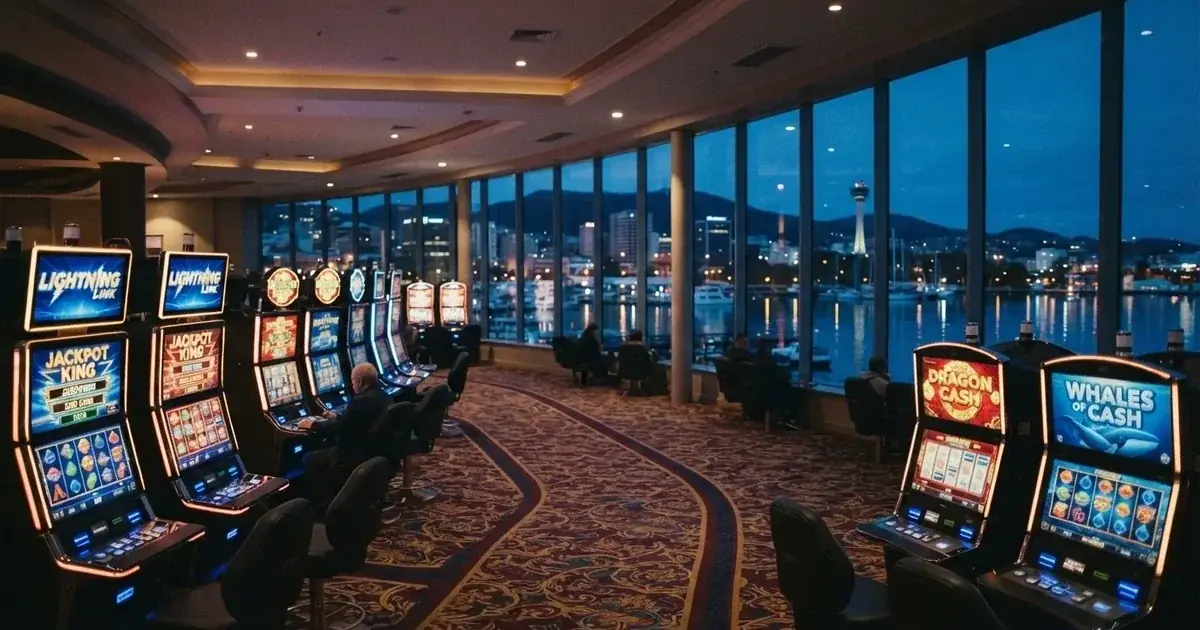
Tasmania is one of the smaller Australian gambling markets, and the way it is wired shows. Two casinos hold the only licences to run table games and unrestricted electronic gaming machines on the island, while pubs and clubs carry a separate licence class for poker machines under reforms that have changed the floor of every venue since December 2026. Anyone searching for “pokies” from a Tasmanian postcode sees that onshore reality sitting beside an offshore online market that the Interactive Gambling Act 2001 expressly prohibits from being offered to Australians. The ACMA has spent the past two years acting on that prohibition, and the picture it leaves behind is the cleanest way to see which options are lawful and which are merely advertised.
Table of Contents
- The legal frame for any pokies venue in Tasmania
- Responsible play on the floor and off it
- The land-based venues that hold a Tasmanian gaming licence
- Payments, payouts and how long a withdrawal takes at a lawful venue
- Specific games and providers on the Tasmanian floor
- The licensed and the prohibited: how a shortlist of pokies venues in Tasmania actually sorts
- The two casinos and the pub and club network, by venue
- Eleven brands the ACMA has named, and what that means for a Tasmanian reader
- Where the licensed market sits, and where the offshore alternative does not
- The overview: what a Tasmanian reader carries away
- Frequently Asked Questions
The legal frame for any pokies venue in Tasmania
Australia’s gambling law works the same way for every state and territory: the Interactive Gambling Act 2001 (IGA), as tightened by the Interactive Gambling Amendment Act 2017, makes it an offence to provide online casino games, online pokies or in-play betting to a person physically in Australia. No state or territory issues a licence for those products. What is licensable is wagering on races and sport placed before the event, lotteries and keno, which in practice most licensed online bookmakers run out of the Northern Territory under the Northern Territory Racing and Wagering Commission (NTRWC). The commission that regulates 52 of Australia’s online bookmakers, including Sportsbet, Bet365 and Ladbrokes, has no full-time staff and meets once a month in Darwin. That thinness is part of why offshore casino sites still find the door ajar.

The enforcement side sits with the ACMA, the Australian Communications and Media Authority. Its tools are investigation, formal warning and the power to direct Australian internet service providers to block illegal services. As of June 2026 the ACMA’s running total was 1,751 illegal gambling and affiliate marketing websites blocked since the first blocking request in November 2019, with more than 230 unlicensed gambling services having left the Australian market since enforcement was strengthened in 2017. A June 2026 blocking round alone added 12 sites: 7Signs, ChromaBet, Donbet, Duospin, Freshbet, Slots Gem, Jacks Club, Lucky Start, Pointsbetz, Spinrise, Vinyl Casino and Wildsino.
A few points flow from that frame and are worth holding before reading any list:
- The individual player is not the target. The IGA targets the provider. Playing on an offshore site from Tasmania is not, by itself, a prosecution risk.
- The provider sits outside Australian consumer protection law. If a withdrawal stalls, there is no local complaints body, no local recourse and no guarantee the site stays reachable. A blocked site can leave a balance on it.
- BetStop, the National Self-Exclusion Register that went live in August 2023, only binds Australian-licensed online and phone wagering services. Offshore casinos are not connected to it.
- Minimum age for any gambling product in Australia is 18.
The economics of the illegal market back the size of the ACMA’s enforcement. H2 Gambling Capital’s 2025 report put annual Australian losses to illegal gambling sites at about A$3.9 billion, and the share of gambling going through legal channels fell from 74% in 2021 to 64%. A market of that scale is why a regulator can justify the volume of blocking requests the ACMA has issued.
What the 2026 reform package adds
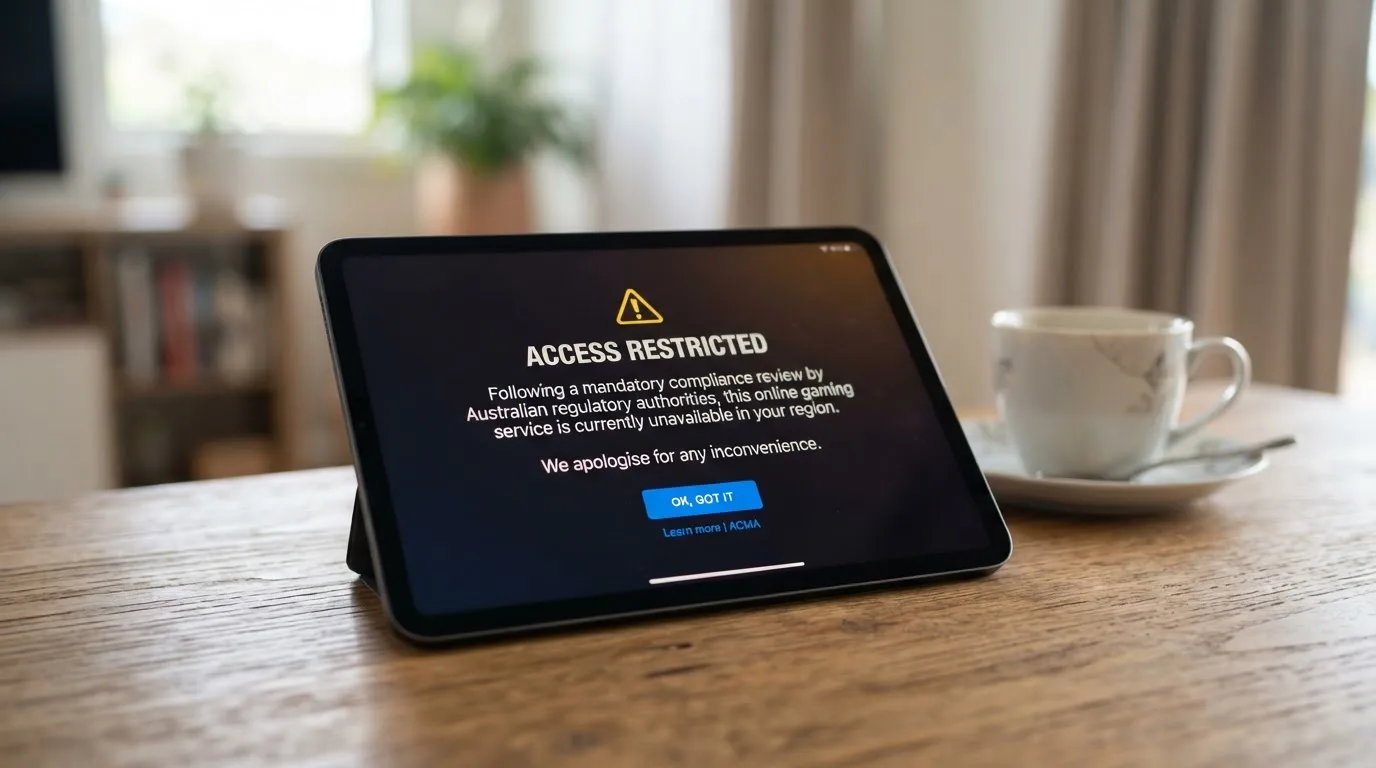
The Interactive Gambling Amendment (Gambling Reform) Bill 2026 passed Parliament on 19 August 2026. Its advertising and inducement measures commence on 1 January 2027, which means the law is enacted but not yet in force on a 2026 page. Read it as a scheduled tightening rather than something already biting the market. The mechanics that already bite are the payment bans that have been in force since 11 June 2024: credit cards, credit-related products and digital currency are banned as payment for licensed online wagering, with penalties up to A$247,500 for operators that breach the rule. Legal deposit routes for licensed wagering are debit card, bank transfer, PayID, Osko and BPAY. A site asking a Tasmanian for a credit card or a crypto deposit is operating outside the Australian rules.
Responsible play on the floor and off it
The same reform that tightened online advertising also rewrote how a poker machine behaves in a Tasmanian pub or club. Tasmania’s cashless gaming card reform moved hotel and club poker machines onto mandatory carded play from December 2026. The default loss limits that travel with the card are A$100 a day, A$500 a month and A$5,000 a year. A player can raise those limits only after a minimum 24-hour wait, a deliberate cooling-off built into the system. The Tasmanian Liquor and Gaming Commission oversees the whole arrangement. As of September 2024 no casino rollout date had been set, which means Wrest Point and the Country Club Casino still run on uncarded machines until the Commission sets a date. A player who walks between a pub and a casino in the same week will see two different payment systems operating.
For anyone whose play has stopped being fun, the first number to write down is 1800 858 858. That is Gambling Helpline Tasmania, run by Anglicare Tasmania’s Gamblers Help Service. It is free, 24-hour and can arrange a venue self-exclusion on the player’s behalf. In-person counsellors are based in Hobart, Launceston, Devonport and Burnie. The national online chat at Gambling Help Online sits alongside it. BetStop, the federal National Self-Exclusion Register, only binds Australian-licensed online and phone wagering services, so it does not exclude a player from an offshore casino; for that, the venue-level arrangements with the Tasmanian Liquor and Gaming Commission remain the working channel.
The economics of harm are the reason these numbers are pitched the way they are. South Australia, a comparable mid-sized market, set a minimum gaming-machine return-to-player rate of 87.5% and a general maximum bet of A$5.00 outside the casino, while Adelaide Casino itself has no maximum-bet limit. South Australian gaming-machine losses outside Adelaide Casino totalled about A$0.92 billion in 2022-23, equivalent to roughly A$497 per adult. Tasmania runs a smaller machine footprint, but the same shape of numbers per adult applies: the house edge is constant and the loss limits on the cashless card sit well below the level at which a recreational player would notice them, which is the point of building them in.
The land-based venues that hold a Tasmanian gaming licence
Tasmania has two casinos on the island, and the rest of the licensed pokies market sits in pubs and clubs under separate machine entitlements. The two casinos are Wrest Point in Hobart, Australia’s first legal casino, which opened on 10 February 1973, and the Country Club Casino and Resort in Launceston, opened by Federal Group in 1982. The Country Club’s design was modelled on the stately homes of the American South, in a Georgian style chosen for the rural landscape around Launceston.
The company behind both venues is Federal Group, which originated as the Federal Coffee Palace Company Limited, founded in Melbourne in June 1885. The Farrell family acquired majority ownership of its holding company by 1989 and privatised the group in 1990; the company remains Tasmanian family-owned. Federal Group held the exclusive licence to operate electronic gaming machines outside its casinos under the Gaming Control Act 1993. In August 2017 it relinquished that monopoly, allowing individual pubs and clubs to hold their own machine licences. The pub and club network has been the working pokies market in Tasmania since.
The size of the casino business becomes visible in the accounts. Mulawa Holdings, part of the Federal Group’s Tasmanian gambling licence structure, reported profit almost doubling from A$13.9 million to A$24.4 million in the year to 30 June 2018, on revenue of A$543 million, while paying about A$75 million in gaming taxes and licence fees to the Tasmanian government. A reader looking at a poker machine in Hobart or Launceston is, in part, looking at that revenue line.
How the wider Australian casino market frames Tasmania
A look at the bigger mainland venues sets the Tasmanian floor. Adelaide Casino, known commercially as SkyCity Adelaide, sits in the heritage-listed Adelaide railway station building on North Terrace, with 90 gaming tables and 950 gaming machines. It is the sole licensed casino in South Australia under the Casino Act 1997. Adelaide Casino’s table-game monopoly was extended to 30 June 2035 under a licence formalised on 11 October 2013, which also allows the casino to expand to up to 200 gaming tables and 1,500 gaming machines subject to redevelopment. South Australia had 11,672 gaming machines outside Adelaide Casino across 471 venues in September 2023.
Queensland is the bigger market still. Brisbane’s Treasury Casino, operated by Star Entertainment Group, closed on 25 August 2024 to make way for the new Star casino at Queen’s Wharf. The Star Brisbane began a staged opening at the A$3.6 billion Queen’s Wharf Brisbane precinct on 29 August 2024, with the main casino floor and premium gaming rooms opening first. Treasury Casino, in Brisbane’s historic Treasury Building, had opened refurbished as a casino in April 1995 and, before its August 2024 closure, occupied a three-level gaming emporium of 80 gaming tables and over 1,300 gaming machines. Queensland had 21,122 gaming machines operating in 351 venues in October 2023.
Star Entertainment’s Queensland licence position is itself a cautionary tale. In late 2022 the Queensland Government, acting on an independent review by former Court of Appeal judge Robert Gotterson, found Star Entertainment unsuitable to hold its Queensland casino licences after concluding it had misled regulators and failed its anti-money-laundering duties. Star was fined A$100 million on 9 December 2022, with a 90-day suspension of the Treasury Brisbane and Star Gold Coast licences deferred to 1 December 2023 to allow remediation. Queen’s Wharf opened amid concerns about the licence position of its lead partner. The takeaway for a Tasmanian player: a casino licence is not a permanent asset, and the regulator can move on an operator in a single review.
Spirit of Tasmania and the question of gaming afloat
Search interest runs to pokies on Spirit of Tasmania, the overnight ferry between Melbourne and Devonport. Spirit of Tasmania is a passenger and vehicle ferry; it does not hold an Australian casino or gaming-machine licence. There are no lawful poker machines aboard. A punter expecting to find the same machines they left at Wrest Point will not find them on the crossing.
Cashless pokies and what a player sees at the machine
Tasmania’s cashless gaming card reform is the visible change inside the pub and club network. From December 2026 every hotel and club poker machine requires carded play. The card holds the player’s identity, the default loss limits, and the cooling-off clock. A player can raise the A$100 daily, A$500 monthly or A$5,000 yearly default only after waiting 24 hours; the machine will not accept a same-day increase. The Tasmanian Liquor and Gaming Commission oversees the system, with venue-level exclusions sitting alongside it.
For someone comparing venues, the practical change is that a pub in Hobart and a casino in Launceston operate on two different payment systems during 2026. The pub card holds the limit. The casino does not, yet.
Payments, payouts and how long a withdrawal takes at a lawful venue
In a pub or club, the relevant payment is the cash or debit card that goes into the cashless gaming card before play. The cashless card carries an A$100 daily default loss limit, which is the practical ceiling on what a single session can spend. There is no withdrawal in the online-wallet sense; a player cashes out at the machine or at the venue counter, subject to venue procedure.
In a casino, payout times follow the casino’s own banking arrangements. The Federal Group operates Wrest Point and the Country Club Casino, so withdrawal times at the cashier are a function of venue staffing and the player’s chosen payment method. A debit card payout clears in the same processing window the player’s bank uses; a bank transfer follows bank cut-off times; large payouts may require identity verification before release. A player expecting an offshore casino’s “instant withdrawal” promise will not find the same architecture at Wrest Point, because the casino verifies identity and the cashier’s job is to confirm it before paying.
For licensed online wagering, the legal deposit routes are debit card, bank transfer, PayID, Osko and BPAY. Credit cards, credit-related products and digital currency are banned as payment for licensed online wagering since 11 June 2024. A site asking a Tasmanian for a credit card or a crypto deposit is operating outside the Australian rules. That single fact is enough to disqualify a brand from the licensed set.
Payout percentage on Tasmanian machines
Tasmania sets its own gaming-machine return-to-player rate as part of the state gaming machine technical standards. Comparable jurisdictions sit close to the same band: South Australia sets a minimum gaming-machine return-to-player rate of 87.5% and a general maximum bet of A$5.00 outside the casino, while Adelaide Casino itself has no maximum-bet limit. A player who walks between Wrest Point and a comparable mainland casino will see similar paytables on similar machines, with the state-level minimum working as a floor rather than a ceiling. The return-to-player rate is the theoretical long-run return; actual session results vary widely because the house always retains an edge.
Specific games and providers on the Tasmanian floor
A poker machine on a Tasmanian floor runs under a state-issued technical standard. The titles on offer are the ones licensed to operate in the venue, drawn from the standard Australian publisher set, with Aristocrat, IGT and Konami supplying much of the floor across the country. The paytable printed on a machine shows the return-to-player percentage the game is set to, and the volatility class the game operates in. A reader researching a specific title will find the manufacturer’s published return-to-player band, with the venue’s actual setting sitting inside that band.
24-hour pokies in Tasmania
The phrase “24-hour pokies Tasmania” runs in searches alongside the question of which venues, if any, stay open around the clock. Wrest Point and the Country Club Casino operate the casino floors; pub and club machines close with the venue’s liquor licence. Outside the two casinos, no Tasmanian pub or club holds a continuous gaming licence, so 24-hour play means the casino floor only. A player looking for a machine at 3am in Hobart is looking for Wrest Point.
Live tables and the casino experience
The two Tasmanian casinos offer table games alongside the electronic gaming machines. Wrest Point is the larger of the two, and the Country Club in Launceston operates a smaller table-game floor in its Georgian-styled main building. The 24-hour question is settled by which casino the player is near; both venues sit inside the standard Australian casino operating pattern.
The licensed and the prohibited: how a shortlist of pokies venues in Tasmania actually sorts
A serious shortlist of pokies venues in Tasmania runs to three categories. The first is the two licensed casinos: Wrest Point in Hobart and the Country Club Casino in Launceston, both run by Federal Group under the casino licence. The second is the pub and club network operating electronic gaming machines under individual machine entitlements, governed by the cashless gaming card rules from December 2026. The third is what an offshore site offers, which is unlawful supply to anyone in Australia regardless of how it brands a “pokies” section.
Three criteria separate the categories from each other:
- Licence status. A venue either holds a Tasmanian casino licence, a pub or club machine entitlement, or no Australian licence at all. The third category has no Australian pathway, because no Australian state or territory issues one for online casino games or online pokies.
- Consumer protection. A licensed venue sits inside the Tasmanian Liquor and Gaming Commission’s complaints framework; an offshore site sits inside its own terms and conditions, which an Australian regulator cannot enforce.
- Payment rails. A licensed wagering operator accepts debit card, bank transfer, PayID, Osko or BPAY. A site asking for credit card or crypto is outside the Australian rules.
Those three criteria are the working test for any shortlist. Apply them and most of the offshore “pokies” market falls away by itself.
A note on the ACMA’s published action against offshore brands
The ACMA’s enforcement record is the cleanest cross-reference a reader can use. Each formal warning names an operator and a date, and the list of named brands below reflects what the ACMA itself has published. None of these brands holds an Australian licence; each appeared on the regulator’s record for offering prohibited services to people in Australia. The table does not rank them. It records what the ACMA has done.
| Brand | ACMA action and date | Operator named by the ACMA | Subject support |
|---|---|---|---|
| RocketPlay | Formal warning, March 2026; earlier warning to the same operator’s wider brand set in May 2022 | Pulsup Ltd (Rocketplay, March 2026); Dama N.V. (May 2022) | — |
| Level Up Casino | Formal warning, May 2022 | Dama N.V. | listings only, per en.wikipedia.org and vgccc.vic.gov.au |
| Woo Casino | Formal warning, March 2025 | Dama N.V. | listings only, per en.wikipedia.org |
| Spirit Casino | Formal warning, May 2025 | Dama N.V. | — |
| National Casino | Formal warning, July 2025 | Consolutetish S.R.L. | listings only, per ABC and infrastructure.gov.au |
| Bizzo Casino | Formal warning, July 2025; earlier warning in 2022 | Consolutetish S.R.L. (July 2025); TechSolutions (CY) Group Limited and TechSolutions Group N.V. (2022) | — |
| Ignition Casino | Formal warning, July 2025 | Bamboo Media | — |
| Instant Casino | Formal warning, February 2025 | EOD Code SRL | — |
| Jackbit | Formal warning, April 2026 | Ryker B.V. (Jackbit and CasinOK) | — |
| Casino Intense | Formal warning, April 2025 | Sterplay Holding Ltd | listings only, per ABC, Asgam and cbs.sa.gov.au |
| Sky Crown | Formal warning under the Interactive Gambling Act 2001 | Hollycorn N.V. (Sky Crown and Blue Leo) | listings only, per en.wikipedia.org |
Two facts carry through the table. First, every brand on it appeared on the ACMA’s record because it offered prohibited services to Australians. Second, no Australian state or territory licenses online casino games or online pokies, so a brand advertising either is, by definition, outside the Australian framework.
What the ACMA’s blocking cadence has added up to
The running total of blocked sites is itself a useful number to think against. From the first blocking request in November 2019 to June 2026, the ACMA asked Australian internet service providers to block 1,751 illegal gambling and affiliate marketing websites. The June 2026 round alone added 12 more, named above. The rate, read against the seven-year window, lands somewhere between one and three blocking rounds a month, with each round typically clearing a dozen sites at a time. A reader who keeps an eye on the ACMA register will see the list move faster than any one of these tables can be refreshed.
To put the cadence into a more useful shape: at the running total of 1,751 sites blocked across roughly 80 months from November 2019 to June 2026, the long-run average works out to a band of about 21 to 23 sites blocked per month. The June 2026 round, at 12 sites, ran below that band. Earlier rounds, particularly the heavier enforcement months after the Interactive Gambling Amendment Act 2017 took effect, sat well above it. Treat the number as an order of magnitude rather than a forecast: the ACMA’s pipeline of named brands moves at a steady clip, and a table like the one above has a half-life of months rather than years.
The two casinos and the pub and club network, by venue
Wrest Point, Hobart
Australia’s first legal casino, opened 10 February 1973. Operated by Federal Group under Tasmania’s casino licence. The venue holds the larger of the two Tasmanian casino floors and the only one a Hobart-based player reaches without driving to Launceston. Wrest Point is the working answer to “where do I play pokies in Hobart” and the practical answer to “is there a casino open at 3am in Tasmania.” The pub and club network closes with the liquor licence; the casino floor does not.
Country Club Casino and Resort, Launceston
Opened by Federal Group in 1982. Modelled on the stately homes of the American South, in a Georgian style chosen for the rural landscape around Launceston. The smaller of the two Tasmanian casinos, with a table-game floor and an electronic gaming machine bank operating under the same casino licence framework as Wrest Point. A Launceston player with the same question gets the same answer.
The pub and club network
From December 2026 every poker machine in a Tasmanian pub or club sits behind a cashless gaming card with a default loss limit of A$100 a day, A$500 a month and A$5,000 a year. The machine entitlements are held individually by each venue under the post-2017 regime that ended Federal Group’s monopoly outside its casinos. A player comparing venues is comparing operating hours, machine mix and the card limits that are the same on every machine in the network.
Eleven brands the ACMA has named, and what that means for a Tasmanian reader
What follows is a closer read of each brand on the table above. Each is described on the basis of what the ACMA itself published. None is recommended as a place to play. The verdict at the end of each block names what the record shows and what a reader comparing options should take from it.
RocketPlay
The ACMA issued a formal warning to Pulsup Ltd over Rocketplay.com.au in March 2026, with an earlier warning to Dama N.V. covering six casino brands including Rocketplay in May 2022. The brand has carried a formal warning under two different operating entities, which is a record of repeat action rather than a single event. A reader who has seen Rocketplay advertised will find it on the regulator’s list, not because the regulator names every brand equally, but because the brand keeps reappearing under a new operator name.
The practical verdict for a Tasmanian reader is that Rocketplay has been the subject of repeated ACMA action and offers a prohibited product to Australians. The brand sits outside Australian consumer protection, and any balance on the site is at the player’s risk if the site is blocked.
Level Up Casino
The ACMA issued a formal warning to Dama N.V. over Level Up in May 2022 as part of a six-brand batch. No subsequent formal warning to Dama N.V. for Level Up alone appears on the published record, but the operator’s wider footprint includes ongoing action: Dama N.V. drew further warnings over Woo Casino in March 2025 and Spirit Casino in May 2025. The brand sits inside a wider Dama N.V. enforcement pattern rather than as a single isolated incident.
Level Up Casino features on the ACMA list, tied to an operator with a history of similar actions. Like all listed brands, it supplies prohibited gambling services to Australians.
Woo Casino
The ACMA issued a further formal warning to Dama N.V. over Woo Casino in March 2025. The warning sits in the same enforcement pattern as the May 2022 batch and the May 2025 Spirit Casino action.
Woo Casino is another brand within the same enforcement cycle. It is not licensed in Australia and, like its peers, provides prohibited interactive services.
Spirit Casino
The ACMA issued a formal warning to Dama N.V. over Spirit Casino in May 2025. The brand is among the more recent named actions and sits inside the same Dama N.V. pattern as Woo Casino and Level Up Casino.
Spirit Casino appears on the regulator’s record as a prohibited service. It operates under the same parent as other sanctioned brands, confirming the persistent nature of these enforcement actions.
National Casino
The ACMA issued a formal warning to Consolutetish S.R.L. over National Casino in July 2025. The brand carries a fresh action rather than a longer published record. National Casino and Bizzo Casino sit on the same warning because Consolutetish S.R.L. is the operator for both.
National Casino is named on the regulator’s list of prohibited services. It operates entirely offshore, outside the jurisdiction of Australian consumer law.
Bizzo Casino
The ACMA issued a formal warning to Consolutetish S.R.L. over Bizzo Casino in July 2025. Bizzo Casino had already been the subject of a 2022 formal warning to TechSolutions (CY) Group Limited and TechSolutions Group N.V., which makes Bizzo the cleanest example on this list of a brand that has crossed the regulator’s path under two different operating entities.
The verdict for a reader is that Bizzo Casino has been the subject of formal warnings under two different operators over a four-year span. The brand offers a prohibited product to Australians and is not licensed in any Australian state or territory.
Ignition Casino
The ACMA issued a formal warning to Bamboo Media over Ignition Casino in July 2025. The brand targets offshore poker play rather than the pokies floor, but the legal classification under the IGA is the same: an offshore online casino product offered to Australians is prohibited regardless of the variant.
Ignition Casino is listed by the ACMA for providing restricted services. Its presence on the register reflects the regulator’s ongoing campaign against unlicensed offshore gaming.
Instant Casino
The ACMA issued a formal warning to EOD Code SRL over Instant Casino in February 2025. The action sits inside the same wider enforcement pattern as the rest of this list.
The verdict is that Instant Casino appears on the regulator’s record for offering a prohibited product to Australians. The brand offers no Australian consumer protection.
Jackbit
The ACMA issued a formal warning to Ryker B.V. over Jackbit and CasinOK in April 2026. The April 2026 action bundles two brands under one operator, which is the same pattern the ACMA has used on Dama N.V. and Consolutetish S.R.L.
Jackbit is included on the ACMA register, grouped with CasinOK. It operates without a local licence and targets Australians with products that cannot lawfully be offered.
Casino Intense
The ACMA issued a formal warning to Sterplay Holding Ltd over Casino Intense in April 2025. The action sits inside a wider Sterplay record but is named for Casino Intense specifically on the regulator’s published warning.
Casino Intense has been formally warned by the ACMA. It lacks any Australian authorisation, meaning players on the site have no local recourse.
Sky Crown
The ACMA issued a formal warning to Hollycorn N.V. over its Sky Crown and Blue Leo casino services. The action is one of the older items in the current regulator record, with the formal warning publication dating to September 2022.
The verdict is that Sky Crown and Blue Leo appear on the regulator’s record because they offered prohibited products to Australians. The action predates the more recent Dama N.V. and Consolutetish S.R.L. patterns, which means the ACMA’s enforcement approach has been consistent across the period.
Where the licensed market sits, and where the offshore alternative does not
The clearest summary of the Tasmanian market is that the lawful options all sit in Tasmania, on a floor a player can walk to. The casinos are Wrest Point and the Country Club. The pubs and clubs operate electronic gaming machines under machine entitlements and the cashless gaming card regime that started in December 2026. Offshore sites offering “pokies” to Australians sit on the other side of the Interactive Gambling Act, and the ACMA has been moving through the named brands at a steady pace since November 2019.
The deeper point is that the regulator’s enforcement record changes what a comparison looks like. A shortlist that mixes Wrest Point and an offshore brand on equal terms is mixing a licensed venue with an unlicensed one. A punter comparing them on payout percentage alone is missing the consumer protection layer that sits on top of the paytable, which is the layer that determines what happens when a withdrawal stalls or a site disappears.
For someone choosing where to play, the working test is three questions. Is the venue licensed in Tasmania? Does it accept a payment the Australian rules permit? Does it sit inside the Tasmanian Liquor and Gaming Commission’s complaints framework? Three “yes” answers puts a venue in the licensed set. Three “no” answers puts it in the offshore set the ACMA has spent the past seven years blocking.
The overview: what a Tasmanian reader carries away
Tasmania’s pokies market is small, regulated and well-mapped. Two casinos. A pub and club network under individual machine entitlements. A cashless gaming card regime from December 2026 that sets default loss limits and a 24-hour cooling-off clock for any increase. A regulator that has moved against offshore brands at a rate that puts the running total of blocked sites at 1,751 by June 2026. The offshore alternative, when an Australian is the customer, is unlawful supply under the Interactive Gambling Act 2001, and the ACMA’s published record makes that point by naming the operators one warning at a time.
A reader choosing where to play has a clean answer. Wrest Point and the Country Club Casino are the licensed casino floors. Pubs and clubs are the licensed pub and club floors under the cashless card regime. Everything else is the offshore market the ACMA has been clearing for seven years.
Frequently Asked Questions
Which venues in Tasmania are licensed to operate pokies?
Two casinos hold Tasmania’s casino licence: Wrest Point in Hobart and the Country Club Casino and Resort in Launceston, both operated by Federal Group. Outside the casinos, individual pubs and clubs hold their own electronic gaming machine entitlements under the post-2017 regime that ended Federal Group’s monopoly. No Australian state or territory issues a licence for online pokies or online casino games, so any site offering those products to someone in Tasmania is operating outside the Australian framework.
Are pokies in Tasmania available around the clock?
The two casinos run continuous gaming floors, so a player who needs a machine at 3am is looking for Wrest Point in Hobart or the Country Club Casino in Launceston. The pub and club network closes with the venue’s liquor licence, and the cashless gaming card system that began in December 2026 runs inside those opening hours. There is no 24-hour pub or club pokies operation outside the two casinos.
What identification do venues in Tasmania require before letting someone play pokies?
Minimum age is 18 for any gambling product in Australia. From December 2026 every pub and club poker machine in Tasmania requires a cashless gaming card, which carries the player’s identity and the default loss limits of A$100 a day, A$500 a month and A$5,000 a year. A raise in those limits triggers a 24-hour cooling-off. The casino floors at Wrest Point and the Country Club Casino verify identity at the cashier and at the gaming floor entry under their own licence conditions.
Can visitors to Tasmania use self-exclusion schemes at local pokies venues?
Venue self-exclusion arrangements run through the Tasmanian Liquor and Gaming Commission and are arranged through Gambling Helpline Tasmania on 1800 858 858, with in-person counsellors in Hobart, Launceston, Devonport and Burnie. BetStop, the National Self-Exclusion Register that went live in August 2023, binds Australian-licensed online and phone wagering services; it does not exclude a player from an offshore casino, so for venue-level exclusion the Tasmanian arrangements remain the working channel.
How does the payout percentage on Tasmania pokies compare with other Australian cities?
Tasmania sets its gaming-machine return-to-player rate through state technical standards, with comparable mainland jurisdictions sitting close to the same band. South Australia sets a minimum gaming-machine return-to-player rate of 87.5% and a general maximum bet of A$5.00 outside the casino, while Adelaide Casino itself has no maximum-bet limit. A player comparing paytables across Wrest Point, the Country Club Casino and a comparable mainland venue sees similar theoretical returns, with the state-level minimum working as a floor rather than a ceiling.
Is it legal for an online casino to advertise “pokies” in Tasmania the same way a pub or club does?
No. The Interactive Gambling Act 2001, as tightened by the 2017 amendments, makes it an offence to provide online casino games or online pokies to a person in Australia. The Interactive Gambling Amendment (Gambling Reform) Bill 2026 passed Parliament on 19 August 2026, with its advertising and inducement measures commencing on 1 January 2027; the law is enacted but the new measures are not yet in force. A pub or club advertising a poker machine is licensed to do so; an offshore casino using the word “pokies” to describe its product is not.